Happy New Year!
By Kori ~ January 1st, 2015
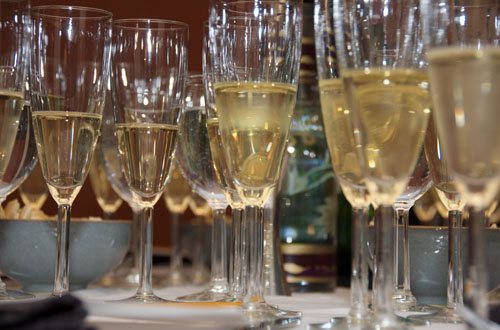
Happy New Year! Best wishes for a happy, healthy, prosperous, and wine-filled 2015!
Filed under: Holiday

 Wine Peeps is an independent wine blog dedicated to helping you get the most bang for your buck in wine. We do this through blind tastings of wine from around the world and calculations of Quality-to-Price Ratios (QPRs). We have a special interest in Washington State wines.

Happy New Year! Best wishes for a happy, healthy, prosperous, and wine-filled 2015!
“But the angel said to them, ‘Do not be afraid. I bring you good news of great joy that will be for all the people. Today in the town of David a Savior has been born to you; he is Christ the Lord. This will be a sign to you: You will find a baby wrapped in cloths and lying in a manger.’” (Luke 2:10-12)
Merry Christmas!
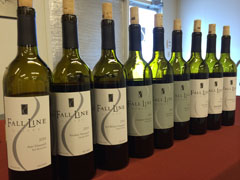 Recently, we had the pleasure to catch up with winemaker Tim Sorenson and taste through Fall Line Winery’s current and upcoming releases. We tasted six of their current releases and also previewed three other wines that will be released in the fall of 2015. While we were very impressed with all nine wines, we thought that the 2012 Cabernet Sauvignon and the 2012 Red Willow Vineyard were truly outstanding.
Tim and his wife Nancy Rivenburgh founded Fall Line Winery in 2003. Located in South Seattle’s Georgetown neighborhood, the winery was officially licensed and bonded in 2004. Both Tim and Nancy are avid skiers and the name “Fall Line” refers to the natural line of descent on a slope. Tim is a retired economics professor. For years, he balanced his day job at Seattle University with his budding wine career. He completed an Introduction to Winemaking course at the University of California-Davis in 2000 and has never looked back. Tim met many local winemakers during his time working at a wine shop in downtown Seattle that led to a two-year ‘vinternship’ with Ben Smith at Cadence Winery from 2002 to 2004. The 2003 vintage was Fall Line’s inaugural commercial release. Fall Line produces about 1,800 to 2,000 cases annually.
The core of Fall Line’s lineup is comprised of three single-vineyard wines, all classic Bordeaux-style red blends. They also produce a Cabernet Sauvignon, a Tempranillo, and another red blend called Exhibition. Fall Line partners with three of the most well-regarded vineyards in Washington State, all located in the Yakima Valley AVA, Artz Vineyard, Boushey Vineyard, and Red Willow Vineyard.
Artz Vineyard, owned by grower Fred Artz, is located on Red Mountain adjacent to the famed Klipsun Vineyard. In fact, Artz was the vineyard manager of Klipsun for 20 years. Fall Line has used fruit from Artz Vineyard since 2004.
Boushey Vineyard is located in the central Yakima Valley, which is relatively cooler than Red Mountain. Owner Dick Boushey, one of the most respected growers in Washington State, has been producing much sought after fruit for over 30 years. Fall Line has partnered with Boushey Vineyard since 2003, and Dick planted a block of Tempranillo especially for Fall Line in 2007.
Red Willow Vineyard, which sits in the northwest corner of the Yakima Valley AVA, is located on the fourth-generation family farm established by grower Mike Sauer’s grandfather-in-law in the 1920’s. The iconic Monsignor Chapel sits atop Red Willow’s highest hill, built with native stones from the farm. Fall Line has been working with Red Willow since 2008 and introduced its Red Willow Vineyard Red Wine in 2010.
If you have not yet tried any Fall Line wines, I encourage you to seek them out. Not only are they excellent, but they deliver serious bang for your buck as well. Fall Line holds an open house for its mailing list members on the third Saturday in November each year. Other than that event, the winery is open by appointment only.
Current Releases:
2011 Fall Line Winery Artz Vineyard Red Wine (Artz Vineyard, Red Mountain, Yakima Valley, Washington): 45% Cabernet Franc, 44% Merlot, and 11% Cabernet Sauvignon. Deep, dark red in color. Beautiful nose with red and black fruit and cinnamon stick aromas. Black cherry, leather, and spice come through on the palate. Medium to full-bodied with crisp acidity, medium to high tannins, and a long, slightly hot, finish.
Quality: 3.5 stars (out of 5)
QPR: 3 bangs for your buck (out of 5)
Where to buy: Winery, $30
2011 Fall Line Winery Boushey Vineyard Red Wine (Boushey Vineyard, Yakima Valley, Washington): 36% Cabernet Franc, 33% Merlot, 17% Cabernet Sauvignon, and 14% Petit Verdot. Deep, dark purplish red. Nice nose but a bit tight at first. Black fruit, smoked meat, and game come through on the palate. Full-bodied with lively acidity, and medium to high tannins. Well-balanced with good complexity and a very long, smooth finish.
Quality: 4 stars (out of 5)
QPR: 4 bangs for your buck (out of 5)
Where to buy: Winery, $30
2011 Fall Line Winery Red Willow Vineyard Red Wine (Red Willow Vineyard, Yakima Valley, Washington): 47% Cabernet Franc, 39% Merlot, and 14% Cabernet Sauvignon. Deep, dark purplish red. Gorgeous nose with blackberry, black cherry, and spice aromas. Fruit-forward with loads of cherry and spice as well as a touch of earth and herbal notes. Medium to full-bodied with crisp acidity and high tannins. Well-balanced with a long finish.
Quality: 4 stars (out of 5)
QPR: 4 bangs for your buck (out of 5)
Where to buy: Winery, $30
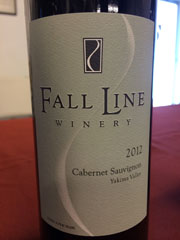 2012 Fall Line Winery Cabernet Sauvignon (Yakima Valley, Washington): 100% Cabernet Sauvignon. Deep, dark purple in color. Nice nose with black fruit and floral notes. Blackcurrant, black cherry, leather, and smoked meat come through on the palate. Full-bodied with lively acidity and high tannins. Big and bold yet very smooth. Well-balanced with a long, lingering finish.
Quality: 4.5 stars (out of 5)
QPR: 5 bangs for your buck (out of 5)
Where to buy: Winery, $30
2012 Fall Line Winery Exhibition Red Wine (Yakima Valley, Washington): 28% Merlot, 26% Cabernet Franc, 21% Petit Verdot, 15% Cabernet Sauvignon, and 10% Tempranillo. Deep, dark red. Nice nose but a bit tight. Black and red fruit and a touch of spice come through on the palate. Medium to full-bodied with lively acidity, medium tannins, and a long finish. Fruit-forward and very approachable.
Quality: 4 stars (out of 5)
QPR: 5 bangs for your buck (out of 5)
Where to buy: Winery, $22
2012 Fall Line Winery Tempranillo (Boushey Vineyard, Yakima Valley, Washington): 100% Tempranillo. Deep purplish red. Nice nose with black fruit and floral notes. Black fruit, leather, smoked meat, and a touch of black pepper come through on the palate. Full-bodied with lively acidity, and big, bold tannins.
Quality: 3.5 stars (out of 5)
QPR: 3 bangs for your buck (out of 5)
Where to buy: Winery, $22
Upcoming Releases:
2012 Fall Line Winery Artz Vineyard Red Wine (Artz Vineyard, Red Mountain, Yakima Valley, Washington): 50% Cabernet Franc, 46% Merlot, and 4% Cabernet Sauvignon. Deep, dark red. Nice nose with red and black fruit aromas. Bright fruit, especially red and black cherry, come through on the palate. Medium to full-bodied with crisp acidity and medium to high tannins. Well-balanced with a long finish.
Quality: 4 stars (out of 5)
QPR: 4 bangs for your buck (out of 5)
Where to buy: Winery, $35 [to be released Fall 2015]
2012 Purple Cafe Red Wine (Boushey Vineyard, Yakima Valley, Washington): Special wine produced exclusively for Purple Cafe by Fall Line Winery. 45% Merlot, 27% Petit Verdot, 25% Cabernet Franc, and 3% Cabernet Sauvignon. Deep, dark purple. Nice nose with black fruit aromas. Fruit-forward with bright, black cherry on the palate. Medium to full-bodied with crisp acidity, high tannins, and a long finish.
Quality: 3.5 stars (out of 5)
QPR: n/a
Where to buy: Purple Cafe, $n/a [to be released Fall 2015]
2012 Fall Line Winery Red Willow Vineyard Red Wine (Red Willow Vineyard, Yakima Valley, Washington): 36% Cabernet Franc, 35% Merlot, 18% Petit Verdot, and 11% Cabernet Sauvignon. Deep, dark purple in color. Gorgeous nose with luscious black fruit aromas. Black cherry, blackberry, earth, leather, spice, and a hint of black pepper come through on the palate. Full-bodied with crisp acidity and medium to high tannins. Well-balanced and smooth with good complexity, and a long, lingering finish.
Quality: 4.5 stars (out of 5)
QPR: 5 bangs for your buck (out of 5)
Where to buy: Winery, $35 [to be released Fall 2015]
 Would you like a quick suggestion for a good wine to drink tonight (or this weekend) that won’t break your budget and is widely available? If so, you might want to check out the 2013 Cune Monopole Rioja Blanco from the Rioja Alta appellation in Spain.
Our selection criteria include:
Cune, also known as Compañía Vinícola del Norte de España, was founded in 1879 by brothers Eusebio and Raimundo Real de Asua in Haro, Rioja, and is still family-owned and family-operated by direct descendants of the founders. Monopole, produced by Cune since 1915, is the oldest white wine brand of Spain.
“Slight yellow greenish color. Seductive scent of spring, white flowers and fresh tropical fruit. In the mouth, it is nice and long, leaving a slight acidity that gives a feeling of freshness that results in an increased potential retronasal aroma. Ideal companion for appetizers, snacks, fish and seafood.” –Cune
2013 Cune Monopole Rioja Blanco (Rioja Alta, Spain): 100% Viura. Pale, straw yellow in color. Very aromatic with orange blossom and tropical notes on the nose. More floral notes as well as lime come through on the palate. Dry and light to medium-bodied with very crisp acidity. Well-balanced and refreshing with a long, lingering finish.
Quality: 4 stars (out of 5)
QPR: 4 bangs for your buck (out of 5)
Where to buy: Received as sample, suggested retail $15; Available elsewhere, $9 to $18
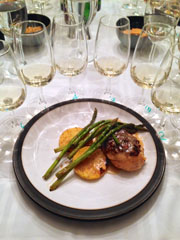 Sauvignon Blanc has been one of our favorite white varieties for years. We have a soft spot for Sauvignon Blanc from the Marlborough region of New Zealand, which was solidified on our trip to the region in 2005. Ever since, we have made it a point to try Sauvignon Blanc from other countries/regions when we have the chance. We decided to put two of our New Zealand Sauvignon Blanc favorites up against four others, two from Washington State and two from France, in one of our wine tasting dinners. Last Friday was a beautiful late September day here in Seattle, perfect to enjoy crisp, refreshing white wines before our cooler fall weather arrives.
All of the wines paired well with Mom’s (LaGayle) dinner of tomato basil soup, ensalada mixta, chicken tapenade, grilled garlic basil polenta cakes, roasted asparagus with balsamic browned butter, and topped off by orange sherbet with strawberries drizzled with simple syrup and ground black pepper for dessert.
The consensus favorite of the evening was the 2013 Nobilo Regional Collection Sauvignon Blanc from New Zealand. In the 1940’s, Nikola Nobilo emigrated from Croatia and planted some of the first commercial grapevines in New Zealand. He was one of the pioneers responsible for the worldwide popularity of New Zealand Sauvignon Blanc.
The other two wines in this tasting that deserve extra attention because of their high quality and excellent value are the 2013 Kim Crawford Sauvignon Blanc from New Zealand and the 2012 Efeste Feral Sauvignon Blanc from Washington State. These top three wines are outstanding and are great choices to enjoy on your deck on a warm evening or to complement lighter fare such as chicken or fish any time of the year.
From 1st to last in the group consensus rankings:
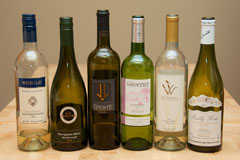 2013 Nobilo Regional Collection Sauvignon Blanc (Marlborough, New Zealand): Pale, straw yellow. Beautiful nose with grapefruit and lime aromas. More grapefruit and lime as well as vegetal notes come through on the palate. Dry and medium-bodied with crisp acidity. Well-balanced with a very long, refreshing finish.
Quality: 4.5 stars (out of 5)
QPR: 5 bangs for your buck (out of 5)
Where to buy: Total Wine & More (Seattle, Washington), $8; Available elsewhere, $8 to $13
2013 Kim Crawford Sauvignon Blanc (Marlborough, New Zealand): Pale, greenish straw yellow. Very aromatic with grapefruit, lime, and fresh cut grass on the nose. More grapefruit, lime, and a touch of pineapple come through on the palate. Dry and medium-bodied with racy acidity. Well-balanced and refreshing with an extremely long, lingering finish.
Quality: 4.5 stars (out of 5)
QPR: 5 bangs for your buck (out of 5)
Where to buy: Total Wine & More (Seattle, Washington), $12; Available elsewhere, $10 to $14
2012 Efeste Feral Sauvignon Blanc (Evergreen Vineyard, Columbia Valley, Washington): Pale, greenish straw yellow. Gorgeous nose with lime, grapefruit, pear, and a touch of minerality. More citrus notes come through on the palate. Dry and light to medium-bodied with tart acidity. Well-balanced with a very long, lingering finish. Very crisp and refreshing.
Quality: 4.5 stars (out of 5)
QPR: 4 bangs for your buck (out of 5)
Where to buy: Total Wine & More (Seattle, Washington), $20; Available elsewhere, $19 to $21
2013 Chateau Montet Bordeaux Blanc (Bordeaux, France): Pale, straw yellow. Nose is a bit tight at first, then pear and apple aromas come through. More pear, apple, and a touch of citrus come through on the palate. Dry and light-bodied with crisp acidity and a long finish.
Quality: 3.5 stars (out of 5)
QPR: 4 bangs for your buck (out of 5)
Where to buy: Total Wine & More (Seattle, Washington), $10
2012 Woodinville Wine Cellars Sauvignon Blanc (Columbia Valley, Washington): Pale, straw yellow. Aromatic with apple, pear, lime, and a touch of minerality on both the nose and palate. Dry and medium-bodied with crisp acidity and a long finish.
Quality: 3 stars (out of 5)
QPR: 2 bangs for your buck (out of 5)
Where to buy: Total Wine & More (Seattle, Washington), $15; Available elsewhere, $15 to $17
2012 Gilles Blanchet Pouilly Fume (Loire, France): Pale, straw yellow. Moderately aromatic with apple notes on the nose. More apple as well as pear and a touch of flint comes through on the palate. Dry and light-bodied with lively acidity and a long finish.
Quality: 3 stars (out of 5)
QPR: 2 bangs for your buck (out of 5)
Where to buy: Total Wine & More (Seattle, Washington), $18
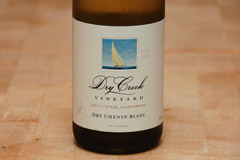 Would you like a quick suggestion for a good wine to drink tonight (or this weekend) that won’t break your budget and is widely available? If so, you might want to check out the 2013 Dry Creek Vineyard Dry Chenin Blanc from Clarksburg in California.
Our selection criteria include:
Dry Creek Vineyard, founded in 1972 by David Stare, is located in the heart of Dry Creek Valley just outside of Healdsburg, California. Well-known for their Fumé Blancs and Zinfandels, Dry Creek Vineyard also produces a number of other good wines. And best of all, their wines deliver serious bang-for-your-buck. “A great wine at a fair price” was founder David Stare’s mantra, and the family continues to uphold this philosophy. Today, Dry Creek Vineyard is run by David’s daughter Kim Stare Wallace and her husband Don.
“A classic summertime sipper, our wonderfully crisp and refreshing Dry Chenin Blanc perfectly represents our love for this classic grape variety. In the glass, fragrant aromatics such as white peach, melon and citrus are immediately appealing. This vintage displays the classic Loire character of earth and crushed minerals that give the wine depth and nuance. There is an underlying chalky quality with some spicy undertones that really make this wine shine. The palate is equally fine with excellent acid lifting the ripe apple and zesty citrus flavors.” –Dry Creek Vineyard
2013 Dry Creek Vineyard Dry Chenin Blanc (Clarksburg, California): 100% Chenin Blanc. Pale straw yellow. Very aromatic with citrus and orange blossom on both the nose and palate. Dry and light-bodied with crisp acidity and a long, refreshing finish.
Quality: 3.5 stars (out of 5)
QPR: 4 bangs for your buck (out of 5)
Where to buy: Received as sample, suggested retail $12; Available elsewhere, $9 to $12
 Founded by Washington wine pioneer Allen Shoup, Long Shadows Vintners is a collection of ultra-premium wineries comprised of internationally acclaimed winemakers from the major wine regions of the world. Each winemaker is a partner in a unique winery dedicated to producing a single Columbia Valley wine representing a “best of type” that reflects the winemaker’s signature style.
Allen Shoup is considered one of the pioneers of the Washington wine industry. He was the CEO of Stimson Lane wine group for years. During that time, he oversaw their portfolio of wineries, including Chateau Ste. Michelle and Columbia Crest, and forged relationships with many important players in the wine business around the world. Upon retirement, he pursued his dream of bringing some of the most highly acclaimed winemakers from different regions around the world to Washington to make world-class wines from Washington grapes comparable to the wines they make in their native wine regions. The Long Shadows winemaker-partners began crafting their signature wines in 2003.
Through the years, we’ve had the pleasure of tasting a number of Long Shadows wines. Recently, we had the opportunity to taste the 2011 Sequel Syrah in a blind samples tasting. It “wow”-ed us! Not only is it an amazing wine, but it also delivers serious bang for your buck.
Sequel is a Syrah made by John Duval, one of the most famous winemakers in Australia and around the world. He is best known for his work with Penfolds Grange, Australia’s most famous wine, and now owns his own John Duval Wines.
2011 Sequel Syrah (Columbia Valley, Washington): 94% Syrah and 6% Cabernet Sauvignon. Dark, dense purple. Gorgeous nose with blackberry and spice aromas. Blackberry, black cherry, black pepper, and spice come through on the palate. Full-bodied with crisp acidity and medium to high, smooth tannins. Well-balanced with good complexity and a very long, lingering finish. Wow!
Quality: 5 stars (out of 5)
QPR: 5 bangs for your buck (out of 5)
Where to Buy: Received as sample, suggested retail $50; Available elsewhere, $42 to $53
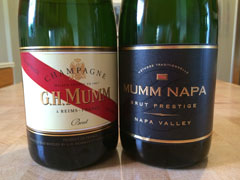 The Mumm family founded the G.H. Mumm champagne house in 1827. In 1876, as a tribute to some of their most prestigious clients, G.H. Mumm decorated a few of their bottles with a crossed red silk ribbon as a reference to the Legion of Honour. Today, G.H. Mumm is the leading champagne brand in France and the third best-selling champagne in the world. The Cordon Rouge Brut is their signature cuvee.
In 1979, G.H. Mumm set out to find an ideal winegrowing area in the United States. They picked Guy Devaux for the project. Devaux had more than 40 years experience crafting still and sparkling wines in France, South America, and the U.S. He was given one criterion from the Mumm family; find a terroir where he could create wine from traditional Champagne grapes using the method champenoise process. He chose the Napa Valley in California and established the Mumm Napa winery there in 1986. The Brut Prestige is their signature sparkling wine.
Recently, we had the opportunity to taste the NV G.H. Mumm Cordon Rouge Brut Champagne and the NV Mumm Napa Prestige Brut Sparkling Wine in a blind samples tasting. Both wines are very good and deliver serious bang for your buck.
NV G.H. Mumm Cordon Rouge Brut Champagne (Reims, Champagne, France): 45% Pinot Noir, 30% Chardonnay, and 25% Pinot Meunier. Small, fairly fast bead of bubbles. Pale straw yellow. Beautiful nose with apple and floral aromas. More apple as well as pear comes through on the palate. Dry and light-bodied with crisp acidity. Well-balanced with a long, refreshing finish.
Quality: 4 stars (out of 5)
QPR: 5 bangs for your buck (out of 5)
Where to buy: Received as sample, suggested retail $45; Available elsewhere, $37 to $49
NV Mumm Napa Prestige Brut Sparkling Wine (Napa Valley, California): 51% Pinot Noir, 46% Chardonnay, 2% Pinot Meunier, and 1% Pinot Gris. Small, fairly fast bead of bubbles. Pale straw yellow with a faint pink tinge. Aromatic with apple and citrus fruit on both the nose and palate. Dry and light-bodied with crisp acidity and a long finish.
Quality: 3.5 stars (out of 5)
QPR: 5 bangs for your buck (out of 5)
Where to buy: Received as sample, suggested retail $25; Available elsewhere, $15 to $21
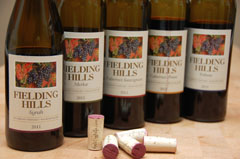 Fielding Hills Winery, a small, family-owned winery in Wenatchee, is one of the top wineries in Washington State. Owner/winemaker Mike Wade and his wife Karen are longtime apple and cherry growers who have turned a middle portion of their orchard near Mattawa into a vineyard. Their RiverBend Vineyard, planted in 1998, is in the Wahluke Slope AVA and is their sole source of grapes. We have tasted their wines from their inaugural vintage in 2000 through their current 2011 vintage and continue to be impressed. They are so consistent; it is not a question of whether their wines will be good but where they will fall on the quality spectrum between “very good” and “Wow!”
Strictly red wine producers, Fielding Hills makes a Cabernet Sauvignon, Syrah, Merlot, Cabernet Franc, and a red blend called Tribute. Recently, we had the opportunity to taste all five of their new releases from the 2011 vintage in a blind samples tasting. Our favorite was the 2011 Syrah, which is outstanding. The 2011 Merlot and 2011 Cabernet Sauvignon were also quite impressive. Those three wines also deliver serious bang for your buck.
If you are ever in the Wenatchee area, Fielding Hills is a stop you do not want to miss. I encourage you to give Mike and Karen a call to make an appointment to visit the winery. This fall, Fielding Hills will open a new tasting room in Lake Chelan. Regardless of whether you are able to visit or not, I encourage you to get your hands on a bottle or two of Fielding Hills wine and enjoy.
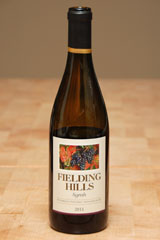 2011 Fielding Hills Syrah (RiverBend Vineyard, Wahluke Slope, Washington): 94% Syrah, 2% Cabernet Sauvignon, 2% Merlot, and 2% Cabernet Franc. Dark, dense purplish red in color. Gorgeous nose with blackcurrant, black cherry, and savory aromas. Fruit-forward with black fruit and savory notes on the palate. Medium to full-bodied with lively acidity and medium to high tannins. Well-balanced with good complexity, and a very long, smooth finish.
Quality: 4.5 stars (out of 5)
QPR: 5 bangs for your buck (out of 5)
Where to buy: Received as sample, suggested retail $38
2011 Fielding Hills Merlot (RiverBend Vineyard, Wahluke Slope, Washington): 81% Merlot, 7% Cabernet Sauvignon, 7% Syrah, and 5% Cabernet Franc. Dark purplish red. Beautiful nose with black plum, black cherry, and spice box aromas. More black plum and spice box come through on the palate. Medium to full-bodied with lively acidity and medium to high, smooth tannins. Well-balanced with good complexity and a long, lingering finish.
Quality: 4.5 stars (out of 5)
QPR: 5 bangs for your buck (out of 5)
Where to buy: Received as sample, suggested retail $36
2011 Fielding Hills Cabernet Sauvignon (RiverBend Vineyard, Wahluke Slope, Washington): 95% Cabernet Sauvignon, 2% Syrah, 2% Merlot, and 1% Cabernet Franc. Nice nose with blackcurrant, black cherry, leather, and earth aromas. More black fruit, leather, and earth come through on the palate. Medium to full-bodied with lively acidity and medium to high tannins. Well-balanced with a very long finish.
Quality: 4 stars (out of 5)
QPR: 5 bangs for your buck (out of 5)
Where to buy: Received as sample, suggested retail $42
2011 Fielding Hills Cabernet Franc (RiverBend Vineyard, Wahluke Slope, Washington): 85% Cabernet Franc, 10% Syrah, and 5% Cabernet Sauvignon. Deep, dark red in color. Aromatic with black fruit, earth, and a touch of spice on the nose. Black cherry and leather come through on the palate. Medium to full-bodied with lively acidity and medium tannins. Well-balanced with a long finish.
Quality: 4 stars (out of 5)
QPR: 3 bangs for your buck (out of 5)
Where to buy: Received as sample, suggested retail $30
2011 Fielding Hills Tribute Red Wine (RiverBend Vineyard, Wahluke Slope, Washington): 55% Cabernet Franc, 20% Syrah, 15% Merlot, and 10% Cabernet Sauvignon. Deep red. Aromatic with black fruit and faint floral notes on the nose and palate. Medium-bodied with lively acidity, medium tannins, and a long finish.
Quality: 3 stars (out of 5)
QPR: 1 bang for your buck (out of 5)
Where to buy: Received as sample, suggested retail $38
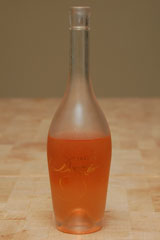 Would you like a quick suggestion for a good wine to drink tonight (or this weekend) that won’t break your budget and is widely available? If so, you might want to try the 2013 Julia’s Dazzle Rosé from the Horse Heaven Hills of Washington State.
Our selection criteria include:
Julia’s Dazzle Rosé is produced and bottled under the Dolan & Weiss Cellars label. However, the masterminds behind it are Long Shadows’ founder Allen Shoup and winemaker Gilles Nicault. For years, Gilles made a dry rosé for Allen to enjoy and share with his own family and friends. After numerous requests from guests at Allen’s dinner parties, in 2011, he asked Gilles to set aside a special block of grapes at The Benches Vineyard to allow for increased production. Formerly known as Juliette’s Dazzle, this wine continues to deliver in its third vintage and is a great choice to enjoy on these warm summer days.
“Sourced from a special block of Pinot Grigio from The Benches Vineyard at Wallula, the grapes were whole cluster pressed and the clarified juice fermented at cool temperatures to retain its intensely vibrant aromatics and flavors.”
2013 Julia’s Dazzle Rosé (The Benches Vineyard, Horse Heaven Hills, Washington): 98% Pinot Grigio and 2% Sangiovese. Pale pink salmon in color. Very aromatic with watermelon, raspberry, and floral notes on both the nose and palate. Dry and light to medium-bodied with crisp acidity and a long, refreshing finish.
Quality: 3.5 stars (out of 5)
QPR: 3 bangs for your buck (out of 5)
Where to buy: Received as sample, suggested retail $16; Available elsewhere, $15 to $18
 Wine Peeps® is a registered trademark. All content of Wine Peeps LLC is copyrighted. © Some rights reserved 2026. This site is licensed under the terms of the displayed Creative commons license. Content may be used only under these terms: non-commercial use only; no modifications allowed; attribution required in the form of a statement; "Originally published on Wine Peeps" with a link back to the original posting. Theme derived from Bytetips, powered by WordPress.


