Wine Peeps is an independent wine blog dedicated to helping you get the most bang for your buck in wine. We do this through blind tastings of wine from around the world and calculations of Quality-to-Price Ratios (QPRs). We have a special interest in Washington State wines.
In the course of our wine journey, we also enjoy numerous wine-related activities such as traveling throughout wine country, visiting vineyards, reading wine books, and trying wine gadgets, all of which we share with our readers.
Official definition from Jancis Robinson’s The Oxford Companion to Wine:
Brix is the scale of measuring total dissolved compounds in grape juice, and therefore its approximate concentration of grape sugars. It is used in the United States and, like other scales used elsewhere, it can be measured with either a refractometer or hydrometer. Degrees Brix indicate the percentage of solutes (of which about 90 percent are sugars in ripe grapes) by weight in the liquid, at a temperature specified for the instrument used. One degree Brix corresponds approximately to 18 g/l sugar.
Layman’s terms from Kori:
In the United States, sugar in grapes is measured in degrees Brix. To estimate the final alcohol level in a wine, the general rule is to divide the Brix measurement by two. For example, grapes harvested at 26 degrees Brix will probably yield a wine that is about 13 percent alcohol.
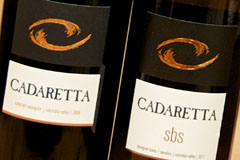
Cadaretta, located in Walla Walla, Washington, is owned and operated by the Middleton family. The Middleton family has a long history in Washington State. They started the Anderson & Middleton forestry products company in Hoquiam, Washington, in 1898. In fact, Cadaretta is named for a ship that once carried their goods to market. The family diversified into wine grapes in California over 20 years ago. They brought their grape and wine experience back to Washington with the founding of Cadaretta in 2005.
Executive winemaker Larry Cherubino of Australia directs winemaking, vineyard selection, and cultural practices for Cadaretta. Brian Rudin is Cadaretta’s resident winemaker who focuses his efforts on the day-to-day winery operations. All of the Cadaretta wines are packed in six-pack boxes, but they produce the equivalent of 4,500 cases per year.
Recently, we had the opportunity to taste their 2008 Cabernet Sauvignon and 2011 Sauvignon Blanc/Semillon blend in a blind samples tasting. Both wines are very good, but we were especially impressed with the Cabernet Sauvignon. It is excellent and delivers serious bang for your buck.
2008 Cadaretta Cabernet Sauvignon (Columbia Valley, Washington): 86% Cabernet Sauvignon, 6% Petit Verdot, 3% Cabernet Franc, and 2% Merlot. Deep, dark red. Nice nose with licorice, black fruit, and smoked meat aromas. More black fruit, licorice, and smoked meat, as well as black pepper and a touch of chocolate come through on the palate. Full-bodied with lively acidity and medium to high, dry tannins. Well-balanced with a long, lingering finish.
Quality: 4 stars (out of 5)
QPR: 5 bangs for your buck (out of 5)
Where to buy: Received as sample, suggested retail $40; Available elsewhere, $30 to $40
2011 Cadaretta SBS Sauvignon Blanc/Semillon (Columbia Valley, Washington): 76% Sauvignon Blanc and 24% Semillon. Very pale straw yellow in color. Aromatic with minerality, lemon, and a touch of peach on both the nose and palate. Dry and light to medium-bodied with lively acidity and a long finish.
Quality: 3.5 stars (out of 5)
QPR: 2 bangs for your buck (out of 5)
Where to buy: Received as sample, suggested retail $23; Available elsewhere, $25
“Named after Allen’s granddaughter, Juliette’s Dazzle is light pink in color and offers aromas of strawberry and orange peel. It is a dry style but with sweet fruit flavors and clean sharp acidity creating a light and refreshing finish.â€
On this day in 1776, the Continental Congress, setting the 13 colonies on the road to freedom as a sovereign nation, approved the Declaration of Independence. As always, this most American of holidays will be marked by parades, fireworks, and backyard barbecues across the country.
We wish you all a very happy 4th of July and hope you enjoy your day with family, friends, good food, and wine. Cheers!
Official definition from Jancis Robinson’s The Oxford Companion to Wine:
Sulfite and bisulfate, the negatively charged ions liberated when sulfurous acid dissociates…. The analytical method usually used for the measurement of sulfite determines all of the various forms which are active in terms of smell, effect on yeast and bacteria, and potential danger to asthmatics. The term sulfites, or sulphites, is therefore used on wine labels (as in ‘Contains sulfites/sulphites’) as an inclusive term for free sulfur dioxide, sulfurous acid (hydrated sulfur dioxide), bisulfate ion, sulfite ion, and some forms of complexed sulfite.
Layman’s terms from Kori:
While Ms. Robinson gives a good technical definition of sulfites above, I would like to use this space to debunk the commonly held myth that sulfites in wine, especially red wine, cause headaches. In fact, all wine has naturally occurring sulfites. So don’t be confused by the label that says, “No sulfites added.†That does not mean “no†sulfites. Red wines actually have the least amount of sulfites added because they already have plenty of natural preservatives from the grape skins used to make them. If you truly believe that it is sulfites causing your headaches, beware of salsa, dried fruits, packaged cookies, and even orange juice. They all have much higher levels of sulfites than red wine. While sulfites often get the blame for headaches after drinking red wine, doctors say that a more likely culprit is histamines.
We’ve had our eyes on Robert Ramsay Cellars for quite some time now and have declared it a “Winery to Watch†in the past. With the current releases, Robert Ramsay continues to impress.
If you live in the greater Seattle area or will be visiting this summer, an outing to the wineries in Woodinville is well worth your time. And while you are there, I highly encourage you to visit Robert Ramsay Cellars.
2009 Robert Ramsay McKinley Springs Syrah (McKinley Springs Vineyard, Horse Heaven Hills, Washington): 92% Syrah, 5% Viognier, and 3% Mourvedre. Dark, inky purple-black. Very aromatic with earth, blackberry, and black pepper on both the nose and palate. Full-bodied with lively acidity and high tannins. Well-balanced with good complexity and a very long finish.
Quality: 4.5 stars (out of 5)
QPR: 5 bangs for your buck (out of 5)
Where to buy: Received as sample, suggested retail $25; Available elsewhere, $25
2009 Robert Ramsay McKinley Springs Mourvedre (McKinley Springs Vineyard, Horse Heaven Hills, Washington): 100% Mourvedre. Dark red in color. Aromatic with game, earth, and black fruit on the nose. More game, earth, black fruit, and a touch of smoke come through on the palate. Medium to full-bodied with crisp acidity and medium to high tannins. Well-balanced and smooth with a long, lingering finish.
Quality: 4 stars (out of 5)
QPR: 3 bangs for your buck (out of 5)
Where to buy: Received as sample, suggested retail $35
2009 Robert Ramsay Mason’s Red (Columbia Valley, Washington): 87% Syrah, 4% Cabernet Sauvignon, 4% Mourvedre, and 5% Viognier. Dark purple. Aromatic with oak and floral notes on the nose. Black cherry, blackberry, and spice come through on the palate. Medium to full-bodied with crisp acidity and a long, smooth finish.
Quality: 3.5 stars (out of 5)
QPR: 4 bangs for your buck (out of 5)
Where to buy: Received as sample, suggested retail $18
2009 Robert Ramsay Boushey Syrah (Boushey Vineyards, Yakima Valley, Washington): 95% Syrah and 5% Viognier. Deep purplish red. Nice nose with black fruit and raisin aromas. More raisins as well as black cherry and spice come through on the palate. Medium to full-bodied with lively acidity, medium tannins, and a long finish.
Quality: 3.5 stars (out of 5)
QPR: 3 bangs for your buck (out of 5)
Where to buy: Received as sample, suggested retail $30
Comments Off on Robert Ramsay Cellars Continues to Impress
Would you like a quick suggestion for a good wine to drink tonight (or this weekend) that won’t break your budget and is widely available? Many of our readers have said this is something they would like, so here is this week’s selection, the 2009 William Church Bishop’s Blend from the Columbia Valley of Washington State.
Our selection criteria include:
A very good Quality rating of >=3.5 stars (out of 5)
“Always a crowd pleaser this house blend over delivers for the price every year. One of our most popular wines, it’s created to be drinkable now and go with a variety of different dishes. Marionberry and boysenberry flavors abound with complexity and richness followed by creamy vanilla and a finish that is smooth and well balanced.†–William Church Winery
2009 William Church Bishop’s Blend Red Wine (Columbia Valley, Washington): 47% Syrah, 22% Cabernet Sauvignon, 16% Merlot, 8% Malbec, and 7% Petit Verdot. Deep, dark purplish red. Aromatic with toffee and black fruit on the nose. Blackberry, black cherry, and spice come through on the palate. Medium-bodied with crisp acidity, medium tannins, and a long finish.
Quality: 3.5 stars (out of 5)
QPR: 4 bangs for your buck (out of 5)
Where to buy: Received as sample, suggested retail $20; Available elsewhere, $20
Comments Off on A Wine for Tonight: 2009 William Church Bishop’s Blend Red Wine
Santorini is an island in the southern Aegean Sea, about 120 miles southeast of Greece’s mainland. It is the largest island of a small, circular archipelago, which bears the same name and is the remnant of a volcanic caldera. Best known for its deep blue waters, breathtaking sunsets, and distinct red, black, and white sand beaches, Santorini has a rich tradition of winemaking that dates back to 3500 BC. However, it was the catastrophic volcanic eruption around 1600 BC that formed the island’s unique terroir.
While Santorini is most well known for its popular dry white wines made from Greece’s most noble white grape variety, Assyrtiko, the island also produces the original Vinsanto or “Vini di Santorini†for which the island became famous in ancient times.
Recently, we had the opportunity to taste a couple of Greek wines from Santorini in a blind samples tasting, the 2004 SantoWines Santorini Vinsanto Dessert Wine and the 2011 Boutari Santorini Dry White Wine. Both wines were very good, but we especially enjoyed the Vinsanto dessert wine.
SantoWines, founded in 1947, is the cooperative winery on the island of Santorini and continues to flourish with the support of its 2,500 members. With over 130 years of experience in the wine industry, the Boutari Company owns six wineries in Greece. Boutari’s Santorini winery opened in 1989.
Folks, these Greek wines made primarily from the Assyrtiko grape variety offer you a palate expanding opportunity. You probably won’t find these wines on the shelf at your local grocery store, but I encourage you to give them a try if you can. And for those of you who enjoy a challenge, you might be inspired to seek membership in the Wine Century Club (the club for adventurous wine drinkers who’ve tried 100 grape varieties or more).
2004 SantoWines Santorini Vinsanto Dessert Wine (PDO Santorini, Greece): 75% Assyrtiko and 25% Aidani. Naturally sweet wine from sun dried grapes. Medium-deep amber in color. Aromatic with caramel and nuts on the nose. More caramel as well as orange peel and a touch of pineapple come through on the palate. Sweet and medium-bodied with lively acidity and a very long finish. Well-balanced and very smooth.
Quality: 4 stars (out of 5)
QPR: 5 bangs for your buck (out of 5)
Where to buy: Received as sample, suggested retail ~$22 [500ml]
2011 Boutari Santorini Dry White Wine (PDO Santorini, Greece): 100% Assyrtiko. Pale straw yellow. Aromatic with floral notes, citrus fruits, and the fresh scent of an ocean breeze on the nose. Lime, grapefruit, and more floral notes come through on the palate. Dry and light to medium-bodied with tart acidity and a long finish. Crisp and refreshing. A pleasant summer sipper as well as a great food wine.
Quality: 3.5 stars (out of 5)
QPR: 2 bangs for your buck (out of 5)
Where to buy: Received as sample, suggested retail ~$20; Available elsewhere, $15 to $22
Official definition from Jancis Robinson’s The Oxford Companion to Wine:
Varietal is a descriptive term for a wine named after the dominant grape variety from which it is made. The word is increasingly misused in place of vine variety. A varietal wine is distinct from a wine named after its own geographical provenance…. Varietal wines are most closely associated with the New World, where they constitute the great majority of wines produced.
Layman’s terms from Kori:
Varietal is a term used to describe a wine named after the grape variety from which it is made. Often confused with last week’s word, variety, varietal describes the wine in the bottle while variety describes the grapes grown on the vine. For example, a bottle of Chardonnay is a varietal wine produced from the Chardonnay grape variety.
Metropolitan Market, founded in 1971, is an award-winning grocery store with six locations in the greater Seattle area. They sell more than 1,200 different wines and beers and have recently added spirits as well. Seattle Magazine has recognized Metropolitan Market as the Grocery Store with the Best Selection of Washington Wines three times.
Recently, I participated in Metropolitan Market’s “What’s in the Bag?” promotion. I was given $90 to fill one of their reusable wine bags with 6 wines of my choosing. Watch the video to see what I picked and why.
Even though I was given $90 to spend, the grand total for these 6 wines (including tax and the 10% discount for purchasing 6 or more bottles) was about $75. All six of these wines are very good and deliver serious bang for your buck.
My picks:
NV Domaine Ste. Michelle Blanc de Noirs (Columbia Valley, Washington): 100% Pinot Noir. Pale salmon in color. Small, fairly fast bead of bubbles. Very aromatic with raspberry, strawberry, cherry, lime, and yeast aromas and flavors. Medium-bodied with crisp acidity and a long finish. A nice, refreshing weeknight or Sunday brunch bubbly.
Quality: 3.5 stars (out of 5)
QPR: 5 bangs for your buck (out of 5)
Where to buy: Metropolitan Market (Seattle, Washington), $8.49; Available elsewhere, $8 to $15
2011 Nobilo Regional Collection Sauvignon Blanc (Marlborough, New Zealand): Pale, greenish straw yellow. Very aromatic with grapefruit, pear, and grassy aromas. Grapefruit, grass, and lime come through on the palate. Dry and light to medium-bodied with very tart acidity. Well-balanced with a long finish. Very crisp and refreshing.
Quality: 4 stars (out of 5)
QPR: 5 bangs for your buck (out of 5)
Where to buy: Metropolitan Market (Seattle, Washington), $10.99; Available elsewhere, $8 to $15
2011 Barnard Griffin Rose of Sangiovese (Columbia Valley, Washington): Medium bright pink in color. Nice nose with strawberry, raspberry, watermelon, and floral aromas. More red fruits as well as orange peel come through on the palate. Dry and medium-bodied with crisp acidity. Very refreshing with a long, lingering finish. An excellent summer sipper and also great with food.
Quality: 4 stars (out of 5)
QPR: 5 bangs for your buck (out of 5)
Where to buy: Metropolitan Market (Seattle, Washington), $10.99; Available elsewhere, $10 to $16
2009 Brian Carter Cellars Abracadabra Red Wine (Columbia Valley, Washington): 19% Sangiovese, 17% Merlot, 13% Syrah, 11% Grenache, 10% Mourvedre, 9% Tempranillo, 7% Malbec, 6% Cabernet Sauvignon, 3% Cabernet Franc, 3% Cinsault, and 2% Counoise. Deep, purplish red. Aromatic with bright red fruit, spice, and creosote on both the nose and palate. Medium-bodied with lively acidity, medium tannins, and a long finish.
Quality: 3.5 stars (out of 5)
QPR: 5 bangs for your buck (out of 5)
Where to buy: Metropolitan Market (Seattle, Washington), $15.99; Available elsewhere, $15
2010 Saviah Cellars The Jack Syrah (Columbia Valley, Washington): 80% Syrah, 10% Grenache, and 10% Mourvedre. Deep, dark purplish red. Nice nose with aromas of plum, raspberry, and cinnamon. Juicy red cherry, raspberry, plum, and spice come through on the palate. Medium to full-bodied with lively acidity, medium to high tannins, and a very long finish.
Quality: 3.5 stars (out of 5)
QPR: 5 bangs for your buck (out of 5)
Where to buy: Metropolitan Market (Seattle, Washington), $14.99; Available elsewhere, $13 to $16
NV Jonesy Dessert Wine (Australia): Port-style wine. Dark amber brown. Very aromatic with toffee, caramel, and nuts on the nose. More toffee and caramel as well as raisins and molasses come through on the palate. Medium sweet and medium to full-bodied with medium tannins. Well-balanced with a long, very smooth finish. Note: This wine is no longer produced under the Jonesy label; it can now be found under the Trevor Jones Boots Dessert Wine label.
Quality: 4 stars (out of 5)
QPR: 5 bangs for your buck (out of 5)
Where to buy: Metropolitan Market (Seattle, Washington), $12.99; Available elsewhere, $10 to $15
Full Disclosure: Metropolitan Market allowed me to keep and experience the wines that I selected, along with the wine bag, after I participated in their “What’s in the Bag?” promotion.

 Wine Peeps is an independent wine blog dedicated to helping you get the most bang for your buck in wine. We do this through blind tastings of wine from around the world and calculations of
 This week’s Wine Word of the Week is Brix.

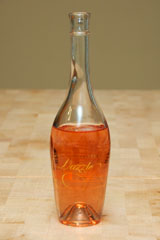 Would you like a quick suggestion for a good wine to drink tonight (or this weekend) that won’t break your budget and is widely available? Many of our readers have said this is something they would like, so here is this week’s selection, the 2011 Juliette’s Dazzle Rosé from the Horse Heaven Hills of Washington State.
 This week’s Wine Word of the Week is sulfites.
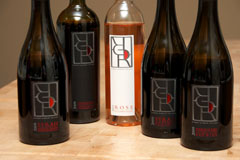 We’ve had our eyes on Robert Ramsay Cellars for quite some time now and have declared it a “Winery to Watch†in the past. With the current releases, Robert Ramsay continues to impress.
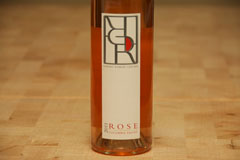 2011 Robert Ramsay Rosé (Columbia Valley, Washington): 62% Grenache, 19% Cinsault, 18% Syrah, and 1% Viognier. Pale pinkish salmon in color. Very aromatic with watermelon, raspberry, and cherry on both the nose and palate. Dry and medium-bodied with crisp acidity. Well-balanced with a very long, refreshing finish. A fabulous summer sipper and excellent with food.
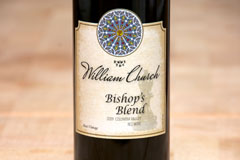 Would you like a quick suggestion for a good wine to drink tonight (or this weekend) that won’t break your budget and is widely available? Many of our readers have said this is something they would like, so here is this week’s selection, the 2009 William Church Bishop’s Blend from the Columbia Valley of Washington State.
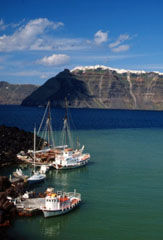 Santorini is an island in the southern Aegean Sea, about 120 miles southeast of Greece’s mainland. It is the largest island of a small, circular archipelago, which bears the same name and is the remnant of a volcanic caldera. Best known for its deep blue waters, breathtaking sunsets, and distinct red, black, and white sand beaches, Santorini has a rich tradition of winemaking that dates back to 3500 BC. However, it was the catastrophic volcanic eruption around 1600 BC that formed the island’s unique terroir.
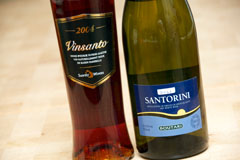 2004 SantoWines Santorini Vinsanto Dessert Wine (PDO Santorini, Greece): 75% Assyrtiko and 25% Aidani. Naturally sweet wine from sun dried grapes. Medium-deep amber in color. Aromatic with caramel and nuts on the nose. More caramel as well as orange peel and a touch of pineapple come through on the palate. Sweet and medium-bodied with lively acidity and a very long finish. Well-balanced and very smooth.
 This week’s Wine Word of the Week is varietal.


