
A Wine for Tonight: 2009 Brian Carter Cellars Abracadabra Red Wine


By Kori ~ April 12th, 2012
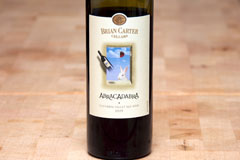
Would you like a quick suggestion for a good wine to drink tonight (or this weekend) that won’t break your budget and is widely available? Many of our readers have said this is something they would like, so here is this week’s selection, the 2009 Brian Carter Cellars Abracadabra Red Wine from the Columbia Valley of Washington State.

Our selection criteria include:

  • A very good Quality rating of >=3.5 stars (out of 5)
  • A price tag of <=$15
  • Must be widely available

Brian Carter has over thirty years of winemaking experience in California and Washington. He arrived in Washington State in 1980 to be winemaker for Paul Thomas Winery and has since founded Apex Winery and served as consulting winemaker for a number of other wineries. He officially opened his own namesake winery, Brian Carter Cellars, in Woodinville in 2006. Brian Carter focuses on European-style blends. He admittedly buys more fruit than he needs to craft his primary Brian Carter wines in order to give him the most flexibility during blending. The leftovers go into this value-priced Abracadabra blend.

“Abracadabra is a blend which uses the same great red varietals and aged in quality oak barrels used in Brian Carter Cellars wines. However the blend varies each year depending on the ‘Magic’ of the harvest. While using traditional grape varieties, Abracadabra is anything but traditional in its final blend. Instead it is a bit unpredictable, curious, mysterious and amazingly delicious. Dark in color, the wine’s aroma has witches hats full of cherries, cedar and tobacco with pinches of anise, bacon and spice. Big flavors show soft, well-integrated tannins and food friendly acidity.” –Brian Carter, owner/winemaker

2009 Brian Carter Cellars Abracadabra Red Wine (Columbia Valley, Washington): 19% Sangiovese, 17% Merlot, 13% Syrah, 11% Grenache, 10% Mourvedre, 9% Tempranillo, 7% Malbec, 6% Cabernet Sauvignon, 3% Cabernet Franc, 3% Cinsault, and 2% Counoise. Deep, purplish red. Aromatic with bright red fruit, spice, and creosote on both the nose and palate. Medium-bodied with lively acidity, medium tannins, and a long finish.
Quality: 3.5 stars (out of 5)
QPR: 5 bangs for your buck (out of 5)
Where to buy: Received as sample, suggested retail $15; Available elsewhere, $15


Filed under: A Wine for Tonight, American Wine, Five-Bangs For Your Buck Wines, Red Wine, Washington State Wine, Wines Under $15, Wines Under $20, Wines Under $25
 

QPR: How is it calculated and what does it really mean?


By John ~ April 11th, 2012

Getting right to the point, a high QPR Rating here on Wine Peeps means that the wine has a great price compared to wines of similar quality [i.e. same Quality Rating] within the same varietal/type. But there’s much more to the story.

When we started publishing QPRs for all the wines we reviewed, there weren’t many wine writers using the term QPR. Now it seems that everyone is using the term as a buzzword for a wine they “feel” is a good deal. Commentary I read about QPR, or quality-to-price ratio, leads me to believe that it may be one of the most misunderstood terms in wine today.

Our QPR calculations often generate comments like, “That’s a $110 wine; how can it be a QPR 5? [our highest QPR rating…and, yes, it can]”; or “At $7, this has to be a great QPR wine [no, it doesn’t].” Even other wine writers sometimes, mistakenly in our opinion, comingle Quality Ratings with QPR, writing things like, “I bumped this wine up to a 4 because it has such a good QPR.”

Once we have assigned a Quality Rating to a wine and know the price of that wine, the QPR is determined by a mathematical calculation and not just a “feeling” about what a good deal it might be.

At Wine Peeps, we assign Quality Ratings on a five-star system, with five being the best. Mathematically, the QPR is found by dividing the price of the wine by the average price of its peers (all wines of the same varietal/type with the same Quality Rating in our database). Then we rate the wine’s QPR on a five-bangs scale, five being a wine that gives you the most bang for your buck. For a more complete explanation of our ratings system, visit our Wine Ratings page.

For example, if a $110 Cabernet Sauvignon has received a Quality Rating of 4.5 stars, it will have a QPR of 5 bangs for your buck because its price is less than ½ of the average of its peers [i.e. All Cabs in our database with a Quality Rating of 4.5]. On the other hand, a $110 Syrah that has received a Quality Rating of 4.5 would only have a QPR of 2 because the average price of a Syrah is much less than that of a Cab at the same Quality Rating level.

If a wine does not merit at least three stars in our Quality Rating, we will not recommend it. Therefore, one and two star wines will have a QPR = NR (not recommended). We cannot recommend that you purchase a wine, no matter how low the price, if it is not of at least good quality. That is why a $7 bottle of wine does not automatically merit a high QPR, although we have found some good quality wines with high QPRs in that price range.

So to reiterate what I said up front, a high QPR means that the wine has a great price compared to wines of similar quality [same Quality Rating] within the same varietal/type.

Taking our QPR rating of a wine and using it in your search for good deals on wines, we would suggest that the best bargains are wines of excellent quality (Quality: 4 stars or higher) that deliver the most bang for your buck (QPR: 5 bangs for your buck).

Happy wine shopping!


Filed under: General Wine Information, Miscellaneous
 

Wine Word of the Week: Crushing


By Kori ~ April 10th, 2012

This week’s Wine Word of the Week is crushing.

Official definition from Jancis Robinson’s The Oxford Companion to Wine:
Crushing is the wine-making operation of breaking open the grape berry so that the juice is more readily available to the yeast for fermentation. Modern winery equipment that permits sufficiently thorough crushing has effectively speeded up the onset and completion of fermentation. The additional advantages of this are that the rapid accumulation of alcohol discourages any activity on the part of wild yeast and bacteria. …. Crushing was traditionally done by foot, by treading grapes thinly spread on a crushing floor slanted towards a drain and bounded by low walls to prevent the loss of juice. Foot treading is a relatively inefficient method of crushing, however….

Layman’s terms from Kori:
Crushing is the first step in the winemaking process once the grapes picked during harvest have arrived at the winery. Crushing is the step in which the grapes are broken open to make the juice available to the yeast to start fermentation. In the past, crushing was done by trampling the grapes barefoot (remember the classic “I Love Lucy” grape stomping episode). Today, most wineries use a mechanical crusher.


Filed under: Wine Word of the Week
 

Spring on Over for Passport to Woodinville Wine Country


By Kori ~ April 9th, 2012

Woodinville has definitely become a must-visit destination in Washington wine country. Home of the state’s oldest, largest, and most well-known wineries, Chateau Ste. Michelle and Columbia Winery, the Woodinville area is also home to over 90 wineries and tasting rooms, with new ones opening all the time. Woodinville boasts the second largest concentration of Washington wineries after Walla Walla and is located just 17 miles northeast of Seattle.

For those of you who live in the Seattle area, be sure to mark your calendar for Woodinville Wine Country’s annual spring event, Passport to Woodinville, coming up the weekend of April 21st and 22nd. Named one of “America’s 50 Most Amazing Wine Experiences” by Food & Wine magazine, Passport to Woodinville offers Washington wine lovers the opportunity to taste through an exciting array of wines at more than 30 participating Woodinville wineries.

Tickets are $75 for a two-day pass, and $65 for a Sunday-only pass. Advance purchase is required, and tickets are only available online at Brown Paper Tickets. Ticket holders receive a glass and passport, allowing one-time entry to participating wineries. No passport is required for designated drivers.

New for this year’s event, Shuttle Express is offering safe and convenient transportation for guests to participating wineries. The Passport Shuttle will run 11am-4pm both days. Guests can park in a master parking lot, hop on the shuttle, and then hop off and back on as often as they would like. The shuttle service will cover all participating wineries, and guests will not have to wait more than 15 minutes at any stop. Also, Shuttle Express will offer secured, staffed wine purchase storage for Passport Shuttle guests who purchase wine during the day.

Passport Shuttle tickets are only $10 per person for a 2-day pass (same price even if you only plan to use it one day) if purchased in advance. They are available for purchase along with your Passport event ticket on Brown Paper Tickets or separately through the Shuttle Express website. Shuttle tickets may also be purchased as a “walk up” during event weekend for $15.

Passport to Woodinville participating wineries include:
Airfield Estates Winery, Anton Ville Winery, Apex at Alder Ridge, Brian Carter Cellars, Bunnell Family Cellars, Chateau Ste. Michelle, Columbia Winery, Convergence Zone Cellars, Covington Cellars, Davenport Cellars, Des Voigne Cellars, Domaine Ste. Michelle, Elevation Cellars, Finn Hill Winery, Goose Ridge Estate Winery, J. Bookwalter Tasting Studio, Kestrel Vintners, Matthews Estate, Michael Florentino Cellars, Northwest Totem Cellars, Otis Kenyon Wine Tasting Room, Page Cellars, Patit Creek Cellars, Patterson Cellars, Piccola Cellars, Pondera Winery, Silver Lake Winery, Tefft Cellars, Tempest Sol Winery, II Vintners, William Church Winery, Woodinville Wine Cellars, XSV Winery.

I hope to see you at Passport later this month. It is a great opportunity to enjoy good wine, food, and entertainment as well as stock up on your favorite wines for spring and summer.

Cheers!

Full disclosure: I am the Wine Consultant for Shuttle Express.


Filed under: American Wine, Washington State Wine, Wine Activities/Events
 

Happy Easter from your Wine Peeps


By Kori ~ April 8th, 2012


Filed under: Holiday
 

A Wine for Tonight: 2011 The Crusher Rosé of Pinot Noir


By Kori ~ April 5th, 2012

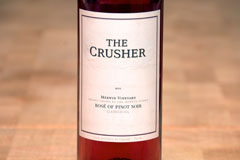
Would you like a quick suggestion for a good wine to drink tonight (or this weekend) that won’t break your budget and is widely available? Many of our readers have said this is something they would like, so here is this week’s selection, the 2011 The Crusher Rosé of Pinot Noir from the Clarksburg region of California.

Our selection criteria include:

  • A very good Quality rating of >=3.5 stars (out of 5)
  • A price tag of <=$15
  • Must be widely available

The Crusher is produced by Don Sebastiani & Sons. The Sebastiani name has been synonymous with quality winemaking in California for over 115 years. Sourced from Merwin Vineyard in the Clarksburg AVA, The Crusher is a tribute to the fundamental relationship between the grower and the winemaker. Winemaker Greg Kitchens joined Don Sebastiani & Sons in 2001.

“100% sourced from the Merwin Vineyard in the heart of the up and coming Clarksburg appellation, our 2011 Rosé of Pinot Noir is rose petal pink in the glass, displaying a fragrant bouquet of wild strawberry, apricot and rose hips notes. A nicely balanced mélange of tangerine, strawberry and subtle Key Lime flavors follow, leading to a crisp palate cleansing finish. Vibrant, racy acidity and a light to medium body make this a wonderfully versatile food wine as well as a great summertime sipper.” –Greg Kitchens, winemaker

2011 The Crusher Rosé of Pinot Noir (Merwin Vineyard, Clarksburg, California): Pale pink. Aromatic with watermelon, raspberry, and strawberry on both the nose and palate. Dry and light to medium-bodied with lively acidity and a long, refreshing finish. A nice wine to enjoy on the porch as the weather gets warmer.
Quality: 3.5 stars (out of 5)
QPR: 4 bangs for your buck (out of 5)
Where to buy: Received as sample, suggested retail $10.99; Available elsewhere, $9 to $14


Filed under: A Wine for Tonight, American Wine, California Wine, Pinot Noir, Rose Wine, Wines Under $15, Wines Under $20, Wines Under $25
 

Taste Washington 2012: Highlights from Seattle’s Wine & Food Weekend


By Kori ~ April 4th, 2012

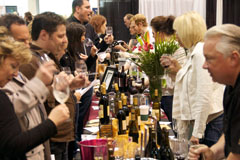
Taste Washington, held in Seattle annually, is the nation’s largest single-region wine and food event. This past weekend brought Washington wine lovers from around the country to Seattle to drink, eat, and be merry. This year, the event was expanded to two days, with Seminars offered each morning followed by the Grand Tasting each afternoon. Hosted by Seattle’s Convention and Visitors Bureau in partnership with the Washington State Wine Commission, Taste Washington featured the wines of over 200 Washington wineries and small bites from many of Seattle’s top restaurants.

Setting the tone for the week, the Washington Wine Restaurant Awards were held at the Washington Athletic Club on the Monday before Taste Washington weekend.

Washington Wine Restaurant Awards

The purpose of the Washington Wine Restaurant Awards is to honor restaurants, sommeliers, and individuals that help promote Washington wines in restaurants. Judges evaluate restaurants on a variety of criteria, including wine list, service and staffing, promotions and overall wine philosophy. The Walter Clore Honorarium, given to an individual who has demonstrated dedication to the advancement of the Washington wine industry, was awarded to Budd Gould from Anthony’s Restaurants. Nelson Daquip, Wine Director at Canlis Restaurant in Seattle, was honored as Sommelier of the Year. The Washington Wine Restaurant of the Year is the most prestigious award, given to the restaurant that has promoted Washington wines above and beyond all others. This year’s winner was The Metropolitan Grill in Seattle.

In addition to the awards presentation, over 40 Washington wineries were on hand pouring their wines. A few wines that got our attention during that tasting were the 2009 EFESTE Big Papa, the 2009 EFESTE Ceidleigh Syrah, the 2009 Robert Ramsay Cellars Boushey Vineyard Syrah, and the not-yet-released 2010 Rotie Cellars Dre Mourvedre.

Seminars

The education portion of Taste Washington featured six seminars, three each day, on a variety of topics. The seminars give attendees the opportunity to taste, discuss, meet, and learn from some of the biggest names in the Washington wine industry as well as a few notable guests from outside of Washington State. I attended the Vineyard Exploration seminar featuring Red Willow Vineyard.

Moderated by Jon Bonne of the San Francisco Chronicle, the panelists included owner/grower Mike Sauer of Red Willow Vineyard, Patrick Comiskey of Wine & Spirits Magazine, and Bob Betz, MW, of Betz Family Winery. Each panelist spoke about their thoughts regarding Red Willow Vineyard which was the birthplace of Syrah in Washington State and has a long history of grape growing innovation, and then Jon Bonne led us through a tasting of wines from Betz Family Winery, Columbia Winery, EFESTE, Gramercy Cellars, Mark Ryan Winery, and Owen Roe.

All of the wines were very good, but my favorite was the 2009 Betz Family Winery La Côte Patriarche Syrah. The fruit for this wine comes from the 1986 Syrah block, the oldest Syrah planting in Washington State. The name of this wine, which translates as “the founder’s slope”, is a nod to Red Willow owner/grower, Mike Sauer, and former Columbia Winery winemaker, David Lake, who planted those original Syrah vines.

“Red Willow Syrah has the same concentration as Red Mountain without the astringency.” –Bob Betz, MW

For more information about the vineyard, check out the article I wrote about Red Willow for Washington Tasting Room Magazine.

Grand Tasting

The Grand Tasting is the “main event” each day. This year, Taste Washington featured over 200 wineries pouring their wines and over 50 restaurants serving small bites. With more than 740 wineries now open in the state of Washington, this event offers attendees the opportunity to try a large number of them in one place at one time. Considering the time and gas money you save not having to crisscross the state visiting tasting rooms and making appointments, the price of admission to Taste Washington is money well spent. Now, don’t get me wrong, once you attend an event like this and discover some favorite new wines and wineries, you will definitely want to make plans to travel to the wineries to visit and taste again. There is nothing like spending a long weekend in Washington wine country.

One of the best aspects of Taste Washington is that often you will find either the winemaker and/or winery owner pouring that winery’s wines. In addition to visiting with a number of people whose wines we have enjoyed in the past, we always find it a great opportunity to try some wines from wineries whose wines we have not previously tasted.

My favorite wines from the Grand Tasting were the 2008 FIGGINS Estate Red Wine, the 2009 Nefarious Cellars Cabernet Sauvignon, and the 2009 Sparkman Cellars Stella Mae Red Wine.

Taste Washington was the perfect way to cap off Washington Wine Month. But here’s to enjoying excellent Washington wine all year long. Cheers!


Filed under: American Wine, Washington State Wine, Wine Activities/Events
 

Wine Word of the Week: Harvest


By Kori ~ April 3rd, 2012

This week’s Wine Word of the Week is harvest.

Official definition from Jancis Robinson’s The Oxford Companion to Wine:
Harvest is both the process of picking ripe grapes from the vine and transferring them to the winery (or field pressing station), and its occasionally festive, if frenetic, duration. This transition period in the wine-making cycle from vineyard to cellar is also known as vintage (crush in much of the New World)…. Harvest typically takes place in autumn: September and October in the northern hemisphere and March and April in the southern hemisphere.

Layman’s terms from Kori:
Harvest is a special time of year in the wine industry. Harvest is when the ripe grapes are picked from the vineyard and taken to the winery for crushing.


Filed under: Wine Word of the Week
 

Two Mountain Winery: Making Good Wine In A Beautiful Setting


By Kori ~ April 2nd, 2012

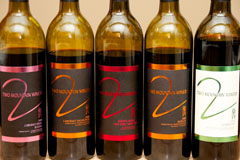
Brothers Matthew and Patrick Rawn established Two Mountain Winery in 2002. Located in the Yakima Valley of Washington State, Two Mountain Winery is named for the two mountains, Mt. Rainier and Mt. Adams, which form the beautiful backdrop of their estate vineyard. They planted Copeland Vineyard in 2000 on land that their family has farmed since 1951. It provides 90 percent of the fruit they use to produce their wines. Matthew Rawn has served as winemaker since the winery’s inception. Two Mountain produces about 3,500 cases per year.

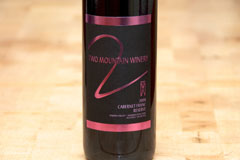
Recently, we had the opportunity to taste a number of Two Mountain wines in a blind samples tasting. While we thought all five of these red wines were good and would recommend all of them, we especially enjoyed the 2008 Cabernet Franc Reserve. It is excellent.

This samples tasting was my first introduction to the wines of Two Mountain Winery. Since the tasting, though, I have noticed their wines on the wine lists at a couple of local Seattle restaurants.

2008 Two Mountain Cabernet Franc Reserve (Yakima Valley, Washington): Dark red in color. Nice nose with red fruit and vegetal aromas. Red fruit, bell pepper, and spice come through on the palate. Medium to full-bodied with good acidity and medium, drying tannins. Well-balanced with a long, smooth finish.
Quality: 4 stars (out of 5)
QPR: 3 bangs for your buck (out of 5)
Where to buy: Received as sample, suggested retail $30; Available elsewhere, $33

NV Two Mountain Hidden Horse Red Table Wine VIII (Washington State): Deep, dark purplish red. Nice nose with floral and vegetal aromas. More vegetal notes and red fruit come through on the palate. Medium to full-bodied with lively acidity, medium tannins, and a medium to long finish.
Quality: 3 stars (out of 5)
QPR: 4 bangs for your buck (out of 5)
Where to buy: Received as sample, suggested retail $15; Available elsewhere, $13 to $15

2008 Two Mountain Cabernet Sauvignon (Yakima Valley, Washington): Dark purple. Aromatic with licorice and black fruit on the nose. Black cherry dominates the palate. Medium to full-bodied with lively acidity, medium to high tannins, and a medium to long finish.
Quality: 3 stars (out of 5)
QPR: 4 bangs for your buck (out of 5)
Where to buy: Received as sample, suggested retail $25

2008 Two Mountain Merlot (Yakima Valley, Washington): Dark red. Aromatic and fruit-forward with red fruit, plum, spice, and a touch of leather on the nose and palate. Medium to full-bodied with lively acidity, medium to high tannins, and a medium to long finish.
Quality: 3 stars (out of 5)
QPR: 3 bangs for your buck (out of 5)
Where to buy: Received as sample, suggested retail $20

2010 Two Mountain Lemberger (Rattlesnake Hills, Washington): Medium-deep ruby red in color. Aromatic with strawberry and raspberry notes on the nose. More red fruits as well as earth come through on the palate. Medium-bodied with lively acidity, medium tannins, and a medium, slightly bitter, finish.
Quality: 3 stars (out of 5)
QPR: 1 bang for your buck (out of 5)
Where to buy: Received as sample, suggested retail $16; Available elsewhere, $15


Filed under: American Wine, Cabernet Franc, Cabernet Sauvignon, Lesser Known Varietals, Merlot, Red Wine, Washington State Wine, Wines Over $25, Wines Under $15, Wines Under $20, Wines Under $25

 

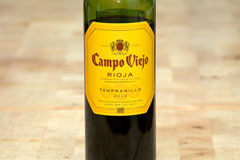
A Wine for Tonight: 2010 Campo Viejo Rioja Tempranillo


By Kori ~ March 29th, 2012

Would you like a quick suggestion for a good wine to drink tonight (or this weekend) that won’t break your budget and is widely available? Many of our readers have said this is something they would like, so here is this week’s selection, the 2010 Campo Viejo Rioja Tempranillo from the Rioja region in Spain.

Our selection criteria include:

  • A very good Quality rating of >=3.5 stars (out of 5)
  • A price tag of <=$15
  • Must be widely available

Campo Viejo was founded in 1959 by two winemakers from La Rioja, Beristain and Ortigüela. After 50 years, Campo Viejo is still going strong, producing accessible and approachable wines in Rioja. In 2001, Campo Viejo built a new state-of-the-art winery.

“We designed the winery ageing room in dark colors with indirect light, prioritizing a dark, restful atmosphere. I wanted to imprint this character on Campo Viejo Crianza and elaborate a wine which can be defined in two words: velvety and elegant.” –Elena Adell, Campo Viejo Winemaker

2010 Campo Viejo Rioja Tempranillo (Rioja, Spain): Deep red in color. Aromatic with molasses, cedar, and herbaceous notes on the nose. More molasses and cedar as well as blackberry and cherry cola come through on the palate. Medium to full-bodied with lively acidity, medium to high tannins, and a long finish.
Quality: 3.5 stars (out of 5)
QPR: 5 bangs for your buck (out of 5)
Where to buy: Received as sample, suggested retail $10; Available elsewhere, $9 to $12


Filed under: A Wine for Tonight, Five-Bangs For Your Buck Wines, Red Wine, Spanish Wine, Tempranillo, Wines Under $10, Wines Under $15, Wines Under $20, Wines Under $25