Today’s post is part of a series featuring the Women of Washington Wine. In an industry once dominated by men, more and more women are joining the ranks as winery owners, vineyard owners, and winemakers. Being a woman myself, I am fascinated by these women and what they have done and continue to do. Through this series, I hope to introduce you to some of the brightest female faces in the Washington wine industry.
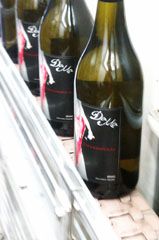
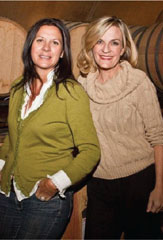 Dawn Kammer and Mary Tuuri Derby are the women behind DaMa Wines, founded in 2007, in Walla Walla, Washington. DaMa is a joining of the winemakers’ first names and also the Spanish word for lady. Dawn and Mary have very diverse backgrounds but have come together to form the DaMa Nation. Every bottle of DaMa wine that is purchased directly supports causes that make a difference for women, children, and communities.
Recently, Dawn and Mary were kind enough to take time out of their busy schedules to answer some questions for me and our Wine Peeps readers.
Highlights from Q&A with Dawn Kammer and Mary Tuuri Derby:
How did you first get involved in the wine business?
Dawn: My husband and I started making wine with neighbors (who now also have their own successful winery); we started right off with French barrels, a basket press, and even a steel tank and Lewis Vineyard fruit. The results were good, so I decided to enroll in the Viticulture and Enology program at College Cellars. While going to school I had the opportunity to be a wine buyer of Washington wines for a local hotel and restaurant. Tasting through them all gave me an idea of the varieties and styles of wine that I would like to produce.
Mary: As an aspiring opera singer hailing from Minnesota, I moved to San Francisco in the late 1980’s to continue studying and performing. And, like many artists, I supported my lifestyle through working in the restaurant industry. It was during these years of working in the best restaurants and with the most amazing people that I was exposed to the wine world. My first mentors were Sylvie Darr and Judy Rodgers of Zuni Café. There I started learning about the world’s wine regions and that started my love affair with food and wine while I continued singing. It was a perfect world. It wasn’t until I left San Francisco in 1997 that wine became more of a business for me. We moved to Chicago in 1997, and there I worked as the assistant sommelier under the tutelage of Brian Duncan at the restaurant Spruce. Then in 2000, I was Walla Walla-bound for the beginning of Spring Valley Vineyard.
What were the steps that led to where you are now?
Dawn: I think my retail background helped tremendously; buying fragrances trained my nose, which has been a huge asset. My husband has really encouraged me to take risks and having a great business partner to share the load and worries has really kept me forward thinking.
Mary: Steps and people along the wine journey!
1970 – A young Minnesota girl got her first whiff of fermentation! My father and Uncle Tony made home wine with California Concord grapes. Old press in the basement, barrel in the cold food cellar, God awful wine! But I loved the smell of both the barrel and the fermentation!
1980 – Moved to Minneapolis and had my first wines, Lambrusco and Blue Nun, a step up from my father’s hooch!
1988 – Happy trails to San Francisco with two suitcases and my red bicycle to continue singing. I joined the restaurant revolution and never looked back. Zuni became my family and my school of life, love, food, and wine. I owe my life to that time, place, and people; I am who I am today because of those days. Oh, the stories!
1997 – Chicago bound. I made a road trip move with my husband, Great Dane, and two cats. I worked at Spruce with the great wine guru, mentor, and friend Brian Duncan. He opened doors to a very male and old school wine world, so different than San Francisco!! But without him, I would not have gotten anywhere. At the time, there were just a handful of women in the industry; it’s crazy thinking about that now. But the greatest gift Brian ever gave me was the wisdom to, “Stay true to yourself, and think outside the box.†He was never one to follow the crowd or the old rules. Brian showed me that being passionate about the wine does not mean you have to be pompous!
2000 – Moved to Walla Walla…first crush, first baby, first big scores, first major life heartache changing moment. My late husband, Devin Derby, and I created a brand that today is one of Washington’s most prestigious brands, Spring Valley Vineyard. Back then we were making decisions with our heart and soul. I remember the exact moments when we came up with the undeniable labels and blends of Uriah, Nina Lee, Muleskinner, and Derby. We believed that our life experiences and family history were truly in each bottling. I will never forget those four years that we shared together creating those wines. But life is not always kind and, in 2004, we lost Devin to a sudden and tragic car accident. Life was no longer the fairytale, winery dream life.
2007 – I met up with Dawn Kammer, and DaMa Nation began!
 Has being a woman been an advantage or a disadvantage in your wine journey?
Dawn: Both! In school, there were only two women and thirty guys. Even though we (the women) were the top of our class, the men were getting all of the job offers, except for tasting room manager positions. My solution was to make my own opportunity. Marketing your brand is a huge part of this business, which means travel, and this part has been difficult as a mother with young kids. Thankfully, we have many friends in the business who have really helped us with space, equipment, sources, etc. While I don’t believe it is because we are women, I think as a woman it easier to accept the help or the help may be easier to offer.
Mary: I never think of being treated differently, and I was raised with brothers and a father who taught me that we all share in the workload whether you are a girl or boy. So I have never been afraid of physical work, which there is plenty of in this industry. Plus, I don’t know what it is like to be a man or a single woman in the business. All I know is what it is like being a single mom in the business, and let me tell you, it is tremendously hard! But it is not because of the industry, any single working mom who doesn’t have a nanny or immediate family to lean on knows what I am talking about, but I don’t think I need to get on that soapbox. There has never been a better time for women to be a part of this industry. We are behind the scenes, we are in the trenches, and we are making the wines, creating the blends and marketing the hell out of ourselves within this business. We are a major component of this industry, and guys watch out! Who do you think buys most of the wine anyway? Women do! And we have a lot of buying power. Look what Leslie Sbrocco is doing within the wine world! Wow!!!
What advice do you have for a woman wanting to get involved in the wine business today?
Dawn: Really do your homework! It is not glamorous, it takes a long time to make $$$$$$, and you better become very good at doing paperwork (sometimes the same paperwork three times). All that being said, it is wonderful to be able to do something you love.
Mary: Go out there and live your life. Learn from all those around you. Work in the restaurant industry, or work crush for a season, try bottling with a winery, travel, taste wines from all over the world…who cares what prices and what scores. Take part in tasting groups, read books about the history of wine, watch movies, and learn to cook. Dance….just because it feels good.
What are your thoughts about the Washington wine industry, in general?
Dawn: We need to get our story and, more importantly, our wines out in the market as aggressively as possible. The industry is unique in the fact that we really want success for not only ourselves but our neighbor wineries as well; I don’t feel the intense competition that I sense in California.
Mary: Oh, I love the Washington wine industry and especially Walla Walla. It’s been growing like gangbusters, and we are still just a small speck within the wine world. We have a lot of work ahead of us to make us known, but it is happening little by little. I am always still amazed when I travel that Washington, let alone Walla Walla, is on people’s wine radar. We should be thankful for wineries like Chateau Ste. Michelle and the other big boys that get Washington in their glasses and doubly thankful for the writers who get the word out for us other small guys.
In recent years the Washington wine industry has grown at a rapid rate. Do you expect that trend to continue?
Dawn: I think it will continue to grow but not as quickly. The boutique wineries will certainly slow unless the incubators or shared facilities expand, helping to cut the huge equipment costs.
Mary: Yes, it will continue to grow!
What is your vision for the future of DaMa Wines?
Dawn: Additional locations in unexpected, non-traditional neighborhoods. We like to be innovative, ahead of the curve. I would like to expand the DaMa Nation and Cowgirl labels. We would really love to spearhead a huge giving back woman’s charity that really excites and involves many people to do the same.
Mary: DaMaNate the World…one bottle at a time.
—
Many thanks to Dawn and Mary for sharing their stories and thoughts with us. I wish them all the best and look forward to following their work and DaMa Wines with great interest, and I hope that you will too.
(Photos from DaMa Wines)

 Wine Peeps is an independent wine blog dedicated to helping you get the most bang for your buck in wine. We do this through blind tastings of wine from around the world and calculations of
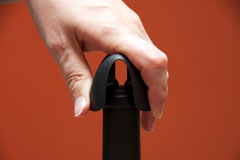 Over the years, we’ve tried just about every foil cutter on the market. Most of them either didn’t work well at all or had a short working life before one of the pins popped out.

 This week’s Wine Word of the Week is color.
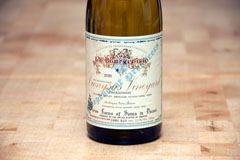 Would you like a quick suggestion for a good wine to drink tonight (or this weekend) that won’t break your budget and is widely available? Many of our readers have said this is something they would like, so here is this week’s selection, the 2010 House of Independent Producers Chardonnay from the Columbia Valley of Washington State.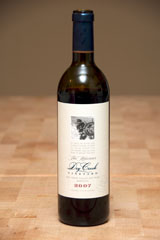
 This week’s Wine Word of the Week is acidity.
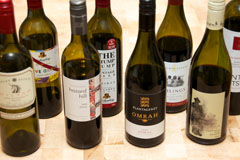 In 2005, we took the trip of a lifetime to Australia. We fell in love with the country, the people, and the wine. While Australia is quite versatile in the number and quality of wines it can successfully produce, it is best known for Shiraz. Many people mistakenly think Australia is a newcomer to the wine production business because their imports to the United States have only exploded since the 1980’s. However, when you visit Australia, you quickly realize that the wine industry there is actually older than in the United States when you see winery cornerstones dated from the 1840’s and 1850’s. In fact, Australia has some of the oldest continuously producing vineyards in the world, some over 100 years old. The reason for these ancient vines is that Australia has been free from
 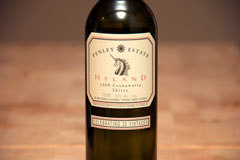 2008 Penley Estate Hyland Shiraz (Coonawarra, Australia): Deep, dark purplish red. Nice nose with spice, blackberry, and peppermint aromas. Blackberry, black cherry, black pepper, mint, and chocolate come through on the palate. Full-bodied and lively with velvety tannins. Well-balanced with a long, lingering finish.
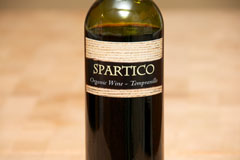 Would you like a quick suggestion for a good wine to drink tonight (or this weekend) that won’t break your budget and is widely available? Many of our readers have said this is something they would like, so here is this week’s selection, the NV Spartico Organic Tempranillo from the Utiel-Requena region of Spain.
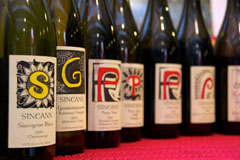 Peter Rosback is one of the most well-known and well-respected winemakers in the Pacific Northwest. Rosback got his start in winemaking in 1985 as a home winemaker experimenting with Pinot Noir. In 1986, he began making Old Vine Zinfandel from
 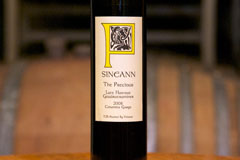 2008 Sineann The Precious Late Harvest Gewurztraminer (Columbia Gorge): Light amber brown color. Extremely aromatic with honey, caramel, prune, and dried apricot on both the nose and palate. Very sweet and sticky, medium to full-bodied with good acidity, and a long, yummy white peach finish. Residual Sugar: 43%
 This week’s Wine Word of the Week is tannins.


