
Book Review: The Food Lover’s Guide to Wine


By LaGayle ~ November 9th, 2011
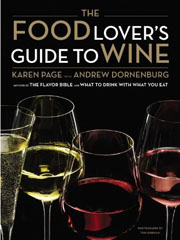
The Food Lover’s Guide to Wine by Karen Page and Andrew Dornenburg is a great book that gives very interesting and valuable information and suggestions for the food lover, or anyone else, who wants to learn more about wine.

Those of you who are regular readers of Wine Peeps know that the book What to Drink with What You Eat by Andrew Dornenburg and Karen Page is one of my favorite references when planning our regular wine tasting dinners and our challenging wine pairing dinners. This talented writing couple has also written The Flavor Bible, which is a great guide to culinary creativity, and has now written another winner in The Food Lover’s Guide to Wine.

Traditionally, food books and cookbooks haven’t mentioned wine and most wine books haven’t given food suggestions. Karen and Andrew have changed all that with their books, and that is what has made their books so attractive to me. We all know that there are many books for foodies, for wine lovers, and for those wanting to learn about wine; however, I believe that Karen and Andrew have combined information on food and wine so well in their books that now my reference stack is not piled quite as high!

The Food Lover’s Guide to Wine even gives some very interesting facts in the timeline of American history. Did you know that in 1624 Virginia passed an act requiring every household to plant twenty vines for every male in the household over the age of twenty? Or, that in 1964 President Lyndon Johnson is credited with establishing the tradition of serving exclusively American wines at the White House? And the list goes on in Chapter 1…definitely a very interesting and enlightening section of the book.

In this book, sommeliers provide a tremendous amount of information on flavor, color, sweetness, weight, volume, style, and so forth. I especially like the quote by Michael Engelmann of Gary Danko’s Restaurant in San Francisco:

“Trust your palate first.”

If you want to learn more, for example, about Carmenere, cool climate wines, or sparkling ice wines, just to name a few, Chapter 4 provides an abundance of information. Of course, what interests me the most is the actual wine pairings. In Chapter 4, the lists also provide pairing suggestions, and Chapter 5 expands on that topic even further.

I found the chart on page 240 that offers information on “considering weight/volume when pairing by course” especially helpful. For general everyday use, I really like the charts on page 259 that gives two very basic lists—one for matching wines to common dishes and the other for matching wines to common cuisines.

I could go on and on, but the bottom line is that The Food Lover’s Guide to Wine provides great information that is presented in an attractive and easy-to-read style. I would recommend your getting a copy for yourself and, also, consider it as a great Christmas gift for the food or wine lovers in your life.

Full Disclosure: We received this book as a review copy.


Filed under: Food & Wine, Wine Books
 

Wine Word of the Week: DOC


By Kori ~ November 8th, 2011

This week’s Wine Word of the Week is DOC.
Official definition from Jancis Robinson’s The Oxford Companion to Wine:
DOC, initials which stand for Denominacao de Origem Controlada in Portugal and Denominazione di Origine Controllata in Italy, those countries’ counterparts of the French Appellation Controlee system of controlled appellations. In both countries, DOC wines represent those regarded as quality wines by European wine law.

Layman’s terms from Kori:
DOC is a quality classification for wine in Italy and Portugal. Wines at the DOC level form the core of Italy’s wine classification system while DOC is the highest wine quality classification in Portugal.


Filed under: Wine Word of the Week
 

Hedges Family Estate: French Flair on Red Mountain


By Kori ~ November 7th, 2011

Hedges Family Estate, located on Red Mountain, is the largest family-owned winery in Washington State. Founders Tom and Anne-Marie Hedges created an export company called American Wine Trade in 1986 to sell wine to foreign importers. Out of that business came the establishment of a négociant-inspired wine called Hedges Cellars. Tom and Anne-Marie bought land on Red Mountain, planted vines, and built the chateau that is now home to their wine estate. Today, their estate vineyard is farmed biodynamically.

Tom was born in Richland, Washington, while Anne-Marie was born in Champagne, France. Both of their upbringings have influenced what Hedges Family Estate is today. They truly believe in the importance of place of origin and embrace the French concept of terroir. If you quickly glance at the labels on their wines, you might mistake them for French wines. Tom and Anne-Marie’s son, Christophe, designs the labels. He is also the national director of sales and marketing. Their daughter, Sarah Hedges Goedhart, is also involved in the business. She serves as assistant winemaker to her uncle Pete Hedges.

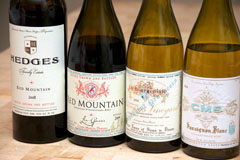
Recently, we had the opportunity to taste some of the current releases from Hedges Family Estate in a blind samples tasting. To be perfectly honest, I was surprised to receive these samples. Hedges is notoriously opposed to having their wines rated, championing an anti-100 point Score Revolution. In fact, a representative from Hedges initially wrote to me asking, “Would you guys be interested in tasting our wines without scoring them?” My reply, in part, said, “…we have standard policies and procedures that we follow in evaluating wines sent as samples. While we do not utilize the 100-point scoring system, we do assign a Quality and QPR rating to wines we taste in our blind samples tastings. For more information about our policies and ratings, please refer to these pages on our site: Trade Samples and Wine Ratings. If you would like for us to taste your wines after reading this information, samples may be sent to…” Shortly thereafter, we received samples and handled them in the same manner as all other samples we receive.

Our favorite was the 2008 Red Mountain, followed closely by the 2009 DLD Syrah, and the 2010 House of Independent Producers Chardonnay. If you find yourself in the Red Mountain area, be sure to visit Hedges Family Estate to taste their wines for yourself.

2008 Hedges Family Estate Red Mountain (Red Mountain, Washington): 36% Cabernet Sauvignon, 33% Merlot, 14% Syrah, 11% Cabernet Franc, and 6% Malbec. Deep, dark purple. Aromatic with black cherry, blackberry, and black pepper on the nose. More black fruit, black pepper, and spice come through on the palate. Medium to full-bodied with lively acidity, medium tannins, and a long finish.
Quality: 3.5 stars (out of 5)
QPR: 3 bangs for your buck (out of 5)
Where to buy: Received as sample, suggested retail $25; Available elsewhere, $18 to $26

2009 DLD Syrah (Les Gosses Vineyard, Red Mountain, Washington): 100% Syrah. Deep, dark purple. Aromatic with blackberry syrup and oak on the nose. Blackberry, black plum, and licorice come through on the palate. Medium to full-bodied and viscous with lively acidity, medium to high tannins, and a long finish.
Quality: 3.5 stars (out of 5)
QPR: 4 bangs for your buck (out of 5)
Where to buy: Received as sample, suggested retail $25; Available elsewhere, $21 to $22

2010 House of Independent Producers Chardonnay (Dionysus Vineyard, Columbia Valley, Washington): 100% Chardonnay. Pale greenish straw yellow. Nice nose with fresh citrus aromas. More citrus as well as honeysuckle, apple, and pear come through on the palate. Dry and light to medium-bodied with lively acidity and a long finish.
Quality: 3.5 stars (out of 5)
QPR: 5 bangs for your buck (out of 5)
Where to buy: Received as sample, suggested retail $14; Available elsewhere, $11 to $15

2009 CMS Sauvignon Blanc by Hedges (Columbia Valley, Washington): 77% Sauvignon Blanc, 20% Chardonnay, and 3% Marsanne. Pale straw yellow. Aromatic with peach, grapefruit zest, and floral notes on both the nose and palate. Dry and light-bodied with crisp acidity and a long, slightly bitter finish.
Quality: 3 stars (out of 5)
QPR: 3 bangs for your buck (out of 5)
Where to buy: Received as sample, suggested retail $14; Available elsewhere, $10 to $15


Filed under: American Wine, Chardonnay, Five-Bangs For Your Buck Wines, Red Wine, Sauvignon Blanc, Shiraz/Syrah, Washington State Wine, White Wine, Wines Over $25, Wines Under $15, Wines Under $20, Wines Under $25
 

A Wine for Tonight: 2008 Feudo Principi di Butera Nero d’Avola


By Kori ~ November 3rd, 2011

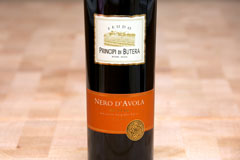
Would you like a quick suggestion for a good wine to drink tonight (or this weekend) that won’t break your budget and is widely available? Many of our readers have said this is something they would like, so here is this week’s selection, the 2008 Feudo Principi di Butera Nero d’Avola from the Sicily region in Italy.

Our selection criteria include:

  • A very good Quality rating of >=3.5 stars (out of 5)
  • A price tag of <=$15
  • Must be widely available

The Principi di Butera estate is located in the district of Butera in the Province of Caltanissetta and lies within the Riesi DOC in the heart of Sicily. Currently, they have 334 acres under vine in their vineyards. In addition to Nero d’Avola and Insolia, which are indigenous varieties, they also grow Merlot, Cabernet Sauvignon, Syrah, and Chardonnay. Antonio Cufari serves as winemaker.

“Dry, well-structured and extremely rounded, it offers very complex fruit flavors on the palate. These are reminiscent of cherries preserved in brandy, mingled with a very appealing spiciness that lingers on the finish.” –Feudo Principi di Butera

2008 Feudo Principi di Butera Nero d’Avola (Sicilia IGT, Italy): Deep, dark red. Aromatic with black fruit and a hint of creosote on the nose. Black plum, black cherry, and licorice come through on the palate. Medium to full-bodied with lively acidity, medium, dry tannins, and a long finish.
Quality: 3.5 stars (out of 5)
QPR: 4 bangs for your buck (out of 5)
Where to buy: Received as sample, suggested retail $14.99; Available elsewhere, $13 to $21


Filed under: A Wine for Tonight, Italian Wine, Nero d'Avola, Red Wine, Wines Under $15, Wines Under $20, Wines Under $25
 

Villa Maria Estate: New Zealand Sauvignon Blanc and Much More


By Kori ~ November 2nd, 2011

Founded in 1961 by Sir George Fistonich, Villa Maria Estate is New Zealand’s 4th largest winery yet remains family-owned. Villa Maria has two wineries, one located in Auckland and one located in New Zealand’s famous winegrowing region of Marlborough. They source grapes from all of New Zealand’s main winegrowing regions. Villa Maria produces between 800,000 and 1 million cases per year and exports about half of it. Their key export markets include the United Kingdom, United States, and Australia. Ste. Michelle Wine Estates imports Villa Maria in the United States.

Villa Maria was the first winery in New Zealand to declare itself a “cork-free zone” and now seals all of their wines with screwcaps. Today, about 90 percent of all New Zealand wines are sealed with screwcaps.

“Sir George Fistonich has been called the ‘Robert Mondavi of the New Zealand wine industry’.” –Winemaker Nick Picone speaking about Villa Maria’s founder

In 2005, we had the pleasure to visit Villa Maria Estate on a trip through the Marlborough region of New Zealand. It was a fabulous trip and an educational and rewarding wine experience. We found some of the most beautiful wine country and nicest people in the world. If you ever get the chance, I highly encourage you to visit New Zealand.

Recently, I had the pleasure to attend a Villa Maria tasting and lunch with winemaker Nick Picone when he was visiting Seattle. Nick has been with Villa Maria for 15 years, starting as a cellar hand and working his way up in the company. He is now the senior winemaker at the Auckland winery. During the lunch, we tasted three wines each from three different tiers of Villa Maria wines, Private Bin (entry-level), Cellar Selection (mid-range), and Reserve (high-end). As you will see from my notes below, I found all nine wines to be very good. I have long been a fan of New Zealand Sauvignon Blanc, the country’s flagship wine. The crisp acidity and refreshing citrus, especially grapefruit, flavors are particularly appealing to my palate. I thought all three of Villa Maria’s Sauvignon Blancs were excellent, with my favorite being the 2009 Reserve.
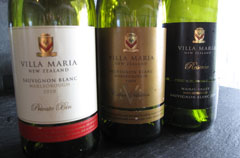
Private Bin

2010 Villa Maria Private Bin Sauvignon Blanc (Marlborough, New Zealand): Greenish straw yellow. Very aromatic with lime, grapefruit, and grass on the nose. More grapefruit, lime, and grass on the palate. Dry and light-bodied with tart acidity. Well-balanced with a long, refreshing finish. [Represents 40% of Villa Maria’s total production.]
Quality: 4 stars (out of 5)
QPR: 4 bangs for your buck (out of 5)
Suggested Retail: $14.99

2008 Villa Maria Private Bin Unoaked Chardonnay (Hawkes Bay, New Zealand): Greenish straw yellow. Aromatic with pear and peach on the nose. More stone fruit, minerality, and some toastiness come through on the palate. Dry and light to medium-bodied with crisp acidity, and a long finish. Clean and fresh.
Quality: 3.5 stars (out of 5)
QPR: 5 bangs for your buck (out of 5)
Suggested Retail: $14.99

2009 Villa Maria Private Bin Pinot Gris (East Coast, New Zealand): Pale, straw yellow. Aromatic with apple, pear, and floral notes on both the nose and palate. Dry and light-bodied with lively acidity, and a long, refreshing finish.
Quality: 3.5 stars (out of 5)
QPR: 4 bangs for your buck (out of 5)
Suggested Retail: $14.99

Cellar Selection

2009 Villa Maria Cellar Selection Sauvignon Blanc (Marlborough, New Zealand): Pale, greenish yellow. Beautiful nose with grapefruit, lime, grass, and melon aromas. More grapefruit, lime, and grass comes through on the palate. Dry and medium-bodied with racy acidity. Well-balanced with a long, lingering finish. Very refreshing and food-friendly.
Quality: 4 stars (out of 5)
QPR: 4 bangs for your buck (out of 5)
Suggested Retail: $19.99

2009 Villa Maria Cellar Selection Riesling (Marlborough, New Zealand): Pale, greenish straw yellow. Aromatic with lime, white peach, and orange peel on the nose. Lime, lemon, orange peel, and a touch of minerality come through on the palate. Dry and medium-bodied with crisp acidity and a long, refreshing finish. Food-friendly. Residual Sugar: 0.81%
Quality: 3.5 stars (out of 5)
QPR: 4 bangs for your buck (out of 5)
Suggested Retail: $19.99

2006 Villa Maria Cellar Selection Pinot Noir (Marlborough, New Zealand): Medium ruby red in color. Nice nose with cherry, plum, and spice aromas. Fruit-forward with red cherry, spice, and a hint of smoke on the palate. Medium-bodied with lively acidity, smooth tannins, and a long finish. Gets better with food.
Quality: 3.5 stars (out of 5)
QPR: 4 bangs for your buck (out of 5)
Suggested Retail: $29.99

Reserve

2009 Villa Maria Reserve Wairau Valley Sauvignon Blanc (Marlborough, New Zealand): Pale, straw yellow. Gorgeous nose with grapefruit, pineapple, and passion fruit aromas. More tropical fruits, grapefruit, and grass come through on the palate. Dry and medium-bodied with racy acidity. Well-balanced with a long, refreshing finish.
Quality: 4 stars (out of 5)
QPR: 2 bangs for your buck (out of 5)
Suggested Retail: $29.99

2007 Villa Maria Reserve Pinot Noir (Marlborough, New Zealand): Medium-deep ruby red in color. Aromatic with cherry, spice, earth, and minerality on the nose. Red and black cherry, spice, smoke, and floral notes come through on the palate. Medium-bodied with lively acidity and medium, smooth tannins. Well-balanced and food-friendly with a long finish.
Quality: 4 stars (out of 5)
QPR: 4 bangs for your buck (out of 5)
Suggested Retail: $39.99

2007 Villa Maria Reserve Cabernet Sauvignon-Merlot (Gimblett Gravels, Hawkes Bay, New Zealand): 69% Cabernet Sauvignon, 29% Merlot, and 2% Malbec. Deep, dark purplish red. Nice nose with fresh mint, cherry, raspberry, and blackberry aromas. Red and black fruits, mint, and a hint of coffee come through on the palate. Full-bodied with crisp acidity and medium to high tannins. Well-balanced with a long finish.
Quality: 4 stars (out of 5)
QPR: 3 bangs for your buck (out of 5)
Suggested Retail: $39.99


Filed under: Chardonnay, Five-Bangs For Your Buck Wines, New Zealand Wine, Pinot Grigio/Pinot Gris, Pinot Noir, Red Wine, Riesling, Sauvignon Blanc, White Wine, Wines Over $25, Wines Under $15, Wines Under $20, Wines Under $25
 

Wine Word of the Week: Amarone


By Kori ~ November 1st, 2011

This week’s Wine Word of the Week is Amarone.
Official definition from Jancis Robinson’s The Oxford Companion to Wine:
Amarone is the most famous of Italy’s dry dried grape wines and has recently been revitalized…. Amarone applied for DOCG status in February 2005 to ensure that it is made solely from Corvina and Corvinone, which together can comprise between 40 and 80 percent of the blend, together with 5-30 percent of the lesser Rondinella.

The wine is made from selected superior whole bunches which are dried or raisined in special drying lodges or chambers. …. After the drying process is finished, the grapes are crushed and fermented dry.

Layman’s terms from Kori:
Traditionally, Amarone was produced in Italy by taking perfectly ripe bunches of grapes and placing them in slatted wooden boxes or hanging them from ceiling rafters to dry. All of the sugar in the grapes is converted into alcohol, so the wine is dry.


Filed under: Wine Word of the Week
 

Wine Tasting Dinner #100: 2008 Washington Merlot


By Kori ~ October 31st, 2011

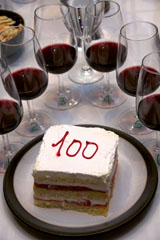
On Friday evening, we hosted our 100th wine tasting dinner. Early on in our wine journey when we found what we thought was a good wine while visiting a winery, we would buy a case and take it home. Too often the wine did not taste nearly as good at home as it had in the tasting room. There were probably several reasons this happened…we had been unduly influenced by a friendly tasting room host, plied with cheese or chocolate in the tasting room, or were suffering from fatigue after visiting a number of wineries in one day. Our solution was to just buy a bottle or two, not a case, at the winery, bring it home, and taste it blind against similar wines. Then we could confidently buy more once a wine was a proven favorite. Out of this process came the idea of hosting regular wine tasting dinners. It has been quite an adventure since we hosted our very first dinner on August 23, 2002.
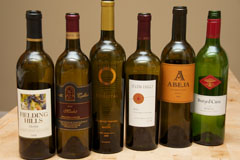
Hosting regular wine tasting dinners in our homes has proved to be a great social event for us as well as an opportunity to compare wines we think we like in a blind tasting paired with food. To mark the special occasion of our 100th dinner, we featured Washington Merlot, which was the same theme as our first dinner. We were also honored to have four special guests join us, one couple who attended that first dinner and one couple who attended our second dinner.

Thankfully, I believe that the Sideways effect has finally diminished and many people are enjoying Merlot again. For those of you who think that you don’t like Merlot, it’s time to give this noble grape another chance. Merlot is a wonderful variety, and Washington State makes outstanding Merlot. Washington Merlot is bigger, more complex, and has higher acidity than most Merlot produced elsewhere.

“Rather than using merlot as a simple blending grape to soften their cabernets, Washington winemakers are just as likely to do the reverse.” –Paul Gregutt, Washington Wines & Wineries, Second Edition

While all six wines were good, the top four were excellent and paired well with Mom’s dinner of tomato basil soup, candied walnut gorgonzola salad, roasted beef tenderloin, garlic mashed sweet potatoes, braised kale, and German chocolate dessert with whipped topping and garnished with shaved chocolate. The consensus favorite of the evening was the 2008 Fielding Hills Merlot, followed closely by the 2008 Leonetti Cellar Merlot.

Fielding Hills Winery is a small, family-owned winery located in Wenatchee, Washington. Owner/winemaker Mike Wade and his wife Karen are longtime apple and cherry growers who have turned a middle portion of their orchard near Mattawa into a vineyard. Their Riverbend Vineyard, planted in 1998, is in the Wahluke Slope AVA. They source all of their fruit, including the fruit used to produce this Merlot, from Riverbend Vineyard.

Leonetti Cellar, founded by Gary and Nancy Figgins in 1977, was the Walla Walla Valley’s first modern-day winery. Leonetti wines have been standard bearers for quality and consistency since the beginning and have achieved a cult following. In 1996, Gary and Nancy’s son, Chris, joined them in the winery after graduating with a degree in Horticulture from Washington State University. While Gary is still actively involved in the winery, Chris now serves as CEO and Director of Winemaking. From early on, the Figgins family has worked on developing their own vineyards in order to achieve their goal of exclusively using estate-grown fruit from the Walla Walla Valley.

These wines are all good representations of the quality Merlot that Washington State produces.

From 1st to last in the group consensus rankings:

2008 Fielding Hills Merlot (Riverbend Vineyards, Wahluke Slope, Washington): 91% Merlot, 5% Syrah, and 4% Cabernet Sauvignon. Deep, dark red in color. Nice nose with black fruit, smoke, and spice aromas. Blackberry, black cherry, smoke, and clove come through on the palate. Full-bodied with lively acidity and medium to high tannins. Well-balanced with good complexity and a long, lingering finish.
Quality: 4.5 stars (out of 5)
QPR: 5 bangs for your buck (out of 5)
Where to buy: Winery, $36; Available elsewhere, $39

2008 Leonetti Cellar Merlot (Walla Walla Valley, Washington): 100% Merlot. Deep purplish red. Aromatic with vanilla and black fruit on the nose. Black fruit, plum, and a hint of chocolate come through on the palate. Full-bodied with lively acidity and medium to high tannins. Well-balanced with good complexity and a very long finish.
Quality: 4.5 stars (out of 5)
QPR: 3 bangs for your buck (out of 5)
Where to buy: Full Pull Wines (Seattle, Washington), $75; Available elsewhere, $59 to $106

2008 Fidelitas Champoux Vineyard Merlot (Champoux Vineyard, Horse Heaven Hills, Washington): 100% Merlot. Deep purplish red. Red fruit, especially cherry, and vanilla come through on both the nose and palate. Medium to full-bodied and lively with medium to high, drying tannins. Well-balanced with a long, smooth finish.
Quality: 4 stars (out of 5)
QPR: 3 bangs for your buck (out of 5)
Where to buy: Esquin Wine Merchants (Seattle, Washington), $53; Available elsewhere, $58

2008 Seven Hills Winery Merlot (Seven Hills Vineyard, Walla Walla Valley): 100% Merlot. Deep ruby red in color. Nice nose with smoke and dark red fruit aromas. Smoke, game, and dark red fruit comes through on the palate. Medium to full-bodied and lively with medium tannins. Well-balanced with a long finish.
Quality: 4 stars (out of 5)
QPR: 5 bangs for your buck (out of 5)
Where to buy: Esquin Wine Merchants (Seattle, Washington), $26; Available elsewhere, $26 to $27

2008 Abeja Merlot (Columbia Valley, Washington): 100% Merlot. Deep ruby red. Aromatic with blackberry, plum, and a hint of spice come through on both the nose and palate. Medium to full-bodied and smooth with medium to high tannins and a long, slightly bitter, finish.
Quality: 3.5 stars (out of 5)
QPR: 4 bangs for your buck (out of 5)
Where to buy: Full Pull Wines (Seattle, Washington), $35; Available elsewhere, $35 to $45

2008 Buried Cane Merlot (Washington State): 90% Merlot and 10% Syrah. Deep ruby red. Aromatic with cherry and raspberry on the nose. Fruit-forward and jammy with candied cherry and raspberry on the palate. Medium-bodied and smooth with medium tannins and a medium finish.
Quality: 3.5 stars (out of 5)
QPR: 5 bangs for your buck (out of 5)
Where to buy: Full Pull Wines (Seattle, Washington), $7; Available elsewhere, $6 to $17


Filed under: American Wine, Five-Bangs For Your Buck Wines, Food & Wine, Merlot, Red Wine, Washington State Wine, Wine Tasting Dinners, Wines Over $25, Wines Under $10, Wines Under $15, Wines Under $20, Wines Under $25
 

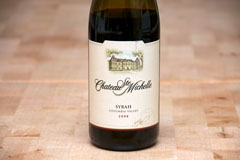
A Wine for Tonight: 2008 Chateau Ste. Michelle Syrah


By Kori ~ October 27th, 2011

Would you like a quick suggestion for a good wine to drink tonight (or this weekend) that won’t break your budget and is widely available? Many of our readers have said this is something they would like, so here is this week’s selection, the 2008 Chateau Ste. Michelle Syrah from the Columbia Valley of Washington State.

Our selection criteria include:

  • A very good Quality rating of >=3.5 stars (out of 5)
  • A price tag of <=$15
  • Must be widely available

Chateau Ste. Michelle is Washington State’s founding winery with its roots dating back to the repeal of Prohibition. In 1976, Ste. Michelle built a French-style chateau in Woodinville, just northeast of Seattle. While all of their white wines are made in Woodinville, all of their red wines are made at Canoe Ridge Estate in eastern Washington. The majority of fruit for this Syrah was sourced from vineyards on the Wahluke Slope with the balance of the blend coming from the Columbia Valley and Horse Heaven Hills AVAs.

“The Columbia Valley Syrah is a soft, ripe Syrah with ripe berry fruit aromas and flavors with hints of vanilla and brown sugar spice. The 2008 Syrah was co-fermented with Viognier for an even more accessible and fruit forward style of Syrah. This is an enjoyable, easy-to-drink red.” –Bob Bertheau, Head Winemaker

2008 Chateau Ste. Michelle Syrah (Columbia Valley, Washington): 95% Syrah and 5% Viognier. Dark purple in color. Nice nose with oak, spice, and black fruit aromas. More black fruit, spice, and a hint of black pepper come through on the palate. Full-bodied with lively acidity, medium to high tannins, and a long finish.
Quality: 3.5 stars (out of 5)
QPR: 5 bangs for your buck (out of 5)
Where to buy: Received as sample, suggested retail $13; Available elsewhere, $11


Filed under: A Wine for Tonight, American Wine, Five-Bangs For Your Buck Wines, Red Wine, Shiraz/Syrah, Washington State Wine, Wines Under $15, Wines Under $20, Wines Under $25
 

Washington Wine Lovers: Vote “Yes” on I-1183


By John ~ October 26th, 2011

As Yogi Berra once said, it’s déjà vu all over again. About a year ago, I wrote a similar post recommending a “yes” vote on I-1100. Now we have I-1183 on the ballot, and some of you are asking for our thoughts and recommendation again. While the two initiatives have a similar primary objective of getting the state out of the liquor business and in sync with most other states, this year’s version, I-1183, leaves out some of the more controversial elements of the prior initiative that winemakers opposed, which I like.
I-1183 keeps in place laws regarding payment for shelf space and cash on delivery, makes it almost impossible for most mini-marts to sell liquor (because of a square footage minimum), and maintains a revenue stream to the state in the form of a percentage of gross spirits revenue. [For the full text of I-1183, click here.]

In fact, in their Policy Brief on September 16, 2011, the Washington Research Council provided the following summary of the fiscal impact of I-1183:

“It is to be expected that independent analysts will come up with somewhat different estimates of the fiscal impacts of a measure as complex as Initiative 1183, and OFM’s (Office of Financial Management’s) estimates do differ somewhat from ours. We remain comfortable with the choices we made in modeling I-1183’s impact. In spite of the differences, the two analyses agree that the initiative will provide significant additional revenues to state and local governments.”

Just as last year, the largest financial supporter of the initiative is Costco, and the major funding against I-1183 are the Wine & Spirits Wholesalers of America. Just as last year, what disappoints me the most about the campaign against I-1183 is what I believe is the disingenuous rhetoric about health and public safety. I-1183 is not about safety. California has private liquor sales rather than a state-controlled system, and yet California has fewer drunk-driving deaths per-capita than we have in Washington State.

I don’t believe for a minute that the wine and spirits wholesalers who are funding the negative ads want us to stop drinking or to drink less. They simply want to ensure that they continue to get their cut of virtually every bottle of wine and spirits sold in Washington State and not have their profit margins shrunk by having to negotiate with large retailers on price.

The other big question for me is what this initiative will do to wine and liquor prices. Melissa Allison of the The Seattle Times addressed this issue in an article published on October 1, 2011. Her conclusion was that a claim by the pro I-1183 group that passage of I-1183 would “bring more competitive prices to consumers” was mostly true. Ms. Allison said, “The pro-campaign is basically right. Some prices would fall, and maybe a lot of prices, given how heavily skewed the state would be toward large chains with big buying power.”
As I’ve traveled around the country, I’ve been impressed with the wine, spirits, and specialty food superstores such as Spec’s in Texas, Beverages & More in California, Davidson’s in Colorado, and so on, and wished that we had something like them here in Washington. I-1183’s passage will go a long way towards making that dream come true.

In summary, it looks to me like passage of I-1183 will be better for me as a consumer, revenue positive for the state, and not be a danger to public safety as some ads have suggested. Please join me in voting “Yes” on I-1183.


Filed under: American Wine, Miscellaneous, Washington State Wine
 

Wine Word of the Week: Vineyard designated


By Kori ~ October 25th, 2011

This week’s Wine Word of the Week is vineyard designated.

Official definition from Ron Herbst and Sharon Tyler Herbst’s The New Wine Lover’s Companion:
Vineyard designated is a term indicating that a wine is made with grapes from the specific vineyard named on a wine’s label. In the United States, a vineyard name on a label means that 95 percent of the grapes in the wine came from the named vineyard and that the named vineyard is located in the AVA indicated on the label.

Layman’s terms from Kori:
Vineyard designated is a term used when a wine has a specific vineyard named on the label, meaning that at least 95 percent of the grapes used to make the wine came from that vineyard.


Filed under: Wine Word of the Week