
Current Releases from Cedergreen Cellars


By Kori ~ July 27th, 2011
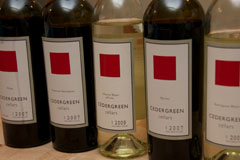
Winemaker Kevin Cedergreen founded Cedergreen Cellars, located in Kirkland, Washington, in 2002. He grew up on an orchard in eastern Washington. After college, he worked as a landscape architect in Seattle. In the mid-90’s, Kevin and his wife decided it was time for a change, and they wanted to do something that would allow them to spend time in both eastern and western Washington. Starting a winery seemed to be a good fit. To learn the nuts and bolts of winemaking, Kevin took extension courses through UC Davis. Prior to starting his own winery, he worked at several wineries in Washington State and spent part of each year in New Zealand so that he could work harvest year-round.

Recently, we had the opportunity to taste some of Cedergreen’s current releases in a blind samples tasting. We were especially impressed with the 2007 Thuja Red Wine, which is a blend of Merlot and Cabernet Sauvignon. We also really enjoyed the 2007 Cabernet Sauvignon and the 2009 Old Vine Chenin Blanc. Chenin Blanc is a sentimental favorite of mine because it was one of the first varieties that I fell in love with when I first got into wine. Very few wineries in Washington State produce a Chenin Blanc so I look forward to the release of Cedergreen’s Old Vine Chenin each year.

If you have not had any Cedergreen wines, I encourage you to give them a try if you see them on the shelf at your local wine shop. You’ll recognize them by the distinctive red square on their labels.
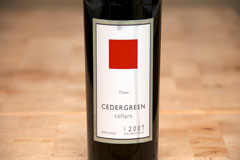
2007 Cedergreen Thuja Red Wine (Columbia Valley, Washington): 80% Merlot and 20% Cabernet Sauvignon. Deep ruby red. Nice nose with aromas of blackberry, black cherry, and pencil shavings. Red and black fruits as well as cinnamon come through on the palate. Medium to full-bodied with crisp acidity and medium to high tannins. Well-balanced with a long finish.
Quality: 4 stars (out of 5)
QPR: 4 bangs for your buck (out of 5)
Where to buy: Received as sample, suggested retail $25

2007 Cedergreen Cabernet Sauvignon (Columbia Valley, Washington): Deep, dark red in color. Very aromatic with oak and black fruits on the nose. Blackberry, black cherry, and spice dominate the palate. Medium to full-bodied with lively acidity, medium to high tannins, and a long finish.
Quality: 3.5 stars (out of 5)
QPR: 4 bangs for your buck (out of 5)
Where to buy: Received as sample, suggested retail $29

2009 Cedergreen Old Vine Chenin Blanc (Columbia Valley, Washington): Very light straw yellow, almost white. Very aromatic with lemon, tropical, and mineral notes on the nose. Lemon drops, lime, and a hint of melon come through on the palate. Dry and light-bodied with crisp acidity and a long, refreshing finish.
Quality: 3.5 stars (out of 5)
QPR: 3 bangs for your buck (out of 5)
Where to buy: Received as sample, suggested retail $17; Available elsewhere, $17

2009 Cedergreen Sauvignon Blanc (Columbia Valley, Washington): Very light straw yellow, almost white. Nose is a bit tight at first, and then some floral aromas and faint citrus notes come through. Citrus fruit and honeysuckle dominate the palate. Dry and light-bodied with lively acidity and a medium to long finish.
Quality: 3 stars (out of 5)
QPR: 3 bangs for your buck (out of 5)
Where to buy: Received as sample, suggested retail $14

2007 Cedergreen Merlot (Columbia Valley, Washington): Deep red in color. Aromatic with oak, smoke, and beef jerky on the nose. Black plum, beef jerky, and smoke come through on the palate. Medium to full-bodied with lively acidity, medium tannins, and a long finish.
Quality: 3 stars (out of 5)
QPR: 1 bang for your buck (out of 5)
Where to buy: Received as sample, suggested retail $36; Available elsewhere, $36


Filed under: American Wine, Cabernet Sauvignon, Chenin Blanc, Merlot, Red Wine, Sauvignon Blanc, Washington State Wine, White Wine, Wines Over $25, Wines Under $15, Wines Under $20, Wines Under $25
 

Wine Word of the Week: En primeur


By Kori ~ July 26th, 2011

This week’s Wine Word of the Week is en primeur.

Official definition from Jancis Robinson’s The Oxford Companion to Wine:
En primeur is a wine trade term, French in origin, for wine sold as futures before being bottled. …. En primeur sales are a relatively recent specialty, but not exclusivity, of classed growths by the Bordeaux trade. Cask samples of wines have customarily been shown in the spring following the vintage and sales solicited, through brokers and negociants, almost immediately. A particular property often releases only a certain proportion, or tranche, of its total production, depending on its need for cash and reading of the market.

Layman’s terms from Kori:
En primeur, which means “in futures”, is a wine purchasing system that developed as a result of the tremendous demand for high-end Bordeaux wines. When the quality of the wine is judged, a broker negotiates a future share of the wine at an opening price. The en primeur system allows the winemaker to be able to collect money for the wine much earlier and allows the broker to resell the wine at a profit and guarantee availability.


Filed under: Wine Word of the Week
 

Women of Washington Wine: Kerry Shiels of Côte Bonneville Winery


By Kori ~ July 25th, 2011

Today’s post is part of a series featuring the Women of Washington Wine. In an industry once dominated by men, more and more women are joining the ranks as winery owners, vineyard owners, and winemakers. Being a woman myself, I am fascinated by these women and what they have done and continue to do. Through this series, I hope to introduce you to some of the brightest female faces in the Washington wine industry.

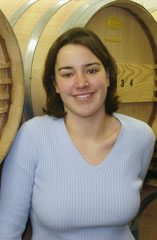
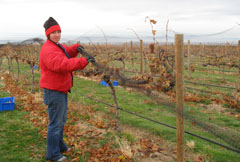
Kerry Shiels is the Director of Winemaking for Côte Bonneville Winery, located in Sunnyside, Washington, in the Yakima Valley. Founded in 2001 by Kerry’s parents, Hugh and Kathy Shiels, Côte Bonneville is the estate winery for DuBrul Vineyard. The Shiels planted their 45-acre world-class vineyard in 1992. They quickly realized that DuBrul was a special vineyard and decided to start Côte Bonneville to showcase what the vineyard does best. Kerry has been officially involved with the family vineyard and winery since 2005. She graduated with a Masters in Viticulture and Enology from UC Davis in August 2009 and has also gained valuable experience working vintages in Napa, Australia, and Argentina.

Recently, Kerry was kind enough to take time out of her busy schedule to answer some questions for me and our Wine Peeps readers.

Highlights from Q&A with Kerry Shiels:

How did you first get involved in the wine business?
I grew up in the Yakima Valley around grapes and wine. My family planted the DuBrul Vineyard when I was in middle school.  I made my first wine at 13. In high school, I was in tasting groups with winemakers. When Côte Bonneville was started, I was always involved. It was a natural fit when I was looking for something after my engineering career.

What were the steps that led to where you are now?
After college, I was hired as an engineer by Fiat to work in Italy, which was awesome! After two years in Torino, I was transferred to another part of the company back in Chicago. After a while, I decided that my life resembled Office Space and Dilbert a little too much. I got into engineering because I liked making things – and wine is definitely more fun to make than cars! I went to work in Napa, then Australia, and then back to work in Napa while I studied at UC Davis. I graduated with my Masters in Viticulture and Enology, and also received a travel grant, which took me to Argentina.

At what point did you decide that you wanted to join the family business?
Ever since I retired from engineering, I had been coming home to work with and learn from our winemaking team. When I finished my Masters, and especially when I came back from Argentina, it was time for me to be a full-time part of DuBrul Vineyard and Côte Bonneville.  It’s an amazing opportunity to grow grapes at this level and work in a winery totally focused on quality. I feel prepared to make the wines but am also happy to be learning more about the nuances of the vineyard.

Has being a woman been an advantage or a disadvantage in your wine journey?
When I worked in the factory in Italy, it was definitely a challenge! In the wine industry, it is not really an issue. But I have always had strong competent women around me, like Kay Simon and Sara Spayd. They paved the way for my generation, both as women in the wine industry, and as professionals in the development of the Washington wine industry.

What advice do you have for a woman wanting to get involved in the wine business today?
My advice to anyone is the same. Work a harvest. Get lots of varied experiences. Get a degree. Find good mentors.

What are your thoughts about the Washington wine industry, in general?
Washington is a great place to be! We have world-class fruit, a dynamic growing industry, people who are cooperative and collaborative, and there are amazing opportunities here.

In recent years the Washington wine industry has grown at a rapid rate. Do you expect that trend to continue?
It’s still growing in terms of numbers of bonded wineries, but most of them are small. The last numbers I heard, Côte Bonneville is larger than half the wineries in the state, and we only make 2,000 cases. I think the next big growth phase we need is larger wineries to broaden the spectrum of wines available outside of the state. It’s tough to be known as a world-class wine region in Chicago or New York when they can’t find more than a handful of labels on the shelves. It takes time for wineries to grow large enough to distribute, as both production and the business aspects change, but it’s happening.

I understand that you spent time working at wineries in Napa, Australia, and Argentina. What did you learn from those experiences?
Heaps! In Napa, especially, I have been in a lot of vineyards up and down the valley and worked with a lot of winemakers. This taught me how people make decisions differently and what affects these decisions have on the wines. In Australia, I worked in a winery that was founded in the 1860s and has a very old-world mentality. Mendoza was interesting because the geology is similar to the Yakima Valley, but the socioeconomic climate, culture, and goals are all very different. The final wine is a combination of the site, the vintage, viticultural practices, and winemaking decisions. You have to understand the role each of these play and how they fit together in order to make a consistent style and quality of wine every year. It helps to have a breadth of experiences to draw from, in addition to the technical knowledge to keep things in context.

What is your vision for the future of Côte Bonneville?
First, to continue to make wines that people love. We will continue to showcase our vineyard, which is truly distinctive. Since I came home full-time, we have expanded into new products, such as Riesling and Cab Franc Rosé. We are making Syrah also, which I’m excited about.

Feel free to share any other thoughts that you believe would be of interest to our readers.
Eastern Washington is a really unique and special place. In DuBrul Vineyard, for example, we grow six varieties, all of which make world-class wines. Few regions in the world can grow so many varieties well, from Riesling to Cabernet. In Europe, you have to go to many regions in multiple countries to find the same level of diversity. Our northern latitude and desert climate combine to create an excellent wine growing area. We are lucky to have this agricultural bounty in our backyard.

Many thanks to Kerry for sharing her story and thoughts with us. I wish her and the Shiels family all the best and look forward to following their work and Côte Bonneville Winery with great interest, and I hope that you will too.

(Photos from Côte Bonneville Winery)


Filed under: American Wine, Interview, Washington State Wine, Women of Washington Wine
 

A Wine for Tonight: 2009 Penfolds Koonunga Hill Shiraz Cabernet


By Kori ~ July 21st, 2011

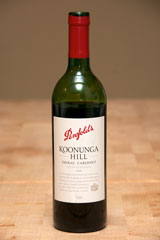
Would you like a quick suggestion for a good wine to drink tonight (or this weekend) that won’t break your budget and is widely available? Many of our readers have said this is something they would like, so here is this week’s selection, the 2009 Penfolds Koonunga Hill Shiraz Cabernet from South Australia.

Our selection criteria include:

  • A very good Quality rating of >=3.5 stars (out of 5)
  • A price tag of <=$15
  • Must be widely available

Penfolds is one of the oldest and most well-respected wineries in Australia. Located in South Australia, Penfolds was established by a transplanted English doctor in 1844. Dr. Christopher Rawson Penfold and his wife Mary built their home at Magill, near Adelaide, and surrounded it with vine cuttings they brought from the south of France. Today, Penfolds boasts two cellar doors (aka tasting rooms), one at the original Magill Estate and the other in Nuriootpa in the heart of the Barossa Valley. Penfolds is most famous for its top of the line Grange wines. This Koonunga Hill wine is from one of their value lines. Nevertheless, according to some “experts,” it is a wine that can age for 20 years which is remarkable for a wine at this price point.

“Penfolds Koonunga Hill Shiraz Cabernet is very much a reflection of the Penfolds winemaking style and philosophy. Sourced from premium vineyards across South Australia, the wine is known for its full-flavoured style with excellent Shiraz and Cabernet fruit, firm yet well-rounded structure and balanced oak. Made as a traditional ‘Australian blend’, the Shiraz component provides fleshy fruit flavour while Cabernet provides a frame of fine grained tannins.” –Penfolds

2009 Penfolds Koonunga Hill Shiraz Cabernet (South Australia, Australia): 73% Shiraz, 27% Cabernet Sauvignon. Deep, dark purple. Very aromatic with blackberry jam, black pepper, and spice on both the nose and palate. Medium to full-bodied with lively acidity and medium to high tannins. Well-balanced and smooth with a long finish.
Quality: 4 stars (out of 5)
QPR: 5 bangs for your buck (out of 5)
Where to buy: Fred Meyer (Seattle, Washington), $9.79; Available elsewhere, $10 to $12


Filed under: A Wine for Tonight, Australian Wine, Five-Bangs For Your Buck Wines, Red Wine, Shiraz/Syrah, Wines Under $10, Wines Under $15, Wines Under $20, Wines Under $25
 

Wine Tasting Dinner: Washington Rosé for Summer


By Kori ~ July 20th, 2011

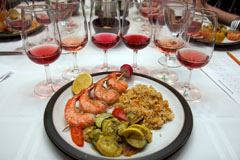
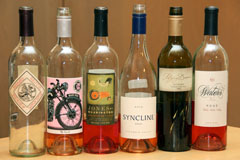
This month’s wine tasting dinner featured six rosé wines from Washington State. It was another fabulous evening of good wine, the company of wonderful friends, and LaGayle’s (Mom’s) excellent food. The wines paired extremely well with our dinner of vichyssoise, crab Louie salad, grilled prawns, grilled vegetables, rice pilaf, and peach and strawberry salad for dessert with almond cookies.

This is the time of year when we turn our attention to rosé wines. In fact, many wineries only make small quantities of rosé wines to be released during the summer months. Rosé is French for “pink” and is used to describe wines of that color. Rosés are generally made from red grapes; however, unlike typical red wine production, the skins are removed from the juice after only a couple of days. This limited skin contact gives rosé its light pink color and is the reason that rosés are lighter-bodied than most red wines. Rosés can run the gamut from dry to sweet. Too many people think pink wines are all sweet. Not so. For me, the dry rosés are more serious and interesting.

The consensus favorite was the 2010 Barnard Griffin Rosé of Sangiovese. It is one of the most well-known and widely available Washington State rosés. I look forward to its release each year. Rob Griffin and his wife Deborah Barnard founded Barnard Griffin Winery, located in Richland, Washington, in 1983. Rob moved to Washington State in 1977 to be winemaker for Preston Wine Cellars when there were under ten wineries in the entire state. Shortly after founding Barnard Griffin, Rob left Preston and went to work for Hogue Cellars as winemaker and general manager. In 1991, Rob left Hogue to devote his full time and energy to Barnard Griffin. The current winery and tasting room were built in 1996. Barnard Griffin’s current annual production is approximately 75,000 cases.

When the sun is shining and you’re looking for a refreshing beverage to enjoy on the deck, don’t forget to give rosé wine a shot.

From 1st to last in the group consensus rankings:

2010 Barnard Griffin Rosé of Sangiovese (Columbia Valley, Washington): Pale to medium pink in color. Nice nose with strawberry, raspberry, watermelon, and floral aromas. More red fruits as well as orange peel come through on the palate. Dry and medium-bodied with crisp acidity. Well-balanced and very refreshing with a long, lingering finish. An excellent summer sipper and also great with food.
Quality: 4 stars (out of 5)
QPR: 5 bangs for your buck (out of 5)
Where to buy: Fred Meyer (Seattle, Washington), $11; Available elsewhere, $10 to $13

2010 Mark Ryan The Vincent Rosé (Columbia Valley, Washington): 60% Syrah, 20% Grenache, and 20% Mourvedre. Very pale salmon color. Aromatic with orange peel and raspberry on both the nose and palate. Dry and medium-bodied with crisp acidity and a long, refreshing finish.
Quality: 3.5 stars (out of 5)
QPR: 4 bangs for your buck (out of 5)
Where to buy: QFC (Seattle, Washington), $12; Available elsewhere, $14

2010 Jones of Washington Rosé of Syrah (Columbia Valley, Washington): Medium pink. Aromatic with aromas and flavors of honey, strawberry, rose petals, and Red Vines. Off-dry and medium-bodied with lively acidity and a long finish.
Quality: 3.5 stars (out of 5)
QPR: 4 bangs for your buck (out of 5)
Where to buy: Wine World (Seattle, Washington), $12

2010 Syncline Rosé (Columbia Valley, Washington): 33% Pinot Noir, 17% Grenache, 17% Cinsault, 15% Carignan, 9% Mourvedre, and 9% Counoise. Very pale salmon color. Nose is a bit tight at first. Strawberry, melon, and orange blossom come through on both the nose and palate. Dry and light-bodied with crisp acidity and a long finish.
Quality: 3 stars (out of 5)
QPR: 2 bangs for your buck (out of 5)
Where to buy: QFC (Seattle, Washington), $16; Available elsewhere, $18 to $19

2009 Flying Dreams Little Red Rosé (Columbia Valley, Washington): Deep ruby pink. Aromatic with plums and mineral notes on the nose. Cherry and plum on the palate. Dry and medium-bodied with lively acidity and a bitter finish. A bit hot on the back end.
Quality: 2.5 stars (out of 5)
QPR: NR (not recommended)
Where to buy: Winery, $18

2010 Waters Rosé (Walla Walla Valley, Washington): 65% Syrah and 35% Viognier. Pale pinkish salmon in color. Interesting aromatics with hairspray, perfume, and floral notes on the nose. Light red fruit and perfume comes through on the palate. Dry and light to medium-bodied with lively acidity and a long, somewhat sour, finish.
Quality: 2.5 stars (out of 5)
QPR: NR (not recommended)
Where to buy: Wine World (Seattle, Washington), $18; Available elsewhere, $16 to $18


Filed under: American Wine, Five-Bangs For Your Buck Wines, Rose Wine, Sangiovese, Shiraz/Syrah, Washington State Wine, Wine Tasting Dinners, Wines NOT To Buy (1 & 2 Star), Wines Under $15, Wines Under $20, Wines Under $25
 

Wine Word of the Week: Macroclimate


By Kori ~ July 19th, 2011

This week’s Wine Word of the Week is macroclimate.
Official definition from Jancis Robinson’s The Oxford Companion to Wine:
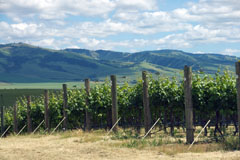
Macroclimate, also called regional climate, means a climate broadly representing an area or region on a scale of tens to hundreds of kilometers. Unlike the more precise terms microclimate and mesoclimate, macroclimate approximates to what is normally meant by the word ‘climate’. It is usually taken from a long-established recording station within the region. ….

Macroclimatic data have to be used with caution when applied to viticulture. Informed adjustments are nearly always needed for differences in altitude, latitude, slope, aspect, and even soil type, before worthwhile estimates can be made for the mesoclimates of actual vineyards. ….

Layman’s terms from Kori:
Macroclimate is the climate of a particular region.


Filed under: Wine Word of the Week
 

Corliss Estates and Tranche Cellars: Livin’ Up to the Hype


By Kori ~ July 18th, 2011

Corliss Estates and Tranche Cellars burst onto the scene a couple of years ago and almost immediately received high praise from the critics. Located in Walla Walla, Washington, Corliss’s critical acclaim has not been limited to the confines of Washington State. In fact, their goal is to be considered one of the “grand vins” of the world. While Corliss and Tranche have the same owners and winemaking team, they are completely separate wineries.

On a recent visit to Walla Walla, we had the pleasure to meet with Erik McLaughlin, Director of Wineries for Corliss Estates, and tour both the Corliss and Tranche facilities, their Blue Mountain Vineyard which is adjacent to Tranche, and taste through some of their current and upcoming releases. We have had some of their wines in the past but were glad to get an inside look at their operation.

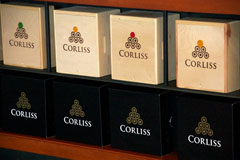
Michael and Lauri Corliss bought the building in downtown Walla Walla in 1999 that is now home to Corliss Estates and started the winery in 2000. Their first wines were released in 2008 from the 2003 vintage. Corliss produces 1,500 cases annually. Great attention to detail goes into the production of these wines. Corliss believes in extended barrel and bottle aging. While the current red wine releases from most Washington wineries are the 2007 or 2008 vintages, Corliss’s current releases are from the 2005 and 2006 vintages and their 2006 Red Wine and Cabernet Sauvignon will be released this fall. The bottles used for Corliss wines feature a very deep punt, which has a unique wax seal that is applied immediately after bottling. Until the wines are labeled close to their release date, the only identifier is that wax seal. They choose to not label their wines at the time of bottling in order to prevent the labels from getting dirty or torn before they are released. After the wines are labeled, they are hand numbered to provide yet another extra touch.

In 2004, the Corlisses decided to start Tranche Cellars. Tranche moved into the former Nicholas Cole facility in 2008 and released their first wines in 2009. Producing 2,000 cases per year, Tranche is where the Corliss winemaking team indulges their fun side, experimenting with different varieties and styles.
The winemaking efforts at Corliss and Tranche truly are a team effort. The winemaking team includes owner Mike Corliss, Erik McLaughlin, on-site winemakers Andrew Trio from Australia and Griffin Frey from Napa, and consulting winemaker Philippe Melka. Corliss and Tranche source their fruit from some of the top vineyards in Washington State as well as their four estate vineyards, Blue Mountain Vineyard in the Walla Walla Valley, Blackrock Vineyard in the Yakima Valley, and Red Mountain Vineyard and Corliss Vineyard on Red Mountain.

We tasted three Corliss wines and three Tranche wines. While we thought all six wines were very good, we were especially impressed with the 2006 Corliss Red Wine, a Bordeaux-style blend, which will be released in the fall. Since I am one to take high scores from the critics with a grain of salt, I am happy to see that Corliss is living up to the hype.

Corliss wines are offered to their registry list first. A limited number are also distributed. If you have not had a chance to try one of their wines, I encourage you to keep your eyes out for them on the shelf at your local wine shop or sign up for their registry. Corliss is not open to the public; they only open their doors twice a year for members of their registry. Tranche is open by appointment only.
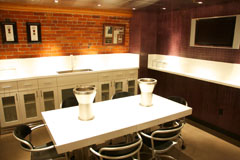
I would be remiss if I did not mention the technical tasting room at the Corliss facility designed to provide the perfect tasting atmosphere. It is a temperature-controlled room, set at a cellar-worthy 65 degrees, which has a white table, white cabinets and countertops, a system to provide neutral air, and spitting/dumping receptacles with a constant flow of water. I would love to have a room like this in my own home.

Without further ado, let’s move on to the wines…

Corliss Estates:

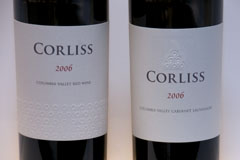
2006 Corliss Red Wine (Columbia Valley, Washington): Blend of Cabernet Sauvignon, Merlot, Cabernet Franc, Petit Verdot, and Malbec. Deep, bright red in color. Gorgeous nose with black cherry, blackberry, licorice, spice, leather, earth, and game aromas and flavors. Medium to full-bodied with good acidity and well-integrated, silky tannins. Well-balanced with good complexity and a long, smooth finish. Gets even better the longer it is open.
Quality: 4.5 stars (out of 5)
QPR: 4 bangs for your buck (out of 5)
Where to buy: Winery, $65 [to be released Fall 2011]

2006 Corliss Cabernet Sauvignon (Columbia Valley, Washington): Deep, bright red. Very aromatic with loads of spice up front as well as leather and ripe blackberry on the nose. Black cherry, spice, and mineral notes come through on the palate. Medium to full-bodied with crisp acidity, and smooth tannins. Well-balanced with a long finish.
Quality: 4 stars (out of 5)
QPR: 4 bangs for your buck (out of 5)
Where to buy: Winery, $75 [to be released Fall 2011]

2005 Corliss Red Wine (Columbia Valley, Washington): 66% Cabernet Sauvignon, 10% Merlot, 9% Malbec, 8% Cabernet Franc, and 7% Petit Verdot. Deep purplish red with slight browning. Very aromatic with black cherry, blackberry, spice, and floral notes on both the nose and palate. Medium to full-bodied with lively acidity and medium to high tannins. Well-balanced with a long finish.
Quality: 4 stars (out of 5)
QPR: 1 bang for your buck (out of 5)
Where to buy: Winery, $65; Available elsewhere, $64 to $65

Tranche Cellars:

2007 Tranche Cabernet Franc (Walla Walla Valley, Washington): Deep red in color. Nice nose with aromas of earth, minerality, licorice, and vegetal notes. Earth, black fruits, and dusty notes. Medium-bodied with crisp acidity, and medium drying tannins. Well-balanced with a long, smooth finish.
Quality: 4 stars (out of 5)
QPR: 4 bangs for your buck (out of 5)
Where to buy: Winery, $25

2006 Tranche Slice of Pape (Columbia Valley, Washington): Blend of Grenache, Syrah, Mourvedre, and Cinsault. Medium red. Nose is a bit tight at first and then earth, spice, and black cherry aromas come through. Flavors of black cherry, leather, earth, and spice. Medium to full-bodied with lively acidity, medium tannins, and a long finish.
Quality: 3.5 stars (out of 5)
QPR: 2 bangs for your buck (out of 5)
Where to buy: Winery, $35

2008 Tranche Slice of Pape Blanc (Columbia Valley, Washington): 58% Roussanne and 42% Viognier. Light, straw yellow in color. Nice nose with pear and white peach aromas. More white peach and tropical fruit comes through on the palate. Light to medium-bodied with lively acidity, good mouthfeel, and a long, refreshing finish.
Quality: 3.5 stars (out of 5)
QPR: 1 bang for your buck (out of 5)
Where to buy: Winery, $30


Filed under: American Wine, Cabernet Franc, Cabernet Sauvignon, Red Wine, Vineyards, Washington State Wine, White Wine, Wines Over $25
 

A Wine for Tonight: 2010 Chateau Ste. Michelle Sauvignon Blanc


By Kori ~ July 14th, 2011

Would you like a quick suggestion for a good wine to drink tonight (or this weekend) that won’t break your budget and is widely available? Many of our readers have said this is something they would like, so here is this week’s selection, the 2010 Chateau Ste. Michelle Sauvignon Blanc from the Columbia Valley of Washington State.
Our selection criteria include:

  • A very good Quality rating of >=3.5 stars (out of 5)
  • A price tag of <=$15
  • Must be widely available

Chateau Ste. Michelle is Washington State’s founding winery with its roots dating back to the repeal of Prohibition. In 1976, Ste. Michelle built a French-style chateau in Woodinville, just northeast of Seattle. While all of Chateau Ste. Michelle’s vineyards are located on the east side of the Cascade Mountains, all of their white wines, including this Sauvignon Blanc, are made in Woodinville.

“The cooler vintage led to a more herbal style of Sauvignon Blanc with aromas of grass, fresh herbs and grapefruit with a clean, fresh finish. The mostly stainless steel fermentation makes this a crisp Sauvignon Blanc. This wine would pair well with dishes with cream sauce.” –Bob Bertheau, Head Winemaker

2010 Chateau Ste. Michelle Sauvignon Blanc (Columbia Valley, Washington): 100% Sauvignon Blanc. Very light straw yellow in color. Aromatic with fresh cut grass and citrus notes on the nose. More citrus fruit, especially lime and orange peel, come through on the palate. Dry and light-bodied with crisp acidity and a long, refreshing finish.
Quality: 3.5 stars (out of 5)
QPR: 4 bangs for your buck (out of 5)
Where to buy: Received as sample, suggested retail $13; Available elsewhere, $9 to $14


Filed under: A Wine for Tonight, American Wine, Sauvignon Blanc, Washington State Wine, White Wine, Wines Under $15, Wines Under $20, Wines Under $25
 

Challenging Wine Pairing: Jerked Chicken


By LaGayle ~ July 13th, 2011

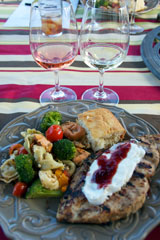
This month’s challenging wine pairing was a special treat. Our friends Darren and Mardee invited us over for jerked chicken, and we did our challenging pairing with their fabulous meal. What a beautiful evening in Seattle, out on their deck, eating delicious food, drinking great wine, and spending time with wonderful friends!

Jerk is a Jamaican cooking style where the meats are either dry rubbed or wet marinated with a number of ingredients including a mixture of spices such as allspice, nutmeg, cinnamon (just to name a few), garlic, and hot peppers. Today, the usual process is to prepare a hot spicy rub and cook the meat on the grill.

The full menu for this meal included the jerked chicken topped with sour cream and roasted raspberry chipotle sauce, tri-color cheese tortellini salad, pineapple beach bread, and key lime pie for dessert.

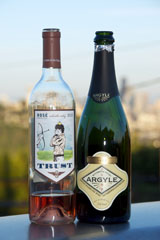
After referring to my favorite guide for pairing food and wine, What to Drink with What You Eat by Andrew Dornenburg and Karen Page, we decided to go with a rosé and a sparkling wine. We enjoyed the 2010 Trust Cellars Cabernet Franc Rosé from the Columbia Valley in Washington State and the 2007 Argyle Brut Sparkling Wine from the Willamette Valley in Oregon. Both wines were excellent; however, the rosé was the consensus favorite with the meal while the sparkling wine was the favorite prior to having it with the food.

We’d love for you to share in the comments what you would have paired with this meal. And, as always, we welcome your suggestions for challenging wine pairings for us to try in the future.

Bon Appétit!

2010 Trust Cellars Cabernet Franc Rosé (Columbia Valley, Washington): Medium salmon-pink in color. Very aromatic with cherry, strawberry, and raspberry on the nose. More cherry as well as watermelon and pear come through on the palate. Dry and light to medium-bodied with lively acidity. Well-balanced and very refreshing with a long finish.
Quality: 4 stars (out of 5)
QPR: 4 bangs for your buck (out of 5)
Where to buy: Wine World Warehouse (Seattle, Washington), $15.99; Available elsewhere, $17

2007 Argyle Brut Sparkling Wine (Willamette Valley, Oregon): 63% Chardonnay and 37% Pinot Noir. Pale, greenish straw yellow. Small, fast bead of bubbles. Nice nose with banana and apple aromas. Apple, pear, and a hint of pineapple come through on the palate. Dry, medium-bodied and crisp. Well-balanced with a long finish. An excellent bubbly.
Quality: 4 stars (out of 5)
QPR: 5 bangs for your buck (out of 5)
Where to buy: Full Pull Wines (Seattle, Washington), $21.99; Available elsewhere, $19 to $29


Filed under: American Wine, Cabernet Franc, Challenging Wine Pairing, Five-Bangs For Your Buck Wines, Food & Wine, Oregon Wine, Rose Wine, Sparkling Wine, Washington State Wine, Wines Under $20, Wines Under $25
 

Wine Word of the Week: Mesoclimate


By Kori ~ July 12th, 2011

This week’s Wine Word of the Week is mesoclimate.

Official definition from Jancis Robinson’s The Oxford Companion to Wine:
Mesoclimate, a term of climatic scale, is intermediate between regional climate or macroclimate, and the very small scale microclimate. It encompasses the more specific terms topoclimate and site climate, and has largely been replaced both in specialist usage (although the word microclimate is widely and incorrectly used by non-specialists for mesoclimate). The usual scale of a mesoclimate is in tens or hundreds of meters, so one speaks correctly of the mesoclimate of a particular vineyard or potential vineyard site. ….

Layman’s terms from Kori:
Mesoclimate, as it pertains to viticulture, refers to the environment of a particular vineyard including its aspect, elevation, slope, and so forth.


Filed under: Wine Word of the Week