
Bordeaux Varieties from Dry Creek Vineyard


By Kori ~ May 18th, 2011
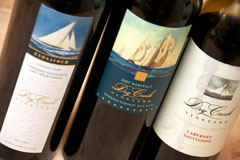
Dry Creek Vineyard, founded in 1972 by David Stare, is located in the heart of Dry Creek Valley just outside of Healdsburg, California. Well-known for their Fumé Blancs and Zinfandels, Dry Creek Vineyard also produces a number of other good wines. Today, Dry Creek Vineyard is run by David’s daughter Kim Stare Wallace and her husband Don.

We recently had the opportunity to taste three wines from Dry Creek Vineyard in a blind samples tasting, the 2006 Endeavour Cabernet Sauvignon, the 2007 Meritage, and the 2007 Cabernet Sauvignon. All three wines were good, but we especially enjoyed the Endeavour Cab. While primarily known for Zinfandel, the Dry Creek Valley actually has more Cabernet Sauvignon planted than any other variety. The fruit for the Endeavour Cabernet Sauvignon is sourced from Dry Creek Vineyard’s Endeavour Estate Vineyard. Located in the Lytton Springs area of Dry Creek Valley, Endeavour is a sustainably farmed vineyard.

All three of these wines are worth a try if you see them on the shelf at your local wine shop. And if you are visiting Sonoma County, I highly encourage you to visit Dry Creek Vineyard.

2006 Dry Creek Vineyard Endeavour Cabernet Sauvignon (Dry Creek Valley, California): 94% Cabernet Sauvignon and 6% Petit Verdot. Deep, dark red. Beautiful nose with chocolate and black fruit aromas. The palate explodes with chocolate and black fruits. Medium to full-bodied with lively acidity and medium to high, dry tannins. Well-balanced and smooth with a long, lingering finish.
Quality: 4 stars (out of 5)
QPR: 4 bangs for your buck (out of 5)
Where to Buy: Received as sample, suggested retail $60

2007 Dry Creek Valley Meritage (Sonoma County, California): 44% Cabernet Sauvignon, 27% Merlot, 14% Cabernet Franc, 11% Malbec, and 4% Petit Verdot. Deep ruby red in color. Aromatic with red fruits, floral notes, red pepper, and spice on the nose. Red and black fruits as well as spice and floral notes come through on the palate. Medium to full-bodied with lively acidity, medium to high, dry tannins, and a long finish.
Quality: 3.5 stars (out of 5)
QPR: 3 bangs for your buck (out of 5)
Where to Buy: Received as sample, suggested retail $28; Available elsewhere, $21 to $27

2007 Dry Creek Vineyard Cabernet Sauvignon (Dry Creek Valley, California): 80% Cabernet Sauvignon, 11% Merlot, 5% Cabernet Franc, 2% Petit Verdot, and 2% Malbec. Deep, dark ruby red. Aromatic with licorice, spice, and black fruits on both the nose and palate. Medium-bodied and smooth with soft tannins and a medium finish.
Quality: 3 stars (out of 5)
QPR: 4 bangs for your buck (out of 5)
Where to Buy: Received as sample, suggested retail $25; Available elsewhere, $18 to $28


Filed under: American Wine, Cabernet Sauvignon, California Wine, Red Wine, Wines Over $25
 

Wine Word of the Week: Spitting


By Kori ~ May 17th, 2011

This week’s Wine Word of the Week is spitting.
Official definition from Jancis Robinson’s The Oxford Companion to Wine:
Spitting is an essential practice at professional tastings where several dozen, often more than 100, wines are regularly offered at the same time. Members of the wine trade, and wine writers, rapidly lose any inhibitions about spitting in public. Since there are no taste receptors in the throat, spitting allows the taster to form a full impression of each wine, while minimizing the blunting effects of alcohol. It does not, unfortunately, leave the taster completely unaffected by alcohol. Some ethanol is vaporized and absorbed in the nose and mouth and, no matter how assiduous the taster, it is extremely difficult to prevent any liquid from dribbling down the throat.

Layman’s terms from Kori:
Spitting is a must for wine professionals at tastings where many wines are being served. However, spitting should not be limited to wine professionals. Anyone attending a large tasting event or visiting a number of wineries in a single day would be well served by spitting. Otherwise, you end up drinking too much which won’t feel good the next morning and you won’t be able to really tell which wines you like and don’t like after the first few you taste.


Filed under: Wine Word of the Week
 

Crack that Cap with Dusted Valley Vintners


By Kori ~ May 16th, 2011

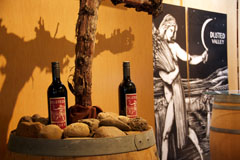
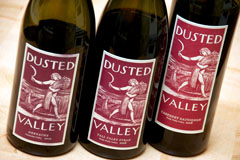
Dusted Valley Vintners, located in Walla Walla, Washington, was founded in 2003 by brothers-in-law Chad Johnson and Corey Braunel who are co-owners, co-winegrowers, and co-winemakers. Both Chad and Corey are originally from Wisconsin and are proud cheese-heads. In fact, they bring a bit of Wisconsin to Dusted Valley by using some barrels made from Wisconsin oak to age their wines. Their current annual production is over 16,000 cases. Boomtown is their entry-level value brand (12,000 cases), and the Dusted Valley label graces the bottles of their higher-end wines (4,000 cases). “Crack that cap” is a familiar refrain when it comes to Dusted Valley because all of their wines are closed with screwcaps. Both Chad and Corey have science backgrounds and based on their research, they believe that screwcaps are the best wine bottle closures.

We first visited Dusted Valley on a trip to Walla Walla in the summer of 2008 and had the pleasure to meet Chad. Their Walla Walla tasting room is located in a converted garage below Corey’s house. In 2009, they opened a second tasting room in Woodinville in the Hollywood Schoolhouse area to have a presence closer to the population base and tourists in Seattle. In addition to being a tasting room, the Dusted Valley Wine Gallery features the art of local artists. In my opinion, Dusted Valley has one of the best names for their wine club that I’ve ever heard, the Stained Tooth Society. Chad, Corey, and all of the folks at Dusted Valley value their STS members but are also able to have a bit of fun with the club giving new members Stained Tooth Society-logoed toothbrushes.

While they source their grapes from vineyards around the state of Washington, Dusted Valley is especially proud of their four estate vineyards, Sconni Block, Birch Creek, Stoney Vine, and Minnick Hills.

Recently, we had the opportunity to meet with Corey and taste through some of the current releases from Dusted Valley at their Wine Gallery in Woodinville. We also took home three of their wines to put into one of our blind samples tastings. We thought all six wines were very good but were especially impressed with the 2009 Grenache.

If you live near or are visiting either Walla Walla or Woodinville, I encourage you to make a point to stop at one of Dusted Valley’s tasting rooms. Not only are they making great wines, but also they are very friendly, welcoming folks.

2009 Dusted Valley Grenache (Columbia Valley, Washington): 91% Grenache and 9% Petite Sirah. Deep, dark ruby red. Gorgeous nose with blackberry, black cherry, spice, perfumed, and gamey aromas. Black cherry, game, strawberry, plum, and a hint of earth come through on the palate. Medium to full-bodied and crisp with medium, smooth tannins. Well-balanced with good complexity and a long finish. A great food wine.
Quality: 4.5 stars (out of 5)
QPR: 5 bangs for your buck (out of 5)
Where to Buy: Received as sample, suggested retail $28; Available elsewhere, $22 to $28

2008 Dusted Valley Tall Tales Syrah (Walla Walla Valley, Washington): 97% Syrah and 3% Viognier. Deep, dark purple. Very aromatic with smoked meat, earth, truffles, and pencil shavings on the nose. More smoked meat and earth as well as blackberry, black cherry, and blueberry come through on the palate. Medium to full-bodied with lively acidity and medium to high, drying tannins. Well-balanced and smooth with a long finish.
Quality: 4 stars (out of 5)
QPR: 2 bangs for your buck (out of 5)
Where to Buy: Received as sample, suggested retail $53; Available elsewhere, $46

2008 Dusted Valley Cabernet Sauvignon (Walla Walla Valley, Washington): 83% Cabernet Sauvignon, 14% Merlot, 2% Cabernet Franc, and 1% Malbec. Deep, dark inky purplish red in color. Nice nose with blackcurrant, leather, oak, chocolate, and dusty aromas that lead to black fruit, licorice, leather, and smoked meat flavors. Medium to full-bodied and lively with medium to high, drying tannins. Well-balanced with good complexity and a long finish.
Quality: 4 stars (out of 5)
QPR: 5 bangs for your buck (out of 5)
Where to Buy: Received as sample, suggested retail $30; Available elsewhere, $24 to $26

2009 Dusted Valley Wallywood (Columbia Valley, Washington): 63% Syrah, 30% Grenache, and 7% Mourvedre. Dark purplish red. Nice nose with earth, spice, and licorice aromas. Red cherry, spice, and Red Vines come through on the palate. Medium to full-bodied with lively acidity, medium to high tannins, and a long, smooth finish.
Quality: 3.5 stars (out of 5)
QPR: 1 bang for your buck (out of 5)
Where to Buy: Winery, $42

2008 Dusted Valley Malbec (Columbia Valley, Washington): Deep, dark inky purple-black in color. Nose is a bit tight at first. Black cherry, leather, and spice dominate the palate. Medium-bodied and lively with medium, drying tannins and a long finish.
Quality: 3.5 stars (out of 5)
QPR: 1 bang for your buck (out of 5)
Where to Buy: Winery, $42; Available elsewhere, $34

2006 Dusted Valley Late Harvest Syrah (Walla Walla Valley, Washington): Deep, dense purple. Aromatic with raisins, prunes, meat, and savory notes on both the nose and palate. Very different dessert wine; not sweet like most Late Harvest wines. Both sweet and savory. Residual Sugar: 5.1%
Quality: 3.5 stars (out of 5)
QPR: 4 bangs for your buck (out of 5)
Where to Buy: Winery, $30 [375ml]


Filed under: American Wine, Cabernet Sauvignon, Dessert Wine, Five-Bangs For Your Buck Wines, Grenache, Malbec, Red Wine, Shiraz/Syrah, Washington State Wine, Wines Over $25
 

A Wine for Tonight: 2010 Nobilo Regional Collection Sauvignon Blanc


By Kori ~ May 12th, 2011

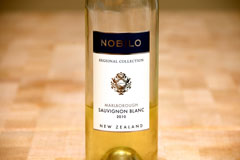
Would you like a quick suggestion for a good wine to drink tonight (or this weekend) that won’t break your budget and is widely available? Many of our readers have said this is something they would like, so here is this week’s selection, the 2010 Nobilo Regional Collection Sauvignon Blanc from the Marlborough region of New Zealand.
Our selection criteria include:

  • A very good Quality rating of >=3.5 stars (out of 5)
  • A price tag of <=$15
  • Must be widely available

Regular readers know that as far as white wines go, we Wine Peeps love Sauvignon Blanc from New Zealand. But as far as Mom (LaGayle) is concerned, New Zealand Sauvignon Blanc is the best wine period. And, Nobilo Regional Collection Sauvignon Blanc is one of her favorite go-to wines.

The Nobilo Regional Collection Sauvignon Blanc is consistent from vintage to vintage and widely available. It is crisp, refreshing, and an excellent sipper no matter whether you are sitting on the deck on a sunny afternoon or curled up with a book on a winter’s evening.

In the 1940’s, Nikola Nobilo emigrated from Croatia and planted some of the first commercial grapevines in New Zealand. He was one of the pioneers responsible for the worldwide popularity of New Zealand Sauvignon Blanc.

“Pale yellow with brilliant clarity. Very evident aromas of pineapple, passion fruit and melon. Fresh, crisp and clean with zesty flavors of ripe tropical fruits and zingy acidity. A beautifully balanced wine with great presence and mouthfeel. Enjoyable on its own as an aperitif, or pairs well with any lighter seafood dish, lemon herb chicken, or summer salads.” –Nobilo

2010 Nobilo Regional Collection Sauvignon Blanc  (Marlborough, New Zealand): Pale, greenish straw yellow. Very aromatic with grapefruit, pear, and grassy aromas. Grapefruit, grass, and lime come through on the palate. Dry and light to medium-bodied with very tart acidity. Well-balanced with a long finish. Very crisp and refreshing.
Quality: 4 stars (out of 5)
QPR: 5 bangs for your buck (out of 5)
Where to buy: Fred Meyer (Seattle, Washington), $9.99; Available elsewhere, $9 to $15


Filed under: A Wine for Tonight, Five-Bangs For Your Buck Wines, New Zealand Wine, Sauvignon Blanc, White Wine, Wines Under $10, Wines Under $15, Wines Under $20, Wines Under $25
 

Challenging Wine Pairing: Thai Red Curry Beef


By LaGayle ~ May 11th, 2011

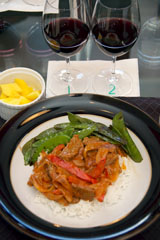
Thai food is so popular that I wanted to do another Thai dish for a challenging wine pairing. Since our family especially enjoys spicy dishes, I decided to try a red curry dish using strips of sirloin steak in this recipe. Delicious!
The menu for this pairing consisted of the Thai red curry beef dish, rice, sautéed snow peas, and fresh mango. As with most of our challenging wine pairing dinners, I consulted What to Drink with What You Eat by Andrew Dornenburg and Karen Page to determine what wines to pair with the meal.

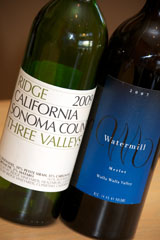
While there are a number of wines that can be paired with this dish, we decided to go with a Zinfandel blend and a Merlot. We enjoyed the 2009 Ridge Three Valleys Zinfandel blend from California’s Sonoma County and a 2007 Watermill Merlot from the Oregon side of the Walla Walla Valley. While both wines were excellent, three of the four of us preferred the Zinfandel blend with the meal.

We’d love for you to share in the comments what you would have paired with this meal. And, as always, we welcome your suggestions for challenging wine pairings for us to try in the future.

Bon Appétit!

2009 Ridge Three Valleys (Sonoma County, California): 70% Zinfandel, 10% Petite Sirah, 15% Carignane, 3% Grenache, and 2% Mataro. Deep, dark purplish red. Nice nose with red cherry, clove, and spice aromas. Flavors of red fruits, particularly strawberry, and spice. Medium to full-bodied with medium, soft tannins. Well-balanced and smooth with a long finish.
Quality: 4 stars (out of 5)
QPR: 5 bangs for your buck (out of 5)
Where to buy: Fred Meyer (Seattle, Washington), $22.79; Available elsewhere, $18 to $29

2007 Watermill Merlot (Walla Walla Valley, Oregon): Deep, dark purple. Aromatic with black fruits, especially black cherry and black plum, and smoke on the nose. More black cherry, black plum, coffee, and baker’s chocolate come through on the palate. Medium to full-bodied with lively acidity and medium to high tannins. Well-balanced with a long finish.
Quality: 4 stars (out of 5)
QPR: 5 bangs for your buck (out of 5)
Where to buy: Winery, $24; Available elsewhere, $22


Filed under: American Wine, California Wine, Challenging Wine Pairing, Five-Bangs For Your Buck Wines, Food & Wine, Merlot, Oregon Wine, Red Wine, Wines Under $25, Zinfandel
 

Wine Word of the Week: Tastevin


By Kori ~ May 10th, 2011

This week’s Wine Word of the Week is tastevin.
Official definition from Jancis Robinson’s The Oxford Companion to Wine:
Tastevins, or wine tasters, as they are known by collectors are wine antiques, are shallow, often dimpled, saucers used for tasting by professionals (and occasionally self-conscious amateurs). Because they were usually used in a cellar, or on purchasing journeys where robust construction was essential, they were almost invariably made of silver….

Layman’s terms from Kori:
A tastevin is a small and shallow cup, sometimes worn on a chain around the neck, which was historically used by wine professionals to taste and evaluate wines. No longer used on a regular basis, today a tastevin is a wine accessory for the true wine geek and collector.


Filed under: Wine Word of the Week
 

Long Shadows Saggi


By Kori ~ May 9th, 2011

Founded by Washington wine pioneer Allen Shoup, Long Shadows Vintners is a collection of ultra-premium wineries comprised of internationally acclaimed winemakers from the major wine regions of the world. Each winemaker is a partner in a unique winery dedicated to producing a single Columbia Valley wine representing a “best of type” that reflects the winemaker’s signature style.
Allen Shoup is considered one of the pioneers of the Washington wine industry. He was the CEO of Stimson Lane wine group for years. During that time, he oversaw their portfolio of wineries, including Chateau Ste. Michelle and Columbia Crest, and forged relationships with many important players in the wine business around the world. Upon retirement, he pursued his dream of bringing some of the most highly acclaimed winemakers from different regions around the world to Washington to make world-class wines from Washington grapes comparable to the wines they make in their native wine regions. The Long Shadows winemaker-partners began crafting their signature wines in 2003.

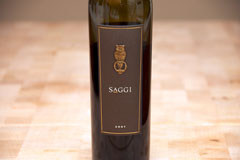
Through the years, we’ve had the pleasure of tasting a number of Long Shadows wines. Recently, we had the opportunity to taste the 2007 Saggi in a blind samples tasting, which we found to be excellent. Saggi is a Super Tuscan-style blend of Sangiovese, Cabernet Sauvignon, and Syrah, made by Ambrogio and Giovanni Folonari, a father-son winemaking team from Italy. The Folonari family has a rich winemaking history dating back to the late 1700’s.

2007 Saggi (Columbia Valley, Washington): 43% Sangiovese, 36% Cabernet Sauvignon, and 21% Syrah. Deep, dark purplish red. Nose is a bit tight at first and then opens up with black fruits and some oak. Black fruits, chocolate, licorice, and a hint of cinnamon come through on the palate. Medium to full-bodied with lively acidity and medium, dry tannins. Well-balanced with a long, smooth finish.
Quality: 4 stars (out of 5)
QPR: 3 bangs for your buck (out of 5)
Where to Buy: Received as sample, suggested retail $45; Available elsewhere, $39 to $50


Filed under: American Wine, Red Wine, Sangiovese, Washington State Wine, Wines Over $25
 

A Wine for Tonight: 2008 Willow Crest Cabernet Franc


By Kori ~ May 5th, 2011

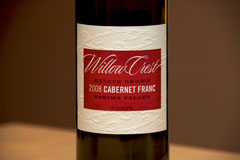
Would you like a quick suggestion for a good wine to drink tonight (or this weekend) that won’t break your budget and is widely available? Many of our readers have said this is something they would like, so here is this week’s selection, the 2008 Willow Crest Cabernet Franc from the Yakima Valley of Washington State.
Our selection criteria include:

  • A very good Quality rating of >=3.5 stars (out of 5)
  • A price tag of <=$15
  • Must be widely available

The Minick Family first planted wine grapes on their Roza farm, north of Prosser, Washington, in 1982, and then David Minick founded Willow Crest Winery in 1995. Willow Crest uses fruit from their 240-acre Minick Family Estate Vineyard to produce their wines. In 2008, Willow Crest partnered with Seattle-based Precept Wine Brands, and Peter Devison was named head winemaker the following year. David Minick continues to oversee the estate vineyard and all wine production. Currently, Willow Crest produces about 8,000 cases per year.

“Our estate’s flagship red is considerably Old World in style, reminiscent of Cabernet Franc coming from the Loire Valley of France. Consistent warm days and cool nights throughout version allow us to fully ripen our fruit without elevated sugars and jam-type/cooked flavors and aromas.” –Willow Crest Winery

2008 Willow Crest Cabernet Franc (Minick Vineyard, Yakima Valley, Washington): Medium to deep, ruby red. Nose is a bit tight at first and then Red Vines come through. Flavors of red fruits, spice, and herbal notes. Medium to full-bodied with crisp acidity, medium to high tannins, and a long finish.
Quality: 3.5 stars (out of 5)
QPR: 5 bangs for your buck (out of 5)
Where to buy: Full Pull Wines (Seattle, Washington), $11; Available elsewhere, $11


Filed under: A Wine for Tonight, American Wine, Cabernet Franc, Five-Bangs For Your Buck Wines, Red Wine, Washington State Wine, Wines Under $15, Wines Under $20, Wines Under $25
 

Tasting Group: Spanish Garnacha


By Kori ~ May 4th, 2011

Since we live in Washington State and often drink wines from Washington State, we want to make sure that we continue to hone our knowledge of the entire world of wine and maintain well-rounded palates in order to make us even more objective when we evaluate wines from Washington State. Therefore, we are thoroughly enjoying our Wine Peeps Tasting Group which includes what we think is an excellent peer group of knowledgeable wine lovers to taste, share, and learn more about wine together. Unlike our monthly wine tasting dinners in which the guests rotate, this tasting group includes people who are committed to getting together once a month which we believe benefits all of us. In addition to trying varieties and regions that we do not taste frequently, the other main difference between this group and our wine tasting dinners is that each group member brings a bottle consistent with the month’s theme so no one knows all the wines in the blind tasting.
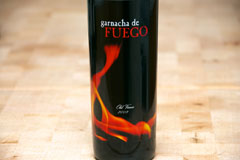
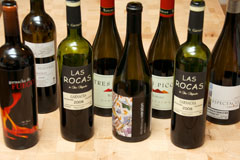
Recently, our tasting group met and explored Spanish Garnacha. Many believe that Grenache is indigenous to Spain where it is called Garnacha, but some contend that the Spanish took the vine from Sardinia during their occupation of the island. Sardinia claims the grape as its own, where it is called yet another name, Cannonau. Grenache/Garnacha is primarily a blending grape, but in recent years, more and more winemakers are producing it as a single varietal wine. Today, it is the third most widely planted red grape variety in Spain and is used to produce both varietal wines and blends. Grenache/Garnacha wines tend to be relatively high in alcohol and offer strawberry, cherry, and perfumed notes. The variety itself typically produces low tannins, low acid wines with moderate amounts of pigment. But low yields can produce dark, rich, spicy reds. We tasted eight bottles of Spanish Garnacha, and the consensus favorite was the 2009 Bodegas Zabrin Ateca Garnacha de Fuego Old Vines. Retailing for only $7.99, it delivers serious bang for your buck. In fact, you could buy a case of the Garnacha de Fuego (the consensus favorite) for the price of one bottle of the Espectacle del Montsant (which finished last in the tasting and is not recommended). A perfect example that price is not always indicative of quality.

As you’ll notice in the tasting notes below, we had duplicates of two of the wines, the Las Rocas and the Tres Picos. While the rankings were close on the Tres Picos and we found them to be very similar, the Las Rocas, while also noticeably similar, varied a bit more. Once again, just one of the many things that keeps the world of wine interesting.

From 1st to last in the group consensus rankings:

2009 Bodegas Zabrin Ateca Garnacha de Fuego Old Vines (Calatayud, Spain): Medium-deep ruby red. Aromatic with sour cherry and strawberry on the nose. More cherry and a hint of spice come through on the palate. Medium-bodied and smooth with soft tannins. Well-balanced with a long finish.
Quality: 4 stars (out of 5)
QPR: 5 bangs for your buck (out of 5)
Where to buy: Fred Meyer (Seattle, Washington), $7.99; Available elsewhere, $6 to $13

2008 Las Rocas de San Alejandro Garnacha (Calatayud, Spain): Deep ruby red. Gorgeous nose with strawberry, cherry, and dusty notes. Loads of red cherry, dust, spice, and a hint of earth on the palate. Medium to full-bodied with lively acidity and medium tannins. Well-balanced and smooth with good complexity and a long, lingering finish.
Quality: 4 stars (out of 5)
QPR: 5 bangs for your buck (out of 5)
Where to buy: Wine World Warehouse (Seattle, Washington), $12; Available elsewhere, $9 to $14

2008 Bodegas Alto Moncayo Veraton Garnacha (Campo de Borja, Spain): Deep red in color. Aromatic with dark red fruits, earth, and a bit of funk on the nose. More red fruits as well as spice and black pepper come through on the palate. Medium to full-bodied and lively with medium to high, drying tannins. Well-balanced with a long finish.
Quality: 4 stars (out of 5)
QPR: 4 bangs for your buck (out of 5)
Where to buy: Esquin Wine Merchants (Seattle, Washington), $28.99; Available elsewhere, $22 to $42

2008 Las Rocas de San Alejandro Garnacha (Calatayud, Spain): Deep ruby red. Nice nose with red fruits, earth, and floral notes. Red fruits, earth, dust, and floral notes on the palate. Medium to full-bodied with lively acidity and medium to high tannins and a long finish.
Quality: 3.5 stars (out of 5)
QPR: 5 bangs for your buck (out of 5)
Where to buy: Fred Meyer (Seattle, Washington), $11.79; Available elsewhere, $9 to $14

2006 Clos Figueras Priorat (Priorat, Spain): Deep purplish ruby red. Aromatic with Red Vines and prunes on the nose; more prunes and stewed plums on the palate. Medium-bodied and smooth with medium tannins. Very ripe and a bit hot with a medium to long finish.
Quality: 3.5 stars (out of 5)
QPR: 1 bang for your buck (out of 5)
Where to buy: Full Pull Wines (Seattle, Washington), $50; Available elsewhere, $68 to $83

2009 Borsao Tres Picos Garnacha (Campo de Borja, Spain): Medium-deep ruby red in color. Aromatic with perfume, dust, and rubber on the nose that lead to flavors of dust, earth, and sour cherry. Medium to full-bodied and lively with medium to high tannins and a long finish.
Quality: 3 stars (out of 5)
QPR: 1 bang for your buck (out of 5)
Where to buy: Whole Foods (Seattle, Washington), $16; Available elsewhere, $7 to $17

2009 Borsao Tres Picos Garnacha (Campo de Borja, Spain): Medium-deep ruby red in color. Aromatic with red berries and floral notes on the nose that lead to more red berries, earth, and oak on the palate. Medium to full-bodied and lively with medium to high tannins and a long finish.
Quality: 3 stars (out of 5)
QPR: 2 bangs for your buck (out of 5)
Where to buy: Fred Meyer (Seattle, Washington), $13.49; Available elsewhere, $7 to $17

2007 Espectacle del Montsant Garnacha (Montsant, Spain): Medium-deep ruby red. Sour cherry Jolly Rancher, strawberry, and dust on the nose; rough, dry, and dusty on the palate. Medium-bodied with lively acidity, hard tannins, and a very bitter, unpleasant finish.
Quality: 2.5 stars (out of 5)
QPR: NR (not recommended)
Where to buy: J.J. Buckley (California), $108.99; Available elsewhere, $100 to $125


Filed under: Five-Bangs For Your Buck Wines, Grenache, Red Wine, Spanish Wine, Tasting Group, Wines NOT To Buy (1 & 2 Star), Wines Over $25, Wines Under $10, Wines Under $15, Wines Under $20, Wines Under $25
 

Wine Word of the Week: Champagne


By Kori ~ May 3rd, 2011

This week’s Wine Word of the Week is Champagne.

Official definition from Jancis Robinson’s The Oxford Companion to Wine:
Champagne is a name derived from the Latin term Campania, originally used to describe the rolling open countryside just north of Rome. In the early Middle Ages, it became applied to a province in north east France. It is now divided into the so-called ‘Champagne pouilleuse,’ the once-barren but now cereal-growing chalky plains east of Rheims, and the ‘Champagne viticole’ (capital letters indicate the geographical region while lower case is used for the wine).

Champagne, with its three champagne towns Rheims (Reims in French), Epernay, and Ay, was the first region to make sparkling wine in any quantity and historically the name champagne became synonymous with the finest, although Champagne is now responsibly for less than one bottle in 12 of total world production of sparkling wine. ….

In the past, a number of grape varieties were planted in Champagne. But today almost the whole vineyard is planted with three: Pinot Noir, Pinot Meunier, and Chardonnay. ….

Layman’s terms from Kori:
The Champagne region of France is one of the coldest and most northerly winegrowing regions in the world, which is why it is best suited to sparkling wine. Champagne is the most well-known sparkling wine in the world, but it can only be called Champagne if it is produced in the Champagne region of France. Champagne is produced from any or all of the three grape varieties allowed for sparkling wine production in the Champagne region: Chardonnay, Pinot Noir, and Pinot Meunier. The majority of Champagne, about 85 percent, is non-vintage and produced in a “house style” by blending wines from several vintages. In the best years, a vintage Champagne is produced in which all of the wine is from the year indicated on the bottle.


Filed under: Wine Word of the Week