
Taste Washington 2011: Highlights from Washington Wine’s Signature Event


By Kori ~ March 30th, 2011
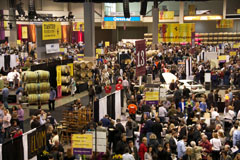
Hosted annually by the Washington Wine Commission, Taste Washington is dubbed “the ultimate wine experience.” This past weekend brought Washington wine lovers from around the country to Seattle to drink, eat, and be merry. The event is a wine and food lover’s paradise.

The festivities kicked off on Friday with the Washington Wine Restaurant Awards, picked up steam on Saturday with Education Day, and launched into overdrive on Sunday when the doors opened for the Grand Tasting.

Washington Wine Restaurant Awards

The purpose of the Washington Wine Restaurant Awards is to honor restaurants, sommeliers, and individuals that help promote Washington wines in restaurants. Judges evaluate restaurants on a variety of criteria, including wine list, service and staffing, promotions and overall wine philosophy. The Walter Clore Honorarium, given to an individual who has demonstrated dedication to the advancement of the Washington wine industry, was awarded to Maureen “Mo” Shaw of Ray’s Café in Seattle. The Washington Wine Restaurant of the Year is the most prestigious award, given to the restaurant that has promoted Washington wines above and beyond all others. This year’s winner was Canlis Restaurant in Seattle.

Education Day
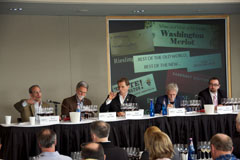
Education Day featured eight seminars on a variety of topics. The seminars give attendees the opportunity to taste, discuss, meet, and learn from some of the biggest names in the Washington wine industry as well as a few notable guests from outside of Washington State. I attended the Common Ground seminar featuring Seven Hills Vineyard as well as one discussing Washington’s Singular Style.

Common Ground: A Seven Hills Vineyard Investigation
Shayn Bjornholm MS, the Education Director for the Washington Wine Commission, led this seminar focused on the Walla Walla Valley’s famed Seven Hills Vineyard. The panel featured Marty Clubb of L’Ecole Nº41, Jean-Francois Pellet of Pepper Bridge Winery, Drew Hendricks MS of Pappas Brothers, and Blake Gray of The Gray Market Report. Each panelist spoke about their thoughts regarding Seven Hills Vineyard, which was named one of the “Top Ten Vineyards in the World” by Wine & Spirits Magazine in 2004, and then Shayn Bjornholm led us through a tasting of wines from L’Ecole Nº41, Leonetti Cellar, and Pepper Bridge Winery. The common threads from winemaker comments about Seven Hills Vineyard were texture, tannin structure, vibrancy, and black fruits, especially black plums.

IN SEARCH OF: Washington’s Singular Style
Bruce Schoenfeld of Travel + Leisure Magazine moderated a stellar panel, which included Bob Betz MW of Betz Family Winery, Shayn Bjornholm MS, Sandy Block MW of Legal Seafoods, and Drew Hendricks MS. After tasting wines from Chablis in France, Ribera del Duero in Spain, and Barolo in Italy, which are very synonymous with a singular style from their region of origin, the panel then took the seminar attendees through a tasting of Washington wines and a discussion of whether or not Washington State has, or should have, a singular style. While no definitive conclusions were made, I will offer up three quotes from Bob Betz that I found particularly interesting:

Washington wine is “Old World structure and New World fruit”.

“Washington Syrah is what America should be drinking.”

“Consumers have a 2-point system (not a 100-point), Yum or Yuck.”

Grand Tasting

The Grand Tasting is the showcase event of Taste Washington. This year’s event featured over 200 wineries pouring their wines and over 50 restaurants serving small bites. With more than 700 wineries now open in the state of Washington, this event offers attendees the opportunity to try a large number of them in one place at one time. Considering the time and gas money you save not having to crisscross the state visiting tasting rooms and making appointments, the $125 for VIP tickets or $75 for general admission tickets is money well spent. Now, don’t get me wrong, once you attend an event like this and discover some favorite new wines and wineries, you will definitely want to make plans to travel to the wineries to visit and taste again. There is nothing like spending a long weekend in Washington wine country.
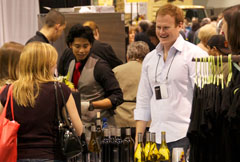
One of the best aspects of Taste Washington is that often you will find either the winemaker and/or winery owner pouring that winery’s wines. In addition to visiting with a number of people whose wines we have enjoyed in the past, we had the opportunity to try some wines from wineries whose wines we had not previously tasted. Our most exciting discovery was JB Neufeld Winery. Located in Yakima, Washington, JB Neufeld Winery is owned by Justin and Brooke Neufeld. While the JB Neufeld wines were new to us, we have long been fans of Gilbert Cellars for whom Justin is also the winemaker. A quick glance at the breakdown of wines we tasted at the Grand Tasting below shows that Justin’s wines also deliver serious bang-for-your-buck with the first three QPR: 5 wines being two wines from Gilbert Cellars and one from JB Neufeld.

My favorite wine from the Grand Tasting was the 2009 Betz Family Winery La Côte Patriarche Syrah, which will be released in the fall. The fruit for this wine comes from the 1986 Syrah block at Red Willow Vineyard, the oldest Syrah planting in the State of Washington. The name of this wine, which translates as “the founder’s slope”, is a nod to Red Willow owner/grower, Mike Sauer, and former Columbia Winery winemaker, David Lake, who planted those original Syrah vines.

Here’s a breakdown of the wines that we tasted during the Grand Tasting. Under each Quality heading, the wine name and region are listed along with price and QPR rating. Wines in bold type received a QPR rating of 5 bangs for your buck (out of 5).

Quality: 4.5 stars (out of 5)
2009 Betz Family Winery La Côte Patriarche Syrah, Yakima Valley, $55, QPR: 4

Quality: 4 stars (out of 5)
2007 Gilbert Cellars Allobroges Red Rhone-style Blend, Columbia Valley, $20, QPR: 5
2007 Gilbert Cellars Cabernet Sauvignon, Wahluke Slope, $28, QPR: 5
2008 JB Neufeld Artz Vineyard Cabernet Sauvignon, Red Mountain, $32, QPR: 5
2007 Dunham Cellars Cabernet Sauvignon XIII, Columbia Valley, $45, QPR: 5

2010 Nefarious Cellars Estate Viognier, Lake Chelan, $18, QPR: 4
2010 William Church Winery Viognier, Columbia Valley, $20, QPR: 4
2008 William Church Winery “2 Spires” Syrah/Cab Blend, Columbia Valley, $28, QPR: 4
2008 Hollywood Hill Vineyards Syrah, Rattlesnake Hills, $32, QPR: 4
2007 Laurelhurst Cellars Boushey Vineyard Syrah, Yakima Valley, $32, QPR: 4
2007 Adams Bench Reckoning Red Blend, Columbia Valley, $34, QPR: 4
2008 Hollywood Hill DIst83 Red Rhone-style Blend, Horse Heaven Hills, $34, QPR: 4
2008 L’Ecole Nº41 Estate Merlot, Walla Walla Valley, $37, QPR: 4
2010 Côte Bonneville Cabernet Franc Rosé, Yakima Valley, $30, QPR: 3
2007 Gilbert Cellars Petit Verdot, Wahluke Slope, $36, QPR: 3
2008 Nefarious Cellars Rocky Mother Syrah, Columbia Valley, $42, QPR: 3
2006 Côte Bonneville Carriage House Red Blend, Yakima Valley, $50, QPR: 2
2008 Andrew Will Sorella Red Blend, Horse Heaven Hills, $70, QPR: 1

Quality: 3.5 stars (out of 5)
NV Treveri Cellars Blanc de Blanc Brut, Columbia Valley, $14, QPR: 5
2008 Gilbert Cellars Left Bank Red Blend, Wahluke Slope, $20, QPR: 4
2008 William Church Winery Bishop’s Blend Red Wine, Columbia Valley, $20, QPR: 4
2008 Dunham Cellars Lewis Vineyard Riesling, Columbia Valley, $20, QPR: 4
2007 Bridge Press Cellars Merlot, Walla Walla Valley, $30, QPR: 4
2008 JB Neufeld DuBrul Vineyard Cabernet Sauvignon, Yakima Valley, $32, QPR: 4
2007 Laurelhurst Cellars Laurus Nobilis Red Blend, Columbia Valley, $28, QPR: 3
2009 Hollywood Hill Vineyards Pinot Noir, Puget Sound, $38, QPR: 3
2008 Nefarious Cellars Malbec, Snipes Mountain, $28, QPR: 2
2008 Adams Bench Reckoning Red Blend, Columbia Valley, $39, QPR: 2
2008 Cooper Wine Company Cabernet Sauvignon, Red Mountain, $60, QPR: 2
2008 Cooper Wine Company L’inizio Red Blend, Red Mountain, $45, QPR: 1
2008 Andrew Will Two Blondes Vineyard Red Blend, Yakima Valley, $56, QPR: 1

Quality: 3 stars (out of 5)
2009 Covey Run Sauvignon Blanc, Columbia Valley, $6, QPR: 5
NV Treveri Cellars Blanc de Blanc Extra Sec, Columbia Valley, $15, QPR: 5
NV Treveri Cellars Blanc de Blanc Demi-Sec, Columbia Valley, $17, QPR: 5

2007 Bridge Press Cellars Cabernet Sauvignon, Walla Walla Valley, $40, QPR: 3
2008 Laurelhurst Cellars Merlot, Columbia Valley, $24, QPR: 2
2009 Andrew Will Cabernet Franc, Columbia Valley, $28, QPR: 2
2008 Laurelhurst Cellars Cabernet Franc, Columbia Valley, $28, QPR: 2
2009 Icicle Ridge Winery Sangiovese, Washington State, $85, QPR: 1


Filed under: American Wine, Cabernet Franc, Cabernet Sauvignon, Five-Bangs For Your Buck Wines, Malbec, Merlot, Petit Verdot, Pinot Noir, Red Wine, Riesling, Rose Wine, Sangiovese, Sauvignon Blanc, Shiraz/Syrah, Sparkling Wine, Viognier, Washington State Wine, White Wine, Wine Activities/Events, Wines Over $25, Wines Under $10, Wines Under $15, Wines Under $20, Wines Under $25
 

Wine Word of the Week: New World


By Kori ~ March 29th, 2011

This week’s Wine Word of the Week is New World.

Official definition from Jancis Robinson’s The Oxford Companion to Wine:
New World, a term much used in the wine world, initially somewhat patronizingly but with increasing admiration over the past quarter-century as the New World’s share of global exports rose from 3 to 23 percent, to distinguish the colonies established as a result of European exploration, beginning with some of the longer voyages in the 15th century. As such it contrasts with the Old World of Europe and the other Mediterranean countries where the vine was widely established by the 4th century. Most of the differences between the Old and New Worlds of wine are being systematically eroded as those in the Old World increasingly adopt technical innovations and those in the New World are increasingly exposed to some of the better aspects of tradition.

Layman’s terms from Kori:
New World is a term used in the wine world to describe wines produced outside of the traditional winegrowing regions of Europe. The New World includes the United States, Australia, New Zealand, South Africa, Argentina, and Chile, just to name a few. In very general terms, New World wines tend to be fruitier and fuller-bodied than Old World wines.


Filed under: Wine Word of the Week
 

Women of Washington Wine: Holly Turner of Three Rivers Winery


By Kori ~ March 28th, 2011

Today’s post is part of a series featuring the Women of Washington Wine. In an industry once dominated by men, more and more women are joining the ranks as winery owners, vineyard owners, and winemakers. Being a woman myself, I am fascinated by these women and what they have done and continue to do. Through this series, I hope to introduce you to some of the brightest female faces in the Washington wine industry.

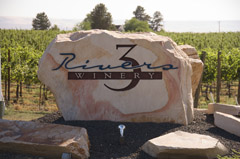
Winemaker Holly Turner joined Three Rivers Winery in Walla Walla, Washington, in 2000 and oversees all aspects of production. Holly got her start at Chateau Ste. Michelle where she worked her way from being on the tasting room staff to the winemaking staff. She spent time working harvest in Argentina before returning to Washington State to work for Three Rivers. Three Rivers Winery is named for the three most prominent rivers—the Columbia, Snake, and Walla Walla—which feed the vineyards from which it sources grapes. Three Rivers sources fruit from some of the top vineyards in the state including Boushey, Champoux, and Sagemoor, among others. Three Rivers is owned by Foley Family Wines in California and produces 15,000 cases per year.

Recently, Holly was kind enough to take time out of her busy schedule to answer some questions for me and our Wine Peeps readers.

Highlights from Q&A with Holly Turner:

How did you first get involved in the wine business?
I started working in the tasting room for Chateau Ste. Michelle in their now closed facility in Grandview.

What were the steps that led to where you are now?
I have a degree in Biology and worked in the food science industry for a couple of years but getting my foot in the door at Chateau Ste. Michelle was essential. I worked in the tasting rooms, then in the red wine laboratory, and finally moved on to the winemaking staff there. After the 1999 vintage, I left for a harvest in Argentina. When I returned, I went to work at Three Rivers.

Has being a woman been an advantage or a disadvantage in your wine journey?
Neither. As a woman, I certainly had to prove myself physically and intellectually. In the cellar, you’re asking people to do very physical work. I felt like I needed to do it as well to earn respect. Intellectually, the proof is always in the bottle. You’re only as good as your last vintage. I believe it’s the same for any male winemaker.

What advice do you have for a woman wanting to get involved in the wine business today?
Get any experience in the wine business that you can. It’s all valuable. There are many opportunities to volunteer, work in tasting rooms, take classes, and work harvest. Do anything you can to learn more.

I understand that you spent time working at a winery in Argentina earlier in your career. What did you learn from that experience?
Wine is universal; even if you don’t speak the language and are unfamiliar with the culture, you can always find common ground in wine. We’re all striving for the same goals of making the most expressive, impressive wine possible from the sites with which we’re working.

What are your thoughts about the Washington wine industry, in general?
I feel fortunate to be a part of the wine industry in Washington. We’re still so young and there is so much potential. Anything goes; I love it.

In recent years the Washington wine industry has grown at a rapid rate. Do you expect that trend to continue?
I don’t have a crystal ball but what I do know is that we’ve got plenty of unplanted acreage in Washington, which means there is potential for growth. The economy is having an impact, but with that being said, there are small wineries popping up all the time. So rapid growth may not be happening right now, but growth definitely.

What is your vision for the future of Three Rivers Winery?
Stay focused. Improve our wine quality. I value consistency in our wines and to continue that we’ve got to be on our game.

Many thanks to Holly for sharing her story and thoughts with us. I wish her all the best and will continue following her work and Three Rivers Winery with great interest, and I hope that you will too.


Filed under: American Wine, Interview, Washington State Wine, Women of Washington Wine
 

A Wine for Tonight: 2010 Veramonte Sauvignon Blanc Reserva


By Kori ~ March 24th, 2011

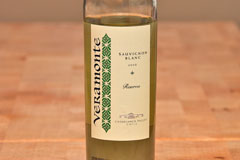
Would you like a quick suggestion for a good wine to drink tonight (or this weekend) that won’t break your budget and is widely available? Many of our readers have said this is something they would like, so here is this week’s selection, the 2010 Veramonte Sauvignon Blanc Reserva from the Casablanca Valley of Chile.

Our selection criteria include:

  • A very good Quality rating of >=3.5 stars (out of 5)
  • A price tag of <=$15
  • Must be widely available

Agustin Huneeus and his son Agustin Francisco Huneeus founded Veramonte, located northwest of Santiago, Chile, along the Pacific Coast, in 1990. The Veramonte estate covers 11,000 acres. More than 1,000 acres are planted to wine grapes while the remaining 10,000 acres have been set aside as natural greenbelt. Cristian Aliaga joined the Veramonte making team in 1999 as assistant winemaker and was promoted to head winemaker in 2007.

Sauvignon Blanc is the primary white variety planted in Chile. This 2010 Veramonte Sauvignon Blanc Reserva is very refreshing and has screaming acidity. In fact, it reminds me a lot of New Zealand Sauvignon Blanc, which I love.

“Sauvignon Blanc grapes are grown in the estate vineyards across a total of 47 vineyard blocks. The 2010 vintage was a little later than usual because of the cool spring. This led to lower yields which increased aromatics and complexity and provided beautiful acidity and mineral notes on the palate.” – Cristian Aliaga, winemaker

2010 Veramonte Sauvignon Blanc Reserva (Casablanca, Valley, Chile): Pale, greenish straw yellow in color. Very aromatic with fresh grass, lemon, lime, and grapefruit on both the nose and palate. Dry and light to medium-bodied with tart acidity. Very refreshing with a long finish.
Quality: 3.5 stars (out of 5)
QPR: 4 bangs for your buck (out of 5)
Where to buy: Received as sample, suggested retail $11.99; Available elsewhere, $5 to $13


Filed under: A Wine for Tonight, Chilean Wine, Sauvignon Blanc, White Wine, Wines Under $15, Wines Under $20, Wines Under $25
 

Wine Tasting Dinner: Washington Malbec


By Kori ~ March 23rd, 2011

Malbec was originally one of the six varieties used in red Bordeaux blends along with Cabernet Sauvignon, Merlot, Cabernet Franc, Petit Verdot, and occasionally Carmenère. Today, it is only used sparingly in Bordeaux but has really come into its own as a stand-alone varietal in Argentina. In my opinion, Washington State is producing some excellent Malbec as well. In general, Malbec is not as tannic as Cabernet Sauvignon but is spicier than Merlot and goes well with a number of different foods. In 2009, Seattle Magazine selected Malbec as the Best Emerging Varietal in their Best of Washington Wine Awards.

“Originally a blending grape in the Bordeaux region of France and then a varietal in Argentina, this grape is cropping up in Washington because of its ability to grow well in the hot days and cool nights of eastern Washington.” –Seattle Magazine

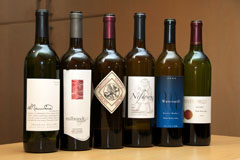
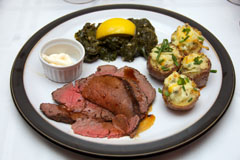
Last Friday, we featured Washington Malbec in our monthly wine tasting dinner. All six wines paired perfectly with Mom’s dinner of roasted pepper tomato soup, sautéed pear salad with blue cheese dressing, roasted beef tenderloin, twice-baked red potato bites, braised kale, and German chocolate dessert with whipped cream garnished with shaved chocolate.

While all six wines were good, the 2007 àMaurice Cellars Malbec stood out from the rest. It was my favorite from the first sip right on through the meal. The 2007 Milbrandt The Estates Malbec also showed extremely well. On top of being excellent wines, the àMaurice and Milbrandt also deliver serious bang for your buck.

Anna Schafer of àMaurice Cellars is a very talented winemaker. In addition to founding àMaurice Cellars with her family in 2004, Anna has also spent time in Argentina working harvest. Given the experience she gained there, it is no wonder that she has a deft touch when it comes to producing top quality Malbec. Consistent from vintage to vintage, Anna’s àMaurice Cellars Malbec is one of the best Malbecs produced in the United States.

If you haven’t yet had the pleasure of enjoying Washington Malbec, this list is a good place to start. Enjoy!

From 1st to last in the group consensus rankings:

2007 àMaurice Cellars Malbec (Columbia Valley, Washington): Deep, dark red in color. Gorgeous nose with aromas of earth, game, smoked meat, and spice. Smoked meat, black cherry, and a hint of earth and spice come through on the palate. Medium to full-bodied with lively acidity and medium to high tannins. Well-balanced with good complexity and a long, smooth finish.
Quality: 4.5 stars (out of 5)
QPR: 5 bangs for your buck (out of 5)
Where to buy: Full Pull Wines (Seattle, Washington), $31; Available elsewhere, $35

2007 Milbrandt The Estates Malbec (Wahluke Slope, Washington): Deep ruby red. Aromatic with cinnamon, red fruits, and floral notes on the nose. More red fruits and floral notes as well as chocolate and licorice come through on the palate. Medium to full-bodied with lively acidity and medium to high tannins. Well-balanced with a long finish.
Quality: 4 stars (out of 5)
QPR: 5 bangs for your buck (out of 5)
Where to buy: Full Pull Wines (Seattle, Washington), $18; Available elsewhere, $18 to $27

2007 Barnard Griffin Malbec (Columbia Valley, Washington): Deep, purplish red in color. Nice nose with herbal and earthy aromas that lead to red fruit and herbal flavors. Medium-bodied with medium tannins and a long, smooth finish.
Quality: 4 stars (out of 5)
QPR: 4 bangs for your buck (out of 5)
Where to buy: Esquin Wine Merchants (Seattle, Washington), $24; Available elsewhere, $27

2008 Nefarious Cellars Malbec (Upland Vineyard, Snipes Mountain, Washington): Deep, dark purplish red. Nice nose with black cherry and spice aromas. More black cherry and cinnamon come through on the palate. Medium to full-bodied with lively acidity, medium to high, drying tannins and a long finish.
Quality: 3.5 stars (out of 5)
QPR: 2 bangs for your buck (out of 5)
Where to buy: Wine World (Seattle, Washington), $26; Available elsewhere, $28

2008 Watermill Winery Estate Malbec (Walla Walla Valley, Oregon): Deep, dark purplish red in color. Cotton candy, cinnamon, and floral aromas come through on the nose; red fruits, cinnamon, bacon, earth, and floral notes on the palate. Medium to full-bodied with lively acidity, medium to high tannins, and a long finish.
Quality: 3.5 stars (out of 5)
QPR: 2 bangs for your buck (out of 5)
Where to buy: Winery, $28; Available elsewhere, $28

2007 Seven Hills Winery Malbec (Walla Walla Valley, Washington): Deep, purplish red. Aromatic with red fruit and floral aromas. Candied red and black fruits and spice come through on the palate. Medium to full-bodied with lively acidity, medium tannins, and a medium to long, jammy finish.
Quality: 3 stars (out of 5)
QPR: 1 bang for your buck (out of 5)
Where to buy: Wine World (Seattle, Washington), $27; Available elsewhere, $23


Filed under: American Wine, Five-Bangs For Your Buck Wines, Malbec, Red Wine, Washington State Wine, Wine Tasting Dinners, Wines Over $25, Wines Under $20, Wines Under $25
 

Wine Word of the Week: Old World


By Kori ~ March 22nd, 2011

This week’s Wine Word of the Week is Old World.

Official definition from Jancis Robinson’s The Oxford Companion to Wine:
Old World is Europe and the rest of the Mediterranean basin such as the Near East and North Africa. The term is used solely in contrast to the New World, the Old World having little sense of homogeneity. In very general terms, Old World techniques in vineyard and cellar have relied more on tradition and less on science than in the New World but this is changing as more and more wine producers travel freely between Old and New Worlds, exchanging ideas and techniques. The notion of terroir is an important and well-established one in much of the Old World, especially France, Germany, and Italy. To typical Old World producers, geography is considerably more important than technology.

Layman’s terms from Kori:
Old World is a term used in the wine world to describe wines produced primarily in the traditional winegrowing regions of Europe. Old World wines can be made in many different styles; however, the winemaking practices employed in Old World wines tend to rely more on tradition and the concept of terroir than New World wines.


Filed under: Wine Word of the Week
 

Cana’s Feast Winery: Turning Water into Wine


By Kori ~ March 21st, 2011

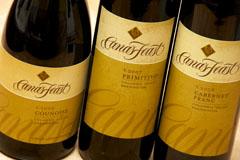
The folks at Cana’s Feast Winery do not literally turn water into wine; however, the wedding feast at Cana at which Jesus performed his first miracle and turned water into wine inspired the winery’s name. Founded by Gino Cuneo as Cuneo Cellars in 1993, the winery was renamed Cana’s Feast, which had been the name of their reserve line, in 2006. Winemaker Patrick Taylor joined Cana’s Feast in 2004 as the assistant to founder and original winemaker Gino Cuneo. Taylor took over all winemaking responsibilities in 2007. Located in Carlton, Oregon, Cana’s Feast sources their grapes from the Columbia Valley in Washington State and the Willamette Valley in Oregon.

We recently had the opportunity to taste several wines from Cana’s Feast Winery in a blind samples tasting, the 2009 Counoise, the 2007 Primitivo, and the 2008 Cabernet Franc. The fruit for these three wines was sourced from vineyards in Washington State. I found the Counoise to be particularly compelling. Not a variety that you run across every day here in the Pacific Northwest, Counoise is primarily grown in the Rhône Valley of France. Cana’s Feast specializes in Italian and Bordeaux varieties, hence the Primitivo and Cabernet Franc.

Cana’s Feast boasts a Tuscan-style winery near downtown Carlton and is one of the few Oregon wineries with an on-site restaurant. The Cucina features Mediterranean-inspired menus and offers views of the Coast Range and the winery’s bocce courts.

2009 Cana’s Feast Counoise (Coyote Canyon Vineyard, Columbia Valley, Washington): Medium ruby red in color. Nice nose with raspberry, strawberry, and cinnamon aromas. More red fruits, spice, and herbal notes come through on the palate. Medium-bodied with crisp acidity, soft tannins, and a long, smooth finish.
Quality: 3.5 stars (out of 5)
QPR: 2 bangs for your buck (out of 5)
Where to Buy: Received as sample, suggested retail $25

2007 Cana’s Feast Primitivo (Columbia Valley, Washington): Medium-deep ruby red. Very aromatic with spice box and potpourri aromas that lead to candied red fruits and spice on the palate. Medium-bodied and lively with medium tannins and a medium to long finish.
Quality: 3 stars (out of 5)
QPR: 4 bangs for your buck (out of 5)
Where to Buy: Received as sample, suggested retail $25

2008 Cana’s Feast Cabernet Franc (Columbia Valley, Washington): Deep, ruby red in color. Fresh red and black fruits as well as vegetal notes come through on both the nose and palate. Medium to full-bodied with crisp acidity, medium, drying tannins, and a long finish.
Quality: 3 stars (out of 5)
QPR: 2 bangs for your buck (out of 5)
Where to Buy: Received as sample, suggested retail $29


Filed under: American Wine, Cabernet Franc, Lesser Known Varietals, Oregon Wine, Red Wine, Washington State Wine, Wines Over $25, Wines Under $25
 

A Wine for Tonight: 2010 Pacific Rim Riesling


By Kori ~ March 17th, 2011

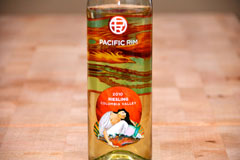
Would you like a quick suggestion for a good wine to drink tonight (or this weekend) that won’t break your budget and is widely available? Many of our readers have said this is something they would like, so here is this week’s selection, the 2010 Pacific Rim Riesling from the Columbia Valley of Washington State.

Our selection criteria include:

  • A very good Quality rating of >=3.5 stars (out of 5)
  • A price tag of <=$15
  • Must be widely available

Pacific Rim Winery, located in West Richland, Washington, is almost exclusively a Riesling producer. The first Pacific Rim Riesling was produced in 1992 as a brand within Bonny Doon Vineyard in Santa Cruz, California, and used grapes from California, Washington, and Germany. In 2007, Randall Grahm decided to downsize Bonny Doon and spun off Pacific Rim as a stand-alone winery dedicated to Riesling. The entire Pacific Rim operation relocated to Washington State with general manager and winemaker Nicolas Quillé running the operation. In January, Pacific Rim was sold to the Mariani family of New York, which owns Banfi Vintners. Pacific Rim consistently produces good wines at great prices that are widely available. Annual production at Pacific Rim is about 160,000 cases with about 90 percent being Riesling.

“Portraying bright crispness, subtle sweetness and aromas of jasmine, pear and apple, the wine exemplifies the harmony of Riesling. The sweetness plays wonderfully with fiery fare (from Thai to Mexican), while the natural acidity stands up to richer foods (from French to German).” –Nicolas Quillé, winemaker

2010 Pacific Rim Riesling (Columbia Valley, Washington): Pale straw yellow in color. Very aromatic with fresh aromas of lemon, citrus, and pear. Lemon meringue pie as well as citrus and pear flavors show through on the palate. Off-dry, medium-bodied and crisp with a long, refreshing finish. Residual Sugar: 2.3%
Quality: 3.5 stars (out of 5)
QPR: 5 bangs for your buck (out of 5)
Where to buy: Received as sample, suggested retail $10; Available elsewhere, $12 to $13


Filed under: A Wine for Tonight, American Wine, Five-Bangs For Your Buck Wines, Riesling, Washington State Wine, White Wine, Wines Under $10, Wines Under $15, Wines Under $20, Wines Under $25
 

Challenging Wine Pairing: Dungeness Crabmeat Au Gratin


By LaGayle ~ March 16th, 2011

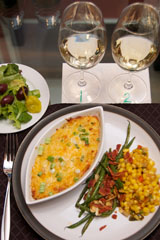
One of my favorite foods is crabmeat au gratin; however, it’s not something that I eat often. While it is “yummy” as my granddaughter says, it is very rich. I decided that it would be a great food to incorporate into one of our challenging wine pairing dinners. Dungeness crabmeat was used in this preparation along with the usual onion, bell pepper, several different cheeses, and spices including Creole seasoning. This entrée is delicious, it’s simple to prepare, and it makes a great presentation. I chose to serve it in individual au gratin dishes rather than as a casserole.
The menu for this meal consisted of a mixed green salad, Dungeness crabmeat au gratin, corn maque choux, and Cajun green bean stir-fry. As a note on the side dish, corn maque choux (pronounced “mock shoe”) is a traditional dish of southern Louisiana thought to be of Cajun and Native American influence and has ingredients that include corn, bell pepper, onion, and tomatoes.

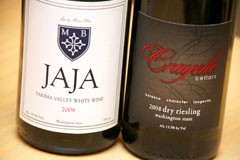
Once the menu was set, it was time to select our two wines. With the seafood entrée, we chose two white wines, both from Washington State, the 2009 Maison Bleue Jaja White Wine, a blend of Roussanne, Chardonnay, and Marsanne, and the 2008 Crayelle Cellars Dry Riesling. Both of these wines had done well in previous blind samples tastings, and we were excited to try them with food. They were both very good and paired well with the meal; however, three out of the four of us gave the nod for the night to the Jaja White. By the way, the Jaja label explains that “jaja” is southern French slang for a great everyday wine, which I think is a perfect description of what we try to find in these challenging wine pairings.

We’d love for you to share in the comments what you would have paired with this meal. And, as always, we welcome your suggestions for challenging wine pairings for us to try in the future.

Bon Appétit!

2009 Maison Bleue Jaja White Wine (Yakima Valley, Washington): 67% Roussanne, 28% Chardonnay, and 5% Marsanne. Pale, straw yellow in color. Nice nose with apple, pear, and grassy aromas. More apple and pear as well as some minerality and a hint of lemon come through on the palate. Dry and medium-bodied with crisp acidity and a long, refreshing finish.
Quality: 3.5 stars (out of 5)
QPR: 3 bangs for your buck (out of 5)
Where to buy: Received as sample, suggested retail $15; Available elsewhere, $14 to $17

2008 Crayelle Cellars Dry Riesling (Columbia Valley, Washington): Pale yellow in color. Aromas of petrol and pear lead to flavors of lemon and white peach on the palate. Dry and medium-bodied with crisp acidity and a long finish. Residual Sugar: 0.05%
Quality: 3.5 stars (out of 5)
QPR: 4 bangs for your buck (out of 5)
Where to Buy: Received as sample, suggested retail $16


Filed under: American Wine, Challenging Wine Pairing, Food & Wine, Riesling, Washington State Wine, White Wine, Wines Under $15, Wines Under $20, Wines Under $25
 

Wine Word of the Week: Custom crush facility


By Kori ~ March 15th, 2011

This week’s Wine Word of the Week is custom crush facility.

Official definition from Jancis Robinson’s The Oxford Companion to Wine:
Custom crush facility is an American term for a winery specializing in vinifying grapes on behalf of many different vine-growers, typically those without their own winemaking equipment. The various wines are kept separate and marketed by the growers under their own labels. Such operations have played an important part in establishing ambitious new wine producers….

Layman’s terms from Kori:
A custom crush facility offers space, winemaking equipment, and winemaking services to their clients. Some small wineries use such facilities to make their own wines before they can afford a facility of their own. Other wineries or individuals rely on such facilities to do the bulk of their winemaking for them. A couple of custom crush facilities that immediately come to mind are Artifex in Walla Walla, Washington, and Crushpad in Napa, California.


Filed under: Wine Word of the Week