Today’s post is part of a series featuring the Women of Washington Wine. In an industry once dominated by men, more and more women are joining the ranks as winery owners, vineyard owners, and winemakers. Being a woman myself, I am fascinated by these women and what they have done and continue to do. Through this series, I hope to introduce you to some of the brightest female faces in the Washington wine industry.
 Judy Phelps and her husband Don bought a 25-acre orchard on the north shore of Lake Chelan in 2004. They ripped out most of the orchard, planted grapevines, updated the existing orchard buildings, and purchased winery equipment to prepare for their first crush in the fall of 2005. Judy serves as winemaker while Don manages the vineyards. Originally known as Balsamroot, the winery was rebranded as Hard Row to Hoe in 2008. The Hard Row to Hoe name has a bit of a “naughty” story behind it, celebrating the entrepreneurial spirit of a man who ran a row boat taxi service on Lake Chelan in the 1930’s ferrying miners by rowboat to a brothel located at Point Lovely. Judy and Don are both very personable and can often be found greeting visitors to their winery and vineyards.
Recently, Judy was kind enough to take time out of her busy schedule to answer some questions for me and our Wine Peeps readers.
Highlights from Q&A with Judy Phelps:
How did you first get involved in the wine business?
I first got involved when I decided to turn my hobby of winemaking into a full-time profession, a second career. This came about as a result of a golden handshake opportunity from my corporate job. I had been making wine at home for friends and family and knew that my early retirement was coming, so I went back to school to get some formal training in winemaking. I received my winemaking certificate from UC Davis in 2006.
What were the steps that led to where you are now?
- I went back to school at UC Davis to get training in winemaking. This was a 3-year program that ended in 2006.
- Don and I bought property, a beautiful orchard at Lake Chelan in 2004. In 2005, we pulled out most of the orchard and planted grapevines.
- We bought state-of-the-art winemaking equipment, renovated an old orchard shed, and had our first commercial crush in 2005.
- We renovated an old building on the property and turned it into a tasting room. The opening in 2006 was very basic honestly; we set up a card table, put out a shingle, and started pouring our wine.
- I decided to concentrate on quality not quantity as a business model and this has allowed and encouraged me to explore different varietals and styles of winemaking, which has contributed to our success. Despite everything else, it is all about the wine.
Hey, it was just that easy!
Has being a woman been an advantage or a disadvantage in your wine journey?
I don’t think it has hurt or helped one way or the other actually, for me anyhow. Although, it is still a male-dominated field; and without female mentors, it may be hard for a young woman to get started. I skirted the glass ceiling by starting my own business and being my own boss. I think for women just starting in the field, they may face some obstacles because it is a non-traditional field for women.
What advice do you have for a woman wanting to get involved in the wine business today?
Like my advice to anyone starting out, be open to any opportunity and get your foot in the door, even if that means volunteering somewhere at first. Get as much experience as you can; be a sponge and absorb everything. There is no one right way to make wine. My philosophy is to find out what you are good at and “OWN” it.
I think that women wine drinkers are a fast growing demographic and women in the business can reach out to the female customer base. Wine tasting has become a social activity for women; it is a niche to take advantage of.
What are your thoughts about the Washington wine industry, in general?
What a great place to be a winemaker! The industry has come so far just in the 6 years that I have been involved in it. It will continue to grow, and Washington wines will continue to grow in popularity.
In recent years the Washington wine industry has grown at a rapid rate. Do you expect that trend to continue?
Yes. Washington wines are still relatively unknown by the rest of the country and the world. I believe we are still on a strong growth curve.
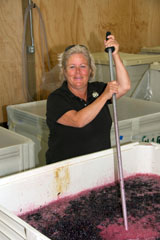 How do you and your husband, Don, divide the duties at the winery?
The short answer is that Don takes care of the vineyard, and I do the winemaking. Don still has a regular day job so the day-to-day management of the winery and tasting room falls to me. Don expertly takes care of the bookkeeping and bill paying and also does most of the social media campaigning. I think we make a great business team and complement each other nicely.
A couple of years ago, you rebranded your winery from Balsamroot to Hard Row to Hoe. What led to that decision and how has the new image been received?
Balsamroot is a native wildflower, part of the shrub steppe habitat here in eastern Washington. We love the name Balsamroot, and because we grow the vineyard organically, we thought it was a good fit because we promote and support the native plant species surrounding the vineyard as part of our organic program. Unfortunately, there was no connection between the name and our customer base. Most of the visitors to the tasting room come from the Seattle area where balsamroot does not grow. We quickly learned that hardly anyone could remember the name, which is not a good position if you are trying to promote your brand.
So with that fact firmly in my mind, I attended a session at the WAWGG [Washington Association of Wine Grape Growers] Conference in 2007 about winery branding and got the idea to rebrand by hearing of the J. Bookwalter Winery story of how they rebranded. That was in February, and by May, we had a new name and new label. We did it rather quickly, I think. The new name has been well received and because of the double entendre and the story behind the name, people now remember it.
You and Don have been very active in promoting Hard Row to Hoe via Twitter and Facebook. What impact has your social networking had on the winery?
I am not sure how to quantify the impact it has had, but we love interacting with our customer base on both Twitter and Facebook. It keeps us in touch with what they like and don’t like and makes us better business owners. We encourage people to comment on our Facebook page; we read everything. So it has helped a great deal to build the brand, as they say, and for people to get to know us and our wine. We don’t use social media to sell anything, just to interact with folks. It really is a lot of fun, too.
What is your vision for the future of Hard Row to Hoe?
We will continue to increase the amount of wine we produce from our estate vineyards. Right now, it is only a small percentage because the vines are young. We expect to continue to specialize in Cabernet Franc as a specialty, and we are starting to explore other varieties from the Lake Chelan AVA such as Pinot Noir, Sangiovese, and Malbec. So look for these in the future. Lake Chelan is a new AVA so, in a way, we feel like pioneers. We will continue to increase the amount of Lake Chelan AVA wines with time, as more and more grapes come online. I love being able to explore growing new varieties and learning how they express themselves here locally.
Feel free to share any other thoughts that you believe would be of interest to our readers.
Our philosophy at Hard Row to Hoe is to take some of the snobbery out of wine drinking and wine tasting and make it more fun. Our wine is no joke, however. This philosophy has made our wine and tasting room very appealing and approachable to many people who may never have tried our wine otherwise. Wine doesn’t have to be pretentious to be good!
I want to encourage women to get involved in the winemaking field, and I’d be willing to mentor anyone out there who may be interested.
—
Many thanks to Judy for sharing her story and thoughts with us. I wish her and Don all the best and will continue following their work and Hard Row to Hoe Vineyards with great interest, and I hope that you will too. And, I certainly hope one of our female readers will take Judy up on her offer to be a mentor.

 Wine Peeps is an independent wine blog dedicated to helping you get the most bang for your buck in wine. We do this through blind tastings of wine from around the world and calculations of
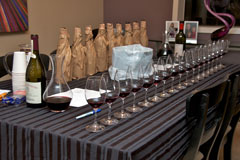 A few weeks ago, the Wine Peeps team hosted a Digging into the Cellar Party for about fifteen of our closest wine loving friends. The theme was Rhone-style wines, and we bookended a blind tasting of eighteen 2005 Washington Syrahs with a 2005 Chateau de Beaucastel Châteauneuf-du-Pape from France and a 2001 Penfolds Grange from Australia. The 2005 vintage was a great vintage in Washington wine country, and we wanted to see how these Syrahs were doing at five years old and see which ones we thought still had a lot of life left.
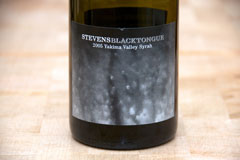 After unveiling the sacked bottles, the consensus favorite of the group turned out to be the 2005 Stevens Black Tongue Syrah. My personal favorite was the 2005 Fielding Hills Syrah, and Kori’s favorite was the 2005 O*S Dineen Vineyard Syrah. Other group favorites were the 2005 Watermill Reserve Syrah (an Oregon winery located in the Walla Walla Valley AVA), the 2005 Hollywood Hill Vineyards Syrah, and the 2005 Basel Cellars Syrah.

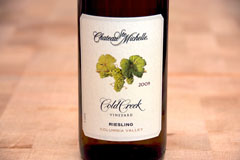 Would you like a quick suggestion for a good wine to drink tonight (or this weekend) that won’t break your budget and is widely available? Many of our readers have said this is something they would like, so here is this week’s selection, the 2009 Chateau Ste. Michelle Cold Creek Vineyard Riesling from the Columbia Valley of Washington State.
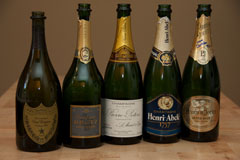 Since we live in Washington State and often drink wines from Washington State, we want to make sure that we continue to hone our knowledge of the entire world of wine and maintain well-rounded palates in order to make us even more objective when we evaluate wines from Washington State. Therefore, we are thoroughly enjoying our Wine Peeps Tasting Group which includes what we think is an excellent peer group of knowledgeable wine lovers to taste, share, and learn more about wine together. Unlike our monthly
 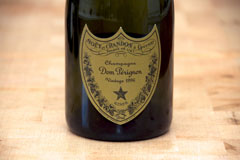 1996 Moet et Chandon Dom Perignon Brut Champagne (Champagne, France): Pale to medium, golden yellow. Small, fast bead of bubbles. Very aromatic with citrus fruits and floral aromas on the nose. Lemon, lime, yeasty, and nutty flavors come through on the palate. Dry and medium-bodied with very crisp acidity. Well-balanced and elegant with a long, lingering finish.
 This week’s Wine Word of the Week is leafroll virus.
 When I received a copy of The Wine Journal by Jennifer McCartney, my first thought was that it might be a great holiday gift item for a wine newbie. After giving the book some further study, my initial opinion has been reinforced. It would make a great stocking stuffer for your new-to-wine friend or family member.
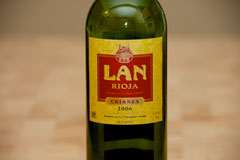 Would you like a quick suggestion for a good wine to drink tonight (or this weekend) that won’t break your budget and is widely available? Many of our readers have said this is something they would like, so here is this week’s selection, the 2006 LAN Rioja Crianza from the Rioja region in Spain.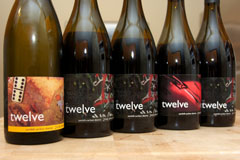
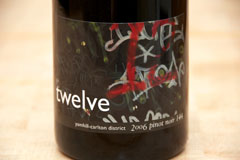 2006 Twelve Pinot Noir 144 (Fir Crest Vineyard, Yamhill-Carlton District, Oregon): Medium red in color. Beautiful bouquet with floral and red fruit aromas. Raspberry, cranberry, strawberry, violet, and a hint of spice come through on the palate. Medium-bodied with good, crisp acidity and medium tannins. Well-balanced with a long, smooth finish.
 This week’s Wine Word of the Week is Charmat.
 For years, I’ve had friends tell me that they can’t find the great Washington State wines that I tell them about where they live. So with the help of


