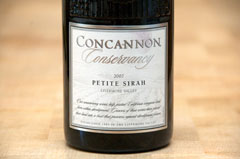
A Wine for Tonight: 2007 Concannon Conservancy Petite Sirah


By Kori ~ August 12th, 2010

Would you like a quick suggestion for a good wine to drink tonight (or this weekend) that won’t break your budget and is widely available? Many of our readers have said this is something they would like, so here is this week’s selection, the 2007 Concannon Conservancy Petite Sirah from the Livermore Valley in California.

Our selection criteria include:

  • A very good Quality rating of >=3.5 stars (out of 5)
  • A price tag of <=$15
  • Must be widely available

Concannon Vineyard, founded in 1883, has been run by a member of the Concannon family for its entire 127-year history. John Concannon is the fourth generation at the helm, seeking to sustain the legacy started by his great-grandfather, James Concannon, who founded the winery. Concannon was one of the few wineries that remained open during Prohibition making sacramental wines as a result of a connection with San Francisco’s Archbishop. In 1961, Concannon introduced America’s first varietally-labeled Petite Sirah.

“The 2007 Petite Sirah, Conservancy has fantastic depth and character. It exhibits a rich nose of fresh berry fruit, and the flavorful palate shows blackberries, chocolate, mocha and plums. Subtle notes of molasses, cedarwood, and ripe mulberries are complemented by soft, creamy oak tones and a smooth, silky finish.” –Winemaker Adam Richardson

2007 Concannon Conservancy Petite Sirah (Livermore Valley, California): Inky purple in color. Aromatic with black cherry and oak on the nose. Blackberry, black cherry, black plum, baker’s chocolate, and a hint of earth come through on the palate. Full-bodied and crisp with medium to high, drying tannins and a very long finish. Big yet smooth.
Quality: 3.5 stars (out of 5)
QPR: 5 bangs for your buck (out of 5)
Where to buy: Fred Meyer (Seattle, Washington), $11.99; Available elsewhere, $10 to $12


Filed under: A Wine for Tonight, American Wine, California Wine, Five-Bangs For Your Buck Wines, Petite Sirah, Red Wine, Wines Under $15, Wines Under $20, Wines Under $25
 

Maryhill: One of Washington State’s Destination Wineries


By Kori ~ August 11th, 2010

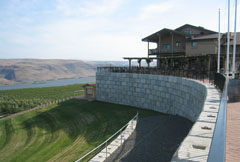
Maryhill Winery, located in Goldendale, Washington, is perched on a bluff overlooking the Columbia River Gorge with Mt. Hood in the distance. Founded in 1999 by Craig and Vicki Leuthold, Maryhill’s production has grown from 4,300 cases in 1999 to over 80,000 cases today, making it the 15th largest winery in Washington State. The winery has a beautiful setting with gorgeous views, a 3,000-square-foot tasting room, and a 4,000-seat outdoor amphitheatre, which plays host to a summer concert series.

Craig and Vicki Leuthold each gave up successful careers in Spokane to pursue their dream of owning a winery. Even as the winery has grown, Craig and Vicki continue to oversee the entire operation. New Zealand-native Richard Batchelor joined Maryhill as winemaker in the summer of 2009. He had previously been head winemaker for Hall Winery in St. Helena, California.

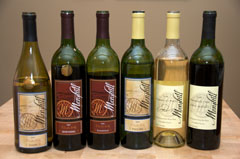
Recently, we had the opportunity to taste six wines from Maryhill in a blind samples tasting. We recommend five out of the six. We particularly enjoyed the 2008 Viognier, the 2007 Zinfandel, and the 2006 Sangiovese. In addition to being very good wines, those three also deliver serious bang for your buck. Maryhill produces a total of 28 wines, most of them (except the Reserves) retail for $20 or less.

As I have mentioned previously, a trip to the Columbia Gorge is well worth your time. If you time it right, you could take in a concert at Maryhill and enjoy outdoor recreation on the Columbia River in addition to visiting some outstanding wineries. However, if you do not live in the area and are unable to visit, Maryhill’s wines are distributed nationally.

2008 Maryhill Viognier (Columbia Valley, Washington): Pale, greenish yellow in color. Very aromatic with floral, orange blossom, honey, and lemon/lime aromas; flavors of citrus fruits, flowers, green apple, pear, and dried apricots. Dry, light to medium-bodied, crisp and refreshing with a very long finish. Well-balanced with good complexity. Residual sugar: 1.24%
Quality: 4 stars (out of 5)
QPR: 4 bangs for your buck (out of 5)
Where to buy: Received as sample, suggested retail $15; Available elsewhere, $11

2007 Maryhill Zinfandel (Columbia Valley, Washington): Deep, ruby red in color. Aromatic with Red Vines, raspberries, and black cherries on the nose that lead to more red fruits, spice, pepper, and a hint of cocoa on the palate. Medium-bodied with lively acidity and medium tannins. Fruit-forward and jammy with a long finish.
Quality: 3.5 stars (out of 5)
QPR: 5 bangs for your buck (out of 5)
Where to buy: Received as sample, suggested retail $22

2006 Maryhill Sangiovese (Columbia Valley, Washington): Deep garnet in color with slight browning around the edges. Aromatic with cinnamon and red fruits on the nose; cherry and spice on the palate. Medium-bodied and lively with medium tannins and a long finish.
Quality: 3.5 stars (out of 5)
QPR: 5 bangs for your buck (out of 5)
Where to buy: Received as sample, suggested retail $18; Available elsewhere, $11

2008 Maryhill Pinot Gris (Columbia Valley, Washington): Very pale, straw yellow. Nice nose with lemon square aromas. More lemon and a hint of hay come through on the palate. Dry, light-bodied and crisp with a long finish. Residual sugar: 0.64%
Quality: 3 stars (out of 5)
QPR: 2 bangs for your buck (out of 5)
Where to buy: Received as sample, suggested retail $15; Available elsewhere, $11 to $15

2008 Maryhill Winemaker’s White (Columbia Valley, Washington): 31% Viognier, 24% Chardonnay, 23% Sauvignon Blanc, 22% Semillon. Pale, straw yellow in color. Aromatic with oak and minerality on the nose; citrus and floral notes on the palate. Dry, light to medium-bodied, crisp acidity, and a long finish. Residual sugar: 1.1%
Quality: 3 stars (out of 5)
QPR: 3 bangs for your buck (out of 5)
Where to buy: Received as sample, suggested retail $12; Available elsewhere, $9

2008 Maryhill Winemaker’s Red (Columbia Valley, Washington): 40% Cabernet Sauvignon, 30% Merlot, 20% Syrah, 10% Cabernet Franc. Deep, ruby red. Stinky feet and Kool-Aid on the nose and palate. Medium-bodied, soft tannins, and a medium finish.
Quality: 2.5 stars (out of 5)
QPR: NR (not recommended)
Where to buy: Received as sample, suggested retail $14; Available elsewhere, $11


Filed under: American Wine, Five-Bangs For Your Buck Wines, Pinot Grigio/Pinot Gris, Red Wine, Sangiovese, Viognier, Washington State Wine, White Wine, Wines NOT To Buy (1 & 2 Star), Wines Under $15, Wines Under $20, Wines Under $25, Zinfandel
 

Challenging Wine Pairing: Bacon


By LaGayle ~ August 10th, 2010

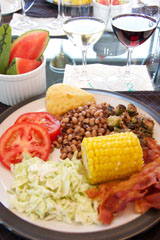
Bacon? Isn’t that a breakfast item or perhaps a sandwich ingredient? For most people, that is the case; however, in our family, crispy bacon is an entree that we enjoy with our southern dinners—not just for breakfast or on a BLT. One of our favorite meals is bacon, black eyed peas, fried okra, corn on the cob, cole slaw, sliced tomatoes, watermelon as the salad, and cornbread.

What we are finding so enjoyable about this challenging wine pairing series is that there aren’t really any foods that cannot be paired with wine. It’s just a matter of determining which wine or wines work best.

Because this is a southern meal, most folks choose to drink iced tea or beer with it. But, why not have wine? Again, I referred to What to Drink with What You Eat by Andrew Dornenburg and Karen Page for suggestions. I took into consideration the entire meal, not just the bacon, in selecting the wines for this challenge. After cross-referencing between the sections on bacon, corn, and cabbage (the main ingredient in the cole slaw), I decided on a dry Riesling and a Grenache. When possible, we like to feature both red and white wines in these challenges.

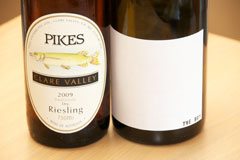
With this bacon meal, we enjoyed the 2009 Pikes “Traditionale” Dry Riesling from the Clare Valley of Australia and the 2008 K Vintners The Boy Grenache from the Walla Walla Valley of Washington State. Both wines are outstanding on their own, and both paired well with the meal. It was a close battle, but we preferred the dry Riesling three to one as the best pairing. Although, I believe that you couldn’t go wrong with either one, and it really depends on your mood on any given day and the time of year as to which you would prefer. On a gorgeous summer evening like we had, the crisp acidity of the dry Riesling was refreshing and contrasted the fat of the bacon, the fried okra, and the butter on the corn while complementing the acidity of the tomatoes.

When John mentioned on Facebook that we were going to be having this challenge with bacon, he received numerous pairing suggestions, including Aussie Shiraz, California Zinfandel, Riesling, and Cote Rotie. At that point, I had already selected the wines. However, we’d love for you to share in the comments what you would have paired with this meal. And, as always, we welcome your suggestions for challenging wine pairings for us to try in the future.

Bon Appétit!

2009 Pikes “Traditionale” Dry Riesling (Clare Valley, Australia): Pale, greenish straw yellow. Gorgeous nose with fresh aromas of lemon peel, lime, white peach, plumeria, and minerality. Lemon, lime, white peach, and a hint of grapefruit come through on the palate. Dry, light to medium-bodied, very crisp and refreshing with a long finish. Well-balanced and good complexity.
Quality: 4.5 stars (out of 5)
QPR: 5 bangs for your buck (out of 5)
Where to buy: Esquin Wine Merchants (Seattle, Washington), $17.99; Available elsewhere, $19

2008 K Vintners The Boy Grenache (Walla Walla Valley, Washington): 92% Grenache, 8% Syrah. Deep, purplish red in color. Aromatic with earth, game, beef jerky, leather, and floral notes on the nose. Meat, game, earth, raspberry, and dewberry dominate the palate. Dry, medium to full-bodied with lively acidity, medium tannins, and a long finish. Well-balanced and very complex.
Quality: 4.5 stars (out of 5)
QPR: 4 bangs for your buck (out of 5)
Where to buy: Esquin Wine Merchants (Seattle, Washington), $42.99; Available elsewhere, $38 to $56


Filed under: American Wine, Australian Wine, Challenging Wine Pairing, Five-Bangs For Your Buck Wines, Food & Wine, Grenache, Red Wine, Riesling, Washington State Wine, White Wine, Wines Over $25, Wines Under $20, Wines Under $25
 

Terroirs of the Walla Walla Valley with Dr. Kevin Pogue


By Kori ~ August 9th, 2010

At the recent Wine Bloggers Conference in Walla Walla, Washington, one of the most interesting and informative sessions of the weekend was the Terroirs of the Walla Walla Valley seminar with Dr. Kevin Pogue, chair of the Geology Department at Whitman College in Walla Walla. Dr. Pogue has conducted research and led field trips in the Pacific Northwest for more than 25 years. His research interests have included the deposits of the Ice Age Missoula floods that form the basis for the soils of many of eastern Washington’s premier vineyards. He is currently involved in research on the geologic and geographic controls on the terroir of the Walla Walla Valley American Viticulture Area. He began focusing his research in this area after people in the wine industry in Walla Walla started asking him questions about where the right dirt for growing wine grapes would be. He soon realized that most people weren’t really thinking about the right places to plant vineyards in the Valley, and he thought he could help them.

The following are highlights from his seminar that I think my fellow wine geeks will find interesting. However, if you have no interest in learning about where your wine comes from, then you should probably skip the rest of this post.

“Now, I’m a 100% ‘terroir-ist’.” –Dr. Kevin Pogue

People generally only talk about terroir on the vineyard scale but don’t really talk about the terroir of a whole AVA (American Viticultural Area). Dr. Pogue talked about “terroirs” plural. Terroir is a difficult thing to define. Terroir is the fact that you can tell that a wine came from a unique place and something about that place is expressed in the wine. There are two types of terroir: cultural and physical. Dr. Pogue’s specialty is the physical terroir and all of those things affect grape varieties.

“Terroir does matter. Grapes don’t get ripe in some places, and they get ripe in other places. Soils have different drainage characteristics and different chemistries. It matters, and you can taste it.” –Dr. Kevin Pogue

In physical terroir, you have soils, geography, and climate. You can’t talk about Walla Walla as having one soil, one geography, and one climate because it is a large area and those things have a lot of variability. There are actually several macro-terroirs in the Valley.

The 46° North latitude line runs right through the Walla Walla Valley AVA. Looking at that latitude around the globe, it puts Walla Walla in really good company, between Bordeaux and Burgundy, and halfway between the Rhone and Burgundy. Walla Walla is on the boundary between the Columbia Basin and the Blue Mountains. The Cascade Mountains shield Walla Walla from the wet, foggy weather that is common on the west side of the state.

The bedrock in the Walla Walla Valley is Columbia River basalt. It is one of the largest areas of basalt bedrock on the continents anywhere in the world. The ocean basins are 100 percent basalt, but it is a relatively rare rock type up on the continent. Basalt is a dense, heavy rock and so much of it was erupted that it depressed the surface of the earth.

“So we actually owe the fact that we have a low elevation here that is warm enough and suitable for viticulture to the fact that the weight of the erupted basalt depressed the elevations in this area.” –Dr. Kevin Pogue

Overlying the basalt and below 1200 feet elevation, the Touchet beds are found. They are flood sediments from some catastrophic glacial floods. Then, there is the Palouse formation which is loess, a geologic term for wind-blown silt, that drapes everything. And then carved into that are stream deposits.

Ice Age Missoula Floods
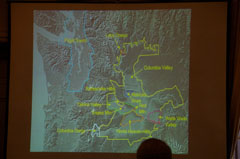
The Ice Age floods are the largest documented floods in earth history. Ice came down into the Northwest. Puget Sound was essentially carved by ice. Seattle was under thousands of feet of ice. Ice came down into the Idaho panhandle and down the Clark Fork River and created a huge lake called Glacial Lake Missoula that was as big as two of the present-day Great Lakes. Missoula, Montana was under 600 feet of water. When the water got high enough, it floated the ice and all of the water spilled out catastrophically. The rushing water across the Columbia Basin was ten times the combined flow of all the world’s rivers. It had a profound effect on the topography and geology of eastern Washington and flooded the Willamette Valley. All of the water fit through a narrow passage called the Wallula Gap, which is about 30 miles west of Walla Walla. Most of the Columbia Valley AVA was affected by these floods.

While the water was temporarily impounded at that constriction at Wallula Gap, it created a lake and when the water stagnated, it dropped its load of sediment. It flooded the Walla Walla Valley and the Yakima Valley and everything up to about 1,200 feet. Some of the vineyards in the Walla Walla Valley are above that flood line and some are below, so they have different sediments depending on where they are relative to that flood line.

Many of the vines in the Walla Walla Valley are rooted in those sediments. They are sandy and contain exotic rocks. These sediments weren’t derived from basalt. They came from the Idaho panhandle, Montana, and northeast Washington where the bedrock is granite. The chemistry of the sediments is completely different from the underlying bedrock. Most places you go, the sediments are made of the decomposed bedrock that is underneath them. All of the sediments in the Walla Walla Valley are exotic. They were washed in or blown in from somewhere else and their chemistry is completely different. If you get a vine that roots through these into the basalt, it suddenly encounters a completely different suite of elements and minerals.
Dust Storms
The Walla Walla Valley usually has two or three huge dust storms in October. After each flood, there was this barren landscape of flood plains. The winds would blow across that, pick up the dust clouds, and blow them across eastern Washington. It is still blowing around and gets deposited in the Palouse hills.

Blue Mountains
The next thing that happened is that the Walla Walla Valley had uplift of the Blue Mountains. The streams responded to that by down-cutting and cutting canyons. Channels come out into the Valley and those channels are trying to wash out those Missoula flood sediments and replace them with gravel derived from the Blue Mountains. Where streams were, they leave behind deposits of gravel. If you dig a hole in downtown Walla Walla, it’s nothing but stream gravels.

Soils present in the Walla Walla Valley

  • Loess – Wind-deposited silt, almost everywhere in the Walla Walla Valley has that at least in the upper two or three feet
  • Missoula flood deposits – Huge floods between 12,000 to 15,000 years ago.
  • Basalt – Pebbles, cobbles, some basalt bedrock
  • Caliche – Calcium carbonate deposits that occurs in semi-arid regions
  • Volcanic ash
  • Ice grafted erratic rocks – Don’t affect terroir at all

Four terroirs of the Walla Walla Valley

  1. Thick, thick, thick, deep loess. Where the vines never see anything but loess, wind-deposited silt. Thick loess with calcareous horizons can be found in the Loess Hills that are to the northeast of town or in the Blue Mountain foothills. (Vineyards with this terroir: Spring Valley, Leonetti Upland, Leonetti Loess, Dwelley, Les Collines)
  2. Silt on top of Missoula flood sediments. Probably the most planted type of terroir in the Walla Walla Valley. Found in the valley floor below 1,200 feet elevation. (Vineyards with this terroir: Pepper Bridge, Seven Hills, Forgotten Hills)
  3. Stream gravels. Only occur in alluvial fans. The town of Walla Walla has obliterated most of the Walla Walla alluvial fan. There are a few vineyards in the Mill Creek fan up by K Vintners but all of downtown Walla Walla would be a really great gravelly terroir, but buildings and streets occupy it. The alluvial fan in Milton-Freewater, Oregon, just south of Walla Walla, has historically been an orchard area and preserved from development. It is almost entirely basalt cobbles. It is very rocky and looks like Chateauneuf-du-Pape. (Vineyards with this terroir: Cayuse)
  4. Basalt. Thin loess over basalt bedrock. Above 1,200 feet or in places steep enough that most of sediment has been washed away. This is a new terroir.

There is great potential to exploit even more terroirs in the Walla Walla Valley, like up in the Blue Mountains.

Climate
Because the Walla Walla Valley is further north than Napa, it has more hours of sunlight. In addition, the sun angle is lower. Some say that Walla Walla has longer, gentler sun each day. On average, Walla Walla has 30 to 40 more minutes of sunlight each day in the summer. It is a little warmer than Napa, warmer than Bordeaux, cooler than southern Rhone, and a lot warmer than Burgundy or the Willamette Valley. Walla Walla gets huge diurnal temperature variation. It is really dry. Most of the Columbia Basin has less than 10 inches of annual precipitation so irrigation is an absolute necessity. Walla Walla gets a little more rainfall due to its proximity to the Blue Mountains.

Summary: Characteristics of the physical terroir of the Walla Walla Valley AVA

  • Combination of low rainfall and well-drained soils allows precise control of water.
  • High latitude provides long summer days and not-too-hot falls with balanced ripening.
  • Low humidity and clear skies lead to cool nights and high diurnal temperature variation, which preserves acidity, promotes balanced ripening.
  • Variations in soil types, elevation, and climate characteristics permit wide range of cultivars.

If you want to learn more about the terroirs of the Walla Walla Valley, check out Dr. Pogue’s essay on the relationship of the Missoula floods to Columbia Basin viticulture in the book, Washington: The State of Wine, or visit his webpage for contact information and a list of his publications.


Filed under: American Wine, Vineyards, Washington State Wine
 

Wine Word of the Week: Cuvée


By Kori ~ August 7th, 2010

This week’s Wine Word of the Week is cuvée.
Official definition from Jancis Robinson’s The Oxford Companion to Wine:
Cuvée is a French wine term derived from cuve, with many different meanings in different contexts. In general terms it can be used to mean any containerful, or even any lot, of wine and therefore wine labels often carry relatively meaningless descriptions incorporating the word cuvée. ….

In Champagne and other environments in which traditional method sparkling wines are made, cuvée is a name for the first and best juice to flow from the press. The blend of base wines assembled for second fermentation in bottle is also known as the cuvée. Thus the term is often used in many champagne and sparkling wine names.

Elsewhere, particularly in German-speaking wine regions oddly enough, cuvée may be used to describe any ambitious blend, particularly of different vine varieties.

Layman’s terms from Kori:
Cuvée has a number of different meanings but is most often used regarding sparkling wine production. Cuvée is the first press or first juice to emerge from the grape, and it is also the blend of separate lots of wine to achieve a house style.


Filed under: Wine Word of the Week
 

Helping the Kids! Auction of Washington Wines


By John ~ August 6th, 2010

Coming up in two weeks is the Auction of Washington Wines, the original, largest, and most prestigious charity auction showcasing the stars of Washington wine. It has raised more than $23 million since its inception in 1988. It’s a great weekend for both wine and charity.
There are many ways for you to participate:

Barrel Auction & Picnic with the Winemakers
Thursday, August 19, 4 PM until Dusk

Winemaker Dinners
Friday, August 20, 6:30 PM

Covey Run 10K Race & 5K Run/Walk
Saturday, August 21, 8 AM

Gala Auction
Saturday, August 21, 4:30 PM until Midnight

To purchase tickets and/or make a donation, register here.

Proceeds from the Auction of Washington Wines benefit uncompensated care at Seattle Children’s Hospital, whose core mission is to provide world-class care for every child in the region, regardless of a family’s ability to pay. This year, the hospital expects to need more than $100 million in uncompensated care funds. A portion of the money raised is also donated to the Washington Wine Education Foundation, funding viticultural and enological research across the state.

To follow the conversation about the Auction of Washington Wines on Twitter, search the event’s hashtag: #AWW10.

The 2010 Auction co-chairs are Brad and Michele Smith of Smith & Greene Company and Rick Small and Darcey Fugman-Small of Woodward Canyon Winery. Major sponsors include: Chateau Ste. Michelle, John L. Scott Foundation, 98.1 Classical KING FM, KING5, Seattle Magazine, Tulalip Resort Casino, Viking Range/GateWay Appliance Distributing, Vine Vertical and Wine Spectator.


Filed under: American Wine, Washington State Wine, Wine Activities/Events
 

A Wine for Tonight: 2009 Charles Smith Wines Kung Fu Girl Riesling


By Kori ~ August 5th, 2010

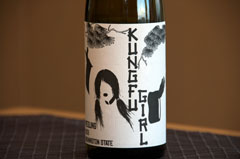
Would you like a quick suggestion for a good wine to drink tonight (or this weekend) that won’t break your budget and is widely available? Many of our readers have said this is something they would like, so here is this week’s selection, the 2009 Charles Smith Wines Kung Fu Girl Riesling from the Columbia Valley in Washington State.

Our selection criteria include:

  • A very good Quality rating of >=3.5 stars (out of 5)
  • A price tag of <=$15
  • Must be widely available

Charles Smith of K Vintners released his first Charles Smith Wines in 2007. The goal of Charles Smith Wines is to produce reasonably priced wines that are meant to be consumed immediately but also have a lot going on (i.e. flavor, balance, typicity). Owner/winemaker Charles Smith is often referred to as a “rock star,” which is a reference to his days of managing rock bands as well as a nod to his professional success. Last year, Food & Wine Magazine named Charles Smith as “Winemaker of the Year.”

“THIS GIRL IS SERIOUS! Aromatic, smooth, vibrant and tasty. Think tangerine, apricot, wet stone, key lime, clove and nectarine…now stop thinking and start drinking…‘CAUSE KUNG FU GIRL KICKS A**!” –Charles Smith

2009 Charles Smith Wines Kung Fu Girl Riesling (Evergreen Vineyard, Columbia Valley, Washington): Very pale, straw yellow. Nose is a bit tight at first, then some minerality comes through. Citrus fruits, particularly lime and lemon, and tropical fruits explode on the palate. Off-dry and medium-bodied. Well-balanced and crisp with a long finish. Excellent by itself and with food. Residual Sugar: 1.41%
Quality: 4 stars (out of 5)
QPR: 5 bangs for your buck (out of 5)
Where to buy: Fred Meyer (Seattle, Washington), $12.49; Available elsewhere, $10 to $15


Filed under: A Wine for Tonight, American Wine, Five-Bangs For Your Buck Wines, Riesling, Washington State Wine, White Wine, Wines Under $15, Wines Under $20, Wines Under $25
 

Col Solare: Shining on Red Mountain


By Kori ~ August 4th, 2010

Col Solare, located on Red Mountain in Washington State, is a partnership between Marchesi Antinori of Italy and Chateau Ste. Michelle of Washington State. Italian for “shining hill,” Col Solare produces one Cabernet Sauvignon-based wine each year with the goal to reflect the characteristics of both Old World and New World styles. The idea for this project began back in 1992 when Marchese Piero Antinori visited Washington State’s Columbia Valley. He was taken by the emerging wine region and decided to partner with Chateau Ste. Michelle, Washington’s oldest winery, to produce a Washington Cabernet-based wine with a European influence. Col Solare’s first release was the 1995 vintage.

Several years later, Antinori and Ted Baseler, President and CEO of Ste. Michelle Wine Estates, decided to build a winery solely dedicated to this project. In 2005, they purchased 40 acres on Red Mountain to build a winery building and plant an estate vineyard. Construction of the winery was completed in time for the harvest of 2006. The 2006 vintage was the first vintage produced at Col Solare’s state-of-the-art facility, which officially opened in April 2007. In addition, Col Solare planted a 28-acre estate vineyard on the property in 2007 and is expecting the first full crop from it during this year’s (2010) harvest. Currently, the fruit for Col Solare is sourced from vineyards around the Columbia Valley. The sourcing breakdown for the soon-to-be-released 2007 vintage is as follows: Red Mountain (31%), Columbia Valley (36%), Wahluke Slope (14%), and Horse Heaven Hills (19%).

“Twenty years from now, we would like to be using all estate fruit from Red Mountain.” –Marcus Notaro, winemaker

Like the partnership, the Col Solare facility itself reflects a mix of Old World and New World. The winery sits high on Red Mountain with an Old World bell tower visible from far away. Inside, though, it boasts a modern cellar and a contemporary, New World décor in the tasting room. The fan-shaped estate vineyard emanates out from the winery building like rays of sunshine, which are illustrated in the Col Solare logo.
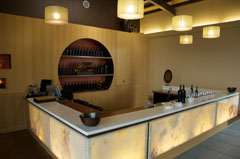
While we have previously had Col Solare wines and attended their events in Seattle, we had the opportunity to visit the winery for the first time on Monday and visit with winemaker Marcus Notaro. Marcus oversees the day-to-day winemaking operations at the winery. He also works closely with Renzo Cotarella, managing director/chief enologist of Marchesi Antinori, and Doug Gore, Senior Vice President for Winemaking and Vineyards for Ste. Michelle Wine Estates to evaluate the final blends for each vintage. Marcus went to work for Chateau Ste. Michelle in 1995 and became winemaker for Col Solare in 2006.

During our visit, we tasted the current 2006 vintage, the soon-to-be-released 2007 vintage, and a barrel sample of the 2008 vintage, which is being bottled this week and will be released in 2011. In addition, we tasted the 2008 vintage of Shining Hill, their second label, which is released one year prior to the flagship Col Solare and serves as a preview of what is to come. Col Solare produces between 10,000 to 11,000 cases per year of its main wine plus an additional 1,000 cases of Shining Hill.

We first tasted the 2007 vintage at the release event for the 2006 vintage last fall shortly after it had been bottled. We were struck by it then, and it has only continued to develop in the bottle. It is truly an outstanding wine. While 2008 was not considered to be as good a vintage in Washington State, the 2008 Col Solare is already showing excellent promise even though it is very young.
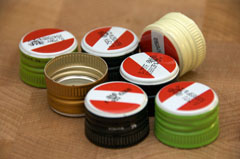
If you are in the Red Mountain area, I encourage you to visit Col Solare. During the summer (May-September), Col Solare is open for Saturday Sole and Sunday Afternoon Tours. Otherwise, be sure to call ahead to schedule an appointment.

2006 Col Solare Red Wine (Columbia Valley, Washington): 72% Cabernet Sauvignon, 19% Merlot, 4% Cabernet Franc, 3% Petit Verdot, 2% Syrah. Deep, dark purple in color. Dark, black fruits, chocolate, and mint come through on both the nose and palate. Medium to full-bodied with soft tannins and a long finish. Well-balanced and smooth.
Quality: 4 stars (out of 5)
QPR: 1 bang for your buck (out of 5)
Where to buy: Winery, $75

2007 Col Solare Red Wine (Columbia Valley, Washington): 75% Cabernet Sauvignon, 20% Merlot, and 5% Cabernet Franc. Deep, dark purple. Gorgeous nose with aromas and flavors of black cherry, blackberry, vanilla, and spice. Full-bodied yet elegant with smooth tannins. Well-balanced with a long finish.
Quality: 4.5 stars (out of 5)
QPR: 4 bangs for your buck (out of 5)
Where to buy: Winery, $75

2008 Shining Hill Red Wine (Columbia Valley, Washington): 60% Cabernet Sauvignon, 25% Merlot, 5% Syrah, and 4% Cabernet Franc. Deep, dark purple. Aromas of oak, vanilla, and black cherry lead to flavors of black fruits and spice. Medium-bodied with medium tannins and a long finish.
Quality: 3.5 stars (out of 5)
QPR: 2 bangs for your buck (out of 5)
Where to buy: Winery, $40


Filed under: American Wine, Red Wine, Vineyards, Washington State Wine, Wines Over $25
 

Tasting Group: Austrian Grüner Veltliner


By Kori ~ August 3rd, 2010

Since we live in Washington State and often drink wines from Washington State, we want to make sure that we continue to hone our knowledge of the entire world of wine and maintain well-rounded palates in order to make us even more objective when we evaluate wines from Washington State. Therefore, we are thoroughly enjoying our Wine Peeps Tasting Group which includes what we think is an excellent peer group of knowledgeable wine lovers to taste, share, and learn more about wine together. Unlike our monthly wine tasting dinners in which the guests rotate, this tasting group includes people who are committed to getting together once a month which we believe benefits all of us. In addition to trying varieties and regions that we do not taste frequently, the other main difference between this group and our wine tasting dinners is that each group member brings a bottle consistent with the month’s theme so no one knows all the wines in the blind tasting.
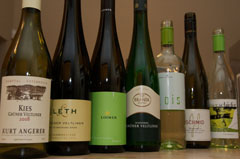
Last week, we met and explored Austrian Grüner Veltliner. Grüner Veltliner, Austria’s main grape, is a white wine grape variety known for its unique flavor profile that can include leafy greens, arugula, pineapple, and white pepper. It is planted in more than one third of Austria’s vineyards and produces a very food-friendly wine.

Grüner Veltliner gained international recognition in the fall of 2002 when it claimed the top two spots in an anonymous tasting organized by internationally known wine specialists, traders and journalists. The tasting featured top Grüner Veltliners and Chardonnays from three vintages competing against high-ranking white Burgundy wines and other top-quality Chardonnays from Australia and California. According to Jancis Robinson MW, one of the world’s foremost wine writers, the tasting showed that Grüner Veltliner must be taken seriously as a variety.

We tasted seven wines and the consensus favorite was the 2008 Kurt Angerer Kies Grüner Veltliner, followed closely by the 2009 Leth Grüner Veltliner Steinagrund Lagenreserve. The red and white Austrian wine seal, which was present on all seven bottles, is used on all wines at the Qualitätswein (Quality wine) level. If you’ve never had an Austrian Grüner Veltliner or are looking for a food-friendly wine to enjoy with dinner, I encourage you to give Grüner Veltliner a try.
From 1st to last in the group consensus rankings:

2008 Kurt Angerer Kies Grüner Veltliner (Kamptal DAC, Austria): Pale, greenish straw yellow. Aromatic with leafy greens and pickles on the nose. Tropical and citrus fruits, Granny Smith apple, and white pepper come through on the palate. Dry and light-bodied with racy acidity. Well-balanced with a long finish.
Quality: 4 stars (out of five)
QPR: 4 bangs for your buck (out of 5)
Where to buy: Esquin Wine Merchants (Seattle, Washington), $19; Available elsewhere, $15 to $17

2009 Leth Grüner Veltliner Steinagrund Lagenreserve (Wagram, Austria): Pale, straw yellow in color. Aromatic with pear and diesel on the nose; pineapple, Granny Smith apple, and white pepper on the palate. Dry and medium-bodied with crisp acidity and a long finish. Well-balanced with good complexity.
Quality: 4 stars (out of five)
QPR: 5 bangs for your buck (out of 5)
Where to buy: Pete’s Wine Shop – Eastside (Bellevue, Washington), $14; Available elsewhere, $13 to $18

2008 Loimer Grüner Veltliner (Kamptal DAC, Austria): Pale, straw yellow. Nose is a bit tight at first then apple and powdered sugar aromas come through. Flavors of apple, pear, and lemon peel. Dry and medium-bodied with crisp acidity and a long finish.
Quality: 3.5 stars (out of five)
QPR: 2 bangs for your buck (out of 5)
Where to buy: McCarthy & Schiering (Seattle, Washington), $21; Available elsewhere, $11 to $22

2007 Brandl Zobing Pfaffenberg Grüner Veltliner (Kamptal DAC, Austria): Pale, greenish straw yellow. Grassy and leafy aromas and flavors as well as apple and white pepper on the palate. Dry, medium-bodied and crisp with a long finish.
Quality: 3.5 stars (out of five)
QPR: 2 bangs for your buck (out of 5)
Where to buy: Fred Meyer (Seattle, Washington), $20; Available elsewhere, $23

2008 Fred Loimer Lois Grüner Veltliner (Niederosterreich, Austria): Pale, greenish straw yellow. Aromatic with pineapple and clementines on the nose; more citrus and tropical fruits and a slight vegetal note on the palate. Dry, light-bodied and crisp with a long finish.
Quality: 3 stars (out of five)
QPR: 2 bangs for your buck (out of 5)
Where to buy: McCarthy & Schiering (Seattle, Washington), $15; Available elsewhere, $10 to $18

2007 Schmid Kremser Weingarten Grüner Veltliner (Kremstal DAC, Austria): Pale, greenish straw yellow. Granny Smith apple and mango on the nose; apple, white pepper, and a slight woodiness on the palate. Dry, light-bodied and lively with a slight effervescence and a long finish. A bit plain.
Quality: 3 stars (out of five)
QPR: 2 bangs for your buck (out of 5)
Where to buy: Pike & Western (Seattle, Washington), $15; Available elsewhere, $10 to $21

2006 Schiefer Grüner Veltliner (Eisenberg DAC, Austria): Pale, golden yellow. Aromas of toasted marshmallows and petrol leads to lime and smoky flavors. Dry, medium-bodied and tart with a bitter, unpleasant finish.
Quality: 2.5 stars (out of five)
QPR: NR (not recommended)
Where to buy: Garagiste (Seattle, Washington), $13


Filed under: Austrian Wine, Five-Bangs For Your Buck Wines, Gruner Veltliner, Tasting Group, White Wine, Wines NOT To Buy (1 & 2 Star), Wines Under $15, Wines Under $20, Wines Under $25
 

Great Washington State Wine Available in Las Vegas


By Kori ~ August 2nd, 2010

For years, I’ve had friends tell me that they can’t find the great Washington State wines that I tell them about where they live. So with the help of Wine-Searcher.com and a lot of legwork, I’ve set out on a mission to prove them wrong.

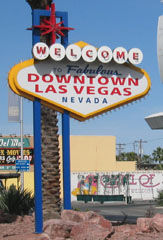
This is the twelfth in a series of posts to help you find great Washington State wines in the major cities and areas all around the country. Today, I’m searching for Washington State wine in the Las Vegas, Nevada, area. Whether you live in Las Vegas or travel there for a conference or, more likely, for pleasure, we want to help you be able to find and enjoy your favorite Washington wines.

Here’s the format: To be selected, a store first has to have a Wine-Searcher.com rating of 4 or higher on a scale of 1 to 5 for customer service, reliability, etc. Next, it has to stock Washington State wines that we like. Finally, they need to be an online retailer as well, so that if you don’t live close enough to the store to drop in, you can still purchase their wines.

Based on these strict criteria, I can only find two Nevada retailers to recommend, Total Wine and More in Las Vegas and Booze Bros. in Sparks, Nevada. I’m hoping that some of our readers will weigh in with comments if you know of other Nevada wine retailers with a good selection of Washington wines. There’s also no doubt that you can find some good Washington wines at a number of the Las Vegas area casino resorts, but that’s out of the scope of this post.

When you visit one of these stores, please let me know how you find their service and selection, and don’t hesitate to ask us any questions you might have about any of the Washington wines they are offering.

Total Wine & More, Boca Park, 730 S. Rampart Blvd, Las Vegas, NV 89145

Booze Bros., 82 Coney Island Dr, Sparks, NV 89431


Filed under: American Wine, Great Washington State Wine Available in (City), Washington State Wine