Wine Word of the Week: Cassis


By Kori ~ July 31st, 2010

This week’s Wine Word of the Week is cassis.

Official definition from Jancis Robinson’s The Oxford Companion to Wine:
Cassis is French for blackcurrant and is used often as a tasting note for red wines, particularly red wines based on Cabernet Sauvignon grapes.

Layman’s terms from Kori:
Cassis, French for blackcurrant, aromas and flavors can often be found in Cabernet Sauvignon. Most often I use blackcurrant in my tasting notes, but the two words can be used interchangeably.


Filed under: Wine Word of the Week
 

The Woodinville Phenomenon


By John ~ July 30th, 2010

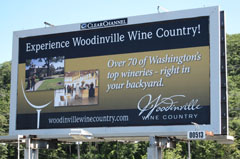
According to the latest list published by the Washington State Liquor Control Board, there are more wineries licensed with a Woodinville address than with a Yakima, Prosser, Benton City (Red Mountain), Spokane, or Tri-Cities address, more than anywhere in Washington State other than Walla Walla. This is especially noteworthy because almost none of these wineries are growing their grapes in Woodinville. Today, there are even a number of Walla Walla wineries with a Woodinville tasting room or one in the works. There are billboards around Seattle that say that there are over 70 wineries and/or tasting rooms in Woodinville. By my count, there are over 90, and the number seems to be increasing every day.

Woodinville is only 30 minutes from Seattle, and the Seattle metroplex is the population center of the state. When I asked Pepper Bridge’s Norm McKibben why the iconic Walla Walla winery has put in a tasting room in Woodinville, Norm replied:

“Walla Walla has been very good to us, but we need to also have a presence closer to the people. Only 10% of the tourists to Washington State come to Walla Walla. And, in fact, only 30% of the residents of Washington State have ever been to Walla Walla.”

The first time I went to Woodinville to taste wine, it was just a sleepy little rural community that just happened to be close to Seattle. There were only a handful of wineries, only a couple of which were opened daily. Today, Woodinville is one of the Seattle area’s top tourist attractions, with at least 18 tasting rooms open daily and upwards of 70 open on the weekend. In addition, the Woodinville Wine Country Association sponsors Passport to Woodinville (first weekend of April) and St. Nicholas Weekend (first weekend of December). And many of the wineries themselves sponsor their own events throughout the year from spring and fall releases to Chateau Ste. Michelle’s summer concert series.

The Pioneers

It all started in Woodinville in 1976 when Ste. Michelle Vintners built a French-style chateau in Woodinville on an estate owned by Seattle lumber baron Frederick Stimson and changed its name to Chateau Ste. Michelle. Right across the street from Chateau Ste. Michelle is Columbia Winery, one of Washington’s oldest wineries and a tourist attractions in its own right. Facelli Winery, the third Woodinville winery, opened in 1988. DeLille Cellars, founded in 1992, was the fourth winery in Woodinville and the beginning of a wave of boutique wineries in the area, such as Betz Family Winery.

The Stand-Alones

Prominent among the stand-alone wineries that have come into Woodinville have been Januik Winery and Novelty Hill who share a top-of-the-line facility just down the road from Chateau Ste. Michelle and Columbia Winery. On the other end of the spectrum are wineries such as Adams Bench and Hollywood Hill Vineyards who started out in their garage or a small facility on their home property. Hollywood Hill also has the only producing vineyard in Woodinville, growing Chardonnay and Pinot Noir grapes. There are also some mid-sized wineries like Matthews Estate who have stand-alone facilities. Other wineries have and will go stand-alone as they outgrow their facilities in the warehouse district.

The Warehouse Wineries

In recent years, the warehouse winery district in Woodinville has become a tourist attraction of its own, advertising that there are “35 artisan wineries within a one-minute radius.” In fact, Betz Family Winery is one of the more notable graduates from the warehouse district. Things are moving so fast that I found five wineries in the warehouse district that aren’t even on their website list.

The Outsiders

A more recent development has been wineries located in other parts of the state opening tasting rooms in Woodinville. So if you live on the west side of the state and you’ve been wanting to visit wineries such as Airfield Estates, Alexandria Nicole, Amavi, Canon de Sol, Challenger Ridge, Chandler Reach, Covey Run, Dusted Valley, Gifford Hirlinger, Gordon Brothers, Goose Ridge, Irlandes, Isenhower, J. Bookwalter, Otis Kenyon, Pepper Bridge, Tefft, or Zerba, you might want to check them out in Woodinville first before driving to their primary locations across the mountains.

The List

Any list of Woodinville wineries/tasting rooms will be out-of-date by the time it goes to press. Since I haven’t found a single one that’s 100% accurate and up-to-date, I’ve started my own. (Click here for our .pdf list of Woodinville wineries/tasting rooms including website, address, phone, and hours.) If you see additions, deletions, or corrections that need to be made, please let me know. And, for regular Woodinville wine news and updates, visit Shona Milne’s Woodinville Wine Update blog; she seems to have a better pulse on what is going on in Woodinville than anyone else.

If you haven’t yet made a Woodinville wine tasting trip, you ought to put it on your schedule now. It’s amazing to observe the energy and the commitment to producing great world-class wine from some of Washington’s best vineyards and sharing that wine with visitors from around the world.


Filed under: American Wine, General Wine Information, Washington State Wine
 

A Wine for Tonight: 2008 Magnificent Wine Company House Wine White


By Kori ~ July 29th, 2010

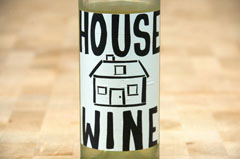
Would you like a quick suggestion for a good wine to drink tonight (or this weekend) that won’t break your budget and is widely available? Many of our readers have said this is something they would like, so here is this week’s selection, the 2008 Magnificent Wine Company House Wine White from the Columbia Valley in Washington State.

Our selection criteria include:

  • A very good Quality rating of >=3.5 stars (out of 5)
  • A price tag of <=$15
  • Must be widely available

Charles Smith of K Vintners founded Magnificent Wine Company in 2004. In the fall of 2006, a majority of Magnificent Wine Company was sold to Washington State-based Precept Brands. Magnificent’s flagship brands are the House Wines, a red Cabernet blend and this white Chardonnay blend. When people refer to a “house” wine, they generally mean something they would drink anytime with anything and that is affordable. That is exactly what these wines are designed to deliver. The House Wines have easily recognizable black and white labels.

“Bright honeysuckle, peach and floral aromatics swirl in the glass. Wonderful flavors of tangerine, pineapple and peach are layered on the palate. This delicious, rich wine is crisp and clean on the finish.” –Magnificent Wine Company

2008 Magnificent Wine Company House Wine White (Columbia Valley, Washington): 78% Chardonnay, 11% Riesling, 5% Muscat, 5% Gewurztraminer, 1% Pinot Gris. Very pale, almost watery, greenish straw yellow. Nice nose with floral, pear, and tropical fruit aromas. Pear, apple, and lemon peel come through on the palate. Dry, light-bodied and crisp with a long finish. Residual Sugar: 0.16%
Quality: 3.5 stars (out of 5)
QPR: 5 bangs for your buck (out of 5)
Where to buy: Fred Meyer (Seattle, Washington) $7.99; Available elsewhere, $12


Filed under: A Wine for Tonight, American Wine, Five-Bangs For Your Buck Wines, Washington State Wine, White Wine, Wines Under $10, Wines Under $15, Wines Under $20, Wines Under $25
 

Riesling Rendezvous: Ageability of Riesling


By Kori ~ July 28th, 2010

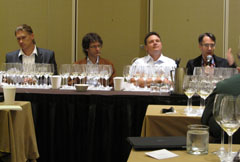
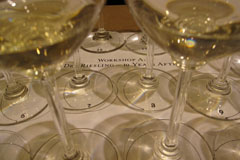
During the recent Riesling Rendezvous, one of my favorite sessions was the Ageability of Riesling workshop, which made a strong case for the age worthiness of Riesling. In fact, Riesling is probably the most age worthy of all white wine varieties.

This workshop, moderated by Stuart Pigott, featured two wines from nine different producers, one from a fairly recent vintage and a comparable wine from an older vintage. Representatives from the featured wineries were on hand to discuss their wines as well as the ageability of Riesling in general.

Right off the bat, Stuart noted that the workshop was deliberately not called “mature” Riesling. Mature is an elastic term, so he more accurately referred to all wines as “maturing” no matter whether they are young or old. Wines, just like people, are always in the process of maturing.

The wines we tasted ranged from a 7-year span between vintages to a 62-year span. I was thrilled to have the opportunity to taste two Rieslings older than me, a 1973 and a 1946. Both wines showed remarkably well considering their age. I was especially impressed by the 1973, which was still quite crisp and bright.

“Young wines are full of so-called primary aromas, also some fermentation aromas, but very much weighted on the fruit and floral and all the youthful stuff. Then, of course, there are the wines which have lost that character and moved into a completely different phase of development with the so-called tertiary aromas, the ones which develop through the influence of oxygen on all of the substances in the wine.” –Stuart Pigott

According to Frederick Frank of Dr. Konstantin Frank Winery, wines that have higher natural acidity and lower pH seem to have a good formula for aging gracefully.

During the workshop, a lively discussion ensued involving the use of the words “petrol” or “kerosene” to describe Rieslings as they age. The winemakers would rather people not use those words, which can have a negative connotation. They prefer those aromas that come with age to be described as smokiness. With that said, as you will see from my notes below, I still get petrol aromas in some Rieslings, particularly ones with a bit of age.

Rieslings, like all wines, change as they age. They tend to become sleeker and drier in taste. After tasting a wide range of Rieslings of different ages, it is clear to me that you either like older wines or you don’t. When you are trying to decide when to drink a wine, it is important to know if you prefer wines young or with some age. It really comes down to personal preference. One way to determine your personal sweet spot is to buy a case of wine and drink it over time, taking notes on how the wine tastes, how it changes, and how you like it.

“You have to decide if you like this aged character or not. With Riesling, you have the general aging characteristics of wine plus this special way that the aromatics change.” –Stuart Pigott

Unfortunately, I can’t remember who said this, but I think it sums up the question of when to drink wines quite well:

“You never know what tomorrow will bring. I prefer to drink great wine today, even if it’s really too young, rather than never.”

We tasted two wines from each producer, one from a fairly recent vintage and a comparable wine from an older vintage. Here are my rough notes and Quality ratings on the wines, in the order we tasted them:

Cave Spring Cellars (Niagara Peninsula, Ontario, Canada)
2008 Riesling Dry: tight nose, tart acidity, lime peel. Quality: 3 stars
2000 Riesling Dry: more golden, petrol, creamy, still fairly bright and crisp. Quality: 3.5 stars

Dr. Konstantin Frank (Finger Lakes, New York)
2008 Dry Riesling: floral, citrus, crisp acidity, cooler year. Quality: 3 stars
1995 Dry Riesling: more golden, creamy, petrol, pudding, warmer, drier year. Quality: 3.5 stars

Josef Leitz (Rheingau, Germany)
2008 Rudesheimer Berg Rottland Riesling Alte Reben Trocken: citrus, lime, minerality, crisp acidity, good complexity, well-balanced. Quality: 4.5 stars
2001 Rudesheimer Berg Rottland Riesling Spatlese Trocken: toast, diesel, hint of wet cork. Quality: 3.5 stars

Domane Wachau (Wachau, Austria)
2009 Riesling Smaragd Achleiten: fruity, ripe, crisp, refreshing. Quality: 4 stars
1993 Riesling Smaragd Achleiten: floral, toasted nuts, creamy yet still crisp, smoky, flinty. Quality: 3.5 stars

Domaine Pfister (Alsace, France)
2007 Riesling Engelberg Grand Cru: lime, lemon, crisp, bright, fresh. Quality: 3.5 stars
1985 Riesling Reserve Engelberg: very different, tastes better than it smells, some bottles were thought to be corked, they now use Vino-Lok closures. Quality: 3 stars

Koehler-Ruprecht (Pfalz, Germany)
2008 Riesling Auslese Trocken Kallstadter Saumagen “R”: tight nose, citrus, floral, good acidity, hint of minerality. Quality: 3 stars
1998 Riesling Auslese Trocken Kallstadter Saumagen “R”: herbal notes, flinty character, good complexity, aging nicely. Quality: 4 stars

Schloss Gobelsburg (Kamptal, Austria)
2008 Zobinger Heiligenstein Riesling: fresh, dried apricots, white peach, crisp. Quality: 3.5 stars
1973 Zobinger Heiligenstein Riesling: smoke, hint of bacon, crisp, amazingly bright, citrus, flint, very impressed with this 37 year old wine. Quality: 4 stars

Van Volxem (Saar, Germany)
2008 Riesling Wiltinger Gottesfuss: floral, pear, crisp, great texture. Quality: 3.5 stars
2000 Riesling Wiltinger Gottesfuss: petrol, smoke, peach, lime, very crisp and refreshing, slight effervescence, would love to have this with food. Quality: 4.5 stars

Staatsweingut Kloster Eberbach (Rheingau, Germany)
2008 Riesling Erstes Gewachs Rudesheimer Berg Schlossberg: fresh, refreshing, crisp, citrus. Quality: 3.5 stars
1946 Riesling “Cabinet” Rudesheimer Berg Schlossberg: petrol, smoke, crisp, tart, yet also creamy, dried apricot, 64 years old – wow. Quality: 4 stars


Filed under: American Wine, Austrian Wine, Canadian Wine, French Wine, German Wine, New York Wine, Riesling, White Wine, Wine Activities/Events
 

Spotlight On: Buty Winery and Dowsett Family Winery


By Kori ~ July 27th, 2010

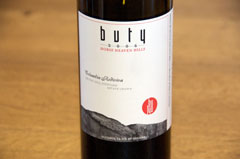
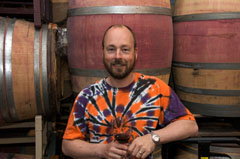
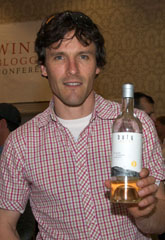
Caleb Foster is undoubtedly one of the winemaking stars in Washington State. With 21 vintages of experience, he certainly has developed his chops but is young enough and energetic enough to stay on the cutting edge. Caleb is the winemaker for Buty Winery in Walla Walla, Washington, which he owns with his wife Nina. The winery is named for Nina’s maiden name. Caleb’s winemaking past includes stints in New Zealand, South Africa, and several areas in Washington State. Before going out on his own, he spent eight years as the assistant winemaker at Woodward Canyon Winery in Walla Walla.

Founded in 2000, Buty Winery produces six wines, two whites and four reds. In addition, they also produce an alter ego line of wines called the BEAST. While my daughter loves Disney’s Beauty and the Beast, I am personally partial to this Buty and the BEAST. The BEAST line is used to present new varietals, new vineyards, and showcase wines outside of the regular Buty portfolio. Buty produces 3,000 cases per year, and the BEAST contributes another 1,800 cases per year.

Buty focuses on several proprietary blends. Caleb makes an excellent white Bordeaux-style blend called Semillon, Sauvignon & Muscadelle. His flagship red wines are two Cabernet Sauvignon/Syrah blends, the Columbia Rediviva (usually Cab-heavy) from the Horse Heaven Hills and the Rediviva of the Stones (usually Syrah-heavy) from the Walla Walla Valley. The goal is for both Rediviva wines to source fruit from their estate vineyards, Phinny Hill in the Horse Heaven Hills and Rockgarden Estate in the Walla Walla Valley. In fact, the 2006 Columbia Rediviva, the current vintage, which is exceptional, is the first to come entirely from Phinny Hill fruit. For those of you who are familiar with the top vineyards in the state, Phinny Hill is located close to Champoux Vineyard in the Horse Heaven Hills and Rockgarden is located in the prized “rocks” region just across the Oregon state line in the Walla Walla Valley.

Chris Dowsett has served as co-winemaker for Buty for a year. In addition to his duties at Buty, Chris also has his own Dowsett Family Winery. Founded in 2007, Dowsett’s production is 300 total cases per year, about 100 cases of Gewurztraminer and 200 cases of a Rhone-style red blend called Devotion. Chris gained valuable winemaking experience at Canoe Ridge, Latitude 46, and at Artifex, a custom crush facility in Walla Walla, before joining Caleb at Buty.

Chris is especially passionate about his dry Gewurztraminer that he sources from Celilo Vineyard in the Columbia Gorge. Celilo Vineyard is the premier white wine grape vineyard in Washington State, and Chris believes it is the perfect site for growing Gewurztraminer. The admiration is mutual as Celilo’s vineyard manager, Rick Ensminger, mentioned Chris often when we visited Celilo in May. Chris has always loved Gewurztraminer and the way it complements so many everyday foods.

We had the pleasure to visit with Caleb Foster and Chris Dowsett when we were in Walla Walla recently for the Wine Bloggers Conference. Both gentlemen are extremely talented winemakers and very nice guys. I highly encourage you to visit Buty the next time you visit Walla Walla and be sure to call ahead and see if you can talk Chris into pouring his Dowsett wines for you as well.


Filed under: American Wine, Cabernet Sauvignon, Gewurztraminer, Red Wine, Shiraz/Syrah, Spotlight On, Vineyards, Washington State Wine, White Wine
 

Women of Washington Wine: Virginie Bourgue of Lullaby Winery


By Kori ~ July 26th, 2010

Today’s post is part of a series featuring the Women of Washington Wine. In an industry once dominated by men, more and more women are joining the ranks as winery owners, vineyard owners, and winemakers. Being a woman myself, I am fascinated by these women and what they have done and continue to do. Through this series, I hope to introduce you to some of the brightest female faces in the Washington wine industry.

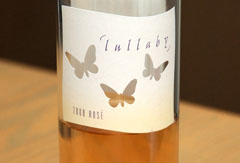
Virginie Bourgue is the owner and winemaker for Lullaby Winery, a limited production winery in Walla Walla, Washington. A native of France, Virginie studied viticulture in Avignon and then received her master’s in enology in Champagne. She worked several jobs in the wine industry in France before accepting an internship at Chateau Ste. Michelle in Washington State in 2002. In 2003, she became winemaker for Bergevin Lane Winery in Walla Walla. After three years, she left Bergevin Lane to become winemaker for Cadaretta Winery and also started her own winery. In April of this year, Virginie left Cadaretta to focus full-time on her own Lullaby Winery as well as consulting opportunities in viticulture and winemaking.

I have had the pleasure to visit with Virginie on two occasions, most recently during the #WARose tasting with Paul Gregutt in June when I tasted her 2008 Lullaby Rosé for the first time. During our Washington Rosé Extravaganza later that month, her Lullaby Rosé was my personal favorite of the evening. True to her French roots, it is a Provence-style rosé that is excellent by itself and also very food-friendly.

Recently, Virginie was kind enough to take time out of her busy schedule to answer some questions for me and our Wine Peeps readers.

Highlights from Q&A with Virginie Bourgue:

How did you first get involved in the wine business?
I grew up in a vine grower’s family, so I guess, since I was born. As to when I first decided to get involved in the wine business, it is a different story. I was home in Provence working in a restaurant called La Bartavelle in Goult. I was a waitress/wine adviser, and watching these smiling faces after a lunch or dinner where the wine and the food were matched in a synergistic way is how I got first involved in the wine business.

What were the steps that led to where you are now?
There are not too many steps: studying, working hard, studying more, still working hard, and having a lot of fun whenever the opportunity arises.

Do you use the fact that you are a woman to promote your wines?
By calling my winery Lullaby, I am paying a tribute to Women and Femininity all the time.

What advice do you have for a woman wanting to get involved in the wine business today?
To follow her passion and to be herself.

What are your thoughts about the Washington wine industry, in general?
Washington State has been a great place to be in the last 8 years. I have witnessed the birth of many wineries, and I have even been part of the birth of a few. I also witnessed the growth of a few AVAs with more acreage being planted and the birth of new AVAs. In the meantime, some vineyards are getting more mature and the profile of the wines being produced is getting more settled and more distinctive. The wine community has always been very friendly. It has been a pure pleasure to be a part of such a vibrant industry.

In recent years the Washington wine industry has grown at a rapid rate. Do you expect that trend to continue?
The growth of the Washington Wine Industry has been tremendous since I arrived in 2002.  I have found the energy contagious, still to this day. I believe it will continue. More will happen in the future.

You recently left your position as winemaker at Cadaretta to focus all of your energy on your own winery. How did you decide that the time was right to go completely out on your own?
I went back to consulting in the areas of viticulture and winemaking along with running Lullaby. This allowed me to be more flexible and mobile.

What is your vision for the future of Lullaby Winery?
Lullaby will grow in the future gradually. My goal remains to produce wines that have balance, softness, complexity, soul, and a sense of place.

Many thanks to Virginie for sharing her story and thoughts with us. I wish her all the best and will be following her work and Lullaby Winery with great interest, and I hope that you will too.


Filed under: American Wine, Interview, Rose Wine, Washington State Wine, Women of Washington Wine
 

Wine Word of the Week: Foxy


By Kori ~ July 24th, 2010

This week’s Wine Word of the Week is foxy.

Official definition from Jancis Robinson’s The Oxford Companion to Wine:
Foxy is usually a deeply pejorative tasting term for the peculiar flavour of many wines, particularly red wines, made from American vines and American hybrids, vine varieties developed from both American and European species of the Vitis genus, particularly Vitis labrusca. The concord grape, widely planted in New York State, is one of the most heavily scented, reeking of something closer to animal fur than fruit, flowers, or any other aroma associated with fine wine, although the ‘candy’-like aroma is, incidentally, quite close to that of the tiny wild strawberry or fraise des bois.

Layman’s terms from Kori:
Foxy is an unflattering tasting term used to describe animal fur aromas and flavors in wine, often found in Vitis labrusca, which is native to the eastern United States.


Filed under: Wine Word of the Week
 

Are You Resuming or Resetting Your Wine Buying Habits?


By John ~ July 23rd, 2010

Almost all of us have changed our spending habits to some degree during the economic storm of the past few years. The big unknown for all businesses is how we will respond once we feel comfortable about the economy again. Will we race right back after luxury goods of all kinds, including wine, or will the “looking for the good deal” mentality persist? More specifically, will you be resuming or resetting your wine buying habits? Please comment and tell us what you plan to do.

In reading quite a bit on this subject over the past few months as I’ve thought about which way my family and I will go, I want to share some educated observations on the subject:

  1. The Nielsen Report, in a June 16 news release, summarized the results of their recent research in the following headline: “Consumers Who Trade Down Satisfied with Quality, Likely to Continue to Buy Less Expensive Alcohol Beverages”.
  2. Lettie Teague, in her July 10 wine article for the Wall Street Journal, said that Chris Camarda, owner and winemaker of Andrew Will [whose wines historically garner rave reviews and top prices] told her that his sales were so slow he was holding back the wines of his latest vintage until those of the previous vintage cleared the shelves. And this year, he said, he is cutting production by 40%. On the other hand, in another part of her article, Teague noted that Ste. Michelle Wine Estates, a huge Washington value wines producer, saw its net revenue jump 26.7% from the previous year’s first quarter.
  3. Mike Veseth, The Wine Economist, noted in a recent post that his email inbox has been hopping with famous Napa wineries offering their wines at deeply discounted prices. “The typical deal I am offered is ‘limited time only’ 50% off the retail price plus discounted shipping.” As you can imagine, those kinds of offerings even make life tougher for the Chris Camardas of the world. And from what I hear and observe, there are hundreds of other wineries with inventory stacked to the ceiling in California and Washington and other places that have not yet faced the realities of the marketplace.
  4. “Staying in continues to be the new night out,” said Danny Brager, vice-president of The Nielsen Company. “As the economy worsened, consumers turned to at-home dining and entertaining, and now that the economy is starting to improve, uncertainty about the extent of the recovery continues to dampen the consumer ‘rush’ to go out more often.”
  5. Jeff Lefevere of the award-winning Good Grape wine blog doesn’t believe that the wine “reset” has been long enough or hard enough [at least so far]. As he says in his July 18 post, “I fear that a short-term recovery in the economy will bear no fruit in bringing clarity of purpose to the role that wine can play in our lives – there will be no reset on proportion and accessibility.  I fear that a recovery in the near-term will continue to engender luxury lifestyle as the marketing vehicle for selling something that should be viewed in an entirely different light.”

As for our family, I believe we definitely fall in the “reset” vs. “resume” camp, despite Jeff’s fears about the population at large. We have made some lifestyle changes that I believe will be long lasting. I do not see us rushing back out to upscale restaurants as much as we used to, and especially not to buy $30+ bottles of wine marked up to $100+, no matter how strongly the economy rebounds. We have too much good wine at home that we’ve bought at reasonable prices.

We also cook and eat at home much more than we used to, as you can tell by our Challenging Wine Pairing series, and our reports of other private tastings with dinner at home. These activities have become family favorites and are not likely to change with the economy. Lastly, we simply get more satisfaction out of a “good deal” than a “status” purchase. That’s why we emphasize our QPR [bang for your buck] ratings on wines that we review.

What about you? Will you “resume” or “reset” your wine buying habits? Not only would we like to know, but also wineries are desperate to know your answer because it will affect their long-term livelihood.


Filed under: General Wine Information
 

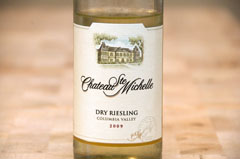
A Wine for Tonight: 2009 Chateau Ste. Michelle Dry Riesling


By Kori ~ July 22nd, 2010

Would you like a quick suggestion for a good wine to drink tonight (or this weekend) that won’t break your budget and is widely available? Many of our readers have said this is something they would like, so here is this week’s selection, the 2009 Chateau Ste. Michelle Dry Riesling from the Columbia Valley in Washington State.
Our selection criteria include:

  • A very good Quality rating of >=3.5 stars (out of 5)
  • A price tag of <=$15
  • Must be widely available

Washington is the largest Riesling producing state in the United States. And, Washington State’s own Chateau Ste. Michelle is the largest Riesling producer in the world. Chateau Ste. Michelle is Washington State’s founding winery with its roots dating back to the repeal of Prohibition. In 1976, Ste. Michelle built a French-style chateau in Woodinville, just northeast of Seattle. While all of Chateau Ste. Michelle’s vineyards are located on the east side of the Cascade Mountains, all of their white wines, including this Dry Riesling, are made in Woodinville.

Last week during the Riesling Rendezvous, winemaker Wendy Stuckey of Chateau Ste. Michelle sat on the panel during the International Blind Tasting of Dry Rieslings in which this wine was poured. When it was revealed and the audience was told that this wine retails for around $8 (we purchased it for under $6), Wendy received resounding applause.

“The Chateau Ste. Michelle Dry Riesling is a dry, crisp, refreshing style of Riesling with beautiful fruit flavors, crisp acidity and an elegant finish. It offers beautiful ripe peach and apricot aromas with a clean finish. This is an incredibly versatile food wine and my favorite with oysters.” –Bob Bertheau, Head Winemaker

2009 Chateau Ste. Michelle Dry Riesling (Columbia Valley, Washington): Pale, greenish straw yellow in color. Very aromatic with apricot and white peach on the nose; more white peach, apricot, and lime on the palate. Dry and light to medium-bodied with crisp acidity and a long, pleasing finish.
Quality: 3.5 stars (out of 5)
QPR: 5 bangs for your buck (out of 5)
Where to buy: Fred Meyer (Seattle, Washington) $5.99; Widely available elsewhere, $8 to $12


Filed under: A Wine for Tonight, American Wine, Five-Bangs For Your Buck Wines, Riesling, Washington State Wine, White Wine, Wines Under $10, Wines Under $15, Wines Under $20, Wines Under $25
 

Wine Tasting Dinner: Washington White Blends


By Kori ~ July 21st, 2010

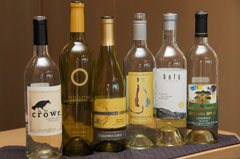
On Friday evening, we hosted our 85th wine tasting dinner. It was a gorgeous, sunny day in Seattle, perfect to enjoy some crisp, cool white wines for summer. This month’s dinner featured white blends from Washington State. All were made with two or more white wine varieties and are labeled as white wine, white blend, or have a proprietary name.

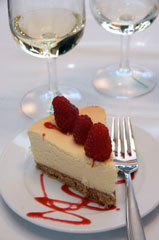
All six wines paired perfectly with Mom’s dinner of curried butternut squash soup, spinach and mango salad, roasted chicken breast with red potatoes and garlic, seasoned zucchini, summer squash and grape tomatoes, topped off by cheesecake with raspberry sauce, garnished with fresh raspberries. Not only did all six wines receive a Quality rating of 3.5 stars (out of 5) or higher, but two of the wines also received a QPR rating of 5 bangs for your buck (out of 5).

The consensus favorite of the evening was the 2009 Corvidae Crowe White Blend. Corvidae Wine Company, located in Sunnyside, Washington, is a relatively new label in the Owen Roe Winery portfolio. In Latin, Corvidae is the name for the family of birds that includes the crow, raven, jay, and magpie, birds that can often be found in Eastern Washington vineyards. This wine had done extremely well during a blind samples tasting earlier this year, but it was absolutely fantastic with dinner. It is a wonderful summer sipper, with or without food. Even though the suggested retail is $12, I have seen it in local grocery stores for under $9.

The other wine in this tasting that deserves extra attention because of its high quality and excellent value is the 2008 Columbia Crest Vineyard 10 White Wine. I continue to be amazed at the quality Columbia Crest is able to achieve at such a high production level. This wine is a great go-to white wine for parties and large groups because it is excellent, appeals to both Chardonnay and Sauvignon Blanc lovers, and can often be found in local grocery stores for under $6.

It is interesting to note that among those attending this tasting dinner, there seemed to be a slight preference for the wines with a higher percentage of Sauvignon Blanc. With that said, the Semillon-based blends are very good as well. In fact, you can’t go wrong with any of these wines to enjoy on your deck on a warm summer evening or to compliment the lighter fare often served during these warm months.

From 1st to last in the group consensus rankings:

2009 Corvidae Crowe White Blend (Columbia Valley, Washington): 48% Sauvignon Blanc, 19% Chenin Blanc, 18% Riesling, 13% Pinot Gris, 2% Muscat. Pale, greenish yellow. Very aromatic with beautiful floral and tropical fruit aromas. More floral notes, apples, pears, lemon, and lime come through on the palate. Dry and light to medium-bodied with crisp acidity. Well-balanced with a long finish. A wonderful summer sipper, with or without food.
Quality: 4.5 stars (out of 5)
QPR: 5 bangs for your buck (out of 5)
Where to buy: Received as sample, suggested retail $12; Available elsewhere, $10 to $12

2008 Fidelitas Optu White Wine (Columbia Valley, Washington): 56% Sauvignon Blanc, 44% Semillon. Pale, greenish straw yellow. Aromas of petrol, apple, and a hint of mint lead to flavors of apple, pear, and citrus fruits. Dry and light-bodied with lively acidity and a long finish. Well-balanced with good complexity.
Quality: 4 stars (out of 5)
QPR: 3 bangs for your buck (out of 5)
Where to buy: Fred Meyer (Seattle, Washington), $23.99; Available elsewhere, $18 to $31

2008 Columbia Crest Two Vines Vineyard 10 White Wine (Washington State): 40% Chardonnay, 34% Sauvignon Blanc, 11% Semillon, 15% Other various aromatic varieties. Pale, greenish straw yellow. Citrus aromas, especially grapefruit, as well as a touch of minerality come through on the nose; lots of apple, lime, lemon peel, grapefruit, and white peach on the palate. Dry and light to medium-bodied with lively acidity and a long finish.
Quality: 4 stars (out of 5)
QPR: 5 bangs for your buck (out of 5)
Where to Buy: Fred Meyer (Seattle, Washington), $5.99; Widely available

2008 Bergevin Lane Calico White (Columbia Valley, Washington): 44% Viognier, 37% Roussanne, 19% Chardonnay. Pale, greenish straw yellow. Minerality and pear on the nose; more pear and apple on the palate. Dry and light-bodied with lively acidity and a long finish.
Quality: 3.5 stars (out of 5)
QPR: 3 bangs for your buck (out of 5)
Where to Buy: Fred Meyer (Seattle, Washington), $15.49; Available elsewhere, $16 to $19

2008 Buty Semillon, Sauvignon and Muscadelle (Columbia Valley, Washington): 69% Semillon, 26% Sauvignon Blanc, 5% Muscadelle. Pale yellow in color. Aromatic with floral notes, pineapple, lemon, vanilla, and a hint of oak. Hay, cream, and tropical fruits come through on the palate. Dry, light-bodied and smooth with a medium finish.
Quality: 3.5 stars (out of 5)
QPR: 2 bangs for your buck (out of 5)
Where to Buy: Fred Meyer (Seattle, Washington), $22.99; Available elsewhere, $20 to $24

2008 L’Ecole Nº 41 Estate Luminesce (Seven Hills Vineyard, Walla Walla Valley, Washington): 70% Semillon, 30% Sauvignon Blanc. Pale, greenish straw yellow in color and very aromatic. Pear, apple, and coconut come through on the nose; pears, apples, peach, and mint on the palate. Dry, medium-bodied, and crisp with a long, somewhat tart, finish.
Quality: 3.5 stars (out of 5)
QPR: 2 bangs for your buck (out of 5)
Where to Buy: Received as sample, suggested retail $20; Available elsewhere, $15 to $21


Filed under: American Wine, Five-Bangs For Your Buck Wines, Washington State Wine, White Wine, Wine Tasting Dinners, Wines Under $10, Wines Under $15, Wines Under $20, Wines Under $25