Domaine Ste. Michelle Sparkling Wines: Big Bangs and Sabers


By Kori ~ July 20th, 2010

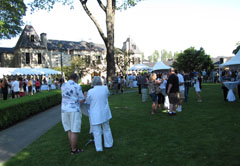
Domaine Ste. Michelle, located in Paterson, Washington, has been producing an excellent array of value sparkling wines for over 30 years. DSM is one of the largest sparkling wine houses in the United States, producing more than 300,000 cases each year. Rick Casqueiro has been head winemaker since 1994. I had the pleasure to meet Rick at the recent Wine Bloggers Conference in Walla Walla. One of the highlights of the conference was when Rick demonstrated how to open a bottle of sparkling wine with a saber.

<a href="http://vimeo.com/13453566">Click here to view video</a>

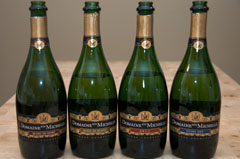
Recently, we had the opportunity to taste four sparkling wines from Domaine Ste. Michelle in a blind samples tasting. All four wines offer good overall quality and deliver the most bang for your buck.

Too often, people only think of sparkling wines to celebrate special occasions or to ring in the New Year. I absolutely love bubbly and think that it should be enjoyed on a regular basis. Sparkling wines are also very food-friendly. All of the wines from Domaine Ste. Michelle can regularly be found for under $10 at your local grocery store and are great options to become your “house” sparkling wine that you don’t hesitate to open on a random Tuesday night, just because.

NV Domaine Ste. Michelle Blanc de Noirs Sparkling Wine (Columbia Valley, Washington): Light, pinkish salmon in color. Very aromatic with raspberry and floral notes. Raspberry, citrus, and a hint of cinnamon come through on the palate. Dry, medium-bodied and crisp with small, fairly fast bubbles, and a long finish.
Quality: 3.5 stars (out of 5)
QPR: 5 bangs for your buck (out of 5)
Where to buy: Received as sample, suggested retail $12; Available elsewhere, $9 to $15

NV Domaine Ste. Michelle Blanc de Blancs Sparkling Wine (Columbia Valley, Washington): Pale, greenish straw yellow. Very aromatic with citrus and grassy notes. More citrus fruits, lemon zest, and some minerality come through on the palate. Dry, medium-bodied and crisp with small, fairly fast bubbles, and a long finish.
Quality: 3.5 stars (out of 5)
QPR: 5 bangs for your buck (out of 5)
Where to buy: Received as sample, suggested retail $12; Available elsewhere, $8 to $13

NV Domaine Ste. Michelle Brut Sparkling Wine (Columbia Valley, Washington): Pale, greenish straw yellow. Aromatic with orange peel and floral aromas that lead to flavors of gardenias and oranges. Dry, medium-bodied and lively with small, fairly fast bubbles, and a long finish.
Quality: 3.5 stars (out of 5)
QPR: 5 bangs for your buck (out of 5)
Where to buy: Received as sample, suggested retail $12; Available elsewhere, $8 to $12

NV Domaine Ste. Michelle Extra Dry Sparkling Wine (Columbia Valley, Washington): Pale, greenish straw yellow. Aromatic with apple, pear, hay, and honey on the nose. Apple, banana, and honey come through on the palate. Off-dry, medium-bodied and lively with small, medium speed bubbles, and a long finish.
Quality: 3 stars (out of 5)
QPR: 5 bangs for your buck (out of 5)
Where to buy: Received as sample, suggested retail $12; Available elsewhere, $8 to $15


Filed under: American Wine, Five-Bangs For Your Buck Wines, Sparkling Wine, Video, Washington State Wine, Wines Under $15, Wines Under $20, Wines Under $25
 

Riesling Rendezvous: Producers and Enthusiasts from Around the World Celebrate and Promote this Noble Grape


By Kori ~ July 19th, 2010

The third Riesling Rendezvous, hosted by Chateau Ste. Michelle of Washington State and Dr. Loosen of Germany, was held last week in the Seattle area. Nearly 70 producers from seven countries and six U.S. states traveled to Washington State to celebrate, explore, and promote Riesling.

While Riesling is enjoying a resurgence of sorts (currently, Riesling is the fastest growing wine in the U.S. market), many consumers still mistakenly dismiss it as being cheap and sweet. In reality, Riesling is one of the most versatile grape varieties. It can be made in many different styles from bone dry to very sweet, reflects the regional character of where it is grown, and is extremely food-friendly. And, it is probably the most age worthy of all white wine varieties.

As a result of discussions that took place at the first Riesling Rendezvous in 2007, the International Riesling Foundation was formed to help consumers better appreciate the many virtues of Riesling. One of their first orders of business was to develop a system to help consumers know what to expect in a particular bottle of Riesling. The IRF created a Riesling Taste Profile which producers may use on their back labels and other merchandising materials. It now appears on over 12 million bottles in the U.S. market. The IRF’s three-year goal is for the Riesling Taste Profile to be the standard for wineries, retailers, and restaurants in the U.S. and other markets where allowed.
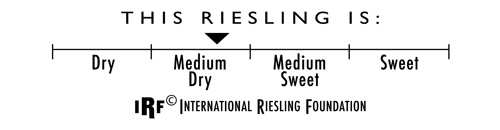
Riesling wines will be recognized and demanded internationally as the world’s most noble wines due to their diversity of styles, regional character, consistent quality, and compatibility with food. –Vision of the International Riesling Foundation
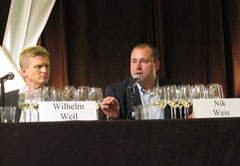
I attended all three days of the Riesling Rendezvous, which included a Grand Tasting, blind tastings, and workshops. It was wonderful to have so many producers and enthusiasts from all around the world together for a total Riesling immersion. It was the first time that I had ever focused on a single variety for three straight days. One of my favorite sessions was the Ageability of Riesling workshop, which made a strong case for the age worthiness of Riesling. Look for a future post about that workshop.

A quick look at the breakdown of wines I tasted below indicates the highest quality Rieslings are being produced in Germany and the Alsace region of France and some of the best values (highest QPRs) are coming from Germany and Washington State. Interestingly, this conclusion is consistent with the conclusion of a recent trade survey.

German and Alsatian Rieslings rated highest in quality, Germany high in value (along with Washington). –Trade Survey Conclusion by Wine Opinions

Here’s a breakdown of the wines that I tasted during the Riesling Rendezvous, except those tasted during the Ageability of Riesling workshop that will be included in a future post. Under each Quality heading, the wine name and region will be listed along with price (when provided) and QPR rating. Wines in bold type received a QPR rating of 5 bangs for your buck (out of 5).

Quality: 4.5 stars (out of 5)
2008 Dr. Loosen Riesling Spatlese Urziger Wurzgarten, Mosel, Germany, $30, QPR: 4
2009 Donnhoff Riesling Spatlese Niederhauser Hermannshohle, Nahe Valley, Germany $37.75, QPR: 4
2008 Hugel et Fils Hugel Riesling, Alsace, France, $NA, QPR: NA

Quality: 4 stars (out of 5)
2009 Donnhoff Riesling Kabinett Oberhauser Leistenberg, Nahe Valley, Germany $15.10, QPR: 5
2009 Efeste Evergreen Riesling, Columbia Valley, Washington, $16, QPR: 5
2009 Glenora Riesling, Finger Lakes, New York, $16, QPR: 5
2008 Donnhoff Riesling Grosses Gewachs Niederhauser Hermannshohle, Nahe Valley, Germany, $17.60, QPR: 5
2008 Chateau Ste. Michelle & Dr. Loosen Eroica Riesling, Columbia Valley, Washington, $18, QPR: 5

2009 Dr. Loosen Riesling Kabinett “Blue Slate”, Mosel, Germany, $20, QPR: 4
2009 Viento Dry Riesling Columbia Gorge Vineyard, Columbia Gorge, Oregon, $20, QPR: 4
2007 Viento Riesling Select Harvest Columbia Gorge Vineyard, Columbia Gorge, Oregon, $20, QPR: 4
2008 Selbach-Oster Riesling Kabinett Wehlener Sonnenuhr, Mosel, Germany, $24, QPR: 4
2008 Domaine Ostertag Riesling Vignoble d’E, Alsace, France, $25, QPR: 4
2009 Frankland Estate Isolation Ridge Vineyard Riesling, Frankland River, Western Australia, $27, QPR: 4
2009 Jim Barry Wines The Florita Riesling, Clare Valley, Australia, $29, QPR: 3
2009 Van Volxem Spatlese Pierpointe St. Urbans Hof, Mosel, Germany, $35, QPR: 3
2009 Josef Leitz Rudesheimer Berg Schlossberg Riesling Trocken Alte Reben, Rheingau, Germany, $NA, QPR: NA
2009 Domane Wachau Riesling Smaragd Singerriedel, Wachau, Austria, $NA, QPR: NA
2009 Villa Maria Reserve Dry Riesling, Marlborough, New Zealand, $NA, QPR: NA
2009 Forrest Wines The Valleys Dry Riesling, Wairau Valley, New Zealand, $NA, QPR: NA
2005 Lucien Albrecht Riesling Grand Cru Clos Schild, Alsace, France, $NA, QPR: NA
2008 Lucien Albrecht Riesling Cuvee Henri, Alsace, France, $NA, QPR: NA
2005 Vins Schoenheitz Riesling Linsenberg, Alsace, France, $NA, QPR: NA
2008 Loimer Riesling Steinmassl, Kamptal, Austria, $NA, QPR: NA
2008 Becker Steinhauser Auslese Brauneberger Sonnenuhr, Mosel, Germany, $NA, QPR: NA
2008 Triple Entente Cuckoo’s Nest Riesling, Old Mission Peninsula, Michigan, $NA, QPR: NA
2000 Black Star Farms A Capella Riesling Ice Wine, Old Mission Peninsula, Michigan, $NA, QPR: NA
2009 Framingham Wines Classic Riesling, Marlborough, New Zealand, $NA, QPR: NA
2007 Egon Muller-Scharzhof Scharzhofberger Riesling Kabinett, Saar Valley, Germany, $NA, QPR: NA
2009 Gysler Riesling Kabinett, Rheinhessen, Germany, $NA, QPR: NA

Quality: 3.5 stars (out of 5)
2009 Chateau Ste. Michelle Dry Riesling, Columbia Valley, Washington, $9, QPR: 5
2008 Chateau Grand Traverse Dry Riesling, Old Mission Peninsula, Michigan, $12.49, QPR: 5

2008 Viento Riesling Columbia Gorge Vineyard, Columbia Gorge, Oregon, $16, QPR: 4
2008 Efeste Evergreen Riesling, Columbia Valley, Washington, $16, QPR: 4
2008 Chateau Grand Traverse Whole Cluster Riesling, Old Mission Peninsula, Michigan, $16, QPR: 4
2009 Josef Leitz Dragonstone Riesling, Rheingau, Germany, $18, QPR: 4
2009 Van Volxem Rotschiefer Riesling Kabinett, Mosel, Germany, $20, QPR: 4
2009 Domane Wachau Riesling Federspiel Terrassen, Wachau, Austria, $20, QPR: 4
2008 Hugel et Fils Riesling Classic, Alsace, France, $20, QPR: 4
2009 Loimer Riesling Kamptal, Kamptal, Austria, $20, QPR: 4
2009 Jim Barry Wines The Lodge Hill Riesling, Clare Valley, Australia, $20, QPR: 4
2009 Frankland Estate Poison Hill Vineyard Riesling, Frankland River, Western Australia, $20, QPR: 4
2009 Domane Wachau Riesling Smaragd Terrassen, Wachau, Austria, $25, QPR: 3
2009 Frankland Estate Cooladerra Vineyard Riesling, Frankland River, Western Australia, $30, QPR: 2
2008 Fox Run Vineyards Reserve Riesling Seneca Lake, Finger Lakes, New York, $30, QPR: 2
2006 Dr. Von Basserman-Jordan Riesling Spatlese Deidesheimer Leinhohle, Pfalz, Germany, $30, QPR: 2
2008 Domaine Ostertag Fronholz Riesling, Alsace, France, $40, QPR: 1
2005 Jim Barry Wines The Florita Riesling, Clare Valley, Australia, $NA, QPR: NA
2008 Brundlmayer Riesling Zobinger Heiligenstein, Kamptal, Austria, $NA, QPR: NA
2008 Clemens Busch Riesling Grosses Gewachs, Marienberg “Falkenlay”, Mosel, Germany, $NA, QPR: NA
2008 Henry of Pelham Speck Family Reserve Riesling, Short Hills Bench, Niagara Peninsula, Ontario, Canada, $NA, QPR: NA
2008 Pierre Sparr Riesling, Alsace, France, $NA, QPR: NA
2009 Helfrich Winery Noble Tier Riesling, Alsace, France, $NA, QPR: NA
2007 Trimbach Riesling, Alsace, France, $NA, QPR: NA
2008 Kuentz-Bas Riesling Tradition, Alsace, France, $NA, QPR: NA
2002 Loimer Riesling Steinmassl, Kamptal, Austria, $NA, QPR: NA
2007 St. Urbans-Hof Ockfener Bockstein Riesling Spatlese, Saar Valley, Germany, $NA, QPR: NA
2008 Robert Weil Kiedrich Grafenberg Riesling Spatlese, Rheingau, Germany, $NA, QPR: NA
2008 Bowers Harbor Vineyards Block II Riesling, Old Mission Peninsula, Michigan, $NA, QPR: NA
2009 Tesch Riesling Trocken “Unplugged”, Nahe Valley, Germany, $NA, QPR: NA
2008 Clemens Busch Pundericher Marienburg Riesling “Fahrlay” Grosses Gewachs, Mosel, Germany, $NA, QPR: NA
2008 Schafer-Frolich Bockenauer Felseneck Riesling Spatlese, Nahe Valley, Germany, $NA, QPR: NA
2007 Ansgar-Clusserath Drohn Hofberger Riesling Auslese, Mosel, Germany, $NA, QPR: NA

Quality: 3 stars (out of 5)
2008 14 Hands Riesling, Washington State, $10, QPR: 4
2008 Dr. Konstantin Frank Dry Riesling, Finger Lakes, New York, $15, QPR: 3
2008 Dr. Konstantin Frank Riesling Semi-Dry, Finger Lakes, New York, $15, QPR: 3
2008 Black Star Farms Arcturos Dry Riesling, Old Mission Peninsula, Michigan, $16.50, QPR: 3
2008 Robert Weil Riesling Trocken Kiedrich Grafenberg Erstes Gewachs, Rheingau, Germany, $18, QPR: 2
2008 Left Foot Charley 7th Hill Riesling, Old Mission Peninsula, Michigan, $18, QPR: 2
2008 Chehalem Reserve Dry Riesling, Willamette Valley, Oregon, $21, QPR: 2
2007 Anthony Road Martini-Reinhardt Selection Riesling, Finger Lakes, New York, $22, QPR: 1
2007 Domaine Ostertag Fronholz Riesling, Alsace, France, $NA, QPR: NA
2009 Arthur Metz Riesling, Alsace, France, $NA, QPR: NA
2009 Espenhof Riesling Trocken “S” Muschelkalk, Rheinhessen, Germany, $NA, QPR: NA
2008 Rainer Schnaitmann Uhlbacher Riesling Trocken, Wurttemberg, Germany, $NA, QPR: NA
2008 Schneider Ellerstadter Kirschenstuck Riesling Trocken, Pfalz, Germany, $NA, QPR: NA
2008 Garage Winery Riesling Feinherb “Wild Thing”, Rheingau, Germany, $NA, QPR: NA

Quality: 2.5 stars (out of 5)
2008 Chateau Grand Traverse Dry Riesling, Old Mission Peninsula, Michigan, $14, QPR: NR
2008 Chateau Grand Traverse Lot 49 Riesling, Old Mission Peninsula, Michigan, $22, QPR: NR
2004 Hugel et Fils Riesling Jubilee, Alsace, France, $NA, QPR: NR
2004 Leon Beyer Riesling Ecaillers, Alsace, France, $NA, QPR: NR
2006 Cave Spring Riesling CSV, Beamsville Bench, Niagara Peninsula, Ontario, Canada, $NA, QPR: NR
2009 2 Lads Winery Riesling, Old Mission Peninsula, Michigan, $NA, QPR: NA
2009 Gysler Riesling Trocken “S” Rotliegendes, Rheinhessen, Germany, $NA, QPR: NA


Filed under: American Wine, Australian Wine, Austrian Wine, Canadian Wine, Five-Bangs For Your Buck Wines, French Wine, German Wine, Michigan Wine, New York Wine, New Zealand Wine, Oregon Wine, Riesling, Washington State Wine, White Wine, Wines NOT To Buy (1 & 2 Star), Wines Over $25, Wines Under $10, Wines Under $15, Wines Under $20, Wines Under $25
 

Wine Word of the Week: Vinifera


By Kori ~ July 17th, 2010

This week’s Wine Word of the Week is vinifera.
Official definition from Jancis Robinson’s The Oxford Companion to Wine:
Vinifera, the European species of Vitis that is the vine most used for wine production, to which all the most familiar vine varieties belong. Vinifera is not a classical Latin word, but one made up by Linnaeus to denote ‘wine-grape bearing’.

Layman’s terms from Kori:
Vinifera, formally known as Vitis vinifera, is native to Europe and west Asia and is the only species of grapevines used on a widespread basis for wine grapes.


Filed under: Wine Word of the Week
 

Rhone Rangers’ Struggles Provide Great Opportunity for Wine Consumers


By John ~ July 16th, 2010

Good wine and great values have been the keynotes at the Rhone Rangers events that I have attended. So why was attendance down so much at this year’s trade event in Seattle, both in numbers of producers pouring wines and in distributors, restaurants, and media tasting the wines? For answers to that question, I turned to Rhone Rangers Board member Jason Haas of Tables Creek Vineyard and Rhone Rangers Executive Director Cheryl Quist.
Jason thought that participation was down due to the lagging economy, conflicting events like Riesling Rendezvous, and Syrah simply not selling as well as in the past. Cheryl blamed the lower participation on wineries cutting back on travel and donor budgets, and distributors not looking for more labels to carry in their portfolio. “It’s just a tough market right now,” said Cheryl.

Jon Martinez of Maison Bleue even recruited Washington winegrowing legend Dick Boushey to pour at his booth. It was a great marketing idea, and it worked. Maison Bleue had a good crowd the whole afternoon.

This was the third year in a row that I attended the Rhone Rangers trade/media tasting here in Seattle. The Rhone Rangers are a non-profit organization dedicated to promoting American Rhone varietal wines. To be members, wineries must produce wines from one or more of the 22 varietals that are native to the Rhone Valley in France. Twenty-nine Rhone Ranger member wineries from Washington, California, Oregon, and Idaho participated in this tasting, down from over forty a year ago.

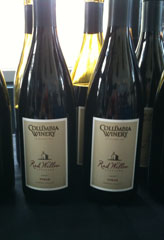
The good news is that for wine consumers, there is great opportunity. The wines continue to get better while the prices are the same or lower. There were a higher percentage of 4 star (out of 5) wines or better, and there were a higher percentage of great QPR wines (5 bangs for your buck) than I’d found the previous two years at this event. There were no real “new” discoveries this year, but a number of excellent new vintages from familiar producers. From a quality standpoint, my two personal favorites were the 2007 Columbia Winery Red Willow Syrah [QPR: 5, as well] and the 2008 Maison Bleue “Liberte” Boushey Syrah. From a QPR standpoint, I continue to be impressed with what Cline Cellars produces at price points we all can afford.
Here’s a breakdown of the wines that I tasted at the Rhone Rangers event; I focused on red wines this year. Under each Quality heading, the wine name and region will be listed along with price and QPR rating. Wines in bold type received a QPR rating of 5 bangs for your buck (out of 5).

Quality: 4.5 stars (out of 5)
2007 Columbia Winery Red Willow Syrah, Yakima Valley, $30, QPR: 5

Quality: 4 stars (out of 5)
2008 Cline “Cashmere” Red Blend, California, $14, QPR: 5
2007 Cline “Cool Climate” Syrah, Sonoma County, $14, QPR: 5
2006 Snoqualmie Reserve Syrah, Columbia Valley, $20, QPR: 5

2008 Tablas Creek “Cote de Tablas” Red Blend, Paso Robles, $25, QPR: 4
2008 Justin Syrah, Paso Robles, $26, QPR: 4
2007 Chateau Ste. Michelle “Boreal” Red Blend, Columbia Valley, $30, QPR: 4
2007 Sarah’s Vineyard “Cote de Madone” Red Blend, Santa Clara Valley, $32, QPR: 4
2008 Maison Bleue “Liberte” Syrah, Boushey Vineyard, Yakima Valley, $39, QPR: 3
2006 Domaine Serene Roadblock Reserve Syrah, Oregon, $40, QPR: 3

Quality: 3.5 stars (out of 5)
2007 Clayhouse Estate Syrah, Paso Robles, $15, QPR: 5
2006 Columbia Crest Reserve Syrah, Columbia Valley, $20, QPR: 4
2008 Maison Bleue “La Roque” Syrah, Horse Heaven Hills, $25, QPR: 4
2007 Chateau Ste. Michelle “Ethos” Syrah, Columbia Valley, $28, QPR: 3
2007 Chateau Ste. Michelle “Austral” Red Blend, Columbia Valley, $30, QPR: 3
2006 Tablas Creek Syrah, Paso Robles, $35, QPR: 3
2006 Fess Parker “Big Easy” Syrah, Santa Barbara County, $35, QPR: 3
2008 Treana Syrah, Hope Family Vineyard, Paso Robles, $42, QPR: 2
2008 Justin “Savant” Red Blend, Paso Robles, $45, QPR: 1
2006 Pride Mountain Syrah, Sonoma, $60, QPR: 1

Quality: 3 stars (out of 5)
2007 Four Vines Phoenix Syrah, Paso Robles, $20, QPR: 3
2006 Eberle Syrah, Steinbeck Vineyard, Paso Robles, $21, QPR: 3
2006 Curtis Syrah, Crossroads Vineyard, Santa Ynez Valley, $32, QPR: 2
2008 Qupe “Sonnie’s” Syrah, Sawyer Lindquist Vineyard, Edna Valley, $35, QPR: 1
2007 Stage Left Syrah “The Scenic Route”, Del Rio Vineyard, Oregon, $38, QPR: 1
2006 Vina Robles “Syree” Syrah, Paso Robles, $39, QPR: 1
2007 Four Vines “The Peasant” Red Blend, Paso Robles, $40, QPR: 1
2007 Epiphany Syrah, Stagecoach Vineyard, Napa Valley, $40, QPR: 1
2006 Fess Parker Syrah, Rodney’s Vineyard, Santa Barbara County, $45, QPR: 1
2008 Pride Mountain Syrah, Sonoma, $60, QPR: 1

Quality: 2.5 stars (out of 5)
2007 Calcareous Vineyard Syrah, Paso Robles, $34, QPR: NR


Filed under: American Wine, California Wine, Five-Bangs For Your Buck Wines, Oregon Wine, Red Wine, Shiraz/Syrah, Washington State Wine, Wine Activities/Events, Wines NOT To Buy (1 & 2 Star), Wines Over $25, Wines Under $15, Wines Under $20, Wines Under $25
 

A Wine for Tonight: 2007 Buried Cane Syrah


By Kori ~ July 15th, 2010

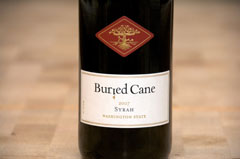
Would you like a quick suggestion for a good wine to drink tonight (or this weekend) that won’t break your budget and is widely available? Many of our readers have said this is something they would like, so here is this week’s selection, the 2007 Buried Cane Syrah from Washington State.
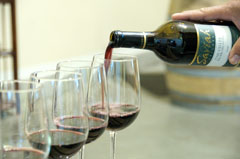
Our selection criteria include:

  • A very good Quality rating of >=3.5 stars (out of 5)
  • A price tag of <=$15
  • Must be widely available

Buried Cane is the value brand for Middleton Family Wines. The Middletons, a multi-generation Washington timber family, also own Cadaretta Winery in Walla Walla, which is where Buried Cane is produced. Buried Cane wines are named after a time-honored practice used to protect grape vines from frigid winter temperatures in which low-growing vine canes are buried and then unearthed after winter freezes pass.

“The inaugural release of Buried Cane Syrah has dark cherry and blackberry spice aromas that open into earthy complexities, with slight cured meat notes. Flavors of cherry and spice lead to silky tannins and a lingering finish. This balanced wine is a great match with grilled meats and Northwest salmon.” –Buried Cane

2007 Buried Cane Syrah (Washington State): 80% Syrah, 8% Mourvedre, 5% Counoise, 4% Grenache, 3% Sangiovese. Deep, dark purplish red. Aromatic with black fruits, oak, and some vegetal notes on the nose. Black fruits and black pepper come through on the palate. Medium to full-bodied, fruit-forward with crisp acidity, medium to high tannins, and a long finish.
Quality: 3.5 stars (out of 5)
QPR: 5 bangs for your buck (out of 5)
Where to buy: Received as sample, suggested retail $12; Available elsewhere, $11-$12


Filed under: A Wine for Tonight, American Wine, Five-Bangs For Your Buck Wines, Red Wine, Shiraz/Syrah, Washington State Wine, Wines Under $15, Wines Under $20, Wines Under $25
 

Saviah Cellars Une Vallée Vertical, 2003-2008


By Kori ~ July 14th, 2010

Recently when we were in Walla Walla for the Wine Bloggers Conference, we had the pleasure to visit with one of our favorite Washington winemakers, Rich Funk of Saviah Cellars. We selected Saviah Cellars as our Best Washington Winery of 2009.
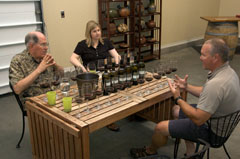
Saviah Cellars is a family-owned winery located south of downtown Walla Walla, near the Oregon state line in the Walla Walla Valley AVA. Founded in 2000 by Rich Funk and his wife Anita, Saviah Cellars currently produces about 9,500 cases per year. The name Saviah is a family name from Anita’s great-grandmother.

Rich took us through a vertical tasting of his Saviah Cellars Une Vallée Red Wine from the 2003 through the 2008 vintage. (For those of you who are not familiar with a vertical tasting, it is one in which you taste different vintages of the same wine from the same winery.) Une Vallée is French for “one valley”. This Left Bank Bordeaux-style blend features fruit from the Walla Walla Valley. When Rich founded Saviah, there were not a lot of vineyards in the Walla Walla Valley so his goal from the beginning has been to blend together the best wine that he can from the Walla Walla Valley. The only exception so far has been the 2004 vintage when the Walla Walla Valley suffered from a terrible freeze; the fruit for that wine was sourced from Columbia Valley vineyards.

“I want to make a wine that really showcases my style as much as the elegance and silkiness that Walla Walla wines portray. I think that the essence of Walla Walla is the silkiness that we have in our wines. The Une Vallée has always been about restraint rather than trying to make a big, bruiser, over-extracted wine.” –Rich Funk, winemaker

As I have said before, one of the things that I really admire about Rich’s winemaking style is that he strives for elegance rather than over-extracted huge wines. As a winemaker, he is all about the fruit, but his wines are not fruit bombs. Rich’s wines show balance, complexity, and elegance.

You can’t go wrong with any of these wines; they are all very good. However, the two that really stood out to us were the 2007 and 2008. Both are very young but are already excellent and should open up even more with a few more years of age. These wines also deliver some serious bang for your buck.
Tasting notes, in the order we tasted them:

2003 Saviah Walla Walla Valley Une Vallée (Walla Walla Valley, Washington): 61% Cabernet Sauvignon, 29% Merlot, 10% Cabernet Franc. Very aromatic with black fruits, spice, licorice, cinnamon, and a hint of leather on the nose. Blackberry and black cherry dominate the palate. Full-bodied with crisp acidity and medium to high tannins. Well-balanced and smooth with a long finish.
Quality: 4 stars (out of 5)
QPR: 4 bangs for your buck (out of 5)
Where to buy: Winery, $32

2004 Saviah Columbia Valley Une Vallée (Columbia Valley, Washington): 60% Cabernet Sauvignon, 30% Merlot, 10% Cabernet Franc. Herbal notes, black cherry, and clove on the nose; black plum and oak on the palate. Medium to full-bodied with lively acidity, medium tannins, and a long finish.
Quality: 3.5 stars (out of 5)
QPR: 3 bangs for your buck (out of 5)
Where to buy: Winery, $32

2005 Saviah Walla Walla Valley Une Vallée (Walla Walla Valley, Washington): 62% Cabernet Sauvignon, 31% Merlot, 7% Cabernet Franc. Aromas of ripe blackberry, citrus, coffee, and a hint of mint. Flavors of black and red fruits and spice. Full-bodied with lively acidity and medium, silky tannins. Well-balanced with a long finish.
Quality: 4 stars (out of 5)
QPR: 4 bangs for your buck (out of 5)
Where to buy: Winery, $32

2006 Saviah Walla Walla Valley Une Vallée (Walla Walla Valley, Washington): 60% Cabernet Sauvignon, 34% Merlot, 6% Cabernet Franc. Very aromatic with floral notes, black fruits, herbs, and slight vegetal aromas on the nose. Ripe black cherry, red cherry, and earth on the palate. Full-bodied with crisp acidity and smooth tannins. Well-balanced with a long finish.
Quality: 4 stars (out of 5)
QPR: 4 bangs for your buck (out of 5)
Where to buy: Winery, $32

2007 Saviah Walla Walla Valley Une Vallée (Walla Walla Valley, Washington): 57% Cabernet Sauvignon, 36% Merlot, 7% Cabernet Franc. Very aromatic with black and blue fruits, vanilla, and spice on the nose. More black and blue fruits, spice, licorice, and floral notes come through on the palate. Full-bodied, crisp yet smooth, medium to high tannins and a long finish. Well-balanced, good complexity, should get even better with some age.
Quality: 4.5 stars (out of 5)
QPR: 5 bangs for your buck (out of 5)
Where to buy: Winery, $32

2008 Saviah Walla Walla Valley Une Vallée (Walla Walla Valley, Washington): 56% Cabernet Sauvignon, 38% Merlot, 6% Cabernet Franc. Gorgeous nose with black fruit, baking spice, and licorice aromas that lead to blackberry, black plum, and spice flavors. Medium to full-bodied with lively acidity, medium to high tannins, and a long finish. Well-balanced with good complexity. A very young wine but shows amazing potential.
Quality: 4.5 stars (out of 5)
QPR: 5 bangs for your buck (out of 5)
Where to buy: Winery, $32


Filed under: American Wine, Five-Bangs For Your Buck Wines, Red Wine, Washington State Wine, Wines Over $25
 

Challenging Wine Pairing: Christmas in July


By LaGayle ~ July 13th, 2010

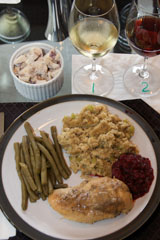
People so often eat certain meals only on very special occasions. In our family the main entrée of our traditional Christmas dinner is chicken and dressing. Not wanting to wait until December to eat it again, I thought it would be fun to have a Christmas in July dinner for this month’s challenging wine pairing.
I thoroughly enjoyed preparing this meal at the midpoint of the year and giving us the opportunity to start looking ahead to Christmas. On a side note, our dressing is usually a cornbread dressing; however, I have started making it with rice flour muffins rather than cornbread because we try, when possible, to eat gluten-free. It is amazing that the texture and taste is identical to that of cornbread. I rounded out the menu with an apple walnut salad, seasoned green beans, a spicy jalapeno cranberry relish, and pecan tarts with whipped topping and garnished with shaved chocolate for dessert.

Once the menu was in place, it was time to determine the wines to pair with the meal. I, again, referred to What to Drink with What You Eat by Andrew Dornenburg and Karen Page to decide what to serve. White wine is frequently paired with chicken; however, certain red wines are also acceptable. The two varietals chosen to pair with our Christmas in July dinner were Chardonnay (domestic) and Pinot Noir (red Burgundy from France).

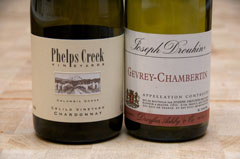
For this challenge, I selected the 2008 Phelps Creek Celilo Vineyard Chardonnay and the 2007 Joseph Drouhin Gevrey-Chambertin. Phelps Creek is located in Oregon but the fruit for this Chardonnay is sourced from Celilo Vineyard in Washington State. The Joseph Drouhin Gevrey-Chambertin is a classic red Burgundy made from the Pinot Noir grape. While we enjoyed both wines, we all thought that the Chardonnay was superb, with and without food. It was a marvelous pairing, and we’ll certainly be picking up another bottle of the Phelps Creek Chardonnay to have with this meal come Christmastime. And, best of all, both wines received a QPR rating of 5 bangs for your buck (out of 5).

As always, I encourage you to try your own challenging pairings at home. Also, we welcome your suggestions for challenging wine pairing meals for us to try in the future.

Bon Appétit!

2008 Phelps Creek Celilo Vineyard Chardonnay (Celilo Vineyard, Columbia Gorge, Washington): Medium yellow in color. Very aromatic and refreshing with grass and green apples on the nose. Citrus, apples, and orange peel come through on the palate. Dry, medium-bodied and crisp with a very long finish. Well-balanced with good complexity. Possibly the best Chardonnay we’ve had.
Quality: 4.5 stars (out of 5)
QPR: 5 bangs for your buck (out of 5)
Where to buy: Winery $24; Available elsewhere, $24

2007 Joseph Drouhin Gevrey-Chambertin (Gevrey-Chambertin, Cotes de Nuits, Burgundy, France): Grape: Pinot Noir. Medium ruby red. Aromas of earth and oak lead to flavors of cherry and earth. Dry and medium-bodied with lively acidity, drying tannins, and a long finish.
Quality: 3.5 stars (out of 5)
QPR: 5 bangs for your buck (out of 5)
Where to buy: QFC (Seattle, Washington), $42.99; Available elsewhere, $36 to $55


Filed under: American Wine, Challenging Wine Pairing, Chardonnay, Five-Bangs For Your Buck Wines, Food & Wine, French Wine, Oregon Wine, Pinot Noir, Red Wine, Washington State Wine, White Wine, Wines Over $25, Wines Under $25
 

Plowing Ahead: Tracing Red Willow Vineyard’s roots to the birthplace of Washington Syrah


By Kori ~ July 12th, 2010

Kori S. Voorhees, our Wine Peeps Editor-in-Chief, is also a regular contributor to Washington Tasting Room Magazine, a quarterly magazine that focuses on Washington State wine with articles about wineries, vineyards, travel, and lifestyle. The following article, written by Kori, appeared in the Fall 2009 issue.

Many a great bottle of wine has begun with grapes from Red Willow Vineyard. In winemaker circles, the vineyard is synonymous with grower Mike Sauer, whose elbow grease and vision have contributed mightily to the high demand for his quality grapes.
Sauer has diligently labored over this piece of land for 40 years. Still, he gives away all the credit for the vineyard’s success. “The soil gives an elegant and concentrated element to the wine with a lot of structure that ages very well,” he suggests. He and his family own Red Willow Vineyard, which sits in the northwest corner of the Yakima Valley appellation on the fourth-generation family farm established by Mike Sauer’s grandfather-in-law in the 1920’s.

Red Willow was named for an ancient, dried up creek bed canyon that descends from Ahtanum Ridge and passes through part of the vineyard. Characterized by its rocky, steep hillsides, the vineyard boasts a complexity and diversity of soils, which allows many different grape varieties to flourish.

“I love hillside fruit because the angle to the sun gives the vines more exposure,” says master winemaker Bob Betz, commenting on Red Willow’s terrain. “Hillside slopes also tend to be more protected in winter. In as much as air drains off a slope, cold air drains off a slope the way water would.”

Betz uses Red Willow grapes in his blends, and in fact, he is releasing a dense and silky Syrah this fall [2009] made from 100% Red Willow grapes, called La Cote Patriarche. Asked what makes Red Willow distinctive, Betz replies, “Red Willow is a combination of a very special site, a very smart grower, and a high work ethic. To me, that is the essence of Red Willow. Mike (Sauer) knows his site, his craft, his culture and provides us with uncompromised fruit.”

Monsignor Chapel

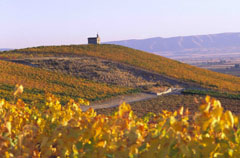
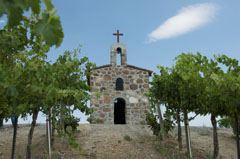
The iconic Monsignor Chapel sits atop Red Willow’s highest hill, built with native stones from the farm. Sauer constructed the monument in memory of his close family friend, the priest who had baptized all of his children. “I was inspired by a chapel I saw in the Rhone region of France,” says Sauer. Seen from miles around, the Monsignor Chapel gives the vineyard a distinct identity that is depicted on certain wine labels and corks.

The Mother of Washington Syrah

The very first Syrah vineyard block planted in Washington was at Red Willow in 1986, making it the mother of Washington Syrah. In fact, it is estimated that 80 percent of all Syrah plantings in Washington can be traced back to cuttings from this vineyard. While Sauer has grown over 20 different varieties at Red Willow over the past 35 years, he believes Syrah is what Washington grows best.

Jonathan Sauer, Mike’s son, recalls the story about how after the first Syrah block was planted there was a celebration on the hillside with bottles of Hermitage and Cote-Rotie from the northern Rhone Valley in France where Syrah originated. After enjoying the wine, they dug holes and buried the empty bottles to let the ground know what was expected of it. It was a symbolic gesture and the vineyard has lived up to those expectations quite well.

Early Roots

While their first vines were planted in 1971, the defining year for Red Willow was 1973 when Mike Sauer was introduced to Dr. Walter Clore, the esteemed Washington State University (WSU) viticulturist. Their relationship led to many cooperative efforts with the WSU Prosser Experiment Station. They installed a weather station and experimented with numerous grape varieties. Red Willow’s first vineyard block of Cabernet Sauvignon was planted in 1973 and is still going strong, making it one of the oldest Cabernet Sauvignon blocks in the state.

Dating back to 1978, Red Willow Vineyard has had a longstanding relationship with Associated Vintners, later known as Columbia Winery. David Lake, Columbia’s winemaker for many years, was particularly fond of the vineyard and was the first to produce a Red Willow vineyard designated wine.

Popular Demand

Columbia Winery still buys a large portion of Red Willow’s annual harvest. In recent years the vineyard’s characteristic fruit has been sought out by a growing number of other notable Washington producers such as Betz, DeLille, Long Shadows, Owen Roe, Adams Bench, Mark Ryan, Kana, Efeste and Andrew Rich.

Winemaker Bob Betz remarks, “It’s a really wonderful series of notes that Red Willow brings to the party; the flavors tend to be dense and concentrated and rich. Especially the older vines. We get some Cab that was planted in 1973 and some Syrah that was planted in 1986. I find it a great tool to bring to our blends.”

The Sauer family also owns a second vineyard on the family farm, Les Vignes de Marcoux, named after Mike Sauer’s mother’s maiden name. Less than a mile west of Red Willow, the soils are much less variable than the steep vineyards of Red Willow. Ten wineries, including Betz, Owen Roe, and Adams Bench will vineyard designate this year [2009] using either Red Willow or Les Vignes de Marcoux grapes.

Plowing Forward

In 2008, the Sauer’s planted the last suitable vineyard ground at Red Willow to a block of Cabernet Franc, giving them 140 total planted acres of wine grapes. In spite of the current economic recession, Red Willow continues to plow ahead and do what they do best. “We have seen a lot of caution and sensitivity in pricing but very little pullback (from winemakers),” says Mike Sauer. “Of course, at the vineyard level, these grapes will translate to wine sold two or three or four years from now.”

Sauer is in the process of bringing more energy-efficient farming practices to Red Willow. Not one to rest on past accolades, he is driven by his vision to someday see the vineyards become authentically green through practices that are sustainable.

After a lifetime of farming Red Willow, Mike Sauer tirelessly plows forward with the help of his family.

He has huge respect for the vintners that he works with, and believes in a spirit of cooperation. Sauer eloquently sums up the harmonious team effort that exists between growers and winemakers, “It’s the work of many people that comes together in a single vintage, and that vintage eventually becomes a cherished moment of that year.”


Filed under: American Wine, Vineyards, Washington State Wine, Washington Tasting Room Magazine, Wine Magazines
 

Wine Word of the Week: Residual sugar


By Kori ~ July 10th, 2010

This week’s Wine Word of the Week is residual sugar.

Official definition from Jancis Robinson’s The Oxford Companion to Wine:
Residual sugar, occasionally RS, is the total quantity of sugars remaining unfermented in the finished wine.  This may include both fermentable sugars, mainly glucose and fructose, which have for some reason remained unconverted to alcohol during fermentation, and small amounts of those few sugars which are not readily fermented by typical wine yeast. Some, but by no means all, residual sugar is tasted as sweetness.

Layman’s terms from Kori:
Residual sugar in a wine is achieved by either arresting fermentation or fermenting to dryness and then blending in unfermented grape juice in order to attain the desired level of sweetness. Residual sugar can provide balance for wines with high acidity such as Riesling. Residual sugar is usually measured in grams of total sugars per liter of wine and often listed as a percentage (i.e. 15 g/l = 1.5%).


Filed under: Wine Word of the Week
 

QPR: A Calculation, Not a Feeling


By John ~ July 9th, 2010

When we started publishing QPRs for all the wines we reviewed, there weren’t many wine writers using the term QPR. Now it seems that everyone is using the term as a buzzword for a wine they feel is a good deal. Commentary I read about QPR, or quality-to-price ratio, leads me to believe that it may be one of the most misunderstood terms in wine today.

Our QPR calculations often generate comments like, “That’s a $110 wine, how can it be a QPR 5 [our highest QPR rating…and yes it can]”; or “At $7, this has to be a great QPR [no it doesn’t].” Even other wine writers sometimes, mistakenly in our opinion, comingle quality ratings with QPR, “I bumped this wine up to a 4 because it has such a good QPR.”

A Quality rating on a wine, no matter what scoring system is used, is subjective, assigned by the reviewer based upon his or her opinion of the quality of the wine. The QPR of that wine is a purely objective calculation that can be made once you have the quality rating and the price of the wine.

At Wine Peeps, we assign Quality ratings on a five-star system, with five being the best. Mathematically, the QPR is found by dividing the price of the wine by the average price of its peers (all wines of the same varietal/type with the same Quality rating in our database). Then we rate the wine’s QPR on a five-bangs scale, five being a wine that gives you the most bang for your buck. For a more complete explanation of our ratings system, visit our Wine Ratings page.

For example, if a $110 Cabernet Sauvignon has received a Quality rating of 4.5 stars, it will have a QPR of 5 bangs for your buck because its price is less than ½ of the average of its peers [i.e. All Cabs in our database with a Quality rating of 4.5]. On the other hand, a $110 Syrah that has received a quality rating of 4.5 would only have a QPR of 2 because the average price of a Syrah is much less than that of a Cab at the same Quality rating level.

If a wine does not merit at least three stars in our Quality rating, we will not recommend it. Therefore, one and two star wines will have a QPR = NR (not recommended). We cannot recommend that you purchase a wine, no matter how low the price, if it is not of at least good quality. That is why a $7 bottle of wine does not automatically merit a high QPR, although we have found some good quality wines with high QPRs in that price range.

The bottom line: A high QPR means that the wine has a great price compared to wines of similar quality [same Quality rating] within the same varietal/type.

Taking our QPR rating of a wine and using it in your search for good deals on wines, we would suggest that the best bargains are wines of excellent quality (Quality: 4 stars or higher) that deliver the most bang for your buck (QPR: 5 bangs for your buck).


Filed under: Miscellaneous