

 Wine Peeps is an independent wine blog dedicated to helping you get the most bang for your buck in wine. We do this through blind tastings of wine from around the world and calculations of
Texas Wine Country 2010
By John ~ May 14th, 2010
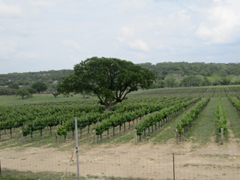 According to the Texas Department of Agriculture, Texas is the 5th largest wine producing state in the U.S. (behind only California, Washington, Oregon, and New York), with more than 180 wineries contributing $1.35 billion annually to the Texas economy. Nearly 1 million travelers a year visit Texas wineries. I would bet that most of our readers would not have thought the wine business in Texas was nearly this large.
This is the third spring in a row that LaGayle and I have visited Texas wine country and Texas wineries. In 2008, we started out with a couple of Texas high plains wineries near Lubbock. Last year, we concentrated on the Texas hill country near Austin/San Antonio. This year, we visited wineries in the north Texas region around Dallas/Fort Worth.
The past two years I have shared with you my impressions of Texas wines and how much better they are today than in 2002 when I first tasted them. As a native Texan I wish I could be more optimistic; however, nothing I found this year has changed my opinion that, while progress is evident, Texas may never leapfrog any of the big four states into the elite class of wine producing areas. And here’s why:
- Pierce’s Disease has been wreaking havoc in many Texas vineyards.
- Erratic weather in the form of late freezes, hail, and even floods are causing producers to have smaller than normal crops in too many years for Texas to be able to produce the string of good vintages that is necessary to establish coveted terroir.
- Because of the weather issues mentioned above, too many Texas producers are selling wines made from California, Washington, New Mexico, and even Australia grapes. They may have no other choice, but it gets old visiting Texas wineries that aren’t pouring wines made from Texas grapes.
After three years of visiting Texas wineries, it appears to me that what Texas does best is some of the Rhone and Spanish varieties such as Syrah and Tempranillo. So, in typical Wine Peeps fashion, we did a blind tasting that included moderately priced Syrah from three of our favorite Texas wineries (Becker, Driftwood Estate, and Texas Hills) and one Washington Syrah, the 2007 Charles Smith Boom Boom! Syrah. LaGayle and I purchased all four wines between $14 and $16 at Spec’s in Austin. None of the four garnered an excellent Quality rating of 4 stars (out of 5) or higher, but there were some good wines in the group with the Boom Boom! from Washington State as our clear favorite:
2007 Charles Smith Boom Boom! Syrah (Washington State)
Quality: 3.5 stars (out of 5)
QPR: 5 bangs for your buck (out of 5)
Where to buy: Spec’s (Austin, Texas), $15; Available elsewhere, $14 to $20
2008 Becker Vineyards Syrah (Texas)
Quality: 3 stars (out of 5)
QPR: 4 bangs for your buck (out of 5)
Where to buy: Spec’s (Austin, Texas), $15
2006 Driftwood Estate Syrah (Texas)
Quality: 3 stars (out of 5)
QPR: 4 bangs for your buck (out of 5)
Where to buy: Spec’s (Austin, Texas), $16
2005 Texas Hills Syrah (Texas)
Quality: 2.5 stars (out of 5)
QPR: NR (not recommended)
Where to buy: Spec’s (Austin, Texas), $14
With the help of Lee Fuqua of Fuqua Winery in Dallas, we were able to locate and purchase a couple of bottles of Tempranillo made with Texas grapes, one from Times Ten Winery and the other from Lone Oak Winery to bring home to Seattle and put in one of our family’s private blind tastings. If they measure up, we’ll report on them in a subsequent post.
Filed under: American Wine, Five-Bangs For Your Buck Wines, Red Wine, Shiraz/Syrah, Texas Wine, Washington State Wine, Wine Travel, Wines NOT To Buy (1 & 2 Star), Wines Under $15, Wines Under $20, Wines Under $25


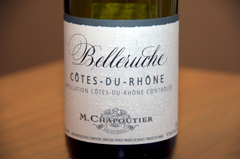 Would you like a quick suggestion for a good wine to drink tonight (or this weekend) that won’t break your budget and is widely available? Many of our readers have said this is something they would like, so here is this week’s selection, the
 Would you like to learn more about Washington wine? Are you coming to Walla Walla for the Wine Bloggers Conference and would like to get a head start on your Washington wine exploration? Do you already love Washington wine and just want an excuse to drink more of it and talk about it? If you answered “yes†to any of these questions, then we have the perfect event for you.
 Tracy Nodland and her husband Tim started making wine at home in 1999 and opened
  In recent years the Washington wine industry has grown at a rapid rate. Do you expect that trend to continue?
  This week’s Wine Word of the Week is TTB.
 When I was studying for my Certified Specialist of Wine exam, I found The Art and Science of Wine to be a valuable resource. World famous UK wine writer Hugh Johnson and Australian winemaker/writer/wine critic James Halliday have done a great job of exploring and explaining how both art and science are involved in the winemaking process.
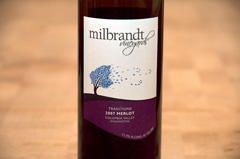 Would you like a quick suggestion for a good wine to drink tonight (or this weekend) that won’t break your budget and is widely available? Many of our readers have said this is something they would like, so here is this week’s selection, the
  Recently, we had what turned out to be a South Africa Merlot versus Washington Merlot showdown in one of our double blind private tasting dinners featuring the 2005 Meerlust Merlot from South Africa and the 2004 Fielding Hills Merlot from Washington State. For a more complete description of how we set up these private tastings, please refer to
  Since we live in Washington State and often drink wines from Washington State, we want to make sure that we continue to hone our knowledge of the entire world of wine and maintain well-rounded palates in order to make us even more objective when we evaluate wines from Washington State. Therefore, we are thoroughly enjoying our Wine Peeps Tasting Group which includes what we think is an excellent peer group of knowledgeable wine lovers to taste, share, and learn more about wine together. Unlike our monthly
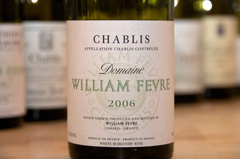
 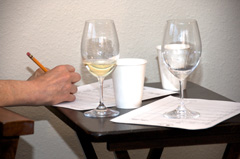 We tasted nine wines, and the consensus favorite was the 2006 Domaine William Fevre Chablis. It was the overwhelming favorite, receiving six out of seven first-place votes and one second-place vote. Interestingly, the consensus second-place wine was also from William Fevre, the 2006 William Fevre Chablis Premier Cru Fourchaume. We found this particularly interesting because given the same producer and the same vintage, a Premier Cru would be expected to be better than an AOC Chablis.


