
Wine Tasting Dinner: Washington Cabernet Sauvignon [Wow! Alert]


By Kori ~ April 21st, 2010
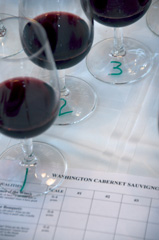
Washington State Cabernet Sauvignons are among the best in the world, and they are much better values (higher QPR) than most Cabs in other wines regions of the world. Last Friday evening, we tasted six Cabernet Sauvignons from Washington State in our monthly wine tasting dinner. It was another fabulous evening of good wines, the company of wonderful friends, and Mom’s excellent food. All six wines paired well with Mom’s dinner of tomato basil soup, arugula, peach, and tomato salad, grilled filet mignon, thyme grilled potatoes and bell peppers, balsamic seasoned green beans, and German chocolate dessert with whipped topping and shaved chocolate.

The consensus favorite was the 2005 Quilceda Creek Galitzine Vineyard Cabernet Sauvignon. With seven out of eight first place votes, it dominated the field and earned a rare 5 stars (out of 5) quality rating. It is always thrilling to discover a “Wow!” wine. Quilceda Creek, located in Snohomish, Washington, was founded in 1978 by the Golitzin family. Generally considered the premier winery in Washington State, Quilceda Creek remains a small, family-owned and operated winery. Quilceda Creek is no stranger to high accolades for their wines. Their flagship wine, the Quilceda Creek Columbia Valley Cabernet Sauvignon, has received three 100-point ratings from Robert Parker’s Wine Advocate for the 2002, 2003, and 2005 vintages. In 2001, they purchased and planted their own Galitzine Vineyard on Red Mountain. The 2004 Quilceda Creek Galitzine Vineyard Cabernet Sauvignon was the first release from this vineyard.

Not only did four of these six wines receive a Quality rating of 4 stars or higher (out of 5), but the top four also received a QPR rating of 5 bangs for your buck (out of 5). Even though these wines are not inexpensive, they are well worth the money. I would encourage you to try any of these wines, especially with a meal, to decide for yourself how Washington State Cabernet Sauvignon compares to other world-renowned Cabs.
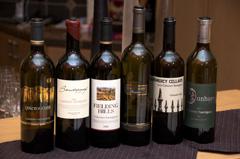
From 1st to last in the group consensus rankings:

2005 Quilceda Creek Galitzine Vineyard Cabernet Sauvignon (Galitzine Vineyard, Red Mountain, Washington): Deep, dark, dense red and extremely aromatic. A gorgeous nose of black cherry, vanilla, and blackberry leads to black fruit, pencil lead, and earth on the palate. Medium to full-bodied with lively acidity and medium to high tannins. Well-balanced with amazing complexity and a long, lingering finish. Excellent from the first sip but really opened up with the meal. Already a “Wow!” wine but should get even better with more bottle age.
Quality: 5 stars (out of 5)
QPR: 5 bangs for your buck (out of 5)
Where to buy: Winery, $98; Available elsewhere, $110 to $225

2005 Boudreaux Cellars Cabernet Sauvignon (Washington State): Dark red in color. Black fruits and spice come through on both the nose and the palate. Medium to full-bodied with lively acidity and medium to high, drying tannins. Well-balanced and complex with a long finish. Improves with food.
Quality: 4.5 stars (out of 5)
QPR: 5 bangs for your buck (out of 5)
Where to buy: Winery, $44; Available elsewhere, $45 to $54

2006 Fielding Hills Cabernet Sauvignon (Riverbend Vineyard, Wahluke Slope, Washington): Dark red with a beautiful bouquet. Black cherry, black currant, and vanilla aromas lead to more black fruit and vanilla flavors. Medium to full-bodied and lively with soft, smooth tannins and a long finish.
Quality: 4.5 stars (out of 5)
QPR: 5 bangs for your buck (out of 5)
Where to buy: Winery, $38; Available elsewhere, $40

2006 Columbia Crest Reserve Cabernet Sauvignon (Columbia Valley, Washington): Deep ruby red. Nose is a bit tight at first with some black fruit aromas coming through the longer its open. Fruit-forward with black fruits, oak, and spice on the palate. Medium to full-bodied and lively with medium to high tannins and a long finish.
Quality: 4 stars (out of 5)
QPR: 5 bangs for your buck (out of 5)
Where to buy: Winery, $27; Available elsewhere, $28 to $40

2006 Gramercy Cellars Cabernet Sauvignon (Columbia Valley, Washington): Deep, dark ruby red and aromatic. Caramel, crème brulee, and vegetal aromas lead to vegetal and black fruit flavors. Medium to full-bodied and lively with smooth tannins and a long finish.
Quality: 3.5 stars (out of 5)
QPR: 3 bangs for your buck (out of 5)
Where to buy: Full Pull Wines (Seattle, Washington), $45; Available elsewhere, $37 to $50

2005 Dunham Cellars Cabernet Sauvignon XI (Columbia Valley, Washington): Deep, dark ruby red. Very fruit-forward with a lot of black and red fruits on both the nose and palate along with a hint of cinnamon. Medium to full-bodied and crisp with medium to high tannins and a long finish.
Quality: 3.5 stars (out of 5)
QPR: 3 bangs for your buck (out of 5)
Where to buy: Winery, $45; Available elsewhere, $43


Filed under: American Wine, Cabernet Sauvignon, Five-Bangs For Your Buck Wines, Five-Star Quality Wines, Red Wine, Washington State Wine, Wine Tasting Dinners, Wines Over $25
 

Challenging Wine Pairing: Beef Stroganoff


By LaGayle ~ April 20th, 2010

Years ago when I was teaching school in Houston and needed to get an evening meal ready after work, one of my standby meals to prepare was beef stroganoff. My version has evolved over the years to be a quick and easy recipe and seems to get quicker and easier as the years go by.
Beef Stroganoff is a Russian dish that originated in the 19th century but has become popular in many countries with just as many variations in the recipes. I know that I’ve made changes from the first time that I made it to the way that I prepare it today.

This dish served over pasta (I use spiral pasta) includes sour cream and mushrooms which give it a unique flavor. Add a vegetable, a salad, and French bread to the menu and a great meal is ready in a very short amount of time. It can be prepared with cubed beef, strips of beef or lean ground beef.

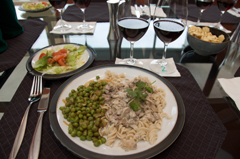
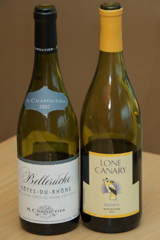
The wines selected to pair with our Beef Stroganoff meal were a Cotes du Rhone from France and a Washington State Barbera. While we enjoyed both wines, the Cotes du Rhone was the unanimous favorite both with and without food.

I hope that these Challenging Wine Pairings inspire you to try your own challenges at home. Just select one of your favorite meals and step out of your comfort zone to select wines to go with it. We’d love to hear any exciting pairing discoveries you find.

Bon Appétit!

2007 M. Chapoutier Belleruche Cotes du Rhone (Cotes du Rhone, France): 80% Grenache, 20% Syrah. Dark purple. Nose is a bit tight at first, then some earth and potpourri show through. Flavors of earth, toasted wood, dark chocolate, and black fruits. Medium to full-bodied with lively acidity, medium to high tannins and a long finish. Well-balanced and very food-friendly.
Quality: 3.5 stars (out of 5)
QPR: 5 bangs for your buck (out of 5)
Where to buy: Fred Meyer (Seattle, Washington), $11.79; Available elsewhere, $9 to $14

2007 Lone Canary Barbera (Wahluke Slope, Washington): Dark, inky purple. Very aromatic with port-like and raisin aromas. Red fruits, almost like thick raspberry jam, comes through on the palate. Medium-bodied and crisp with medium tannins and a long finish.
Quality: 3 stars (out of 5)
QPR: 1 bang for your buck (out of 5)
Where to buy: Esquin Wine Merchants (Seattle, Washington), $16.99; Available elsewhere, $18


Filed under: American Wine, Barbera, Challenging Wine Pairing, Five-Bangs For Your Buck Wines, Food & Wine, French Wine, Red Wine, Washington State Wine, Wines Under $15, Wines Under $20, Wines Under $25
 

Women of Washington Wine: Katy Perry of Tildio Winery


By Kori ~ April 19th, 2010

Today’s post is part of a series featuring the Women of Washington Wine. In an industry once dominated by men, more and more women are joining the ranks as winery owners, vineyard owners, and winemakers. Being a woman myself, I am fascinated by these women and what they have done and continue to do. Through this series, I hope to introduce you to some of the brightest female faces in the Washington wine industry.

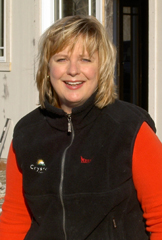
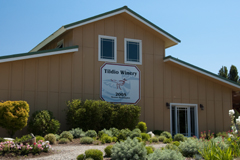
Katy Perry and her husband Milum founded Tildio Winery in 2005. Located in Manson, Washington, on the north shore of Lake Chelan, Tildio (Spanish for killdeer) got its name from the hundreds of killdeer birds who make their home on the property. Katy and Milum purchased their vineyard property in 2000 and began planting vines in 2001. In 2004, Milum and two helpers began building the winery and finished the tasting room just in time for Tildio’s grand opening in the spring of 2005. Katy has an extensive winemaking resume and is one of the many in the Washington wine industry who cut their teeth at Chateau Ste. Michelle. Today, Katy and Milum are living their dream of owning and running their own vineyard and winery. Tildio Winery produces about 2,000 cases annually.
Recently, Katy was kind enough to take time out of her busy schedule to answer some questions for me and our Wine Peeps readers.

Highlights from Q&A with Katy Perry:

How did you first get involved in the wine business?
No one would give me a job in Napa so I had to go to UC Davis first. It was a fantastic 4 years (in the late 1980’s) where I made lifetime friends, most of who are in the wine biz around the world. My UC Davis Enology/Viticulture degree opened up opportunities for me I otherwise would never had.

What were the steps that led to where you are now?
I always followed my heart and thought to broaden my experiences. So as opportunities presented themselves to me I would make a move if it was in a direction that fit that profile. When I visited my family in Lake Chelan on a vacation in the late 90’s from Napa, we made a quick trip to Penticton, B.C. I was floored at their wine industry; I just didn’t know! Within two years of that visit I had moved back to the Northwest, accepted a job with Chateau Ste. Michelle as a winemaker and purchased my bare vineyard and winery property in Lake Chelan (I had already picked it out the year before). In my case, it has pretty much been a matter of what I put my energy and heart toward.

Has being a woman been an advantage or a disadvantage in your wine journey?
I would have to ask you, in what corporate environment has being a woman been an advantage?!

Women have definitely had to push WAY harder to get equal consideration as an equal male counterpart in this industry. I don’t want to sound bitter or anything but the good old boy network is definitely healthy. A lot of my women friends in the business had to first put in years in lab positions while our male compatriots went straight into cellar/winemaking tracks and were never even considered for lab positions. Not that lab jobs are bad, they aren’t. But many wanted to make wine and couldn’t bust out of the lab. Ultimately, I believe it served them well to understand lab results inside and out before becoming winemakers and needing to rely, or not, on lab numbers. Those girlfriends of mine have turned out to be really awesome winemakers!

Having said that, my experience was a little different because I started in research viticulture and enology jobs for Robert Mondavi and then the same for The Benziger Winery. It was solitary at times, and very nerdy, but I was able to play around with all the newest little bugs and cutting edge things going on at the time in viticulture and enology. After that even more really interesting things opened up for me, it was just a different track than the typical “go get a job in a lab” sort of approach.

What advice do you have for a woman wanting to get involved in the wine business today?
Marry into it; it’s way easier!

Or, there’s the way I did it, go to school and learn the science of your craft. After that try to get a job working for at least a few people you consider icons and learn their techniques and philosophy. And of course travel a lot to other wine regions and other countries, work a crush or two in the southern hemisphere, it will amaze you. Stay active in tasting groups; it keeps your palate honest.

What are your thoughts about the Washington wine industry, in general?
Washington state fruit has a natural acidity and balance that I love. Having worked in California for years I became used to adding lots of acid because the wines were flabby and out of balance if you didn’t. Here, the naturally acidic wines have an elegance and vibrancy I’m hooked on!

In recent years the Washington wine industry has grown at a rapid rate. Do you expect that trend to continue?
I just don’t know, who can predict what’s going to happen right now. I really hope everything turns around and we continue to grow as an industry, it’s a great community of people to associate with.

I understand that you serve as President of the Lake Chelan Wine Growers Association. What is involved in that position?
The Lake Chelan Wine Growers Association is a small marketing group of 14 wineries. Given our small size we focus on promoting a few events during the year in Chelan, such as Spring Barrel tasting weekend and Crush in Chelan, and try to do them well. As we become more experienced at this we hope to expand our marketing efforts. Our most recent advancement was hiring Bob Silver in Seattle as our PR guy to help us reach out to the Wine Bloggers Convention in Washington this June.

How do you and your husband, Milum, divide the duties at the winery?
I kind of think of it this way, I draw up the master plan and he figures out how to make it work. I love to conceptualize and create, get lost in blending trials and ideas. Milum is really into the machinery and mechanisms of making things happen and the flow of work. Sometimes we go back and forth on how to get a job done in a way that best accomplishes the goal while taking into account our small size and equipment. One thing we always agree on is that whatever we do it must FIRST be in the interest of making the best wine we possibly can.

What is your vision for the future of Tildio Winery?
We love what we’re doing and don’t want to change too much. I think the future might include hiring interns to mentor, that would be fun for me. I’m still following my passion and want to keep new ideas and perspectives flowing. One way to help that process is by bringing in new faces and their ideas to the frame.

Feel free to share any other thoughts that you believe would be of interest to our readers.
I really appreciate your focus on women in wine. We are still a minority but we exist, it’s important to tell young women that it’s possible if they want to be a winemaker.

Many thanks to Katy for sharing her story and thoughts with us. I wish her all the best and will be following her work and Tildio Winery with great interest, and I hope that you will too.


Filed under: American Wine, Interview, Washington State Wine, Women of Washington Wine
 

Wine Word of the Week: First growth


By Kori ~ April 17th, 2010

This week’s Wine Word of the Week is first growth.

Official definition from Jancis Robinson’s The Oxford Companion to Wine:
First growth is a direct translation of the French premier cru but its meaning tends to be limited to those Bordeaux wine properties judged in the top rank according to the various classifications: Chx Lafite, Latour, Margaux, Haut-Brion, Mouton-Rothschild, Cheval Blanc, Ausone, d’Yquem, together often with the unclassified but generally acknowledged star of Pomerol, Ch Petrus. Just below these red Bordeaux in terms of status are the so-called super seconds.

Layman’s terms from Kori:
First growth (or premier cru) most often refers to the famous First Growths of Bordeaux, designated in the 1855 classification. The original First Growths included Chateau Lafite Rothschild, Chateau Latour, Chateau Margaux, and Chateau Haut-Brion. After years and years of lobbying by owner Baron Philippe de Rothschild, Chateau Mouton Rothschild was promoted to First Growth status in 1973.


Filed under: Wine Word of the Week
 

Answers to the 10 Most Commonly Asked Questions about Wine


By John ~ April 16th, 2010

According to Ask.com, the following are the 10 most commonly asked questions about wine. What follows are our answers. Actually, we have already answered most of these in various posts over time, but I thought it would be helpful to put them all together here:

1. How many calories are in a glass of wine?
In general the answer is about 100 calories, but it can vary slightly depending on the type of glass, the wine varietal, and how full you pour the glass. You’ll get 5 – 5oz glasses out of a bottle of wine.

2. How do you make wine?
Wine is made from fermenting grapes. To start fermentation, grapes are harvested, pressed or crushed, and then the resulting must is inoculated with yeast.

3. What is port wine?
Port is fortified wine, meaning that alcohol is added during fermentation, halting fermentation and leaving residual sugar (sweetness). Almost all port production is red wine. True port is produced in the Douro Valley of Portugal. It is inappropriate to call a port-style wine Port unless it is from Portugal.

4. How many bottles of wine are in a case?
The standard case is 12 bottles.

5. What is Marsala Wine?
Marsala is port-style fortified wine from Sicily, an island off of Italy, made from all white grapes and that has been aged in a solera system like Sherry.

6. What wine goes best with chicken?
There is not one simple answer, because the best pairing will depend on how the chicken is prepared. LaGayle, our Wine Peeps food guru has done some delicious chicken pairings including Italian Soave with fettuccini alfredo and grilled chicken, California Pinot Noir with spicy chicken casserole, Washington Pinot Gris with chicken tapenade, New Zealand Pinot Grigio with salsa verde chicken enchiladas, Washington Viognier with curried chicken, and Washington Rosé with chicken tetrazzini.

7. Who is the god of wine?
Bacchus is the Roman god of wine; Dionysus is the Greek god of wine. But as far as I’m concerned, the real God of wine is Jesus Christ whose first miracle was to turn water into wine at the wedding in Cana.

8. How long does wine last once opened?
In general, the answer is a couple of days. It depends on the age of the wine, how much wine is left in the bottle, and how it is cared for once opened. Pumping the air out of the partially consumed bottle, sealing it, and refrigerating it all slow the process of oxidation and can help it last longer.

9. How do you remove red wine spills from carpet?
The best product we’ve found is Wine Away, available in most wine shops and winery tasting rooms.

10. What is the best way to open a bottle of wine?
There are many different wine bottle openers on the market, and some are better than others under certain circumstances. The most practical and inexpensive opener for a single bottle of wine is the double-hinged Waiter’s Friend. If you need to open a case or two for a party, I’d recommend an electric opener.

I hope you’ve found these answers helpful. If you have any other questions about wine, please don’t hesitate to ask.

Cheers!


Filed under: General Wine Information
 

A Wine for Tonight: 2007 Columbia Crest H3 Merlot


By Kori ~ April 15th, 2010

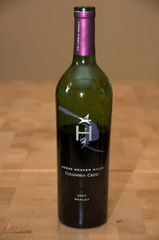
Would you like a quick suggestion for a good wine to drink tonight (or this weekend) that won’t break your budget and is widely available? Many of our readers have said this is something they would like, so here is this week’s selection, the 2007 Columbia Crest H3 Merlot from the Horse Heaven Hills of Washington State.
Our selection criteria include:

  • A very good Quality rating of >=3.5 stars (out of 5)
  • A price tag of <=$15
  • Must be widely available

Columbia Crest, located in Paterson, Washington, has been one of our favorite sources of value wines for many years. Head winemaker, Ray Einberger, took the reins in 2002 from Doug Gore who had been the winemaker since Columbia Crest was founded in 1983. Under Gore and Einberger’s leadership, the Columbia Crest winemaking team has produced more 90+ scoring bottles of wine than any other winery in the world. For those of us who live in Washington State, it is nice to have such a consistent, affordable producer in our own backyard.

H3, an abbreviation for Horse Heaven Hills, is the newest tier of wines in the Columbia Crest portfolio and was created to showcase the region in which their winery is located. All of the fruit used to produce H3 wines come from the Horse Heaven Hills AVA.

“The H3 Merlot entices the nose with spicy blackberry aromas and then explodes across the palate with slight dusty, earthy, and rich berry notes which cumulate in the seductive, velvety, cocoa finish.” –Winemaker Ray Einberger

2007 Columbia Crest H3 Merlot (Horse Heaven Hills, Washington): 79% Merlot, 11% Cabernet Sauvignon, 6% Cabernet Franc, and 4% Syrah. Medium-deep ruby red. Earth, wood, vanilla, and a hint of barnyard come through on the nose; lots of black cherry as well as earth on the palate. Medium-bodied with good acidity and medium, drying tannins. Complexity shows through the longer it is open. A long, slightly bitter, finish.
Quality: 3.5 stars (out of 5)
QPR: 5 bangs for your buck (out of 5)
Where to buy: Fred Meyer (Seattle, Washington), $11; Available elsewhere, $10 to $14


Filed under: A Wine for Tonight, American Wine, Five-Bangs For Your Buck Wines, Merlot, Red Wine, Washington State Wine, Wines Under $15, Wines Under $20, Wines Under $25
 

Paso Robles: Signature Varietal?


By Kori ~ April 14th, 2010

Some wine regions have gained legendary status because of the popularity of one signature varietal; think Napa Valley Cabernet Sauvignon or Oregon Pinot Noir. Prior to my recent trip to explore Paso Robles wine country, I was uncertain as to whether or not the region had a signature varietal. I was familiar with the proliferation of Rhone-style varieties and blends led by the folks at Tablas Creek, but I also knew that one of the most acclaimed wines from the region was Justin’s Isosceles which is a Bordeaux-style blend of Cabernet Sauvignon, Merlot, and Cabernet Franc.
So what did I learn after three days of immersion in the wine scene in Paso Robles? Much like Washington State, Paso Robles does well with a number of different grape varieties. The various micro-climates and soil types in the Paso Robles AVA make it conducive to growing more than 40 different grape varieties.

Besides the Rhone and Bordeaux-style wines that I was expecting, I quickly learned about two other wines that are produced often and well in Paso Robles: Zinfandel and “Paso Blends”.

Zinfandel is referred to as the heritage variety of Paso Robles. It was first planted in the region in the 1920’s and had a strong influence on the growth and development of the local wine industry. Some area wineries like Turley Wine Cellars have made Zinfandel their own signature varietal.

Some of the newer “boutique” wineries in the area have found their own niche crafting uniquely “Paso Blends” of Bordeaux, Rhone, and Zinfandel varieties. I found these blends to be the most palate-expanding for me because I don’t believe I’ve ever had a Syrah/Zinfandel/Viognier blend or a Syrah/Cabernet Sauvignon/Petit Verdot blend prior to this trip. I’m all for innovation and experimentation but I was worried at first that these blends might be a bit too gimmicky. Thankfully, that was not the case at all. I found many of these “Paso Blends” to be extremely well-made and quite enjoyable.
OK, now we’ve covered four different styles that are done well in Paso Robles: Rhone, Bordeaux, Zinfandel, and Paso Blends. Believe it or not, folks, there are more with some winemakers also experimenting with Spanish and Italian varieties as well. And I can’t forget Windward who specializes in Pinot Noir.

Now that I’ve thoroughly confused myself and probably you, I decided to take a look at the most widely planted varieties according to the Paso Robles Wine Country Alliance. As of 2007, Cabernet Sauvignon led the way with 38 percent, followed by Merlot, Zinfandel, Syrah, Chardonnay, Petite Sirah and Sauvignon Blanc.

So back to my original question: Does Paso Robles have a signature varietal? I would have to say that the answer is “no”, and in their case, that is probably a good thing. While I’ve seen some wine writers try to pigeon-hole the region as the Rhone Valley of California, I think there is much more to Paso than that. A quick look back at my favorite wines from the trip, those with 4-star or higher Quality and 4-bangs or better QPR, shows two Zinfandels, a traditional red Rhone blend, a Syrah, a Paso Blend, and a Pinot Noir.

Paso Robles is beautiful, the people are friendly, and when it comes to wine, they truly offer something for everyone.


Filed under: American Wine, California Wine, Wine Travel
 

Grü V Olympics: Exploring Austrian Grüner Veltliner


By Kori ~ April 13th, 2010

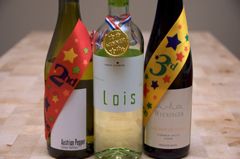
Recently, we participated in an event focused on Austrian Grüner Veltliner. We, along with a group of fellow wine bloggers, were sent four Austrian Grüner Veltliners as part of the Grü V Olympics. A fun play on the recent winter Olympics, we were asked to taste the wines head-to-head and score them based on certain characteristics.
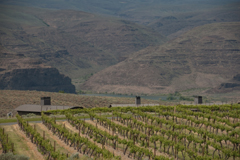

Grüner Veltliner, a white wine grape variety, is indigenous to Austria and is not planted extensively elsewhere. More than one-third of the vineyard acres in Austria are planted to Grüner Veltliner. It is known as a very food-friendly wine.

To be true to our Wine Peeps way, we threw these four wines into one of our blind samples tastings. We scored them using our regular rating system as well as completed the Grü V Olympics score sheet. The organizer of the event tallied up all of the score sheets in order to pronounce the consensus medal winners.

If you take the time to look at the consensus rankings, you will note that our rankings (included below) are almost the exact opposite. Interesting. I think that there are possibly several factors at play here. First of all, we may just have different palates than the other judges. But probably the most telling reason for the difference is the circumstances in which we each tasted the wines. Now, before I go any further, let me say that I have not surveyed the other judges; however, after reading the blog posts of a couple of them, I think that we are one of the only, if not the only, judges who tasted blind. There are many schools of thought regarding whether wine critics should taste blind or not. When possible, we truly believe in the merits of blind tasting.

In the case of these Grü V Olympics, I believe that blind tasting really eliminated the potential bias of label and price for us. Our gold medal winner, the 2008 Fred Loimer Lois Grüner Veltliner, is the least expensive of the four and has the cheapest looking label. But, when we tasted it blind along with the other three, it clearly stood out as the best of the bunch.

Our opinion of the Lois was only validated a couple of weeks later. After our blind samples tasting, I stuck the partial bottle in the back of the fridge and forgot about it until a couple of weeks later when we were enjoying a mid-week chicken dinner at home. Lamenting the fact that I had forgotten to put a white wine in the fridge to chill, I found the two-week old Lois. Most often such discoveries result in the wine being poured down the drain because it has gone bad. However, I am happy to report that while it was certainly not as fresh as when it was first opened, we found the Lois to still be crisp, refreshing, and a great accompaniment to our dinner.

Gold Medal:
2008 Fred Loimer Lois Grüner Veltliner (Kamptal, Austria): Pale, straw yellow in color. Citrus aromas on the nose; citrus, tropical fruit, and grapefruit flavors on the palate. Light to medium-bodied with crisp acidity. Well-balanced with a long finish.
Quality: 4 stars (out of 5)
QPR: 4 bangs for your buck (out of 5)
Where to buy: Received as sample, suggested retail $14.99; Available elsewhere, $11 to $18

Silver Medal:
2008 Pfaffl Austrian Pepper “The Dot” Grüner Veltliner (Niederosterreich, Austria): Greenish yellow and very aromatic. Aromas of honey and apple lead to flavors of lemon, lime, and grass. Light-bodied and tart with a long finish.
Quality: 3.5 stars (out of 5)
QPR: 3 bangs for your buck (out of 5)
Where to buy: Received as sample, suggested retail $15.99; Available elsewhere, $15.50

Bronze Medal:
2008 Wieninger Vienna Hills Grüner Veltliner (Vienna Hills, Austria): Pale, straw yellow. Floral and almond aromas on the nose; roses and pears on the palate. Light to medium-bodied and crisp with a long finish.
Quality: 3 stars (out of 5)
QPR: 2 bangs for your buck (out of 5)
Where to Buy: Received as sample, suggested retail $17.99

Honorable Mention:
2007 Weingut Stadt Krems Grüner Veltliner (Kremstal, Austria): Yellow with green tinges. A very tight nose with faint aromas of flowers and grass. Citrus and hints of tropical fruit on the palate. Light-bodied and lively with a long finish.
Quality: 3 stars (out of 5)
QPR: 2 bangs for your buck (out of 5)
Where to Buy: Received as sample, suggested retail $16.99; Available elsewhere, $15 to $24


Filed under: Austrian Wine, Gruner Veltliner, White Wine, Wine Activities/Events, Wines Under $15, Wines Under $20, Wines Under $25
 

Spotlight On: Cave B Estate Winery


By Kori ~ April 12th, 2010

Cave B Estate Winery is a destination winery resort located on 900 foot cliffs above the Columbia River in Quincy, Washington. Founded in 2001 by Vincent and Carol Bryan, Cave B Estate Winery sits in the heart of the Bryan’s SageCliffe Resort which also includes The Cave B Inn at SageCliffe, The Spa at SageCliffe, Tendrils Vineyard Restaurant, a cliff-side swimming pool, and event and meeting facilities. While Cave B is a little off the beaten path, it is actually centrally located, just over two hours from both Seattle and Spokane. The setting is peaceful and visually stunning, an excellent place to visit for an afternoon or a long weekend.

The SageCliffe story began in 1980 when the Bryan family bought the land. At the time, it was home to alfalfa, sagebrush, and a few cattle. They began planting their first vineyard on the property that first summer. When the vineyards began producing adequately, they sold the grapes to wineries around Washington State but always looked forward to making their own wine. Their first winery was known as Champs de Brionne. Not long after the winery opened, the Bryans discovered an area on their property which offered amazing natural acoustics. Today, that area is the world-renowned Gorge Amphitheater. As the reputation of the amphitheater grew, they decided to close the winery and focus on the amphitheater and vineyards.

Years later in 2001, with the amphitheater’s reputation firmly established and the vineyards more mature, the Bryans decided to open another winery, this time a smaller, premium estate winery named Cave B Estate Winery. All of the grapes used in Cave B wines come from their 100+ acre estate vineyards. The climate in their vineyards is not as hot as Wahluke Slope and not as cool as Lake Chelan but rather somewhere in the middle. This allows them to ripen reds nicely but also retain good acidity. As a result, many varieties seem to do well on their site, and they currently grow seventeen different varieties. Cave B uses about 35 percent of their crop and they sell the rest of the grapes to other wineries. Currently, Cave B produces a total of about 5,000 cases per year under two labels, their primary Cave B label and their more widely available SageCliffe label.

Winemaker Alfredo “Freddy” Arredondo joined Cave B in 2006 as assistant winemaker and became head winemaker in November 2007. He is a very personable guy with a clear passion for both wine and food. In fact, his roots are in the food world. He attended culinary school in Scottsdale, Arizona, and later also studied at the Italian Culinary Institute for Foreigners in Costigliole, Italy. Through his culinary studies, he became interested in wine and in 2003 decided to switch his focus to winemaking. He graduated with a degree in Enology and Viticulture from the Institute for Enology and Viticulture in Walla Walla, Washington. During school, he worked as a cellar master at Cougar Crest Winery. After graduation in 2005, he went to work for Cave B.
“Before changing careers, I was a chef. I’ve been working on my palate my whole life. I make wines that are meant to be drunk with food.” –Winemaker Freddy Arredondo

Recently, Dad (John) and I had the pleasure to meet Freddy and taste through some of the Cave B wines with him when he was in Seattle. The 2008 vintage was the first vintage that Freddy produced completely on his own. During that tasting, we had the opportunity to taste three of “his” reds that were recently bottled and will not be released until June, a Malbec, a Cabernet Franc, and a Tempranillo. We were very impressed, particularly with the Malbec. Both the Malbec and the Cabernet Franc are the first varietal bottlings of those wines from Cave B. Given that recently bottled wines tend to be muted on both the nose and palate, we were very impressed with the character that these wines already showed. I will be anxious to try these wines again once they’ve been in the bottle six to eight months. We have had Cave B wines in the past and had found them to be somewhat inconsistent. It is obvious that Freddy has Cave B headed down the right path as these current and upcoming releases are quite impressive and really show Freddy’s potential as a winemaker as he showcases Cave B’s vineyard site.

“My philosophy in winemaking in general is to really pull back on oak, really have a restrained, light touch with oak. I really view the oak as giving the wine texture and body more so than giving it toasted wood. I, personally, especially with food, don’t really like wines that smell and taste like toasted wood. I want the fruit to be front and center, not the oak.” –Winemaker Freddy Arredondo

The only bad news in all of this is that most of Cave B’s wines are not widely distributed. About 80 percent of all their wine sales take place on the premises through their tasting room, restaurant, and wine club.

The wines rated below include a number of Cave B’s current and upcoming releases, one we tasted in a blind samples tasting and the others when we tasted with Freddy in Seattle. These eight wines are excellent representatives of the Cave B portfolio. With four 4-star wines, two 3.5-star wines, and two 3-star wines, I encourage you to pick up any of these if you happen to see them on the shelf at your local wine shop. And if you find yourself near The Gorge Amphitheater or looking for a special vacation destination, I encourage you to stop by or make a reservation at Cave B. As if the current amenities aren’t enough to entice you, they also are developing The Golf Club at SageCliffe and a limited number of single-family residences. And down the road, they plan to build a Hilltop Village which will include art galleries, performance spaces, more culinary offerings, retail shops, and condominiums.
2008 Cave B Estate Winery Malbec (Columbia Valley, Washington): Bottled in early March. Cave B’s first varietal Malbec. Beautiful blood red with purple hues. Massive red fruit on the nose. Luscious red fruits, spice, and a hint of black pepper on the palate. Medium-bodied with very crisp acidity and drying tannins. Well-balanced now but should really open up with more time in the bottle.
Quality: 4 stars (out of 5)
QPR: 3 bangs for your buck (out of 5)
Where to buy: Winery, probably low $30’s (to be released in June)

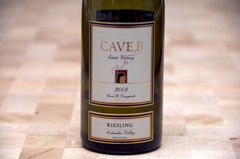
2008 Cave B Estate Winery Riesling (Columbia Valley, Washington): Pale, straw yellow with green tinges. Petrol, mineral, dill, and citrus aromas on the nose; pears, peaches, and green apples on the palate. Off-dry and light-bodied with crisp acidity. Well-balanced and complex with a long finish. Residual Sugar: 2%
Quality: 4 stars (out of 5)
QPR: 5 bangs for your buck (out of 5)
Where to buy: Received as sample, suggested retail $18

2008 Cave B Estate Winery Cabernet Franc (Columbia Valley, Washington): Bottled in early March. Cave B’s first varietal Cab Franc. Gorgeous nose for just being bottled. Spice, clove, vegetal, and dark fruit aromas and flavors. Medium-bodied with crisp acidity, medium tannins, and a long finish. Well-balanced, good complexity, has great potential.
Quality: 4 stars (out of 5)
QPR: 4 bangs for your buck (out of 5)
Where to buy: Winery, probably high $20’s (to be released in June)

2006 Cave B Estate Winery Cuvee du Soleil (Columbia Valley, Washington): 44% Cabernet Sauvignon, 31% Cabernet Franc, 25% Merlot. Cave B’s signature Bordeaux-style blend. Great nose with smoke, chocolate, and spice aromas. Black fruits and smoked meat come through on the palate. Full-bodied with lively acidity and high, drying tannins. Good fruit up front and good weight on the mid-palate. Well-balanced with a long finish.
Quality: 4 stars (out of 5)
QPR: 3 bangs for your buck (out of 5)
Where to buy: Winery, $40

2008 Cave B Estate Winery Tempranillo (Columbia Valley, Washington): 80% Tempranillo, 20% Cabernet Franc. Bottled in early March. Aromas of earth, floral, and spice; flavors of smoke, dark fruits, and leather. Medium to full-bodied, lively acidity, medium drying tannins, and a long finish. Should come together with more time in the bottle.
Quality: 3.5 stars (out of 5)
QPR: 2 bangs for your buck (out of 5)
Where to buy: Winery, probably high $20’s (to be released in June)

2009 SageCliffe 100 Chardonnay (Columbia Valley, Washington): Small amount of Viognier blended in as well. Light-bodied and very aromatic. Floral notes, pear, and apple come through on both the nose and palate. Crisp, yet smooth, with a long finish.
Quality: 3.5 stars (out of 5)
QPR: 4 bangs for your buck (out of 5)
Where to buy: Winery, $18.50

2008 Cave B Estate Winery Semillon Ice Wine (Columbia Valley, Washington): Golden yellow. Nose is a bit tight at first but then honey and dried apricot aromas and flavors show through. Not overly sweet on the palate despite the high residual sugar. Good balance. Residual Sugar: 12.5%
Quality: 3 stars (out of 5)
QPR: 4 bangs for your buck (out of 5)
Where to buy: Winery, $35 [375ml]

2008 Cave B Estate Winery Semillon (Columbia Valley, Washington): Some oak and a hint of butter on the nose. Light to medium-bodied. Smooth and creamy with lively acidity and a long, slightly hot, finish.
Quality: 3 stars (out of 5)
QPR: 1 bang for your buck (out of 5)
Where to buy: Winery, $20


Filed under: American Wine, Cabernet Franc, Chardonnay, Dessert Wine, Five-Bangs For Your Buck Wines, Malbec, Red Wine, Riesling, Semillon, Spotlight On, Tempranillo, Washington State Wine, White Wine, Wine Travel, Wines Over $25, Wines Under $20, Wines Under $25
 

Wine Word of the Week: Sustainable viticulture


By Kori ~ April 10th, 2010

This week’s Wine Word of the Week is sustainable viticulture.

Official definition from Jancis Robinson’s The Oxford Companion to Wine:
Sustainable viticulture is a form of viticultural practice which aims to avoid any form of environmental degradation while maintaining the economic viability of the vineyard. It is defined by the Sustainable Agriculture Research and Education Program at the University of California at Davis as “the principle that we must meet the needs of the present without compromising the ability of future generations to meet their own needs.”

Layman’s terms from Kori:
Sustainable viticulture has the same goals as organic viticulture or biodynamic viticulture with one big difference: It incorporates the “scientific method” into the formula. It utilizes the least amount of intervention possible while managing in a way that sustains the long-term health of the vineyards as well as the economic viability of the operation.


Filed under: Wine Word of the Week