
Taste Washington 2010: Restaurant Awards and Education Day


By Kori ~ March 31st, 2010

Taste Washington 2010 is now in the books, so it’s time to reflect on what we learned and tasted and look forward to next year. Again this year, we had the pleasure to attend all of the Taste Washington festivities including the Washington Wine Restaurant Awards on Friday, Education Day on Saturday, and the Grand Tasting on Sunday. On Friday, I will be posting a complete recap of the Grand Tasting and a breakdown of all the wines that we tasted throughout the weekend.
Today, I want to focus on the Restaurant Awards and Education Day. While they are attended by fewer people than the Grand Tasting, they are no less important. In fact, these two events afford attendees the rare opportunity to learn a ton about Washington wines and mingle with the people that make the Washington wine industry tick. The Restaurant Awards are not open to the public, but Education Day certainly is. If you have not attended any of the Taste Washington seminars in the past, you should make it a point to do so next year. For the most part, they are well worth the time and money.

Washington Wine Restaurant Awards

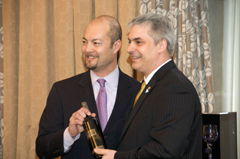
The purpose of the Washington Wine Restaurant Awards is to honor restaurants, sommeliers, and individuals that help promote Washington wines in restaurants. Judges evaluate restaurants on a variety of criteria, including wine list, service and staffing, promotions and overall wine philosophy. The Walter Clore Honorarium, given to an individual who has demonstrated dedication to the advancement of the Washington wine industry, was awarded to Doug Zellars of the Washington Athletic Club. The Washington Wine Restaurant of the Year is the most prestigious award, given to the restaurant that has promoted Washington wines above and beyond all others. This year’s winner was Sun Mountain Lodge in Winthrop, Washington. To commemorate the honor, Sun Mountain Lodge received a beautiful custom-blown glass sculpture designed by Seattle-based glass artist Jesse Kelly.

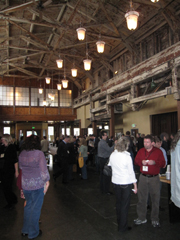
In addition to the awards ceremony, about 50 Washington wineries were pouring for a Washington Wine Trade Tasting which allowed us to get a head start on the wineries we wanted to taste at the Grand Tasting on Sunday.

Education Day

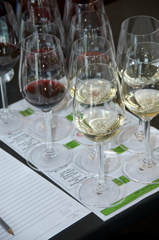
Education Day featured seven seminars on a variety of topics. The seminars give attendees the opportunity to taste, discuss, meet, and learn from some of the biggest names in the Washington wine industry as well as a few notable guests from outside of Washington State. In order to cover more, the Wine Peeps team split up and attended different seminars. I attended the Common Ground seminar featuring Boushey Vineyard as well as The Value Challenge. Dad (John) attended The Legend of Quilceda Creek and Mighty Malbec. Colby roamed from seminar to seminar taking pictures.

Common Ground – Boushey Vineyard
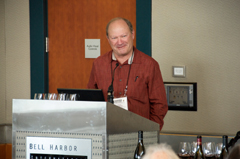
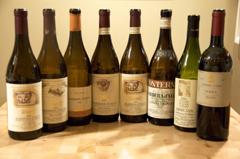
Bob Betz MW of Betz Family Winery led this seminar focused on Yakima Valley’s famed Boushey Vineyard. Dick Boushey, owner/grower of Boushey Vineyard sat alongside Joshua Greene of Wine & Spirits magazine, geologist and Whitman College professor Dr. Kevin Pogue, and Sara Schneider of Sunset magazine on the panel. Each panelist spoke about their thoughts regarding Boushey Vineyard and then Bob Betz led us through a tasting of seven Boushey Vineyard Syrahs, which included a barrel sample and a couple of not-yet-released wines, so that attendees could get a sense of the wines’ “Boushey-ness”. There were also a number of winemakers who use Boushey fruit in the audience who Bob called upon to speak about the vineyard. The common thread from winemaker comments about Boushey Vineyard was pigment, concentration, texture, vitality, and vibrancy. Marie-Eve Gilla of Forgeron Cellars summed it up well when she spoke about the fruit she gets from Boushey Vineyard, “It is very precise, beautiful from beginning to end.”

The Value Challenge
Sara Schneider of Sunset magazine moderated the panel which included Andrea Immer-Robinson MS, Emily Wines MS, Tom Wark of Fermentation, and Juan Munoz-Oca of Columbia Crest. Since we here at Wine Peeps are focused on being “Your Link to Great QPR Wines from Washington State and Beyond,” I had high hopes for this seminar. What could be better than tasting through five flights of wines in a “Washington vs. The World” challenge featuring wines in the $10 to $20 range? When the attendees tasted the wines, we did not know which ones were from Washington and which were from elsewhere. The Washington wines did extremely well. In my opinion, the Washington wines won four of the matchups and tied in one of them. Not bad considering the competition included wines from France, Australia, and California. Unfortunately though, after we tasted through the flights of wines, the seminar got a bit off track with the moderator and some of the panelists recommending non-Washington wines as great values. While I agree that there are also great values outside of Washington State, there are many great values in Washington, and I encourage those of you who live in Washington to search out the values in Washington wines first before venturing elsewhere. If you’re not sure where to start your search, you may peruse previous posts in our Featured Categories: Washington State Wine and Five-Bangs For Your Buck Wines, ask us a question in the comments section below, or send us your question via our Contact Us form.

The Legend of Quilceda Creek (Attended by John)
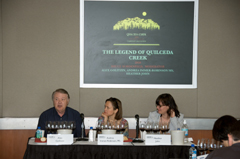
Bruce Schoenfeld of Travel + Leisure moderated a panel including Quilceda Creek Vintners founder Alex Golitzin, Andrea Immer-Robinson MS, and Heather John of Bon Appétit. Quilceda Creek is generally considered Washington State’s premier winery and is one of the most highly acclaimed Cabernet Sauvignon producers in the world. Their flagship wine, the Quilceda Creek Columbia Valley Cabernet Sauvignon, has received three 100-point ratings from Robert Parker’s Wine Advocate. This seminar afforded attendees the rare opportunity to taste some of Quilceda Creek’s highly sought-after wines including the 1999, 2005, 2006, and 2007 Columbia Valley Cabernet Sauvignons as well as the 2005, 2006, and 2007 Galitzine Vineyard Cabernet Sauvignons. It was great to be able to hear the Quilceda Creek story directly from founder Alex Golitzin, a very humble guy given the success he has had. Bonded in 1978, Quilceda Creek started out buying their grapes from Otis Vineyard. Today they only source from vineyards in the Horse Heaven Hills and Red Mountain, several of which they own outright or have an ownership-interest.

Mighty Malbec (Attended by John)
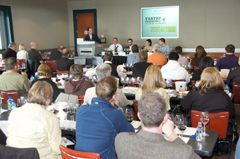
Seattle magazine recognized Malbec as the state’s Best Emerging Variety in their 2009 Best of Washington Wine Awards. Moderator Jake Kosseff of Seattle magazine led a panel including Dr. Thomas Henick-Kling of Washington State University, Christopher Miller of Spago Beverly Hills, Anna Schafer of àMaurice Cellars, and Sean Sullivan of Washington Wine Report in a discussion about this emerging variety. While none of the panelists offered any information about Malbec that I didn’t already know, we were able to taste five Washington State Malbecs as well as one Malbec from France and one from Argentina. The Washington Malbecs stacked up very well; in my opinion, four of the five Washington Malbecs were the best four out of all seven wines. This was not a surprise as we Wine Peeps have been saying for some time that Malbec is a variety to watch here in Washington and have even encouraged some growers to plant Malbec. In general, Malbec is not as tannic as Cabernet Sauvignon but is spicier than Merlot and goes well with a number of different foods. One of the original five Bordeaux varieties, Malbec is somewhat unique in that its distinctive character is evident early so it does not require the aging of other big red varieties. If you are looking for a good place to start in exploring Washington Malbec for yourself, refer back to our Washington Malbec Extravaganza from last fall.

Remember to come back on Friday for a complete recap of the Grand Tasting and a breakdown of all the wines that we tasted throughout the weekend.


Filed under: American Wine, Malbec, Red Wine, Vineyards, Washington State Wine, Wine Activities/Events
 

Tasting Group: Italian Barbera


By John ~ March 30th, 2010

With the first three months of 2010 almost behind us, I’m happy to report that we are continuing to make good on our New Year’s resolution to explore more wines from around the world. Since we live in Washington State and often drink wines from Washington State, we want to make sure that we continue to hone our knowledge of the entire world of wine and maintain well-rounded palates in order to make us even more objective when we evaluate wines from Washington State. As a result, we have put together a Wine Peeps Tasting Group which includes what we think is an excellent peer group of knowledgeable wine lovers to taste, share, and learn more about wine together. Unlike our monthly wine tasting dinners in which the guests rotate, this tasting group includes people who are committed to getting together once a month which we hope will benefit all of us. In addition to trying varieties and regions that we do not taste frequently, the other main difference between this group and our wine tasting dinners is that each group member will bring a bottle consistent with the month’s theme so no one will know all the wines in the blind tasting.
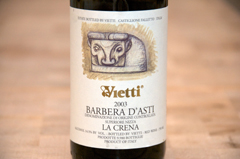
Last week, we met for the third time and explored Italian Barbera. Kori was out of town visiting the Paso Robles wine region of California so I am recapping this month’s tasting group. This was a good time for us to try Italian Barbera, because a group of wine bloggers just recently visited the prime Barbera growing area in the Piedmont region of Italy and reported very mixed opinions on today’s Barbera. While there were some more traditional as well as newer style Barberas in our tasting, the consensus of our group was that this was a very good set of wines to explore.

The home for Barbera is in the northwest part of Italy known as Piedmont. Barbera plays second fiddle to Nebbiolo on the best vineyard sites because Nebbiolo wines generally sell for more in the marketplace. Most of the better Barbera is grown around Asti and Alba, thus the popular designations, Barbera d’ Asti and Barbera d’ Alba. The Barbera grape is a small berry, thus it is known for a deep red color. Barbera are also characterized by high acid levels and relatively low tannins. Because Barbera ripens late, it is also prone to some volatile acidity, although at such low levels that it is not always noticeable in the glass.

We tasted eight wines, and the consensus favorite was the 2003 Vietti La Crena Barbera d’ Asti. It was the oldest wine in the tasting and was the favorite of every one of us, a rarity in our tasting group and tasting dinners. While we did not have any exact duplicates, we did end up with four Vietti wines, including the 2006 vintage of our consensus favorite, which was the most controversial wine of the evening, but my personal 2nd place choice.
From 1st to last in the group consensus rankings:

2003 Vietti La Crena (Barbera d’ Asti, Piedmont, Italy): Medium ruby red. Aromas of dried red fruits and spice with good strawberry and cherry flavors. Tasted the way I believe a great Barbera should taste. Light to medium body and tart with low to medium tannins. Very well balanced. Clearly the best wine of the eight.
Quality: 4.5 stars (out of five)
QPR:  4 bangs for your buck (out of 5)
Where to buy: Esquin Wine Merchants (Seattle, Washington), $50; Available elsewhere, $38 to $43

2006 Vietti Tre Vigne (Barbera d’ Alba, Piedmont, Italy): Ruby red with medium depth of color. Licorice and a little bit of oak on the nose. Heavy on the palate with flavors of black cherries. Good acidity with low to medium tannins and a long, pleasant finish.
Quality: 4 stars (out of five)
QPR: 4 bangs for your buck (out of five)
Where to buy: Pike & Western Wine Shop (Seattle, Washington), $25; Available elsewhere, $27

2005 Cogno Bricco dei Merli (Barbera d’ Alba, Piedmont, Italy): Ruby red color with medium depth. Low aroma intensity, just a hint of raw bacon. Fruit forward with flavors of plum and cherries. Light to medium body with high acidity, low to medium tannins, and a decent finish.
Quality: 4 stars (out of five)
QPR: 4 bangs for your buck (out of five)
Where to buy: Fred Meyer (Seattle, Washington), $25

2007 Vietti Tre Vigne (Barbera d’ Asti, Piedmont, Italy): Deep purple in color. Aromas of vanilla, spice, and chocolate. Very fruity in a good way. Flavors of plums, raspberries, and other red fruits. Medium body with good acidity and low to medium tannins. Well balanced.
Quality: 4 stars (out of five)
QPR: 5 bangs for your buck (out of five)
Where to buy: Fred Meyer (Seattle, Washington), $18; Available elsewhere, $15 to $22

2006 Vietti La Crena (Barbera d’ Asti, Piedmont, Italy): Deep, dark purple in color. Aromas of ripe red fruits and hints of milk duds. Abundant black fruits. Very flavorful. Full-bodied with good acidity and medium tannins. Well-balanced with very long finish. A love it or hate it Barbera, because it is non-traditional. I loved it!
Quality: 4 stars (out of five)
QPR: 3 bangs for your buck (out of five)
Where to buy: Esquin Wine Merchants (Seattle, Washington), $42; Available elsewhere, $38 to $46

2007 Giacomo Conterno Cascina Francia (Barbera d’ Alba, Piedmont, Italy): Dark purple in color. Aroma of stale water in plastic. Great fruit flavors of cherries, even cherry cobbler. Crisp in acidity and low in tannins, making it fairly well balanced.
Quality: 3 stars (out of five)
QPR: 1 bang for you buck (out of five)
Where to buy: Pete’s Wine Shop-Eastside (Bellevue, Washington), $44; Available elsewhere, $38 to $55

2006 Podere Ruggeri Corsini Armujan (Barbera d’ Alba, Piedmont, Italy): Deep, dark purple in color. Aromas of licorice and a hint of volatile acidity. Good flavors of cherries, strawberries, and cranberries. Light to medium body, tart, with low tannin level. Good sipping, middle of the road Barbera.
Quality: 3 stars (out of five)
QPR: 1 bang for your buck (out of five)
Where to buy: Avalon Wines (Corvallis, Oregon), $27

2007 Paitin Serra (Barbera d’ Alba, Piedmont, Italy): Deep, dark ruby/purple in color. Aromas of onions and garlic imply a fault, probably mercaptans. Flavors of sour cherries. Medium body with super high acidity and low tannins. Not well-balanced.
Quality: 2 stars (out of five)
QPR: NR (not recommended)
Where to buy: Fred Meyer (Seattle, Washington), $18; Available elsewhere, $15 to $23


Filed under: Barbera, Five-Bangs For Your Buck Wines, Italian Wine, Red Wine, Tasting Group, Wines NOT To Buy (1 & 2 Star), Wines Over $25, Wines Under $20, Wines Under $25
 

Crayelle Cellars: Inaugural Releases


By Kori ~ March 29th, 2010

The Washington wine industry continues to grow at a rapid rate. According to the Washington Wine Commission, a new winery is bonded every ten days. As a Washington wine lover, it is always exciting to try new wines from new wineries.
Crayelle Cellars, located in Wenatchee, Washington, was founded by winemaker Craig Mitrakul and his wife Danielle in the fall. The inaugural release of their wines was in November 2009. Even though Crayelle Cellars is a new winery, Craig Mitrakul is not new to winemaking. He received his Masters Degree in Food Science with an emphasis in Enology at Cornell University where he studied under Thomas Henick-Kling, now the Director of Enology and Viticulture at Washington State University.

After graduation, Craig worked as a lab technician for Chateau Ste. Michelle where he had the opportunity to work with some of Washington’s top winemakers. He then worked in Australia, New York, and Oregon before returning to Washington State as an assistant winemaker at Three Rivers Winery in Walla Walla. Since 2004, he has been the winemaker for Ryan Patrick Vineyards and Saint Laurent Estate Winery in the Wenatchee Valley. With nearly 15 years of experience under his belt, Craig decided it was time to try his hand at his own label, focusing on the two varietals he is most passionate about, Riesling and Syrah. Since we believe that Riesling and Syrah are Washington’s signature varietals, we think that he has made a wise decision to showcase these two grapes that grow so well in Washington State.

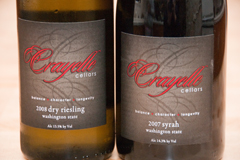
Recently, we had the opportunity to taste both of Crayelle’s inaugural releases in a blind samples tasting, the 2008 Dry Riesling and the 2007 Syrah. Based on tasting these wines, Crayelle Cellars and winemaker Craig Mitrakul show great promise. I look forward to trying both of these wines again once they’ve had some more time in the bottle, and I encourage you to give either of them a try if you have the chance.

2008 Crayelle Cellars Dry Riesling (Columbia Valley, Washington): Pale, greenish yellow in color and very aromatic. Aromas of petrol and pear lead to flavors of pear and lime SweeTarts. Medium-bodied with tart acidity. Well-balanced with a long finish. Residual Sugar: 0.05%
Quality: 3.5 stars (out of 5)
QPR: 4 bangs for your buck (out of 5)
Where to Buy: Received as sample, suggested retail $16; Available elsewhere, $16

2007 Crayelle Cellars Syrah (Columbia Valley, Washington): Deep, dark purple. Aromatic with black fruits, leather, and smoke coming through on both the nose and the palate. Medium to full-bodied with lively acidity, medium to high sweet tannins, and a long, slightly bitter, finish.
Quality: 3 stars (out of 5)
QPR: 2 bangs for your buck (out of 5)
Where to Buy: Received as sample, suggested retail $26; Available elsewhere, $26


Filed under: American Wine, Red Wine, Riesling, Shiraz/Syrah, Washington State Wine, White Wine, Wines Over $25, Wines Under $20, Wines Under $25
 

Wine Word of the Week: Organic viticulture


By Kori ~ March 27th, 2010

This week’s Wine Word of the Week is organic viticulture.
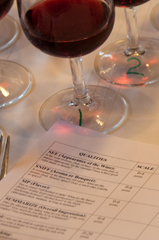
Official definition from Jancis Robinson’s The Oxford Companion to Wine:
Organic viticulture is a system of grape-growing broadly defined as shunning manmade (industrially synthesized) compounds such as fertilizers, fungicides, and pesticides, as well as anything that has been genetically modified. It contrasts with “conventional”, sometimes even called “industrialized” or “chemical” viticulture, by utilizing naturally occurring substances.

Layman’s terms from Kori:
Organic viticulture eliminates the use of synthetic products that create toxins in an attempt to build soil, protect the environment, and protect the health of the vineyard employees.


Filed under: Wine Word of the Week
 

Texture: Just as Important as Aroma and Flavor in Wine


By John ~ March 26th, 2010

Some people think I’m just a “fruit” guy when it comes to wine. That’s not true, but a grape is a fruit, so a wine that doesn’t exhibit any fruit aromas and flavors just doesn’t seem right to me. Most tastings of wine focus solely on aromas and flavors, because they are a wine’s most striking characteristics. But another important distinguishing feature is not detectable by eyes, nose, or taste buds. That feature is texture.
Once I determine that a wine has desirable fruit characteristics through aroma and taste, I look for texture, or the way the wine feels in my mouth. Some wine lovers call this “mouthfeel” while others lump it under the term “body.”

“The idea of texture in a liquid is so difficult, in fact, that wine experts cannot even agree on what to call it. …. [Besides texture, there is] the unwieldy term ‘mouthfeel’ and its constituents: body, density, weight, and for the truly geeky, viscosity. Joshua Wesson, chairman of Best Cellars, a chain of eight wine shops, uses the term ‘umami,’ a Japanese word for the elusive, indescribably delicious quality that goes beyond salty, sweet, sour and bitter.

Whatever you call it, great texture is a crucial though undervalued characteristic of the best wines. It’s a crackling vivacity that insinuates itself in your mouth, almost demanding that you take another sip simply because it feels so good.” –Eric Asimov, New York Times, January 10, 2006

Texture is often described in terms like cushiony, silky, satiny, or velvety. It is especially important to consider in making wine and food pairing decisions. The higher the alcohol and residual sugar levels, the thicker in texture a wine seems. Texture itself is not indicative of a high-quality wine, but it sure doesn’t hurt.

The best wines are well-balanced wines, showing good fruit in harmony with good texture, acidity, and tannins.

Cheers!


Filed under: General Wine Information
 

A Wine for Tonight: 2007 Barnard Griffin Merlot (#WAMerlot)


By Kori ~ March 25th, 2010

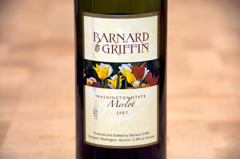
Would you like a quick suggestion for a good wine to drink tonight (or this weekend) that won’t break your budget and is widely available? Many of our readers have said this is something they would like, so here is this week’s selection, the 2007 Barnard Griffin Merlot from the Columbia Valley of Washington State.
Our selection criteria include:

  • A very good Quality rating of >=3.5 stars (out of 5)
  • A price tag of <=$15
  • Must be widely available

For those who haven’t heard, tonight there is a Twitter tasting featuring Washington Merlot. The brainchild of Josh Wade of Drink Nectar, #WAMerlot (the event’s Twitter hashtag) is a virtual event in which hopefully thousands of people will be simultaneously tasting Washington Merlot and tweeting about it.

Regular readers know that I think highly of Washington Merlot so I am all for an event that will bring attention to both our great state of Washington and this sometimes underappreciated grape. Unfortunately, though, I am unable to participate in tonight’s event (5-7pm PDT) because I am in California at another wine event. Knowing that I would not be able to taste and tweet tonight, the Wine Peeps got together last week while watching the NCAA Tournament to taste through six Washington Merlots that meet the “A Wine for Tonight” criteria of being <=$15 and widely available to determine the best one to recommend to you so that you can participate if you’d like.

We really liked several of the wines but the consensus favorite was the 2007 Barnard Griffin Merlot. Barnard Griffin Winery, located in Richland, Washington, was founded in 1983 by Rob Griffin and his wife Deborah Barnard. Rob moved to Washington State in 1977 to be winemaker for Preston Wine Cellars when there were under ten wineries in the entire state. Shortly after founding Barnard Griffin, Rob left Preston and went to work for Hogue Cellars as winemaker and general manager. In 1991, Rob left Hogue to devote his full time and energy to Barnard Griffin. The current winery and tasting room were built in 1996. Barnard Griffin’s current annual production is approximately 75,000 cases. They are well-known for their distinctive Tulip label which graces all of their non-Reserve wines.

“A medley of vanilla, deep spice, plum and black tea aromas create a pleasing herb/fruit balance. Infused, ripe cherry and vanilla flavors greet the palate followed by mouthwatering acidity. Hints of burnt orange and plum chime in on the long finish. Well paired with lamb or spicy Italian foods.” –Winemaker Rob Griffin

So go to your local wine shop, pick up a bottle of this 2007 Barnard Griffin Merlot or any Washington Merlot, log on to Twitter between 5 and 7pm PDT tonight, and participate in the #WAMerlot event.

And, even if you have no interest in participating in the Twitter event, this is a great bottle to enjoy with tonight’s dinner.

2007 Barnard Griffin Merlot (Columbia Valley, Washington): Ruby red in color. A gorgeous nose with vanilla, licorice, floral, and perfume aromas. Fruit-forward with cherry, plum, and vanilla flavors on the palate. Medium to full-bodied with crisp acidity, soft tannins, and a long finish. Well-balanced.
Quality: 4 stars (out of 5)
QPR: 5 bangs for your buck (out of 5)
Where to buy: Fred Meyer (Seattle, Washington), $13.79; Available elsewhere, $13 to $18


Filed under: A Wine for Tonight, American Wine, Five-Bangs For Your Buck Wines, Merlot, Red Wine, Washington State Wine, Wines Under $15, Wines Under $20, Wines Under $25
 

Red Wine for White Wine Drinkers


By Kori ~ March 24th, 2010

Wine Blogging Wednesday, the blogosphere’s monthly virtual wine tasting event, is in its fifth year. Our host this month for WBW #67 is Joe Roberts of 1WineDude. Joe selected Seeing Red for the First Time as the theme and asked us to “pick a red wine that you would use to introduce a white wine drinker to red wines for the first time.” This topic is one that I have wanted to write about as I’m often asked by white wine drinkers where they should start in exploring red wines.

White wine drinker: I’d like to try some red wines. Are there sweet red wines?
Wine Peeps: Red wines generally are not sweet. However, some have less tannins than others and, therefore, seem softer and more approachable.

White wine drinker: I’ve been told I should try Pinot Noir or Merlot, but I didn’t like either of those. What else do you recommend?

Wine Peeps: For starters, I’d recommend you try a rosé wine made from a red variety. A dry or off-dry rosé will serve as a good transition from whites to reds. As a next step, I’d suggest you try Sangiovese (Chianti is predominately made from Sangiovese grapes).

White wine drinker: What reds should I avoid?

Wine Peeps: Until you get accustomed to drinking more red wines and more dry wines, I would stay away from Cabernet Sauvignon and Syrah because they tend to be bigger, bolder, more tannic wines.

White wine drinker: Thanks. But are you sure there aren’t any sweet reds you could recommend?

Wine Peeps: Well, if you like sparkling wines, a red sparkling wine from Italy that you might like is Brachetto d’Acqui. It is quite sweet and very yummy, great before or after dinner.
Now, let’s get down to the nitty-gritty, here are three red wines that I’d suggest white wine drinkers try. Some of these may not be the vintage currently available in stores, but they are the ones I had in my cellar. I have found all three of these to be fairly consistent from vintage to vintage so you should feel comfortable trying the current vintage.

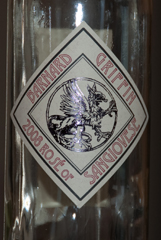
2008 Barnard Griffin Rosé of Sangiovese (Columbia Valley, Washington): Bright, hot pink color. Very aromatic with strawberry, mint, and floral aromas. Smooth and crisp with lots of bright strawberry flavors. Long finish.
Quality: 3.5 stars (out of 5)
QPR: 4 bangs for your buck (out of 5)
Where to buy: Esquin Wine Merchants (Seattle, Washington), $11; Available elsewhere, $12 to $18

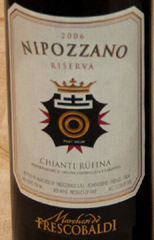
2006 Frescobaldi Nipozzano Riserva (Chianti Rufina DOCG Riserva, Italy): 90% Sangiovese and complementary grapes (Malvasia Nera, Colorino, Merlot, and Cabernet Sauvignon). Ruby red in color and very aromatic. Red Vines, fresh red fruit, and cinnamon come through on the nose; more red fruit, leather, and black plum on the palate. Medium-bodied and lively with medium tannins and a long finish. Well-balanced and smooth.
Quality: 4 stars (out of 5)
QPR: 5 bangs for your buck (out of 5)
Where to Buy: Received as sample, suggested retail $19; Available elsewhere, $16 to $31

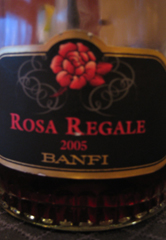
2005 Banfi Rosa Regale Brachetto d’Acqui (Piedmont, Italy): Bright red with aromas of rhubarb pie and red fruit flavors. Tastes like a red Moscato d’Asti. Easy drinking, very pleasant, and sweet but not sickeningly sweet.
Quality: 4 stars (out of 5)
QPR: 5 bangs for your buck (out of 5)
Where to buy: Sam’s Club (Seattle, Washington), $15.99; Available elsewhere, $19


Filed under: American Wine, Five-Bangs For Your Buck Wines, Italian Wine, Lesser Known Varietals, Red Wine, Rose Wine, Sangiovese, Sparkling Wine, Washington State Wine, White Wine, Wine Blogging Wednesday, Wines Under $15, Wines Under $20, Wines Under $25
 

Oregon’s Willamette Valley Wineries: On the Road to Seattle


By Kori ~ March 23rd, 2010

Our neighbors to the south, the Willamette Valley Wineries Association, recently made a trip to our fair city for their first ever consumer and trade tasting. “On the Road to Seattle” was a block party event featuring over 50 Willamette Valley wineries. All of the AVAs within the greater Willamette Valley AVA were represented including Chehalem Mountains, Ribbon Ridge, Yamhill-Carlton, Dundee Hills, McMinnville, and Eola-Amity Hills.

Oregon’s Willamette Valley is known the world over for its signature varietal, Pinot Noir. While many of the wineries also produce other cool-climate varieties, it is Pinot Noir that steals the show. As a result, we chose to taste only Pinot Noir at the event and did our best to taste at least one Pinot from as many participating wineries as we had time. All told, we tasted 43 Pinot Noirs from 40 different wineries. It was a wonderful opportunity to get a flavor for some of the wineries that we were not able to visit on our last trip to the Willamette Valley or try in our Oregon Pinot Noir tasting dinner. We discovered some wines and wineries that we would like to explore further in future trips and tastings. If you are interested in exploring Pinot Noir from Oregon’s Willamette Valley, we hope that you’ll find our list of wines we tasted helpful in giving you a place to start.

While wine grapes have been grown in Oregon since the mid-1800’s, it was not until 1966 when David Lett and his wife Diana planted 3,000 Pinot Noir vines in the Dundee Hills that the Willamette Valley really came into being. David, who passed away in 2008, is affectionately known in Oregon as Papa Pinot. Today, the Willamette Valley is home to more than 200 wineries and 15,000 vineyard acres.

Here’s a breakdown of the wines that we tasted at the “On the Road to Seattle” event. Under each Quality heading, the wine name and region will be listed along with price and QPR rating. Wines in bold type received a QPR rating of 5 bangs for your buck (out of 5).

Quality: 4.5 stars (out of 5)
2006 Boedecker Momtazi Vineyard Pinot Noir, Willamette Valley, $45, QPR: 5
2007 Archery Summit Red Hills Estate Pinot Noir, Dundee Hills, $85, QPR: 5

Quality: 4 stars (out of 5)
2006 Andrew Rich Pinot Noir, Willamette Valley, $30, QPR: 5
2006 Anne Amie Pinot Noir, Willamette Valley, $35, QPR: 4
2008 Sineann Resonance Pinot Noir, Willamette Valley, $42, QPR: 4
2008 Elk Cove Mount Richmond Pinot Noir, Willamette Valley, $45, QPR: 4
2006 Domaine Serene Evenstad Reserve Pinot Noir, Willamette Valley, $58, QPR: 3
2006 Argyle Nuthouse Pinot Noir, Willamette Valley, $60, QPR: 3
2006 Domaine Drouhin Cuvee Laurene Pinot Noir, Dundee Hills, $65, QPR: 3

Quality: 3.5 stars (out of 5)
2003 August Cellars Pinot Noir, Willamette Valley, $20, QPR: 5
2008 Coeur de Terre Estate Pinot Noir, $29, QPR: 4
2008 Duck Pond Jory Cuvee Pinot Noir, $29.99, QPR: 4
2007 Amity Crannell Vineyard Pinot Noir, Eola-Amity Hills, $32, QPR: 4
2006 Coleman Estate Reserve Pinot Noir, Willamette Valley, $38, QPR: 3
2007 Adea Hawksview Vineyard Pinot Noir, Chehalem Mountains, $40, QPR: 3
2007 J.K. Carriere Pinot Noir, Willamette Valley, $42, QPR: 3
2007 Lemelson Meyer Vineyard Pinot Noir, Dundee Hills, $42, QPR: 3
2006 Belle Pente Estate Reserve Pinot Noir, Yamhill-Carlton, $45, QPR: 3
2008 Bergstrom Shea Vineyard Pinot Noir, Yamhill-Carlton, $45, QPR: 3
2007 WillaKenzie Estate Emery Pinot Noir, Yamhill-Carlton, $45, QPR: 3
2007 Bethel Heights Casteel Reserve Pinot Noir, Eola-Amity Hills, $60, QPR: 2
2007 Dusky Goose Pinot Noir, Dundee Hills, $75, QPR: 1

Quality: 3 stars (out of 5)
2008 Benton-Lane Pinot Noir, Willamette Valley, $26, QPR: 3
2008 Patricia Green Croft Vineyard Pinot Noir, Eola-Amity Hills, $30, QPR: 3
2007 Adelsheim Vineyard Pinot Noir, Willamette Valley, $32, QPR: 3
2007 Lemelson Thea’s Selection Pinot Noir, Willamette Valley, $32, QPR: 3
2007 Methven Family Estate Pinot Noir, Eola-Amity Hills, $35, QPR: 2
2007 Sokol Blosser Pinot Noir, Dundee Hills, $38, QPR: 2
2007 Lange Estate 3 Hills Cuvee Pinot Noir, Willamette Valley, $40, QPR: 2
2006 Rex Hill Reserve Pinot Noir, Willamette Valley, $42, QPR: 1
2007 Anam Cara Estate Reserve Pinot Noir, Chehalem Mountains, $45, QPR: 1
2007 Cooper Mountain Mountain Terroir Pinot Noir, Willamette Valley, $45, QPR: 1
2007 Chehalem Reserve Pinot Noir, Willamette Valley, $49, QPR: 1
2007 R. Stuart Ana Vineyard Pinot Noir, Dundee Hills, $50, QPR: 1
2007 Penner-Ash Dussin Vineyard Pinot Noir, Yamhill-Carlton, $60, QPR: 1
2005 The Eyrie Vineyards Estate Reserve Pinot Noir, Dundee Hills, $65, QPR: 1
2007 Bergstrom Bergstrom Vineyard Pinot Noir, Dundee Hills, $75, QPR: 1
2007 Beaux Freres Upper Terrace Pinot Noir, Ribbon Ridge, $90, QPR: 1

Quality: 2.5 stars (out of 5)
2007 Airlie Pinot Noir, Willamette Valley, $18, QPR: NR
2008 Montinore Estate Reserve Pinot Noir, $25, QPR: NR
2007 Anam Cara Nicholas Estate Pinot Noir, Chehalem Mountains, $33, QPR: NR
2007 Brooks Janus Pinot Noir, Willamette Valley, $35, QPR: NR
2007 Le Cadeau Equinoxe Pinot Noir, Chehalem, $48, QPR: NR


Filed under: American Wine, Five-Bangs For Your Buck Wines, Oregon Wine, Pinot Noir, Wine Activities/Events, Wines NOT To Buy (1 & 2 Star), Wines Over $25, Wines Under $20, Wines Under $25
 

Women of Washington Wine: Poppie Mantone of Syncline Wine Cellars


By Kori ~ March 22nd, 2010

Today’s post is part of a series featuring the Women of Washington Wine. In an industry once dominated by men, more and more women are joining the ranks as winery owners, vineyard owners, and winemakers. Being a woman myself, I am fascinated by these women and what they have done and continue to do. Through this series, I hope to introduce you to some of the brightest female faces in the Washington wine industry.

Syncline Wine Cellars, founded by James and Poppie Mantone in 1999, is located in southern Washington in the Columbia Gorge AVA. James and Poppie met during the 1997 harvest at LaVelle Vineyards in Oregon’s Willamette Valley. Shortly thereafter, they married, moved to Washington, and pursued the dream of owning their own winery. The Mantones specialize in Rhone varietals including Syrah, Grenache, Mourvedre, Cinsault, Counoise, Carignan, Roussanne, and Viognier. Syncline’s annual production is just under 3,000 cases. The winery gets its name from the nearby 300-foot cliffs rising out of the Columbia River into the surrounding mountains known as the “Coyote Wall Syncline.”

Recently, Poppie was kind enough to take time out of her busy schedule to answer some questions for me and our Wine Peeps readers.

Highlights from Q&A with Poppie Mantone:

How did you first get involved in the wine business?
After falling hard for a lovely bottle of Oregon Pinot Noir (Burgundy was my first love), I headed west in search of a Northwest vineyard that might hire me to “experience the romance.” Here I am 14 years later, still head over heels.

What were the steps that led to where you are now?
Strong determination on my part, plus many instances of great timing. James and I met after we were already in the industry working for other wineries and vineyards. Several years working very well together led us to think, “What about our own label for WA Rhone varietals?” One move led to another and with each vintage the business has matured and transformed. We have found ourselves to be deeply satisfied with farming.

Has being a woman been an advantage or a disadvantage in your wine journey?
When I’m out there working the market, or picking up fruit from the vineyards (yes, I agree with Ashley [Ashley Trout of Flying Trout Wines], it’s great to get the bins all loaded up for you by the farm boys) it’s quite an advantage. But beyond that, it’s really more about who you are, not what your gender is. You must be the kind of person who: is flexible with high tolerance for constant change and the unexpected, can wear many hats, and is not afraid to put yourself out there and go for what you want.

What advice do you have for a woman wanting to get involved in the wine business today?
Go for it. Figure out how the skills you have can benefit an already existing winery; or if you have well rounded years of wine making, growing and selling experience, it may be time to start your own label.

What are your thoughts about the Washington wine industry, in general?
We are such a young industry. There is so much to learn about vineyard potential all over the state. We have just scratched the surface for getting the word out to the rest of the world about Washington wines.

In recent years the Washington wine industry has grown at a rapid rate. Do you expect that trend to continue?
As long as demand from wine drinkers keeps increasing, yes. The Washington wine industry has grown, though most of the new wineries have tiny production. It’s easy to sell a few hundred cases of anything. If/when all the new wineries continue to increase production, very skillful marketing will be the key to success. The total volume of all wine produced in Washington is still a drop in the bucket compared to most other wine regions of the world. Washington wines are such a great value for consumers. I believe we can continue to grow sustainably if our land prices, wine prices, and irrigation rights stay reasonable.

How do you and your husband, James, divide the duties at the winery?
That is constantly evolving. As our business has changed, grown, and babies born, we have both gravitated to what we each do best. If one of us is getting stuck on something, we switch roles. Most of what we do is collaborative. We’re lucky that after all these years, we still love working with each other best.

As the mother of a young girl, how do you maintain a healthy work/life balance?
That has been the biggest challenge of all…and we have another one on the way. I must be crazy. Loving what I do is the only way to balance this lifestyle. We live and work on the farm, my office is in our home, the winery and vineyard are in the backyard. It’s such an advantage that I can raise my children without putting them in daycare (and I get to go to work in my slippers). They grow up with us, helping on the farm. Ava, now 6 years old, loves to be home; whether it’s simply running around playing (she calls it her “big backyard”) or helping in the laboratory, picking grapes with us at harvest, taking care of the garden, orchard or chickens, sticking labels on boxes at bottling, chatting up tasting room customers, the list goes on. She thinks it’s all a blast. We make a point of taking quality time off together. Big vacations throughout the year, away from the farm, are a must. We also make sure we do not lose sight of non-wine related things we love to do on a regular basis like biking, skiing, kiteboarding, and dance. Also, I think we live in one of the most amazing locations in the world. The climate, beauty, and community here are ideal for us. No matter where we travel, it’s always exciting to come home.

What is your vision for the future of Syncline Wine Cellars?
In all of our business decisions, we hold up the vision of a small family farm that will carry on for generations. Everything we build on this land or for our brand has a higher purpose in this model. We nurture our surroundings so that the health and sustainability of this business keeps steady through the years. I want to keep doing this until I’m too old to get out of bed.

Many thanks to Poppie for sharing her story and thoughts with us. I wish her all the best and will be following her work and Syncline Wine Cellars with great interest, and I hope that you will too.

(Photos from Syncline Wine Cellars)


Filed under: American Wine, Interview, Washington State Wine, Women of Washington Wine
 

Wine Word of the Week: Noble rot


By Kori ~ March 20th, 2010

This week’s Wine Word of the Week is noble rot.

Official definition from Jancis Robinson’s The Oxford Companion to Wine:
Noble rot, also known as pourriture noble in French, Edelfaule in German, muffa in Italian, and sometimes simply as botrytis, is the benevolent form of botrytis bunch rot, in which the Botrytis cinerea fungus attacks ripe, undamaged white wine grapes and, given the right weather, can result in extremely sweet grapes which may look disgusting but have undergone such a complex transformation that they are capable of producing probably the world’s finest, and certainly the longest-living, sweet wines. Indeed, the defining factor of a great vintage for sweet white wine in areas specializing in its production is the incidence of noble rot.

Layman’s terms from Kori:
Noble rot, caused by the mold Botrytis cinerea which grows on white wine grapes under certain weather conditions, results in thick, intensely sweet wines which have a distinct honeyed character.


Filed under: Wine Word of the Week