
Current Releases from Fielding Hills, Nefarious, and Saviah


By Kori ~ October 19th, 2009
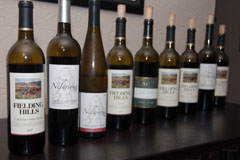
Current Releases from Fielding Hills, Nefarious, and SaviahRecently, we had the opportunity to taste some of the current releases from three outstanding Washington wineries, Fielding Hills Winery in Wenatchee, Nefarious Cellars in Lake Chelan, and Saviah Cellars in Walla Walla. While all nine of the wines are very good, we were especially impressed by the 2007 Fielding Hills Cabernet Sauvignon and the 2007 Nefarious Cabernet Sauvignon.

As with all of the Fielding Hills wines, the fruit for the 2007 Fielding Hills Cabernet Sauvignon was sourced from Mike and Karen Wade’s Riverbend Vineyard near Mattawa, Washington, in the Wahluke Slope AVA. Interestingly, the fruit for the 2007 Nefarious Cabernet Sauvignon is also sourced from the same Riverbend Vineyard. Tasting these two wines side by side in a blind tasting proved to be a testament to the quality fruit coming from that vineyard. Both wines are big, bold, smooth, and well-balanced with luscious black fruits on both the nose and palate.

Probably the biggest surprise for me in this tasting was the 2008 Nefarious Stone’s Throw Vineyard Riesling. Oftentimes, I find Riesling to be too sweet, even the dry styles seem sweeter than other dry white wines. However, this Nefarious Riesling blew me away. It is off dry but not cloying. I find the crisp acidity quite refreshing. This is a wine that I could just sit and sip and would also be an excellent food wine.

I was also thrilled to try the 2007 Fielding Hills Merlot since Colby and I helped to bottle it in May. We thought it was an excellent wine when we tasted it at bottling, but it has definitely improved with some bottle age and should continue to improve for a few years.

Tasting notes for all nine wines, in my personal order of preference:

2007 Fielding Hills Cabernet Sauvignon (Wahluke Slope, WA): Deep, dark red. Has a beautiful nose with blackberry aromas and a bit of oak. Luscious black fruits and coffee come through on the palate. Full-bodied with high tannins and a very long finish. Big, bold, smooth, and well-balanced. This is an exceptional wine.
Quality: 4.5 stars (out of 5)
QPR: 5 bangs for your buck (out of 5)
Where to buy: Received as sample, suggested retail $38; Available elsewhere, $38 to $40

2007 Nefarious Cabernet Sauvignon (Wahluke Slope, WA): Deep, dark red. Lots of similarities to the Fielding Hills Cab. Blackberry and oak aromas; luscious black fruit and smoked meat flavors. Full-bodied with high tannins and a very long finish. Big, bold, smooth, and well-balanced. This is also an exceptional wine.
Quality: 4.5 stars (out of 5)
QPR: 5 bangs for your buck (out of 5)
Where to buy: Received as sample, suggested retail $30; Winery, $29.99
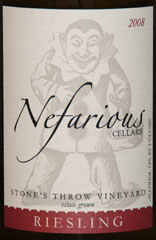
2008 Nefarious Stone’s Throw Vineyard Riesling2008 Nefarious Stone’s Throw Vineyard Riesling (Columbia Valley, WA): Estate grown fruit. Pale gold in color. Dried apricots come through on the nose; Granny Smith apples and white peach on the palate. Off dry, medium-bodied, long finish. Very crisp, smooth, and well-balanced. Could just sit and sip this wine but would also be excellent with food.
Quality: 4 stars (out of 5)
QPR: 5 bangs for your buck (out of 5)
Where to buy: Received as sample, suggested retail $18; Winery, $17.99

2007 Fielding Hills Merlot (Wahluke Slope, WA): Deep red. An absolutely gorgeous nose with black plum aromas and a hint of oak. More black fruits and leather come through on the palate. Medium to full-bodied with medium tannins and a very long, pleasant finish. Smooth and well-balanced. An excellent food wine.
Quality: 4 stars (out of 5)
QPR: 4 bangs for your buck (out of 5)
Where to buy: Received as sample, suggested retail $36; Available elsewhere, $36 to $39

2007 Saviah Une Vallee Red Wine (Walla Walla Valley, WA): 57% Cabernet Sauvignon, 36% Merlot, 7% Cabernet Franc. Deep red with black cherry, vanilla, and a hint of oak aromas. Black cherry and milk chocolate flavors. Medium to full-bodied with medium to high tannins and a long finish. Smooth and well-balanced.
Quality: 4 stars (out of 5)
QPR: 4 bangs for your buck (out of 5)
Where to buy: Received as sample, suggested retail $32; Available elsewhere, $32 to $33

2007 Fielding Hills Syrah (Wahluke Slope, WA): Dark, inky purple. Luscious black fruits and spice on the nose; black fruits and black pepper on the palate. Medium to full-bodied with medium to high tannins. Well-balanced with a very long finish.
Quality: 4 stars (out of 5)
QPR: 3 bangs for your buck (out of 5)
Where to buy: Received as sample, suggested retail $40; Available elsewhere, $40 to $43

2007 Fielding Hills Tribute (Wahluke Slope, WA): 43% Syrah, 30% Merlot, 18% Cabernet Sauvignon, 9% Cabernet Franc. Nose is a bit closed at first. Opens up the longer its open with black fruit aromas and flavors. Medium to full-bodied and lively with medium to high, drying tannins and a long, slightly bitter finish.
Quality: 3.5 stars (out of 5)
QPR: 3 bangs for your buck (out of 5)
Where to buy: Received as sample, suggested retail $32; Available elsewhere, $32 to $34

2007 Nefarious Cabernet Franc (Wahluke Slope, WA): Ruby red in color. Very aromatic. Raspberry popsicle on the nose; dark fruits and smoke on the palate. Medium-bodied, medium tannins with a long, crisp finish.
Quality: 3.5 stars (out of 5)
QPR: 3 bangs for your buck (out of 5)
Where to buy: Received as sample, suggested retail $28; Available elsewhere, $28 to $30

2007 Fielding Hills Cabernet Franc (Wahluke Slope, WA): Garnet red with dark fruit aromas. Black fruit flavors with some bitterness and astringency on the palate right now. Still very young, should soften with some age. Medium-bodied with medium tannins and a long, lively finish.
Quality: 3.5 stars (out of 5)
QPR: 3 bangs for your buck (out of 5)
Where to buy: Received as sample, suggested retail $30; Available elsewhere, $30 to $33


Filed under: American Wine, Cabernet Franc, Cabernet Sauvignon, Five-Bangs For Your Buck Wines, Merlot, Red Wine, Riesling, Shiraz/Syrah, Washington State Wine, White Wine, Wines Over $25, Wines Under $20, Wines Under $25
 

Book Review: What to Drink with What You Eat


By John ~ October 16th, 2009

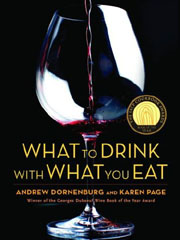
What to Drink with What You Eat by Andrew Dornenburg and Karen Page Let’s get right to the bottom line: What to Drink with What You Eat by Andrew Dornenburg and Karen Page is a great book. It is not an easy reading bedside book; but it is a superb reference work, the most comprehensive and useful book of its type that we’ve ever found. LaGayle, our food and cooking expert, has really been impressed by some of the unique pairing suggestions that she’s found in this book.
While the title is What to Drink with What You Eat, the book goes the other way, too, with a comprehensive section on “what to eat with what you drink.” Since we bought our copy of this book, this section has been especially helpful to LaGayle in planning the menus for our monthly wine tasting dinners once Kori and I have decided on the wine theme for the evening.

For example, if we were going to have a Cabernet Franc tasting, we would open the book to Chapter Six and listed under Cabernet Franc in BOLD CAPS are their very highly recommended pairings: BEEF, ESP. LEAN, AND ESPECIALLY ROASTED; DUCK; EGGPLANT; GAME, ESP. WITH FULLER-BODIED WINE; LAMB, ESP. CHOPS, LOIN, AND/OR ROASTED; MEAT, RED, ESP. GRILLED AND/OR ROASTED; AND PORK, ESP. WITH FRUIT SAUCE AND/OR ROASTED. Great quotes by noted wine and food experts are interspersed throughout the book, such as:

“As Cabernet Franc ages, it takes on a vegetal quality reminiscent of peppers or eggplant—and marries well with vegetables.” –Tim Kopec, Wine Director at Veritas (NYC)

Alternatively, if you were going to start with a unique entrée idea, say Catfish, and needed a wine pairing suggestion, you could go to Chapter Five and see Chardonnay, Riesling, and Sancerre were frequently recommended by a number of experts.

Chapters Five and Six really are the guts of the book. The one shortcoming of this book for me is that it doesn’t have an index. My guess is that it’s because the listings of foods in Chapter Five and wines in Chapter Six are in alphabetical order.

While the information for this book was compiled by the James Beard award-winning husband and wife team of Andrew Dornenburg and Karen Page, the raw material was supplied by more than seventy leading experts on wine and food pairings. Esthetically, it’s a nice looking, large, hardcover book that makes a great coffee table adornment and conversation starter.

It’s been amazing that since we’ve been using this book, how many other people I’ve noticed having it, many of whom have volunteered how helpful it has been to them. I believe you will join that list when you get your own copy.

What to Drink with What You Eat is currently available on Amazon.com for $22.05 and at fine booksellers almost everywhere.


Filed under: Food & Wine, Wine Books
 

Wine Word of the Week: Clone


By Kori ~ October 15th, 2009

Wine Word of the WeekThis week’s Wine Word of the Week is clone.
Official definition from Jancis Robinson’s The Oxford Companion to Wine:
Clone in a viticultural context is a single vine or a population of vines all derived by vegetative propagation from cuttings or buds from a single ‘mother vine’ by deliberate clonal selection.

Layman’s terms from Kori:
A clone is a vine that has been reproduced asexually by cutting off a twig and planting it elsewhere. The purpose of cloning vines is to reproduce vines with the distinctive traits of the mother vine, such as high productivity and/or disease resistance.


Filed under: Wine Word of the Week
 

Wine Blogging Wednesday #62: A Grape By Any Other Name


By Kori ~ October 14th, 2009

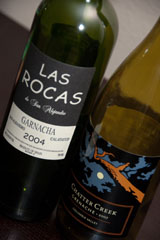
2004 Las Rocas de San Alejandro Garnacha and 2007 Chatter Creek GrenacheOur host for the October edition of Wine Blogging Wednesday, the blogosphere’s monthly virtual wine tasting event, is Dale Cruse of Drinks Are On Me. He selected A Grape By Any Other Name as this month’s theme and issued a semantic challenge to “taste wines labeled with their lesser-known varietal synonyms.” He also offered, “Extra points for trying BOTH the traditionally named grape AND its alternative.”
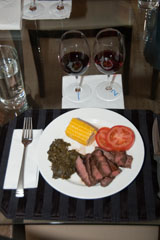
There are a number of options when it comes to varietal synonyms, Syrah/Shiraz, Zinfandel/Primitivo, Sauvignon Blanc/Fume Blanc, and Mourvedre/Monastrell, to name a few. We decided to try a varietal that we do not have very often, Grenache/Garnacha. A couple years ago, we discovered an excellent Garnacha, Las Rocas de San Alejandro from Spain. We still had a bottle of 2004 Las Rocas in the cellar so we decided to pull it out for this WBW. Since we Wine Peeps believe in blind tastings (and always love going for bonus points), we decided to taste the Las Rocas in one of our private tasting dinners against a Washington State wine, the 2007 Chatter Creek Grenache. We really enjoyed both wines but all gave a slight edge to the Las Rocas. They were both great with Mom’s dinner of pan-seared flank steak, sautéed spinach, corn on the cob, and sliced tomatoes.

pan-seared flank steak, sautéed spinach, corn on the cob, and sliced tomatoesMany believe that Grenache is indigenous to Spain where it is called Garnacha, but some contend that the Spanish took the vine from Sardinia during their occupation of the island. Sardinia claims the grape as its own, where it is called yet another name, Cannonau.  Grenache/Garnacha is primarily a blending grape, but in recent years, more and more winemakers are producing it as a single varietal wine.
2004 Las Rocas de San Alejandro Garnacha (DO Calatayud, Spain): Deep ruby red. Red fruits, especially raspberries, earth, and Red Vines come through on the nose; red and black fruits on the palate. The thick raspberry flavors remind me a lot of Chambord liqueur. Medium to full-bodied with medium tannins and a long finish. Very smooth. Improves the longer its open.
Quality: 4 stars (out of 5)
QPR: 5 bangs for your buck (out of 5)
Where to Buy: Wine Exchange (California), $8; MAB Finer Wines (New York), $17.99

2007 Chatter Creek Grenache (Columbia Valley, Washington): Ruby red but much lighter than the Las Rocas. Aromas of red fruits and spice. Smells like Ocean Spray Cran-Raspberry. More raspberries come through on the palate as well as a hint of bell pepper. Medium-bodied with soft tannins and a long, smooth, yet slightly hot, finish.
Quality: 3.5 stars (out of 5)
QPR: 4 bangs for your buck (out of 5)
Where to Buy: Esquin Wine Merchants (Seattle), $16.99; Available elsewhere, $16 to $19


Filed under: American Wine, Five-Bangs For Your Buck Wines, Grenache, Red Wine, Spanish Wine, Washington State Wine, Wine Blogging Wednesday, Wines Under $10, Wines Under $15, Wines Under $20, Wines Under $25
 

Challenging Wine Pairing: Shrimp Creole


By LaGayle ~ October 12th, 2009

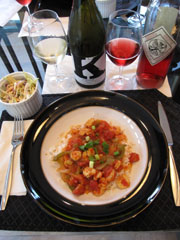
Shrimp Creole paired with Viognier and Rosé of Sangiovese It’s time for another food and wine pairing challenge. As you have probably noticed, the Wine Peeps like spicy foods, so this time the menu called for a Creole/Cajun dish. As I planned the meal, I decided to prepare Shrimp Creole which I served with white rice and bayou coleslaw. If I do say so myself, it was fantastic!
Most often when someone thinks of Louisiana cooking, the thought is Cajun, but Cajun/Creole today is recognized by many to be interchangeable terms. In an article by Malcolm He’bert, “The Creole and Cajun Cooking of Louisiana”, the difference between the two is as follows:

“Many Creoles were rich planters and their kitchens aspired to grande cuisine. Their recipes came from France or Spain as did their chefs. By using classic French techniques with local foodstuffs, they created a whole new cuisine, Creole cooking.” And, “on the other hand the Acadians, later contracted to Cajun, were a tough people who tended to serve strong country food prepared from locally available ingredients. It was pungent, peppery and practical since it was all cooked in a single pot. Thus Cajun cuisine was born.”

Both styles are prepared with basic foods such as onion, celery, bell peppers, a hint of garlic, beans, sausage, rice, seafood, etc., but the key is the various spices that give it such oomph!!! For example, Shrimp Creole is a blend of onions, celery, garlic, bell peppers, cayenne pepper, tomatoes, spices, the ever popular Tabasco, and, of course, shrimp. Put that over rice, and you have a hearty, filling and flavorful meal. The bayou coleslaw was yummy, too. It was a broccoli slaw with green onions, red onion, and parsley tossed with a dressing consisting of mayonnaise, mustard, green olives, lemon juice, fennel seed, and seasoned sea salt.

The great thing about this menu is that it is an easy meal to prepare. Chop, dice, sauté, blend, simmer. And, while it’s easy, it is so flavorful!

Now what wines to pair with this meal? Oftentimes, the first thought with seafood is a white wine. However, the spiciness of Shrimp Creole could call for something other than white. I decided to try both a white and a rosé. For the white, my first thought was a Spanish Albariño, but instead I decided on a Washington Viognier which I find to be very similar. So, I selected the 2008 K Vintners Columbia Valley Viognier and the 2008 Barnard Griffin Rosé of Sangiovese, also a Washington wine.

Our conclusion after this pairing challenge was quite interesting. All four of us felt the Viognier was best with the overall meal; however, individually, the Viognier paired best with the Shrimp Creole while the Rosé of Sangiovese paired best with the coleslaw. I believe it was the fennel in the coleslaw which tipped the scale to the rosé.

This meal and the wines were great for a late summer dinner. Please let us know what you have found to be enjoyable dinners and wine pairings on wonderful late summer or early fall evenings.

Bon Appétit!

2008 K Vintners Viognier (Columbia Valley, WA): Straw yellow. Sweet citrus, peach, and apricot aromas. Citrus and peaches come through on the palate as well. Medium-bodied and lively with a long finish. Well-balanced and extremely smooth. A very fresh wine.
Quality: 4 stars (out of 5)
QPR: 4 bangs for your buck (out of 5)
Where to buy: Winery, $20; Ultimate Wine Shop (New Jersey), $24.99

2008 Barnard Griffin Rosé of Sangiovese (Columbia Valley, Washington): Bright, hot pink color. Very aromatic with strawberry, mint, and floral aromas. Smooth and crisp with lots of bright strawberry flavors. Long finish.
Quality: 3.5 stars (out of 5)
QPR: 4 bangs for your buck (out of 5)
Where to buy: Esquin Wine Merchants (Seattle, WA), $11; Available elsewhere, $10 to $18


Filed under: American Wine, Challenging Wine Pairing, Food & Wine, Rose Wine, Sangiovese, Viognier, Washington State Wine, White Wine, Wines Under $15, Wines Under $20, Wines Under $25
 

The 2009 Harvest in Washington State


By John ~ October 9th, 2009

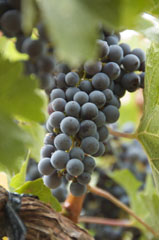
Grapes ready for harvestThe harvest began early in Washington State this year, and first indications are that it’s going to be another stellar vintage. The state of Washington has had an uninterrupted string of outstanding vintages for this entire decade, highlighted so far by 2005 and the 2007’s just now being released.
According to a recent news release by the Washington Wine Commission, great weather resulted in an early start to harvest, which was verified to us by Mike Wade of Fielding Hills when his Merlot from the Wahluke Slope was ready a couple of weeks sooner than normally would be expected. Ryan Pennington of the Wine Commission quoted leading Yakima Valley grower Dick Boushey as saying:

“We’re probably a week ahead of last year. It looks outstanding. The weather has given us both plenty of sugar and good acidity. Also, the color is great….”

A report by the Washington Association of Wine Grape Growers indicates a record crop of 155,000 tons of wine grapes this fall, up from 145,000 tons last year. While their estimates are often on the high side, a record crop is still likely.

While harvest is only the beginning, without a good harvest under the right growing conditions, it’s tough to make great wine. Fortunately, the early returns on 2009 are very promising. The growers have done their job; now it’s the winemakers’ turn. It’ll be at least two years to tell if the promise of this fall turns out to be great wine.

In the meantime, we’ll toast the 2009 harvest by opening some of the great new 2007’s from Washington State now being released.

Cheers!


Filed under: American Wine, Vineyards, Washington State Wine
 

Wine Word of the Week: Blind Tasting


By Kori ~ October 8th, 2009

Wine Word of the WeekThis week’s Wine Word of the Week is blind tasting.
Official definition from Jancis Robinson’s The Oxford Companion to Wine:
A blind tasting is one whose purpose is that the taster assesses and possibly identifies unknown wines as closely as possible.

Layman’s terms from Kori:
A blind tasting means that the bottles are covered by sacks or wine bags so that the labels cannot be seen. Typically, a number of wines of a single type (i.e., Washington Syrah) are tasted and compared, and then their identities are revealed. In a single-blind tasting, the varietal is known but not the individual wines. In a double-blind tasting, neither the varietal nor the individual wines is known.


Filed under: Wine Word of the Week
 

Private Tasting: Australian Shiraz Blends


By Kori ~ October 7th, 2009

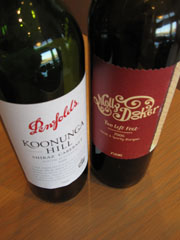
2006 Penfolds Koonunga Hill Shiraz Cabernet and 2006 Mollydooker Two Left FeetRecently, we had what turned out to be an Australian Shiraz blends showdown in one of our double blind private tasting dinners pitting the 2006 Penfolds Koonunga Hill Shiraz Cabernet against the 2006 Mollydooker Two Left Feet. The Mollydooker is a very good wine but the Penfolds Koonunga Hill is excellent. At $8 and with a QPR rating of 5 bangs for your buck, the Koonunga Hills delivers phenomenal value. And according to some “experts,” it is a wine that can age for 20 years which is remarkable for a wine at this price point. For a more complete description of how we set up these private tastings, please refer to How We Taste.
Penfolds is one of the oldest and most well-respected wineries in Australia. Located in South Australia, Penfolds was established by a transplanted English doctor in 1844. Dr. Christopher Rawson Penfold and his wife Mary built their home at Magill, near Adelaide, and surrounded it with vine cuttings they brought from the south of France. Today, Penfolds boasts two cellar doors (aka tasting rooms), one at the original Magill Estate and the other in Nuriootpa in the heart of the Barossa Valley. We had the pleasure to visit the Nuriootpa cellar door on our trip to Australia in 2005. Penfolds is most famous for its top of the line Grange wines. The Koonunga Hill wine that we had in this tasting is from one of their value lines.

Mollydooker, located in McLaren Vale just outside of Adelaide in South Australia, was founded by Sarah and Sparky Marquis in 2005. The husband and wife winemaking team had been making Australian wines for other brands for 12 years prior to starting their own winery. In four short years, they have received numerous accolades for their Mollydooker wines. By the way, Mollydooker is an Aussie term for a left hander.

2006 Penfolds Koonunga Hill Shiraz Cabernet (South Australia): 78% Shiraz, 22% Cabernet Sauvignon. Dark, inky purple. Very aromatic with black fruit and earth notes. Blackberry pie, earth, and spice come through on the palate. Full-bodied with high, drying tannins and a long finish. Extremely smooth and well-balanced.
Quality: 4 stars (out of 5)
QPR: 5 bangs for your buck (out of 5)
Where to buy: Wine Exchange (California), $8; Available elsewhere, $8 to $14

2006 Mollydooker Two Left Feet (South Australia): 68% Shiraz, 17% Merlot, 15% Cabernet Sauvignon. Extremely dark purple, almost opaque. Blackberry and vegetal aromas and flavors as well as some milk chocolate on the palate. Full-bodied and smooth with high tannins and a long finish.
Quality: 3.5 stars (out of 5)
QPR: 4 bangs for your buck (out of 5)
Where to buy: Winery, $20; Available elsewhere, $20 to $33


Filed under: Australian Wine, Five-Bangs For Your Buck Wines, Red Wine, Shiraz/Syrah, Wines Under $10, Wines Under $15, Wines Under $20, Wines Under $25
 

Great Washington State Wine Available in Chicago


By Kori ~ October 5th, 2009

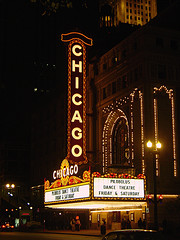
Chicago Theatre at Night (Photo by laffy4k)For years, I’ve had friends tell me that they can’t find the great Washington State wines that I tell them about where they live. So with the help of Wine-Searcher.com and a lot of legwork, I’ve set out on a mission to prove them wrong.
This is the second in a series of posts to help you find great Washington State wines in the major cities and areas all around the country. The first post in the series featured New York City. Today, I’m searching for Washington State wine in the Chicago area.

Here’s the format: To be selected, a store first has to have a Wine-Searcher.com rating of 4 or higher on a scale of 1 to 5 for customer service, reliability, etc. Next, it has to stock Washington State wines that we really like. Finally, they need to be an online retailer as well, so that if you don’t live close enough to the store to drop in, you can still purchase their wines.

Based on those criteria, I’ve selected four Chicago area retailers. Binny’s Beverage Depot, with 22 Chicago-land locations, has a great selection of fine Washington State wines. Malloy’s and Knightsbridge each have a decent selection of good quality Washington wines, and Hart Davis Hart has some of the cream of the crop in high-end Washington State wines.

Listed in alphabetical order below are the four retailers with their street addresses and links to their websites. Please let me know how you find their service and selection when you visit in person, and don’t hesitate to ask us any questions you might have about any of the Washington wines they are offering.

Binny’s Beverage Depot, 213 W Grand Ave, Chicago, IL 60654

Hart Davis Hart Wine Co., 363 W. Erie St, Chicago, IL 60610

Knightsbridge Wine Shoppe, 824 Sunset Ridge, Northbrook, IL 60062

Malloy’s Finest Wine & Spirits, 580 Roosevelt Road, Glen Ellyn, IL 60137

(Photo by laffy4k)


Filed under: American Wine, Great Washington State Wine Available in (City), Washington State Wine
 

Which Came First, the Cork or the Corkscrew?


By John ~ October 2nd, 2009

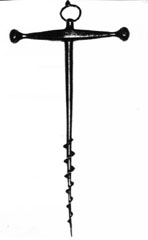
Early Corkscrew. Courtesy of Bert Giulian.Am I the only person who contemplates all sorts of esoteric thoughts when sipping a good glass of wine? I doubt that I am. Not too long ago, after using my handy corkscrew to open a good bottle of wine, I got to thinking, “Which came first, the cork or the corkscrew?” Now I realize that you may care less, but it really started bugging me.

My first thought, and I believe I read it somewhere in a wine book long ago, was that the cork obviously came first because why would you need a corkscrew if you didn’t have a cork? Good question, but since I was an engineering student in a former life, I remembered that Archimedes invented the screw and the screw had been used for centuries before wine bottles or corks were developed.

A little more research and I learned that before the early 1700’s wine was stored in casks. Crude bottles, more like pitchers, were used to serve wine but not to store or ship it. The first wine bottles were sealed by wooden plugs covered with wax-coated cloth, and the plugs stuck out of the bottles enough to be able to be removed by hand.

In 1728, a French royal decree allowed the sale of wine in bottles for the first time. About that same time, bottles mass produced in England were becoming available, and it was found that cork could be used to seal them. By that time, a screw-type device had been developed to remove wadding from a gun barrel and that device looks almost exactly like the early corkscrew.

So, I believe the mystery is solved. The fact that the mechanism for removing a cork, the screw, had been around for centuries and was being used in various industries by the time it became needed to remove a cork, gave the wine bottle cork developers the confidence that the cork could be removed if they could just develop a good closure.

And as they say, the rest is history.

Cheers!


Filed under: General Wine Information