Wine Word of the Week: Cooper


By Kori ~ September 3rd, 2009

Wine Word of the WeekThis week’s Wine Word of the Week is cooper.

Official definition from Jancis Robinson’s The Oxford Companion to Wine:
A cooper is someone who makes and repairs small barrels and larger wooden vats.

Layman’s terms from Kori:
A cooper is a wine barrel-maker.


Filed under: Wine Word of the Week
 

More from Canadian Wine Country


By John ~ September 2nd, 2009

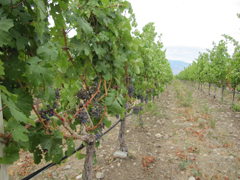
Vineyard in the Okanagan ValleyAs regular Wine Peeps readers know, we recently spent a long weekend in the Okanagan Valley of British Columbia, Canada, relaxing, visiting family friends, and of course, wine tasting. Kori wrote a nice post recapping our weekend and sharing our thoughts and ratings of the wines that we tasted.

LaGayle and I stayed over an extra day after Kori and her family left  to celebrate our 41st wedding anniversary, and as you might expect, we also found time to visit three more Okanagan Valley wineries, La Stella Winery, Le Vieux Pin, and Nk’Mip Cellars. It was only fitting that our favorite of the three was La Stella, since my mother’s first name was Stella.

La Stella and Le Vieux are small boutique wineries under common ownership, while Nk’Mip is a larger winery which is a partnership between the Osoyoos Indians and Vincor. In addition to the winery, Nk’Mip has a complete entertainment complex including a resort, restaurant, and desert cultural center.

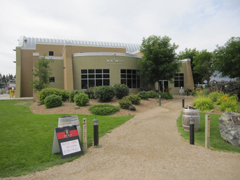
Nk’Mip CellarsAs with the first part of this trip, we were impressed with the friendliness and professionalism of the folks in the tasting rooms. Each of these three wineries provided a take-home tasting sheet with their wine information on it and provided water and crackers to cleanse your palate.

Here’s a breakdown of the wines that we tasted. Under each Quality heading, the wine name and region will be listed along with price and QPR rating. Wines in bold type received a QPR rating of 5 bangs for your buck (out of 5).

Quality: 4 stars (out of 5)
2008 La Stella Lastellina Merlot Rosato, Okanagan Valley, $25, QPR: 5
2008 La Stella Leggierro Unoaked Chardonnay, Okanagan Valley, $25, QPR: 5

2008 Nk’Mip QwAM QwMT Riesling Icewine, Okanagan Valley, $60, QPR: 3
2006 La Stella Maestoso Merlot, Okanagan Valley, $85, QPR: 2

Quality: 3.5 stars (out of 5)
2006 Nk’Mip QwAM QwMT Cabernet Sauvignon, Okanagan Valley, $29.99, QPR: 5
2006 Le Vieux Pin Emoi Pinot Noir, Okanagan Valley, $35, QPR: 4
2006 La Stella Allegreto Merlot, Okanagan Valley, $38, QPR: 3
2006 Le Vieux Pin Epoque Merlot, Okanagan Valley, $38, QPR: 3
2006 Le Vieux Pin Apogee Merlot, Okanagan Valley, $65, QPR: 1

Quality: 3 stars (out of 5)
2007 Nk’Mip QwAM QwMT Pinot Noir, Okanagan Valley, $24.99, QPR: 3
2007 Nk’Mip Winemaker’s Series Pinot Blanc, Okanagan Valley, $16.99, QPR: 2
2008 La Stella Vivace Pinot Grigio, Okanagan Valley, $25, QPR: 1
2006 Nk’Mip QwAM QwMT Syrah, Okanagan Valley, $34.99, QPR: 1
2006 Le Vieux Pin Perigee Pinot Noir, Okanagan Valley, $45, QPR: 1

Quality: 2.5 stars (out of 5)
2008 Nk’Mip Winemaker’s Series Riesling Okanagan Valley, $17.99, QPR: NR
2007 Nk’Mip QwAM QwMT Chardonnay, Okanagan Valley, $24.99, QPR: NR
2006 Nk’Mip QwAM QwMT Meritage, Okanagan Valley, $29.99, QPR: NR


Filed under: Cabernet Sauvignon, Canadian Wine, Chardonnay, Dessert Wine, Five-Bangs For Your Buck Wines, Merlot, Pinot Blanc, Pinot Grigio/Pinot Gris, Pinot Noir, Red Wine, Riesling, Rose Wine, Shiraz/Syrah, White Wine, Wine Travel, Wines NOT To Buy (1 & 2 Star), Wines Over $25, Wines Under $20, Wines Under $25
 

Premiere Issue of Washington Tasting Room Magazine Rolling off the Presses


By Kori ~ August 31st, 2009

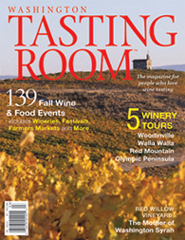
Washington Tasting Room MagazineWashington Tasting Room Magazine is a brand new quarterly magazine aimed at wine enthusiasts of every age and from novice to collector. As the name implies, it focuses on Washington State wine with articles about wineries, vineyards, travel, and lifestyle.

I am proud to announce that I am a Contributor to the magazine. The article that I wrote for the premiere issue, entitled “Plowing ahead,” is about Red Willow Vineyard which is the birthplace of Washington Syrah. When I received my copy of the magazine, I was thrilled to find that my article is the centerfold article and a beautiful picture of Red Willow Vineyard adorns the cover.

You can find a copy of the magazine in select downtown Seattle hotels and in over 100 winery tasting rooms from Woodinville to Walla Walla, with statewide distribution to additional areas with a high concentration of wine visitors that include wine destination resorts and lodgings, wine bars, restaurants, and wine retailers. If you’d like a copy mailed to your home each quarter, you may subscribe to the magazine by visiting the Washington Tasting Room website.

Washington Tasting Room Magazine is published by Viva Publishing, LLC, headquartered in the Puget Sound.

Highlights from Q&A with John Vitale, Publisher and Editor:

How did the idea for Washington Tasting Room Magazine originate?
With over 600 wineries in the state, and new ones constantly emerging, we realized the time was perfect for a magazine devoted to Washington State wineries, travel and lifestyle. Washington has become one of the most important and notable wine destinations in the world, and we felt that it deserved a magazine dedicated to celebrating the state’s diverse wine regions, people, travel, food and culture.

How do you feel about starting a new print magazine in an era of print consolidation?
I’m very excited about this magazine, both in print and online. Our top priority is producing the best magazine possible right now, but we have plans for a web component, too. We recognize that readers respond differently to each medium, which is why we created a print magazine that we hope readers will find visually stunning in every way. The gorgeous photography, attractive design, and quality paper stock make it a pleasure to pick up and read. So, from a presentation aspect, print does a superior job of capturing attention. But the reason someone would want to subscribe is the entertaining and informative articles packed into every issue. We’re really fortunate to work with some of the finest wine, food and travel writers who love to share their sensory experiences about Washington State wine as much as we do.

Is the title indicative of the magazine’s focus?
The title, Washington Tasting Room, is a metaphor. Our emphasis is not only on wineries and tasting rooms, but also on the journey. In that respect, the magazine will spotlight destination getaways and unique accommodations, talk with pioneers in the wine world, visit restaurants and bistros using local ingredients and celebrating local wines. As a reader, you’ll meet artists and discover art you can bring home, and learn about taking a cooking, art, cheese making, and vineyard or wine class. You’ll get tips and inspirational ideas for creating and enhancing the Tasting Room in your own home—whether it’s your kitchen, patio, or wine cellar. The magazine is about this, and more.

How do you plan to distribute the magazine?
Distribution channels include mailed subscriptions, newsstands, and hundreds of wine and culinary tourism locations in Washington State. Mailed subscriptions can be purchased through the website. The magazine is carried in select wine destination hotel rooms, B&Bs, and hotel concierge services, mainly in downtown Seattle, but also in Walla Walla, Spokane, and the Yakima Valley. This list is expanding daily. In addition, the magazine can be picked up in more than 100 wine tasting rooms in Washington, fine wine retailers and wine bars. This too, is expanding rapidly.

Do you have plans to go to a more frequent publication schedule than quarterly?
Not at this time.

What’s the market you’re targeting?
Our tagline says it best: The magazine for people who love wine tasting.  Our readers are all ages (21 and over, of course) that enjoy going wine tasting and touring.

From an editorial standpoint, what makes Washington Tasting Room Magazine unique from other wine-related magazines?
What sets our content apart from any other magazine is our focus on Washington State. We’re a consumer-oriented magazine, and we do not rate or score wines. I don’t think any other magazine in the world can say all those things.

Why should someone read the magazine?
People who love wine tasting are explorers by nature. But with so much happening on the wine scene, it’s impossible for most people to keep track of it all, much less explore it all on their own. Washington Tasting Room Magazine will act as a tour guide—exploring fun travel destinations, weekend getaways, local eateries and fun sightseeing along the wine trail. You’ll tour wineries and vineyards, discover restaurants, cheese and food pairings, music and art, and interesting people at the forefront of the wine scene. Along with a comprehensive wine-and-food-related events calendar, every issue will be packed with sidebars on different wines, new winery openings, practical tips and advice.


Filed under: American Wine, Vineyards, Washington State Wine, Washington Tasting Room Magazine, Wine Magazines
 

Wine Bargains for You!


By John ~ August 28th, 2009

Over the past two years, we have devoted a number of posts to great value bargain wines.

You can buy great value wines for under $20 (some under $10)
Great Value Wines
Super Bargain Wines for Tough Times
Super Bargain Wines in the $10 to $25 Range

Since our last post on this topic, we’ve discovered several more gems that you might like to try before summer is over.

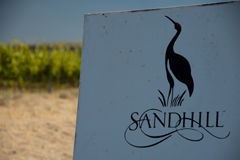
Sandhill WineryThe first is a closeout, and one of the best wine buys I’ve seen anywhere. We discovered Sandhill Winery, recently bought out by Corliss Estates and thus the closeout, early this summer on a trip to Red Mountain. We thought their 2003 Merlot was a good buy then at $24.99. At the current price of $9.99, it’s a steal.

2003 Sandhill Merlot (Red Mountain, WA): Dark red with dark fruit and earthy aromas. Blackberry, licorice, black plums, and spice come through on the palate. Full-bodied with high, drying tannins, and a long finish. Big and bold, yet well-balanced.
Quality: 4 stars (out of 5)
QPR: 5 bangs for your buck (out of 5)
Where to buy: Esquin Wine Merchants (Seattle), $9.99; Madwine (Washington), $9.99

Next is the 2007 Parejas Cellars Rosé, a wine we first discovered in one of our Seattle wine bar date nights. It was our favorite when we visited the Local Vine. Later, it was the consensus winner at our Washington Rosé tasting dinner…and it’s less than $10 a bottle.

2007 Parejas Cellars Rosé (Yakima Valley, Washington): 34% Viognier, 66% Mourvedre. Pale salmon in color. Lots of green, vegetal aromas. Flavors of strawberry, watermelon, and herbs come through on the palate. Crisp, smooth, and slightly fizzy. Very flavorful and refreshing with a long finish.
Quality: 4 stars (out of 5)
QPR: 5 bangs for your buck (out of 5)
Where to buy: The Local Vine (Seattle), $9

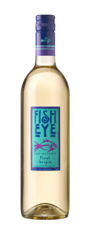
2008 FishEye Pinot GrigioIn the Live Blogging segment of the Wine Bloggers Conference in Sonoma, we found a California Pinot Grigio, the 2008 FishEye, which was surprisingly good for $7 a bottle.

2008 FishEye California Pinot Grigio (California): Apple, pear, melon. Very crisp, fresh. Amazing value for a summer sipper.
Quality: 3.5 stars (out of 5)
QPR: 5 bangs for your buck (out of 5)
Where to buy: Madwine (Washington), $4.99; K&L Wine Merchants (California), $4.99

Earlier this year, we had a tasting dinner featuring South African Red Blends. The best combination of quality and price was the 2007 Spice Route Chakalaka.

2007 Spice Route Chakalaka (Swartland, South Africa): 57% Shiraz, 20% Grenache, 17% Mourvedre, 6% Carignan. Ruby red with aromas of smoke, cedar, and vanilla. Plums come through on the palate. Medium-bodied, medium tannins, and a long, crisp finish. Slightly bitter but softens with food.
Quality: 4 stars (out of 5)
QPR: 5 bangs for your buck (out of 5)
Where to buy: Wine Exchange (California), $14.99; Available elsewhere, $15 to $20

And finally, at the Rhone Rangers event in Seattle, the standout bargain was the 2007 Cline “Cashmere” Red Blend.

2007 Cline “Cashmere” Red Blend (California)
Quality: 3.5 stars (out of 5)
QPR: 5 bangs for your buck (out of 5)
Where to buy: Wilbur’s Total Beverage (Colorado), $14.99; Fine Wine House (California), $15.98

For more wine bargains, stay tuned for our upcoming post on Washington Wine Month (September this year), when the Washington State Liquor Stores as well as many independent retailers run their once-a-year specials on a big selection of Washington State wines.


Filed under: American Wine, California Wine, Five-Bangs For Your Buck Wines, Merlot, Pinot Grigio/Pinot Gris, Red Wine, Rose Wine, South African Wine, Washington State Wine, White Wine, Wines Under $10, Wines Under $15, Wines Under $20, Wines Under $25
 

Wine Word of the Week: Sommelier


By Kori ~ August 27th, 2009

Wine Word of the WeekThis week’s Wine Word of the Week is sommelier.

Official definition from Jancis Robinson’s The Oxford Companion to Wine:
Sommelier is a widely used French term for a specialist wine waiter or wine steward. The sommelier’s job is to ensure that any wine ordered is served correctly and, ideally, to advise on the individual characteristics of every wine on the establishment’s wine list and on food and wine matching. In some establishments, the sommelier may also be responsible for compiling the list, buying and storing the wine, and restocking whatever passes for a cellar.

Layman’s terms from Kori:
A sommelier, also known as a wine steward, is a trained wine professional who most often works in a fine restaurant. A sommelier’s role varies depending on where he/she works, but most are responsible for selecting the restaurant’s wine list, procuring the wine, and making wine recommendations to restaurant patrons.


Filed under: Wine Word of the Week
 

Wine Book Club: A Vineyard in Tuscany


By Kori ~ August 26th, 2009

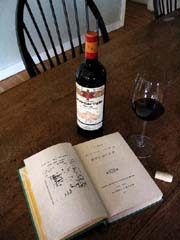
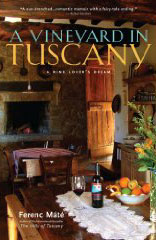
Wine Book ClubThank you for joining us for the August “virtual meeting” of the Wine Book Club. Many thanks to Dr. Debs of Good Wine Under $20 who originally proposed the idea for the WBC where bloggers and wine lovers come together for book reviews and discussions after reading a selected text. Dr. Debs chose A Vineyard in Tuscany: A Wine Lover’s Dream by Ferenc Máté as this month’s selection. Unfortunately, this month is the final meeting of the Wine Book Club. While those of us, who have participated regularly, me, Dr. Debs, and Frank of Drink What You Like, will certainly continue to read wine books and post about them on our own blogs, we will not be continuing with the monthly club.

A Vineyard in Tuscany is your standard feel-good story of adversity and perseverance which ultimately results in a happy ending. However, its setting in the beautiful and romantic hills of Tuscany is what makes it special. And the fact that it is a story of a writer’s journey as well is also somewhat unique and probably helped pay the bills.

Máté and his wife Candace, an artist who lovingly refers to him as Chum, lived in a small villa called La Marinaia near Montepulciano with their son and dreamed of having their own vineyard and making their own award-winning wine. In the beginning, it was mostly Máté’s dream. After searching everywhere in the region for months and months and making an ill-fated overture to a less-than neighborly neighbor, they finally found the place they had been looking for, called Il Colombaio, in Montalcino.  “Chum,” Candace whispered, “God built this ruin for you.”

Then came the tough part: paying for it and developing the land around it into a working vineyard. While Máté was always talking about the scarcity of money before and during this project, it was interesting to me to note that they always seemed to have funds for expensive summer sailing trips and other exotic travel adventures.

A Vineyard in Tuscany: A Wine Lover’s Dream by Ferenc MátéMuch of the book is devoted to chronicling the story of developing the fifteen acres of vines that were put in by hand along with the effort and expense of restoring the ruin into a home and winery. One highlight was the unexpected visit by their new neighbor Angelo Gaja, the famous Italian vintner, who had just purchased the vineyard next to theirs. At their first meeting, Gaja presented them with a gift of what turned out to be a $400 bottle of Sori San Lorenzo wine.

In the end, the Mátés prevail and they produce wines that receive international acclaim. While a few of the side trails Máté takes the reader on seemed distracting to me, it was generally a good read and a great story. Since Italy and Tuscany, in particular, were already on my short list of places to visit, this book did nothing but reinforce my desire to make that trip. Hopefully, sooner rather than later.

I would recommend this book to anyone who loves Italian wine, is considering a trip to Italy, or who fantasizes about owning their own vineyard and winery. If this describes you, head on over to Amazon or your book retailer of choice and pick up a copy.

Have you already read A Vineyard in Tuscany: A Wine Lover’s Dream? If so, please leave a comment and let us know what you thought of it.

Cheers!


Filed under: Italian Wine, Wine Book Club, Wine Books
 

Women of Washington Wine: Kathy Charlton of Olympic Cellars


By Kori ~ August 24th, 2009

Today’s post is part of a series featuring the Women of Washington Wine. In an industry once dominated by men, more and more women are joining the ranks as winery owners, vineyard owners, and winemakers. Being a woman myself, I am fascinated by these women and what they have done and continue to do. Through this series, I hope to introduce you to some of the brightest female faces in the Washington wine industry.
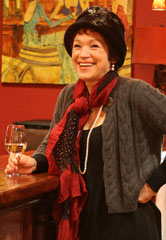
Kathy Charlton of Olympic CellarsKathy Charlton and her husband Ralph, along with another couple, bought Olympic Cellars in 1999. Located in Port Angeles, Washington, Olympic Cellars (originally named Neuharth Winery) was one of the first 15 wineries in the state and the first on the Olympic Peninsula. In 2002, under Kathy’s leadership, the winery became officially women-owned and operated. Kathy, Libby Sweetser, and Molly Rivard are affectionately referred to by the locals as the Olympic Women in Wine. Currently, the “only rooster in the hen house” is winemaker Benoit Murat who hails from Toulouse, France. Olympic Cellars is also committed to philanthropic giving through their Charity of Choice and 2X Success programs.

I had the pleasure to meet Kathy Charlton last month. Shortly thereafter, she was kind enough to take time out of her busy schedule to answer some questions for me and our Wine Peeps readers in a telephone interview.

Highlights from Q&A with Kathy Charlton:

How did you first get involved in the wine business?
It wasn’t planned. My husband and mother-in-law had invested in some commercial property up here on the Peninsula with two other investors in the 90’s. We were approached by Olympic Cellars which was owned by Dan Caudill. The winery had changed names from Neuharth Winery, upon the death of the founder in the early 90’s, to Olympic Cellars.

My husband called and said, “How would you like to buy a winery?” And I said, “That’ll make good dinner conversation.” He said, “No, I’m serious.” The winery had gotten into cash flow difficulties. Basically it was going bankrupt and unbeknownst to us, my mother-in-law had co-signed the loan. So we bought a winery and were naïve enough to think we could run it from Dallas. We started putting our money in it. Two years later, I had an opportunity to take an early retirement, and we came up here and took over the operations.

Then I had a steep learning curve.

What were the steps that led to where you are now?
I stood behind the bar for the first two years; there was only me and a part-time winemaker, Sara Gagnon who now owns Harbinger Winery. She apprenticed under Dan Caudill who was the second owner/winemaker. By standing behind the bar, I got a real feel for the customers. We get a lot of people who have come to the Peninsula on vacation and they drop in. My first question usually is, “What type of wine do you normally drink or enjoy?”  Depending on their answers, I can take them on a couple of different flights. I decided we were going to have a wider range of wine than our small business should be doing. Early on we were producing 1,500 cases per year, now we are at 3,500. We have 17 different wines.

Has being a woman been an advantage or a disadvantage in your wine journey? Please explain.
About 2005, we had a media frenzy about wine for women and the statistics came out about women’s buying patterns. The studies said that women bought 70 percent of the wine and drank 50 percent. As a woman-owned business, we got pulled into a lot of stories people were doing, and we got a lot of good exposure. I think the best thing from my standpoint is that I look at how my business has evolved. I came into with a business background and no preconceived industry ways of doing things. I have been a non-traditional winery from the very beginning. As I’ve learned more about the industry, I feel like I’m straddling a line. I want to be recognized by the industry for the great wines we’re doing, for the vineyards we’re sourcing grapes from, and all the accolades that are a part of being in the wine business. On the other hand, we really enjoy having fun at the winery. Three women in second careers, doing some wacky stuff that doesn’t necessary go with what you expect at a winery. It’s the whole “working girl” persona and the industry persona.

Do you believe a woman has certain built-in traits that can make her a better winery owner than a man? If so, please explain.
I don’t know if a woman is a better winery owner but rather has a different style of doing business. This goes back to my corporate days. There was just a different style of doing business. I can run the numbers with the best of them. When I came and started running this small business, I had burnt out. I had literally hit the wall and was ready to try something new. I got that back as I started being able to be more creative.

We said, “Wow! We have to be profitable; we are going to donate.” I was getting a stack of bills and a stack of requests for donations, and logically I knew that a bottle here and a bottle there were not going to make a big difference or a significant impact to an organization. We forecast what we could do and based it on the sales of our Working Girl wines. We decided to write a check every month and start with one charity. As we grew, we’ve been able to take on other non-profits and tie a wine or an event to them. We put a little soul and meaning and purpose to what we were doing, and I needed that.
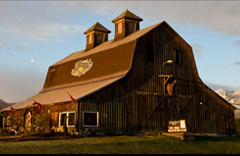
Olympic CellarsDo you use the fact that you are a woman to promote your wines? If so, how?
I have been very careful with that. In the beginning, I did some research on women in wine, in wineries. There weren’t that many of us. We talked about that but didn’t overtly do that. The story behind the Working Girl wines…I found that wineries did second labels. So we were blending and blending too much one night, I leaned back and said, “Ladies, I’m exhausted, this working girl has got to go home.”  We all sat up and said, “That’s it, that’s who we are.” It became the Working Girl White.

Are there more opportunities available to women today in the wine business than when you started?
Oh yeah. This is like any other industry. I was in finance, and when I was in school, there were only two or three women in accounting and finance. When I went to Texas Instruments, there were only a few women in management. And it’s grown and grown and grown. I think the wine industry is just behind some of the other industries. Women are the best sales people. I have been to umpteen dozen tasting bars, and they relate better.

What advice do you have for a woman wanting to get involved in the wine business today?
I’d tell her to work in a winery first. Depending on where she wants to be, from the chemistry side, from the enology side, if she wants to be a winemaker, go down that path. Distribution is a hard life. Retail is a hard life. Each is different and you have to decide what your skills are.

I don’t think there’s any limitation because of sex. The limitation would be where your talent is, what you want to do. I would give the same advice to anyone going into school or going into business, really understand what you want to do with your life, there’s lots of different aspects of the wine industry.

What are your thoughts about the Washington wine industry, in general?
I’m glad I’m in Washington, not in California. To get a bankrupt winery, I was early enough there were only 200 wineries, the industry was still growing and relatively young. You don’t have to be a Château something or have a huge amount of money behind you.

In recent years the Washington wine industry has grown at a rapid rate. Do you expect that trend to continue?
I don’t see an end to it. With the economy, we’ve been a little more cautious. There have been some wineries that have gone under. If they didn’t have a good business model, they couldn’t survive last year. We don’t have some of the issues in our vineyards that California does because we’re more spread out. We just haven’t used every square inch of dirt, which then disease spreads. I’ve read that difference is why we’re having some of the great vintages we are.

I understand that your Working Girl series of wines were “created by women in support of women.” Could you share a little bit about these wines and the philanthropic efforts of Olympic Cellars?
The Working Girl is pretty special to us. When we decided to do that blend and came up with the label and the name, it really helped us rebuild the winery. There was, and is today, an emotional connection to those labels.  The winery is known as the home to working girls for many reasons. We do connect it with non-profits. One of the other things we have is a program called 2X Success. I really needed dedicated volunteers. Then it just happened a lot of non-profits were writing grants as it’s become harder and harder to find money. If you work at the winery, for every hour you work, you earn a bottle of Working Girl wine and it goes on the books. I have five organizations that volunteer for events, bottling, and crush. They’re lined up, they’re ready, they work their day, and they sign their name in with how many hours they worked. People come in and look at the book to see how many cases they’ve earned to date. Then they either have their own fundraiser or we open the doors to the winery, and they just have their fundraiser there. That’s worked really well for us.  We’ve become very involved in the community through the working girls.

What is your vision for the future of Olympic Cellars?
I’m at the point where someday there’s going to be an exit strategy. I don’t have children that are going to carry on Olympic Cellars. I want to see vineyards on the Peninsula grow and thrive. We’re always coming up with new and different things to do with the winery. Events, music, and so forth. Usually, I always have a three year plan, and I don’t have it right now. The economy is such that we just can’t do things. It’s not business as usual. You made me realize what’s happening…ten years ago I was learning how to run a winery, now I’m learning how to run a winery differently in this new economy. So I’m sitting back, digging in, and going through a steep learning curve again.

Many thanks to Kathy for sharing her story and thoughts with us. I wish her all the best and will be following her work and Olympic Cellars with great interest, and I hope that you will too.

(Photos from Olympic Cellars)



Filed under: American Wine, Interview, Washington State Wine, Women of Washington Wine
 

Is it Terroir or a Wine Fault?


By John ~ August 21st, 2009

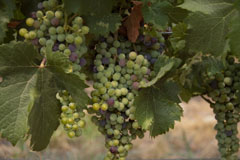
Wine GrapesI always find it interesting when I hear or read someone describe a wine, that I consider to be terrible, as complex or a product of unique terroir. Who is right in a situation like this? Fortunately, in wine, there is no right or wrong answer. It’s what you like that counts.
But be sure to ask yourself, do I like this wine because it is “supposed” to be good according to some expert, because it has developed a cult following through great marketing, or because of a $100+ per bottle price tag? I do not believe that any of the foregoing is a good reason to believe you need to like a certain wine.

In fact, I’ve found several great farmers in Pacific Northwest wine country who are poor winemakers, yet they’ve developed a cult-like following. When you sample their wines, you get a telltale “funk” that they’ll say is unique terroir, but which I believe is a wine fault. In one case it is actually brettanomyces; in another, mercaptans. In other words, it is just sloppy winemaking.

The true test is when you find wines made by other winemakers with virtually the same fruit as those poorly made wines, and they are technically perfect. However, those “perfect” wines may not have the cachet of the faulty wines. Fortunately, I’m already seeing some pushback from consumers away from some of these faulty wines, and I’m sure there will be more who do the same as savvy wine consumers ignore the labels and reputations and really understand the difference between unique terroir and a wine fault.

For those of you who don’t know how to spot some of the common faults, here’s a brief primer:

Brettanomyces – mousy or yeasty
Mercaptans – garlic or onion-like odors
SO2 – burnt matches smell
H2S – rotten eggs
Volatile acidity – rancid butter, sauerkraut, vinegar, fingernail polish remover

If rotten garbage or a dirty locker room smell turns you on, then go for it. Since that doesn’t appeal to me, I’ll leave that “unique” terroir to you, if that’s what you believe it is!


Filed under: General Wine Information
 

Wine Word of the Week: Meritage


By Kori ~ August 20th, 2009

Wine Word of the WeekThis week’s Wine Word of the Week is Meritage.
Official definition from Jancis Robinson’s The Oxford Companion to Wine:
Meritage is the name coined in 1981 by the winner of a competition in the Los Angeles Times for American wines made from a blend of grape varieties in the image of Bordeaux, devised to distinguish these wines from varietal Cabernet Sauvignon, Merlot, etc., most usefully on wine lists. This trade-marked name is legally available on labels only to American wineries that agree to join the Meritage Association….

Layman’s terms from Kori:
Meritage is a trademarked name used by American producers who are members of the Meritage Association to label their Bordeaux-style blends. This term gives the impression of a higher quality wine rather than simply calling it a red or white table wine.


Filed under: Wine Word of the Week
 

Private Tasting: Vertical of Dutschke St. Jakobi Shiraz


By Kori ~ August 19th, 2009

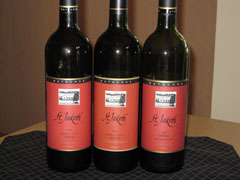
Dutschke St. Jakobi ShirazIf you are a fan of Shiraz or Syrah and have not tried Dutschke St. Jakobi from the Barossa Valley of Australia, you are missing out. We stumbled upon Dutschke when we were visiting Australia in 2005. One night when we were out to dinner at a restaurant in Adelaide, we ordered a bottle of their “house” Shiraz. The waiter brought the bottle, poured our glasses, and we each took a sip. We looked up at each other with mutual recognition that this was an excellent wine. What in the world is this no-name house wine, we wondered. We had already tasted many Shirazes in both the Hunter Valley and the Barossa Valley on our trip and this wine was one of the best we’d had. We asked the waiter who produced this wine. He told us that he was not allowed to say. After much cajoling and assuring him that we were from the United States and wouldn’t be telling anyone in Adelaide, he relented and told us that it was produced by Dutschke. Unfortunately, we were near the end of our trip and Dutschke does not have a cellar door, so we were unable to visit. However, after we returned home, we contacted Dutschke to see if we could get their wines in the U.S. Thankfully, the answer was (and still is) “yes”!

From that moment on, we’ve had a love affair with Dutschke wines, buying each new vintage when it is released. Recently, in one of our private tasting dinners, we had what turned out to be a three bottle vertical of Dutschke St. Jakobi Shiraz with their 1998, 1999, and 2002 vintages. All three of these wines were fabulous. In addition to being high quality, the wines also bring serious bang for your buck. And anyone that questions the ageability of Australian Shiraz should note that these wines are seven to eleven years old. For a more complete description of how we set up these private tastings, please refer to How We Taste.

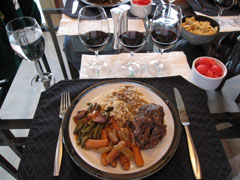
Chuck roast with onion and carrots, brown rice, and green bean bundlesSt. Jakobi is the estate vineyard for Dutschke Wines and is named for the nearby St. Jakobi Lutheran Church. Located in Lyndoch in the Barossa Valley of South Australia, this vineyard dates back to the 19th century. Oscar Semmler, winemaker Wayne Dutschke’s grandfather, bought the vineyard in the 1930’s. Oscar’s son Ken got involved around 1975 and planted Shiraz. The majority of their fruit was sold to other Barossa Valley winemakers. In 1990, Ken Semmler and Wayne Dutschke decided to keep some of their grapes and produce some wine of their own. Originally named Willow Bend, the winery name was changed to Dutschke with the 1998 vintage.

Since these are older vintages, they may be difficult to find. However, this wine has been so consistent for us that I’d encourage you to give the current vintage a try.

1999 Dutschke St. Jakobi Shiraz (Barossa Valley, Australia): Deep garnet red. Very aromatic with dark cherry, oak, vanilla, and cinnamon coming through on the nose. Dark fruits and black pepper on the palate. Medium to full-bodied with medium to high tannins and a very long finish. Bold yet smooth and extremely well-balanced.
Quality: 4.5 stars (out of 5)
QPR: 5 bangs for your buck (out of 5)
Where to Buy: Premier Cru (California), $16

2002 Dutschke St. Jakobi Shiraz (Barossa Valley, Australia): Very dark red. Black fruit aromas, particularly plums, along with black pepper and vanilla. Flavors of blackberry, plums, and blackcurrant. Medium to full-bodied with medium to high tannins and a long finish. Big, bold, and smooth.
Quality: 4.5 stars (out of 5)
QPR: 5 bangs for your buck (out of 5)
Where to Buy: Old Town Cellar (California), $32.99; Available elsewhere, $35 to $40

1998 Dutschke St. Jakobi Shiraz (Barossa Valley, Australia): Dark red. Blackberry and mint aromas with black and blue fruit flavors. Medium to full-bodied with medium tannins. Smooth with a long, slightly bitter, finish.
Quality: 4 stars (out of 5)
QPR: 4 bangs for your buck (out of 5)
Where to Buy: The Jug Shop (California), $29.90; Available elsewhere, $20 to $39


Filed under: Australian Wine, Five-Bangs For Your Buck Wines, Red Wine, Shiraz/Syrah, Wines Over $25, Wines Under $20, Wines Under $25