Book Review: WineTrails of Oregon


By John ~ July 3rd, 2009

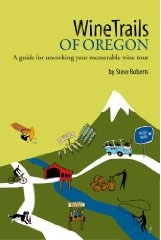
WineTrails of Oregon by Steve RobertsSteve Roberts has done it again! After his WineTrails of Washington book came out last year, Kori and I ran into Steve at one of his book signings here in Seattle and Kori purchased one of the books. During our conversation, after finding out what a time-consuming process it was to visit all of the wineries and compile all the information on their tasting rooms and their other amenities, I asked Steve what he was going to do for an encore. Steve told me he was already hard at work on WineTrails of Oregon, so I was not surprised when Steve contacted me about sending us a review copy of his new book.

WineTrails of Oregon features 200 wineries throughout Oregon from the Willamette Valley to the Rogue Valley. Wineries are grouped into easy-to-visit WineTrails—a total of 24 different WineTrails to explore. The book is full color, rich in content, and includes over 450 photos from wine country. Bonus material includes a list of Steve’s favorites: the best wineries for meals, overnight accommodations, weddings, picnicking, and biking.

I thought WineTrails of Washington was a very good book and it has been extremely helpful to us in our wine country travels in the state of Washington. I have no doubt that Steve’s new book will prove to be just as valuable for us in Oregon. For example, we have visited Oregon wine country on several occasions, the most recent being last fall; but I had no idea that he could find 200 Oregon wineries with regular tasting hours and a host of others available for tastings by appointment which he lists in the appendix.

When most people think of Oregon wine country, they only think of the Willamette Valley near Portland. Steve points out that there are actually four different viticultural areas in Oregon, each with distinctly different climate and soils. He has divided the four areas into ten geographic regions and a total of 24 WineTrails, each of which you could traverse in a day or two.

Before you visit Oregon wine country (or visit it again), be sure to pick up a copy of WineTrails of Oregon. In case you’re wondering, I’ve already asked Steve what’s next after this book, so be on the lookout for WineTrails of Idaho next year. After that, he says he’s finished, but I don’t believe him.

Congratulations again, Steve!


Filed under: American Wine, Oregon Wine, Wine Books, Wine Travel
 

Wine Word of the Week: Flowering


By Kori ~ July 2nd, 2009

Wine Word of the WeekThis week’s Wine Word of the Week is flowering.

Official definition from Jancis Robinson’s The Oxford Companion to Wine:
Flowering is an important event in the annual growth cycle of vines, the process preceding the fertilization of vine flowers and their subsequent development into berries. ….

Flowering, or bloom, takes place about six to 13 weeks after budbreak, the period being shorter for warm climates and early varieties.

Layman’s terms from Kori:
Flowering, the second stage in the annual growth cycle of the vine, takes place about 40-90 days after bud break. Warm, dry weather is ideal for flowering.


Filed under: Wine Word of the Week
 

Women of Washington Wine: Anna Schafer of àMaurice Cellars


By Kori ~ July 1st, 2009

Today’s post is part of a series featuring the Women of Washington Wine. In an industry once dominated by men, more and more women are joining the ranks as winery owners, vineyard owners, and winemakers. Being a woman myself, I am fascinated by these women and what they have done and continue to do. Through this series, I hope to introduce you to some of the brightest female faces in the Washington wine industry.

Winemaker Anna Schafer of àMaurice CellarsAnna Schafer, winemaker for àMaurice Cellars in Walla Walla, Washington, is a young, energetic face in the Washington wine industry. The Schafer family founded àMaurice Cellars and planted their 13 acre estate vineyard in 2006. The winery name, àMaurice, which means “to Maurice” in French pays homage to Anna’s grandfather. As one of the founders, Anna has been involved with àMaurice since the beginning. To further her winemaking knowledge, Anna works harvest in Argentina as well. Of the àMaurice wines I’ve tasted, my favorite is the Malbec which is no surprise given Anna’s Argentine ties.

I had the pleasure to meet Anna Schafer during Taste Washington in April and then we visited àMaurice on our recent trip to Walla Walla. Anna was kind enough to take time out of her busy schedule to answer some questions for me and our Wine Peeps readers.

Highlights from Q&A with Anna Schafer:

How did you first get involved in the wine business?
As a family we shared wine from an early age. We always talked about starting to make some and then our words became actions. We started making wine way before there were any grapes involved.

What were the steps that led to where you are now?
Mentors and listening to people. I think we are all our best teachers. There are too many lifetimes I would have to live to know everything I want to about wine. Learning from each other is the best way to at least attempt it.

Has being a woman been an advantage or a disadvantage in your wine journey? Please explain.
I think of it as an advantage except when I am trying to lift something. The manual labor aspect of winemaking is what deters most young women from pursuing it I think. It is a dirty job, but I like working with my hands. I only think being a woman is an advantage just because it makes me different.  Anything that stands out is good.

Do you believe a woman has certain built-in traits than can make her a better winemaker than a man? If so, please explain.
No, but some studies suggest we have more taste buds.

Do you use the fact that you are a woman to promote your wines? If so, how?
Not really, I hope the wine talks more than I do.
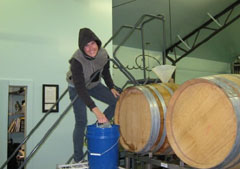
Winemaker Anna Schafer working hard at àMaurice CellarsWhat advice do you have for a woman wanting to get involved in the wine business today?
Use your knees!! I am seeing some amazing young female winemakers coming thru the ranks. I am employing one of them this harvest. If not in the winemaking side there are so many other facets to the industry. We need more female sommeliers!

What are your thoughts about the Washington wine industry, in general?
The industry is growing. Everything we do as a winemaker can have a result which shows three, four, ten years later. We, as an industry, need to hold up the standards that have been made by our founding winemakers and honor them by making good, deliberate, conscientious decisions.

In recent years the Washington wine industry has grown at a rapid rate. Do you expect that trend to continue?
I think water is the major issue; we have more “rights” to the water than water. The state needs to look at that pretty closely. In terms of the economy, wine is a delayed return with lots of initial capital investment. We will see if people are still willing to invest like that in the near future.

I understand that you also work harvest in Argentina for winemaker Paul Hobbs’s Viña Cobos. How did that arrangement come about and what have you learned from that experience?
I have a friend who was friends with a friend of Paul’s partners in Mendoza.  The family I live with in Mendoza is involved closely with Alta Vista and Norton as well as sell their 150 hectare vineyard’s fruit to Chandon and Salentine. I think about Argentina daily in my winemaking; if it was not something I picked up from Paul, it was another winery. Argentines are so passionate and have a way to express it so clearly; it is hard not to fall in love with winemaking down there.

What is your vision for the future of àMaurice Cellars?
We will keep making wines that we like to drink and stay around 3,500 cases. We have our estate now which is a dream. The fruit really is spectacular, I am amazed each time I try it. Our Estate Viognier, “the Sparrow” [was] released [last week]!!!

Many thanks to Anna for sharing her story and thoughts with us. I wish her and the Schafer family all the best and will be following her work and wines with great interest, and I hope that you will too.

(Photos from àMaurice Cellars Facebook page)


Filed under: American Wine, Interview, Washington State Wine, Women of Washington Wine
 

Why Can’t I Buy the Wine I Want to Buy?


By John ~ June 30th, 2009

United States CapitolThis is America, right? Land of the Free. We’ll you wouldn’t know it if you are shopping for wine. If Lenn Thompson recommends a great New York wine, or Russ Kane touts a super Texas wine, or Dr. Debs or Alder Yarrow puts me onto a special California wine, that does not mean I can buy it and have it shipped to my house in Seattle. And very often, those wines I’d really like to try are not available in my local wine shop.
Why not? There are three primary bottlenecks to the wine distribution system in the US:

  1. Archaic wine laws in all fifty states that date from Prohibition days.
  2. A Distributor monopoly that spends millions on lobbyists to preserve the three-tier system and thwart customer choice.
  3. And most recently, a failure at a business like New Vine Logistics, the huge California wine fulfillment center that shipped wine for hundreds of producers and was scheduled to be Amazon.com’s wine logistics/shipping firm. [While there is now a deal to pick up the pieces of New Vine Logistics, there is no assurance that this company or its major competitors will be long-term survivors.]

Mike Veseth of The Wine Economist made some excellent points on this subject in a recent post:

SVB [Silicon Valley Bank, a major wine industry lender] estimates that there are 6000 wineries active in the US market producing about 7000 wine brands. All these brands need to squeeze through the U.S. three tier distribution system bottleneck. This means they need to go from maker (first tier) to state-licensed distributor (second tier) to local retailer (third tier). ….

Now we get to the big squeeze. These 7000 brands get funneled through about 550 major distributors, according to SVB (obviously this does not count many smaller Mom-and-Pop and specialized distributors that I am familiar with), which is about half as many as a few years back. Hopefully you can appreciate the bottleneck — 7000 brands worth $30 billion in retail sales have to squeeze through 550 distributors in 50 states on their way to 76 million wine consumers. Any blockage in the distributor tier backs up the whole industry. ….

The net effect is clear — distributors are reducing their SKUs (stock keeping units to non-economists) and focusing [on] a smaller number of reliably profitable product lines. This means that it is harder and harder for new and niche wineries to get on the warehouse pallet. [And the distributor does not want you or I to circumvent them and buy direct from our favorite winery.]

So, what’s the answer? For a free market advocate like myself, it’s difficult to suggest this, but I believe we need a new federal law that will take precedent over the ridiculous patchwork of fifty different state laws that we have today. Steve Bachman of Vinfolio has been an outspoken advocate of this solution for some time. Here’s what Steve says:

As I have written before…, the best solution is a new federal law that relies upon the government’s authority under the Commerce Clause to mandate rules for interstate wine shipping while leaving the rest of the states’ regulatory and enforcement systems intact.

How a Federal wine shipping law should work

  • Single annual shipping permit – A single Federal process for issuing annual permits to parties licensed in any state by their state regulatory authority (including retailers, wineries, wholesalers, and importers).
  • Tax collection – Mandatory state/municipal tax collection on new purchases based on destination zip code with monthly remittances to each state.
  • “Dry” area registry – National registry of dry counties and zip codes where inbound shipments would be prohibited.
  • Age verification – Age verification required (21 or older) to ship (either via an online service or in person) and to receive a shipment (with signature required).
  • Centralized reporting – Federal reporting and recordkeeping standard established requiring the permit holder to file monthly reports (available to all state authorities for tax verification and other purposes) and to maintain all shipment records for a minimum period of three years.
  • Regulatory jurisdiction matching activity – Shippers regulated solely by their home state authority for all activities other than shipping (where Federal regulation would apply) and shipment-related taxes (where each state’s taxing authority would have jurisdiction).
  • Violations – Violations of Federal shipping rules (including the failure to pay associated state taxes) would constitute grounds for revoking all interstate shipping privileges.

If such a law were in effect, you and I could buy the wine we want, no matter who has it for sale or which state they are located in, or whether a large distributor has deemed it worthy of inclusion in his portfolio.

Is this likely to happen any time soon? Probably not, unless a massive grassroots consumer-based campaign is launched that puts Congress under pressure to act. One thing for sure is that it’ll never happen unless all of us wine lovers unite to break the bottleneck that keeps us from buying the bottle of wine we want to buy.

What do you think?


Filed under: American Wine, General Wine Information
 

Video Interview with Dave Stephenson of Stephenson Cellars


By Kori ~ June 29th, 2009

Recently during Vintage Walla Walla weekend, we had the opportunity to sit down for a nice visit with owner/winemaker Dave Stephenson of Stephenson Cellars in Walla Walla, Washington. While Stephenson Cellars, founded in 2001, is located in the Walla Walla airport complex, Dave recently moved his tasting room to downtown Walla Walla.

Mom (LaGayle) and Dad (John) first discovered Stephenson Cellars when they visited Walla Walla on their cross-country road trip in the spring of 2008. Since then, we have had Stephenson Cellars wines on numerous occasions. We continue to be impressed with the overall quality of the wines, and most importantly in today’s economy, their high QPR ratings across the board. While Stephenson Cellars currently produces five wines (Cabernet Sauvignon, Merlot, Syrah, Red Wine, and Viognier), Syrah is Dave’s specialty.

Dave was kind enough to answer our questions on a variety of topics, from how he got started to why he keeps his vineyard sources under wraps to why he moved his tasting room downtown. As you’ll see from the video, Dave has a laid back personality, but don’t let that fool you, he is a hard-working, talented winemaker. He knows how to identify great fruit and turn it into outstanding wine.

Here are some key clips from our interview:


Filed under: American Wine, Interview, Video, Washington State Wine
 

Washington Syrah: Great Quality Doesn’t Always Translate into Great Sales


By Kori ~ June 26th, 2009

First off, as regular readers know, I love Syrah, and I believe that some of the best Syrah in the world is made in Washington State. In fact, the first wine that ever garnered our highest quality rating, 5 stars (out of 5) was a Fielding Hills Syrah from Washington. But as the title of this post suggests, great quality doesn’t always translate into great sales.

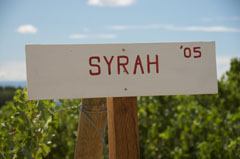
Washington SyrahSince the Washington Syrah seminar at Vintage Walla Walla earlier this month, the blogosphere has been buzzing about the discussion moderated by noted northwest wine writer Paul Gregutt. In a post on his blog, Gregutt said, “The question I intended to pose [at the seminar] was “how do these Washington syrahs age?… but it soon became apparent that the real topic of the day was not how will they age – none of them showed any signs of wearing out anytime soon – but why don’t consumers flock to these wines?”
Gregutt went further by saying that “as I look over my tasting notes for the past few years, it is the syrahs that garner the highest scores as a group. It is a syrah that finally toppled my resistance to the 100 point barrier [2006 Charles Smith Royal City Syrah]. It is syrah that winemakers in this state almost universally love.”

A number of people, both inside and outside the wine business, say the price issue is what hurts the sale of Washington Syrah in today’s economy, but I don’t really believe that argument holds much water. In a comment on Sean Sullivan’s Washington Wine Report blog, I listed the following Washington Syrahs that we’ve rated at least 4 stars (out of 5) at two different price points (<$15 and <$30), neither of which breaks the bank:

<$15
Columbia Crest Two Vines Shiraz, $7
Giant Wine Co. Sinner’s Punch 2006 (90% Syrah), $14

<$30
Snoqualmie Reserve Syrah 2004, $17
Columbia Crest Reserve Syrah 2006, $20
Syncline Columbia Valley Syrah 2006, $22
Dusted Valley Stained Tooth Syrah 2006, $24
Gilbert Syrah 2005 and 2006, $25
Darby The Dark Side Syrah Walla Walla Valley 2006, $25
William Church Yakima Valley Syrah 2006, $25
Chateau Ste Michelle Ethos Syrah 2004, $26
Watermill Reserve Syrah Walla Walla Valley 2005, $28
Stephenson Syrah 2005 and 2006, $28
Basel Cellars Syrah 2005, $28

“When it comes to fine red wines at fair prices, Washington excels.” –Harvey Steiman, Wine Spectator, July 31, 2009

I will acknowledge that there are some perception issues, but I don’t believe that it is the actual price of Washington Syrah that is the problem. Let me explain. The average wine consumer is used to paying less than $10 for Yellow Tail Shiraz at the grocery store so they wonder why they should pay over $30 for wine made from the same grape in Washington even though there is no comparison in quality. On the other hand, $30 for a Washington Cabernet Sauvignon can seem like a bargain when compared to a $50 or $100 Napa Valley Cab which is often the benchmark for even the novice wine consumer.

Another factor that I think is at play here, and may actually have more to do with lagging sales than price, is the fact that Syrah is still so new in Washington (the first Syrah vines in Washington were planted at Red Willow Vineyard in 1986 and it was years later before significant acreage was in production) that many wine lovers can’t imagine it can be so good so soon. But it is and it’ll only get better as the vineyards mature and the winemakers learn where and how they do best.

While great quality doesn’t always translate into great sales, it should where Washington Syrah is concerned. As you can see from the list above, there are some great values on wonderful Washington Syrah available to you right now. Take advantage of these bargains while they last! I believe that it is only a matter of time before Washington Syrah is universally acclaimed as world class—and the demand and prices will reflect it.


Filed under: American Wine, Shiraz/Syrah, Vineyards, Washington State Wine, Wines Over $25, Wines Under $10, Wines Under $15, Wines Under $20, Wines Under $25
 

Wine Book Club Roundup: La Vie en Rosé


By Kori ~ June 25th, 2009

Wine Book ClubThank you for joining us for the June roundup of the Wine Book Club. Dr. Debs of Good Wine Under $20, who founded our monthly Wine Book Club, selected La Vie en Rosé: A Very French Adventure Continues by Jamie Ivey (St. Martin’s Press, $24.95; Amazon.com, $16.47) as the book for this month, and it has been my pleasure to host. This book shares the adventures of author Jamie Ivey, his wife Tanya, and their friend Peter as they leave their comfortable lives in London to open a rosé-only wine bar in the south of France.
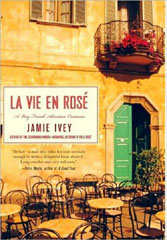
Jamie, Tanya, and Peter had spent the previous summer searching for France’s palest rosé which was the subject of Ivey’s first book, Extremely Pale Rosé. During that trip, they completely fell in love with France and decided that they wanted to move there to open their own rosé-only wine bar. They returned to London to get their affairs in order, save up some money, and the following spring, they sold their house and set off on their adventure.

While this adventure may sound like the stuff dreams are made of, they ran into a lot of roadblocks along the way. They had made arrangements with a bar owner in Aix to set up shop on his terrace for the summer while looking for a more permanent location for La Vie en Rosé. When they arrived on what was to be their first day, they discovered that they were the butt of a practical joke. They spent the rest of the summer bouncing around from temporary location to temporary location holding two week “rosé festivals” while looking for property of their own.

Dr. Debs of Good Wine Under $20 said, “Getting to experience the highs and lows of the process—from Ivey’s halting attempts to communicate with the locals (all of whom know a great deal about wine) to the moment they plunk down money on a piece of property—was like watching friends dive off a very high cliff into formidably deep waters. I appreciated the bravery of what they did, but I have no intention of doing it myself.” I couldn’t agree more and was thinking the exact same thing as I read the book. While I found their stories to be a perfect summer read, I certainly would not want to be in their shoes.

Frank of Drink What You Like, points out that “As the story comes to a close, Jamie reflects on the irony of worrying about the location of La Vie En Rosé throughout the summer. The trio finds success not in a ‘brick and mortar’ location, but in a small stall in the heart of a French market. (This of course is the prelude to Jamie’s next book, Rosé en Marche.)”

La Vie en Rosé: A Very French Adventure Continues by Jamie IveyWhile the story has a happy ending, I must admit that I was a bit disappointed that they did not ultimately find the perfect permanent location for La Vie en Rosé. I personally would not enjoy the gypsy lifestyle of being in a different location each day of the week, moving from market to market. Although, different strokes for different folks is what makes the world go round, and what they did find seems perfect for them.
Dr. Debs found the book to be “full of the sights and sounds of the southern French countryside. From local festivals celebrating garlic to visits with local vignerons, Ivey is adept at bringing a scene to life in all its variety and with a fair bit of humor.” She also notes, however, that “Ivey is British, and this means that his sense of humor is decidedly British as well. His tone may strike some readers as offbeat and ironic.”

If you are looking for a fun summer read or have ambitions of your own to give up your current life and set out on an adventure, then head on over to Amazon or your book retailer of choice and pick up a copy. As Frank said, “I have the deepest respect for those who pursue their dreams with singular focus and stay committed despite challenges. Also because I too harbor similar ‘romantic’ dreams of leaving the grind here to pursue similar endeavors abroad.”

Have you already read La Vie en Rosé: A Very French Adventure Continues? If so, please leave a comment and let us know what you thought of it.

Many thanks to my fellow Wine Bookaneers, Dr. Debs and Frank, for participating again this month. We would love to have more of you join us. So for anyone considering reading along, the next two selections in the Wine Book Club are:
July: Africa Uncorked: Travels in Extreme Wine Territory by John and Erica Platter
August: A Vineyard in Tuscany: A Wine Lover’s Dream by Ferenc Mate

Cheers!


Filed under: French Wine, Rose Wine, Wine Book Club, Wine Books
 

Wine Tasting Dinner: Oregon Pinot Noir


By Kori ~ June 24th, 2009

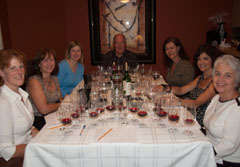
Wine tasting dinner guests at the tableThis month’s wine tasting dinner, held last Friday night, featured Oregon Pinot Noir. Regular Wine Peeps readers know that Pinot Noir is not our favorite varietal. However, since we live so close to Oregon, generally considered the best growing area for Pinot Noir in the United States, we have made a conscious effort to continue to try Pinots and hopefully discover a few that we really like.

I know that there are many Pinot lovers out there, so if you are one of them, you are probably thinking, “What is she talking about? Pinot Noir is my favorite. What’s not to like?”

As with any wine, it’s all a matter of taste. Pinot Noir is generally lighter in color and lighter-bodied than other red wines. I typically prefer bigger, bolder wines like Syrah and Cabernet Sauvignon. With that said though, there are definitely times when a lighter-styled wine pairs better with certain foods. In fact, these Oregon Pinot Noirs paired quite well with Mom’s dinner of tomato basil soup, mixed green salad with dill vinaigrette dressing, prime rib, cilantro lime mashed sweet potatoes, braised red kale, and chocolate cake with whipped topping, raspberries, and shaved chocolate.

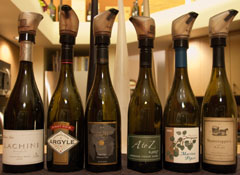
Lineup of Oregon Pinot NoirsThe other drawback to Pinot Noir is that it is a very finicky grape. While at its best it can produce dream wines, too often it isn’t close to that. There is a lot of variation from vintage to vintage even from the same producer.
I am happy to report that we would recommend five of the six wines in this tasting dinner. The big winners were the 2006 Lachini Family Estate Pinot Noir and the 2006 Argyle Reserve Pinot Noir. Both are smooth, well-balanced wines that boast bright red fruits. While oftentimes Pinots are overpriced, in my opinion, the biggest surprise in this tasting was the fact that the top five wines all have a QPR rating of either 4 or 5 bangs for your buck.

From 1st to last in the group consensus rankings:

2006 Lachini Family Estate Pinot Noir (Willamette Valley, Oregon): Pale ruby with smoke and red fruit aromas. More red fruits come through on the palate. Tastes like a cherry Jolly Rancher. Medium-bodied and lively with medium tannins and a long finish. Smooth and well-balanced. A little bigger than the others in this tasting.
Quality: 4 stars (out of 5)
QPR: 5 bangs for your buck (out of 5)
Where to buy: Esquin Wine Merchants (Seattle), $35; Binny’s Beverage Depot (Illinois), $32.99

2006 Argyle Reserve Pinot Noir (Willamette Valley, Oregon): Pale ruby and very aromatic. Strawberries and floral notes come through on both the nose and the palate. Light to medium-bodied, low to medium tannins, and a long finish. Lively, smooth, and well-balanced.
Quality: 4 stars (out of 5)
QPR: 4 bangs for your buck (out of 5)
Where to buy: Pete’s Wine Shop – Eastside (Washington), $37; Available elsewhere, $28 to $47

2006 Patton Valley Vineyard Estate Grown Pinot Noir (Willamette Valley, Oregon): Pale ruby but not as brilliant as the others. Raspberry and sweet chocolate aromas. Red fruit flavors with a hint of white pepper. Light-bodied, low to medium tannins, and a long finish. Improves with food.
Quality: 3.5 stars (out of 5)
QPR: 4 bangs for your buck (out of 5)
Where to buy: K&L Wine Merchants (California), $34; Beltramo’s Wines and Spirits (California), $31.99

2007 A to Z Wineworks Pinot Noir (Oregon): Aromas and flavors of strawberries. A bit of a dirty, earthy funk on the nose. Medium-bodied and crisp with soft tannins and a long finish.
Quality: 3 stars (out of 5)
QPR: 5 bangs for your buck (out of 5)
Where to buy: K&L Wine Merchants (California), $15; Available elsewhere, $15 to $21

2006 Cottonwood Winery Marina Piper Pinot Noir (Yamhill County, Oregon): Bing cherries and earth on the nose; red fruits and a bit fishy on the palate. Medium-bodied, crisp, low to medium-tannins, and a long finish. Smooth.
Quality: 3 stars (out of 5)
QPR: 4 bangs for your buck (out of 5)
Where to buy: Esquin Wine Merchants (Seattle), $24; DeLaVin (Washington), $29

2007 Owen Roe Sharecropper’s Pinot Noir (Oregon): Smells like a dirty mop bucket. Faint hints of red fruits come through the stinky, smoky aromas. Bitter. Improves slightly with food but still misses the mark.
Quality: 2.5 stars (out of 5)
QPR:  NR (not recommended)
Where to buy: K&L Wine Merchants (California), $24; Available elsewhere, $22 to $30


Filed under: American Wine, Five-Bangs For Your Buck Wines, Oregon Wine, Pinot Noir, Red Wine, Wine Tasting Dinners, Wines NOT To Buy (1 & 2 Star), Wines Over $25, Wines Under $20, Wines Under $25
 

Wine Word of the Week: Bud break


By Kori ~ June 23rd, 2009

Since I am hosting this month’s Wine Book Club and will be posting the roundup on Thursday, Wine Word of the Week moved to Tuesday just for this week.

Wine Word of the WeekThis week’s Wine Word of the Week is bud break.
Official definition from Jancis Robinson’s The Oxford Companion to Wine:
Budbreak, or budburst, is a stage of annual vine development during which small shoots emerge from vine buds in the spring. This process begins the new growing season and signals the end of dormancy, their period of winter sleep. The first sign that budbreak is imminent is bleeding, when the vines begin to drip water from pruning cuts. The buds left at winter pruning begin to swell in the few weeks prior to budbreak, and budbreak itself is marked by the first signs of green in the vineyard, as the first young leaves unfold and push through the bud scales.

Layman’s terms from Kori:
Bud break, when shoot growth starts and you begin to see green, marks the beginning of the annual growth cycle of the vine.


Filed under: Wine Word of the Week
 

Spotlight On: Boudreaux Cellars


By Kori ~ June 22nd, 2009

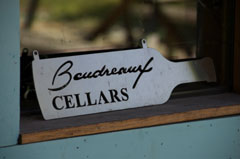
Boudreaux CellarsBoudreaux Cellars, located just outside Leavenworth, Washington, was founded by owner/winemaker Rob Newsom in 2001. A Louisiana native, Newsom has lived on the property that is home to both his log home and Boudreaux Cellars since 1981. He began making wine in his garage in 1998 and started building the winery facilities in 2001. Boudreaux currently produces about 2,000 cases per year which is exactly the production level that Newsom plans to maintain.

We first met Rob Newsom and visited Boudreaux Cellars last summer on a weekend trip to Leavenworth. Boudreaux Cellars is best known for its Cabernet Sauvignons which are excellent. We have tasted the 2005 Cabernet Sauvignon on several occasions, rating it as 4.5 stars (out of 5) two out of three times. While it is not inexpensive at $50, given its high quality rating and the high prices of other Cabs on the market, it garners a QPR rating of 5 bangs for your buck (out of 5). Recently, we had the opportunity to taste Boudreaux’s 2005 Reserve Cabernet Sauvignon as well. It is another big, powerful, and complex Cab. Though I personally prefer the regular Cab to this Reserve (tasting note below), it is another impressive effort from Newsom.

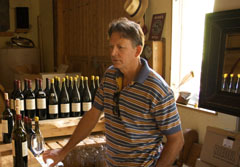
Owner/winemaker Rob Newsom of Boudreaux CellarsSince his site is not ideally suited for grape growing, Newsom sources his grapes from many different vineyards around the state. His goal is to get the best grapes from the best vineyards. In fact, most of his bottles are labeled simply Washington State and lists the vineyard sources for that particular wine. While the 2005 Cab is sourced from ten different vineyards, the 2005 Reserve Cab is sourced from only two, Champoux Vineyard in the Horse Heaven Hills and Loess Vineyard in the Walla Walla Valley.
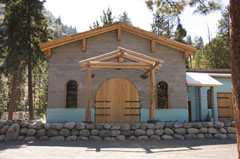
In addition to making great wines, Boudreaux boasts a spectacular setting along the Icicle River in the Cascade Mountains. Since it is located four miles off the power grid, Boudreaux is the only winery in Washington State that is completely self-powered.

Boudreaux Cellars is located in the Cascade Mountains just outside of Leavenworth, WashingtonWith his Louisiana Cajun accent and dry sense of humor, a visit with Rob Newsom is a real treat. He is a gracious host, very welcoming, and downright hilarious. He truly is one of the great personalities in the Washington wine industry.

Only open by appointment, Boudreaux is well worth a visit. If you are going to be in the Leavenworth area, be sure to call ahead to set up a time to stop by Boudreaux to sample their wines, visit with Rob, and take in the beautiful setting. And regardless of whether you are able to visit or not, be sure to try some Boudreaux wines.

2005 Boudreaux Cellars Reserve Cabernet Sauvignon (Washington State): Dark, inky purple. Smoked meats and pencil shavings come through on the nose; black fruits, chocolate, and coffee on the palate. Medium to full-bodied and bone dry with high, drying tannins. Flavorful and lively with a long finish. Still quite young; should soften with age.
Quality: 4 stars (out of 5)
QPR: 3 bangs for your buck (out of 5)
Where to buy: Received as sample, suggested retail $100; Winery, $100


Filed under: American Wine, Cabernet Sauvignon, Spotlight On, Washington State Wine