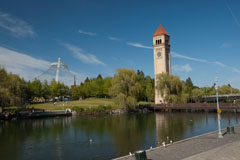
 When most people think of wine country destinations in Washington State, Walla Walla, Yakima, and Woodinville immediately come to mind. One area that I have rarely heard mentioned is Spokane and that is truly a shame. We had the pleasure to spend the long Memorial Day weekend in the Spokane area, and I must say that it is a must-visit for wine lovers. The wineries in Spokane are producing some excellent wines, are owned and run by really nice folks, and the city itself offers quite a number of other activities to make it a great wine country destination.
To be honest, I may not have ever visited if it were not for co-owner/winemaker Greg Lipsker of Barrister Winery. After reading posts about other wine country trips we’ve taken, Greg contacted me last year to encourage us to consider visiting Spokane and even offered to put together a tasting of Spokane area wineries at his facility.
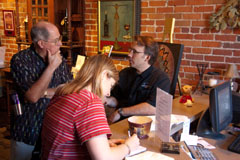
We were finally able to find time to journey to Spokane and took Greg up on his offer to coordinate a tasting. I was pleased that eleven of Spokane’s 14 wineries participated in the tasting hosted by Barrister Winery. And in most cases, the owner or winemaker was on hand to pour the wines and talk to us. It really was an excellent opportunity to get an overview of what Spokane wineries have to offer. I was impressed by the sense of community among the wineries and the fact that they work together to promote their area.
 While these wineries are located in Spokane, it is important to remember that they are getting their grapes from the same places as the wineries in the rest of the state. If you’ll notice the region listed for each wine in the list below, they include Columbia Valley, Walla Walla Valley, Yakima Valley, Red Mountain, and other AVAs throughout the state of Washington. These are the same AVAs you’ll see listed on the bottles of wineries located in Walla Walla, Yakima, and Woodinville.
Without further ado, here’s a little information about each winery whose wines we tasted. [Please note: Other than the wines that the wineries poured for us to taste, we paid all of our own expenses for this trip.]
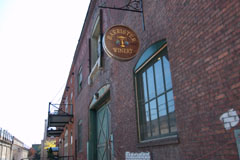
Barrister Winery was founded in 2001 by two attorney/winemakers, Greg Lipsker and Michael White. Barrister is located in a 100 year-old brick building in the historic Davenport Arts District downtown. They currently produce about 3,200 cases per year and are on their way to 4,200 cases. Of the nine of their wines that we tasted, we rated four of them as 4-star quality or better. Their 2007 Cabernet Franc which will be released in July was one of the top three wines that we tasted all day.
 Liberty Lake Wine Cellars is a community winery founded in 2005 by Doug and Shelly Smith. Located in the town of Liberty Lake just 17 miles east of Spokane near the Idaho state line, Liberty Lake Wine Cellars produces 500 cases per year and plans to stay at that level. They opened to the public in June 2008 and are now releasing their second vintage, specializing in single vineyard red wines from Red Mountain and the Walla Walla Valley. Our favorite of their wines was the Cab Franc-based 2006 Second Generation Red Wine which has an incredible aroma.
Nodland Cellars, founded by owner/winemakers Tim and Tracy Nodland, produces one red (400 cases) and one white (30-35 cases) wine each year. Their 2005 Bebop white wine is sold out so Tracy was only pouring their 2005 Private Blend red wine. Tim and Tracy started making wine at home in 1999 and opened Nodland Cellars in 2005. Their distinctive jazz band label was designed by Florida-based artist Tim Rogerson.
Vintage Hill Cellars is a small batch production winery owned by winemaker Cody George and Brian Murray. Founded in 2006, Vintage Hill produces 1,300 cases per year and hopes to ramp up production to 2,000-2,500 cases. They generally offer eight different wines each year, six of which are currently available.
Lone Canary Winery, founded by winemaker Mike Scott and vineyardists Steve and Jeanne Schaub in 2003, produces a Sauvignon Blanc, a Cuvee Rose, and red wines featuring Italian and Bordeaux varietals. Their annual production is just over 4,000 cases. Their 2005 DuBrul Vineyard Reserve (66% Merlot, 34% Cabernet Sauvignon) was one of the top three wines that we tasted. Its aromas and flavors of chocolate-covered raspberries are captivating.
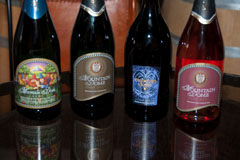 Mountain Dome Winery, located on 84 acres just outside of town in the foothills of Mt. Spokane, is the only dedicated independent sparkling wine producer in the state of Washington. Winemaker Erik Manz produces 3,500 cases per year using Pinot Noir and Chardonnay grapes in the methode champenoise or traditional method. Mountain Dome was founded in 1984 by Erik’s parents, Michael and Patricia Manz. If you are like me and have a weakness for bubbly, you’ll want to seek out Mountain Dome. Not only are their wines of high quality but all four sparkling wines we tasted have a QPR of 5 bangs for your buck. Our favorite was the NV Cuvee Forte which is truly an elegant sparkling wine and one of the top three wines that we tasted.
Robert Karl Cellars, founded in 1999 by winemaker Joseph Gunselman and his wife Rebecca, produces 2,500 cases per year using fruit exclusively from the Horse Heaven Hills. Their winery and tasting room are located in an old fire station built in 1912 in the Historic Warehouse District. Robert Karl offers six wines each year, Cabernet Sauvignon, Merlot, Syrah, Claret, Sauvignon Blanc, and a dry Cabernet Franc Rose.
Townshend Cellar, located north of Spokane in Colbert, WA, was founded in 1998 by owner/winemaker Don Townshend. An engineer by background and trade, Don got hooked on the wine business after doing an engineering job for Preston Premium Wines. He makes over twenty different wines and produces about 16,000 cases per year. Townshend Cellar offers great value; all nine of their wines that we tasted had a QPR of 4 or 5 bangs for your buck. Our favorites were the T3 Red Wine and the 2001 Cabernet Sauvignon.
Latah Creek Winery, owned by Mike and Ellena Conway, has been in business 27 years and produces about 17,000 cases per year. Our favorite of their wines was the 2006 Petit Verdot Winemaker’s Reserve Red. Petit Verdot is used more often as a blending grape rather than a stand-alone varietal, but this wine is big, bold, and very good. Latah Creek remains a family owned and operated winery with the Conway’s daughter Natalie serving as assistant winemaker since 2005.
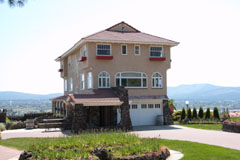 Arbor Crest Wine Cellars was founded in 1982 and produces about 20,000 cases per year. Owned by the Mielke family, Arbor Crest boasts a beautiful setting with a scenic overlook of Spokane and the surrounding area.
Grande Ronde Cellars was started by Dave Westfall, John Mueller, David Page and Michael Manz in 1997. Michael Manz of Mountain Dome oversaw the winemaking until he passed away in 2006. Now his brother, John Mueller, guides production of Grande Ronde’s 1,000 cases per year operation. Our favorite of their wines was the 2003 Cabernet Sauvignon from Seven Hills Vineyard in the Walla Walla Valley.
In addition to the eleven wineries that participated in the tasting at Barrister, we also tried to visit Caterina Winery. Despite all of their literature and even the hours posted on their door indicating that they are open daily from 12-5pm, they were closed when we arrived at 2:15pm. It was a disappointing ending to an otherwise fabulous weekend in Spokane’s undiscovered wine country.
In coming weeks, we will be doing some “Spotlight On†posts to feature Spokane wineries that we believe are doing some exciting things.
Here’s a breakdown of the wines that we tasted in Spokane. Under each Quality heading, the wine name and region will be listed along with price and QPR rating. Wines in bold type received a QPR rating of 5 bangs for your buck (out of 5).
Quality: 4.5 stars (out of 5)
2007 Barrister Cabernet Franc, Columbia Valley, $27, QPR: 5
NV Mountain Dome Cuvee Forte (sparkling), Washington State, $32, QPR: 5
2005 Lone Canary DuBrul Vineyard Reserve, Yakima Valley, $34.95, QPR: 5
Quality: 4 stars (out of 5)
NV Lone Canary Bird House Red, Columbia Valley, $14.95, QPR: 5
2001 Townshend Late Harvest Chenin Blanc, Yakima Valley, $18 [375ml], QPR: 5
NV Townshend T3 Red Wine, Columbia Valley, $19.95, QPR: 5
2004 Mountain Dome Brut (sparkling), Washington State, $22, QPR: 5
2003 Grande Ronde Cabernet Sauvignon Seven Hills Vineyard, Walla Walla Valley, $27, QPR: 5
2001 Townshend Cabernet Sauvignon, Columbia Valley, $27.95, QPR: 5
2005 Barrister Cabernet Sauvignon Bacchus Vineyard, Columbia Valley, $32, QPR: 5
2005 Barrister Cabernet Sauvignon, Red Mountain, $32, QPR: 5
2003 Townshend Cabernet Franc, Columbia Valley, $25, QPR: 4
2006 Barrister Cabernet Franc, Columbia Valley, $27, QPR: 4
2006 Latah Creek Petit Verdot Winemaker’s Reserve Red, Washington State, $29.99, QPR: 3
Quality: 3.5 stars (out of 5)
NV Townshend Red Table Wine, Columbia Valley, $10.95, QPR: 5
2007 Townshend Chardonnay, Columbia Valley, $10.95, QPR: 5
NV Mountain Dome Brut (sparkling), Washington State, $14, QPR: 5
2007 Lone Canary Sangiovese, Wahluke Slope, $17.95, QPR: 5
NV Mountain Dome Brut Rose (sparkling), Washington State, $22, QPR: 5
2007 Lone Canary Barbera, Wahluke Slope, $17.95, QPR: 4
2006 Liberty Lake Second Generation Red Wine, Red Mountain, $18.50, QPR: 4
2005 Townshend Syrah, Columbia Valley, $19.95, QPR: 4
NV Barrister Rough Justice Red Blend, Columbia Valley, $20, QPR: 4
2005 Grande Ronde Cellar Red, Walla Walla Valley, $20, QPR: 4
2006 Robert Karl Claret, Horse Heaven Hills, $20, QPR: 4
2002 Townshend Merlot, Columbia Valley, $23, QPR: 4
2005 Barrister Merlot, Red Mountain, $25, QPR: 4
2006 Vintage Hill Merlot, Washington State, $25, QPR: 4
2003 Grande Ronde Merlot Seven Hills Vineyard, Walla Walla Valley, $27, QPR: 4
2005 Robert Karl Cabernet Sauvignon, Horse Heaven Hills, $30, QPR: 4
2007 Vintage Hill Sauvignon Blanc, Wahluke Slope, $15, QPR: 3
2006 Barrister Syrah Morrison Lane Vineyard, Walla Walla Valley, $28, QPR: 3
2006 Liberty Lake Syrah, Red Mountain, $28, QPR: 3
2007 Robert Karl Syrah, Horse Heaven Hills, $30, QPR: 3
2005 Nodland Private Blend Red Wine, Columbia Valley, $35, QPR: 2
Quality: 3 stars (out of 5)
2006 Arbor Crest Cabernet Sauvignon, Columbia Valley, $20, QPR: 5
NV Townshend White Table Wine, Columbia Valley, $10.95, QPR: 4
2007 Latah Creek Chardonnay, Washington State, $11.99, QPR: 4
2005 Liberty Lake Cabernet Sauvignon, Walla Walla Valley, $22, QPR: 4
2006 Liberty Lake Merlot, Red Mountain, $22, QPR: 3
2005 Arbor Crest Cabernet Sauvignon Klipsun Vineyard, Red Mountain, $32, QPR: 3
2008 Robert Karl Sauvignon Blanc, Horse Heaven Hills, $15, QPR: 2
2006 Barrister Merlot Dwelley Vineyard, Walla Walla Valley, $25, QPR: 2
2008 Barrister Sauvignon Blanc Klipsun Vineyard, Red Mountain, $19, QPR: 1
Quality: 2.5 stars (out of 5)
2007 Latah Creek Riesling, Washington State, $8.99, QPR: NR
NV Latah Creek Huckleberry d’ Latah, Washington State, $9.99, QPR: NR
2005 Latah Creek Natalie’s Nectar Sweet Syrah, Washington State, $14.99, QPR: NR
2008 Robert Karl Cabernet Franc Rose, Horse Heaven Hills, $15, QPR: NR
2006 Arbor Crest Merlot, Columbia Valley, $18, QPR: NR
NV Latah Creek Vinosity Red Blend, Washington State, $19.99, QPR: NR
Quality: 2 stars (out of 5)
2006 Arbor Crest Chardonnay, Columbia Valley, $18, QPR: NR


 Wine Peeps is an independent wine blog dedicated to helping you get the most bang for your buck in wine. We do this through blind tastings of wine from around the world and calculations of
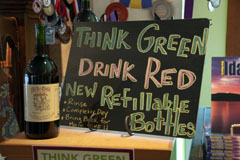 We learned that since February, their popular Bistro Rouge Red Table Wine has been available in a refillable 1.5 liter bottle. You buy the first 1.5 liter bottle, sealed with a cork, for $25; then refills, sealed with a T-stopper, are $16 thereafter. The idea came from co-proprietor Julie Meyer who was frustrated seeing glass from Sandpoint getting reintegrated into other solid waste after being sorted by residents and ultimately disposed of at a landfill in Eastern Oregon.

 This week’s Wine Word of the Week is malolactic fermentation.
 Looking out my window, I see the sun shining, the lake glistening, and a slight breeze blowing. Summer is officially upon us. And what is the perfect beverage to enjoy on a hot summer day? For us wine lovers, this is the time of year when we turn our attention to rosé wines. In fact, many wineries only make small quantities of rosé wines to be released during the summer months. When you pour that chilled glass of rosé and head for your deck to relax in the beautiful weather, why not take along a book to read, a book about rosé no less, and join us for this month’s Wine Book Club.
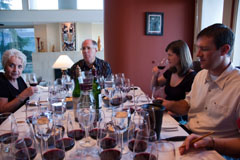 Last Friday evening was a gorgeous, sunny summer evening here in Seattle. It was the perfect night to gather with friends to enjoy a fabulous meal and good wines for one of our monthly
 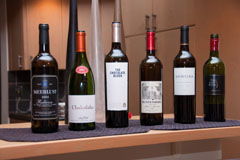 Interestingly, the two wines that came out on top in the group consensus rankings were from the two wineries in South Africa where Dad did video interviews:
 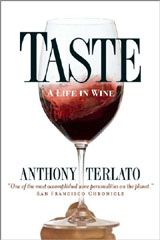 Anthony Terlato is chairman of Terlato Wines International and Terlato Wine Group and has been involved in the wine industry for over 50 years. Formerly known as Paterno Imports, Terlato Wines International is one of the leading importers and marketers of fine wines from around the world in the United States. Over the years, Terlato has played a very important part in introducing fine Italian wines to America.
 This week’s Wine Word of the Week is lees.
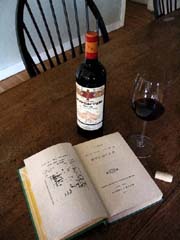 Thank you for joining us for the May “virtual meeting†of the Wine Book Club. Many thanks to Dr. Debs of
  Passion on the Vine is a well-written memoir that makes you feel as if you are sitting at the table with the Esposito family, eating a scrumptious meal prepared with local ingredients and enjoying local wine. And by the way, the meal could last up to four or six hours.
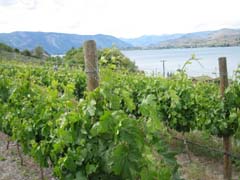 Lake Chelan is the second AVA established in Washington State this year. Snipes Mountain officially became an AVA in February. Lake Chelan, a 3-hour drive east from Seattle, has been a popular tourist destination for years especially during the summer months when visitors flock there to enjoy the sunshine and recreation around the lake.
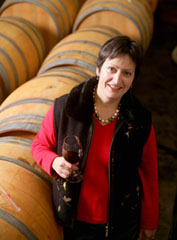 Marie-Eve Gilla, part owner and winemaker for
 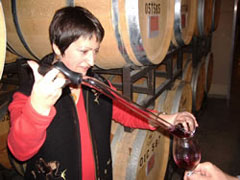 Do you believe a woman has certain built-in traits than can make her a better winemaker than a man? If so, please explain.


