Wine Word of the Week: Aroma


By Kori ~ May 7th, 2009

Wine Word of the WeekThis week’s Wine Word of the Week is aroma.

Official definition from Jancis Robinson’s The Oxford Companion to Wine:
Aroma is an imprecise tasting term for a relatively simple smell such as that of a grape, fermenting must, or young wine. Originally from the Greek word meaning ‘spice’, it has evolved so that in generally current English it means ‘pleasant smell’ (as opposed to odors, which may be distinctly nasty). Wine-tasting professionals tend to use the word aroma to distinguish the smells associated with young wines from the more complex aromatic compounds which result from extended bottle age, generally referred to as bouquet.

Layman’s terms from Kori:
While some wine tasting professionals make a distinction between aroma and bouquet as does Ms. Robinson, generally the term aroma simply describes the flavor sensation that comes from sniffing a wine.

__________________

IN OTHER NEWS:

The Wine Century Club turns 4 today! We’ll be raising a glass of a new-to-us variety to celebrate. Come back on Tuesday for a recap.


Filed under: Wine Century Club, Wine Word of the Week
 

Texas Wine Country 2009, Part One


By John ~ May 6th, 2009

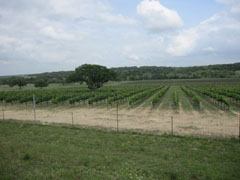
Driftwood Estate Winery vineyardsRegular readers may remember that I visited several wineries in the Texas Panhandle about a year ago. Prior to last year, I had not been impressed at all with the Texas wineries I had visited. However, based on my limited sampling last year, I wanted to make a more comprehensive survey of Texas wines and wineries on this trip, revisiting several of the wineries from six or seven years ago as well as a number that I had not previously visited. Quite frankly, those wineries had not shown me much in 2002. So far, our experience this time has been much better.

You might be surprised to know that Texas is America’s #5 grape and wine producing state, according to a survey in 2007 by MKF in conjunction with the Texas Wine and Grape Growers and Texas Tech University, behind only California, Washington, Oregon, and New York. Texas now has over 120 wineries that produce over $1 billion in revenue annually.

So far on this visit to Texas, we have visited twelve wineries, one near College Station and eleven in the Texas Hill Country near Austin. Of the twelve, Becker Vineyards, Driftwood Estate Winery, and Texas Hills Vineyard have stood out above the rest both in quality and in value (QPR) as you will see in our tasting summary below.
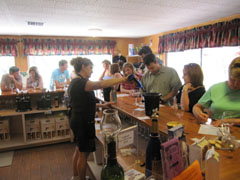
Driftwood Estate Winery tasting roomAs you might expect in Texas, most of the tasting room personnel have been very hospitable, although most of the Texas wineries we have visited have tasting fees and they are rarely refundable with a purchase, which rubs me the wrong way.

One thing we learned last year is that Texas wineries do not necessarily produce all of their wines from Texas grapes. Some use New Mexico and/or California grapes in addition to Texas grapes. In the tasting summary, I will note the wines that are not made with Texas grapes.

Here’s a breakdown of the wines that we tasted. Under each Quality heading, the wine name will be listed along with price and QPR rating. Wines in bold type received a QPR rating of 5 bangs for your buck (out of 5).

Quality: 4 stars (out of 5)
2006 Driftwood Estate Syrah, $18, QPR: 5
2007 Becker Vintage Port, $21.95, QPR: 5
2007 Texas Hills KICK BUTT Cab, $25, QPR: 5

Quality: 3.5 stars (out of 5)
2005 Texas Hills KICK BUTT Cab, $17.50, QPR: 5
2006 Driftwood Estate Super Texan (88% Sangiovese, 12% Merlot), $18, QPR: 5
2006 Driftwood Estate Lone Star Cab, $18, QPR: 5
2006 Texas Hills Port Rubino, $19.95, QPR: 5
2006 Becker Reserve Cabernet Sauvignon, $24.95, QPR: 5

2007 Becker Chenin Blanc, $12.95, QPR: 4
2007 Becker Claret, $16.95, QPR: 4
2007 Becker Prairie Rotie, $16.95, QPR: 4
2007 Texas Hills Syrah, $19.95, QPR: 4
2007 Woodrose Zinfandel, Willmuth Vineyards, $21.95, QPR: 4
2007 Mandola Estate Zinfandel, $24, QPR: 4
NV Grape Creek Port, $29.95, QPR: 4
2006 Woodrose Tawny Port (CA & TX grapes), $29.95, QPR: 4
2005 Texas Hills Orange Moscato, $17.50, QPR: 3
2007Grape Creek Cabernet/Syrah, $26.95, QPR: 3
2005 Torre di Pietra Claret, $27.95, QPR: 3
NV Torre di Pietra Tango Port (Primitivo), $49.95, QPR: 3
2007 Pedernales Stonewall Viognier, $18.00, QPR: 2
NV Torre di Pietra Rosa Flamenco, $18.95, QPR: 2
2007 Pedernales Cellars Family Reserve, $49.00, QPR: 1

Quality: 3 stars (out of 5)
2004 Texas Hills Cabernet Sauvignon, $14.95, QPR: 5
2002 McReynolds Wines Cabernet Sauvignon, $15, QPR: 5

2005 Texas Hills Syrah, $13.95, QPR: 4
2006 Driftwood Estate Longhorn Red, $18, QPR: 4
NV Fredericksburg Bach Burgundy, $18.95, QPR: 4
2007 Pedernales Cellars Cabernet Sauvignon, $25.00, QPR: 4
2007 Driftwood Estate Dry Rose (CA grapes), $12, QPR: 3
2008 Becker Viognier, $14.95, QPR: 3
NV Torre di Pietra Texas Dirty Girl, $18.95, QPR: 3
2007 Grape Creek Merlot, $19.95, QPR: 3
2006 McReynolds Wines Merlot, $20, QPR: 3
2005 Messina Hof Private Reserve Cabernet Franc, $22, QPR: 3
2006 Messina Hof Private Reserve Tex-Zin, $22, QPR: 3
2006 Grape Creek Bellissimo (NM grapes), $24.95, QPR: 3
2007 Mandola Estate SPINO’-Montepulciano, $26, QPR: 3
2008 Grape Creek, Pinot Grigio (CA grapes), $16.95, QPR: 2
2007 Mandola Estate Canto Felice, $18, QPR: 2
2005 Fredericksburg Merlot, $24.95, QPR: 2
2006 Woodrose Merlot, Hendericks Vineyards, $24.95, QPR: 2
NV Torre di Pietra Porto Blanco, $49.95, QPR: 2
NV Torre di Pietra Red Flirt (Cab/Syrah), $18.95, QPR: 1
2008 Driftwood Estate Cuve Blanc, $20, QPR: 1
2007 Torre di Pietra Texas Chenin Blanc, $21.95, QPR: 1
2008 Torre di Pietra Blanc du Bois, $21.95, QPR: 1
2008 Woodrose Texas Rain (Rose), Tanglewood Vineyards, $21.95, QPR: 1
2007 Woodrose Three Dog White (TX & CA grapes), $21.95, QPR: 1
2006 Torre di Pietra Mataro (Mourvedre), $24.95, QPR: 1
2007 TORO di Tejas (Tempranillo), $25, QPR: 1
2003 Fredericksburg Texitage, $34.50, QPR: 1
2006 Grape Creek Mosaic (CA grapes), $36.95, QPR: 1

Quality: 2.5 stars (out of 5)
2006 Driftwood Estate Merlot (CA grapes), $12, QPR: NR
2007 Texas Hills Pinot Grigio, $14.95, QPR: NR
2005 McReynolds Wines Chardonnay, $15, QPR: NR
2002 McReynolds Wines Merlot, $15, QPR: NR
2008 Pedernales Cellars Garnacha Rose, $15.00, QPR: NR
2008 Grape Creek Cuvee Blanc, $16.95, QPR: NR
2006 Mandola Estate Viognier, $18, QPR: NR
2006 Grape Creek Cabernet Trois (CA grapes), $18.95, QPR: NR
NV Torre di Pietra Classico, $18.95, QPR: NR
2004 Fredericksburg Rose of Cab, $19.95, QPR: NR
2008 Pedernales Cellars Vino Blanco, $20.00, QPR: NR
2007 Woodrose Seven (66% Cab, 34% Sangiovese, CA grapes), $21.95, QPR: NR
2005 Messina Hof Private Reflections (60% Cab Franc), $22, QPR: NR
2008 Woodrose Blanc du Bois, Tanglewood Vineyards, $23.95, QPR: NR
2007 Mandola Estate Dolcetto, $26, QPR: NR
2007 Woodrose Cabernet Sauvignon-Syrah, $26.95, QPR: NR
2007 Woodrose Sauvignon Blanc Reserve (CA grapes), $28.95, QPR: NR
2007 Pedernales Cellars Tempranillo, $29.00, QPR: NR
2005 Torre di Pietra Sangiovese, $29.95, QPR: NR
2005 Torre di Pietra Touriga Nacional, $39.95, QPR: NR

Quality: 2 stars (out of 5)
2004 McReynolds Wines Merlot (76% Merlot, 24% Sangiovese), $10, QPR: NR
2004 Cinque Vino Rosso, $12.95, QPR: NR
NV Fredericksburg Corderillas, $15.95, QPR: NR
2007 Grape Creek Viognier, $16.95, QPR: NR
2005 Torre di Pietra Carignane, $18.95, QPR: NR
NV Fredericksburg F & N, $18.95, QPR: NR
2007 Texas Hills Rousanne, $19.95, QPR: NR
2005 Messina Hof Private Reserve Cabernet Sauvignon, $22, QPR: NR
2007 Mandola Estate Sangiovese, $24, QPR: NR
2007 Woodrose Wicked Red (TX & CA grapes), $27.95, QPR: NR


Filed under: American Wine, Cabernet Franc, Cabernet Sauvignon, Chenin Blanc, Five-Bangs For Your Buck Wines, Lesser Known Varietals, Merlot, Port, Roussanne, Sangiovese, Shiraz/Syrah, Tempranillo, Texas Wine, Viognier, Wines Under $15, Wines Under $20, Wines Under $25
 

Women of Washington Wine: Bergevin Lane


By Kori ~ May 4th, 2009

Today’s post is the first in a new series featuring the Women of Washington Wine. In an industry once dominated by men, more and more women are joining the ranks as winery owners, vineyard owners, and winemakers. Being a woman myself, I am fascinated by these women and what they have done and continue to do. Through this series, I hope to introduce you to some of the brightest female faces in the Washington wine industry.

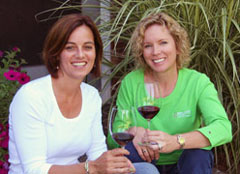
Annette Bergevin and Amber LaneAnnette Bergevin and Amber Lane, along with Annette’s father Gary, founded Bergevin Lane Vineyards in 2001. Located in downtown Walla Walla, Washington, Bergevin Lane officially opened its doors in 2003 in a 20,000 square foot facility. Their current production level is 7,500 cases per year but they have the capacity to increase production significantly in the future.
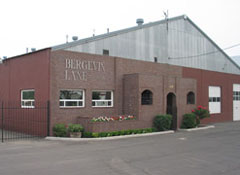
Recently, I had the pleasure to meet Annette Bergevin during the Taste Washington weekend. She was kind enough to take time out of her busy schedule to answer some questions for me and our Wine Peeps readers.

Highlights from Q&A with Annette Bergevin:

How did you first get involved in the wine business?
I was living in the Bay Area and traveled home to Walla Walla often. When I came home we would get in my dad’s car and we could visit all of the wineries in an afternoon. Today it takes at least four days to visit all the wineries! I was looking for a way to move back home and my dad was involved in the business and it was a very easy decision.

What were the steps that led to where you are now?
We put one foot in front of the other and Ka-pow! First we put together our business and marketing plans. It was like we were standing on the edge of a high dive and we just jumped. Once we were mid-air there was no turning back. We sold our home, bought a new home in Walla Walla, put our business plan in action, put together our fruit contracts, found a home for our production facility and then came crush. The same day as our last bit of juice from crush went into barrel I had a new little girl! Needless to say, there was a lot of action going on in 2002!

Has being a woman been an advantage or a disadvantage in your wine journey? Please explain.
We focus on our wine, making really good wine and coming up with ways to have fun as we work really hard to sell our wine. We have some advantages just because there are not a lot of women winery owners and/or winemakers out there so we are selected for fun “women focused” events. When we’re out picking up fruit, we strap the bins down ourselves; we drive the forklift and lift our own cases. I’m not sure if we are taken as seriously as men but we believe that is changing.

Bergevin LaneDo you believe a woman has certain built-in traits than can make her a better winery owner than a man? If so, please explain.

We think a good winery owner, man or woman, is committed to excellence, is energetic, enjoys working with people, is entrepreneurial and is self motivated. We do not see it as one being better than the other. We believe it is good to have balance in life so having women in the wine industry adds a little “balance”! We do run across folks at wine tastings who are surprised that we own the winery. They will say, “So, do you work in the tasting room?” or something like that. We typically answer, “yes, and we answer phones, and if needed we sweep floors…then it is kind of fun to add, and we manage the entire operation as well.” We work hard and it is kind of cool to be able to say it is “our baby!” To give credit where credit is due, we have a wonderful team at Bergevin Lane from our back office to our production team that helps us do what we do!

Do you use the fact that you are a woman to promote your wines? If so, how?
We do like to include in our marketing materials that we are women managed. It can help set us apart from other wineries. We hope to be an example for young women out there who are interested in getting into areas that for many, many years have been predominately male dominated.

What advice do you have for a woman wanting to get involved in the wine business today?
Have a strong business and marketing plan. If you are starting a winery have your funding in place and prepare yourself to work super hard. Surround yourself with knowledgeable industry folks. Know your strengths and weaknesses and make sure your team includes folks who can compliment your weaknesses. Go for it!

In recent years the Washington wine industry has grown at a rapid rate. Do you expect that trend to continue?
That’s a really good question because we would have thought that the growth would level out somewhat during these crazy economical times however we keep hearing about folks jumping on board. Wineries will have to have good distribution channels to move all the wine out there.

What is your vision for the future of Bergevin Lane Vineyards?
The sky is the limit. We look forward to making better and better wines.  We’ll work hard to maintain market driven growth and we hope to have that super high scoring wine. It doesn’t necessarily have to be the wine critic score, although we wouldn’t complain, but we want to make “that bottle of wine” that stays on your mind, that you continue to think about for years after trying it. The one that makes you close your eyes, roll your head back and smile and makes you think wow and say, “Remember that Bergevin Lane Wine we enjoyed, if only we had one more bottle….”

(Photos from Bergevin Lane)


Filed under: American Wine, Interview, Washington State Wine, Women of Washington Wine
 

Book Review: Secrets of Wine


By John ~ May 1st, 2009

Secrets of Wine by Giles KimeSecrets of Wine by Giles Kime is the wine book in the “52 Brilliant Ideas” book series. It’s an easy read in a very approachable format. I believe it’s a book for someone just past the wine novice stage who is looking to explore beyond just the old standards like Chardonnay and Merlot.

Author Giles Kime was editor of Decanter magazine and wrote the wine column for the Sunday Telegraph (UK). He is now deputy editor of Homes & Gardens magazine. The basic premise of the book is that the only way you will deepen your understanding of wine is through extensive tasting. He says that great tasters are not necessarily people who have been born with a special gift; they are simply people who have had the opportunity to taste a lot of wine, preferably in large flights, so that comparisons can be easily made.

Each of the 52 short chapters contains a specific theme, an “idea for you,” “try another idea,” a “defining idea,” and a “how did it go” section in a Q&A format. It gets right to the point and is an easy book to put down tonight and pick up tomorrow without rereading a lot.

As the book says, “one good idea can change your life.” I believe that you will find more than one good idea in this book. For example, in idea 52, Kime says the more that you taste the more you’ll begin to realize that some expensive wines can taste like battery acid and some cheap wines like nectar. The key is tasting enough different wines to find that good value nectar.

Have you already read Secrets of Wine? If so, what did you think of it?

Cheers!


Filed under: Wine Books
 

Wine Word of the Week: Racking


By Kori ~ April 30th, 2009

Wine Word of the WeekThis week’s Wine Word of the Week is racking.
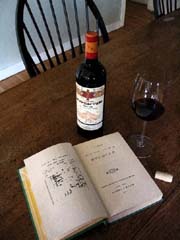
Official definition from Jancis Robinson’s The Oxford Companion to Wine:
Racking is the wine-making operation of removing clear wine from the settled sediment or lees in the bottom of a container. The verb to rack has been used thus at least since the 14th century.

Racking is usually achieved by pumping or siphoning the wine away from the sediment into an empty container but special large racking tanks are used by some large wineries (and breweries). ….

Racking, or soutirage as it is known in French, forms an important part of the annual cycle of cellar work, or elevage, in the production of most fine wines matured in small barrels. ….

Racking is not only part of the clarification process, it also provides aeration, which, in the case of red wines, is essential to the formation of pigmented tannins and is beneficial to the sensory properties of the wine.

Layman’s terms from Kori:
Racking is the process of moving a wine off its sediment or lees.


Filed under: Wine Word of the Week
 

Wine Book Club: The Science of Wine


By Kori ~ April 29th, 2009

Wine Book ClubThank you for joining us for the April “virtual meeting” of the Wine Book Club. Many thanks to Dr. Debs of Good Wine Under $20 who originally proposed the idea for the WBC where bloggers and wine lovers come together for book reviews and discussions after reading a selected text. When Dr. Debs announced The Science of Wine: From Vine to Glass by Jamie Goode as this month’s Wine Book Club selection, I headed to our storage room once again to find the copy that I had purchased in April 2006 shortly after it was released.
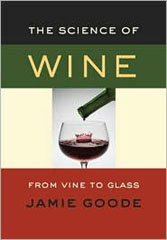
Fortunately, I have a habit of highlighting, dog-earing pages, and making notes in the margins as I read a book that makes it easy for me to review and recall what I liked and didn’t like. The first thing I noticed is that I didn’t have as many pages dog-eared in this book as I normally do.

While I found this book to be a good overview of the science of making wine, it is not the easiest read. If you are in the wine business or studying for a wine certification, this book compiles some very esoteric arguments on various topics in an organized way. It is certainly nice to find all of these topics in one book rather than having to Google all over the internet. However, this book is way too complex for beginners or people who don’t really care about some of the factors that affect the taste and quality of wine; they just want to drink good wine.

Some of the topics that caught my attention and might be of interest to you:

  • The question of terroir.

“The French feel they have ownership of terroir, but in good winemaking the idea is universal.” –Charlie Melton, Barossa wine-grower

  • Climate change implications for wine.

“It appears that the currently cool-climate regions would benefit the most. If the climate warms as the models predict, then these regions will be better able to ripen the fruit and may even be able to consider other varieties that could not ripen there today.” –Dr. Gregory Jones

  • The Science of Wine: From Vine to Glass by Jamie GoodeIs alcohol reduction a sin?

“Today the central debate about reverse osmosis and other high-tech wine-production innovations is not about whether they work; it is about whether winemakers will go to hell if they use them.” –Clark Smith

“There are some great old-vine vineyards in the New World that were planted in areas that are perhaps too warm for the grapes to arrive at optimal flavor/alcohol balance. One makes a better wine by picking the grapes riper and taking a little alcohol out of them than by picking them earlier.” –Randall Grahm, California winemaker

  • The effects of sulphur dioxide on wine consumers.

“ …many foodstuffs contain higher levels of sulphites than wine, with the worst offenders being dried fruits, which typically contain 1,000 ppm—about ten times the level in wine.”

  • Which wine bottle closure is best?

“There is, as yet, no perfect closure. Instead winemakers have to choose the closure that best suits their objectives. The data would seem to suggest that synthetic corks are the least effective closure….”

Author Jamie Goode, a London-based wine writer, obviously knows his stuff, but I believe that this book probably has a fairly limited audience. However, if you’d like to learn more about some of the topics I’ve mentioned, grab a copy today as this book can be a good resource.

Have you already read The Science of Wine: From Vine to Glass? If so, please leave a comment and let us know what you thought of it.

For those of you who would like to read along with us in the Wine Book Club, the May selection is Passion on the Vine: A Memoir of Food, Wine, and Family in the Heart of Italy by Sergio Esposito.

Cheers!


Filed under: Wine Book Club, Wine Books
 

Private Tasting: Washington Rhone-Style Blends


By Kori ~ April 27th, 2009

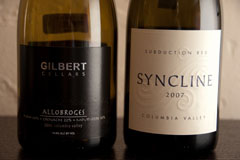
2006 Gilbert Cellars Allobroges and 2007 Syncline Subduction RedThe Rhone Valley in France is divided into two parts, appropriately referred to as the northern Rhone and the southern Rhone. While the northern Rhone produces mostly single varietal wines, the southern Rhone is known for producing blends. The most famous AOC in the southern Rhone is Chateauneuf-du-Pape which is well-known for its Grenache-based blends, many of which are GSM’s (Grenache-Syrah-Mourvedre blends).
Some of our favorite Syrah producers in Washington State are now producing blends similar to those produced in the southern Rhone. However, while the southern Rhone blends usually contain more Grenache than any other variety, the two Washington Rhone-style blends we had in this private tasting are Syrah-based.

When we visited Gilbert Cellars last summer, one of the barrel samples we tasted was an SGM (Syrah-Grenache-Mourvedre blend) that Sean Gilbert was considering calling Allobroges as a nod to its Rhone inspiration. We thought it was very good so recently when I saw the 2006 Gilbert Cellars Allobroges on an end cap display while grocery shopping at Fred Meyer, I picked up a bottle.

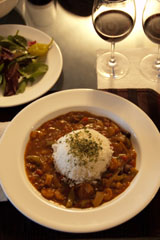
Shrimp EtouffeeA few days later when shopping at Pete’s Wine Shop in Bellevue, I came across a bottle of the 2007 Syncline Subduction Red. It is an SMG (Syrah-Mourvedre-Grenache blend) with some Cinsault and Counoise thrown in as well. So in typical Wine Peeps fashion, I bought a bottle, brought it home, and sacked it up along with the Gilbert Allobroges, and put them into our private tasting lineup. For a more complete description of how we set up these private tastings, please refer to How We Taste.
The other night we had what turned out to be this Washington Rhone-style blends showdown. They paired extremely well with our spicy dinner of shrimp etouffee and a mixed green salad with pepperocinis. The Gilbert Allobroges was even better than we had thought when we tasted the barrel sample, and the Syncline Subduction Red was good as well. We liked both of these wines but all four of us preferred the Gilbert Allobroges. And with a QPR of 5 bangs for your buck, the Allobroges is a great buy to boot!

2006 Gilbert Cellars Allobroges (Columbia Valley, Washington): 60% Syrah, 22% Grenache, 18% Mourvedre. Deep red with dark fruit aromas. Dark fruits, pomegranate, and a hint of pepper come through on the palate. Medium-bodied with soft tannins. Smooth and well-balanced with a long finish.
Quality: 4 stars (out of 5)
QPR: 5 bangs for your buck (out of 5)
Where to buy: Fred Meyer (Seattle), $21.99; Winery, $24

2007 Syncline Subduction Red (Columbia Valley, Washington): 35% Syrah, 21% Mourvedre, 16% Grenache, 15% Cinsault, 13% Counoise. Deep red and very aromatic. Strawberries and raspberries on the nose lead to more red fruit flavors. Has a vegetal component on the finish along with some dark plums. Medium-bodied with low to medium tannins. Smooth with a medium finish.
Quality: 3.5 stars (out of 5)
QPR: 4 bangs for your buck (out of 5)
Where to buy: Pete’s Wine Shop – Eastside (Seattle area), $16.69; Available elsewhere, $18


Filed under: American Wine, Five-Bangs For Your Buck Wines, Grenache, Mourvedre, Red Wine, Shiraz/Syrah, Washington State Wine, Wines Under $20, Wines Under $25
 

Will you love me in the morning? (Is a wine better the second day?)


By John ~ April 24th, 2009

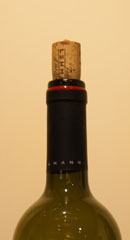
Cork in bottle. Waiting for the second day.How often have you opened a bottle of wine that was great the night you opened it, but fell flat on its face when you tried the rest of the bottle the next day? What about the flip side, a bottle that was just okay the first night but you loved it the second day? What’s going on here?
Wine changes the moment you open the bottle due to exposure to air. Obviously, the best of all worlds is a bottle that’s great tonight, but you love it even better in the morning (or more likely tomorrow evening). A wine that’s better the second day is usually a wine that will age well. A wine that has really dropped off overnight is a wine that is best consumed young.

One value label I’ve found that fits the profile of more love the second day is Penfolds Koonunga Hill from Australia. These are $8 wines and both their Shiraz Cabernet and Cabernet Sauvignon will often last 15 to 20 years.

Since we returned from our South African wine journey, I’ve discovered another $8 gem that might age better than you would think, the 2005 MAN Vintners Cabernet Sauvignon from South Africa’s Coastal Region.  The first day we tasted it we gave it a decent Quality Rating of 3.5 stars (out of 5). The second and even third day I loved it more and more, a clear 4 stars.

In sum, decanting young wines, and then tasting them the next day to see if you still love them, or even love them more, is the best way I know to determine how well they might age. That way you can decide whether it makes sense to buy a case to drink over the next 5 or 6 years, or whether to buy just another bottle or two to drink now.


Filed under: Australian Wine, Cabernet Sauvignon, General Wine Information, Red Wine, Shiraz/Syrah, South African Wine, Wines Under $10, Wines Under $15, Wines Under $20, Wines Under $25
 

Wine Word of the Week: Capsule


By Kori ~ April 23rd, 2009

Wine Word of the WeekThis week’s Wine Word of the Week is capsule.
Official definition from Jancis Robinson’s The Oxford Companion to Wine:
Capsule is the French and occasional English name for the sheath over the top of a cork and bottle-neck, otherwise known as a foil, just as a capsule cutter is more widely known as a foil cutter.

Layman’s terms from Kori:
Capsule is the foil that covers the cork and neck of a wine bottle.


Filed under: Wine Word of the Week
 

Private Tasting: New Zealand Unoaked Chardonnay


By Kori ~ April 22nd, 2009

Recently, we had one of our double-blind private tastings. When we sat down for our dinner, all we knew were that the two wines in front of us were white, but we did not know their region of origin or varietal. For a more complete description of how we set up these private tastings, please refer to How We Taste.

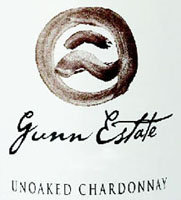
Gunn Estate Unoaked ChardonnayWhile we thought both wines were good, all four of us slightly preferred one over the other. When we finished eating and pulled off the sacks to reveal what we had been drinking, we found two unoaked Chardonnays from New Zealand. The 2006 Gunn Estate Unoaked Chardonnay beat the 2007 Kim Crawford Unoaked Chardonnay.

While we had tasted a previous vintage of the Kim Crawford Unoaked Chardonnay, we had not previously had the Gunn Estate. I learned about it from reading Gary Vaynerchuk’s 101 Wines book in which the 2007 vintage was his #86. Since we have long been fans of New Zealand wines but have not been very big fans of Chardonnay, I thought it would be fun to put two unoaked Chardonnays from New Zealand in our private tasting lineup to see what we thought of them when we did not know what we were drinking.

“I think Chardonnay, more than any other wine, got totally out of control with its oak monster. Far too often, the oak monster comes in, smashes all the fruit flavors and freshness, and leaves this wine tasting like a splintered two-by-four. So, I’m really passionate about this whole movement for unoaked Chardonnay.” –Gary Vaynerchuk, Gary Vaynerchuk’s 101 Wines

I could not have said it better myself. I want to like Chardonnay; I really do. But I do not enjoy tasting a wine that makes me think I am licking an oak tree or sucking on a stick of butter. For that very reason, I am excited that more and more wineries are producing unoaked Chardonnays.

Both of these unoaked Chardonnays are nice white wines that are worth a try if you see them on the shelf at your local wine shop. And with a Quality rating of 3.5 stars and a QPR of 5 bangs for your buck, the Gunn Estate is a great buy.

2006 Gunn Estate Unoaked Chardonnay (East Coast, New Zealand): Straw yellow with green apple aromas and dried apricot flavors. Medium-bodied and smooth. Well-balanced. Good with or without food.
Quality: 3.5 stars (out of 5)
QPR: 5 bangs for your buck (out of 5)
Where to buy: K&L Wine Merchants (California), $12.99; Bottlenotes (California), $18.00

2007 Kim Crawford Unoaked Chardonnay (New Zealand): Straw yellow. Pears come through on both the nose and palate. Minerality present on the mid-palate. Lively and flavorful but has a slight fizz I could have done without.
Quality: 3 stars (out of 5)
QPR: 4 bangs for your buck (out of 5)
Where to buy: Fred Meyer (Seattle), $16.49; Available elsewhere, $11 to $22


Filed under: Chardonnay, Five-Bangs For Your Buck Wines, New Zealand Wine, White Wine, Wines Under $15, Wines Under $20, Wines Under $25