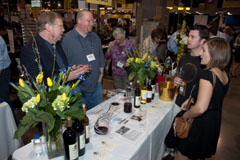
 The tagline used by the Washington Wine Commission to describe Taste Washington is “the ultimate wine experience.†That phrase definitely sums up this past weekend. Taste Washington is a wine and food lover’s paradise.
The festivities kicked off on Friday with the Washington Wine Restaurant Awards, picked up steam on Saturday with Education Day, and launched into overdrive on Sunday when the doors opened at 2pm for the Grand Tasting.
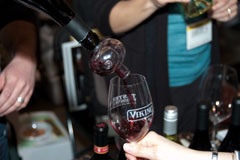 The Grand Tasting is the showcase event of Taste Washington. This year was the biggest and best one yet with over 200 wineries pouring their wines and over 60 restaurants serving small bites. With 602 wineries now open in the state of Washington, this event offers attendees the opportunity to try a large number of them in one place at one time. Considering the time and gas money you save not having to crisscross the state visiting tasting rooms and making appointments, the $125 for VIP tickets or $85 for general admission tickets is money well spent. Now, don’t get me wrong, once you attend an event like this and discover some favorite new wines and wineries, you will definitely want to make plans to travel to the wineries to visit and taste again. There is nothing like spending a long weekend in Washington wine country.
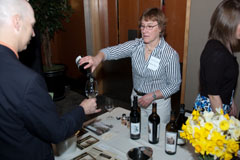 With 200+ wineries pouring over 900 wines, it is impossible to taste all of them in a six hour period. Therefore, we always try to put together a “plan of attack†before the event. This year we decided to focus on new wineries or wineries that were new to us as well as taste the new releases of some of our favorites. As I mentioned yesterday, we had the opportunity to get a head start and taste some wines during the trade tasting at the Restaurant Awards on Friday and a few more during the seminars on Saturday. Those wines along with the ones we tasted at the Grand Tasting on Sunday totaled 115 different wines. As you’ll see from the complete breakdown of wines below, of those 115 wines, we rated 33 of them as 4-star quality or higher and 18 of them have a QPR rating of 5 bangs for your buck. Once again, this weekend proved what we’ve been saying for some time: Washington State is producing outstanding wines that deliver the most bang for your buck.
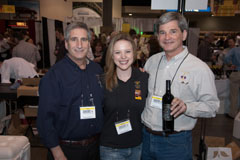 Of the wineries whose wines I had not tasted prior to this weekend, the most exciting discoveries were Cote Bonneville, which is the estate winery for DuBrul Vineyard, and Chateau Rollat, a relatively new winery located in Walla Walla. One of the best aspects of Taste Washington is that often you will find either the winemaker and/or winery owner pouring that winery’s wines. We enjoyed the opportunity to visit with some of the winemakers/winery owners whose wines we have enjoyed in the past including Mike Wade of Fielding Hills, Rob Newsom of Boudreaux Cellars, Tim and Erica Blue of Adams Bench, and Chad Johnson of Dusted Valley as well as meet a few who we had not had the chance to meet previously including Kathy Shiels of Cote Bonneville, Greg Lipsker and Michael White of Barrister Winery, and Annette Bergevin of Bergevin Lane.
Here’s a breakdown of the wines that we tasted during the Taste Washington weekend. Under each Quality heading, the wine name and region will be listed along with price and QPR rating. Wines in bold type received a QPR rating of 5 bangs for your buck (out of 5).
Quality: 4.5 stars (out of 5)
2007 Mark Ryan The Dissident, Columbia Valley, $28, QPR: 5
2006 Fielding Hills Cabernet Sauvignon, Wahluke Slope, $38, QPR: 5
2005 Boudreaux Cellars Cabernet Sauvignon, Washington State, $50, QPR: 5
2006 Sequel Syrah [Long Shadows], Columbia Valley, $55, QPR: 5
2006 Januik Winery Klipsun Vineyard Merlot, Red Mountain, $40, QPR: 4
Quality: 4 stars (out of 5)
2005 Kana Dark Star (Rhone Blend), Columbia Valley, $24, QPR: 5
2006 Darby Winery The Dark Side Syrah, Walla Walla Valley, $25, QPR: 5
2006 Barrister Winery Merlot, Walla Walla Valley, $25, QPR: 5
2006 William Church Winery Syrah, Yakima Valley, $25, QPR: 5
2007 Elegante Sangiovese Blue Mountain Vineyard, Walla Walla Valley, $26, QPR: 5
2005 Columbia Red Willow Cabernet Sauvignon, Yakima Valley, $30, QPR: 5
2005 Chateau Rollat “Rollat†Cabernet Sauvignon, Walla Walla Valley, $38, QPR: 5
2006 Walla Walla Vintners Sagemoor Vineyard Cabernet Sauvignon, Columbia Valley, $40, QPR: 5
2006 Adams Bench Reserve Cabernet Sauvignon “Vâ€, Columbia Valley, $42, QPR: 5
2006 Gorman “The Bully†Cabernet Sauvignon, Red Mountain, $42, QPR: 5
2006 Woodward Canyon “Artist Series†Cabernet Sauvignon, Columbia Valley, $50, QPR: 5
2006 Rock Meadow Cabernet Franc, Columbia Valley, $19, QPR: 4
2007 Dusted Valley Grenache, Columbia Valley, $24, QPR: 4
2007 Barrister Winery Cabernet Franc, Columbia Valley, $27, QPR: 4
2006 Pomum Cellars Syrah, Columbia Valley, $34, QPR: 4
2006 Doyenne Aix, Red Mountain, $34, QPR: 4
2005 Chateau Rollat “Edouard†Cabernet Sauvignon, Walla Walla Valley, $62, QPR: 4
2005 Woodward Canyon “Old Vines” Cabernet Sauvignon, Columbia Valley, $80, QPR: 4
2006 aMaurice Cellars Malbec, Columbia Valley, $35, QPR: 3
2006 Fielding Hills Syrah, Wahluke Slope, $40, QPR: 3
2005 Cote Bonneville Carriage House DuBrul Vineyard, Yakima Valley, $50, QPR: 2
2005 Bergevin Lane Intuition Reserve, Columbia Valley, $55, QPR: 2
2006 Andrew Will Sorella, Horse Heaven Hills, $75, QPR: 1
2006 DeLille Chaleur Estate Rouge, Yakima Valley, $75, QPR: 1
2004 Cote Bonneville DuBrul Vineyard, Yakima Valley, $120, QPR: 1
2006 JM Cellars Cabernet Sauvignon, Red Mountain, $NA, QPR: NA
1999 Woodward Canyon “Artist Series†Cabernet Sauvignon, Columbia Valley, $NA, QPR: NA
1999 Hedges Family Estate Red Mountain Reserve, Red Mountain, $NA, QPR: NA
Quality: 3.5 stars (out of 5)
2006 Columbia Cabernet Sauvignon, Columbia Valley, $20, QPR: 5
NV Knipprath Cellars Au Chocolat!, Washington State, $25, QPR: 5
2005 Kana Tempranillo, Columbia Valley, $18, QPR: 4
2006 William Church Winery Bishop’s Blend Red Wine, Columbia Valley, $18, QPR: 4
2006 Patterson Cellars Recession Red, Yakima Valley, $22, QPR: 4
2007 Dusted Valley Stained Tooth Syrah, Columbia Valley, $24, QPR: 4
2007 Nefarious Cellars Syrah, Columbia Valley, $27, QPR: 4
2005 Robert Karl Cellars Cabernet Sauvignon, Horse Heaven Hills, $30, QPR: 4
2006 Chateau Ste. Michelle Cold Creek Cabernet Sauvignon, Columbia Valley, $30, QPR: 4
2004 Donedei Cabernet Sauvignon, Columbia Valley, $35, QPR: 4
2006 Trust Cellars Cabernet Sauvignon, Columbia Valley, $36, QPR: 4
2005 Page Cellars Preface Cabernet Sauvignon, Red Mountain, $37, QPR: 4
2006 Hestia Cellars Cabernet Sauvignon Dineen Vineyard, Columbia Valley, $38, QPR: 4
2005 Cedergreen Cellars Thuja Red Blend, Columbia Valley, $25, QPR: 3
2006 Trust Cellars Syrah, Columbia Valley, $28, QPR: 3
2006 Sparkman Cellars WILDERNESS Red Blend, Columbia Valley, $28, QPR: 3
2006 Animale Petit Verdot, Columbia Valley, $28, QPR: 3
2006 Efeste Ceidleigh Syrah, Red Mountain, $29, QPR: 3
2006 Patterson Cellars BDX (Bordeaux Style), Columbia Valley $30, QPR: 3
2006 SYZYGY Syrah, Walla Walla Valley, $33, QPR: 3
2006 Efeste Jolie Bouche Syrah, Yakima Valley, $34, QPR: 3
2004 Donedei Merlot, Columbia Valley, $35, QPR: 3
2006 Cadaretta Merlot, Columbia Valley, $35, QPR: 3
2006 Baer Winery Ursa Red Blend, Columbia Valley, $39, QPR: 3
2006 Tamarack Dubrul Vineyard Reserve Cabernet Sauvignon, Yakima Valley, $45, QPR: 3
2006 Januik Winery Champoux Vineyard Cabernet Sauvignon, Horse Heaven Hills, $50, QPR: 3
2006 Sparkman Cellars “Kingpin†Cabernet Sauvignon, Red Mountain, $56, QPR: 3
2008 Nefarious Cellars Viognier, Columbia Valley, $19, QPR: 2
2006 Adams Bench “Reckoningâ€, Columbia Valley, $34, QPR: 2
2006 DeLille Cellars D2, Columbia Valley, $35, QPR: 2
2006 Pomum Cellars Shya Red, Yakima Valley, $36, QPR: 2
2006 Betz “Pere de Famille†Cabernet Sauvignon, Columbia Valley, $59, QPR: 2
2006 Soos Creek Ciel du Cheval Red Wine, Red Mountain, $40, QPR: 1
2006 Doyenne Syrah, Yakima Valley, $49, QPR: 1
2006 Nicholas Cole Cellars Dauphine Syrah, Walla Walla Valley, $50, QPR: 1
2006 Hedges Family Estate “Single Vineyard†Limited Reserve, Red Mountain, $NA, QPR: NA
1999 Betz “Pere de Famille†Cabernet Sauvignon, Columbia Valley, $NA, QPR: NA
Quality: 3 stars (out of 5)
NV Knipprath Cellars Positron Tawny Port, Columbia Valley, $22, QPR: 5
2005 Okanogan Estate and Vineyards Syrah, Washington State, $17, QPR: 4
2006 Robert Karl Cellars Claret, Horse Heaven Hills, $20, QPR: 4
2006 Mercer Estates Cabernet Sauvignon, Horse Heaven Hills, $24, QPR: 4
2006 Rock Meadow Cabernet Sauvignon, Columbia Valley, $24, QPR: 4
2006 Elegante Cabernet Sauvignon Les Collines Vineyard, Walla Walla Valley, $30, QPR: 4
2006 Northwest Totem Cabernet Sauvignon Elerding Vineyard, Yakima Valley, $30, QPR: 4
2008 Barnard Griffin Rose of Sangiovese, Columbia Valley, $12, QPR: 3
2007 Challenger Ridge Syrah, Yakima Valley, $20, QPR: 3
2006 Animale Zinfandel, Columbia Valley, $22, QPR: 3
2006 SYZYGY Red Wine, Columbia Valley, $24, QPR: 3
2004 H/H Estate Reserve Sangiovese, Columbia Valley, $24, QPR: 3
2004 Cedergreen Cellars Thuja Red Blend, Columbia Valley, $25, QPR: 3
2006 Barrage Cellars Double Barrel, Columbia Valley, $35, QPR: 3
2006 Esther Bricques Cabernet Sauvignon Reserve, Washington State, $35, QPR: 3
2006 Gamache Vintners Cabernet Franc, Columbia Valley, $24, QPR: 2
2005 Bergevin Lane Syrah, Columbia Valley, $26, QPR: 2
2006 Page Cellars Lick My Lips Syrah, Columbia Valley, $27, QPR: 2
2006 H/H Estate Reserve Robert Andrews Red, Horse Heaven Hills, $28, QPR: 2
2006 Ward Johnson Winery Merlot, Red Mountain, $30, QPR: 2
2006 Ward Johnson Winery Syrah, Red Mountain, $30, QPR: 2
2006 Northwest Totem Cabernet Franc Sagemoor Vineyard, Yakima Valley, $30, QPR: 2
2006 Hestia Cellars Syrah Dineen Vineyard, Columbia Valley, $32, QPR: 2
2006 aMaurice Cellars Syrah, Columbia Valley, $34, QPR: 1
2006 Lodmell Syrah Alder Ridge Vineyard, Columbia Valley, $37, QPR: 1
2006 Cave B Estate Winery Cuvee du Soleil, Columbia Valley, $45, QPR: 1
1999 Chateau Ste. Michelle Cold Creek Cabernet Sauvignon, Columbia Valley, $ NA, QPR: NA
1999 Columbia Cabernet Sauvignon, Columbia Valley, $NA, QPR: NA
Quality: 2.5 stars (out of 5)
2007 Challenger Ridge Viognier, Yakima Valley, $13, QPR: NR
2006 Challenger Ridge Gordon Red Blend, Yakima Valley, $20, QPR: NR
2005 Gordon Brothers Cellars Syrah, Columbia Valley, $20, QPR: NR
2007 Knipprath Cellars Matrix Ruby Port, Columbia Valley, $22, QPR: NR
2006 Animale Petite Sirah, Yakima Valley, $24, QPR: NR
2003 Willis Hall Cabernet Sauvignon, Columbia Valley, $24, QPR: NR
2007 Cascade Cliffs Barbera, Columbia Valley, $25, QPR: NR
2006 Powers Syrah Cougar Vineyard, Wahluke Slope, $25, QPR: NR
2005 Gamache Vintners Cabernet Sauvignon, Columbia Valley, $28, QPR: NR
2005 Willis Hall Cabernet Franc, Columbia Valley, $28, QPR: NR
2006 Cadaretta Syrah, Columbia Valley, $35, QPR: NR
2005 Nicholas Cole Cellars Michelle Bordeaux Blend, Walla Walla Valley, $55, QPR: NR
Quality: 2 stars (out of 5)
2006 Tiger Mountain Columbia Valley Cuvee, Columbia Valley, $15, QPR: NR
NV Knipprath Cellars Pink Port, Columbia Valley, $22, QPR: NR
2007 Cave B Estate Winery Sangiovese, Columbia Valley, $22, QPR: NR
2006 Esther Bricques Syrah, Washington State, $25, QPR: NR
2006 Challenger Ridge Pinot Noir Reserve, Puget Sound, $36, QPR: NR

 Wine Peeps is an independent wine blog dedicated to helping you get the most bang for your buck in wine. We do this through blind tastings of wine from around the world and calculations of
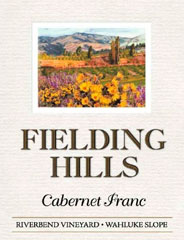 Cabernet Franc is generally thought of as the quiet little brother of Cabernet Sauvignon. Some people even refer to it as the “other†Cabernet. However, Cabernet Franc is actually one of the genealogical parents of Cabernet Sauvignon. Originating in Bordeaux, France, Cabernet Sauvignon is a cross between Cabernet Franc and Sauvignon Blanc.

 Recently, I read
  This week’s Wine Word of the Week is appellation.
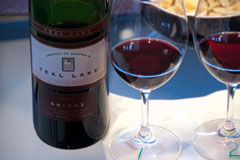 Kosher wine must be produced and handled only by Jews, from the moment the grapes enter the barrels until it is poured into the wineglass. Wine that is to be handled by non-Jews, such as distributors, waiters and salespeople, must go through a process to make it mevushal. In Hebrew the word mevushal means cooked or boiled. While not literally boiled, mevushal wines are flash pasteurized to a temperature that meets the requirements of an overseeing rabbinical authority. Anyone, Jewish or not, may open a mevushal wine and it will remain kosher. However, non-mevushal wines should be opened and poured by Jews only.
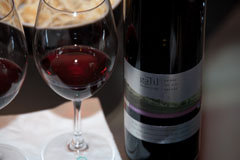 We chose these two so that we could blind taste two wines of the same varietal from two different parts of the world. Also, the Teal Lake is mevushal while the Galil Mountain in non-mevushal. We thought these two wines would provide us with an interesting comparison. Interesting? Yes. Good? No.
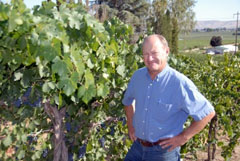 Many people think of wine as an uppity beverage. They think beer is for the common folk while wine is for high society. Oh, how I wish we could break down these stereotypes once and for all.
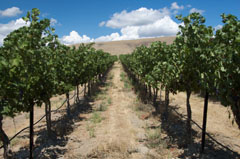 In addition, I had the great pleasure of interviewing
 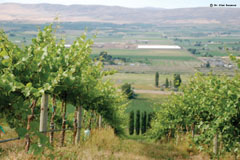 Upland Vineyards was probably the first formal vineyard to get started in Washington. William B. Bridgman planted the first vinifera vines in 1917 on Snipes Mountain which are still in cultivation today. In 1972, the Newhouse family bought all of Upland Vineyards and currently farm 700 acres of wine grapes. Owner Todd Newhouse was instrumental in getting the new Snipes Mountain AVA established. One of the unique things about Upland Vineyards is that they have slopes that face in all four cardinal directions which allow them to grow over 35 different grape varieties.
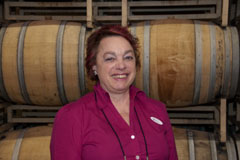 Owned and operated by Patricia Gelles and her husband David, Klipsun Vineyard is located on Red Mountain and was started in 1984. Klipsun means “sunset†in Chinook Indian jargon and is an appropriate name because the vineyard faces west. According to Patricia, everything grows well there except for Chardonnay. Currently, they have approximately 120 acres planted to Merlot, Cabernet Sauvignon, Syrah, Malbec, Nebbiolo, Sauvignon Blanc, and Semillon. About 25 to 30 producers buy Klipsun grapes including Quilceda Creek which is generally considered the premiere winery in Washington State. Gelles is particular about who she will work with in order to maintain a good reputation for the vineyard.
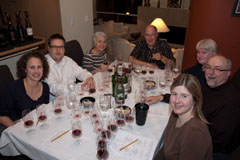 On Friday evening, we hosted our 70th
 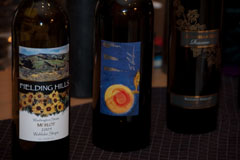 While all six wines were good, the top four were excellent and paired well with Mom’s dinner of tomato basil soup, mixed green salad, beef tenderloin served with a sour cream sauce, sautéed green beans with red onions and roasted peppers, chipotle lime mashed sweet potatoes, and a scrumptious chocolate cake topped with raspberries and whipped cream.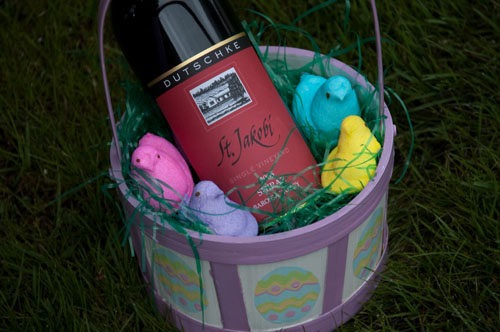
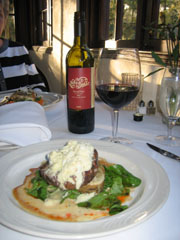 A few months ago, I
  This week’s Wine Word of the Week is veraison.


