Best of 2008 in Washington Wine Country


By John ~ December 26th, 2008

After visiting more wineries than we can count, tasting hundreds and hundreds of Washington wines, meeting winemakers, and walking the rows in many of the best known vineyards in the state, these are the Wine Peeps’ picks as the best of 2008 in Washington Wine Country.

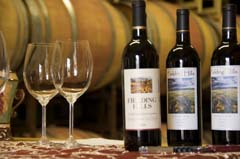
20081226_fieldinghillsBEST WINE: 2005 Fielding Hills Syrah (featured Aug 8, Sept 17, Nov 3)

Honorable Mention: 2005 Boudreaux Cellars Cabernet Sauvignon, 2005 Dunham Cellars Lewis Vineyard Merlot, 2005 Gilbert Cellars Syrah, 2005 Watermill Reserve Syrah

BEST WINERY: Dunham Cellars (featured July 28, Nov 24)

Honorable Mention: Long Shadows, Columbia Crest

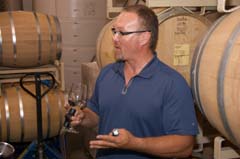
20081226_richfunkBEST WINEMAKER: Richard Funk, Winemaker/Owner of Saviah Cellars and Winemaker for Watermill Winery (featured Aug 15, Oct 8, Oct 13)

Honorable Mention: Mike Wade of Fielding Hills and Rob Newsom of Boudreaux Cellars

BEST NEWCOMER: Gilbert Cellars/Sean Gilbert (featured Aug 11, Aug 27)

Honorable Mention: Adams Bench/Tim and Erica Blue

BEST VARIETAL: Syrah

Honorable Mention: Red Blends

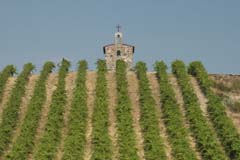
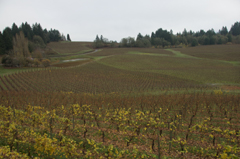
20081226_redwillowBEST VINEYARD: Red Willow Vineyard (featured July 21, July 30, Aug 22)

Honorable Mention: Stillwater Creek Vineyard

BEST AVA: Wahluke Slope (featured Sept 10)

Honorable Mention: Red Mountain

BEST WINE SHOP: Pete’s Wine Shop – Eastside, Bellevue (featured Sept 12)

Honorable Mention: Esquin Wine Merchants, Seattle; McCarthy & Schiering, Seattle; Compass Wines, Anacortes

BEST WINE EVENT: Icicle Ridge Winery Jazzamatazz Concert Series (featured June 25, Sept 8)

Congratulations to all of the winners and keep up the good work!


Filed under: American Wine, Best of, Washington State Wine
 

Wine Word of the Week: Bible


By Kori ~ December 25th, 2008

winepeeps_wotw_2-1b3This week’s Wine Word of the Week is Bible.

Official definition from Jancis Robinson’s The Oxford Companion to Wine:
The vine, including its chief product, wine, is mentioned more often in the Bible than any other plant. The Book of Genesis presents the invention of viticulture as a step in the development of civilization. …. Viticulture is divinely ordained: the art of wine-making will soften the rigours of human existence in a fallen world. ….

The Bible is not suitable reading for teetotalers. As the Psalmist says, “wine maketh glad the heart of man” (Ps. 104:15).

Layman’s terms from Kori:
I know, it’s another stretch as far as a wine word goes. But I think Ms. Robinson does a nice job of pointing out the importance of wine in the Bible. And the Bible is a good place to focus our thoughts today as we celebrate Christ’s birth.

“But the angel said to them, ‘Do not be afraid. I bring you good news of great joy that will be for all the people. Today in the town of David a Savior has been born to you; he is Christ the Lord. This will be a sign to you: You will find a baby wrapped in cloths and lying in a manger.’” (Luke 2:10-12).

Merry Christmas!


Filed under: Wine Word of the Week
 

Wine Tasting Dinner: Washington Malbec


By Kori ~ December 24th, 2008

Mother Nature gave us just enough of a reprieve between snowstorms to allow us and our guests to make it to this month’s wine tasting dinner last Friday night. After being cooped up in our homes for a couple days, it was nice to get out for a fun evening of good wines, excellent food, and the company of wonderful friends.

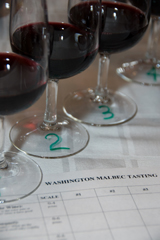
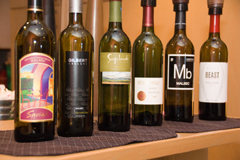
20081224_wamalbec1This month’s tasting dinner featured Washington Malbec. You may remember that we tasted Argentine Malbec in June. While Malbec has become the signature grape in Argentina and is also used as a blending grape in Bordeaux and Bordeaux-style blends, I believe that it is on the cusp of becoming a major player in Washington State as a stand-alone varietal. More and more Washington wineries are trying their hand at Malbec each year. Malbec seems to do well in Washington State’s climate and soil. Malbec appeals to a number of different palates because it is not as tannic as Cabernet Sauvignon but is spicier than Merlot and goes well with a variety of foods.

All but the BEAST, which was the lone disappointment in this tasting, paired nicely with Mom’s dinner menu which included creamy tomato soup with basil, mixed green salad, seasoned beef tenderloin with sautéed mushrooms, chipotle-lime mashed sweet potatoes, and mixed vegetables. After dinner, we enjoyed gourmet cookies and Port. 20081224_wamalbec2

Not surprisingly, the 2006 Saviah Cellars Malbec and the 2005 Gilbert Cellars Malbec came out on top. We had enjoyed both of these wines earlier this year individually, but it is always fun to put our favorites up against their peers in a blind tasting to see how they fare.

From 1st to last in the group consensus rankings:

2006 Saviah Cellars Malbec (Walla Walla Valley): Dark, inky purple. Very aromatic. Luscious black fruit and movie theatre popcorn aromas lead to black Bing cherries, blackberries, and black pepper on the palate. Also hints of smoked meats and tobacco come through on the back end. Well crafted and well-balanced with a long, smooth finish.
Quality: 4 stars (out of 5)
QPR: 4 bangs for your buck (out of 5)
Where to Buy: Winery, $30

2005 Gilbert Cellars Malbec (Columbia Valley): Red fruits and hay come through on the nose, leading to more intense flavors of cherry, raspberry, and pepper on the palate. Smooth and well-balanced. Improves with food.
Quality: 4 stars (out of 5)
QPR: 4 bangs for your buck (out of 5)
Where to Buy: Winery, $26 [Sold Out; 2006 is the currently available vintage]

2004 Sagelands Malbec (Columbia Valley)
Quality: 3.5 stars (out of 5)
QPR: 4 bangs for your buck (out of 5)
Where to Buy: Pete’s Wine Shop (Bellevue, WA), $14

2006 Seven Hills Malbec (Walla Walla Valley)
Quality: 3.5 stars (out of 5)
QPR: 2 bangs for your buck (out of 5)
Where to Buy: Pete’s Wine Shop (Bellevue, WA), $25; Available elsewhere, $24 to $30

2007 Substance Malbec (Columbia Valley)
Quality: 3 stars (out of 5)
QPR: 1 bangs for your buck (out of 5)
Where to Buy: Esquin Wine Merchants (Seattle), $20

2006 Buty BEAST Conner Lee Vineyard Malbec (Columbia Valley)
Quality: 2.5 stars (out of 5)
QPR: NR (not recommended)
Price: $40


Filed under: American Wine, Malbec, Red Wine, Washington State Wine, Wine Tasting Dinners, Wines NOT To Buy (1 & 2 Star), Wines Over $25, Wines Under $15, Wines Under $20, Wines Under $25
 

Spotlight On: Peter Lehmann


By Kori ~ December 22nd, 2008

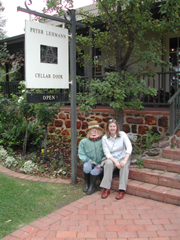
20081221_peterlehmann1Peter Lehmann Wines, founded in 1979 by Peter Lehmann, is located in the Barossa Valley of Australia. Tanunda, South Australia, about 70km north of Adelaide, is home to the winery and cellar door (aka tasting room).

Peter Lehmann has become affectionately known as the “Baron of the Barossa.” Prior to founding Peter Lehmann Wines, he was winemaker and manager for another winery. With an overproduction of grapes in the late 1970s, the winery he worked for asked him to go back on his word to some of the local growers from whom he had promised to purchase grapes. A man of integrity, Peter Lehmann would not do it. Instead, he put together some financial partners and purchased the grapes himself. His actions saved many of the grape growers from financial ruin and earned Peter Lehmann tremendous respect in the community. Ultimately, he went completely out on his own and found investment partners to form Peter Lehmann Wines. While it was initially founded to produce wine from purchased grapes, today Peter Lehmann Wines owns some of its own vineyards as well as continues to support numerous local growers.

“It is not often that a person becomes a legend in his own lifetime.” –Wine writer, James Halliday, wrote of Peter Lehmann

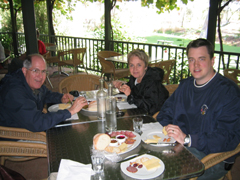
20081221_peterlehmann2We had the pleasure of visiting Australian wine country in 2005 and were especially taken by the Barossa Valley. One of our most exciting discoveries was Peter Lehmann Wines. We visited the cellar door, tasted some outstanding wines, and then enjoyed a platter lunch out on the patio. Their 2002 Peter Lehmann Shiraz was my favorite and continues to be excellent today. Their Clancy’s red blend and Cabernet Sauvignon are also very good. Thankfully, Peter Lehmann Wines are widely available in the United States, reasonably priced, and consistent from vintage to vintage.

When most people think of Australian wine, they think of Shiraz. And while they do make excellent Shiraz, they are not one-trick ponies. The Barossa Valley, in particular, is also known for its Grenache, Cabernet Sauvignon, and Semillon, to name a few.

As Peter Lehmann, himself, was quoted as saying in The Barossa: Australian Wine Regions:

“Why do we make so many different types of wine? Because we can. How boring it would be to wake up each day and just be able to make Chateau Lafite.”

20081221_peterlehmann3If you see a bottle of Peter Lehmann Shiraz on the shelf at your local wine retailer, pick it up. It is sure to be of high quality and give you the most bang for your buck. The currently available vintage of Peter Lehmann Shiraz is 2005, and it is excellent [Quality: 4.5 stars (out of 5), QPR: 5 bangs for your buck (out of 5), Price: around $14]. And if you ever have the pleasure of visiting the Barossa Valley, be sure to stop by Peter Lehmann’s cellar door. It will be an experience you won’t forget.


Filed under: Australian Wine, Shiraz/Syrah, Spotlight On
 

The Green Movement: Organic, Biodynamic, and Sustainable Viticulture…too often it’s about bragging rights


By John ~ December 19th, 2008

Having spent over thirty years of my adult life intimately involved in agriculture, I understand from hands-on experience that the vineyard should not be a chemical plant. Good soil should not be over-fertilized, and vines should not be bombarded with fungicides, herbicides, and pesticides. I also believe that the smaller the carbon footprint the better all the way through the process until the consumer gets the bottle of wine home to drink.

20081219_sustainableBy the same token, I see a disturbing trend where the Green Movement is used primarily as a marketing tool, implying falsely, I believe, that organic or biodynamically-grown grapes are inherently capable of producing better wine. I’ve seen no evidence that is true. To clear up some of the confusion and misunderstanding, let’s define the basic terms and then talk about protecting the environment in a way that also gives the producer the best chance of success over the long term.

  1. Organic Viticulture—It eliminates the use of synthetic products that create toxins in an attempt to build soil, protect the environment, and protect the health of the vineyard employees.
  2. Biodynamic Viticulture—It utilizes the same basic principles as organic farming, but then incorporates religious-like practices such as the alignment of planets, phases of the moon, and special preparations such as crushed quartz crystals.
  3. Sustainable Viticulture—It has the same goals as organic or biodynamic viticulture with one big difference: It incorporates the “scientific method” into the formula.

As I visit wineries all over the world, tour their vineyards, and talk to winemakers, I have come to several conclusions. First of all, I believe that organic farming is the ideal in the mind of most serious winemakers. However, there are years when circumstances might make that impractical. For example, if a fungus that does not respond to an organic treatment threatens your vineyard, what do you do? Or what if prudent pest management necessitates a one-time rifle shot approach that would not qualify the operation as certified organic? Second, if you are really trying to do the best job, there are times when you might need to honestly analyze the tradeoffs. For example, if you mulch-under your vines instead of using herbicides, how much more diesel fuel do you use? And third, touting yourself as certified organic or biodynamic can tie your hands when the unusual occurs and may end up costing a winemaker more than he has gained, in dollars, reputation, and possibly even the loss of a healthy vineyard.

Therefore, I have concluded that an honest use of sustainable viticultural practices is probably the best of the three, utilizing the least amount of intervention possible while managing in a way that sustains the long-term health of the vineyards as well as the economic viability of the operation. Combined with softer winemaking practices, sustainable viticulture gives us the best shot at producing great wine over the long haul.

What do you think?


Filed under: General Wine Information, Vineyards
 

Contest Reminder: Submit your bowl game picks


By Kori ~ December 18th, 2008

For a chance to win a Vinturi Essential Wine Aerator, remember to submit your bowl game picks (for the 12 games we selected) by this Saturday, December 20, at 11am EST. That’s just two days from today! Even if you’re not a football fan, why not make a guess anyway for a chance to win a great prize.

Visit our Football Watching Wines for Bowl Season post to enter.


Filed under: Contest
 

Wine Word of the Week: Sediment


By Kori ~ December 18th, 2008

winepeeps_wotw_2-1b2This week’s Wine Word of the Week is sediment.

Official definition from Jancis Robinson’s The Oxford Companion to Wine:
Sediment is the solid material which settles to the bottom of any wine container, whether it be a bottle or a vat, tank, cask, or barrel. This sediment is a very heterogeneous mixture which at the start of wine-making consists mainly of dead yeast cells, the insoluble fragments of grape pulp and skin, and the seeds that settle out of new wine. At subsequent stages it consists of tartrates and, from red wines, phenolic polymers, as well as any insoluble materials added to assist clarification or to facilitate filtration.

Sediments in bottled wines are relatively rare, and usually signal a fine wine that has already spent some years in bottle. So unaccustomed have modern wine consumers become to sediment that many (erroneously) view it as a fault.

Layman’s terms from Kori:
Sediment is the “gunk” that settles to the bottom of a wine bottle. When you pour a wine that contains sediment, you may notice the sediment in your glass as you pour the last bit of wine from a bottle or it might catch around the shoulders of the bottle. While it may not be aesthetically pleasing, there is nothing wrong with a wine that contains sediment. It generally indicates a wine that has been aged a while. To prevent the sediment from ending up in your glass, it is a good idea to pour an older wine (or any wine you suspect contains sediment) through a filter into a decanter before serving.


Filed under: Wine Word of the Week
 

Sparkling Wine: Where Extra Dry is not really extra dry


By Kori ~ December 17th, 2008

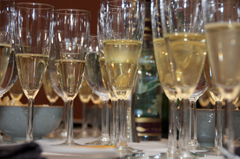
More than any other time of year, this is the season for bubbly. There are just so many opportunities to enjoy sparkling wines during the holidays. Whether you are looking for an aperitif to enjoy before Christmas dinner, celebrating your team’s big win in a bowl game, or ringing in the New Year, a good bubbly hits the spot.

20081217_sparklingRight now, your local grocery stores, wine shops, and liquor stores all have prominent displays of sparkling wines to enjoy for the many upcoming celebrations. Glancing at such a display on a recent trip to QFC, I saw a bottle of Domaine Ste. Michelle Extra Dry which made me remember the days before I embarked on my wine education and wrongfully assumed that Extra Dry meant that the wine was literally extra dry, drier than what would normally be considered dry. Much to my surprise I discovered that Extra Dry is actually sweeter than Brut (the dry standard for sparkling wines). It occurred to me that many of you may be in the same boat that I used to be.

So here’s a list of traditional sparkling wine terms to understand before you head to the store this holiday season:

Brut nature, sans dosage — no sugar added
Extra brut — extremely dry (less than 0.6 percent sugar)
Brut — dry, the most common style (less than 1.5 percent sugar)
Extra dry, extra sec — off-dry (1.2-2.0 percent sugar)
Sec — slightly sweet (1.7-3.5 percent sugar)
Demi-sec — sweet (3.5-5.0 percent sugar)
Doux — very sweet (more than 5.0 percent sugar)

For specific suggestions of sparkling wines to try, check out my recent Wine Tasting Dinner: Sparkling Wine post.

Cheers!


Filed under: General Wine Information, Sparkling Wine
 

Football Watching Wines for Bowl Season


By John ~ December 16th, 2008

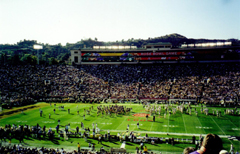
20081216_rosebowlThis Saturday, December 20, is the beginning of the annual college football marathon, 34 games in 19 days culminating in the BCS National Championship Game in Miami on January 8. Those of us football fanatics are stocking up on our manly fare of burgers, chili, pizza, brats, chips, salsa, and cheese. Now we need some wine. After all, we do want to show a little sophistication.

When I think football, I’m thinking leather, dirt, locker rooms, and sweat, so I’m looking for some good inexpensive wines that will give me a little of that football feeling and that will hold up to this crazy diet. Several wines that immediately come to mind are:

  • 2004 Penfolds Koonunga Hill Shiraz-Cabernet  (Australia), approx $8
  • 2006 Calina Cabernet Sauvignon Reserva (Chile), approx. $8
  • 2006 Atlas Cumbres Malbec (Argentina), approx $10
  • 2005 Columbia Crest Two Vines Shiraz (Washington), approx  $7

With 34 games, you’ll want to buy these by the case and save another 10-15%. Since I’m sure that you expect your teams to win, just as I do, you’ll also want to stock up on some bubbly to celebrate after the game. A couple of good inexpensive sparkling wines to consider are:

  • Domaine Ste. Michelle Blanc de Noirs (Washington), approx $9
  • Freixenet Cordon Negro Brut Cava (Spain), approx $8

To make bowl season even more interesting, the Wine Peeps have decided to host a contest. Leave a comment below with your picks for the following 12 bowl games (one game for each bottle of wine in that case you’re going to buy) before Saturday, December 20, at 11am EST. The reader with the most correct picks wins a Vinturi Essential Wine Aerator.

In the event of a tie, the tiebreaker goes to the reader who correctly picks the winner of the National Championship game followed by who submits their picks first.

All times Eastern
Pioneer Las Vegas (12/20, 8pm, ESPN): BYU vs. Arizona
San Diego County Credit Union Poinsettia (12/23, 8pm, ESPN): Boise State vs. TCU
Emerald (12/27, 8pm, ESPN): Miami (FL) vs. California
Valero Alamo (12/29, 8pm, ESPN): Missouri vs. Northwestern
Pacific Life Holiday (12/30, 8pm, ESPN): Oklahoma State vs. Oregon
Brut Sun (12/31, 2pm, CBS): Oregon State vs. Pittsburgh
Rose Bowl Game Presented by Citi (1/1, 4:30pm, ABC): Penn State vs. USC
FedEx Orange (1/1, 8:30pm, FOX): Cincinnati vs. Virginia Tech
AT&T Cotton (1/2, 2pm, FOX): Ole Miss vs. Texas Tech
Allstate Sugar (1/2, 8pm, FOX): Utah vs. Alabama
Tostitos Fiesta (1/5, 8pm, FOX): Ohio State vs. Texas
FedEx BCS National Championship Game (1/8, 8pm, FOX): Florida vs. Oklahoma


Filed under: American Wine, Argentine Wine, Australian Wine, Chilean Wine, Contest, Malbec, Red Wine, Shiraz/Syrah, Spanish Wine, Sparkling Wine, Washington State Wine
 

A Very Special Private Tasting of Washington Cabs


By Kori ~ December 15th, 2008

Several years ago, Dad (John) began purchasing special bottles of wine to put in his cellar and then enjoy on special occasions such as birthdays, anniversaries, Christmas, and so forth. We always look forward to these occasions knowing that we are in for a very special wine treat.
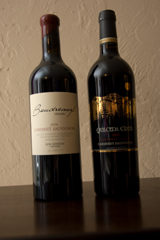
20081215_boud-quilSince we are firm believers in blind tastings, these special occasions are no different from our normal private family tastings in terms of the set-up with the exception that Dad knows the identity of the two wines. The rest of us don’t know anything except that we are tasting two red or white wines. The challenge is to not only determine which wine is our favorite but to identify the varietal and region of origin. Generally one of the wines is one of Dad’s special bottles and the other is either a wine that we’ve tasted before and enjoyed or a more reasonably priced wine of the same varietal.

When we recently celebrated Dad’s birthday, we were treated to a very special tasting of what turned out to be Washington Cabernet Sauvignons. Dad’s special bottle this time was the 2002 Quilceda Creek Cabernet Sauvignon, and it was pitted against the 2004 Boudreaux Cellars Cabernet Sauvignon. We had not previously tasted either of these wines.

For those of you who are not very familiar with Washington State wines, Quilceda Creek is generally considered the premiere Cabernet Sauvignon producer in the state, if not simply the premiere winery in the state. Quilceda Creek, founded in 1978, is a small, family-owned and operated winery located in Snohomish, Washington. Quilceda Creek has received three 100-point ratings in the last four years from Robert Parker’s Wine Advocate for their 2002, 2003, and 2005 Cabs. The 2002 and 2003 Quilceda Creek Cabs (rated at the same time) were the first Washington State wines ever to receive a perfect 100-point rating.

Boudreaux Cellars is another Washington State winery well-known for its excellent Cabernet Sauvignon. Owner/winemaker Rob Newsom, a Louisiana native, founded Boudreaux Cellars in 2001 just outside of Leavenworth, Washington. While Boudreaux has not pulled in 100-point ratings yet, in its short seven year history, it has garnered quite a bit of attention. The 2004 Boudreaux Cab nabbed the #10 spot in Gary Vaynerchuk’s 101 Wines Guaranteed to Inspire, Delight, and Bring Thunder to Your World.

Both of these wines were very good but all four of us preferred the Boudreaux Cab over the Quilceda Creek Cab. The Boudreaux had a lot going on and was extremely well-balanced. Both wines have great aging potential, but the Boudreaux is definitely more enjoyable today. And for a fourth of the cost of the Quilceda Creek, Boudreaux hands-down gives you the most bang for your buck. Even though the 2004 is sold out, we have tasted the 2005 Boudreaux Cab as well and it is excellent too.

Both of these wines demonstrate the high quality of wines coming out of Washington State today.

2004 Boudreaux Cellars Cabernet Sauvignon (Washington State): Deep, dark garnet. More brilliant than but not quite as dense as the Quilceda Creek. Gorgeous nose with dark fruit, floral, and earthy aromas. Flavors of red and black fruits come through on the palate with a vegetal and grassy component. Extremely well-balanced with good fruit, good acidity, smooth tannins, and a long finish.
Quality: 4.5 stars (out of 5)
QPR: 5 bangs for your buck (out of 5)
Where to Buy: 2005 is currently available vintage: Winery, $50; Available elsewhere, $44 to $55

2002 Quilceda Creek Cabernet Sauvignon (Washington State): Deep, dark, very inky with slight browning around the edges. Very fragrant nose of dark fruits, earth, tobacco, and spice leads to flavors of black cherry and cocoa. Very tannic on the first taste, mellows a bit with some air, has good aging potential.
Quality: 4 stars (out of 5)
QPR: 1 bangs for your buck (out of 5)
Where to Buy: WineBid.com, opening bid $195; Available elsewhere, $200 to $450


Filed under: American Wine, Cabernet Sauvignon, Five-Bangs For Your Buck Wines, Red Wine, Washington State Wine, Wines Over $25