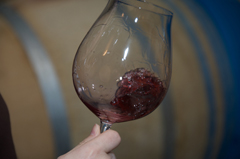
 After spending Thanksgiving Day in Seattle, we loaded up the car and headed to Oregon’s Willamette Valley. The last time we visited wineries in the area, which was several years ago, we had not had a very pleasant experience. With the increasing notoriety that Oregon has received worldwide as a wine producing region, we decided that it was time to go back and give it another shot. I am happy to report that this trip was much more pleasant. And while Pinot Noir is still not my favorite varietal, I did find a few that I would gladly have again. In addition, I was pleased to discover that Oregon is making some other good wines as well, most notably Pinot Gris and Riesling. Wine Country Thanksgiving, held the Friday, Saturday, and Sunday of Thanksgiving Weekend, is one of two annual events in the Willamette Valley, the other being Memorial Weekend. These special holiday weekend events offer the opportunity to visit some wineries that are rarely open to the public.
On Friday, we visited three wineries in the Salem area. St. Innocent Winery was our first stop. St. Innocent is located on and sources their estate fruit from Zenith Vineyard. Zenith Vineyard now makes their own wine as well, sharing a winemaker with St. Innocent. Our next stop was at Eola Hills Wine Cellars. Eola Hills makes some good wines at very reasonable prices. Our favorite Eola Hills wine was actually a Sangiovese produced with fruit from Lodi, California.
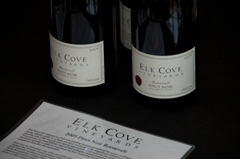 We had a busy day on Saturday in which we visited seven wineries located in the northern part of the Willamette Valley. Belle Pente Vineyard & Winery (pronounced “bell-pontâ€) is owned and operated by Jill and Brian O’Donnell who moved from San Jose, California, to Oregon in 1992. Their current annual production level is 4,000 to 5,000 cases. In terms of quality, Elk Cove Vineyards was our favorite winery on this trip. Founded in 1974, Elk Cove currently produces about 40,000 cases per year. Of the eight Elk Cove wines we tasted, we rated three of them at 4-star quality. The only drawback is the high prices of their reserve level Pinot Noirs which result in low QPR’s. If money is no object though and you happen across a bottle of 2005 Elk Cove Pinot Noir—Roosevelt, be sure to snatch it up. It is excellent!
Next we visited Patton Valley Vineyard. The people were extremely friendly but the wines were a bit disappointing. Our next stop was Erath Winery. Erath is a 70,000-case operation now owned by Ste. Michelle Wine Estates, Washington State’s largest wine company. We tasted four wines and could only recommend one of them.
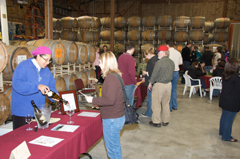 Argyle Winery is located in an old restored home in Dundee. Argyle is one of the most well-respected wineries in Oregon and one of our favorites as well. You may remember that their 1997 Argyle Extended Tirage Brut recently won our Sparkling Wine tasting dinner. Of all the Pinot Noirs that we tasted on this trip, the 2006 Argyle Reserve Pinot Noir represents the highest quality and most bang-for-your-buck.
The most disappointing visit was to Duck Pond Cellars. Their customer service was severely lacking; it took forever to get helped and once we did, the lady was not very friendly. Once inside the barrel room for tasting, we were blasted by a live band playing so loud it was difficult to think, let alone discuss the wines with each other. And to top it off, the wines were not very good. Our final stop took us to Chehalem Winery. They were well-organized and had a friendly tasting staff. Our favorite of their wines was the 2007 Chehalem Reserve Dry Riesling.
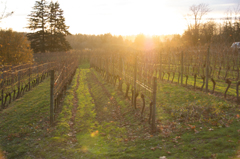 All told, I’m really glad that we visited the Willamette Valley again. I have a much better perception of them now than I did from our previous visit. In addition to finally finding a few Pinots that I like and meeting some very nice people, we had fabulous weather and were able to enjoy the beautiful Oregon countryside.
Here’s a breakdown of the wines that we tasted in the Willamette Valley. Under each Quality heading, the wine name will be listed along with their price and QPR rating. Wines in bold type received a QPR rating of 5 bangs for your buck (out of 5).
Quality: 4 stars (out of 5)
2007 Eola Hills Lodi Sangiovese, $19.95, QPR: 5
2007 Elk Cove Late Harvest Riesling, $20, QPR: 5
2007 Chehalem Reserve Dry Riesling, $21, QPR: 4
2006 Argyle Riesling, $25, QPR: 4
2006 Argyle Reserve Pinot Noir, $42.50, QPR: 4
2005 Elk Cove Pinot Noir, Roosevelt, $85, QPR: 2
2006 Elk Cove Reserve Pinot Noir, $100, QPR: 1
Quality: 3.5 stars (out of 5)
2007 Eola Hills Pinot Gris, $9.95, QPR: 5
2002 Eola Hills LBV Cabernet Sauvignon Port-Style Wine, $29.95, QPR: 4
2005 Eola Hills La Creole Pinot Noir, $30, QPR: 4
2006 Belle Pente Pinot Noir, Murto Vineyard, $35, QPR: 4
2007 Zenith Vineyard Pinot Gris, $18, QPR: 3
2007 Elk Cove Pinot Gris, $19, QPR: 3
2007 Chehalem Willamette Valley Pinot Gris, $19, QPR: 3
2005 Elk Cove Grenache, Del Rio, $22, QPR: 3
2006 Duck Pond Pinot Noir St. Jory, $40, QPR: 3
2005 Belle Pente Pinot Noir, Estate Reserve, $45, QPR: 3
2006 Belle Pente Reserve Pinot Gris, $22, QPR: 2
2006 Eola Hills Wolf Hill 667 Pinot Noir, $49.95, QPR: 2
2006 Patton Valley Vineyard Lorna Marie Pinot Noir, $70, QPR: 1
Quality: 3 stars (out of 5)
2007 Eola Hills Pinot Noir, $13.95, QPR: 5
2007 Elk Cove Pinot Blanc, $19, QPR: 4
2006 Eola Hills La Creole Pinot Noir, $24.95, QPR: 4
2007 Chehalem INOX Chardonnay, $19, QPR: 3
2006 Elk Cove Pinot Noir, $27, QPR: 3
2005 Argyle Brut Sparkling Wine, $30, QPR: 3
2005 Duck Pond Pinot Noir Cuvee, $30, QPR: 3
2006 Belle Pente Chardonnay, Belle Pente Vineyard, $25, QPR: 2
2006 Belle Pente Pinot Noir, Belle Pente Vineyard, $35, QPR: 2
2006 Patton Valley Vineyard Estate Pinot Noir, $35, QPR: 2
2006 St. Innocent Pinot Noir, Zenith Vineyard, $39, QPR: 2
2006 Zenith Vineyard Pinot Noir, Barrel Select, $40, QPR: 2
2006 St. Innocent Pinot Noir, Seven Springs Vineyard, $42, QPR: 2
2007 St. Innocent Pinot Gris, Vitae Springs Vineyard, $20, QPR: 1
2006 Argyle Nuthouse Chardonnay, $35, QPR: 1
2006 Chehalem Stoller Vineyards Pinot Noir, $44, QPR: 1
2006 Chehalem Ridgecrest Vineyards Pinot Noir, $44, QPR: 1
2007 Elk Cove Pinot Noir, Mount Richmond, $48, QPR: 1
2006 Erath Pinot Noir, Bishop Creek Vineyard, $50, QPR: 1
2005 Argyle Nuthouse Pinot Noir, $60, QPR: 1
Quality: 2.5 stars (out of 5)
2007 Eola Hills Sauvignon Blanc, $9.95, QPR: NR
2007 Eola Hills Reserve Pinot Gris, $13.95, QPR: NR
2005 Belle Pente Gewürztraminer, $18, QPR: NR
2007 Chehalem Stoller Vineyards Pinot Blanc, $19, QPR: NR
2007 St. Innocent Pinot Blanc, Freedom Hill Vineyard, $20, QPR: NR
2006 Patton Valley Vineyard Declassified Pinot Noir, $20, QPR: NR
2005 Duck Pond Sangiovese, $20, QPR: NR
2006 Duck Pond Pinot Noir, $20, QPR: NR
2006 Zenith Vineyard Pinot Noir, Estate, $25, QPR: NR
2006 Eola Hills Oak Grove Pinot Noir, $25, QPR: NR
1999 Patton Valley Vineyard Pinot Noir, $28, QPR: NR
2006 St. Innocent Pinot Noir, Temperance Hill Vineyard, $32, QPR: NR
2006 Erath Pinot Noir, Estate Selection, $36, QPR: NR
2004 Eola Hills Applegate Cabernet Sauvignon, $39.95, QPR: NR
2006 Erath Pinot Noir, Leland Vineyard, $50, QPR: NR
Quality: 2 stars (out of 5)
2007 Duck Pond Pinot Grigio, $10, QPR: NR
2007 Erath Reserve Pinot Gris, $22, QPR: NR
2007 Chehalem 3 Vineyard Pinot Noir, $32, QPR: NR
2005 Duck Pond Semillon Dessert Wine, $40, QPR: NR


 Wine Peeps is an independent wine blog dedicated to helping you get the most bang for your buck in wine. We do this through blind tastings of wine from around the world and calculations of
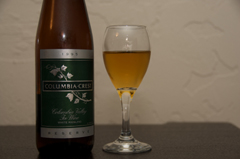 Years ago during a visit to the Okanagan Valley in British Columbia, Canada, I was introduced to ice wine. It is yummy stuff! Shortly after returning home, I was visiting Chateau Ste. Michelle in nearby Woodinville, Washington, and found this Columbia Crest Ice Wine for sale in the shop. Both Chateau Ste. Michelle and Columbia Crest are owned by Ste. Michelle Wine Estates. I quickly snatched up a bottle. I took it home, added it to my cellar, and waited for a special occasion to try this Washington State ice wine. [Note: The U.S. does not have the same strict rules for ice wine production as Canada but that’s a topic for another day.] As happens far too often, I wait and wait for a special occasion and end up waiting too long. With wine, that is very dangerous since there is a finite window within which you should ideally consume it. According to Vinfolio, the cellar-tracking program that I use, I should have drunk this 1995 Ice Wine by 1998. Whoops! I was still waiting for that perfect occasion to open it in 2008, knowing full well that it was probably vinegar by now.

 This week’s Wine Word of the Week is phylloxera.
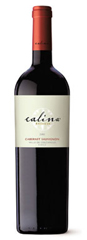 The first bottle that I selected was the 2006 Los Vascos Cabernet Sauvignon from the Colchagua Valley of Chile. I was intrigued by this wine because Los Vascos is owned by Domaines Baron de Rothschild of France (of Lafite Rothschild fame). I was curious to see what an $8 bottle of wine from a company known for their $300 bottles would taste like. While it is a decent sipper, it certainly bears no resemblance to its more prestigious cousin.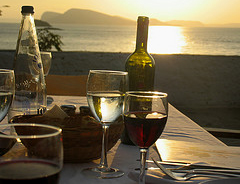
 This week’s Wine Word of the Week is faults.
 Even though Black Friday and Cyber Monday have come and gone, if you are like me, you still have plenty of Christmas shopping to do. Are you at a loss for what to get your dad, sister, Aunt Sally, or your next door neighbor? If you know the person that you are shopping for is a wine lover or at least has an interest in wine, here’s a list that I hope will help you figure out what to buy for them. Or maybe it will even give you an idea of something to put on your own wish list.
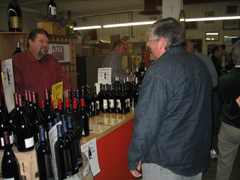 On a recent Saturday, the Wine Peeps attended tastings at two local wine shops. Mom (LaGayle) and Dad (John) attended the Ross Andrew tasting at McCarthy & Schiering in Seattle’s Ravenna neighborhood and then I joined them for the Stephenson Cellars, Otis Kenyon, and Five Star Cellars tasting at Pete’s Wine Shop in Bellevue.
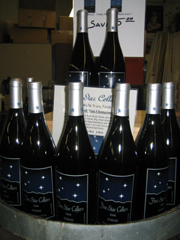 Five Star Cellars
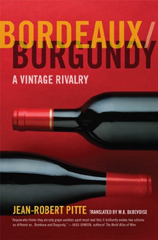 When I first picked up Bordeaux/Burgundy: A Vintage Rivalry by Jean-Robert Pitte, I thought of another book that I read a few years ago, A Tale of Two Valleys: Wine, Wealth, and the Battle for the Good Life in Napa and Sonoma. The books are similar in concept, with A Tale of Two Valleys an American story and Bordeaux/Burgundy a French tale. Like Napa and Sonoma, Bordeaux and Burgundy have very different personalities but both make great wine.
 This week’s Wine Word of the Week is Turkey.


