
Wine Tasting Dinner: Sparkling Wine


By Kori ~ November 26th, 2008
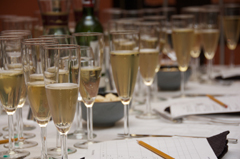
This time of year with the holidays rapidly approaching, my “wine” attention tends to focus on bubbly. I absolutely love sparkling wine but do not drink it often enough. However this time of year, I make sure to celebrate with friends and family and enjoy some sparkling wine. With that in mind, it was easy for us to choose the theme for this month’s wine tasting dinner. We selected six sparkling wines to blind taste to help us, and hopefully you as well, choose an excellent sparkling wine to enjoy as an aperitif before Thanksgiving dinner, to take to the in-laws on Christmas, or to pop on New Year’s Eve.

We had a wide range of bubbly in this tasting—three from the United States (one each from Oregon, California, and New Mexico), one from France, one from Italy, and one from Spain. The most surprising thing to us was that they finished in that order in the group consensus rankings; the three U.S. sparkling wines finished 1-2-3, and the one true Champagne finished 4th. The top three wines also received a QPR rating of 5 bangs for your buck. All three (Argyle Extended Tirage, Domaine Carneros, and Gruet) are excellent wines and excellent buys. And even the Freixenet that finished in sixth place is a QPR 5; while not as good as the top three in terms of quality, it is nevertheless a great value in the under $10 price point.
All of these sparkling wines paired nicely with Mom’s dinner menu which included butternut squash soup with curry, mixed green salad, pistachio-encrusted chicken breasts with a cream gravy, risotto, sautéed mixed vegetables, and sorbet for dessert.

If you haven’t had one of the top three sparklers listed below, I encourage you to pick up a bottle to enjoy this holiday season. And if you don’t see your favorite sparkling wine on this list, let us know in the comments as we’d like to try it.

From 1st to last in the group consensus rankings:

1997 Argyle Extended Tirage Brut (Willamette Valley, Oregon): Small, very fast beads. The nose is a bit tight at first. Pear, apple, and hints of nuts come through on the palate. Very crisp and fresh for an 11 year old sparkler.
Quality: 4.5 stars (out of 5)
QPR: 5 bangs for your buck (out of 5)
Where to buy: Pete’s Wine Shop (Seattle), $45; Available elsewhere, $37 to $48

2004 Domaine Carneros [Taittinger] Brut (Carneros, California): Aromas of melon and vanilla lead to flavors of apple and a bit of spice. Very crisp and refreshing.
Quality: 4.5 stars (out of 5)
QPR: 5 bangs for your buck (out of 5)
Where to buy: MadWine (Seattle), $21; Available elsewhere, $18 to $29

NV Gruet Brut (New Mexico): Distinct aromas of citrus, especially grapefruit, come through on the nose. Smells a lot like a New Zealand Sauvignon Blanc. Hints of butter and vanilla mingle with the citrus on the palate. Crisp acidity.
Quality: 4 stars (out of 5)

QPR: 5 bangs for your buck (out of 5)
Where to buy: Pete’s Wine Shop (Seattle), $13; Available elsewhere, $11 to $15

NV Pol Roger Reserve Brut (Champagne, France)
Quality: 3.5 stars (out of 5)
QPR: 3 bangs for your buck (out of 5)
Where to buy: Pete’s Wine Shop (Seattle), $42; Available elsewhere, $28 to $63

NV Bellavista Cuvee Brut (Franciacorta, Italy)
Quality: 3 stars (out of 5)
QPR: 2 bangs for your buck (out of 5)
Where to buy: Pete’s Wine Shop (Seattle), $40; Available elsewhere, $29 to $50

NV Freixenet Cordon Negro Brut Cava (Cataluna, Spain)
Quality: 3 stars (out of 5)
QPR: 5 bangs for your buck (out of 5)
Where to buy: Pete’s Wine Shop (Seattle), $9; Available elsewhere, $7 to $8


Filed under: American Wine, California Wine, Five-Bangs For Your Buck Wines, French Wine, Italian Wine, New Mexico Wine, Oregon Wine, Spanish Wine, Sparkling Wine, Wine Tasting Dinners, Wines Over $25, Wines Under $10, Wines Under $15, Wines Under $20, Wines Under $25
 

Spotlight On: Dunham Cellars


By Kori ~ November 24th, 2008

Dunham Cellars is a family-owned winery located in a remodeled World War II airplane hangar in Walla Walla, Washington. Eric Dunham began making wine under the Dunham Cellars name in 1995 in his spare time. By 1999, he decided to devote his full attention to his wines and together with his parents, Mike and Joanne, they opened the winery at Walla Walla Regional Airport.

Some of you may be familiar with Dunham Cellars from a Banner Bank commercial they did a few years ago. (Note: This is not an endorsement of Banner Bank; I just always thought it was a cute ad that stuck in my mind.)

“Eric Dunham, though still in his mid-thirties, has already acquired full renaissance man credentials. An accomplished chef, painter, and winemaker, he traces his interest in wine back to his early teens, when he perfected a variety of techniques for breaking into his father’s cellar.” –Paul Gregutt, Washington Wines & Wineries

Since Eric’s inaugural release of the 1995 Dunham Cellars Cabernet Sauvignon I [his Columbia Valley Cabs are numbered with Roman numerals], his wines have garnered lots of attention. Well deserved attention. Eric has been the winemaker for Dunham Cellars since the very beginning. Earlier this year, Dan Wampfler joined Dunham Cellars as winemaker and now Eric’s official title is Director of Wine.

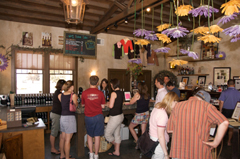
In July, we visited Dunham Cellars for the first time. Like most of the wineries located at the Walla Walla airport, Dunham Cellars is very unassuming from the outside. Inside though, Dunham boasts a good-sized tasting room and gift shop which opens into a much larger room known as the Hangar Lounge. The lounge is an eclectic space, decorated with some of Eric Dunham’s original artwork on the walls, which recently opened as a wine bar serving wines by the glass or bottle as well as offering deli snacks. Some of Eric’s artwork also appears on certain Dunham Cellars wine labels.

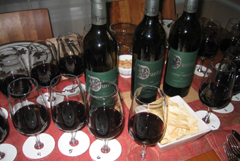
We recently had the opportunity to attend a Dunham Cellars Cabernet Sauvignon vertical tasting dinner at the home of our good friends, Ross and Alison. Ross had obtained seven Dunham Cabs (1998 through 2005, with the exception of 2003) for our wine drinking pleasure. None of them would be considered huge Cabs with big, bold tannins, but all of them were good, smooth, and well-balanced. Here’s a breakdown of those seven wines.

2004 Dunham Cellars Cabernet Sauvignon X (Columbia Valley): Very distinctive nose with aromas of beef jerky, cinnamon rolls, and chile con queso. Black fruits and spice come through on the palate. Extremely smooth and well-balanced.
Quality: 4.5 stars (out of 5)
QPR: 5 bangs for your buck (out of 5)
Where to buy: De La Vin (Washington), $46

2005 Dunham Cellars Cabernet Sauvignon XI (Columbia Valley): Aromas and flavors of black fruits, especially plums and blackberries. Smooth tannins. Opens up as it is paired with food.
Quality: 4.5 stars (out of 5)
QPR: 5 bangs for your buck (out of 5)
Where to buy: Winery, $45

2002 Dunham Cellars Cabernet Sauvignon VIII (Columbia Valley): Black cherry and spearmint dominate the nose. Blackberry, cassis, and black pepper come through on the palate. A bit of a funky finish.
Quality: 4 stars (out of 5)
QPR: 5 bangs for your buck (out of 5)
Where to buy: Laurenti Wines (New Jersey), $37.88

2001 Dunham Cellars Cabernet Sauvignon VII (Columbia Valley)
Quality: 3.5 stars (out of 5)
QPR: 3 bangs for your buck (out of 5)
Where to buy: Winery, $50

2000 Dunham Cellars Cabernet Sauvignon VI (Columbia Valley)
Quality: 3.5 stars (out of 5)
QPR: 3 bangs for your buck (out of 5)
Where to buy: Winery, $50

1999 Dunham Cellars Cabernet Sauvignon V (Columbia Valley)
Quality: 3.5 stars (out of 5)
QPR: 3 bangs for your buck (out of 5)
Where to buy: Winery, $50

1998 Dunham Cellars Cabernet Sauvignon IV (Columbia Valley)
Quality: 3 stars (out of 5)
QPR: 1 bang for your buck (out of 5)
Where to buy: Compass Wines (Washington), $59.99


Filed under: American Wine, Cabernet Sauvignon, Five-Bangs For Your Buck Wines, Red Wine, Spotlight On, Washington State Wine, Wines Over $25
 

Sonoma Wines We Tasted at WBC


By Kori ~ November 21st, 2008

We could not have asked for more hospitable hosts for the first-ever North American Wine Bloggers Conference than the people of the Sonoma wine industry. They really stepped up to the plate with sponsorships and donations of wine to help make the conference possible.

Sonoma County is located north of San Francisco between Napa County and the Pacific Ocean. While Napa gets more attention worldwide, what many people do not know is that Sonoma is actually the birthplace of California wine, with the first wine grapes planted in Fort Ross around 1812. Sonoma is home to a number of wineries that are over 100 years old and are still run by the founding families. Sonoma County covers over 1,000,000 acres with 60,000 of those planted to wine grapes in its 13 wine regions and currently is home to more than 350 wineries.

We have had the pleasure of visiting Sonoma County on several occasions. We have always found it to be a great place to visit with great wines and very friendly people. If you’ve never been, I highly encourage you to take a trip to see for yourself.

Here’s a breakdown of the Sonoma wines that we tasted at the Wine Bloggers Conference, except those that we already rated during the Live Wine Blogging event. Under each Quality heading, the wine name and region within Sonoma County will be listed along with their price and QPR rating. Wines in bold type received a QPR rating of 5 bangs for your buck (out of 5).

Quality: 4.5 stars (out of 5)
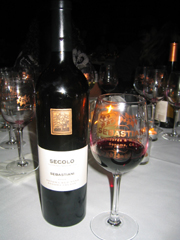
2005 Sebastiani Secolo, Sonoma County, $35, QPR: 5

Quality: 4 stars (out of 5)
2006 Pedroncelli Mother Clone Zinfandel, Dry Creek Valley, $14, QPR: 5
2005 Ehret Family Winery Cabernet Sauvignon, Knights Valley, $39.99, QPR: 5
2002 Montemaggiore Superiore Syrah, Dry Creek Valley, $35, QPR: 4
2006 Siduri Van Der Camp Vineyard Pinot Noir, Sonoma Mountain, $44, QPR: 4
2005 Michel-Schlumberger Coteaux Sauvages, Dry Creek Valley, $50, QPR: 2

Quality: 3.5 stars (out of 5)
2006 Pedroncelli Three Vineyards Cabernet Sauvignon, Dry Creek Valley, $15.50, QPR: 5
2003 Pedroncelli Winery “Four Grapes” Vintage Port, Dry Creek Valley, $18, QPR: 5
2006 Quivira Zinfandel, Dry Creek Valley, $20, QPR: 5
2003 Paradise Ridge Syrah, Sonoma County, $23.95, QPR: 4
2004 Michel-Schlumberger Estate Cabernet Sauvignon, Dry Creek Valley, $38, QPR: 4
2005 Paradise Ridge Elevation Cabernet Sauvignon, Rockpile, $40, QPR: 4
2007 Dry Creek Vineyard Fume Blanc, Sonoma County, $14.50, QPR: 3
2006 Enkidu Odyssey Syrah, Russian River Valley, $34, QPR: 3
2006 Quivira Wine Creek Ranch Barrel Selection Zinfandel, Dry Creek Valley, $34, QPR: 3
2004 Montemaggiore Syrah, Dry Creek Valley, $35, QPR: 3
2006 Seghesio Old Vine Zinfandel, Sonoma County, $36, QPR: 3
2004 Jordan Cabernet Sauvignon, Alexander Valley, $50, QPR: 3
2005 Sebastiani Cherryblock Cabernet Sauvignon, Sonoma County, $75, QPR: 1

Quality: 3 stars (out of 5)
2007 Siduri Pinot Noir, Sonoma Coast, $20, QPR: 4
2006 Enkidu Humbaba, Sonoma County, $25, QPR: 3
2006 Truett-Hurst Red Rooster Zinfandel, Dry Creek Valley, $29, QPR: 2
2004 Medlock Ames Cabernet Sauvignon, Alexander Valley, $50, QPR: 2
2006 Quivira Grenache, Dry Creek Valley, $26, QPR: 1
2005 Rielle Zinfandel, Sonoma County, $40, QPR: 1

Quality: 2.5 stars (out of 5)
2006 Sebastiani Barbera, Sonoma Valley, $26, QPR: NR
2007 Flowers Pinot Noir, Sonoma Coast, $60, QPR: NR


Filed under: American Wine, Barbera, Cabernet Sauvignon, California Wine, Dessert Wine, Five-Bangs For Your Buck Wines, Grenache, Pinot Noir, Port, Red Wine, Sauvignon Blanc, Shiraz/Syrah, White Wine, Wine Activities/Events, Wines NOT To Buy (1 & 2 Star), Wines Over $25, Wines Under $15, Wines Under $20, Wines Under $25, Zinfandel
 

Wine Word of the Week: Bottling


By Kori ~ November 20th, 2008

This week’s Wine Word of the Week is bottling.

Official definition from Jancis Robinson’s The Oxford Companion to Wine:
Bottling is a vital wine-making operation for all wines other than those packaged in containers other than bottles and those few served straight from a cask or tank as bulk wine.

Bottling techniques vary greatly according to the size, resources, technical ability, and modernity of the winery, although since the 1960s it has been customary almost everywhere to blend all casks or vats of a given lot of wine together before bottling, and to bottle it all at once.

Layman’s terms from Kori:
Bottling is the final step in the winemaking process in which wines are transferred from their barrels, casks, or vats to bottles (at least for wines that are to be packaged in bottles). Once bottled, many wines, especially many red wines, are set aside to age in the bottle before they are sold or consumed.


Filed under: Wine Word of the Week
 

Boushey and Elephant Mountain Vineyards


By Kori ~ November 19th, 2008

Continuing our visits to some of the major vineyards in Washington State, Dad (John) and I made a day trip to the legendary Boushey Vineyards and the up-and-coming Elephant Mountain Vineyards.

Dick Boushey planted his first blocks of grapes in 1980 just off of County Line Road, about five miles north of Grandview, Washington, in the Yakima Valley AVA. Walking through some of the north/south rows, the deep sand almost looks like ant beds with no ants. We observed very little rock or gravel in these south sloping vineyards in the Rattlesnake Mountains.

Boushey Vineyards started with Cabernet Sauvignon and Merlot and now grows most of the other major red varieties as well. From our experience, we believe that Syrah may be the best Boushey-grown variety today. If you come across a Boushey vineyard-designate Syrah bottling, I encourage you to give it a try. Boushey grows for some of the best winemakers in Washington, including Betz, DeLille, Fidelitas, Forgeron, Long Shadows, and McCrea.

Heading back toward the city of Yakima from Boushey Vineyards, you’ll pass through the small town of Wapato. West of Wapato you’ll find the famed Red Willow Vineyard that we featured in several posts earlier this year (here, here, and here). North and east of Wapato in the relatively new Rattlesnake Hills AVA we visited the Elephant Mountain Vineyards on Nightingale Road and were very impressed with what they are doing.  The vineyard, established by Joe and Tom Hattrup in 1998, is located high on the southern slopes of Rattlesnake Ridge at the base of Elephant Mountain. The north/south rows are gently rolling, mostly in deep sand, with some rocks close to the top of the vineyard in the Syrah rows.

Once again, at Elephant Mountain, we’ve found a grower with a background in orchards doing great things with wine grapes. As with Boushey, Elephant Mountain started out with only Cabernet Sauvignon and Merlot and now is growing many other varieties including Syrah. I don’t believe that there is any question that Elephant Mountain is one of the Yakima Valley’s finest younger vineyards. While I haven’t seen many Elephant Mountain vineyard- designate bottlings yet, their grapes are playing an important part in the bottlings of some of the state’s best vintners.

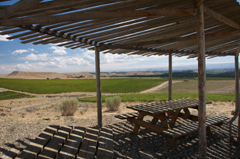
As a bonus, Elephant Mountain Vineyards boasts a visitors’ area with a spectacular view of the Yakima Valley. All in all, we had another great day in Washington Wine Country.


Filed under: American Wine, Vineyards, Washington State Wine
 

Thanksgiving: A Little Different Menu, A Little Different Wine


By Kori ~ November 17th, 2008

The last thing the world needs is another article or blog post on traditional Thanksgiving meal/wine pairings where the bottom line is usually a recommendation of Riesling and Pinot Noir as the white and red wine selections.

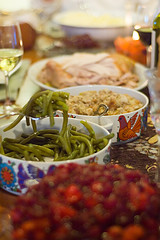
However, the Wine Peeps are having a slightly different Thanksgiving spread this year, and we think it deserves a slightly different wine menu. Because of our Texas roots, Mom (LaGayle) is serving an apple/walnut salad, spicy braised chicken breast with a jalapeno cranberry relish, her “famous” faux sage cornbread dressing made with rice flour muffins, and sautéed green beans. Dessert is my homemade pecan pie, topped with whipped cream and/or creamy, homemade vanilla Blue Bell ice cream from Texas. In short, it’s a meal where the same old wines won’t really stand up to the rich food. (Photo by CarbonNYC)

So here are my wine suggestions for this kind of Thanksgiving meal:

  • Since Thanksgiving is an American holiday, let’s have American wine.
  • Start with a toast to our forefathers with a Domaine Carneros Brut from California (widely available for around $20) or a Gruet Brut from New Mexico (widely available for around $12).
  • For the main course, go with a fruit forward Syrah if you’d like a red wine or a nice Gewürztraminer if you would prefer a white wine. If you live in the state of Washington, you might like to try the Fielding Hills Syrah that has topped our recommended list this year ($40). For a more economical choice, try either the Columbia Crest Two Vines Shiraz from Washington (widely available for around $8) or the Cline Los Carneros Estate Syrah from California (available for around $20). For a Gewürztraminer, you’ll be hard pressed to beat the Columbia Crest Two Vines Gewürztraminer from Washington (available for around $8) in terms of bang for your buck.
  • To complement the pecan pie dessert, I’d recommend a good port-style wine, of which there are many possibilities at reasonable prices depending on where you live. Here in Washington, I would suggest the Barnard Griffin Syrah Port (500ml available for around $16). In California, you might like the Pedroncelli Four Grapes Vintage Port (500ml available for around $15), and in the Midwest there is the Mount Pleasant Tawny Library Port from Missouri (375ml available for around $30).

Hope you have a great holiday with family and friends. And remember to give thanks for this great country which stands for freedom, democracy, and opportunity for all.

Enjoy!


Filed under: American Wine, California Wine, Dessert Wine, Food & Wine, Gewurztraminer, Missouri Wine, New Mexico Wine, Port, Red Wine, Shiraz/Syrah, Sparkling Wine, Washington State Wine, White Wine, Wines Over $25, Wines Under $10, Wines Under $15, Wines Under $20, Wines Under $25
 

Cadence Winery: Striving to hit the right note


By Kori ~ November 14th, 2008

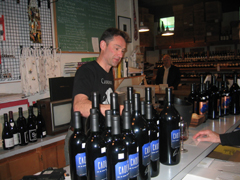
Last Saturday, Dad (John) and I attended a tasting for Cadence Winery at the McCarthy & Schiering wine shop in Seattle’s Ravenna neighborhood. Winemaker Ben Smith was on hand pouring his wines, talking about them, and sharing pictures of his Cara Mia Vineyard on Red Mountain.

Ben and his wife Gaye McNutt founded Cadence Winery in 1998. Their winery, open by appointment only, is located in Seattle, Washington. They produce red Bordeaux-style blends from Red Mountain fruit. Ben and Gaye purchased 10.5 acres of prized vineyard land in Red Mountain, generally considered the hottest AVA in Washington State, even before they founded the winery. The first vines were planted in 2004, and their first harvest from Cara Mia Vineyard was in 2006. The recently released 2006 Camerata and 2006 Bel Canto are the debut releases from their vineyard. During this past decade, Cadence has grown to its current yearly production level of 2,400 cases.
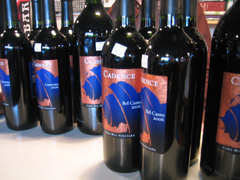
Prior to this tasting, we had not tasted any Cadence wines. Our favorite was the 2006 Camerata (see ratings below). This is the first time that they have produced a predominantly Cabernet Sauvignon wine. All of their wines are blends that bear proprietary names instead of being varietally designated. However, in the case of their 2006 Camerata which is 94% Cabernet Sauvignon, it could be labeled as a Cab if they wanted it to be.

Here is a winery that is trying to do all of the right things. They have gone after the best grapes from some of the best vineyards in the state in the hottest AVA in the state. They have purchased prized vineyard land and have started their own vineyard in that same AVA. And they are producing some good wines. However, I wonder if they might be missing a business opportunity by not producing any varietally designated wines. Let me explain.

As you’ll see from our ratings below, we thought all of their wines were of good quality but not all of them are good buys. Now I completely understand why they are priced the way that they are and I sympathize with the situation faced by many small wineries. They are spending a lot of money on grapes from Red Mountain, have high expenses associated with starting their own vineyard and paying vineyard management fees, and are trying to make ends meet at a modest production level. With that said, when we crunched the numbers, all of their wines received a QPR rating of 1 bang for your buck, except for the Camerata. And the only reason that the Camerata received a QPR of 5 bangs for your buck is because we calculated its QPR based on it being a Cabernet Sauvignon, even though it is not labeled as such. If we had calculated its QPR based on it being a blend, it would only have received a 2 bangs for your buck rating. Wondering why?

Well, we believe that wines have to be evaluated in relation to their peers and their perception with consumers. While Bordeaux blends from Bordeaux, France, command big bucks, Bordeaux-style blends from the U.S. generally do not. Unlike Bordeaux, France, where all of their wines are blends and those blends are regulated by the government, too often wineries in the U.S. produce blends from their leftovers. They put their best grapes into their Cabernet Sauvignon, their Merlot, etc., and then produce a blend from the grapes that do not quite make the cut. Don’t get me wrong, many of these blends are very good but they are usually priced less than their varietally designated wines. Obviously, Cadence does not do this. They are trying to use the Bordeaux model and make the best wines they can by blending the very best grapes that they can get. But, unfortunately, the average wine consumer does not know this. Therefore, when they walk into a wine shop, they might have a hard time forking over $45 or $55 for a Cadence blend when they can buy any number of other good blends for much less. On the other hand, an excellent Cabernet Sauvignon can average over $100 so an excellent Cab for $55 could be considered a great deal.
So Ben and Gaye, if you are reading, keep up the good work. You are doing some great things but you might want to think about how your wines are labeled and positioned in the marketplace to get the most return on your investment.

And bottom line for our readers, go out and pick up a bottle of their 2006 Camerata. It’s definitely worth the money.

In order of our preference in this tasting:

2006 Cadence Camerata, Cara Mia Vineyard (Red Mountain, Washington): 94% Cabernet Sauvignon, 6% Cabernet Franc.
Quality: 4 stars (out of 5)
QPR: 5 bangs for your buck (out of 5)
Where to Buy: Winery, $55; McCarthy & Schiering (Seattle), $55

2006 Cadence Bel Canto, Cara Mia Vineyard (Red Mountain, Washington): 52% Cabernet Franc, 48% Merlot.
Quality: 3.5 stars (out of 5)
QPR: 1 bang for your buck (out of 5)
Where to Buy: Winery, $55; McCarthy & Schiering (Seattle), $55

2006 Cadence Ciel Du Cheval Vineyard (Red Mountain, Washington): 36% Cabernet Sauvignon, 32% Cabernet Franc, 20% Merlot, 12% Petit Verdot.
Quality: 3.5 stars (out of 5)
QPR: 1 bang for your buck (out of 5)
Where to Buy: Winery, $45; McCarthy & Schiering (Seattle), $45

2006 Cadence Tapteil Vineyard (Red Mountain, Washington): 53% Cabernet Sauvignon, 32% Merlot, 15% Cabernet Franc.
Quality: 3 stars (out of 5)
QPR: 1 bang for your buck (out of 5)
Where to Buy: Winery, $45; McCarthy & Schiering (Seattle), $45


Filed under: American Wine, Cabernet Sauvignon, Five-Bangs For Your Buck Wines, Red Wine, Vineyards, Washington State Wine, Wines Over $25
 

Wine Word of the Week: Stabilization


By Kori ~ November 13th, 2008

This week’s Wine Word of the Week is stabilization.
Official definition from Jancis Robinson’s The Oxford Companion to Wine:
Stabilization is a group of wine-processing operations undertaken to ensure that the wine, once bottled, will not form hazes, clouds, or unwanted deposits; become gassy; or undergo rapid deterioration of flavor after bottling. A quick recovery from bottle sickness and subtle changes in flavor that occur with lengthy ageing are considered normal in a stable wine.

Everyday wines are usually more thoroughly stabilized than fine wines since consumers have come to expect them to be crystal clear. ….

Stabilization includes two sorts of operations: one to counter physical and chemical changes and another to counter microbiological changes.

Layman’s terms from Kori:
Stabilization is a technique used primarily in white wine production to make the wine look better. Heat stabilization helps to prevent unsightly haze while cold stabilization precipitates out tartrate crystal deposits.


Filed under: Wine Word of the Week
 

Wine Blogging Wednesday #51: Baked Goods


By Kori ~ November 12th, 2008

The November edition of Wine Blogging Wednesday, the blogosphere’s monthly virtual wine tasting event, is hosted by Joe Roberts of 1WineDude. Joe selected Baked Goods as this month’s theme in which he asks us to select a wine that has been deliberately heated, or Madeirized.

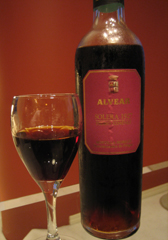
Since he also left the door open for us to select any sweet fortified wine, we chose to taste the 1927 Solera Alvear Pedro Ximenez from Montilla-Moriles, Spain. In the summer of 2007 when Dad (John) and I were studying for our Certified Specialist of Wine exam, we became fascinated with the fractional blending system known as solera that is used to age some fortified wines.

Solera is a process for aging liquids such as wine, vinegar, and brandy, by fractional blending in such a way that the finished product is a mixture of ages, with the average age gradually increasing as the process continues over many years. A solera is literally the set of barrels or other containers used in the process. –Wikipedia

Any wine labeled solera will carry the vintage date of the original cask so this 1927 solera was blended from casks that were first started in 1927. The process to produce this wine began over 80 years ago, and this wine represents a little bit of each vintage during that 80 year span.

As we were learning more about fortified wines and the solera system, we were anxious to try one. About that time, we received an email alert from Wine Exchange touting this highly acclaimed wine. At $15.99, we couldn’t resist and purchased two bottles. We tasted the first bottle shortly after receiving the shipment, thought it was great, and had been holding onto the second bottle. This Baked Goods theme gave us the perfect opportunity to open it. It was even better than I had remembered.

One other fun fact that makes this a perfect Baked Goods selection is that when the grapes were at their optimal degree of maturity, they were spread out on mats to dry in the sun until they became raisins. I’d say that lying out in the sun until you’re shriveled up definitely constitutes being deliberately heated, or baked.

1927 Solera Alvear Pedro Ximenez (Montilla-Moriles, Spain): Half bottle (375ml). A white sherry that is dark amber in color. An exceptional nose of caramel and nuts. Sweet flavors of maple syrup, nuts, caramel, and butterscotch with a hint of prunes come through on the palate. Tastes like a baked Snickers bar. Medium-bodied and extremely smooth. Excellent by itself but would also be good with dessert or over ice cream.
Quality: 4 stars (out of 5)
QPR: 5 bangs for your buck (out of 5)
Where to Buy: Wine Exchange (California), $19.99 (was $15.99); Available elsewhere, $16-$27


Filed under: Dessert Wine, Five-Bangs For Your Buck Wines, Fortified Wine, Lesser Known Varietals, Spanish Wine, Wine Blogging Wednesday, Wines Under $20, Wines Under $25
 

New Zealand Wine New Release Tasting


By Kori ~ November 10th, 2008

At the recent Wine Bloggers Conference, we had the pleasure of attending the self-paced New Zealand Wine New Release Tasting hosted by the New Zealand Winegrowers. With all of the wine that had already been poured for us that day and the dinner with wine that was still ahead, Dad (John) and I did not attempt to taste all of the 100+ wines that were offered. Instead, we chose to taste the new releases from wineries that we have previously enjoyed as well as try a few new ones.

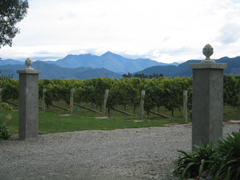
We have been big fans of New Zealand Sauvignon Blanc, the country’s flagship wine, for many years. In fact, NZ Sauv Blanc is Mom’s (LaGayle) favorite varietal, no matter the season. The crisp acidity and refreshing citrus, especially grapefruit, flavors are particularly appealing to our palates. In 2005, we took a trip to the Marlborough region of New Zealand to visit some of the wineries that we had come to love as well as observe New Zealand winemaking up close. It was a fabulous trip and an educational and rewarding wine experience. We found some of the most beautiful wine country and nicest people in the world. If you ever get the chance, I highly encourage you to visit New Zealand.
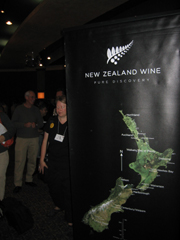
At this tasting, we chose to taste some of the new 2008 releases of some of our tried-and-true favorites. Of particular note, the 2008 Kim Crawford Sauvignon Blanc and the 2008 Nobilo Regional Collection Sauvignon Blanc both measured up to their previous vintages. In addition to tasting a number of Sauvignon Blancs, we enjoyed one sparkling wine, one Syrah, and several Pinot Noirs. While Pinot Noir has not historically been one of our favorite varietals, we wanted to give some NZ Pinots a chance as we had heard great things about them. In fact, Pinot Noir has overtaken Chardonnay as the second most planted varietal in New Zealand. Unfortunately, none of the ones we tasted really knocked our socks off.

Here’s a breakdown of the wines that we tasted. Under each Quality heading, the wine name and region within New Zealand will be listed along with their recommended retail price (although many can be found for less) and QPR rating. Wines in bold type received a QPR rating of 5 bangs for your buck (out of 5).

Quality: 4.5 stars (out of 5)
2008 Kim Crawford Sauvignon Blanc, Marlborough, $19 (widely available for $13-$14), QPR: 5

Quality: 4 stars (out of 5)
2008 Nobilo Regional Collection Sauvignon Blanc, Marlborough, $12.99 (widely available for $9-$10), QPR: 5

Quality: 3.5 stars (out of 5)
2008 Oyster Bay Sauvignon Blanc, Marlborough, $14.99, QPR: 3
2008 Saint Clair Sauvignon Blanc, Marlborough, $18, QPR: 2
2008 Spy Valley Sauvignon Blanc, Marlborough, $18, QPR: 2
2008 Saint Clair Wairau Reserve Sauvignon Blanc, Marlborough, $26, QPR: 1

Quality: 3 stars (out of 5)
2007 Mud House Pinot Noir, Central Otago, $16.99, QPR: 5
2008 Monkey Bay Sauvignon Blanc, Marlborough, $10.99, QPR: 4
NV Allan Scott Blanc de Blancs Sparkling Wine, Marlborough, $23, QPR: 4
2007 Nobilo Icon Pinot Noir, Marlborough, $19.99, QPR: 4
2008 Brancott Sauvignon Blanc, Marlborough, $12.99, QPR: 3
2008 Babich Sauvignon Blanc, Marlborough, $15, QPR: 2

Quality: 2.5 stars (out of 5)
2008 Matua Valley Sauvignon Blanc, Marlborough, $12.99, QPR: NR
2007 Saint Clair Vicar’s Choice Pinot Noir, Marlborough, $18, QPR: NR
2007 Kennedy Point Syrah, Waiheke, $35, QPR: NR

Quality: 2 stars (out of 5)
2007 Matua Valley Estate Pinot Noir, Marlborough, $20.99, QPR: NR


Filed under: Five-Bangs For Your Buck Wines, New Zealand Wine, Pinot Noir, Red Wine, Sauvignon Blanc, Shiraz/Syrah, Sparkling Wine, White Wine, Wine Activities/Events, Wines NOT To Buy (1 & 2 Star), Wines Over $25, Wines Under $10, Wines Under $15, Wines Under $20, Wines Under $25