
Spotlight On: Fielding Hills


By Kori ~ September 17th, 2008
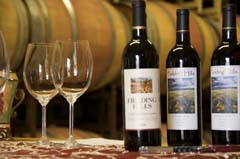
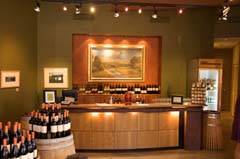
Fielding Hills Winery is a small, family-owned winery located in Wenatchee, Washington. Owner/winemaker Mike Wade and his wife Karen are longtime apple and cherry growers who have turned a middle portion of their orchard near Mattawa into a vineyard. Their Riverbend Vineyard, planted in 1998, is in the warm Wahluke Slope AVA. Strictly red wine producers, Fielding Hills’ current production is about 800 cases per year.

Just over a month ago, we had our first bottle of Fielding Hills wine and were absolutely blown away. Their 2005 Syrah is the first Washington Syrah we’ve given a 5-star (out of 5) Quality Rating. Since enjoying that first bottle, we have visited both their Riverbend Vineyard and their winery as well as attended their 2006 Vintage Release Dinner in Seattle. In addition to their Syrah, we also have really enjoyed their Merlot and Cabernet Sauvignon.
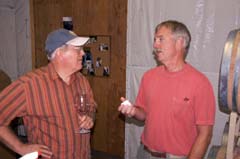
On a recent visit to Wenatchee, we visited Fielding Hills and had the pleasure to meet Mike and Karen Wade. The winery is located in a converted orchard shop just a few hundred yards from the Wades home overlooking the Wenatchee Valley. While the winery itself is nothing fancy, the quality of wine they are producing speaks for itself. The Wades are down-to-earth, very friendly people. It is obvious from speaking to Mike that he absolutely loves what he is doing and wants to produce the best wine possible. In fact, he is his own worst critic which I believe pushes him to be a great winemaker.

“This winery [Fielding Hills] is a superstar in the making.” –Paul Gregutt, Washington Wines and Wineries

During our winery visit, we had an opportunity to taste several barrel samples from the 2007 vintage. If those tastes were any indication, I think that 2007 has the potential to be their best vintage yet. I look forward to tasting them again when they are released next year.
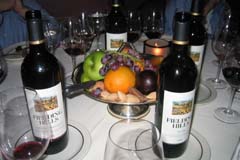
Last Friday, Dad (John) and I attended the Fielding Hills 2006 Vintage Release Dinner at El Gaucho in Seattle. It marked the release of their seventh vintage. It was a wonderful event at which we were able to meet some fellow wine lovers from Seattle as well as friends of the Wades that ventured over from the Wenatchee area. Of the 2006 vintage, I am most excited about their Syrah and Cabernet Sauvignon.

If you are ever in the Wenatchee area, I encourage you to give Mike and Karen a call to make an appointment to visit the winery. And regardless of whether you are able to visit or not, try to get your hands on a bottle or two of Fielding Hills wine and enjoy.

Here’s a rundown of the Fielding Hills wines that we have tasted recently. Under each Quality heading, the wine name will be listed along with price and QPR rating. All of Fielding Hills’ wines are sourced from their Riverbend Vineyard in Wahluke Slope. Wines in bold type received a QPR rating of 5 bangs for your buck (out of 5).

Quality: 5 stars (out of 5)
2005 Fielding Hills Syrah, $40, QPR: 5

Quality: 4.5 stars (out of 5)
2006 Fielding Hills Syrah, $40, QPR: 5
2005 Fielding Hills Merlot, $36, QPR: 5

Quality: 4 stars (out of 5)
2005 Fielding Hills Cabernet Sauvignon, $38, QPR: 5
2006 Fielding Hills Cabernet Sauvignon, $38, QPR: 5
2002 Fielding Hills Merlot, $36, QPR: 4
2006 Fielding Hills Merlot, $36, QPR: 4
2005 Fielding Hills Cabernet Franc, $30, QPR: 4

Quality: 3.5 stars (out of 5)
2006 Fielding Hills Tribute, $32, QPR: 2

Quality: 3 stars (out of 5)
2006 Fielding Hills Cabernet Franc, $30, QPR: 2


Filed under: American Wine, Cabernet Franc, Cabernet Sauvignon, Five-Bangs For Your Buck Wines, Five-Star Quality Wines, Merlot, Red Wine, Shiraz/Syrah, Spotlight On, Washington State Wine, Wines Over $25
 

Private Tasting: Red Sparklers


By Kori ~ September 15th, 2008

We enjoy trying new wines and treating ourselves to different things to keep our wine journey interesting. One of our recent double-blind private tastings featured wines that may be both new and different to you. While we have enjoyed red sparkling wines before, our experience with them is definitely limited. Yes, I said red sparkling wines. Not white as is most common or even rose. Both of these wines were definitely red. We chose to enjoy them as after-dinner drinks, but you could certainly have red sparklers before dinner, during dinner, or even all by themselves as well. When we poured our glasses, it was obvious that these wines were red and bubbly, but we did not know their region of origin or varietal. For a more complete description of how we set up these private tastings, please refer back to my Private Tasting: Rioja post.

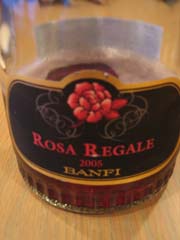
Between these two red sparklers, we definitely had a clear favorite. When we pulled off the sacks to reveal what we had been drinking, we found a Brachetto d’ Acqui from Italy and a Sparkling Shiraz from Australia. The 2005 Banfi Rosa Regale Brachetto d’Acqui easily beat the NV The Black Chook Sparkling Shiraz. Given how much we Wine Peeps enjoy Shiraz and sparkling wine, we were disappointed in this Sparkling Shiraz.
If you’ve never had a red sparkler, I highly encourage you to give one a try. And the Banfi is a great place to start.

2005 Banfi Rosa Regale Brachetto d’Acqui (Piedmont, Italy): Bright red with aromas of rhubarb pie. Tastes like a red Nivole. Easy drinking, very pleasant, and thankfully not too sweet.
Quality: 4 stars (out of 5)
QPR: 5 bangs for your buck (out of 5)
Where to buy: Sam’s Club, $15.99; Available elsewhere, $20 to $26

NV The Black Chook Sparkling Shiraz (South Eastern Australia): A very dark and dense purple color. Aromas of sweet black cherry. Smells much better than it tastes. Very bitter, like biting into an espresso bean.
Quality: 2 stars (out of 5)
QPR: NR (not recommended)
Where to buy: Wine Exchange (California), $12.95; Available elsewhere, $13 to $20


Filed under: Australian Wine, Five-Bangs For Your Buck Wines, Italian Wine, Lesser Known Varietals, Shiraz/Syrah, Sparkling Wine, Wines NOT To Buy (1 & 2 Star), Wines Under $15, Wines Under $20, Wines Under $25
 

Best Wine Shops for Washington Wine


By John ~ September 12th, 2008

It has been disappointing to me that so many wine shops in the State of Washington carry such a poor selection of Washington wines, especially given the very good quality of Washington wines. However, in our ongoing search for good sources of the wines that we like, we have found several vendors that you might want to consider for your purchases.

First, the bricks and mortar stores:

  1. Pete’s Wine Shop – Eastside (Bellevue, WA) – They have the best combination of selection and price of any Seattle area store. Pete’s also has a Seattle proper location on the east side of Lake Union, but it occupies just a portion of a neighborhood convenience store/deli and the aisles are so narrow and crowded that it’s a difficult place to shop.
  2. Esquin Wine Merchants (Seattle, WA) – They may have even a bigger selection of Washington wines, but generally their prices are not as good as Pete’s.
  3. McCarthy & Schiering (Seattle, WA) – They carry some good Washington wines, but neither their selection nor their prices are as good as Pete’s or Esquin.
  4. Pike & Western Wine Shop (Seattle, WA) – Much like McCarthy & Schiering, they carry some good Washington wines, but neither their selection nor their prices are as good as Pete’s or Esquin.
  5. Compass Wines (Anacortes, WA) – They often have the harder-to-find ultra-premium cult wines, but don’t expect many bargains here. Compass Wines also has an online store.
  6. Water to Wine (Gig Harbor, WA) – Another nice shop with a decent selection of Washington wines.
  7. Big box stores like Fred Meyer, Costco, and Sam’s Club – If they have the wine you are looking for, they’ll probably have it at a better price than any of the others, but it’s usually hit or miss on their inventory.

Now for the online vendors, where I do not believe that there is a clear number one as with the bricks and mortar stores:

  1. Avalon Wine (Corvallis, OR) – In the ultra-premium Washington wines category, they probably have the best selection and/or access to the best selection.
  2. MadWine (Seattle, WA) – They have an excellent selection of the mainstream Washington wines. If they have the wine, it will be at a very competitive price, but they won’t have the wines in the ultra-premium category that Avalon will have.

Keep in mind that it won’t make sense to just buy one or two bottles online because shipping costs will be too high. As a general rule, I believe you need to be thinking in terms of at least six bottles, preferably a case, to justify buying online.

There are certainly a number of good vendors I haven’t mentioned, but these are my favorites. Also, keep in mind that my vendor selections are somewhat biased because of their proximity to where I live in Seattle. If you know of any other great sources of Washington wines with good selection and value pricing, please let us know.


Filed under: General Wine Information, Washington State Wine
 

Wine Word of the Week: Closures


By Kori ~ September 11th, 2008

This week’s Wine Word of the Week is closures.
Official definition from Jancis Robinson’s The Oxford Companion to Wine:
Closures for wine containers are necessary to avoid harmful contact with oxygen and have changed remarkably little until recent times. Corks are still the principal closures used for wine bottles, just as they were more than two centuries ago and probably long before that, although alternative stoppers are increasingly common, thanks primarily to the rise in the incidence of corked wine as a result of cork taint since the mid 1980s.

Layman’s terms from Kori:
Closures are whatever mechanism is used to close a bottle of wine. Corks continue to be the most commonly used closures; however, in recent years, more and more wineries are experimenting with alternative closures such as screwcaps and glass stoppers in an attempt to eliminate cork taint.


Filed under: Wine Word of the Week
 

Red Mountain and Wahluke Slope: Hot in More Ways Than One


By Kori ~ September 10th, 2008

Red Mountain is generally considered the hottest AVA in Washington State. And by hot, I mean that it is home to some of the most highly sought after vineyards in the state. While Red Mountain is more well-known, Wahluke Slope is hot on its heels as prized vineyard land. And both Red Mountain and Wahluke Slope have some of the hottest weather in the state.
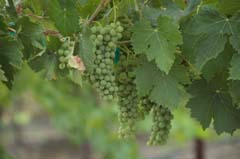
“For all of Washington’s wine types, specific vineyard regions are starting to emerge as distinctive.” –Harvey Steiman, Wine Spectator magazine, July 31, 2008

Recently, Dad (John) and I have had the pleasure to visit a number of vineyards around the state of Washington.

Located just off Interstate 82 in Benton City, Red Mountain was designated as an official AVA in 2001. On Red Mountain, we visited Kiona, Ciel du Cheval, Klipsun, Grand Ciel, Ranch at the End of the Road, and Taptiel. Ironically, most Red Mountain vineyards have very little slope. Most feature gently rolling sandy hills without much rock. Red Mountain vineyards seem to do best growing Bordeaux varieties, especially Cabernet Sauvignon and Merlot.
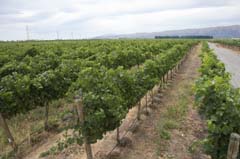
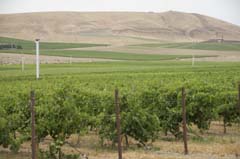
Wahluke Slope, designated as an official AVA in 2006, may be “young” but is quickly garnering a lot of attention. Located near the small town of Mattawa between the Saddle Mountains and the Columbia River, this area has long been known for its orchards. In recent years, a number of the tree-fruit growers have been pulling up some of their orchards to plant vineyards. In the Wahluke Slope, we visited Clifton, Clifton Hill, Katherine Leone, Gilbert, and Riverbend. Most of these vineyards feature sandy soils with some rocks and gently slope to the south. Like Red Mountain, Wahluke Slope does well with Cabernet Sauvignon and Merlot, but they are also producing some great Syrah and Malbec as well.
Now you might be thinking, why should I care about the geography, soils, and weather of vineyards and AVA’s? After all, I just want to enjoy a good bottle of wine. Well, that’s exactly why knowing a bit about where a wine comes from is important. Hopefully the next time you venture into your local wine shop, you won’t feel lost staring at a shelf full of bottles. While there is certainly no guarantee that the wine will be good, if you see a bottle of Cabernet Sauvignon from Red Mountain or a Syrah from Wahluke Slope, chances are that they at least started with good fruit. And as any winemaker will tell you, the path to great wine starts with good fruit.


Filed under: American Wine, Vineyards, Washington State Wine
 

Wine and Jazz in Leavenworth


By Kori ~ September 8th, 2008

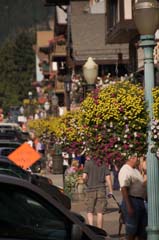
For those of you who have never been, Leavenworth, Washington, is a quaint and beautiful Bavarian Village nestled in the foothills of the Cascade Mountains in the heart of the state. No matter the season, it is a great get-away tourist destination. And in recent years, it has also become a destination for wine lovers as a number of wineries now call the area home and others have opened tasting rooms in downtown Leavenworth. About a two and a half hour drive east of Seattle, Leavenworth was awarded the title of “Ultimate Holiday Town USA” by A&E Network in 2003.

Recently, we spent a weekend in Leavenworth to relax, taste some wines, and attend a jazz concert.

Our first stop was at Boudreaux Cellars. Only open by appointment, Boudreaux is well worth a visit. Owner/winemaker Rob Newsom, a Louisiana native, has lived on the property since 1981 and began making wine in his garage in 1998. In 2001, he started building the winery facilities. Boudreaux currently produces about 2,000 cases per year which is exactly the production level that Newsom plans to maintain. Newsom sources his grapes from many different vineyards around the state. His goal is to get the best grapes from the best vineyards. Boudreaux Cellars is best known for its Cabernet Sauvignon which is excellent. In addition to making great wines, Boudreaux boasts a spectacular setting along the Icicle River.

Then we ventured into downtown Leavenworth and visited several tasting rooms. D’Vinery, which opened in January 2008, is the newest tasting room for Eagle Creek Winery. Nat, the assistant winemaker, was our very friendly and informative host. Eagle Creek Winery is Leavenworth’s oldest winery. Owner/winemaker Ed Rutledge and his wife Pat also own the local Innsbrucker Inn and A Book for All Seasons. Eagle Creek produces about 1,000 cases per year.

Ryan Patrick Vineyards opened a new tasting room location in Leavenworth this June. Their production facilities are located 55 miles away in Quincy.  Terry and Vivian Flanagan founded Ryan Patrick Vineyards, named for their two sons, in 1996. Overall, we were disappointed with this visit. The wines were decent but not great and the service was lacking. We waited quite a while to be served. And then after paying a tasting fee, we were not able to taste a couple of the wines that were on the list as available for tasting because they finished the bottles that were open but would not open new bottles.

Our final tasting room visit took us to A Taste of Icicle Ridge, the downtown Leavenworth location for Icicle Ridge Winery. A Taste of Icicle Ridge is a beautiful tasting room and gift shop decorated to resemble the log home that is the hallmark of the winery in nearby Peshastin. Louie Wagoner, the Wagoner family patriarch, is a well-known and respected pear farmer who ventured into the winery business about seven years ago. Son-in-law Don Wood is the winemaker and the entire family is involved in the operation. They host special events at the winery throughout the year. Our favorite Icicle Ridge events are their summer Jazzamatazz Concerts.

In fact, the main reason for this trip was to attend the Darren Motamedy jazz concert at Icicle Ridge. There are few things better than sitting on the lawn, sipping wine, and listening to wonderful jazz music as the sun sets behind the mountains.
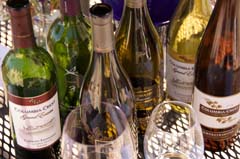
Here’s a breakdown of the wines that we tasted in Leavenworth. Under each Quality heading, the wine name and region will be listed along with price and QPR rating. Wines in bold type received a QPR rating of 5 bangs for your buck (out of 5).

Quality: 4.5 stars (out of 5)
2005 Boudreaux Cellars Cabernet Sauvignon, Washington State, $50, QPR: 5

Quality: 4 stars (out of 5)
2005 Boudreaux Cellars Merlot, Washington State, $40, QPR: 4

Quality: 3.5 stars (out of 5)
2002 Ryan Patrick Reserve Red, Columbia Valley, $29, QPR: 3

Quality: 3 stars (out of 5)
2004 Ryan Patrick Sauvignon Blanc, Columbia Valley, $14.40, QPR: 3
2005 Eagle Creek Chardonnay, Columbia Valley, $19, QPR: 3
2005 Eagle Creek Merlot, Columbia Valley, $21, QPR: 3
2005 Ryan Patrick Reserve Cabernet Sauvignon, Columbia Valley, $35, QPR: 3
2006 Eagle Creek White Riesling, Columbia Valley, $17, QPR: 2
2006 Eagle Creek Gewurztraminer, Columbia Valley, $18, QPR: 2
2006 Ryan Patrick Barbera, Columbia Valley, $26, QPR: 2
2007 Icicle Ridge Stiletto Red, Washington State, $27.50, QPR: 2
2006 Icicle Ridge Merlot, Washington State, $28.50, QPR: 2
2007 Icicle Ridge Three Blondes Gewurztraminer, Washington State, $23, QPR: 1
2006 Boudreaux Cellars Chardonnay, Columbia Valley, $35, QPR: 1

Quality: 2.5 stars (out of 5)
2006 Ryan Patrick Naked Chardonnay, Columbia Valley, $11, QPR: NR
2005 Eagle Creek Syrah, Columbia Valley, $21, QPR: NR
2006 Icicle Ridge Reserve Cabernet Sauvignon, Washington State, $45, QPR: NR
2007 Icicle Ridge White Merlot, Washington State, $48, QPR: NR

Quality: 2 stars (out of 5)
2006 Eagle Creek Pinot Grigio, Columbia Valley, $18, QPR: NR
2006 Ryan Patrick Rock Island Red, Columbia Valley, $18, QPR: NR
2006 Ryan Patrick Syrah, Columbia Valley, $30, QPR: NR


Filed under: American Wine, Barbera, Cabernet Sauvignon, Chardonnay, Five-Bangs For Your Buck Wines, Gewurztraminer, Merlot, Pinot Grigio/Pinot Gris, Red Wine, Riesling, Sauvignon Blanc, Shiraz/Syrah, Washington State Wine, White Wine, Wine Activities/Events, Wine Travel, Wines NOT To Buy (1 & 2 Star), Wines Over $25, Wines Under $15, Wines Under $20, Wines Under $25
 

Super Bargain Wines for Tough Times


By John ~ September 5th, 2008

As gas prices climb higher and higher and your employer balks at that long-overdue pay raise, have you started looking for wines on sale at reasonable prices? Sure you have, but remember there is a big difference between a cheap wine and a bargain wine.

A wine is only a bargain if it’s a good wine yet its price is much less than wines of similar quality. We believe that a wine is a super bargain only if it is of excellent quality (4-star quality or higher) and its price is less than or equal to one-half of wines of the same varietal and the same quality level (5 bangs-for-your-buck).
Out of the thousands of wines we have tasted over the years, below is a list of those super bargain wines with a price less than or equal to $10. We have listed the vintage that established this wine as a super bargain for us (and the price we paid for it at that time), but we believe you can confidently purchase their current vintage and expect an excellent wine drinking experience.

VINTAGE WINERY LOCATION VARIETAL/TYPE PRICE QUALITY QPR
2000 Columbia Crest Gr Est Washington Cab Sauv $8.00 5 5
2004 Castle Rock Washington Cab Sauv $8.00 4 5
2005 Concannon Central Coast California Cab Sauv $9.00 4 5
2005 Columbia Crest Gr Est Washington Merlot $9.00 4 5
2004 Penfolds Koonunga Hill AUSTRALIA Shiraz-Cab $7.99 4 5
2005 Milton Park (Thorn-Clarke) AUSTRALIA Shiraz $6.99 4 5
2003 Columbia Crest Two Vines Washington Shiraz $6.67 4 5
2006 Atlas Cumbres ARGENTINA Malbec $9.99 4 5
2001 Ste. Chapelle Idaho Riesling $5.00 4 5
2006 Yalumba Unwooded AUSTRALIA Chardonnay $10.16 4 5
2007 Nobilo Reg Collection
Marlborough
NEW ZEALAND Sauv Blanc $8.75 4 5
2006 Matua Valley Marlborough NEW ZEALAND Sauv Blanc $7.99 4 5
2001 Hogue Washington Chenin Blanc $5.00 4 5
2005 Michele Chiarlo Nivole ITALY Moscato d’Asti $9.95 4 5
NV Jonesy Old Tawny Port AUSTRALIA Port $7.99 4 5
NV Freixenet Cordon Negro Brut Cava SPAIN Sparkling Wine $9.09 4.5 5

In the coming months, we will give you similar lists of super bargain wines at varying price levels.


Filed under: American Wine, Argentine Wine, Australian Wine, Cabernet Sauvignon, California Wine, Chardonnay, Chenin Blanc, Five-Bangs For Your Buck Wines, Idaho Wine, Italian Wine, Malbec, Merlot, Moscato/Muscat, New Zealand Wine, Port, Red Wine, Riesling, Sauvignon Blanc, Shiraz/Syrah, Spanish Wine, Sparkling Wine, Washington State Wine, White Wine, Wines Under $10
 

Wine Word of the Week: Corked


By Kori ~ September 4th, 2008

This week’s Wine Word of the Week is corked, not to be confused with the term corkage from last week.
Official definition from Jancis Robinson’s The Oxford Companion to Wine:
Corked is the pejorative tasting term for a wine spoiled by a cork stopper contaminated with cork taint. This is one of the most serious wine faults as in most cases it irrevocably imbues the wine with such a powerfully off-putting smell that it cannot be drunk with any enjoyment. ….

Layman’s terms from Kori:
Corked is the term used to describe a wine that has been spoiled by cork taint. Cork taint is most often recognized by the smell of wet cardboard when you sniff the wine. A wine that is corked is essentially ruined. Some experts contend that as many as five percent of all wine bottles opened are flawed by a tainted cork. This fact has led many in the industry to pursue alternative closures such as screwcaps and glass stoppers.


Filed under: Wine Word of the Week
 

Basics of Growing Wine Grapes


By Kori ~ September 3rd, 2008

Growing wine grapes is not an uppity business; it is basic agriculture (see my post from June 16). And most growers are salt-of-the-earth folks.
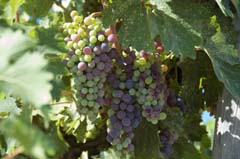
A wine grape consists of about 71-85 percent water, on average about 13-27 percent sugar (which is converted into alcohol during the fermentation process), and about 2 percent skin, pips and everything else. If a winemaker knows how much alcohol he wants in his wine, he can pick the grapes when they have developed the right amount of sugar.

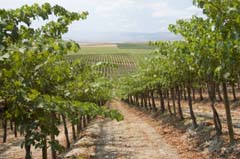
Wine grapes need and love sunshine but not too much sunshine. Just like other fruit, not enough sunshine and the grapes won’t ripen, too much sunshine and they’ll burn. In a perfect world, you’d have a vineyard with long, hot sunny days and cool, breezy nights.

Grapevines also need water to survive but too much water is bad, too. A wine growing area like Washington State that can provide controlled irrigation to its vineyards has a big advantage over those totally dependent on nature.

Wine grapes generally do best in “bad” soil on a hillside, facing towards the equator (south in the northern hemisphere). They can make otherwise barren land productive. The average person probably does not realize how productive grapevines can be. As Lynn Hoffman says in The New Short Course in Wine:

“Even old vines severely pruned to concentrate their juice will produce over a thousand full-sized bottles per acre. Irrigation and lenient pruning can multiply that figure ten-fold….There is no crop that yields as great a value per acre of ground as wine grapes.”

Once grapes are picked, they are processed into wine. Yeasts that grow on all grape skins automatically ferment grape juice into wine when the grapes are crushed, although many wineries today add their own yeast to jump-start the process.
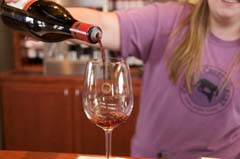
The skins of all wine grapes are basically red in color, but the juice is naturally clear. Therefore, the way to make white wine is to separate the juice from the skins almost immediately so that the wine extracts none of the skin’s red color pigment. To produce a red wine, winemakers let the fermentation run its full course in contact with the skins. The longer the skin contact, the greater the extraction of red color and the greater the intensity of the wine because the skins are also where the tannins are found.

While winemakers get most of the attention in the wine business and do make the decisions on when to harvest, how to blend, how long to keep the wine in barrels, and when to bottle, the best winemakers will freely admit that it is really the grape grower who is primarily responsible for the quality of the wines that they produce. If the quality of the grapes is not present, there is only so much a winemaker can do.


Filed under: General Wine Information, Vineyards
 

Tasting Rooms: Trends and Areas Needing Improvement


By John ~ August 29th, 2008

On February 8th, I did a post on Tips for visiting wine country which included advice on being friendly and polite and respecting the time of the people working in a tasting room. Since then, we have visited over 100 winery tasting rooms in 15 different states. Based on those visits, I’d like to share a couple trends I’ve observed as well as suggest some areas where tasting rooms could improve the experience for their visitors.

First, the trends:

  1. More and more winery tasting rooms charge tasting fees. While I would prefer no tasting fees, I understand the problems wineries face with busloads just out for a free party or locals using the tasting room as a free bar. Therefore, I can live with a tasting fee for groups of eight or more or a tasting fee that is refundable with the purchase of wine. However, I try to avoid tasting rooms with a totally non-refundable tasting fee. There are too many other good wineries out there that have customer-friendly policies.
  2. More and more winery tasting rooms are pouring wines not available elsewhere. For me, this trend is worse than a tasting fee. I visit winery tasting rooms primarily to find good new wines to taste that I will be able to buy when I get back home if I like them. If the wines they pour are not available outside of the tasting room, I lose interest quickly. While I realize that the winery can possibly make more sales in the tasting room today with the “pitch” that it’s not available elsewhere, I really do not believe it helps them in the long run.

Now, the areas needing improvement. In addition to the comments I made above, here are some suggestions that I have for tasting rooms:

  1. Make sure that you are open during the hours that you have advertised or posted that you are open. As our regular readers know, nothing ticks us off more than a tasting room not open as advertised. I doubt that we are alone on this one. You usually don’t get a second chance to make a first impression, so be sure to change your hours on your website and all other places you advertise before you just decide to close today because it hasn’t been very busy recently on this day of the week. If I have driven five hours to visit you, I will not be a happy camper. And the “I” I’m referring to might not be me but could be the biggest potential customer or promoter of your wines that you’ll ever have.
  2. Make sure that you clearly explain your tasting fee policy, if any, up front. Better yet, have it posted clearly and explain it. I’ve seen it get very awkward when it was not explained up front and a visitor has already finished tasting when the tasting fee is brought to their attention. That situation can poison the atmosphere for everyone else in the tasting room, too.
  3. Have a handout with tasting notes and a price list. Too often, tasting notes and a price list are nonexistent or either they are in a laminated copy on the counter but not on a sheet on which a visitor can make notes and take with them.
  4. Have spit cups and dump buckets available. I have been amazed at how many tasting rooms do not even have dump buckets, much less provide at least a styrofoam spit cup (or the “green” equivalent). If you are serious about promoting responsible wine drinking, then you should encourage your visitors to spit rather than swallow, especially since many will be driving and visiting other wineries as well.
  5. Give your tasting room personnel some flexibility in wines to pour. Again, when I drive five hours to visit your tasting room that is 30 miles from anyone else just to taste a Cab you are noted for, pay a tasting fee, and then your tasting room person tells me you’re not pouring the Cab today, I get more than a little upset. My suggestion is that you give your tasting room personnel the flexibility to open that Cab if they can see that the visitor is a serious wine enthusiast and not just a freeloader.
  6. Cool your uppity attitude. Obviously, this suggestion does not apply to all tasting rooms as we have had many wonderful experiences and met some very friendly people on our winery visits. In fact, when we have been served by the owners and/or winemakers in a tasting room, most have been very down-to-earth folks who are very courteous and welcoming. Too often, though, we have encountered tasting room hired hands who cop an uppity attitude and talk down to visitors. Not smart and certainly not good for business.

If visitors remember to be polite and respectful and wineries take some of these suggestions to heart, I truly believe the tasting room experience can be great for all of us.


Filed under: General Wine Information, Wine Travel