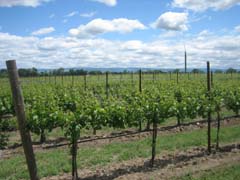
 As our road trip continued, we were excited to arrive back in our home state of Washington. We took two days to tour a select group of Walla Walla wineries. It was our first trip to Walla Walla in several years. Most Walla Walla wineries seem to be going to tasting fees that are refundable with a purchase. While I would prefer no tasting fees, I can understand and live with that system. Where I have a problem is with wineries where the tasting fee is not refundable and/or they offer to let you keep the tasting glass (which I don’t need and it doesn’t match any other glass that I have). On this trip, we tasted at several wineries we had visited on our last trip here and a couple of new ones. Interestingly, I was generally more impressed with the new ones than the ones we had previously visited.
Our first stop was at Woodward Canyon Winery, one of our repeat visits. Of the five wines we tasted, our favorite was the 2005 Woodward Canyon Columbia Valley Merlot, although I did not find any of their wines really special.
Our next stop was at L’Ecole No. 41, a longstanding winery here housed in old schoolhouse No. 41, a truly unique winery setting. Of the five wines we tasted, our favorite was the 2006 L’Ecole Seven Hills Vineyard Estate Syrah, although once again none of their wines really knocked my socks off as I had hoped they would.
Our third stop was at Reininger Winery, another one we had visited previously, but one that I believe has improved during the intervening years. At Reininger, we found three excellent wines out of the six we tasted, but our favorite was the 2005 Reininger Syrah Ash Hollow Vineyard. The best value wine we tasted was the 2003 Reininger Cabernet Sauvignon Ash Hollow Vineyard. The third excellent wine was the 2005 Reininger Malbec.
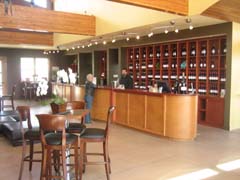 Next we visited the beautiful new Cougar Crest Estate Winery facility. The tasting room is outstanding in every way, and we found their wines to be generally very good. Dave and Debbie Hansen are another set of winery owners whose agricultural background is in fruit production, in their case apples. They grow all of their own grapes on their estate vineyards, currently producing about 10,000 cases per year. Out of the six wines we tasted, our favorite was their 2005 Cougar Crest Walla Walla Valley Syrah. Close behind was their 2005 Cougar Crest Walla Walla Cabernet Franc, a varietal I’ve rarely found attractive other than in a blend.
Our fifth visit of the day was supposed to be Saviah Cellars. We had tasted their 2005 Syrah at Taste Washington and didn’t really like it that much, but we wanted to give them another try because of the strong recommendation of the hostess at Watermill Winery. But despite the fact that their advertising said they would be open from 12-5pm, they were not. And the young man, who was left to inform us that they were closed as the boss ducked out a side door, was not apologetic nor did he care to tell us when they might be open if we wanted to come back. They might have decent wine, I’ll never know, but their business practices are certainly not impressive. [Editor’s note: We had an opportunity to revisit Saviah Cellars and had a very positive experience. Please see Kori’s July 28th post.]
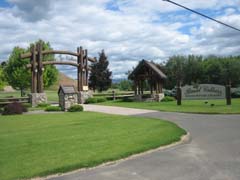 Our final stop for Day 1 was at Basel Cellars, where we tasted what we thought was the best wine of the day, the 2005 Basel Cellars Syrah. Two other excellent wines were the 2005 Basel Cellars Estate Merlot and the 2005 Basel Cellars Inspired (Merlot/Cab Franc blend).
Here’s a breakdown of the Walla Walla wines that we tasted on Day 1. Under each Quality heading, the wine name will be listed along with price and QPR rating. Wines in bold type received a QPR rating of 5 bangs for your buck (out of 5).
Quality: 4.5 stars (out of 5)
2005 Basel Cellars Syrah, $28, QPR: 5
Quality: 4 stars (out of 5)
2005 Basel Cellars Estate Merlot, $28, QPR: 5
2003 Reininger Cabernet Sauvignon Ash Hollow Vineyard, $32, QPR: 5
2005 Cougar Crest Walla Walla Valley Syrah, $32, QPR: 4
2005 Cougar Crest Walla Walla Cabernet Franc, $36, QPR: 3
2005 Basel Cellars Inspired (Merlot/Cab Franc blend), $40, QPR: 3
2005 Reininger Syrah Ash Hollow Vineyard, $41, QPR: 3
2005 Reininger Malbec, $45, QPR: 2
Quality: 3.5 stars (out of 5)
2005 L’Ecole Columbia Valley Cabernet Sauvignon, $29, QPR: 5
NV Cougar Crest Dedication Two Red Table Wine, $20, QPR: 4
2005 Basel Cellars Estate Cabernet Sauvignon, $36, QPR: 4
2006 Cougar Crest Walla Walla Valley Viognier, $20, QPR: 3
2005 Cougar Crest Walla Walla Valley Merlot, $32, QPR: 3
2006 L’Ecole Seven Hills Vineyard Estate Syrah, $36, QPR: 3
2005 Reininger Syrah, $36, QPR: 3
2005 Woodward Canyon Columbia Valley Merlot, $39, QPR: 3
2005 Woodward Canyon Artist Series Cabernet, $44, QPR: 3
2007 Basel Cellars Sauvignon Blanc, $18, QPR: 2
2005 Basel Cellars Estate Merriment (Bordeaux blend), $48, QPR: 1
2005 L’Ecole Pepper Bridge Vineyard Apogee, $49, QPR: 1
2003 Woodward Canyon Estate Red, $59, QPR: 1
Quality: 3 stars (out of 5)
2006 L’Ecole Recess Red, $17, QPR: 4
2006 Nelms Road Merlot, $21, QPR: 3
2006 Basel Cellars Sauvignon Blanc, $18, QPR: 2
2003 Reininger Merlot, $30, QPR: 2
2005 Cougar Crest Walla Walla Anniversary Cuvee (Bordeaux blend), $32, QPR: 2
2007 Woodward Canyon Estate Sauvignon Blanc, $24, QPR: 1
Quality: 2.5 stars (out of 5)
2006 L’Ecole Seven Hills Vineyard Estate Merlot, $36, QPR: NR
2002 Reininger Cima blend, $45, QPR: NR
Come back next Friday for my recap of Day 2 in Walla Walla.

 Wine Peeps is an independent wine blog dedicated to helping you get the most bang for your buck in wine. We do this through blind tastings of wine from around the world and calculations of
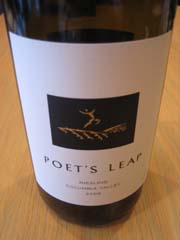 During dinner, one of these wines really stood out. All four of us Wine Peeps preferred it over the other wine. When we finished eating and pulled off the sacks to reveal what we had been drinking, we found two Rieslings from Washington State. The 2006 Poet’s Leap Riesling had easily beaten the 2006 Icicle Ridge White Riesling.

 This week’s Wine Word of the Week is alcohol.
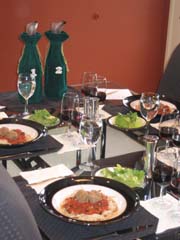 When preparing the meal for a double-blind tasting, I try to keep the entrée very basic. We tend to like very spicy foods so it would be easy to do a pairing that would not work well with some varietals. The reasoning for the more basic entrée is that since we do not know the varietal, we do not want to have a meal that might overpower a particular wine.
 In fact, later during dinner, we took the remaining half bottle of the Lafite and blind tasted it against a 2000 Columbia Crest Walter Clore Private Reserve (Bordeaux-type blend from Washington). Walter Clore is widely available at about $30 per bottle. In our blind tasting, two of the four of us preferred Lafite and the other two chose Walter Clore as their favorite.
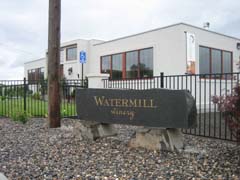 Our first stop was at
 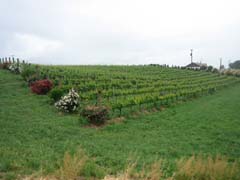 Our next stop was at
  This week’s Wine Word of the Week is color.
 The people who make money in the winery business are not necessarily the people who grow or contract for the best grapes and they are not necessarily the people who make those grapes into the best wine, but they are the people who have developed and executed a top notch, consistent program for marketing their product, selling out every vintage before the next one is ready to come to market.
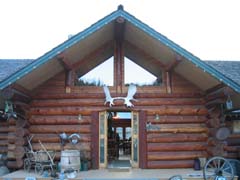
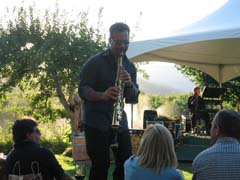 They have a very unique tasting room setup in the dining room of Louie and Judy Wagoner’s log home at the winery. You’ll never feel more at home anywhere else than at Icicle Ridge. They have established a very successful wine club that is built around a myriad of special events held at the winery throughout the year. Our favorite Icicle Ridge events are their summer Jazzamatazz Concerts, featuring popular regional artists such as Darren Motamedy.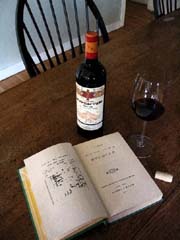
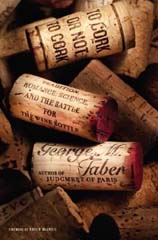 My own conclusion is that the wine industry must continue to work diligently to find the perfect alternative closure to cork. The wine industry cannot stay viable as an industry when five percent or more of all bottles opened are flawed by a tainted cork and when a person has no clue whether an expensive bottle they bought years ago for a special occasion and stored properly will be good when they open it. While the cork industry has been forced to improve, cork is still not the perfect closure.