
Road Trip: Idaho


By John ~ June 20th, 2008

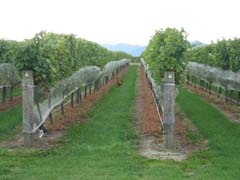
As we continued our cross-country road trip, we visited three Idaho wineries, one in Glenns Ferry and two in Caldwell, Idaho. They all produce their wines exclusively with Idaho grapes, and we found some pretty good wines at each stop. Our first stop was at Carmela Vineyards, in business since 1988. They produce about 10,000 cases a year, almost all sold in Idaho although they will ship out-of-state. Our favorite wine at Carmela was their 2004 Carmela Reserve Merlot.
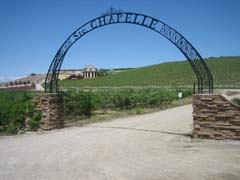
Our next stop was at Ste. Chapelle Winery, Idaho’s oldest and largest winery, a part of the mammoth Constellation Group when we visited but was purchased last week by Ascentia Wine Estates. Out of the five wines we tasted at Ste. Chapelle, our favorites were the 2004 Ste. Chapelle Winemaker Syrah and the 2004 Ste. Chapelle Ice Wine Sauvignon Blanc.

Our third stop was at Williamson Vineyards, where a fourth generation Williamson, Beverly, was our knowledgeable tasting room hostess. The Williamsons have been in the fruit growing business for generations and remain a large producer today but have only been growing grapes, mainly as a diversification measure, since the 1990’s. They are contract growers for some of Idaho’s best known wineries as well as produce an increasing amount of grapes for their own winery operation. We also had the opportunity to meet and visit with Beverly’s father, Roger, who is the winemaker for Williamson Vineyards. While we would not hesitate to recommend any of the five wines we tasted at Williamson, our favorites were the 2005 Williamson Syrah and the NV Williamson Doce Dessert Wine (Ruby style Port). I believe that Williamson is an up-and-coming winery that merits watching. I’d like to come back in five years and see the progress that they have made.
Note: A few days after these visits, we also visited another Idaho winery, Camas Prairie Winery in Moscow, Idaho, but we did not taste any wines. When we entered the tasting room, the owner was serving some other folks so we didn’t expect instantaneous service. But when he finished their tasting, he said he was going to pass them off to the checkout clerks, implying that he would then serve us. However, instead he went over to the checkout with them and continued to visit, totally ignoring us. But the straw that broke the camel’s back for us was when another employee came in, and instead of spelling him at the checkout desk or serving us, she waited on another customer who had come in after us. When that happened, we left. There are too many other wineries with good wine and good service to put up with that. I could not recommend Camas Prairie Winery to anyone.

Here’s a breakdown of the Idaho wines that we tasted. Under each Quality heading, the wine name will be listed along with price and QPR rating. Wines in bold type received a QPR rating of 5 bangs for your buck (out of 5).

Quality: 4 stars (out of 5)
2004 Carmela Reserve Merlot, $25, QPR: 5
2004 Ste. Chapelle Winemaker Syrah, $11, QPR: 5
2004 Ste. Chapelle Ice Wine Sauvignon Blanc, $20, QPR: 5
2005 Williamson Syrah, $18, QPR: 5
NV Williamson Doce Dessert Wine (Ruby style Port), $25, QPR: 5

Quality: 3.5 stars (out of 5)
2004 Williamson Cabernet Sauvignon, $25, QPR: 5
2006 Williamson Late Harvest Viognier, $22, QPR: 5

2004 Carmela Red Meritage, $17, QPR: 4
2006 Williamson Viognier, $15, QPR: 3

Quality: 3 stars (out of 5)
NV Carmela Cabernet Merlot, $10, QPR: 5
2005 Ste. Chapelle Winemaker Cabernet Sauvignon, $11, QPR: 5

2001-02 Carmela Merlot, $17, QPR: 4
2000 Carmela Cabernet Franc, $17, QPR: 4

Quality: 2.5 stars (out of 5)
2003 Carmela Cabernet Sauvignon, $17, QPR: NR
2006 Ste. Chapelle Winemaker Merlot, $11, QPR: NR

Quality: 2 stars (out of 5)
2003 Carmela Pinot Noir, $17, QPR: NR
2006 Carmela Semillon, $13, QPR: NR
2006 Ste. Chapelle Sauvignon Blanc, $9, QPR: NR

Have you ever had Idaho wine? If so, how did you like it? What was your favorite?


Filed under: American Wine, Cabernet Franc, Cabernet Sauvignon, Dessert Wine, Five-Bangs For Your Buck Wines, Idaho Wine, Merlot, Pinot Noir, Port, Red Wine, Riesling, Sauvignon Blanc, Semillon, Shiraz/Syrah, Viognier, White Wine, Wine Travel, Wines NOT To Buy (1 & 2 Star), Wines Under $10, Wines Under $15, Wines Under $20, Wines Under $25
 

Wine Word of the Week: Acidity


By Kori ~ June 19th, 2008

This week’s Wine Word of the Week is acidity.

Official definition from Jancis Robinson’s The Oxford Companion to Wine:
Acidity is a general term for the fresh, tart, or sour taste produced by the natural organic acids present in a liquid. Wines, together with most other refreshing or appetizing drinks, owe their attractive qualities to a proper balance between this acidic character and the sweet and bitter sensations of other components. All refreshing drinks contain some acidity, which is typically sensed on the human palate by a prickling sensation on the sides of the tongue.

Layman’s terms from Kori:
Too little acid and wine is “flat.” Too much acid and wine is “tart.” In between, wine is “crisp.” A mark of acidity is saliva production in your mouth. The more saliva produced in your mouth after you spit or swallow a wine, the higher the level of acidity.


Filed under: Wine Word of the Week
 

Wine Tasting Dinner: Argentine Malbec


By Kori ~ June 18th, 2008

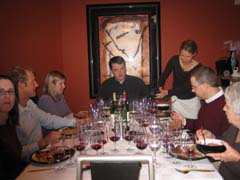
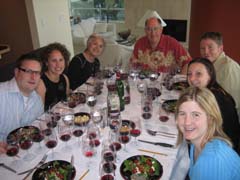
On Friday evening, we hosted our 60th wine tasting dinner. It was another fun evening of good wines, Mom’s excellent food, and the company of wonderful friends.

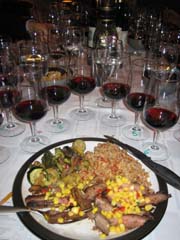
With the current state of the dollar and rising gas prices, most of us are looking to find some good deals. That’s the main reason why we selected Argentine Malbec for this month’s tasting. All six wines that we tasted come in under $20, and the winner rolls in under $10. Malbec is a varietal that is getting more and more attention and appeals to a wide variety of folks. It has a lot to offer. It is not as tannic as Cabernet Sauvignon but is spicier than Merlot and goes well with a number of different foods. It paired wonderfully with Mom’s dinner of flank steak with pico di gallo and corn salsa, Spanish rice, and sautéed vegetables.

Paul Gregutt, Wine Adviser for the Seattle Times, recently wrote a couple articles touting Argentine Malbec. All of the wines in this tasting were on his recommended list from April 9th.

For the most part, my rankings are generally close to the group consensus rankings. In this tasting, however, my personal favorite finished fourth. While the last two wines were disappointing, I don’t feel that you can go wrong with any of the top four.

From 1st to last in the group consensus rankings:

2006 Altas Cumbres Malbec: Spicy and jammy. Smooth, not too bold.
Quality: 4 stars (out of 5)
QPR: 5 bangs for your buck (out of 5)
Where to buy: Esquin (Seattle), $9.99, Available elsewhere, $7.99

2006 Punto Final Malbec: Lots of red fruits, especially cherries and strawberries come through on both the nose and the palate. A hint of peppermint is present on the mid-palate.
Quality: 3.5 stars (out of 5)
QPR: 5 bangs for your buck (out of 5)
Where to buy: Esquin (Seattle), $11.99, Available elsewhere, $9 to $14

2007 Altos Las Hormigas Malbec: A bit spicy with flavors of beef jerky and cinnamon. A little rough now, should get better with age.
Quality: 3 stars (out of 5)
QPR: 4 bangs for your buck (out of 5)
Where to buy: Pete’s Wine Shop – Eastside (Seattle area), $9.29, Available elsewhere, $8 to $13

2005 Melipal Malbec: My favorite of the evening. Very complex with lots of dried fruit and black olive flavors. Also has an attractive smoky component coming through on the nose.
Quality: 3 stars (out of 5)
QPR: 1 bang for your buck (out of 5)
Where to buy: Esquin (Seattle), $19.99, Available elsewhere, $14 to $20

2005 Tomero Malbec
Quality: 2.5 stars (out of 5)
QPR: NR (not recommended)
Where to buy: Esquin (Seattle), $14.99

2005 Andeluna Winemaker’s Selection Malbec
Quality: 1 star (out of 5)
QPR: NR (not recommended)
Where to buy: Esquin (Seattle), $12.99


Filed under: Argentine Wine, Five-Bangs For Your Buck Wines, Malbec, Red Wine, Wine Tasting Dinners, Wines NOT To Buy (1 & 2 Star), Wines Under $10, Wines Under $15, Wines Under $20, Wines Under $25
 

Wine producing is basic agriculture


By Kori ~ June 16th, 2008

The wine producing business is not nearly as glamorous as it looks from the outside. It’s basic agriculture.

Traditionally, especially in Europe, winemaking was a family farm type business on a small plot of land passed down through the generations. It was an annual struggle to grow the grapes, process them into wine, and sell them for enough to support a family.

In the United States, it was somewhat similar early on, but today the wine business is inundated by the hobbyist winery owners on the one hand and the mega-winery conglomerates on the other.

Whether here in the U.S., in Europe, or wherever, the wine producing business is a labor intensive, get your hands dirty endeavor. You can do everything technically correct in planting, weeding, pruning, irrigating, scheduling your harvest–you name it–and the weather can still ruin your crop.

In the winery itself, skill in blending cannot always make up for deficiencies in a particular grape vintage. And the opinion of just a couple of key critics can make-or-break your marketing effort for the year. Our hats are off to those families who have made wine production their life’s business and succeeded. Again, it’s not nearly as glamorous as it looks from the outside.


Filed under: General Wine Information
 

Road Trip: Colorado


By John ~ June 13th, 2008

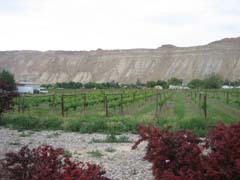
As we traveled through Colorado, we made several stops at wineries near Palisade, Colorado. We were impressed that each of the wineries we visited sold only Colorado grown grapes, offered complimentary tastings, had nice professional tasting rooms, and their wines were pretty good.

Our first stop was at Grande River Vineyards, Colorado’s oldest winery. Their production is about 8,000 cases per year, almost all sold in Colorado, although they can ship to Washington State. We tasted seven different wines with our favorite being the 2005 Grande River Syrah.

Our next stop was at Plum Creek Winery, a winery started in 1983 with production of about 15,000 cases per year, all sold in Colorado. Plum Creek will no longer even ship outside of Colorado, a shame since they have some good wines. We tasted five Plum Creek wines, our favorites being their 2006 Plum Creek Sauvignon Blanc, the 2006 Plum Creek Sangiovese, and the 2006 Plum Creek Cabernet Sauvignon.

Our final stop was at Graystone Winery, a Port house where we tasted three different ports. Our favorite was their Graystone Port III (2003 Cab/Merlot Ruby Port), a port that we believe will be even better with more time in the bottle.

In my opinion, Colorado is an emerging wine area that has good potential. They seem to be able to grow the popular international varietals and have a tourist base that is generally wine savvy. I’d like to come back in five years and see the progress they have made.

Since we tasted fifteen different wines, I have broken down the list into Quality rating categories. Under each Quality heading, the wine name will be listed along with price and QPR rating. Wines in bold type received a QPR rating of 5 bangs for your buck (out of 5).

Quality: 3.5 stars (out of 5)
2005 Grande River Syrah, $17, QPR: 5
2005 Grande River Late Harvest Viognier, $20, QPR: 5
2006 Plum Creek Sangiovese, $17, QPR: 5
2006 Plum Creek Cabernet Sauvignon, $17, QPR: 5
Graystone Port III (2003 Cab/Merlot Ruby Port), $23, QPR: 5

2006 Plum Creek Sauvignon Blanc, $11, QPR: 4

Quality: 3 stars (out of 5)
Graystone Port II (2002 Cab/Merlot Port), $23, QPR: 5
2003 Plum Creek Cabernet Franc, $12, QPR: 4
2001 Grande River Reserve Cabernet Sauvignon, $35, QPR: 3
2005 Grande River Viognier, $17, QPR: 2

Quality: 2.5 stars (out of 5)
2002 Grande River Merlot, $13, QPR: NR
2004 Grande River Cabernet Sauvignon, $15, QPR: NR
2006 Plum Creek Merlot, $12, QPR: NR
Graystone Lipizzan White Port (2002 Pinot Gris Port), $22, QPR: NR

Quality: 2 stars (out of 5)
2006 Grande River Sauvignon Blanc, $10, QPR: NR

Have you ever had Colorado wine? If so, how did you like it? What was your favorite?


Filed under: American Wine, Cabernet Franc, Cabernet Sauvignon, Colorado Wine, Dessert Wine, Five-Bangs For Your Buck Wines, Merlot, Pinot Grigio/Pinot Gris, Port, Red Wine, Sangiovese, Sauvignon Blanc, Shiraz/Syrah, Viognier, White Wine, Wine Travel, Wines NOT To Buy (1 & 2 Star), Wines Over $25, Wines Under $15, Wines Under $20, Wines Under $25
 

Wine Word of the Week: Tannins


By Kori ~ June 12th, 2008

As of today, we are implementing a new weekly feature called Wine Word of the Week. Each Thursday I will select one wine word that you may have heard but may not be exactly sure what it means. I’ll share with you an official “textbook” definition and then do my best to explain it in layman’s terms.

Our first Wine Word of the Week is tannins.

Official definition from Jancis Robinson’s The Oxford Companion to Wine:
Tannins are a diverse and complex group of chemical compounds that occur in the bark of many trees and in fruits, including the grape. Strictly speaking, a tannin is a compound that is capable of interacting with proteins and precipitating them; this is the basis of the process of tanning animal hides (hence the name tannin) and is also a process that is believed to be responsible for the sensation of astringency. Tannins in wine come predominantly from the grapes and, to a much lesser extent, from the wood in which the wine is aged.

Layman’s terms from Kori:
Tannins prolong the life of a great red wine. High tannins “pucker up” the inside of your mouth and leave it feeling dry and cottony. As the wine ages, the tannins “soften” and become less harsh in your mouth.


Filed under: Wine Word of the Week
 

Wine Blogging Wednesday #46: Rhone Whites


By Kori ~ June 11th, 2008

Our host for the June edition of Wine Blogging Wednesday, the blogosphere’s monthly virtual wine tasting event, is Dr. Debs of Good Wine Under $20. She has selected Rhone Whites as our theme. With the warm summer weather coming soon (hopefully), many of us will be looking to enjoy some nice white wines. Excellent options are wines made from one or more of the classic white grape varieties of the Rhone Valley in France, including Bourboulenc, Clairette Blanc, Grenache Blanc, Marsanne, Muscat Blanc a Petits Grains, Picardin, Picpoul/Piquepoul Blanc, Roussanne, Ugni Blanc, and Viognier. Even though these varieties are native to the Rhone Valley, these grapes are now grown in many parts of the world. Therefore, a wine does not actually have to be produced in the Rhone Valley in France to be considered a “Rhone White.”

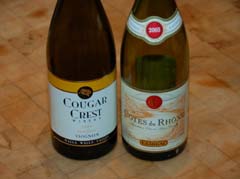
In fact, Dr. Debs promised top billing in the roundup if we tasted wines from more than one region. So the Wine Peeps decided to blind taste one from Cotes du Rhone in France and one from the Walla Walla Valley in our home state of Washington. We selected the 2005 E. Guigal Cotes du Rhone Blanc and pitted it against the 2005 Cougar Crest Viognier. We were pleasantly surprised to find that all four of us preferred the Cougar Crest Viognier from Washington. We found it to be very fresh, crisp, and smooth which is exactly what we are looking for in a summer white. In addition, it was a perfect complement to our dinner of chicken kabobs with squash, green peppers, and zucchini served with rice.

2005 Cougar Crest Viognier (Walla Walla Valley, Washington): Faint yellow color and very clear. Sweet aromas of tree fruits, especially pear. Pear, honeysuckle, and floral flavors come through on the palate. Very fresh, crisp acidity, and a nice smooth finish.
Quality: 3.5 stars (out of 5)
QPR: 3 bangs for your buck (out of 5)
Where to Buy: Davidsons Liquors (Colorado), $17.99, Available elsewhere, $20 to $21

2005 E. Guigal Cotes du Rhone Blanc (Rhone Valley, France): 55% Viognier, 20% Roussanne, 10% Clairette, 5% Marsanne, 5% Bourboulenc, and 5% Grenache Blanc. Light straw and hay hues. Very tight nose with faint floral and pear aromas. Minerally and chalky flavors. Very plain; nothing stands out.
Quality: 2 stars (out of 5)
QPR: NR (not recommended)
Where to Buy: Davidsons Liquors (Colorado), $14.99, Available elsewhere, $11 to $15


Filed under: American Wine, French Wine, Lesser Known Varietals, Viognier, Washington State Wine, White Wine, Wine Blogging Wednesday, Wines NOT To Buy (1 & 2 Star), Wines Under $15, Wines Under $20, Wines Under $25
 

Tasting Methodology


By Kori ~ June 9th, 2008

“Wine tasting is to taste a wine with care in order to appreciate its quality; to submit it to examination by our senses, in particular those of taste and smell; to try and understand it by discovering its various qualities and defects and putting them into words….” –Jean Ribereau-Gayon and Emile Peynaud

As you begin to examine each wine in a tasting you attend or host, try to follow the tasting methodology below (adapted from several sources over the years, including the Wine Spectator, Emile Peynaud, and Amy Mumma, CWU World Wine Program coordinator) or something similar:

First, pour about 1/3 glassful in an appropriate tasting glass.

SEE: Tilt the glass at a 45-degree angle away from you against a white background with good lighting.

  • Is the wine brilliant, clear, or hazy?
  • Do you see any bubbles or ropiness?
  • Is the color pale or intense (appropriate for the varietal)?
  • Does it have good color depth or density?

Sight is the first of our senses that we use in wine tasting. What you see gives you a sneak preview, clues as to what to expect. Be sure to take good notes at each step in seeing, sniffing, and sipping.

SNIFF: Swirl the wine gently in the glass to aerate it and release its bouquet, then put your nose inside the rim of the glass and take a couple of slow, deep sniffs to smell for aromas.

  • Is the wine clean, or are there any off-odors?
  • Are the aromas faint or intense?
  • What are the aromas? Does it smell like fruit, flowers, spice, etc?
  • Does the wine smell oaky? (American Oak: overt, vanilla, perception of sweetness; French Oak: subtle, spicy, kicks in mid-palate)

SIP: Take a small amount of wine into your mouth, let it lie on your tongue a few seconds and then slowly draw in some air through your lips, and then swish the liquid around like mouthwash, bringing it into contact with every part of your mouth.

  • Is the wine sweet or dry? (<0.5% residual sugar is considered dry)
  • Does the wine fill your mouth, i.e. have body? Does it feel more like water (light-bodied) or cream (full-bodied)?
  • What are the flavors and are they intense or diluted? (Do they have the subtlety of an Old World wine or the boldness of a New World wine?)

Take another sip and evaluate the acidity, tannins, and alcohol.

  • Is there a tingle around the sides or tip of your tongue? Does it have sourness like lemonade (tart), is it flat like water, or something in between (crisp, zesty)? [Signs of high acidity: leaves your mouth initially feeling dry but is soon replaced with significant saliva production.]
  • Is there a puckering dryness (astringency), a rough gritty feeling, or even bitterness on your tongue or inner cheeks, like strong iced tea would cause? [Signs of tannins: leaves your mouth feeling dry and cottony.]
  • Does the wine taste hot at the back of your mouth? [A sign of alcohol.]
  • Are the flavors, acidity, tannins, and alcohol in equilibrium? [A sign of balance.] Too much alcohol and not enough acidity and tannins means a wine is soft. Too much acidity and tannins and not enough alcohol means a wine is harsh. A balanced wine will become smooth and integrated as it matures.
  • Do you find something new in the wine each time you come back to it? Do you taste a number of different flavors? [Signs of complexity.]

SUMMARIZE: Spit or swallow the wine and record your impressions. After you spit or swallow, you can close your mouth and breathe out through your nose for further evaluation of the wine.

  • Is it free of measurable wine faults? (ex. musty, baked, vinegary, sulfur, etc.)
  • How long after you swallow do the flavors linger? (Finish, sometimes also called Length.) A finish of <5 seconds is short, 5-9 seconds is moderate, 10-15 seconds is long, and 15+ seconds is lingering. The longer the finish, the better.
  • What is the wine’s overall quality?
  • Do you like the wine personally?
  • How would you describe the wine in one sentence? Try to make your one word sentence not just “I like it” or “I don’t like it” but more a description of what you like or don’t like about the wine. It doesn’t have to include any fancy wine-speak, just a simple sentence like “This wine is not balanced; I’d prefer a wine with more fruit and less alcohol.”
  • And, finally, keep written tasting records. You’ll find it valuable and entertaining to look back on in the future.

The true wine experience encompasses all five senses, including hearing as you listen and appreciate the sounds of your friends and family drinking good wine with you and celebrating the day.


Filed under: General Wine Information
 

Road Trip: South Dakota


By John ~ June 6th, 2008

As our cross-country road trip continued, we visited the Prairie Berry Winery near Hill City, South Dakota, tasted some of their South Dakota wine, and had lunch in their Euro-Deli. While they have an impressive tasting room and lunch was great, the wines were very mediocre. There were not any wines that I could seriously recommend.
This is another area where it is too cold to grow the traditional varietals of California and Washington, so their local production is limited to a few varietals like St. Croix, Frontenac, and a number of fruit wines. Once again, in this part of the country, we saw many more sweet wines than dry wines.

While South Dakota wineries can make money with their built-in tourist base because of the proximity of Mt. Rushmore and its three million visitors per year, I don’t see South Dakota becoming serious wine country.

Have you ever visited any South Dakota wineries or tasted South Dakota wines? What were your impressions?


Filed under: American Wine, Lesser Known Varietals, South Dakota Wine, Wine Travel
 

Blind tasting is the best way to find out what you like (and don’t like)


By Kori ~ June 4th, 2008

“Wine is a little like love. When the right one comes along you’ll know it!” –Anonymous

Keep in mind that the wines you prefer may not technically be the best wines, especially early on in your wine journey. And that’s fine. However, as you hone your tasting skills, hopefully you will be able to distinguish between pleasant but simple wines and truly outstanding wines.

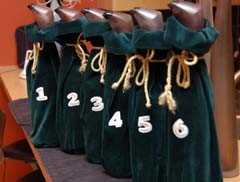
A blind tasting means that the bottles are covered by sacks or wine bags so that the labels cannot be seen. Typically, a number of wines of a single type (ex. California Cabs) are tasted and compared, and then their identities are revealed. In a single-blind tasting, the varietal is known but not the individual wines. In a double-blind tasting, neither the varietal nor the individual wines is known.

By tasting wines blind, you are not influenced by the label, the reputation of the winemaker, or the price. You are focused totally on the quality of the wine and are completely unbiased in your evaluation.

After you have evaluated the wines, the real fun begins, which is removing the bags or sacks that have covered the bottles and discovering the identities and prices of wines that you really like (or don’t like).

Have you ever participated in a blind tasting? If so, did you find it to be a positive experience?

Come back on Monday for my Tasting Methodology post for tips on evaluating wines during a tasting (blind or not).


Filed under: General Wine Information