In recent weeks, we’ve reported from the road on winery visits in California, Arizona, New Mexico, Texas, Tennessee and Kentucky. Today, I’ll report on our wine tasting visits in Ohio, Wisconsin, Missouri, and Nebraska.
On the way out of Cincinnati, Ohio, we stopped at Ohio’s oldest and largest winery, Meier’s Wine Cellars. It was almost a replay of the wineries we visited in Tennessee, meaning that Ohio is not serious premium wine country. As the tasting room hostess explained, their customer base likes sweet, fruity wines so that is what they produce. We did our best to smile and taste about a half dozen of their selections, but there wasn’t anything I would write home about, so I won’t.
In Wisconsin, between Milwaukee and Green Bay, we stopped in the old historic town of Cedarburg to visit the Cedar Creek Winery. It was a fun visit in their tasting room because of the knowledge and friendliness of the tasting room hostess. While Cedar Creek and their sister winery produce a total of over 80,000 cases per year, it is virtually all sold in the state of Wisconsin. They can and do ship to about twelve states, but Washington is no longer one they can ship to, even though five of the wines they make are produced with Washington grapes. Sounds familiar, doesn’t it? Washington is happy to let them buy grapes but not to sell back wine produced with those grapes to consumers in Washington State. Once again, Washington’s reputation is suffering from these kinds of nonsensical rules.
While none of the wines we tasted made from Wisconsin grapes were outstanding, several were pleasant sipping wines at very reasonable prices that I would have purchased if they could ship to Washington. The visit was not all for naught because I was able to add several grape varieties to my Wine Century Club list: Seyval Blanc (white), Lacrosse (red), and St. Pepin (red).
In Branson, Missouri, we visited three wine tasting rooms to get a flavor for Missouri wines. While Missouri is primarily a sweet wine state, as have been most mid-America states, they do produce some decent dry wines as well. The most notable is Norton, a dry red varietal native to Missouri.
Our first stop was at the Lindwedel Wine Garden. We found out that Lindwedel is actually a wine retailer, not a producer, but they do sell several wines under their own label, the NV Lindwedel Norton and the NV Lindwedel Norton Port.
Next we visited the Stone Hill Winery tasting room. Stone Hill is one of Missouri’s oldest and largest wineries. We thought their best wine was a 2004 Stone Hill Norton. Other wines we tasted were a 2005 Stone Hill Port, a 2006 Stone Hill Chardonel (Chardonnay/Seyval Blanc blend), a 2005 Stone Hill Chambourcin, and a NV Stone Hill Cream Sherry.
 Our third and final stop of the day was at Mount Pleasant Winery, a new and obviously well-funded operation out of Augusta, Missouri. Their Branson tasting room has only been open five weeks, but is it clear that they intend to be a serious player in the premium wine business in Missouri. I’d like to come back in five years and see what they have accomplished. They appear to be one of the few Missouri wineries having any success growing the traditional reds like Cabernet Sauvignon and Merlot.
Our favorite of their wines was the NV Mount Pleasant Tawny Port. We also liked their 2001 Mount Pleasant Vintage Port and their 2005 Mount Pleasant Norton, although the Norton appears overpriced at $35. Other Mount Pleasant wines we tasted were the 2004 Mount Pleasant Cabernet Sauvignon, the 2004 Mount Pleasant Claret, and the NV Mount Pleasant Villagio (white blend).
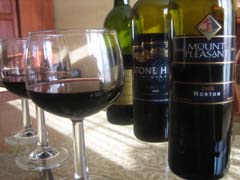 The night after we visited the wineries we got a take-out pizza for dinner and took it back to our room to have a private tasting of three Missouri Norton wines. We blind tasted the NV Lindwedel Norton, the 2004 Stone Hill Norton, and the 2005 Mount Pleasant Norton. We easily agreed that the Mount Pleasant was our favorite, the Lindwedel was our second choice, and the Stone Hill came in third. This pretty well verified our preliminary rankings when we visited each of the wineries.
From our limited sampling of Missouri wines, it seems apparent that while Missouri has traditionally had a sweet and fruit wine emphasis geared toward tourists, there are now serious vintners trying to develop a premium wine industry with traditional grapes as well as the notable local grapes such as Norton.
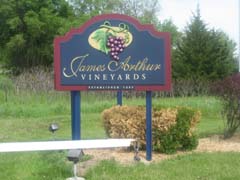 From Missouri, we drove up to Nebraska and visited Nebraska’s largest winery, James Arthur Vineyards in Raymond, Nebraska. We tasted six of their dry red wines, all made from Nebraska grown grapes. None of their wines were from traditional varietals because of their cold northern location and short growing season. Although I did not classify any of their offerings as outstanding, two were pretty good, and we did add three new varieties to our Wine Century Club list: De Chaunac, Frontenac, and St. Croix.
Their best wine was a 2005 James Arthur St. Croix. Other wines we tasted were the 2006 James Arthur Frontenac, the NV James Arthur Reserve Rouge (St. Croix/St. Vincent blend), the NV James Arthur Nebraska Red (St. Croix/ St. Vincent/Foch blend), the 2006 James Arthur Game Bird Red (St. Vincent), and 2005 James Arthur De Chaunac.
Out of the four mid-America states in which we sampled wines (Ohio, Wisconsin, Missouri, and Nebraska), Missouri appears to be the most serious about premium wine production and the state with the most overall wine potential.
In order to keep these notes from being unwieldy as we tasted many different wines, I have broken down the list into Quality rating categories. Under each Quality heading, the wine name will be listed along with state, price and QPR rating. Wines in bold type received a QPR rating of 5 bangs for your buck (out of 5).
Quality: 4 stars (out of 5)
NV Mount Pleasant Tawny Port, Missouri, $30, QPR: 5
Quality: 3.5 stars (out of 5)
2001 Mount Pleasant Vintage Port, Missouri, $25, QPR: 5
NV Lindwedel Norton, Missouri, $22, QPR: 4
2005 Mount Pleasant Norton, Missouri, $35, QPR: 1
Quality: 3 stars (out of 5)
2005 Stone Hill Port, Missouri, $20, QPR: 5
NV Lindwedel Norton Port, Missouri, $25, QPR: 4
2004 Stone Hill Norton, Missouri, $19, QPR: 3
2004 Mount Pleasant Cabernet Sauvignon, Missouri, $40, QPR: 3
2005 James Arthur St. Croix, Nebraska, $17, QPR: 1
2006 James Arthur Frontenac, Nebraska, $15, QPR: 1
Quality: 2.5 stars (out of 5)
2006 Stone Hill Chardonel, Missouri, $11, QPR: NR
2005 Stone Hill Chambourcin, Missouri, $16, QPR: NR
NV Stone Hill Cream Sherry, Missouri, $16, QPR: NR
2004 Mount Pleasant Claret, Missouri, $19, QPR: NR
NV James Arthur Reserve Rouge, Nebraska, $14, QPR: NR
NV James Arthur Nebraska Red, Nebraska, $14, QPR: NR
Quality: 2 stars (out of 5)
NV Mount Pleasant Villagio, Missouri, $12, QPR: NR
2006 James Arthur Game Bird Red, Nebraska, $15, QPR: NR
Quality: 1.5 stars (out of 5)
2005 James Arthur De Chaunac, Nebraska, $12, QPR: NR


 Wine Peeps is an independent wine blog dedicated to helping you get the most bang for your buck in wine. We do this through blind tastings of wine from around the world and calculations of
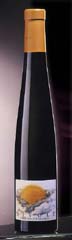 Now that June has arrived and summer is upon us, you may be on the lookout for a crisp, refreshing dessert wine. It’s time to leave the heavy desserts and heavy dessert wines behind and move forward to lighter fare. Michele Chiarlo’s Nivole Moscato d’Asti hits the spot for me. It’s sweet but not too sweet and makes the perfect dessert all by itself or as an accompaniment to a light summer dessert. Alternatively, it can be enjoyed as an aperitif before dinner if you so choose.

 During our cross-country road trip, we have been taking in some sporting events, mostly Major League Baseball games.
 As Matt Skinner says in Thirsty Work,
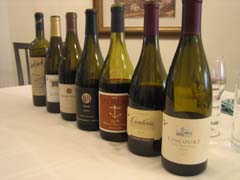 While virtually every wine lover is familiar with Syrah from the Rhone Valley in France and Shiraz [sha-RAZZ] from Australia, I am more and more impressed with the quality of Shiraz/Syrah from areas not traditionally known for this grape, such as Washington and California in the United States as well as Chile and South Africa. It is beginning to look like Shiraz/Syrah might become the new Cabernet Sauvignon; a grape that dominates some regions but also makes good wine almost everywhere it is grown.
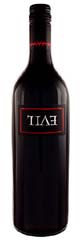
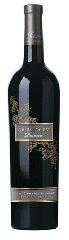 We enjoyed these two wines with Mom’s excellent chicken cacciatore dinner. All four of us Wine Peeps thought both wines were good and they both went well with the meal. When we pulled off the sacks after dinner to see what we had been drinking, we found two Cabernet Sauvignons, one from Washington and the other from Australia. In the head-to-head, we gave the nod to the 2004 Columbia Crest Reserve Cabernet Sauvignon from Washington. We found it to be just a bit better overall than the 2006 Evil [R Wines] Cabernet Sauvignon from Australia. But I would gladly drink either of these wines again in the future. Please note that both are five-bangs-for-your-buck wines.
 Once again,
 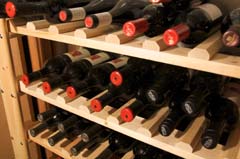 The two biggest dangers to wine are wide temperature fluctuations and high temperatures for a sustained period of time. For wines that you plan to consume in the next week to the next year, which will probably be most of your wine, a dark, low-vibration closet in a home or apartment with a normal household temperature of 68 to 72 degrees is fine. It’s also wise to store your wine flat, so that the wine remains in contact with the cork and keeps the cork from drying out. Actually, the color and thickness of the wine bottle itself are inherently a great help in protecting the wine as well.
 Robert Mondavi, winemaking legend and Napa Valley pioneer,
  Our next stops on our road trip across these United States of America were Tennessee and Kentucky. We headed for Gatlinburg, Tennessee, and visited three Tennessee wineries,
 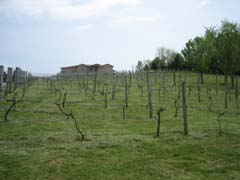 Our third and final winery visit in Kentucky was at
  This event, held last weekend at the Dempsey Indoor on the University of Washington campus, brought together two of my favorite things, Huskies and wine. As a graduate of the University of Washington, I am a tried and true Husky fan. In fact one of my favorite pastimes is attending UW sporting events with my family. So an event that features wine and supports the Huskies is right up my alley. In its third year,
  As with any event like this, it is impossible to taste all of the wines offered. So Colby and I chose to visit the booths for wineries whose wines we had not previously tasted or had not tasted in a long time. We made a few discoveries and look forward to picking up some bottles and adding them to our blind-tasting lineup to see how they stack up against some of our proven favorites.
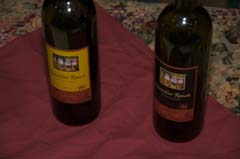 Our most exciting discovery of the day was


