
Ulupalakua Red


By Kori ~ January 24th, 2008

Aloha! The Wine Peeps just returned from a fabulous week in Hawaii. When you think of wine-producing states in the U.S., you probably think of California, Washington, Oregon, or New York. However, there are commercial wineries in all 50 states. When we travel, we like to either visit local wineries or try wines from the area.

After checking into our hotel in Honolulu, we headed to a nearby Safeway to buy some supplies for the week. Of course, we had to check out their wine selection while we were there. Most of the Hawaiian wines that they offered were fruit-blended wines. These fruit-blended wines are very popular with tourists but we were looking for a traditional grape wine from Hawaii to try. We finally found one on the shelf, Ulupalakua Red from Maui’s Tedeschi Vineyards.

20080124_ulupalakuared.jpgWe enjoyed the Ulupalakua Red (a cabernet blend) one evening after dinner as we relaxed in our room listening to Hawaiian music and watching the activity on Kalakaua Avenue below. It was a pleasant sipper on a warm, tropical evening. This is not a wine that I would have shipped home but it’s worth a try when you are visiting the islands.

.

NV Tedeschi Vineyards Ulupalakua Red: A dense, deep red with a sweet, chocolaty aroma. Very fruit-forward; raspberries dominate. Not much body and a short finish.
Quality: 2 stars (out of 5)
QPR: NR (not recommended)
Price: $19.99 (Safeway – Honolulu)


Filed under: American Wine, Red Wine, Wines NOT To Buy (1 & 2 Star), Wines Under $20, Wines Under $25
 

Sideways Revisited


By John ~ January 22nd, 2008

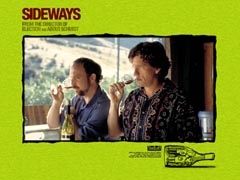
20080122_sidewaysrevisited.jpgA few weeks ago, we attended a Sideways wine tasting hosted by Ross of the Decanted blog here in Seattle. Ross had put together virtually every wine in the movie for a group of about fifteen of us to taste. It was a great evening. After the tasting, Ross posted a report on the tasting that you might enjoy reading. While there were more Pinots in the tasting than any other varietal, as you would expect in a Sideways tasting, the “Best in Show” wine was a Syrah, the 2001 Blackjack Ranch Maximus Syrah, which got my vote as well.
It was just one night and one tasting, but it reconfirmed my long-held opinion that Pinot Noir may be the most over-hyped, most inconsistent wine from vintage to vintage and producer to producer of any of the world’s major varietals, and most Pinots are overpriced, too. This may be a little over-the-top statement, but I have always thought there might be some truth in the following quote:

“…God made Cabernet Sauvignon, whereas the devil made Pinot Noir.” –Andre Tchelistcheff, pioneer California winemaker

Pinot Noir, unlike Cabernet, Merlot, or Shiraz/Syrah, is rarely offered at a budget price. And when it is, it is usually thin and dull or tannic and vegetal. If you want a reasonably good Pinot Noir, you have to pay the price. So I say, why should I bother? There are so many wines from other varietals that are consistently good, and offered at much more reasonable prices [great QPR].

I rarely believe what the movies say, and the movie Sideways kept that record intact for me when it touted Pinot Noir so highly.

“Pinot Noir may be responsible for a few thousand bottles of great red Burgundy, but Cabernet Sauvignon is the main ingredient in millions of bottles with virtually unparalleled aging potential made all over the world.” –Jancis Robinson, How to Taste

There are just too many great wines out there (Cabernet, Syrah, etc.) to spend more money than we should buying a wine we probably won’t like.


Filed under: American Wine, Cabernet Sauvignon, California Wine, General Wine Information, Merlot, Pinot Noir, Red Wine, Shiraz/Syrah
 

Wine Ratings: Blessing or Curse?


By John ~ January 18th, 2008

As you will see if you read the Wine Ratings page of this blog, we believe that ratings are a necessity for the wine consumer to be able to consistently make wise and enjoyable purchases. Used properly, we believe ratings are definitely a blessing and not a curse.

Unfortunately, the vast majority of wine reviews and ratings only discuss quality, not value. A couple of notable exceptions, in addition to the reviews in this blog, are Dr. Debs’ blog, Good Wine Under $20, and Neil Monnens in his subscription service, the Wine Blue Book. Dr. Debs rates wines that she reviews in one of four QPR (quality-to-price ratio) categories: excellent, very good, good, and poor. On the other hand, Neil Monnens does not review wines himself but rather uses a purely quantitative method for taking the average rating of a wine rated by at least two of the major professional ratings services and then computes a QPR for the wine and ranks it among its contemporaries.

Here at Wine Peeps, we do both a QUALITY rating and a QPR rating on each wine that we review in order to help you get the most bang for your buck. The details of our system are spelled out on our Wine Ratings page. Leave us a comment and let us know what you think of our system and be sure to make us aware of any system that you believe might be even better. We are always learning along with you.


Filed under: General Wine Information
 

Wine Blogging Wednesday #41: Friuli Whites


By Kori ~ January 16th, 2008

Welcome to Wine Blogging Wednesday! For those of you that are new to WBW, so are we. This is the first time that we have participated, and we had a lot of fun tasting wines that were new to us. Jack and Joanne of Fork & Bottle are the hosts this month, and they selected Friuli-Venezia Giulia white wines for us to try because they believe that Friuli has become “the most exciting wine region in the world.” After tasting five different Friuli Pinot Grigios and one Friuli Sauvignon Blanc over the last month, I cannot say that I agree with them based on what I tasted, but I did enjoy branching out and educating my palate.

Friuli-Venezia Giulia is located in Northeast Italy and is known for a number of different white varietals. We tasted mainly Pinot Grigios because it was the only Friuli varietal with any selection in Seattle. To be honest, we would have also liked to try some Tocai Friulanos, but I couldn’t find them. I will be interested in other posts where they have been reviewed. Maybe that would have changed my opinion of Friuli whites.

20080116_fruili1.jpgWe blind tasted the five Pinot Grigios against each other to determine our favorite over three different evenings. The first tasting pitted the 2006 Pighin Pinot Grigio Grave del Friuli against the 2006 Campanile Pinot Grigio Grave del Friuli and the Pighin came out on top. The second tasting saw the 2006 Attems Pinot Grigio Collio top the 2005 Benvolio Pinot Grigio Grave del Friuli. Since we are always looking for good values, all four of these bottles were purchased for under $15.
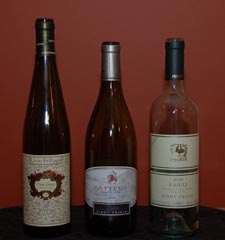
20080116_fruili2.jpgSince Jack and Joanne had recommended certain producers and suggested trying a bottle that cost over $18, we decided to step it up for our third and final tasting. We took the winners of our first two tastings, Pighin and Attems, and put them up against the 2006 Livio Felluga Pinot Grigio Friuli. Sure enough, the Livio Felluga was the favorite. However, while it was the best of these five, we would not rate it among our favorite whites.
A complete list of the Friuli Pinot Grigios we tried (from good to ugh):

2006 Livio Felluga Pinot Grigio Friuli: Aromas and flavors of grapefruit prevail. Good mouth-feel and well-balanced but rather simple. Drink within the next year.
Quality: 3 stars (out of 5)
QPR: 2 bangs for your buck (out of 5)
Where to buy: Pete’s Wine Shop – Eastside (Seattle area), $24.29; K&L Wine Merchants (California), $21.99; PJ Wine (NYC), $19.99

2006 Attems Pinot Grigio Collio
Quality: 2 stars (out of 5)
QPR: NR (not recommended)
Price: $14.99

2006 Pighin Pinot Grigio Grave del Friuli
Quality: 2 stars (out of 5)
QPR: NR (not recommended)
Price: $14.99

2006 Campanile Pinot Grigio Grave del Friuli
Quality: 1 stars (out of 5)
QPR: NR (not recommended)
Price: $9.39

2005 Benvolio Pinot Grigio Grave del Friuli
Quality: 1 stars (out of 5)
QPR: NR (not recommended)
Price: $6.99


Filed under: Italian Wine, Pinot Grigio/Pinot Gris, Sauvignon Blanc, White Wine, Wine Blogging Wednesday, Wines NOT To Buy (1 & 2 Star), Wines Under $10, Wines Under $15, Wines Under $20, Wines Under $25
 

Wine Tasting Dinner: California Zinfandel


By Kori ~ January 14th, 2008

On Friday night, we had one of our monthly wine tasting dinners. We blind tasted six different California Zinfandels. The four Wine Peeps were in attendance as well as four guests. It was a fun evening filled with lots of laughter, excellent food, and great wines. Among the six wines, the 2005 Seghesio Sonoma Zinfandel was the consensus favorite with the 2005 Dashe Dry Creek Zinfandel finishing a close second. The 2005 Bogle Vineyards Old Vines Zinfandel pulled up the rear with 5th or 6th place votes from everyone. The other three wines were good but did not set themselves apart as the Seghesio and Dashe did.

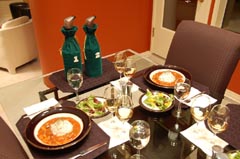
LaGayle’s menu included creamy tomato soup with basil, mixed green salad, grilled beef tenderloin steaks with sautéed mushrooms, rosemary-garlic sweet potatoes, green beans, and German chocolate pie. It is always amazing how the wines change through the course of an evening and with certain foods. This meal perfectly complimented the wines and the best ones got even better with food.

The lineup in order from 1st place to last:

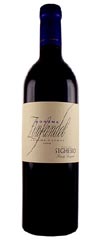
20080114_seghesio.jpg2005 Seghesio Sonoma Zinfandel – Sonoma County: My favorite of the night from the first sniff to the end of dessert. Exhibits pleasant aromas of black fruits (cherries, blackberries, and boysenberries). These same fruits come through when sipping. Smooth tannins lead to a nice finish. Even though it has the highest alcohol content of the six at 15.2%, it is very well-balanced and therefore does not come across as a “hot” wine. Ready for drinking now and should do well for at least a couple more years.
Quality: 4 stars (out of 5)
QPR: 5 bangs for your buck (out of 5)
Where to buy: K&L Wine Merchants (California), $16.99 [2006 is the currently available vintage]

2005 Dashe Dry Creek Zinfandel: Subtle aromas of spice, pepper, and vanilla lead to flavors of black cherry. Good fruit, good acidity, and lower alcohol but rougher tannins, so I did not find it as well-balanced as the Seghesio. Ready to drink now and should last a few more years.
Quality: 3.5 stars (out of 5)
QPR: 4 bangs for your buck (out of 5)
Where to buy: K&L Wine Merchants (California), $19.99 [2006 is the currently available vintage]

2004 Four Vines Zinfandel Paso Robles Biker
Quality: 3 stars (out of 5)
QPR: 4 bangs for your buck (out of 5)
Price: $16.99

NV Rosenblum “Vintners Cuvee XXIX” California Zinfandel
Quality: 3 stars (out of 5)
QPR: 5 bangs for your buck (out of 5)
Price: $7.98

2005 Buehler Zinfandel Napa Valley
Quality: 3 stars (out of 5)
QPR: 4 bangs for your buck (out of 5)
Price: $14.99

2005 Bogle Vineyards Old Vines Zinfandel
Quality: 1 stars (out of 5)
QPR: NR (not recommended)
Price: $9.99


Filed under: American Wine, California Wine, Five-Bangs For Your Buck Wines, Red Wine, Wine Tasting Dinners, Wines NOT To Buy (1 & 2 Star), Wines Under $10, Wines Under $15, Wines Under $20, Wines Under $25, Zinfandel
 

You can buy great value wines for under $20 (some under $10).


By John ~ January 11th, 2008

“You only have so many bottles in your life, never drink a bad one.” –Len Evans

Wine prices are not inherently linked to quality and pleasure. As we’ve said in the About page, we’ve tried wines in and from almost every major wine-producing area in the world. We’ve had blind tastings and wine tasting dinners to compare what we thought were our favorites from each region and each varietal.

My conclusion: A high price does not necessarily make a great wine. In fact, the least expensive wine has actually been the consensus favorite more often than the most expensive wine in our tastings. That is why we started this blog with the post, You can’t taste the label. Here are some examples of wineries I have found that produce great wines at reasonable prices:

United States
Washington:
Columbia Crest
Domaine Ste. Michelle (sparkling)
California:
Pedroncelli
Rosenblum
Sebastiani
Villa Mt. Eden

Australia
Jacob’s Creek Reserve
Penfolds (Koonunga Hill Range)
Peter Lehmann
St Hallett
Thorn-Clarke
Wynns Coonawarra Estate

Canada
Jackson-Triggs

Chile
Concha y Toro

France
Chateau Branda
Chateau Potensac
Chateau Thieuley
Guigal

Italy
Gabbiano
Michele Chiarlo

New Zealand
Kim Crawford
Nobilo
Matua Valley
Saint Clair

South Africa
Fairview

Spain
Las Rocas de San Alejandro

We’ll make specific vintage and varietal recommendations from many of these wineries in coming weeks and months as well as identify other great value producers from around the world as time goes on.


Filed under: American Wine, Australian Wine, California Wine, Canadian Wine, Chilean Wine, French Wine, Italian Wine, New Zealand Wine, Red Wine, South African Wine, Spanish Wine, Sparkling Wine, Washington State Wine, White Wine, Wines Under $10, Wines Under $15, Wines Under $20, Wines Under $25
 

Spanish Ayes!


By Kori ~ January 10th, 2008

One of my goals for 2008 is to learn more about Spanish wines. Most of you are probably familiar with the easy drinking, widely available, great value Las Rocas de San Alejandro Garnacha (Grenache) which retails for $7-10 in most areas. As you go up the quality ladder in Spain, you probably think of Tempranillos from the Rioja region. However, in recent years, the Ribera del Duero region, also known for Tempranillo, has really come to the forefront.

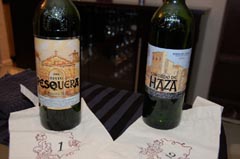
20080110_spanishayes.jpgLast night we had a blind tasting of two Ribera del Duero wines with dinner. We tasted the 2004 Tinto Pesquera – Crianza and the 2004 Condado de Haza – Crianza. Both wines matched up well with our Swiss steak over pasta and salad. We found them both quite enjoyable but 3 out of 4 of us preferred the Tinto Pesquera.

2004 Tinto Pesquera – Crianza: This wine is very dense and exhibits a dull, inky purple color with aromas of chocolate, leather, and earth. It is very dry, especially without food. With subtle fruit, bold tannins, good acidity, and a long finish, it improves with food after it has been in the glass a while. Seems to be a wine that will really open up in a few years and should age well.
Quality: 4 stars (out of 5)
QPR: 4 bangs for your buck (out of 5)
Where to buy: Pete’s Wine Shop – Eastside (Seattle area), $26.99; Hi-Time Cellars (LA area), $26.99; Sherry Lehmann (NYC area), $29.95

2004 Condado de Haza – Crianza: This wine is also dense and has an inky purple hue that is a bit brighter than the Pesquera. With a nose of chocolate-covered cherries, it shows lots of cherry and plum flavors up front. It is well balanced and with food became quite jammy. Ready to drink now but should last quite a while.
Quality: 3.5 stars (out of 5)
QPR: 3 bangs for your buck (out of 5)
Where to buy: Pete’s Wine Shop – Eastside (Seattle area), $18.44; Ancona’s Wine (Connecticut), $24.99


Filed under: Red Wine, Spanish Wine, Tempranillo, Wines Over $25, Wines Under $20, Wines Under $25
 

You can’t taste the label


By Kori ~ January 9th, 2008

“…it is not the year, the producer, or even the label that determines the quality of the wine. It is the wine in the glass, whatever the label or producer or year…Drink wine, not labels.” –Dr. Maynard Amerine

“Buying the label” is a mistake that I’ve made and I’ve seen others make time and time again. Has it ever happened to you?

Wine marketing statistics say that labels are what consumers buy. I’ve seen a study that said that eighty percent of wine purchases in the USA are made based on the label. Look at the money many wineries are putting into their label design and production and you inherently know that labels sell. Yet, the label has nothing to do with the quality of the wine inside. You can’t taste the label so don’t buy based on the label.

“Buying the label” can manifest itself it two different forms. The first is buying a wine because it has a fancy, cute, or whimsical label that you find appealing. The second is buying a wine because of the reputation of the winery (you think you’re supposed to like it) or because the price point is such that you assume it must be good.

I attended a wine tasting party where the pre-tasting conversation revolved around several of the participants telling us about their favorite wines (naturally, very expensive ones). One gentleman in particular just knew he could pick his favorite out anywhere. Unbeknownst to him, his “favorite” was in the flight we were going to blind taste that night. When we finished our tasting and tallied the scores, his “favorite” finished next to last and he picked it dead last in the tasting. The consensus favorite and the one he picked number one was a wine costing 1/3 of his “favorite.” Why had it been his “favorite”? It had been his “favorite” because it was “supposed” to be good. He had bought the label, not the wine.

Hopefully in coming weeks and months, I can help you find some great wines that are great on their merits, not just because of their fancy label, winery hype, or cost.


Filed under: General Wine Information