Today’s post is part of a series featuring the Women of Washington Wine. In an industry once dominated by men, more and more women are joining the ranks as winery owners, vineyard owners, and winemakers. Being a woman myself, I am fascinated by these women and what they have done and continue to do. Through this series, I hope to introduce you to some of the brightest female faces in the Washington wine industry.
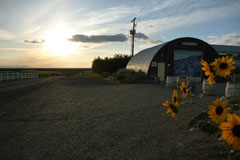
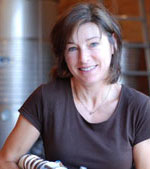 Founded in 2005 in Sunnyside, Washington, by Tom and Susan Garrison and Mike and Gabrielle Seibel, Steppe Cellars is a partnership between two sisters and their husbands. They had been growing grapes for over 20 years and decided to open their own winery. Steppe Cellars is named for the shrub steppe environment that surrounds the winery. Winemaker Anke Freimuth-Wildman, a native of Germany, grew up in the Mosel Valley, studied viticulture and enology at Geisenheim Institute, and has gained valuable winemaking experience working in Germany, Switzerland, and Washington State.
Recently, Anke was kind enough to take time out of her busy schedule to answer some questions for me and our Wine Peeps readers.
Highlights from Q&A with Anke Freimuth-Wildman:
How did you first get involved in the wine business?
I grew up in Germany on the Mosel River where my family owns vineyards and a winery. As a kid, I helped in the vineyard, tasting room and cellar. I loved the work, the beauty of the Mosel region and everything that had to do with winemaking. My parents encouraged me to pursue this as a career in order to continue the family business.
What were the steps that led you to where you are now?
After high school, I enrolled in the Viticulture and Enology program at the Geisenheim Institute on the Rhein River. There, in 1981, Dr. Helmut Becker introduced me to Dr. Walter Clore and his wife Irene who were touring the German wine country at the time. Walt and Irene invited me to Washington State to stay with them while I was doing an internship with Dr. Sara Spayd at the WSU Experiment Station in Prosser. When the internship was over, I returned to Germany and finished my degree. In 1990, I came back to Prosser and landed a job as a winemaker at The Hogue Cellars, and worked there until 1995. I learned a lot there! Then, I took a few years off to raise my children while working temporary lab jobs during crush at a few local wineries. Consulting jobs started coming my way after that, and finally in 2005, I was asked by Steppe Cellars to be their winemaker.
Has being a woman been an advantage or disadvantage in your journey?
Coming right out of college with a degree in Viticulture and Enology, it was difficult to be accepted as a woman winemaker in the German wine industry in those days. Actually, it was close to impossible and not much fun. The cellar was the proud domain of the men. That helped make the decision to come back to Washington very attractive. Women were treated more as equals here in the Washington wine business than in Germany, and the possibilities for a career in the wine industry seemed much better. The openness and free exchange of information among fellow winemakers and people in the Washington industry in general made for an amazing experience. Things have changed for the better in Germany since those days. When I started, it was a disadvantage as a female to try and become a winemaker. Now, it doesn’t matter.
 What advice do you have for women getting in the wine business today?
Basically, the same as it would be for anyone of either sex. Get a good education with strong foundations in microbiology, chemistry, and also in marketing. Whether it’s a formal degree or through some of the other great programs available now, education is the key. Try to get a lot of hands-on experience by working in different wineries. Taste lots of wines!
What are your thoughts about the Washington wine industry in general?
It’s a great business to be in, and Washington is a great place to be in it. In my view, Washington State has the potential to become one of the greatest wine regions in the world. In fact, I think that it already is! Where else in the world can you grow so many different wine grape varieties and make world-class wines from all of them?
In recent years the Washington wine industry has grown at a rapid rate. Do you expect that trend to continue?
Why not? As long as great wines are being made and there are enough people who like to drink them and appreciate them, there is still room to grow.
What is your vision for the future of Steppe Cellars?
I think the future is very bright. Steppe Cellars is a small family-owned business and will most likely and proudly remain so in the near future. We make just 1500 cases. We want to continue to make the kind of wine we like to drink ourselves. I’m glad that other people seem to like it too!
Feel free to share any thoughts that you think would be of interest to our readers.
I feel lucky to enjoy a flexible schedule. I’m able to do all kinds of things at home, including working on blends at my kitchen table if I want to! My husband, Tedd Wildman, who I met at the Experiment Station in Prosser all those years ago, and I have three teenage kids, James, Ben, and Becky. He established StoneTree Vineyard on the Wahluke Slope in 2000. That vineyard has earned quite a good reputation over the years, and I’m happy that he supplies Steppe Cellars with most of our red grapes. It takes good grapes to make good wine! And, although I make lots of wines from different varieties, I still enjoy a good German-style Riesling!
—
Many thanks to Anke for sharing her story and thoughts with us. I wish her all the best and look forward to following her work and Steppe Cellars with great interest, and I hope that you will too.
(Photos from Steppe Cellars)

 Wine Peeps is an independent wine blog dedicated to helping you get the most bang for your buck in wine. We do this through blind tastings of wine from around the world and calculations of
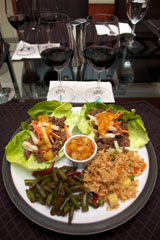 Recently, I came across a recipe for beef lettuce wraps with wowee sauce. This sounded delicious and seemed like a great prospect for one of our challenging wine pairings. Seasoned ground beef topped with shredded carrots and sliced water chestnuts garnished with wowee sauce was fabulous wrapped in the Boston lettuce leaves. Wowee sauce is a blend of crushed pineapple, orange marmalade, and soy sauce. Additional sauce was served for individual preference. We rounded out the meal with Szechwan green beans and fried rice. The meal tasted wonderful and looked great on the plate as well.
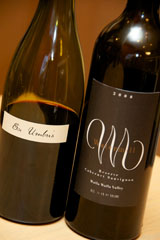 2009 Owen Roe Ex Umbris Syrah (Columbia Valley): Deep, dark purple. Aromatic with dark black licorice, black fruits, spice, and a touch of oak on the nose. Very vibrant fruit, blackberry, black cherry, black plum, licorice, spice, and a hint of leather come through on the palate. Medium to full-bodied with crisp acidity, and medium to high, silky tannins. Well-balanced with good complexity and a long, lingering finish.

 This week’s Wine Word of the Week is corked.
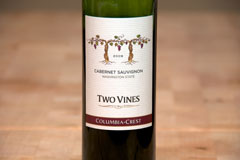 Would you like a quick suggestion for a good wine to drink tonight (or this weekend) that won’t break your budget and is widely available? Many of our readers have said this is something they would like, so here is this week’s selection, the 2009 Columbia Crest Two Vines Cabernet Sauvignon from Washington State.
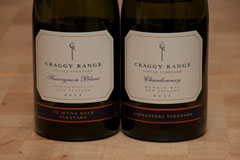 Founded in 1997 by businessman Terry Peabody and Master of Wine Steve Smith,
  This week’s Wine Word of the Week is corkage.
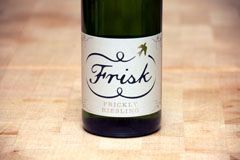 Would you like a quick suggestion for a good wine to drink tonight (or this weekend) that won’t break your budget and is widely available? Many of our readers have said this is something they would like, so here is this week’s selection, the 2011 Frisk Prickly Riesling from the Alpine Valleys region of Victoria in Australia.
 Today marks our 1,000th post here on Wine Peeps. That means that we have averaged 245 posts per year or 4.71 posts per week. Folks, that’s a lot of writing, mostly by Kori, and we hope it has provided a great source of wine-related info for you.
 This week’s Wine Word of the Week is vintage.


