Adams Bench Red Willow Vineyard Cabernet Sauvignon Vertical Tasting


By Kori ~ November 12th, 2012

Adams Bench Winery is a small, family-owned winery located in Woodinville, Washington. Founded in 2005 by owners and co-winemakers Tim and Erica Blue, Adams Bench produces Cabernet Sauvignon and Cab blends exclusively. After being bitten by the wine bug, Tim and Erica took enology courses at the famed UC Davis and began making home wine in 2004. Adams Bench’s current production is 1,000 cases per year.

We first met Tim and Erica in 2008 when we visited their winery after hearing about them on a visit to Red Willow Vineyard, a vineyard they began sourcing grapes from in 2007. At that first tasting, in addition to tasting their current releases at that time, we were also able to taste several barrel samples from the 2007 vintage. Among them was a barrel sample of the 2007 Red Willow Cabernet Sauvignon. When they first brought the Red Willow Cab grapes to the winery during harvest that year, the Blues did not intend to use them to make a single vineyard wine. However, according to Erica, they could not get over the incredible aromas that they were getting from them and after trying some blending combinations, they found that they liked the Red Willow Cab by itself the best. After that tasting, I wrote, “They have not decided for sure whether to bottle it as a 100 percent Red Willow Cab, but I certainly hope that they do. It is fabulous!” Well, thankfully, they did, and they have continued to produce a Red Willow Cab each vintage since then.

Red Willow Vineyard, which sits in the northwest corner of the Yakima Valley AVA, is located on the fourth-generation family farm established by grower Mike Sauer’s grandfather-in-law in the 1920’s. The iconic Monsignor Chapel sits atop Red Willow’s highest hill, built with native stones from the farm.

Recently, we had the opportunity to enjoy a vertical tasting of all three vintages of the Adams Bench Red Willow Vineyard Cabernet Sauvignon. (For those of you who are not familiar with a vertical tasting, it is one in which you taste different vintages of the same wine from the same winery.) We had tasted each of these wines upon release but were glad to have the opportunity to taste each vintage side by side. While our tastings are usually blind, we decided not to taste these blind. We simply wanted to enjoy the wines and taste them in a logical order, from oldest to youngest. All three wines are excellent. The 2007 vintage is drinking beautifully right now, and the 2009 vintage, while still young, may be their best wine yet.

Adams Bench is only open by appointment, but if you are heading to the Woodinville area, I encourage you to schedule a visit to the winery. It boasts a gorgeous setting on a few acres overlooking horse pastures with a view of the Olympic Mountains on a clear day.

2007 Adams Bench Red Willow Vineyard Cabernet Sauvignon (Red Willow Vineyard, Yakima Valley, Washington): 100% Cabernet Sauvignon. Dark, dense purple. Very aromatic with blackcurrant, pencil lead, and licorice on both the nose and palate. Full-bodied with crisp acidity and high, dry tannins. Well-balanced with a creamy mouthfeel and a very long, smooth finish.
Quality: 4.5 stars (out of 5)
QPR: 5 bangs for your buck (out of 5)
Winery Release: $48

2008 Adams Bench Red Willow Vineyard Cabernet Sauvignon (Red Willow Vineyard, Yakima Valley, Washington): 75% Cabernet Sauvignon and 25% Merlot. Dark, dense purple. Aromatic with blackberry, black cherry, smoke, and sawdust on the nose. More blackberry, smoke, and a touch of cinnamon come through on the palate. Full-bodied with lively acidity, and medium to high, chewy tannins. Well-balanced with a long, smooth finish.
Quality: 4 stars (out of 5)
QPR: 4 bangs for your buck (out of 5)
Winery Release: $60

2009 Adams Bench Red Willow Vineyard Cabernet Sauvignon (Red Willow Vineyard, Yakima Valley, Washington): 100% Cabernet Sauvignon. Dark, dense purple. Gorgeous nose with blackcurrant and molasses aromas. Blackcurrant, cedar, cinnamon, and chocolate come through on the palate. Full-bodied with crisp acidity and high, dry tannins. Well-balanced and smooth with a luscious mouthfeel and a very long, lingering finish.
Quality: 4.5 stars (out of 5)
QPR: 5 bangs for your buck (out of 5)
Winery Release: $60


Filed under: American Wine, Cabernet Sauvignon, Five-Bangs For Your Buck Wines, Red Wine, Vineyards, Washington State Wine, Wines Over $25
 

A Wine for Tonight: NV Carnaval Moscato Red Sparkling Wine


By Kori ~ November 8th, 2012

Would you like a quick suggestion for a good wine to drink tonight (or this weekend) that won’t break your budget and is widely available? Many of our readers have said this is something they would like, so here is this week’s selection, the NV Carnaval Moscato Red Sparkling Wine from Brazil.

Our selection criteria include:

  • A very good Quality rating of >=3.5 stars (out of 5)
  • A price tag of <=$20
  • Must be widely available

Carnaval is a new label produced by Cooperativa Vinícola Aurora, Brazil’s largest wine producer. Founded in 1931, the cooperative now has over 1,100 families as members. Located in the heart of Bento Gonçalves, Aurora produces 42 million liters annually.

NV Carnaval Moscato Red Sparkling Wine (Brazil): Small, fairly fast bead of bubbles. Pale pink in color. Aromatic with cherry and white peach on both the nose and palate. Medium sweet and medium-bodied with crisp acidity and a long, refreshing finish.
Quality: 3.5 stars (out of 5)
QPR: 5 bangs for your buck (out of 5)
Where to buy: Received as sample, suggested retail $13; Available elsewhere, $14 to $17


Filed under: A Wine for Tonight, Brazilian Wine, Five-Bangs For Your Buck Wines, Moscato/Muscat, Sparkling Wine, Wines Under $15, Wines Under $20, Wines Under $25
 

Wines of Chile: An Overview


By Kori ~ November 7th, 2012

Spanish settlers first planted wine grapes in Chile around 1550. However, the Chilean wine industry really got its start in the 1980’s when Spanish winemaker Miguel Torres arrived in Chile and began making wines in the Curicó Valley. He ushered in a new era of modern winemaking and was the first in Chile to use stainless steel tanks and French oak barrels. Soon other Chilean winemakers followed suit, and the industry has grown exponentially in both vineyard hectares planted and wine sales abroad. So while Chile has a long wine history, I believe that it is just now coming into its own as a world-class wine region.

During my recent media trip to Chile, I had the pleasure to visit a number of its wineries and vineyards and meet many of the movers and shakers in the Chilean wine industry. In the coming weeks, I will be individually highlighting some of the wine regions we visited including reviews of wines I tasted from those regions. In the meantime, however, I want to give you an overview of those regions so that you get an overall feel for the geography, climate, and wines.

Chilean Wine Regions
Chile’s appellation system, known as its Denomination of Origin or D.O. is divided into the following regions, from north to south:

  • Elqui Valley—The Elqui Valley is considered Chile’s northernmost wine region. The valley is hot and dry but also has cool breezes that blow in along the Elqui River. Located in close proximity to the Andes Mountains, the Elqui Valley is best known for producing cool-climate Syrah and Sauvignon Blanc.
  • Limarí Valley—Vines were first planted in the Limarí Valley in the mid-16th century. Best known for its Chardonnay, the Limarí Valley also does well with cool-climate Syrah and Sauvignon Blanc.
  • Choapa Valley—Located at Chile’s narrowest point, where there is no distinction between the Andes and the Coastal Mountains, the Choapa Valley has a desert-like climate and is best known for its Syrah and Cabernet Sauvignon.
  • Aconcagua Valley—The Aconcagua Valley is one of Chile’s most traditional wine growing regions. Named for the tallest mountain in the Americas, the Aconcagua Valley is best known for its Cabernet Sauvignon, Syrah, Carmenere, and coastal Sauvignon Blanc.
  • Casablanca Valley—The Casablanca Valley was Chile’s first cool-climate wine region. With its cool Mediterranean climate and pronounced maritime influence, the Casablanca Valley is best known for its Sauvignon Blanc, Chardonnay, and Pinot Noir.
  • San Antonio Valley—The San Antonio Valley is a relatively new wine region. Its cool climate is ideal for producing Sauvignon Blanc, Pinot Noir, and Chardonnay.
  • Maipo Valley—The Maipo Valley is the closest wine region to the city of Santiago. It spans from the Andes to the coast and is one of Chile’s oldest wine regions. Best known for its red wines, the Maipo Valley does well with Cabernet Sauvignon, Carmenere, and Syrah.
  • Cachapoal Valley—The Cachapoal Valley is located in Chile’s agricultural heartland. With its Mediterranean climate, it is best known for producing Cabernet Sauvignon, Merlot, Syrah, and Carmenere.
  • Colchagua Valley—One of Chile’s best known wine regions, the Colchagua Valley has received much praise for its full-bodied red wines. Cabernet Sauvignon accounts for more than 40% of all varieties planted, but the Colchagua Valley also does well with Carmenere, Syrah, and Malbec.
  • Curicó Valley—More than 30 varieties of wine grapes have grown in the Curicó Valley since the mid-1800′s. Its modern winemaking history began when Miguel Torres arrived there over 100 years later. Wine production is one of the area’s most important industries. The Curicó Valley is best known for producing Cabernet Sauvignon, Carmenere, Syrah, and Sauvignon Blanc.
  • Maule Valley—The Maule Valley is the largest and one of the oldest wine regions in Chile. A long overlooked region, the Maule Valley is garnering renewed attention. The valley is able to produce a wide variety of wines but is especially known for its Cabernet Sauvignon, Merlot, Carmenere, and old-vine Carignan.
  • Itata Valley—The Itata Valley is Chile’s oldest wine region. Its hot summers and very wet, cold winters have posed challenges for most traditional wine grape varieties. The varieties with the most hectares planted are Moscatel de Alejandria and Pais.
  • Bío-Bío Valley—Average rainfall in the Bío-Bío Valley is among the highest of all Chilean wine valleys which makes for more challenging wine growing conditions. Cool-climate varieties such as Sauvignon Blanc, Chardonnay, and Pinot Noir are showing promise there.
  • Malleco Valley—The Malleco Valley is currently Chile’s southernmost wine region. High rainfall and a shorter growing season make the area challenging for many varieties, but Chardonnay and Pinot Noir are showing promise.

Chile is a long, narrow country that runs 2,600 miles along the southwestern coast of South America between the Pacific Ocean and the Andes Mountains. But don’t let its geography fool you, there is more climatic and soil diversity found east to west than from north to south. As a result, Wines of Chile has recently established a New Classification of Chile’s Wine Producing Areas. The New Vitivinicultural Zonification aims to provide consumers with complementary information to give them a better idea of what to expect in a wine so labelled.

New Classification of Chile’s Wine Producing Areas
Wine labels that display a Denomination of Origin can also include the following complementary terms as long as the “sum of at least 85% of the volume of the components of the final blend of the wine come from areas that meet the conditions of the term indicated and that have been declared as such by the Chilean Agriculture and Livestock Service (SAG).”

  • Costa Areas—Costa Areas are cool-climate areas near the Pacific Ocean.
  • Entre Cordilleras Areas—Entre Cordilleras Areas are located within the strip of land that runs between the Andes and the Coastal Mountains.
  • Andes Areas—Andes Areas are located in close proximity to the Andes Mountains, the longest and most extensive mountain range in the world.

Be sure to come back as I individually highlight some of these Chilean wine regions in the coming weeks.

Salud!


Filed under: Chilean Wine, General Wine Information, Vineyards, Wine Travel
 

Wine Word of the Week: Toast


By Kori ~ November 6th, 2012

This week’s Wine Word of the Week is toast.

Official definition from Jancis Robinson’s The Oxford Companion to Wine:
Toast, given to a barrel when forming it over a heat source, is one of the processes in barrel making that most obviously affect eventual wine flavor. …. The toast provides a buffer between the alcohol in wine and the tannins in wood. In general, the less a barrel is toasted, the more tannins and other wood characteristics will be leached into the wine by the alcohol. Wine matured in lightly toasted barrels therefore tends to taste ‘oaky’, ‘woody’, or even ‘vegetal’, while wine matured in heavily toasted barrels is more likely to taste ‘toasty’ or ‘spicy’.

Layman’s terms from Kori:
Toast is imparted on a wine barrel during the barrel making process using fire to caramelize but not burn the inside of the barrel. The toast level directly affects the eventual flavor of the finished wine. The more the toast, the less the oaky, woody flavor.


Filed under: Wine Word of the Week
 

Current Releases from Fjellene Cellars in Walla Walla


By Kori ~ November 5th, 2012

Fjellene Cellars is a small, family-owned winery located in Walla Walla, Washington. Owner/winemaker Matthew Erlandson founded Fjellene Cellars in 2008. Prior to going out on his own, Matthew worked as assistant winemaker at Beresan Winery and Balboa Winery under Tom Glase. Before his winemaking days, Matthew spent thirteen years as an outdoor educator and mountain guide. Fittingly, Fjellene, pronounced Fyel-LAY-Nuh, means “mountains” in Norwegian. Given Matthew’s background and interest in the outdoors, it is no surprise that he is committed to minimizing the impact that his winery has on the environment and working towards sustainability.

Recently, we had the opportunity to taste six of Fjellene’s current releases in a blind samples tasting. All of the wines were good, but we were especially impressed with the 2010 Syrah. It is co-fermented with Viognier, and the grapes are sourced from Les Collines and Pepper Bridge Vineyards in the Walla Walla Valley.

If you have not had any Fjellene wines, I encourage you to give them a try if you have the opportunity. They are limited production and self-distributed. And if you find yourself in Walla Walla, be sure to visit the tasting room located on their 8-acre estate vineyard south of town that is open on Fridays and Saturdays or by appointment.

2010 Fjellene Cellars Syrah (Walla Walla Valley, Washington): 96% Syrah and 4% Viognier. Deep, dark purplish red. Very aromatic with beautiful blackberry, black cherry, black pepper, and spice on the nose. Black fruit, black pepper, and cocoa come through on the palate. Full-bodied with lively acidity and medium to high, dry tannins. Well-balanced with a long, smooth finish.
Quality: 4 stars (out of 5)
QPR: 4 bangs for your buck (out of 5)
Where to buy: Received as sample, suggested retail $29; Available elsewhere, $26

2009 Fjellene Cellars Cabernet Sauvignon (Waliser Vineyard, Walla Walla Valley, Washington): 80% Cabernet Sauvignon and 20% Merlot. Deep, dark red in color. Nice nose with blackcurrant, leather, earth, and a touch of barnyard aromas. Blackcurrant and slight vegetal notes come through on the palate. Medium to full-bodied with lively acidity, medium to high tannins, and a long, smooth finish.
Quality: 3.5 stars (out of 5)
QPR: 4 bangs for your buck (out of 5)
Where to buy: Received as sample, suggested retail $35; Available elsewhere, $30

2010 The Stranger Red Wine (Walla Walla Valley, Washington): Deep, dark red. Nice nose with black fruit and clove aromas and flavors. Full-bodied with lively acidity, medium to high, dry tannins, and a long finish.
Quality: 3.5 stars (out of 5)
QPR: 3 bangs for your buck (out of 5)
Where to buy: Received as sample, suggested retail $26

2011 Fjellene Cellars Rosé (Art Den Hoed Vineyard, Columbia Valley, Washington): 100% Syrah. Medium pinkish salmon in color. Aromatic with strawberry and watermelon on both the nose and palate. Dry and medium-bodied with crisp acidity and a long, slightly bitter, finish. Residual Sugar: 0.094%
Quality: 3 stars (out of 5)
QPR: 2 bangs for your buck (out of 5)
Where to buy: Received as sample, suggested retail $18

2008 Fjellene Cellars The South Col Blend Red Wine (Columbia Valley, Washington): 62% Cabernet Sauvignon, 25% Merlot, and 13% Cabernet Franc. Deep, dark red. Aromatic with earth, eucalyptus, black fruit, and a tough of mint on both the nose and palate. Dry and medium to full-bodied with lively acidity, medium tannins, and a long finish.
Quality: 3 stars (out of 5)
QPR: 2 bangs for your buck (out of 5)
Where to buy: Received as sample, suggested retail $32

2008 Fjellene Cellars The North Col Blend Red Wine (Waliser Vineyard, Walla Walla Valley, Washington): 50% Cabernet Franc and 50% Merlot. Deep, dark red. Aromatic with black cherry, oak, and vegetal notes on the nose. More black fruit and vegetal notes as well as mint come through on the palate. Medium to full-bodied with lively acidity, medium to high tannins, and a long finish.
Quality: 3 stars (out of 5)
QPR: 2 bangs for your buck (out of 5)
Where to buy: Received as sample, suggested retail $32


Filed under: American Wine, Cabernet Sauvignon, Red Wine, Rose Wine, Shiraz/Syrah, Washington State Wine, Wines Over $25, Wines Under $20, Wines Under $25
 

A Wine for Tonight: 2008 Santa Rita Medalla Real Cabernet Sauvignon


By Kori ~ November 1st, 2012

Would you like a quick suggestion for a good wine to drink tonight (or this weekend) that won’t break your budget and is widely available? Many of our readers have said this is something they would like, so here is this week’s selection, the 2008 Santa Rita Medalla Real Cabernet Sauvignon from the Maipo Valley of Chile.

Our selection criteria include:

  • A very good Quality rating of >=3.5 stars (out of 5)
  • A price tag of <=$20
  • Must be widely available

Founded in 1880 by Domingo Fernandez Concha in Chile’s Maipo Valley, Santa Rita Winery was among the first to pioneer plantings of European grape varieties in Chile. In 1980, its present owner, Gruppo Claro, acquired Santa Rita. The winery has vineyards in several of Chile’s appellations including the Maipo Valley, Apalta, Casablanca, Rapel, Leyda, and Curico. Grapes for Santa Rita’s Medalla Real wines are hand-harvested at optimal ripeness from their best and oldest vineyards.

“Deep ruby-red in color, with a bouquet of black fruits such as blackcurrants, blueberries, and blackberries with dried figs, cigar box, and spice notes. The concentrated palate offers well-rounded ripe tannins that create the prominent backbone that leads the wine on to a long, lingering finish.” –Santa Rita

2008 Santa Rita Medalla Real Cabernet Sauvignon (Maipo Valley, Chile): 95% Cabernet Sauvignon, 5% Cabernet Franc. Deep ruby red. Aromatic with black fruit, spice, and a touch of smoke on both the nose and palate. Medium to full-bodied and lively with medium to high tannins, and a long finish.
Quality: 3.5 stars (out of 5)
QPR: 5 bangs for your buck (out of 5)
Where to buy: BevMo (Tukwila, Washington), $17.99; Available elsewhere, $12 to $20


Filed under: A Wine for Tonight, Cabernet Sauvignon, Chilean Wine, Five-Bangs For Your Buck Wines, Red Wine, Wines Under $20, Wines Under $25
 

Wines of Chile: Exploring Terroir


By Kori ~ October 31st, 2012

Chile is a long, narrow country that runs 2,600 miles along the southwestern coast of South America between the Pacific Ocean and the Andes Mountains. But don’t let its geography fool you, there is more climatic and soil diversity found east to west than from north to south. Spanish settlers first planted wine grapes in Chile around 1550. While Chile has a long wine history, I believe that it is just now coming into its own as a world-class wine region.

Recently, I had the pleasure to spend 10 days in Chile exploring Chilean wine country on a media trip hosted by Wines of Chile. While we were there, we participated in an online tasting along with 50 other wine bloggers back in the United States. Eleven Chilean winemakers/winery representatives convened in Santiago to talk about their wines via video conference while Master Sommelier Fred Dexheimer moderated.

The presenting winemakers/winery representatives included:

This group of winemakers was a fun and lively group. They were more than willing to answer questions and share personal stories on top of discussing their own wines and their thoughts on terroir in different Chilean wine regions. Most of the bloggers, including me, were tweeting during the event. If you’d like to review the stream, check out #BlogChile.

During the event, we tasted three wines from four different varieties including Sauvignon Blanc, Pinot Noir, Carmenere, and Cabernet Sauvignon.

Sauvignon Blanc

Sauvignon Blanc is the second-most planted white variety in Chile, hot on the heels of Chardonnay, and does very well in the cool climate regions near the Pacific Ocean.

2012 Viña Casablanca Nimbus Single Vineyard Sauvignon Blanc (Casablanca Valley, Chile): 100% Sauvignon Blanc. Very pale straw yellow. Beautiful nose with floral and citrus aromas. Lime and Granny Smith apple come through on the palate. Dry and light-bodied with crisp acidity and a long finish.
Quality: 3.5 stars (out of 5)
QPR: 4 bangs for your buck (out of 5)
Suggested Retail Price: $12.99

2011 San Pedro 1865 Single Vineyard Sauvignon Blanc (Leyda Valley, San Antonio Valley, Chile): 100% Sauvignon Blanc. Pale greenish straw yellow. Very aromatic with grapefruit, lime, and grass on the nose. More grapefruit, lime, and a touch of minerality come through on the palate. Dry and medium-bodied with racy acidity and good mouthfeel. Well-balanced with a long, lingering finish.
Quality: 4 stars (out of 5)
QPR: 4 bangs for your buck (out of 5)
Suggested Retail Price: $19

2011 Casa Silva Cool Coast Sauvignon Blanc (Colchagua Valley, Chile): 100% Sauvignon Blanc. Pale greenish straw yellow. Very aromatic with lemon, pineapple, and a touch of banana on the nose. More citrus notes as well as a touch of minerality come through on the palate. Dry and light to medium-bodied with crisp acidity. Well-balanced with a long, elegant finish.
Quality: 4 stars (out of 5)
QPR: 3 bangs for your buck (out of 5)
Suggested Retail Price: $25

Pinot Noir

Pinot Noir is a relative newcomer to the Chilean wine scene with a growing number of vineyards in cool climate regions trying their hand with this finicky red variety.

2010 Emiliana Novas Pinot Noir (Casablanca Valley, Chile): 100% Pinot Noir. Deep ruby red. Nice nose with strawberry, raspberry, and spice aromas. Earth, spice, and red fruit come through on the palate. Medium-bodied with crisp acidity, smooth tannins, and a long, slightly bitter finish.
Quality: 3 stars (out of 5)
QPR: 4 bangs for your buck (out of 5)
Suggested Retail Price: $19

2009 Cono Sur 20 Barrels Pinot Noir (Casablanca Valley, Chile): 100% Pinot Noir. Deep ruby red. Aromatic with candied cherry, raspberry, and plum on the nose. Fruit-forward with candied cherry and spice on the palate. Medium-bodied and lively with smooth tannins and a medium finish.
Quality: 3.5 stars (out of 5)
QPR: 4 bangs for your buck (out of 5)
Suggested Retail Price: $32

2009 Morandé Gran Reserva Pinot Noir (Casablanca Valley, Chile): 100% Pinot Noir. Deep red. Nice nose with floral, cherry, and spice aromas. Spice cherry, white pepper, and a touch of earth come through on the palate. Medium-bodied with crisp acidity and smooth tannins. Well-balanced with a long finish.
Quality: 4 stars (out of 5)
QPR: 5 bangs for your buck (out of 5)
Suggested Retail Price: $17.99

Carmenere

Carmenere, a red variety originally found in the Bordeaux region of France, disappeared from European vineyards almost completely in the mid-19th century. Today, Carmenere is known as Chile’s signature grape, having been discovered there in 1994 among vines that were previously thought to be Merlot.

2010 Concha y Toro Marques de Casa Concha Carmenere (Cachapoal Valley, Chile): 100% Carmenere. Deep purplish red. Aromatic with black plum, chocolate, and a slight vegetal note on the nose. Jammy with black plum, black pepper, and a touch of chocolate on the palate. Medium to full-bodied with crisp acidity, medium to high tannins, and a medium finish.
Quality: 3 stars (out of 5)
QPR: 1 bang for your buck (out of 5)
Suggested Retail Price: $22

2010 Carmen Gran Reserva Carmenere (Apalta, Colchagua Valley, Chile): 95% Carmenere and 5% Carignan. Deep purplish red. Gorgeous nose with blackberry, earth, tobacco leaf, and a touch of green pepper. Lucious palate with blackberry, tobacco, and black pepper. Medium to full-bodied with lively acidity and sweet tannins. Well-balanced with a long, smooth finish.
Quality: 4 stars (out of 5)
QPR: 5 bangs for your buck (out of 5)
Suggested Retail Price: $14.99

2009 Koyle Royale Carmenere (Colchagua Valley, Chile): 85% Carmenere, 8% Petit Verdot, and 7% Malbec. Deep purple. Aromatic with black fruit, dark chocolate, and pencil lead on both the nose and palate. Medium to full-bodied with crisp acidity, high, dry tannins, and a long, slightly bitter, finish.
Quality: 3 stars (out of 5)
QPR: 1 bang for your buck (out of 5)
Suggested Retail Price: $25.99

Cabernet Sauvignon

Cabernet Sauvignon is Chile’s star grape with over 40,000 hectares planted, accounting for 47% of all red varieties planted. While it is grown in all but the coldest areas of Chile, Cab does best in regions with a warm, dry climate that allows it to fully ripen.

2009 Viña Ventisquero Grey Cabernet Sauvignon (Maipo Valley, Chile): 94% Cabernet Sauvignon and 6% Petit Verdot. Deep, dark red. Gorgeous nose with red and black fruit, black pepper, and floral aromas. Blackberry, black raspberry, mint, and floral notes come through on the palate. Full-bodied with lively acidity and big, bold tannins. Well-balanced with good mouthfeel and a long finish.
Quality: 4 stars (out of 5)
QPR: 5 bangs for your buck (out of 5)
Suggested Retail Price: $29

2010 Maquis Cabernet Sauvignon (Colchagua Valley, Chile): 100% Cabernet Sauvignon. Deep, dark purple. Nice nose with red and black fruit, earth, oak, and pencil lead aromas and flavors. A bit thin on the mid-palate. Medium to full-bodied and lively with smooth tannins, and a medium to long finish.
Quality: 3 stars (out of 5)
QPR: 5 bangs for your buck (out of 5)
Suggested Retail Price: $19

2009 Viña Los Vascos Le Dix Cabernet Sauvignon (Colchagua Valley, Chile): 85% Cabernet Sauvignon, 10% Carmenere, and 5% Syrah. Deep, dark purplish red. Nice nose with blackcurrant, licorice, and cinnamon aromas. Blackcurrant, blackberry, licorice, black pepper, spice, and cinnamon come through on the palate. Full-bodied with crisp acidity and big, bold, dry tannins. Well-balanced with a long, lingering finish. Gets better the longer it’s open.
Quality: 4 stars (out of 5)
QPR: 4 bangs for your buck (out of 5)
Suggested Retail Price: $64.99

While there were many great wines in this tasting, my favorite in each variety was the 2011 San Pedro 1865 Single Vineyard Sauvignon Blanc, the 2009 Morandé Gran Reserva Pinot Noir, the 2010 Carmen Gran Reserva Carmenere, and the 2009 Viña Ventisquero Grey Cabernet Sauvignon.

In addition to tasting wines, I thoroughly enjoy it when I have the opportunity to visit with winemakers and kick the dirt in the vineyards. While I am thankful for the technology that has allowed me to participate in these online tastings in the past with winemakers on another continent, it was truly a thrill to be able to complete the experience by visiting Chile, touring its wineries and vineyards, and meeting these talented winemakers in person. Chile truly is a special place.

In the coming weeks, I will be writing more about the people and places that I encountered in Chile. And if you are planning a trip there anytime soon (which I highly recommend), feel free to ask me any questions about the area in the comments below or via our Contact Us form. I’m happy to help if I can.

Salud!


Filed under: Cabernet Sauvignon, Carmenere, Chilean Wine, Five-Bangs For Your Buck Wines, Pinot Noir, Red Wine, Sauvignon Blanc, White Wine, Wine Activities/Events, Wines Over $25, Wines Under $15, Wines Under $20, Wines Under $25
 

Wine Word of the Week: Malolactic fermentation


By Kori ~ October 30th, 2012

This week’s Wine Word of the Week is malolactic fermentation.

Official definition from Jancis Robinson’s The Oxford Companion to Wine:
Malolactic fermentation is the conversion of stronger malic acid naturally present in new wine into lactic acid (which has lower acidity) and carbon dioxide. …. It is accomplished by lactic acid bacteria, which are naturally present in most established wineries but may have to be cultured and carefully introduced in newer establishments where malolactic fermentation is desired. ….

Malolactic fermentation is desirable in wines which have excessive acidity, particularly red wines produced in cooler climates. It can also add flavor and complexity to both red and white wines, as well as rendering the wine impervious to the danger of malolactic fermentation in bottle.

Layman’s terms from Kori:
Malolactic fermentation is the winemaking process during which malic acid is converted to lactic acid, thereby softening the taste of the wine.


Filed under: Wine Word of the Week
 

Women of Washington Wine: Wendy Stuckey of Chateau Ste. Michelle


By Kori ~ October 29th, 2012

Today’s post is part of a series featuring the Women of Washington Wine. In an industry once dominated by men, more and more women are joining the ranks as winery owners, vineyard owners, and winemakers. Being a woman myself, I am fascinated by these women and what they have done and continue to do. Through this series, I hope to introduce you to some of the brightest female faces in the Washington wine industry.

Wendy Stuckey left her native Australia in 2007 to join Chateau Ste. Michelle as its white wine winemaker. She manages the day-to-day operations as the winery’s white wine cellar in Woodinville, Washington, just northeast of Seattle. Chateau Ste. Michelle is Washington State’s founding winery with its roots dating back to the repeal of Prohibition. While all of Chateau Ste. Michelle’s vineyards are located on the east side of the Cascade Mountains, all of their white wines are made in Woodinville.

During the Riesling Rendezvous in 2010, which I attended, Wendy sat on the panel during the International Blind Tasting of Dry Rieslings in which her Chateau Ste. Michelle Dry Riesling was poured. When it was revealed and the audience was told that the wine retails for around $8, Wendy received resounding applause from the international audience.

Recently, Wendy was kind enough to take time out of her busy schedule to answer some questions for me and our Wine Peeps readers.

Highlights from Q&A with Wendy Stuckey:

How did you first get involved in the wine business?
I had no direct connection to the wine industry, but I did have a yearning to learn more about wine. I gave up my career in the medical field and jumped head first into a 3-year degree in Winemaking.

During my studies, I worked weekends for a small winery that was well known in Australia for making great Rieslings. After finishing my degree, I landed an assistant winemaking job for a winery in the Barossa Valley that made sparkling wines, white and red wines, sherry, port, brandy, and vinegar! This was a wonderful introduction to the wine industry.

What were the steps that led to where you are now?
It goes back to my youth. In my late teens and early 20’s (in Australia, the legal age to consume alcohol is 18), I used to drink Seppelt Queen Adelaide Riesling, which is similar in style to the Chateau Ste. Michelle Columbia Valley Riesling. Ten years later, I ended up making Queen Adelaide Riesling at Seppelt Wines.

My interest in Riesling grew exponentially in my next winemaking job at Wolf Blass in the Barossa Valley. Wolf Blass, the man, was and still is a great advocate of Riesling. It was there that I really focused on the variety and my winemaking path with Riesling began. An opportunity arose for me in late 2007 to join the winemaking team at Chateau Ste. Michelle as their White Winemaker. At Chateau Ste. Michelle, I have access to many different vineyards to make many different Rieslings, including Eroica, botrytis styles, and ice wine. It was an opportunity that came at the right time in my career, so I jumped at it.

Has being a woman been an advantage or a disadvantage in your wine journey?
I’m not where I am today because of any disadvantage, that’s for sure. I have made choices throughout my career that I believe have been good for me and being a woman has certainly not hindered my career in any way.

What advice do you have for a woman wanting to get involved in the wine business today?
Be yourself, enjoy wine, be prepared for the unexpected, and, most importantly, enjoy what you do. You’ll be a better winemaker for it.

What are your thoughts about the Washington wine industry, in general?
Washington produces great wines across many different varieties, and we are so lucky to have this diversity. Vineyards are being planted in new areas and this, in itself, is exciting to be a part of. There is a great future for the industry and the key is to not to lose sight of the quality we are renowned for.

In recent years the Washington wine industry has grown at a rapid rate. Do you expect that trend to continue?
I would like to think that the industry could keep growing, as long as there is a solid plan for the future, and of course, the demand for Washington wine continues in the marketplace. And, why not? We produce great wines at great prices.

What is your vision for the future of the white wine program at Chateau Ste. Michelle?
Our wines are well received in the marketplace and so the future continues to look bright. Every year since I have been with the winery there has been at least one new wine style. It may only be 200 cases, or it may be more. This involves a lot of decision making in deciding on the style, sourcing the grapes from the right region, making the wine, and then finally blending this new wine. Creating a new wine is always a great challenge and inevitably results in learning something new about winemaking, viticulture, and the AVA’s of Washington. We also enjoy experimenting with new white varieties, and these wines may end up being bottled and available through our wine club and wine shop.

Many thanks to Wendy for sharing her story and thoughts with us. I wish her all the best and will continue to follow her work and Chateau Ste. Michelle with great interest, and I hope that you will too.

(Photos from Chateau Ste. Michelle)


Filed under: American Wine, Interview, Washington State Wine, Women of Washington Wine
 

A Wine for Tonight: 2011 Dunham Cellars Three Legged Red


By Kori ~ October 25th, 2012

Would you like a quick suggestion for a good wine to drink tonight (or this weekend) that won’t break your budget and is widely available? Many of our readers have said this is something they would like, so here is this week’s selection, the 2011 Dunham Cellars Three Legged Red from the Columbia Valley of Washington State.
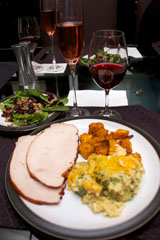
Our selection criteria include:

  • A very good Quality rating of >=3.5 stars (out of 5)
  • A price tag of <=$20
  • Must be widely available

Dunham Cellars is a family-owned winery located in a remodeled World War II airplane hangar in Walla Walla, Washington. Eric Dunham began making wine in his spare time under the Dunham Cellars name in 1995. By 1999, he decided to devote his full attention to his wines and together with his parents, Mike and Joanne, they opened the winery at Walla Walla Regional Airport. In 2008, Dan Wampfler joined Dunham Cellars as winemaker and now Eric serves as Senior Winemaker. Three Legged Red was named for Eric’s three legged dog, Port, that passed away in 2008.

“Each year, Dunham Cellars blends a portion of its wines into this red table wine. Using fruit from all of our estate vineyards and using the same barrels in which our finest Cabernet, Merlots and Syrahs are aged, we are able to maintain the consistent high quality of our top wine, as well as create a great everyday wine that is price-friendly.” –Dunham Cellars

2011 Dunham Cellars Three Legged Red (Columbia Valley, Washington): Deep purplish red. Aromatic with red cherry, plum, and pencil lead on both the nose and palate. Medium to full-bodied with lively acidity, medium tannins, and a long, smooth finish.
Quality: 3.5 stars (out of 5)
QPR: 4 bangs for your buck (out of 5)
Where to buy: Total Wine & More (Seattle, Washington), $17.49; Available elsewhere, $18 to $20


Filed under: A Wine for Tonight, American Wine, Red Wine, Washington State Wine, Wines Under $20, Wines Under $25