
Tasting Group: Loire Valley Cabernet Franc


By Kori ~ September 28th, 2010
Since we live in Washington State and often drink wines from Washington State, we want to make sure that we continue to hone our knowledge of the entire world of wine and maintain well-rounded palates in order to make us even more objective when we evaluate wines from Washington State. Therefore, we are thoroughly enjoying our Wine Peeps Tasting Group which includes what we think is an excellent peer group of knowledgeable wine lovers to taste, share, and learn more about wine together. Unlike our monthly wine tasting dinners in which the guests rotate, this tasting group includes people who are committed to getting together once a month which we believe benefits all of us. In addition to trying varieties and regions that we do not taste frequently, the other main difference between this group and our wine tasting dinners is that each group member brings a bottle consistent with the month’s theme so no one knows all the wines in the blind tasting.

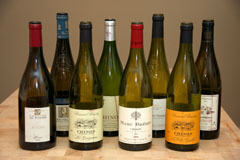
Last week, we met and explored Cabernet Franc from France’s Loire Valley. The Loire Valley is France’s third largest wine region. It is a long, narrow region that runs predominately east/west along the Loire River. The region spans about 600 miles. There is great diversity in Loire Valley wines due to its wide range of microclimates. Loire Valley wines are very food-friendly and are the most popular wines ordered in restaurants in France. In the Loire Valley, “Cabernet” means Cabernet Franc. It was the Loire’s first red grape variety, and it thrives there. Known for its earth, spice, and red fruit characteristics, Cabernet Franc is the red grape variety used to produce wines in Chinon, Bourgueil, Saumur, Saumur-Champigny, and Anjou, among others.

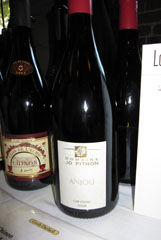
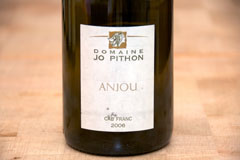
We tasted eight bottles of Loire Valley Cabernet Franc, and the consensus favorite was the 2006 Domaine Jo Pithon Anjou. This tasting proved to be a good palate check for me as this wine was my favorite (and the group’s favorite) in this blind tasting and was also my favorite at the recent Loire Valley Wines trade tasting.

I must admit that this tasting was a pleasant surprise for me. I have not always been a big fan of varietal Cabernet Franc, particularly from France, but have preferred it when used as a blending grape. However, this was probably the best overall set of wines we’ve had in one of our tasting group meetings. I look forward to trying some of these wines again with food as I can certainly see why they are so popular in restaurants in France. Not only are they food-friendly wines, but also they can be more pocketbook-friendly than wines from other regions in France.
From 1st to last in the group consensus rankings:

2006 Domaine Jo Pithon Anjou (Anjou, Loire Valley, France): Deep, dark ruby red. Aromatic with cream, butter, herbal, cola, and floral aromas on the nose. Red and black fruits and more herbal notes on the palate. Medium to full-bodied with lively acidity and medium to high tannins. Extremely well-balanced and smooth with a long, lingering finish.
Quality: 4.5 stars (out of five)
QPR: 4 bangs for your buck (out of 5)
Where to buy: Esquin (Seattle, Washington), $29

2007 Bernard Baudry Les Grezeaux Chinon (Chinon, Loire Valley, France): Medium, ruby red. Aromatic with cherry pie, red fruit, barnyard, green vegetable, and savory aromas. Cherry pie, earth, green vegetables, wet stone, and white pepper come through on the palate. Medium to full-bodied and crisp with medium to high tannins. Well-balanced with a long finish.
Quality: 4 stars (out of five)
QPR: 3 bangs for your buck (out of 5)
Where to buy: Full Pull Wines (Seattle, Washington), $30; Available elsewhere, $25

2006 Marc Bredif Chinon (Chinon, Loire Valley, France): Deep, ruby garnet in color. Aromatic with earth, red fruit, floral, and vegetal aromas on the nose. Fruit-forward with red fruits, green bell pepper, mint, and a hint of earth on the palate. Medium-bodied and smooth with high, drying tannins and a long finish.
Quality: 4 stars (out of five)
QPR: 5 bangs for your buck (out of 5)
Where to buy: Fred Meyer (Seattle, Washington), $18; Available elsewhere, $17 to $20

2007 Bernard Baudry Le Clos Guillot Chinon (Chinon, Loire Valley, France): Medium, ruby red. Aromatic with cherry pie, red fruit, barnyard, and earthy aromas. Red fruits, earth, green vegetables, and eucalyptus come through on the palate. Medium to full-bodied and crisp with medium to high, drying tannins. Well-balanced with a long finish.
Quality: 4 stars (out of five)
QPR: 3 bangs for your buck (out of 5)
Where to buy: Full Pull Wines (Seattle, Washington), $31; Available elsewhere, $25 to $30

2005 Domaine Les Grandes Vignes Les Cocainelles Anjou-Villages (Anjou-Villages, Loire Valley, France): Dark, purplish red. Nice nose with aromas of earth, herbs, green vegetables, cinnamon, and clove. Flavors of black fruits, coffee, mint, and spice. Full-bodied and lively with chewy tannins and a long finish.
Quality: 3.5 stars (out of five)
QPR: 3 bangs for your buck (out of 5)
Where to buy: Whole Foods (Seattle, Washington), $24

2008 Charles Joguet Cuvee Terroir Chinon (Chinon, Loire Valley, France): Deep, ruby red. Aromatic with red cherry, earth, and tea aromas. Red fruits, rubber, tar, tea leaves, and earthy and vegetal notes come through on the palate. Medium-bodied and lively with medium, drying tannins, and a long, slightly bitter finish.
Quality: 3.5 stars (out of five)
QPR: 4 bangs for your buck (out of 5)
Where to buy: Pike & Western Wine Shop (Seattle, Washington), $22; Available elsewhere, $17 to $24

2009 Cave des Vignerons de Saumur Lieu-Dit Les Vignoles Saumur-Champigny (Saumur-Champigny, Loire Valley, France): Deep, purplish ruby red in color. Butterscotch and very ripe red cherries on the nose; green vegetables, oak, barnyard, and jammy red fruits on the palate. Medium to full-bodied and lively with medium to high, drying tannins, and a long, slightly bitter finish.
Quality: 3 stars (out of five)
QPR: 4 bangs for your buck (out of 5)
Where to buy: Esquin (Seattle, Washington), $13

2006 Henri Bourgeois Le Pigeonnier Bourgueil (Bourgueil, Loire Valley, France): Deep, ruby red. Aromas of red and black fruits, pencil lead, mint, eucalyptus, and stinky feet. Flavors of earth, eucalyptus, and cherries. Medium to full-bodied and lively with chewy, drying tannins, and a long finish.
Quality: 3 stars (out of five)
QPR: 4 bangs for your buck (out of 5)
Where to buy: Pete’s Wine Shop (Seattle, Washington), $15


Filed under: Cabernet Franc, Five-Bangs For Your Buck Wines, French Wine, Red Wine, Tasting Group, Wines Over $25, Wines Under $15, Wines Under $20, Wines Under $25
 

Women of Washington Wine: Lisa Baer of Baer Winery


By Kori ~ September 27th, 2010

Today’s post is part of a series featuring the Women of Washington Wine. In an industry once dominated by men, more and more women are joining the ranks as winery owners, vineyard owners, and winemakers. Being a woman myself, I am fascinated by these women and what they have done and continue to do. Through this series, I hope to introduce you to some of the brightest female faces in the Washington wine industry.

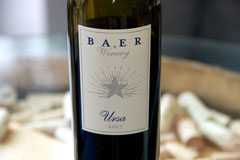
Lance Baer founded Baer Winery in 2000. After he passed away in 2007, his sister Lisa and father Les took over the winery and have continued Lance’s legacy. Today, Lisa Baer is the face of the winery. With the help of consulting winemaker/oenologist Erica Orr, Lisa strives to make wines that would meet her brother’s standards. Baer Winery sources fruit exclusively from Stillwater Creek Vineyard, located in the Frenchman Hills on the Royal Slope of Washington State’s Columbia Valley. Located in the warehouse district in Woodinville, Washington, Baer Winery produces 2,000 cases per year.

Recently, Lisa was kind enough to take time out of her busy schedule to answer some questions for me and our Wine Peeps readers.

Highlights from Q&A with Lisa Baer:

How did you first get involved in the wine business?
My brother, Lance Baer, got me interested in wine (first through tasting groups) and so when he decided to start his own winery in 2000, I worked along with him.  I have a marketing background and so my initial input was in that area.

What were the steps that led to where you are now?
Our small boutique winery is family owned and operated, and so I was lucky enough to be involved from its inception. The winery was founded by my brother, who had the wine expertise (he was the Assistant Winemaker at DeLille at the time), and so I learned winemaking mostly from him, hands-on, but also through taking classes through UC Davis and Central Washington University. My brother passed away in 2007, which left me as the face of Baer Winery, and me and my father unexpectedly running the winery, rather than just working for my brother. It was important for us to continue his legacy, but only if we could still produce wine of the same high standard, not just something with our name on the label. While my learning curve has greatly increased, we do work with a Consulting Winemaker/Oenologist, Erica Orr, who is invaluable to our program.

Has being a woman been an advantage or a disadvantage in your wine journey?
I think neither. The wine community in Woodinville and Washington State is very accepting of any individual, based on what they bring to the table and how their wine tastes and not whether they are male or female. I do feel limited sometimes about the physical jobs at the winery, but this has given me an opportunity for positive personal growth to keep up as much as I can. I never dreamed when I was 10 years old that someday I would be learning to drive a forklift. It’s not yet my great talent, but it’s important for me to keep giving it my best effort.

What advice do you have for a woman wanting to get involved in the wine business today?
Spend as much time as you can at a winery either volunteering or working there to first learn what it’s really about and to get some experience. It will be a good learning experience and prospective employers will take you more seriously. It is common, and not just for women, for someone to think they want to make wine, but then their interest soon fades after the first day or so of barrel washing and equipment sterilizing. Many internships with local students last just a day or so. So, find out where your interest lies, and then be serious about it.

What are your thoughts about the Washington wine industry, in general?
Wine is now made in all 50 states of the U.S., but there are quite a few where maybe that’s not such a good idea. In Washington, however, we’re blessed with an ideal climate for growing wine grapes, and talented individuals to make those grapes into delicious wine. I was amazed when we started our winery that we could do that. I thought a winery had to be some big, fancy Chateau that was in the family for years and years, yet in Washington it is still possible to start a small winery and make great wine.

In recent years the Washington wine industry has grown at a rapid rate. Do you expect that trend to continue?
It’s an exciting time in the Washington wine industry with the huge growth we are experiencing, and there has been much less fallout than I expected. The growth has given us a critical mass, whereby the local population is now much more aware of the wine industry in their backyard, so I think that has resulted in increased sales for Washington wineries. Still, I wonder if there will be a point at which there is saturation and some wineries that don’t make it.

What is your vision for the future of Baer Winery?
From the beginning, our plan was to grow to a production of about 2,000 cases per year, which we have now done. We want to stay at that level to maintain the small, handcrafted process. Within that, however, we look forward to coming up with new wines to offer, such as the single-varietal Cabernet Franc that was released this year for the first time. We have the freedom as a small winery to work with what the fruit brings us, so we will continue to have fun with new offerings for our customers. We also look forward to being an important part of the growth of the Woodinville wine industry and its contribution to the Woodinville area and getting the visitors to come there.

Many thanks to Lisa for sharing her story and thoughts with us. I wish her all the best and will be following her work and Baer Winery with great interest, and I hope that you will too.


Filed under: American Wine, Interview, Washington State Wine, Women of Washington Wine
 

Wine Word of the Week: Fining


By Kori ~ September 25th, 2010

This week’s Wine Word of the Week is fining.

Official definition from Jancis Robinson’s The Oxford Companion to Wine:
Fining is the winemaking process with the aim of clarification and stabilization of a wine whereby a fining agent, one of a range of special materials, is added to coagulate or absorb and precipitate quickly the colloids suspended in it. Fining (collage, or ‘sticking’, in French) is important because, by encouraging these microscopic particles to fall out of the wine, the wine is less likely to become hazy or cloudy.

Layman’s terms from Kori:
Fining takes place during the clarification and stabilization stages of the winemaking process. Fining agents such as egg whites and gelatin are mixed into the wine to bind to undesirable particles. Both the fining agents and undesirable particles are removed during racking.


Filed under: Wine Word of the Week
 

Agonizing Over and Analyzing Washington Ballot Initiatives I-1100 & I-1105


By John ~ September 24th, 2010

A month ago, I was fairly certain how I would vote on both of these initiatives. Today, I’m not as sure. How about you?

Earlier this month, a good, concise summary of the two initiatives appeared in the Seattle P-I Online. It said in part, “I-1100 would eliminate Washington’s ‘three-tiered’ liquor control system, which segregates the manufacturing, distributing and retailing of spirits. Bans against volume discounts would be repealed and retailers like Costco and Wal-Mart would be allowed to buy directly from manufacturers [without going through a distributor]. The other measure, I-1105, would privatize the liquor retail system but keep in place state laws that protect the liquor distributors, who are behind 1105.”

Studying the two initiatives, it appears to me that I-1100 is pro-consumer, while I-1105 is pro-the middleman. I-1100 preserves the existing liquor excise tax, while I-1105 repeals it. It also appears that I-1100 will provide more funds for liquor enforcement and education, but I-1105 does not.

Traditionally, I’ve found it helpful to “follow the money” when I’m deciding how to vote on something like these initiatives. Seeing who is backing them financially gives me a good feel for who will benefit the most and whether or not I agree that it is for the greater good.

Following the money shows a group called “Modernize Washington” has raised almost $2 million to support I-1100. Costco, Wal-Mart, and Safeway are its largest donors, according to the Public Disclosure Commission. “Washington Citizens for Liquor Reform” has raised about $2.2 million to support I-1105. The group’s donors (virtually 100%) are liquor distributors Odom Southern Holdings and Young’s Market Company. And a group called “Protect our Communities,” a somewhat disingenuous name considering its main donors are beer and wine wholesalers, has raised about $6 million to oppose both initiatives.

After following the money, studying what the initiatives do and don’t do, and since I am a big proponent of dismantling the archaic three-tiered system that exists primarily for the benefit of distributors and for getting the state monopoly out of the wine retail business, I had concluded that I’m for I-1100 and against I-1105.

I have been especially incensed that Rick Garza of the Washington State Liquor Control Board (WSLCB) has been traveling around the state on state time and money campaigning against both initiatives. It’s not surprising given that his and other jobs may be at stake, but it “walks and talks” like a clear violation of state ethics legislation.

Quite honestly, as a small businessman myself for many, many years, I thought it would be a slam-dunk for wineries and winemakers around the state to be in favor of I-1100. However, in recent weeks, I’ve learned that they are divided on the issue. The Family Winemakers of Washington group is strongly pro I-1100, while the Washington Wine Institute is equally vehement in its opposition. Darby English of Darby Winery, James Mantone of Syncline Cellars, and Caleb Foster of Buty Winery have come out on TV (English) and print (Mantone and Foster) against I-1100. I don’t know English personally and his ad appeared to be paid by the wholesalers’ group, so I discounted it somewhat. On the other hand, I did believe Mantone and Foster’s objections deserved careful study. If I understand correctly, their objections revolve around concerns about the elimination of both uniform pricing and the requirement for immediate cash payment for wine. Since almost every other business in the world offers volume discounts and extends short-term credit to its customers, I’m not sure I understand the anguish. Besides, I don’t believe the initiative requires a winery to extend credit. And most wineries already offer case discounts to consumers, which is the same in principle as volume discounts to merchants.

I respect Mantone and Foster personally and as talented winemakers, so their concerns made me reconsider my position. However, after further study and reflection, I still believe the benefits outweigh the concerns about I-1100. I’m still leaning toward a “yes” vote on I-1100 and a “no” vote on I-1105.

Have you made up your mind about these initiatives? Please weigh in with your thoughts and tell me if you think I should reconsider my position.


Filed under: American Wine, Miscellaneous, Washington State Wine
 

A Wine for Tonight: 2009 Chateau Ste. Michelle Sauvignon Blanc


By Kori ~ September 23rd, 2010

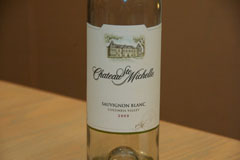
Would you like a quick suggestion for a good wine to drink tonight (or this weekend) that won’t break your budget and is widely available? Many of our readers have said this is something they would like, so here is this week’s selection, the 2009 Chateau Ste. Michelle Sauvignon Blanc from the Columbia Valley of Washington State.

Our selection criteria include:

  • A very good Quality rating of >=3.5 stars (out of 5)
  • A price tag of <=$15
  • Must be widely available

Chateau Ste. Michelle is Washington State’s founding winery with its roots dating back to the repeal of Prohibition. In 1976, Ste. Michelle built a French-style chateau in Woodinville, just northeast of Seattle. While all of Chateau Ste. Michelle’s vineyards are located on the east side of the Cascade Mountains, all of their white wines, including this Sauvignon Blanc, are made in Woodinville.

“The mostly stainless steel fermentation makes this a crisp, refreshing style of Sauvignon Blanc. The wine offers fresh aromas of herbs and lavender with a beautiful floral note. A touch of Semillon is added for richness. This wine would pair well with dishes with cream sauce.” –Bob Bertheau, Head Winemaker

2009 Chateau Ste. Michelle Sauvignon Blanc (Columbia Valley, Washington): 89% Sauvignon Blanc, 11% Semillon. Pale, greenish straw yellow in color. Aromatic with apple, pear, and minerality on the nose. Lemon, lime, and other citrus fruits come through on the palate. Dry and light-bodied with tart, crisp acidity and a long finish. Well-balanced and refreshing.
Quality: 4 stars (out of 5)
QPR: 5 bangs for your buck (out of 5)
Where to buy: Fred Meyer (Seattle, Washington), $8.99; Available elsewhere, $8 to $13


Filed under: A Wine for Tonight, American Wine, Five-Bangs For Your Buck Wines, Sauvignon Blanc, Washington State Wine, White Wine, Wines Under $10, Wines Under $15, Wines Under $20, Wines Under $25
 

Spotlight On: Rasa Vineyards [Wow! Alert]


By Kori ~ September 22nd, 2010

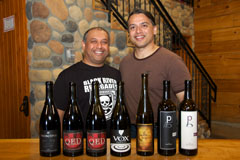
Rasa Vineyards is a relatively new winery located in Walla Walla, Washington. Founded in 2007 by brothers Pinto and Billo Naravane, Rasa Vineyards burst onto the Washington wine scene and received numerous accolades for their inaugural releases. Currently, they produce around 2,000 cases per year, a level they plan to maintain for a while.

Originally from India, the brothers turned to an uncle for help in naming their winery. When they explained to him their idea of producing terroir-driven wines, he suggested Rasa, which basically means “terroir” in Sanskrit. He said that it means “essence” and is often used figuratively in regards to soil and fruit; and in slang, it also means “juice.” They felt that it was a nice way to encapsulate the story of what they are trying to create, was a good tie-back to India, and is a relatively simple word for people to say.

Both Pinto and Billo have engineering and mathematical backgrounds and worked in the computer industry. Bitten by the wine bug around 1990, they began tasting 500 to 600 wines a year and talking about starting a winery together someday. Billo received his BS in Applied Mathematics and Computer Science from MIT and his MS in Electrical Engineering from Stanford University. He worked in the computer industry for about 15 years, much of that time travelling as a consultant. He soon realized that he did not want to do that for another 30 years and applied to the Viticulture and Enology program at UC Davis in 2006. He graduated in June of 2008 and moved to Walla Walla full-time in September of that year. Pinto, meanwhile, still lives in New Jersey where the brothers grew up. He received his BE in Computer Science/Electrical Engineering and MS in Electrical Engineering from Stevens Institute of Technology and runs his own computer networking company. Eventually, Pinto hopes to move to Walla Walla, but for the time being, he will continue to live in New Jersey in order to supplement their income until the winery becomes self-sustaining. Having him on the east coast has also opened doors for them in the New York and New Jersey markets which has proved quite beneficial.

Even though Pinto and Billo come from very technical backgrounds, they both felt the pull to express their artistic side through the winery. Pinto loves to write poetry and screenplays, and Billo loves music and plays classical piano.

“Our conservative Indian parents love the fact that we are throwing that out [our engineering and technical backgrounds] to make wine.” –Pinto Naravane, co-owner/managing partner, Rasa Vineyards

When the brothers decided that the time was right to pursue their dream of starting a winery and Billo started school at UC Davis, they put a lot of time into developing a business plan and deciding where they wanted to locate their winery. In addition to Walla Walla, they considered Paso Robles, Napa, Sonoma, Mendocino, and Oregon. When they visited Walla Walla, it reminded them of Napa and Sonoma in the late 1980’s and early 1990’s.

“We saw a real parallel to where Walla Walla and eastern Washington are and where Sonoma and Napa were. So we thought it was a great opportunity for us to come here and make great, world-class wines.” –Pinto Naravane, co-owner/managing partner, Rasa Vineyards

“We came here to Walla Walla where the industry is still forming with the intent to be one of the leaders longer term.” –Billo Naravane, co-owner/winemaker, Rasa Vineyards

As for official titles, Pinto is the managing partner and Billo is the winemaker. However, it is very evident that the brothers collaborate on everything. Even though Pinto lives in New Jersey, he travels to Walla Walla frequently. He is there for all of the blending trials and throughout harvest.

Speaking of blending trials, they taste everything blind over the course of three to four days. Then they go through and compare notes to determine the percentages that work best. Given our belief in blind tasting, I was particularly struck to learn that they taste that way too.

“We are huge fans of blind tasting. That’s really the only way to taste wine.” –Billo Naravane, co-owner/winemaker, Rasa Vineyards

On September 1st, Rasa Vineyards moved into its new facility south of downtown Walla Walla near the Washington/Oregon state line. Located on Powerline Road, their gorgeous winery is the former home of Hence Cellars. Prior to moving into their own building, Rasa had been making their wines at Artifex, Walla Walla’s custom crush facility. While Artifex has served them well, Pinto and Billo were anxious to find a place that they could call their own that would give them space to not only produce their wines but also have a tasting room and a place for events. By the end of September, they hope to be completely moved in and will be open by appointment only until harvest is done. After Fall Release Weekend in November, they plan to begin having regular tasting room hours.

We had the pleasure of visiting Rasa Vineyards in their new facility just three days after they got the keys. Pinto and Billo gave us on a tour of their new digs and tasted us through their wines. During our visit, they shared with us some of their winemaking philosophies.

They avoid pumps whenever possible, do very gentle punch downs, and are careful to manage the extraction level of their wines. While their wines have a considerable amount of tannins, they strive for a very silky feel. Their wines are built to age for 10 to 20 years.

“The key to producing wines that will age is to establish the balance young. Wines never gain balance with age. It is important to get that balance in terms of fruit, tannins, acidity, and alcohol just right in the beginning. One of our philosophies is that whenever that balance point is reached, no matter where it is in that cycle, we press off and immediately go to barrel.” –Billo Naravane, co-owner/winemaker, Rasa Vineyards

In stark contrast to their technical backgrounds, Billo and Pinto make their wines in as non-interventionist a manner as possible. They do not tinker with it. Billo’s knowledge of organic chemistry and microbiology only comes into play if something seems off-kilter. They also employ a minimalist oak program. Usually their Syrahs only get 18-25% new French oak. Even their Cabernet Sauvignon (which is still in barrel and set to be bottled in January) has only seen about 60-65% new oak. They have experimented with some American oak barrels but about 98% of the barrels they use are French.

“We are not huge fans of oak, honestly. You go through all this trouble to get these complex grapes, and get the flavors right on the grapes in the vineyard, and then it doesn’t make any sense to us to come in here, crush it, and put it into barrels in 100% new oak, and just mask all of those flavors that we worked so hard to get in the first place.” –Billo Naravane, co-owner/winemaker, Rasa Vineyards

Currently, their fruit sources include vineyards in the Walla Walla Valley and the Columbia Valley such as Les Collines, Seven Hills, Sagemoor, and Minick. They do have plans to plant their own estate vineyard “in the rocks” near Milton-Freewater, Oregon. They have purchased 28 acres near Seven Hills Vineyard that are currently planted to apples and cherries. They have cleared nine acres and put in a drip irrigation system. Their hope is to have the funds to plant at least some of those nine acres in March.

“Stylistically, our palates are much more aligned with France than California or Australia. We like those wines, but we are huge Rhone fanatics and Bordeaux fanatics. We love Cote Rotie and Hermitage, more terroir-driven wines rather than over-the-top fruit type wines.” –Billo Naravane, co-owner/winemaker, Rasa Vineyards

We tasted through seven of their wines, five from their primary Rasa label and two from their new second label, PB Wines. The PB Wines are made in an identical manner and get the same treatment as the Rasa wines but are just offered at a lower price point.

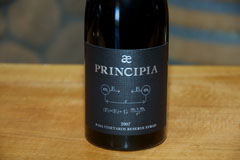
We were absolutely blown away by their 2007 Principia Reserve Syrah. It truly is a “Wow!” wine. At $85, it sports a hefty price tag but is worth every penny. We also thought that their 2007 QED and 2008 Vox Populi Mourvedre were outstanding.

The names of their wines are a nod to their scientific and mathematical backgrounds. QED stands for “quod erat demonstrandum”.

“When we started the winery, our friends said, ‘We know you know a lot about wine, but can you make great wine?’ So we decided to call this QED and say, ‘The proof is in the bottle.’” –Pinto Naravane, co-owner/managing partner, Rasa Vineyards

For their reserve line of wines, they decided to celebrate something profound in human history instead of calling them Winemaker’s Reserve or Artist Series or something that has been done by many other wineries. Their first reserve wine, Principia, is based on Sir Isaac Newton’s seminal work on the laws of mechanics and universal gravitation.

The Mourvedre that goes into their Vox Populi was originally sourced to be a blending grape in the QED. However, when some of their winemaker friends tasted barrel samples of it, they commented on how remarkable it was. Even some collectors who tasted it offered to buy it in futures and asked them to bottle at least some of it by itself. Therefore, Vox Populi or “voice of the people” was born.

Rasa Vineyards offers their wines through their mailing list first. They are also distributed in 17 states. If you have not had a chance to try one of their wines, I encourage you to keep your eyes out for them on the shelf at your local wine shop or go ahead and put your name on their mailing list. If their first releases are any indication, this winery is headed for superstar status. And if you are in the Walla Walla area, Rasa Vineyards is definitely a must-visit.

2007 Rasa Vineyards Principia Reserve Syrah (Walla Walla Valley, Washington): 100% Syrah. Deep, dark purple in color. Gorgeous nose with a lot going on aromatically. Blackberry, black plum, clove, pepper, smoke, and pencil lead fill both the nose and palate. Full-bodied with crisp acidity and high yet silky tannins. Well-balanced with a long, lingering finish. This wine hits it out of the park. Wow!
Quality: 5 stars (out of 5)
QPR: 5 bangs for your buck (out of 5)
Where to buy: Winery, $85

2007 Rasa Vineyards QED (Walla Walla Valley, Washington): 94% Syrah, 3% Grenache, and 3% Mourvedre. Deep, dark purplish red. Gorgeous nose with aromas of red and black fruits, game, and spice. Smoked meats, game, black fruits, and cinnamon come through on the palate. Full-bodied and crisp with high tannins. Well-balanced and smooth with a long finish.
Quality: 4.5 stars (out of 5)
QPR: 5 bangs for your buck (out of 5)
Where to buy: Winery, $50

2008 Rasa Vineyards Vox Populi Mourvedre (Minick Vineyard, Yakima Valley, Washington): 100% Mourvedre. Dark, ruby purple. Very aromatic with red and black fruits, smoked meats, game, and white pepper on both the nose and palate. Medium to full-bodied with lively acidity, medium to high tannins and a long finish. Big yet smooth and well-balanced.
Quality: 4.5 stars (out of 5)
QPR: 4 bangs for your buck (out of 5)
Where to buy: Winery, $45

2008 Rasa Vineyards QED (Walla Walla Valley, Washington): 83% Syrah, 10% Grenache, 5% Mourvedre, and 2% Viognier. Deep, dark purplish red in color. Beautiful bouquet with red and black fruits and floral notes. Blackberry, black cherry, and spice dominate the palate. Full-bodied and crisp with medium to high tannins and a long finish.
Quality: 4 stars (out of 5)
QPR: 3 bangs for your buck (out of 5)
Where to buy: Winery, $50 [to be released in November]

2009 Rasa Vineyards The Composer Riesling (Sagemoor Vineyards, Columbia Valley, Washington): Pale, straw yellow in color. Nice nose with aromas of white peach and apricot that lead to flavors of apple, pear, and peach. Light to medium-bodied and lively with a long finish. Residual Sugar: 1.56%
Quality: 3 stars (out of 5)
QPR: 1 bang for your buck (out of 5)
Where to buy: Winery, $30

2008 PB Wines Red Mountain Kiona Vineyards (Red Mountain, Washington): 66.7% Syrah, 33.3% Cabernet Sauvignon. Dark, purplish red. Aromatic with earth and dark fruits on the nose; black cherry, pepper, and chocolate on the palate. Medium to full-bodied and crisp with medium to high, silky tannins. Well-balanced and smooth with a long finish.
Quality: 4 stars (out of 5)
QPR: 4 bangs for your buck (out of 5)
Where to buy: Winery, $29

2008 PB Wines Yakima Valley Syrah (Yakima Valley, Washington): Dark, deep purple. Aromas of black fruits, spice, pepper, and a hint of chocolate. Blackberry, black cherry, and spice come through on the palate. Medium-bodied and fruit-forward with lively acidity, medium tannins, and a long finish.
Quality: 3.5 stars (out of 5)
QPR: 3 bangs for your buck (out of 5)
Where to buy: Winery, $29


Filed under: American Wine, Five-Bangs For Your Buck Wines, Five-Star Quality Wines, Mourvedre, Red Wine, Riesling, Shiraz/Syrah, Spotlight On, Washington State Wine, White Wine, Wines Over $25
 

Loire Valley Wines: Diverse, yet Distinctive


By Kori ~ September 21st, 2010

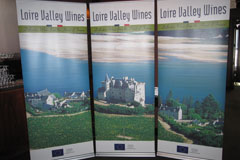
The Loire Valley is France’s third largest wine region. It is a long, narrow region that runs predominately east/west along the Loire River. The region spans about 600 miles. The Loire Valley includes 65 appellations and produces wines from over a dozen grape varieties. There is great diversity in Loire Valley wines due to its wide range of microclimates. Loire Valley wines are very food-friendly and are the most popular wines ordered in restaurants in France.

Last week, the Loire Valley Wine Bureau hosted a trade tasting of Loire Valley wines in Seattle. It was a great opportunity for Dad (John) and I to explore Loire Valley wines further. While over 100 different wines were being poured from all over the Loire Valley and made from many different grape varieties, we decided to focus our tasting on Cabernet Franc and dry Chenin Blanc.

In the Loire Valley, “Cabernet” means Cabernet Franc. It was the Loire’s first red grape variety, and it thrives there. Known for its earth, spice, and red fruit characteristics, Cabernet Franc is the red grape variety used to produce wines in Chinon, Bourgueil, Saumur, Saumur-Champigny, and Anjou, among others.

Chenin Blanc is a white grape variety native to the Loire Valley. It is able to adapt to different microclimates and therefore is produced in a wide variety of styles, from dry to sweet to sparkling. Chenin Blanc is the primary white variety in appellations such as Vouvray, Anjou, Chinon, and Saumur.

Of the wines we tasted, one Cabernet Franc and one Chenin Blanc stood out above the rest. We thought that the 2006 Domaine Jo Pithon Anjou (Cabernet Franc) and the 2009 Pierre Chainier Clos de Nouys Vouvray Sec (Chenin Blanc) were excellent. As far as value goes, the wines of Cave des Vignerons de Saumur delivered serious bang for the buck. If you have not had any or many wines from the Loire Valley, I encourage you to seek out one of these wines to help expand your palate. These wines are quite distinctive and really express the unique terroir of the Loire Valley.

Here’s a breakdown of the wines that we tasted at the Loire Valley Wines event. Under each Quality heading, the wine name, grape variety, and region within the Loire Valley will be listed along with price and QPR rating. Wines in bold type received a QPR rating of 5 bangs for your buck (out of 5).

Quality: 4 stars (out of 5)
2006 Domaine Jo Pithon Anjou (Cabernet Franc), Anjou, $24.99, QPR: 4
2009 Pierre Chainier Clos de Nouys Vouvray Sec (Chenin Blanc), Vouvray, $21.99, QPR: 3

Quality: 3.5 stars (out of 5)
2009 Cave des Vignerons de Saumur Lieu-Dit Les Vignoles Saumur-Champigny (Cabernet Franc), Saumur-Champigny, $12.99, QPR: 5
2005 Chateau de Targe Saumur-Champigny (Cabernet Franc), Saumur-Champigny, $18.99, QPR: 4
2005 Domaine Baudry-Dutour Perriere Vieilles Vignes Chinon (Cabernet Franc), Chinon, $22, QPR: 4
2008 Laurent Kraft Vouvray Sec (Chenin Blanc), Vouvray, $16, QPR: 3
2004 Couly Dutheil Clos De L’Echo Chinon (Cabernet Franc), Chinon, $34.99, QPR: 2

Quality: 3 stars (out of 5)
2009 Cave des Vignerons de Saumur Les Pouches Saumur (Cabernet Franc), Saumur, $9.99, QPR: 5
2009 Cave des Vignerons de Saumur Lieu-Dit Les Epinats Saumur (Cabernet Franc), Saumur, $9.99, QPR: 5
2009 Cave des Vignerons de Saumur Lieu-Dit Beauregard Bourgueil (Cabernet Franc), Bourgueil, $10.99, QPR: 5

2009 Cave des Vignerons de Saumur Le Haut Vignot Anjou (Chenin Blanc), Anjou, $8.99, QPR: 4
2009 Cave des Vignerons de Saumur Lieu-Dit Les Epinats Saumur (Chenin Blanc), Saumur, $9.99, QPR: 4
2007 Domaine de Quarres Metis Anjou-Villages (Cabernet Franc), Anjou-Villages, $17, QPR: 4
2007 Remy Pannier Chinon (Cabernet Franc), Chinon, $19, QPR: 3
2004 Wilfrid Rousse Vieilles Vignes Chinon (Cabernet Franc), Chinon, $20, QPR: 3
2007 Domaine Filliatreau Grande Vignolle Saumur-Champigny (Cabernet Franc), Saumur-Champigny, $20, QPR: 3
2009 Couly Dutheil Les Chanteaux Chinon (Chenin Blanc), Chinon, $26.99, QPR: 1

Quality: 2.5 stars (out of 5)
2009 Cave des Vignerons de Saumur Les Pouches Saumur (Chenin Blanc), Saumur, $9.99, QPR: NR
2005 Domaine des Baumard Logis de la Giraudiere Anjou (Cabernet Franc), Anjou, $17, QPR: NR
2009 Pierre Gauthier Jour De Soif Bourgueil (Cabernet Franc), Bourgueil, $19.99, QPR: NR
2007 Couly Dutheil Barronie Madaleine Chinon (Cabernet Franc), Chinon, $22.99, QPR: NR


Filed under: Cabernet Franc, Chenin Blanc, Five-Bangs For Your Buck Wines, French Wine, Red Wine, White Wine, Wine Activities/Events, Wines NOT To Buy (1 & 2 Star), Wines Over $25, Wines Under $10, Wines Under $15, Wines Under $20, Wines Under $25
 

Woodinville Wine Country Comes to Seattle


By Kori ~ September 20th, 2010

Woodinville has definitely become a must-visit destination in Washington wine country. Home of the state’s oldest, largest, and most well-known wineries, Chateau Ste. Michelle and Columbia Winery, the Woodinville area is also home to over 90 wineries and tasting rooms, with new ones opening all the time. Woodinville now boasts the second largest concentration of Washington wineries after Walla Walla and is located just 17 miles northeast of Seattle. Today, Woodinville is one of the Seattle area’s top tourist attractions, with at least 18 tasting rooms open daily and upwards of 70 open on the weekend.

Founded in 2002, Woodinville Wine Country is a non-profit organization currently comprised of 57 member wineries that share the goal of producing world-class wines and driving tourism to the area. In an effort to get the word out about their wines, Woodinville Wine Country hosted a “Taste for the Trade” event in Seattle last week. They are also hosting a similar event in Bellevue this afternoon. Even with their close proximity to the population center of the state, I am glad to see that Woodinville is not content to rest on their laurels and wait for the people to come to them. It shows initiative for them to also come to the people. As a result, I hope to see even more Woodinville wines on the wine lists of local restaurants and in area wine shops. Woodinville Wine Country also sponsors two annual events for the public, Passport to Woodinville (first weekend of April) and St. Nicholas Weekend (first weekend of December).

If you haven’t made a Woodinville wine tasting trip yet, I highly encourage you to do so whether for one of the event weekends, when you are vacationing in Seattle, or just when you have a free afternoon. (Click here for our updated .pdf list of Woodinville wineries/tasting rooms including website, address, phone, and hours.)

Here’s a breakdown of the wines that we tasted at the Woodinville Wine Country “Taste for the Trade” event. Under each Quality heading, the wine name and region will be listed along with price and QPR rating. Wines in bold type received a QPR rating of 5 bangs for your buck (out of 5).
Quality: 4 stars (out of 5)
2007 Brian Carter Cellars Abracadabra Red Wine, Columbia Valley, $15, QPR: 5
2005 DiStefano Winery Syrah R, Columbia Valley, $20, QPR: 5
2007 Chateau Ste. Michelle Canoe Ridge Estate Cabernet Sauvignon, Horse Heaven Hills, $27, QPR: 5

2008 Hollywood Hill Vineyards Cabernet Franc, Rattlesnake Hills, $26, QPR: 4
2007 Northwest Totem Cellars Low Man Red (Bordeaux-style blend), Columbia Valley, $28, QPR: 4
2006 Brian Carter Cellars Le Coursier (Bordeaux-style blend), Columbia Valley, $30, QPR: 4
2007 Pomum Cellars Syrah, Columbia Valley, $30, QPR: 4
2007 Sparkman Cellars Ruby Leigh (Merlot-based blend), Red Mountain, $42, QPR: 3
2007 Sparkman Cellars Stella Mae (Cab-based blend), Columbia Valley, $42, QPR: 3
2008 Mark Ryan Winery Wild Eyes Syrah, Red Mountain, $45, QPR: 3
2008 Mark Ryan Winery Crazy Mary Mourvedre, Red Mountain, $45, QPR: 3
2008 Betz Family Winery Besoleil Grenache, Columbia Valley, $45, QPR: 2

Quality: 3.5 stars (out of 5)
2006 DiStefano Winery Cabernet Sauvignon, Columbia Valley, $25, QPR: 5
2005 Columbia Winery Red Willow Cabernet Sauvignon, Yakima Valley, $26, QPR: 5

2008 William Church Winery Bishop’s Blend (Bordeaux-style blend), Columbia Valley, $20, QPR: 4
2006 Page Cellars Preface Cabernet Sauvignon, Red Mountain, $37, QPR: 4
2007 Hestia Cellars Meritage, Columbia Valley, $25, QPR: 3
2008 Mark Ryan Winery Chardonnay, Columbia Valley, $28, QPR: 3
2008 Mark Ryan Winery The Dissident Red (Cab/Syrah/Mer), Columbia Valley, $32, QPR: 3
2007 Elevation Cellars Monolith (Cab/Merlot), Columbia Valley, $34, QPR: 2
2007 Matthews Estate Claret, Columbia Valley, $35, QPR: 2
2007 Northwest Totem Cellars Potlatch (Syrah/Temp/Gren), Columbia Valley, $36, QPR: 2
2006 Page Cellars Syrah, Red Mountain, $37, QPR: 2
2007 Woodinville Wine Cellars Indomitable (Cab-based blend), Columbia Valley, $40, QPR: 2
2008 Hollywood Hill Vineyards Malbec, Wahluke Slope, $34, QPR: 1

Quality: 3 stars (out of 5)
2007 Red Sky Winery Sunrise Blend (Cab/Merlot), Washington State, $20, QPR: 4
2009 Elevation Cellars Imperium Riesling, Columbia Valley, $16, QPR: 3
2006 Brian Carter Cellars Tuttorosso (Sangio/Cab/Syrah), Yakima Valley, $25, QPR: 3
2006 Brian Carter Cellars Oriana (Viog/Rouss/Ries), Columbia Valley, $15, QPR: 2
2007 Sparkman Cellars Wilderness Red Blend, Columbia Valley, $28, QPR: 2

Quality: 2.5 stars (out of 5)
NV Tefft Cellars Villa Toscana (Sangiovese-based blend), $14, QPR: NR
2008 Facelli Winery Sangiovese, Sugarloaf Vineyard, Columbia Valley, $24, QPR: NR


Filed under: American Wine, Cabernet Franc, Cabernet Sauvignon, Chardonnay, Five-Bangs For Your Buck Wines, Grenache, Malbec, Mourvedre, Red Wine, Riesling, Sangiovese, Shiraz/Syrah, Washington State Wine, White Wine, Wine Activities/Events, Wines NOT To Buy (1 & 2 Star), Wines Over $25, Wines Under $15, Wines Under $20, Wines Under $25
 

Wine Word of the Week: Breathing


By Kori ~ September 18th, 2010

This week’s Wine Word of the Week is breathing.
Official definition from Jancis Robinson’s The Oxford Companion to Wine:
Breathing is an operation believed beneficial by some consumers, involving pulling the cork and letting the open bottle stand for a few hours before it is poured. In fact, in such circumstances, the wine can take only the most minimal of ‘breaths’, and any change is bound to be imperceptible (except possibly in the case of bottle sickness). The surface area of the wine exposed to the air is so small that the effects of any aeration are negligible.

Layman’s terms from Kori:
Breathing is the process practiced by some wine enthusiasts of opening a bottle of wine and letting it stand for a while before it is poured to let it “breathe”. However, it is not a very effective method of aeration. Consider decanting a wine in order to really let it “breathe”.


Filed under: Wine Word of the Week
 

Book Review: Washington Wines and Wineries, Second Edition


By John ~ September 17th, 2010

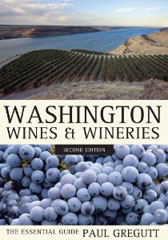
Paul Gregutt has done it again! If you have any interest in Washington State wines, you need to get a copy of his latest book, Washington Wines and Wineries: The Essential Guide, Second Edition. When you travel around Washington wine country as much as we do, you very quickly see the respect and admiration that Paul has among the people in the wine community. He’s certainly earned it, arriving in Washington in the 1970’s when the Washington wine industry was in its infancy and growing right along with it.

When I got my copy of his First Edition of this book a few years ago, I studied it from cover to cover to see how his rankings compared with ours and to find some new wineries to check out. It has been a constant and invaluable companion on our extensive travels through Washington wine country since then. So, naturally, Kori and I were excited to receive our review copy of this new edition last week and get it autographed by Paul at the Full Pull book-signing event. On a side note, it was a treat to hear Paul and Rob Newsom of Boudreaux Cellars play music together.

I’ve since made my first pass through the book, compared it to the First Edition, and come to a number of conclusions that I would like to share with you. While someone new to Washington wine should definitely purchase this book, the first and most obvious question to be answered is whether or not this book has enough new material to be worth purchasing by someone who already owns the First Edition. The answer is a definite yes.

Personally, I like the layout and structure of the book, and I’ve always appreciated Paul’s writing style. I especially enjoyed his discussion of Washington’s AVAs and Top Eight Wine Grapes and his listings of the wineries he believes produce the best bottles from each varietal. He includes twice as many wineries and vineyard listings in this book than in the First Edition, and I wish he had room for even more.

I would like to call special attention to the wineries who have zoomed up the charts from Paul’s first book to this one: Alexandria Nicole, Amavi, Andrew Rich, Barrister, Beresan, Boudreaux, Brian Carter, Bunnell, Chateau Rollat, Corliss, Cote Bonneville, Fielding Hills, Gorman, Gramercy, Long Shadows, Nicolas Cole, Pacific Rim, Sheridan, Stephenson, Stevens, and Waters. One would have to assume that these are wineries that Paul believes are really on the move in improving their stature and performance.

In any book like this that rates wineries, or in any list of top wines, the one thing that is always missing that readers would find valuable is what the universe was from which selection was made. More importantly, if a winery is totally omitted from the book, is it because Paul has not visited the winery, not tasted through their wines, or is it because they don’t suit his palate?

Because this book is promoted as “The Essential Guide” to Washington wines and wineries, I believe that there is a higher responsibility to make sure that no deserving winery was left out than if it was just called “My Favorites.”  Therefore, I struggled when reading the winery profiles of some wineries that Paul panned in his comments, indicated they might be going out of business, or implied the listing was just due to location or an associated vineyard. Those listings made me wonder why they were included over other wineries that I believe would be deserving of higher praise such as Adams Bench, Benson Vineyards, Cave B Winery, Four Lakes, Glencorrie, Hollywood Hill, Icicle Ridge, Jones of Washington, Kontos, Mountain Dome, Parejas, Obelisco, Plumb, Rio Vista, Robert Ramsay, and Tempus.

On the vineyard side, I really liked his much-expanded list of top vineyards from the First Edition. However, I was surprised at the inclusion of one historically important vineyard that doesn’t appear to have any of the four or five-star wineries purchasing its grapes today and another vineyard whose listing appears to be based more on potential than actual performance to-date. As with the wineries section, I would have preferred to see some other vineyards that I believe would be deserving of higher praise listed. Some that come to mind are Destiny Ridge, Dineen, Gamache, Horse Heaven Vineyard (Columbia Crest), Kiona, and Loess.

Despite my concerns for the wineries and vineyards that were left out, it is still a darn good book and one that should be on your wine bookshelf. If you love Washington wine or would like to learn more about it, I encourage you to pick up a copy of this book today.

Have you already read Washington Wines and Wineries: The Essential Guide, Second Edition? If so, please leave a comment and let us know what you thought of it.

Cheers!

Full Disclosure: We received this book as a review copy.


Filed under: American Wine, Washington State Wine, Wine Books