Wine Word of the Week: Hybrid


By Kori ~ September 4th, 2010

This week’s Wine Word of the Week is hybrid.

Official definition from Jancis Robinson’s The Oxford Companion to Wine:
Hybrid, in common viticultural terms, is the offspring of two varieties of different species, as distinct from a cross between two varieties of the same species. European Union authorities prefer the somewhat cumbersome term ‘interspecific cross’ to the word hybrid, which has pejorative connotations within Europe.

Layman’s terms from Kori:
Hybrid is the offspring between two different species, for example, a hybrid of Vitis vinifera and Vitis labrusca such as Herbemont and Othello. Other, more familiar hybrids include Marechal Foch, Chambourcin, Frontenac, and Vidal.


Filed under: Wine Word of the Week
 

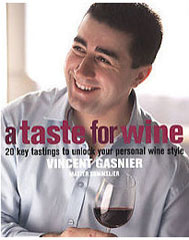
Book Review: A Taste for Wine


By John ~ September 3rd, 2010

What first attracted me to this book, A Taste for Wine: 20 key tastings to unlock your personal wine style by Vincent Gasnier, Master Sommelier, was the subtitle, because I believe there are many wine consumers who sort of know what they like in wine but haven’t equated it to a particular wine style.

“Wines are like cars! We all have our favorites; the one we drive every day and feel comfortable with—and the one we dream of owning. Like wines, cars have different styles; a Ferrari is fast, powerful, noisy, and brash (in an expensive way!); a Mercedes is also powerful, but smoother, more quiet and controlled. There are no rights and wrongs, only personal preferences, and, just as you would always test drive a car before buying it, you need to taste wines of many different styles to find your favorites.” –Vincent Gasnier

The guts of the book features Gasnier’s grouping of wine varietals by style and takes the reader on a tasting tour of what he considers the major wine styles. Gasnier has a chapter on each style, including light, crisp whites; juicy, aromatic whites; full, opulent whites; rosé; fruity, lively reds; ripe, smooth reds; rich, dense reds; sparkling wine; and sweet and fortified.

Rather than the usual country-by-country organization in this type of book, Gasnier sorted the wines into styles, with all of the juicy, aromatic whites such as Sauvignon Blanc, Riesling, and Gruner Veltliner in one section and all of the ripe, smooth reds such as Merlot, Sangiovese, and Tempranillo in another section, and so on. For each varietal in each style, he gives what he calls his CAT mantra, a color, aroma, and taste profile along with a good quality example. And, finally, he offers a food pairing idea for each wine.

The last section of the book is a helpful User’s Guide, which includes chapters on buying and storing wine, serving wine, diagnosing faults, and matching wine styles with food. One caveat: Don’t get too hung up on individual producer wine recommendations because you might not be able to find them where you are located. However, you should be able to find similar examples of the style.

A Taste for Wine is a 350-page paperback book packed with good information. It’s probably not the best book for the complete wine novice. However, I believe it can be valuable to anyone from just above novice level to just below true wine expert. Unfortunately, the book appears to be out of print, but used copies are available at a very reasonable price through Amazon.com.

Have you already read A Taste for Wine? If so, please leave a comment and let us know what you thought of it.

Cheers!


Filed under: General Wine Information, Wine Books
 

A Wine for Tonight: 2008 Buried Cane Merlot


By Kori ~ September 2nd, 2010

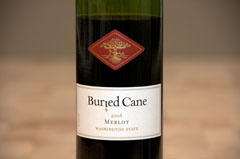
Would you like a quick suggestion for a good wine to drink tonight (or this weekend) that won’t break your budget and is widely available? Many of our readers have said this is something they would like, so here is this week’s selection, the 2008 Buried Cane Merlot from Washington State.

Our selection criteria include:

  • A very good Quality rating of >=3.5 stars (out of 5)
  • A price tag of <=$15
  • Must be widely available

Buried Cane is the value brand for Middleton Family Wines. The Middletons, a multi-generation Washington timber family, also own Cadaretta Winery in Walla Walla, which is where Buried Cane is produced. Buried Cane wines are named after a time-honored practice used to protect grape vines from frigid winter temperatures in which low-growing vine canes are buried and then unearthed after winter freezes pass.

“Buried Cane Merlot has plenty of sweet cherry and berry flavors, with complex aromas that include earthy mint, tobacco, and spices like nutmeg and clove. Enjoy it with everything from pizza to grilled meats.” –Buried Cane

2008 Buried Cane Merlot (Washington State): 90 % Merlot, 10% Syrah. Deep, ruby red in color. Aromatic with black cherry, oak, and bell pepper on the nose; black cherry and tobacco on the palate. Medium-bodied and lively with medium tannins and a long finish.
Quality: 3.5 stars (out of 5)
QPR: 5 bangs for your buck (out of 5)
Where to buy: Received as sample, suggested retail $13; Available elsewhere, $18


Filed under: A Wine for Tonight, American Wine, Five-Bangs For Your Buck Wines, Merlot, Red Wine, Wines Under $15, Wines Under $20, Wines Under $25
 

Spotlight On: William Church Winery


By Kori ~ September 1st, 2010

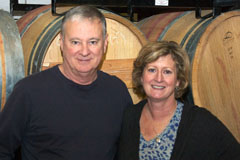
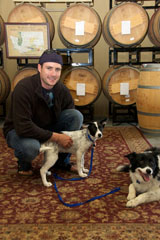
William Church Winery, founded in 2005 by Rod and Leslie Balsley, is located in the warehouse district in Woodinville, Washington. Bitten by the wine bug when they honeymooned in Italy, Rod and Leslie got their start in winemaking as a hobby when they moved next door to a man named Dick Gidley who had been making wine in his garage for over twenty years. After a while, they decided to pursue winemaking on a commercial scale.

Rod originally thought that they should open their winery in Walla Walla. They also looked at the Prosser area before deciding on Woodinville. Leslie was drawn to Woodinville because it was an up-and-coming wine community with great potential and they would not have to move. Rod also joked that “its proximity to Nordstom” was another reason Leslie preferred Woodinville. When they opened, Woodinville had only about fifteen wineries. In the five years since, the Woodinville wine community has exploded and now boasts over 90 wineries and tasting rooms. “When we started, people could visit all of the Woodinville wineries in a day. Now, they have to pick and choose,” said Leslie. They have been located in their current space in the warehouse district since 2007.

After years in the high-tech industry, Rod and Leslie are thoroughly enjoying their second careers in the wine industry. They are both actively involved in all aspects of the winery. Rod manages the day-to-day winemaking operations with the help of assistant winemaker Marcus Rafanelli. Leslie manages the marketing and sales aspects of the business. Rod, Leslie, and Marcus work together to decide what wines to offer and are all involved in blending trials. William Church Winery produces 2,500 cases per year.

Last weekend, we had an opportunity to visit William Church Winery and taste through their wines with Rod and Leslie. We tasted six current releases and one soon-to-be-released wine. All seven wines were very good with four receiving 4-star Quality ratings and the other three receiving 3.5-star Quality ratings. In addition to the current releases that we tasted, we also tasted a barrel sample of their 2009 Malbec, which is showing great potential. My favorites were the soon-to-be-released 2008 Syrah and the 2007 Cabernet Sauvignon.

As we have mentioned previously, if you live in the greater Seattle area or visit the area on vacation, a trip to the wineries in Woodinville is well worth your time. And while you are there, I encourage you to stop at William Church Winery.

Current releases that we tasted:

2008 William Church Syrah (Columbia Valley, Washington): 100% Syrah. Vineyards: Dineen, Red Willow, and Stillwater Creek. Very dark, deep purple in color. Gorgeous nose with earth, smoke, and licorice aromas. More earth, smoke, and licorice come through on the palate as well as black fruits. Medium to full-bodied and crisp with medium to high tannins. Well-balanced with good complexity and a long finish.
Quality: 4 stars (out of 5)
QPR: 5 bangs for your buck (out of 5)
Where to buy: Winery, $25 [to be released later this month]

2007 William Church Cabernet Sauvignon (Columbia Valley, Washington): 90% Cabernet Sauvignon, 10% Petit Verdot. Vineyards: Dineen, Chandler Reach, and Gamache. Deep, dark red in color and very aromatic. Blackberry, black cherry, and blackcurrant dominate the nose. More black fruits as well as black pepper and oak come through on the palate. Full-bodied and crisp with medium to high tannins. Well-balanced and smooth with a long finish.
Quality: 4 stars (out of 5)
QPR: 5 bangs for your buck (out of 5)
Where to buy: Winery, $29

2007 William Church Syrah (Dineen Vineyard, Yakima Valley, Washington): 89% Syrah, 11% Malbec. Deep, dark purple and very aromatic. Aromas and flavors of earth, smoke, minerality, and spice. A brooding, Rhone-style Syrah. Medium to full-bodied and crisp with medium tannins. Well-balanced with a long finish.
Quality: 4 stars (out of 5)
QPR: 5 bangs for your buck (out of 5)
Where to buy: Winery, $23

2008 William Church Malbec (Gamache Vineyards, Columbia Valley, Washington): Deep, dark purple. Very fruit-forward with blackberry jam, licorice, and spice aromas and flavors. Medium to full-bodied and lively with medium tannins. Well-balanced with a long finish.
Quality: 4 stars (out of 5)
QPR: 3 bangs for your buck (out of 5)
Where to buy: Winery, $30

2007 William Church Sur La Mer Red Wine (Columbia Valley, Washington): 40% Cabernet Sauvignon, 20% Merlot, 20% Cabernet Franc, 10% Malbec, and 10% Petit Verdot. Deep, dark purplish red. Aromatic with smoke, earth, and floral notes on the nose and palate. Medium to full-bodied and lively with medium tannins and a long finish.
Quality: 3.5 stars (out of 5)
QPR: 3 bangs for your buck (out of 5)
Where to buy: Winery, $28

2007 William Church 2 Spires Red Wine (Columbia Valley, Washington): 62% Syrah, 38% Cabernet Sauvignon. Deep, dark purple. Black fruits, licorice, and a touch of smoke on the nose and palate. Medium to full-bodied with lively acidity, medium to high tannins, and a long finish.
Quality: 3.5 stars (out of 5)
QPR: 3 bangs for your buck (out of 5)
Where to buy: Winery, $28

2009 William Church Viognier (Conner Lee Vineyard, Columbia Valley, Washington): Pale, straw yellow in color. Floral, citrus, and peach aromas and flavors come through on both the nose and palate. Dry and medium-bodied with lively acidity and a long finish.
Quality: 3.5 stars (out of 5)
QPR: 2 bangs for your buck (out of 5)
Where to buy: Winery, $21

In case you missed it, Leslie Balsley of William Church Winery was featured in our Women of Washington Wine series in August.


Filed under: American Wine, Cabernet Sauvignon, Five-Bangs For Your Buck Wines, Malbec, Red Wine, Shiraz/Syrah, Spotlight On, Viognier, Washington State Wine, White Wine, Wines Over $25, Wines Under $25
 

Tasting Group: Italian Pinot Grigio


By Kori ~ August 31st, 2010

Since we live in Washington State and often drink wines from Washington State, we want to make sure that we continue to hone our knowledge of the entire world of wine and maintain well-rounded palates in order to make us even more objective when we evaluate wines from Washington State. Therefore, we are thoroughly enjoying our Wine Peeps Tasting Group which includes what we think is an excellent peer group of knowledgeable wine lovers to taste, share, and learn more about wine together. Unlike our monthly wine tasting dinners in which the guests rotate, this tasting group includes people who are committed to getting together once a month which we believe benefits all of us. In addition to trying varieties and regions that we do not taste frequently, the other main difference between this group and our wine tasting dinners is that each group member brings a bottle consistent with the month’s theme so no one knows all the wines in the blind tasting.

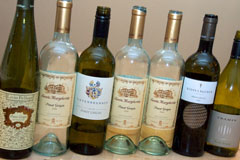
Last week, we met and explored Italian Pinot Grigio. Pinot Grigio, known as Pinot Gris in some parts of the world, is a very popular quaffing wine. In most cases, it is light, simple, refreshing, and pairs well with a variety of foods, which gives it broad consumer appeal. Pinot Grigio is a genetic mutation of Pinot Noir. It is traditionally fermented in stainless steel to preserve its fruit and freshness. Pinot Grigio has really made a name for itself in the northeast of Italy in Trentino-Alto Adige and Friuli-Venezia Giulia.

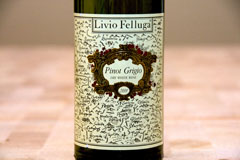
We tasted seven bottles of Italian Pinot Grigio, and the consensus favorite was the 2008 Livio Felluga Pinot Grigio. Livio Felluga, the man, is considered the patriarch of viticulture and winemaking in the Friuli region of Italy. Founded in the 1950’s, the Livio Felluga estate covers more than 160 hectares. The Livio Felluga bottle features a distinctive map label that Livio Felluga himself created in 1956 to portray his love of the land.

Well, this was a first. As you’ll notice in the tasting notes below, we had three bottles of the exact same wine, the 2008 Santa Margherita Pinot Grigio, which is actually not that surprising considering that it is the most popular Italian Pinot Grigio sold in the United States. While the rankings were close, no one identified them as being the same wine. In fact, as you’ll see from the notes, they all tasted slightly different. Even after we unveiled them and re-tasted the three wines, we all thought that they tasted different. Even so, they were all good. Just one of the many things that keeps the world of wine interesting.

From 1st to last in the group consensus rankings:

2008 Livio Felluga Pinot Grigio (Colli Orientali del Friuli, Friuli-Venezia Giulia, Italy): Pale, greenish straw yellow in color. Very aromatic with white peach, nuts, and floral notes on the nose. Apple, peach, and almonds come through on the palate. Dry and medium-bodied with crisp acidity and a long finish.
Quality: 4 stars (out of five)
QPR: 3 bangs for your buck (out of 5)
Where to buy: Fine Wine & Cigars (Redmond, Washington), $24; Available elsewhere, $19 to $33

2008 Santa Margherita Pinot Grigio (Trentino-Alto Adige, Italy): Pale, greenish straw yellow. Very aromatic with lime, Granny Smith apple, and grapefruit aromas. More citrus, apple, and pear flavors on the palate. Dry, medium-bodied, crisp and refreshing with a long finish.
Quality: 3.5 stars (out of five)
QPR: 2 bangs for your buck (out of 5)
Where to buy: Thriftway (Seattle, Washington), $25; Available elsewhere, $16 to $23

2008 Santa Margherita Pinot Grigio (Trentino-Alto Adige, Italy): Pale straw yellow. Aromatic with lime, lemon, and apple on the nose; honey and some minerality on the palate. Dry, light to medium-bodied and viscous with crisp acidity and a long finish.
Quality: 3.5 stars (out of five)
QPR: 2 bangs for your buck (out of 5)
Where to buy: Fred Meyer (Seattle, Washington), $23; Available elsewhere, $16 to $23

2008 Tiefenbrunner Pinot Grigio (Alto Adige, Italy): Pale yellow in color. Aromatic with nuts, lemon, and minerality on the nose. Apple and pear flavors dominate the palate. Dry and light to medium-bodied with lively acidity and a long finish.
Quality: 3.5 stars (out of five)
QPR: 4 bangs for your buck (out of 5)
Where to buy: Fred Meyer (Seattle, Washington), $13.50; Available elsewhere, $11 to $18

2008 Santa Margherita Pinot Grigio (Trentino-Alto Adige, Italy): Pale yellow. Aromatic with tropical fruits, particularly pineapple, on the nose; citrus, lemon peel, and a hint of minerality on the palate. Dry, light to medium-bodied, crisp and refreshing with a long finish.
Quality: 3.5 stars (out of five)
QPR: 2 bangs for your buck (out of 5)
Where to buy: Whole Foods (Seattle, Washington), $20; Available elsewhere, $16 to $23

2008 Alois Lageder Pinot Grigio (Alto Adige, Italy): Pale, greenish straw yellow in color. Nose is a bit tight at first, and then some pear and apple aromas come through. More pear and nuts on the palate. Dry and light-bodied with lively acidity and a medium finish. A bit watery and plain.
Quality: 3 stars (out of five)
QPR: 3 bangs for your buck (out of 5)
Where to buy: Fred Meyer (Seattle, Washington), $15; Available elsewhere, $12 to $18

2009 Tramin Pinot Grigio (Alto Adige, Italy): Pale, greenish straw yellow in color. Fizzy citrus notes on the nose; apple, citrus and tropical fruits on the palate. Dry, light-bodied and tart with a long, bitter finish. Tastes carbonated. Not pleasant.
Quality: 2.5 stars (out of five)
QPR: NR (not recommended)
Where to buy: Whole Foods (Seattle, Washington), $16; Available elsewhere, $11 to $14


Filed under: Italian Wine, Pinot Grigio/Pinot Gris, Tasting Group, White Wine, Wines NOT To Buy (1 & 2 Star), Wines Over $25, Wines Under $15, Wines Under $20, Wines Under $25
 

Red Mountain Sunset: Klipsun Vineyard


By Kori ~ August 30th, 2010

Kori S. Voorhees, our Wine Peeps Editor-in-Chief, is also a regular contributor to Washington Tasting Room Magazine, a quarterly magazine that focuses on Washington State wine with articles about wineries, vineyards, travel, and lifestyle. The following article, written by Kori, appeared in the Winter 2009/2010 issue.
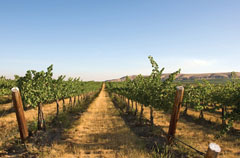
Klipsun Vineyard is known for its big, bold flavors and has evolved as a shining example of Red Mountain terroir

Klipsun means sunset in Chinook Indian jargon. But the sun is certainly not setting on Klipsun Vineyard, located in the Red Mountain AVA (American Viticultural Area) near Benton City, Washington. In fact, it’s more like late morning in the evolution of Klipsun Vineyard, with many of its best vineyard blocks just entering the prime of their productive lives.

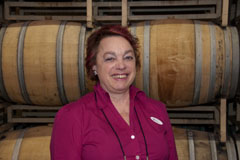
If you ask the best winemakers in the state of Washington to name the top vineyards in the state, Klipsun Vineyard is near the top of almost every list. And in the very next breath, they usually mention owner Patricia Gelles. One of the few women in a largely male-dominated industry, Patricia does not put up with any nonsense.

When winemakers speak of contacting Patricia about buying some of her fruit, they turn into scared little boys. She is very particular about who she sells to because she is determined to preserve the reputation of the vineyard.

Patricia Gelles, with her fire engine red-streaked hair and British accent, is not the prototypical Eastern Washington vineyard owner. If you ran into her on the street, you would probably imagine her sipping a glass of high-end wine with friends, not being the woman responsible for the grapes that go into some of the best wines in the world. According to owner/winemaker John Bigelow of JM Cellars, Gelles is “an amazing ambassador of Washington wine.” Given her marketing background, it is no surprise that she is not only a tireless advocate for Klipsun Vineyard but also the Washington wine industry. In fact, a friend affectionately coined the term “Baroness of the Mountain” to describe her.

When Patricia and her husband David founded Klipsun in 1984, there weren’t many wineries or vineyards in the state. The Gelleses were friends with the owners of Kiona Vineyard, the Holmes and Williams families, who told them about the adjacent land for sale and asked them if they were interested. “We said yes, not knowing at all what we were getting into,” remembers Patricia.

Known for its dark cherry fruit flavors and bold, masculine characteristics, Klipsun’s soil composition is mainly sandy loam, the majority of which was deposited during the Missoula floods. The vineyard faces west with approximately 120 acres of Merlot, Cabernet Sauvignon, Syrah, Malbec, Nebbiolo, Sauvignon Blanc, and Semillon.

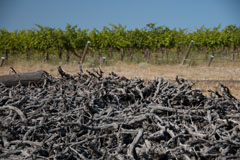
Every variety that they have tried has grown well at Klipsun except for Chardonnay. In fact, when asked about it, Patricia dismissively gestured toward a pile of dead vines at the back of the property, saying, “That’s our Chardonnay over there, that wood pile.” After a freeze in 1986, they pulled out all of their Chardonnay vines and planted Syrah.

Their most sought after grapes are their Old Block of Cabernet Sauvignon, which is the first variety they planted back in 1984. “Andre Tchelistcheff (legendary California winemaker and consultant) said that the Kiona Cab was the best he’d ever tasted, so we decided to put in Cab too, since we are right next to Kiona,” said Gelles. As for how they decided what other varieties to plant, “We planted what we wanted to drink.”

Currently, about 35 producers purchase Klipsun grapes, among them Andrew Will, DeLille, Januik, JM Cellars, Seven Hills, and Quilceda Creek. It takes a while for winemakers to learn how to make a wine from Klipsun fruit so that it is not too big. For that reason, many producers blend the masculine Klipsun fruit with more refined feminine fruit from vineyards like Ciel du Cheval and Boushey.

“In a blend, Klipsun fruit lifts up tannin, and adds structure and power,” said winemaker Chris Upchurch of DeLille Cellars.

Even though many winemakers choose to blend Klipsun fruit, there are also winemakers who choose to produce a Klipsun vineyard-designated wine. In fact, Patricia remembers the first time she was asked by a winemaker if she would mind them putting the Klipsun name on the label. It was then that she realized that Klipsun was going to be a very special vineyard.

Since the beginning, Patricia Gelles has spent most of her time in the office making sure that the Klipsun fruit is sold. Her background is in marketing and after year two, she was trying to figure out where to sell the fruit. Rob Griffin, who was working for Hogue at the time, knocked on their door, and they haven’t looked back since. She lets her vineyard manager take care of the hands-on work in the vineyard.

Over the course of 25 years, there are only two people who have managed Klipsun, Fred Artz and Julia Kock. Fred Artz, who owns his own Artz Vineyard adjoining Klipsun, originally planted Klipsun Vineyard for the Gelleses and worked as their vineyard manager for 20 years. They hired Julia Kock, soon after she graduated from viticulture and enology school, to take over as vineyard manager in 2005. While some people in the industry may have been skeptical about them hiring what appeared to be an inexperienced vineyard manager, Gelles is quick to point out that Julia “was fresh out of viticulture and enology school, but very experienced in human resources and she’d done an internship at Columbia Crest. Julia has a fabulous palate. She understands what the winemakers are trying to do.”

Under Julia’s direction, Klipsun Vineyard is focused on sustainable viticultural practices. There is much debate in the wine industry today as to the merits of organic, biodynamic, or sustainable farming. While the ideal may be organic farming, there are many factors that generally make it impractical. Klipsun has not used an herbicide in twenty years, and Julia uses a very soft pesticide program. However, as Patricia points out, “There are too many things going on physically in nature and too many people close by that can have an impact on us. If we get an infestation of mites or something like that, we need to be able to treat it.”

So where does a vineyard that has been named as one of the top 25 vineyards in the world by Wine & Spirits Magazine go from here? “We want to keep on doing what we do best,” said Gelles.  “If we get enough demand, we might put in another few acres. We have 30 or 40 acres that we could plant at some point, but we’re not in a mad rush.”

When you get to know Patricia Gelles, who is as bold and commanding as her fruit, and you see the emphasis she and Julia are placing on sustainable viticultural practices, you quickly realize the sun is shining brightly at Klipsun Vineyard.


Filed under: American Wine, Vineyards, Washington State Wine, Washington Tasting Room Magazine, Wine Magazines
 

Wine Word of the Week: Cross


By Kori ~ August 28th, 2010

This week’s Wine Word of the Week is cross.

Official definition from Jancis Robinson’s The Oxford Companion to Wine:
Cross is the result of breeding a new variety by crossing two vine varieties of the same species, usually the European vinifera species. Thus, Muller-Thurgau, for example is a cross.

Layman’s terms from Kori:
Cross is the offspring of different subspecies within the same species. For example, Cabernet Sauvignon is a cross between Cabernet Franc and Sauvignon Blanc.


Filed under: Wine Word of the Week
 

Washington Wineries Continue Moving Toward the People


By John ~ August 27th, 2010

When the infamous Willie Sutton was asked why he robbed banks, his answer was, “That’s where the money is.” When I’ve asked winery owners from Eastern Washington why they’ve opened a tasting room in Woodinville, the answer has most often been, “That’s where the people are.” Makes sense, doesn’t it? In fact, I wrote a post last month devoted entirely to The Woodinville Phenomenon.

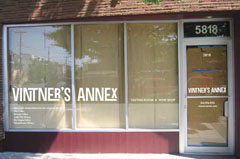
While Woodinville is only about 30 minutes from Seattle (unless it’s rush hour when it can take an hour or more), I’m noticing that some of the Woodinville wineries are now talking about putting tasting rooms in Seattle proper, closer to more of the people and closer to tourist traffic, especially cruise ship visitors. Again, it makes sense, doesn’t it? In fact, one group of five wineries, Alta Cellars, Barrage Cellars, Des Voigne Cellars, Cuillin Hills Winery, and Flying Dreams Winery, has already joined together to open the Vintner’s Annex in the Ballard neighborhood in Seattle.

In downtown Seattle, you have The Tasting Room on Post Alley near Pike Place Market where wines from Camaraderie Cellars, Harlequin Wine Cellars, Latitude 46, Mountain Dome, Naches Heights, Wilridge Winery, and Wineglass Cellars can be tasted and purchased.

South of downtown Seattle is located another pod of wineries, including several of the state’s best, such as O*S Winery and Cadence Winery.

For the future, the most exciting potential location may lie along the 15th Street/Elliott Avenue corridor between Ballard and downtown Seattle. Only one winery, Ward Johnson Winery, is located on Elliott Avenue now, but I understand there are others under consideration, and the location makes a lot of sense located in a largely old industrial area between the cruise ship terminals and downtown Seattle.

The movement of wineries and tasting rooms closer to the people has likely just begun. Stay tuned!


Filed under: American Wine, General Wine Information, Washington State Wine
 

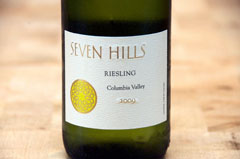
A Wine for Tonight: 2009 Seven Hills Riesling


By Kori ~ August 26th, 2010

Would you like a quick suggestion for a good wine to drink tonight (or this weekend) that won’t break your budget and is widely available? Many of our readers have said this is something they would like, so here is this week’s selection, the 2009 Seven Hills Riesling from the Columbia Valley of Washington State.

Our selection criteria include:

  • A very good Quality rating of >=3.5 stars (out of 5)
  • A price tag of <=$15
  • Must be widely available

Founded in 1988 by winemaker Casey McClellan and his wife Vicky, Seven Hills Winery is located in downtown Walla Walla, Washington. Casey was raised in Walla Walla and is a fourth-generation farmer. After completing his Masters of Science at UC Davis, he and Vicky returned to the Walla Walla Valley to open Seven Hills Winery. The winery was originally located in Milton-Freewater, Oregon, and in 2000 moved to its current location in Walla Walla, just ten miles up the road.

“This is a graceful, balanced Riesling of low alcohol and light straw color. It opens with honeysuckle, guanabana, green apple and poached pear flavors and aromas, on a slightly sweet palate that follows through to a fresh, clean finish. Riesling ages well, but we recommend enjoying it within two years of release. This is a very versatile style suitable for a wide variety of food and occasions.” –Winemaker Casey McClellan

2009 Seven Hills Riesling (Columbia Valley, Washington): Pale, straw yellow in color. Very aromatic with citrus, floral, and peach aromas. Peach, apricot, and lemon come through on the palate. Off-dry and medium-bodied with crisp acidity and a long finish.
Quality: 3.5 stars (out of 5)
QPR: 5 bangs for your buck (out of 5)
Where to buy: Fred Meyer (Seattle, Washington), $10.99; Available elsewhere, $9 to $17


Filed under: A Wine for Tonight, American Wine, Five-Bangs For Your Buck Wines, Riesling, Washington State Wine, White Wine, Wines Under $15, Wines Under $20, Wines Under $25
 

Wine Tasting Dinner: Washington Sauvignon Blanc


By Kori ~ August 25th, 2010

Sauvignon Blanc has been one of our favorite white varieties for years. Our trip to New Zealand in 2005 solidified that love, and we have a soft spot for Sauvignon Blanc from the Marlborough region of New Zealand. Since that trip, we have made it a point to try Sauvignon Blanc from other countries/regions when we have the chance. Given our emphasis on wines from Washington State, we decided that it was time to feature Washington Sauvignon Blanc in one of our wine tasting dinners. Last Friday was a gorgeous, sunny day in Seattle, perfect to enjoy crisp, refreshing white wines.
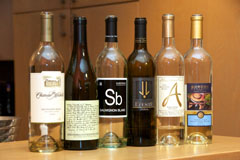
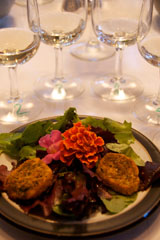
All of the wines paired well with Mom’s (LaGayle) dinner of curried butternut squash soup, mixed green salad with thyme-seasoned goat cheese cakes and balsamic-dijon vinaigrette, grilled shrimp, sun-dried tomato and basil risotto, roasted asparagus bundles, and Muscat Canelli cake with lemon and mint garnish for dessert.

The consensus favorite of the evening was the 2009 Chateau Ste. Michelle Sauvignon Blanc. Chateau Ste. Michelle is Washington State’s founding winery with its roots dating back to the repeal of Prohibition. In 1976, Ste. Michelle built a French-style chateau in Woodinville, just northeast of Seattle. While all of Chateau Ste. Michelle’s vineyards are located on the east side of the Cascade Mountains, all of their white wines, including this Sauvignon Blanc, are made in Woodinville. This wine is a wonderful summer sipper, with or without food. It was my favorite of the evening before the meal and was also fantastic with dinner. Best of all, it retails for less than $9 and received a QPR rating of 5 bangs for your buck (out of 5).

The other two wines in this tasting that deserve extra attention because of their high quality and excellent value are the 2009 Stevens Another Thought Sauvignon Blanc and the 2009 Substance Sauvignon Blanc. In fact, you can’t go wrong with any of top five wines to enjoy on your deck on a warm summer evening or to compliment the lighter fare often served during these warm months.

From 1st to last in the group consensus rankings:

2009 Chateau Ste. Michelle Sauvignon Blanc (Columbia Valley, Washington): Pale, greenish straw yellow in color. Aromatic with apple, pear, and minerality on the nose. Lemon, lime, and other citrus fruits come through on the palate. Dry and light-bodied with tart, crisp acidity and a long finish. Well-balanced and refreshing.
Quality: 4 stars (out of 5)
QPR: 5 bangs for your buck (out of 5)
Where to buy: Fred Meyer (Seattle, Washington), $8.99; Available elsewhere, $8 to $10

2009 Stevens Another Thought Sauvignon Blanc (Yakima Valley, Washington): Pale, straw yellow. Aromatic with floral, grassy, and pear aromas that lead to pear and lime flavors. Dry and light-bodied with crisp acidity and a long finish. Well-balanced and refreshing.
Quality: 4 stars (out of 5)
QPR: 4 bangs for your buck (out of 5)
Where to buy: Full Pull Wines (Seattle, Washington), $16.99

2009 Substance Sauvignon Blanc (Washington State): Pale, greenish straw yellow. Beautiful bouquet with grapefruit and citrus aromas. More grapefruit and lime come through on the palate. Dry and light to medium-bodied with crisp acidity. Well-balanced with a very long finish.
Quality: 4 stars (out of 5)
QPR: 4 bangs for your buck (out of 5)
Where to buy: Esquin Wine Merchants (Seattle, Washington), $14.99; Available elsewhere, $13

2009 Efeste Feral Sauvignon Blanc (Evergreen Vineyard, Columbia Valley, Washington): Pale, greenish yellow. Minerality and pear on the nose; pear and apple on the palate. Dry and light-bodied with a long finish. Crisp and refreshing.
Quality: 3.5 stars (out of 5)
QPR: 3 bangs for your buck (out of 5)
Where to buy: Fred Meyer (Seattle, Washington), $16.99; Available elsewhere, $8 to $15

2008 Alexandria Nicole Steel Horse Sauvignon Blanc (Destiny Ridge Vineyards, Horse Heaven Hills, Washington): Pale, greenish straw yellow. Aromatic with minerality and grassy aromas. More minerality, toast, and lemon peel on the palate. Dry and light-bodied with crisp acidity and a long finish.
Quality: 3 stars (out of 5)
QPR: 3 bangs for your buck (out of 5)
Where to buy: Fred Meyer (Seattle, Washington), $13.99

2007 Gordon Brothers Sauvignon Blanc (Columbia Valley, Washington): Pale, greenish straw yellow. Minerality, nuts, apple, and cat pee on the nose; burnt toast and apple on the palate. Dry and light-bodied with lively acidity and a bitter finish.
Quality: 2.5 stars (out of 5)
QPR: NR (not recommended)
Where to buy: Esquin Wine Merchants (Seattle, Washington), $6.99; Available elsewhere, $7 to $14


Filed under: American Wine, Five-Bangs For Your Buck Wines, Food & Wine, Sauvignon Blanc, Washington State Wine, White Wine, Wine Tasting Dinners, Wines NOT To Buy (1 & 2 Star), Wines Under $10, Wines Under $15, Wines Under $20, Wines Under $25