A Wine for Tonight: 2009 Heinz Eifel Riesling Spätlese


By Kori ~ July 8th, 2010

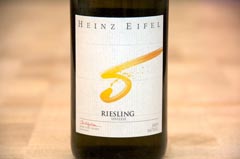
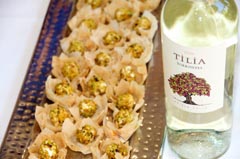
Would you like a quick suggestion for a good wine to drink tonight (or this weekend) that won’t break your budget and is widely available? Many of our readers have said this is something they would like, so here is this week’s selection, the 2009 Heinz Eifel Riesling Spätlese from the Mosel Valley of Germany.

Our selection criteria include:

  • A very good Quality rating of >=3.5 stars (out of 5)
  • A price tag of <=$15
  • Must be widely available

Heinz Eifel Wines is a brand of German wines, produced by Römerhof winery. Heinz Eifel, the man, founded Römerhof in 1979 in Trittenheim in the Mosel Valley. His daughter, Anne Eifel-Spohr, became their winemaker in 2000. The Heinz Eifel brand was created to pay respect to the Eifel family tradition while showcasing the next generation through Anne’s winemaking. The Römerhof winery has long-term contracts with select growers throughout Germany. Heinz Eifel Wines produces five different Rieslings, the full range of which is now nationally available in the United States.

“Heinz Eifel Riesling Spätlese is made from late-harvested Riesling grapes in the middle Mosel Valley of Germany. These grapes hang into late autumn and ripen such that they produce a rich, full-bodied white wine. Loaded with pear, peach, citrus and apricot flavors. An ideal dinner Riesling and also can be enjoyed with riper, aged cheeses and spicy cuisine due to its enhanced complexity.” –Anne Eifel-Spohr, winemaker

2009 Heinz Eifel Riesling Spätlese (Mosel, Germany): Pale to medium greenish yellow. Very aromatic with petrol and hay on the nose. Honey, pear, and tropical fruits come through on the palate. Sweet but not sickeningly sweet and medium-bodied with crisp acidity and a long finish. Residual Sugar: 6%
Quality: 3.5 stars (out of 5)
QPR: 5 bangs for your buck (out of 5)
Where to buy: Received as sample, suggested retail $12.99; Available elsewhere, $9 to $12


Filed under: A Wine for Tonight, Five-Bangs For Your Buck Wines, German Wine, Riesling, White Wine, Wines Under $15, Wines Under $20, Wines Under $25
 

Paso Robles: Odds and Ends


By Kori ~ July 7th, 2010

Over the past few months, I have highlighted some of the people and places I encountered on my press trip to Paso Robles in March. Paso Robles is California’s third largest and fastest growing wine region. Paso is producing some excellent wines, has wonderful welcoming people, and is a beautiful area to boot.

Before filing away my notes, I decided to go back through and see if there were any notable nuggets that I haven’t yet posted. So here are some odds and ends that I thought you might find interesting.

  • Mayor Duane Picanco speaking about Paso Robles, which has a population of about 30,000: “Small enough to know you, large enough to serve you.”
  • The three E’s of Sustainability: Economy, Environment, and Social Equity.
  • Founder/winemaker Christian Tietje of Four Vines sees Paso as being well suited for Zinfandel and Rhone varieties and says that Spanish varieties are next.
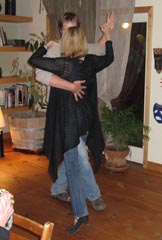
  • Winery owners and winemakers in Paso are friends outside of the wine business. Case in point, Stephan and Beatrice Asseo of L’Aventure, Terry and Jennifer Hoage of Terry Hoage Vineyards, and Marc Goldberg and Maggie D’Ambrosia of Windward Vineyard take dance classes together and have been enjoying “Tango Tuesdays” for five years.
  • Over 95% of Paso Robles wineries are family owned and operated.
  • The average production for a Paso Robles winery is less than 5,000 cases annually.
  • According to Hope Family Wines winemaker Jason “JC” Diefenderfer, “Grenache is what Pinot aspires to be.”
  • The Paso Robles AVA is petitioning to get 11 sub-AVA’s designated by the TTB. Even if the sub-AVA’s are approved, Paso Robles will still be listed on the labels also per their conjunctive label law.
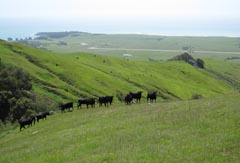
  • Hearst Ranch boasts gorgeous views, and its grass-fed beef program is run by a great group of real cowboys. “We just try to keep it as simple as possible. The cattle eat grass, which is what God intended them to eat,” says Cliff Garrison, Ranch Operations Manager.
  • Dry farming is talked about and practiced often in Paso Robles. According to Neil Collins, owner/winemaker of Lone Madrone and winemaker for Tablas Creek, “Dry farming is the purest expression of the soil.”
  • Pasolivo makes excellent olive oil; however, I learned that olive oil tasting (i.e. drinking it straight) is not for me.
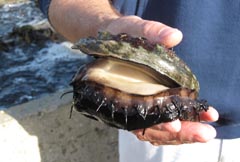
  • Prior to this trip, I had no idea what abalone was. After touring The Abalone Farm (brand name Ocean Rose), which is the oldest and largest producer of farm raised abalone in the United States; I have a new appreciation for this delicacy.
  • The home of Justin and Deborah Baldwin, the proprietors of Justin Vineyards & Winery, will be featured in an upcoming episode of MTV Teen Cribs.

For easy reference, here are links to my previous posts about Paso Robles:
Paso Robles: California’s Emerging Wine Region
Paso Robles: Signature Varietal?
Paso Robles: Dusi Vineyard
Paso Robles: Crash Courses at Steinbeck Vineyards
Paso Robles: The Food

I cannot wait to visit Paso Robles again and hope that you have a chance to visit the area too. For more information about Paso Robles or help in planning a trip, visit the Paso Robles Wine Country Alliance site.


Filed under: American Wine, California Wine, Wine Travel
 

Food and Wine Pairing with Chef Jeffrey Saad


By Kori ~ July 6th, 2010

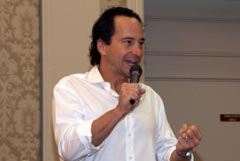
At the recent Wine Bloggers Conference in Walla Walla, Washington, one of my favorite sessions of the weekend was the Food and Wine Pairing Seminar with chef Jeffrey Saad, the runner up on season 5 of The Next Food Network Star. Jeffrey is a 25-year food industry veteran and restaurateur. He has a dynamic personality, and the tips he shared with us got me even more excited about the possibilities when pairing wine with food. So, I am passing along some of his tips in the hopes that it will answer some of your questions about food and wine pairing and give you more confidence when selecting a wine to go with dinner.

General thoughts on food and wine pairing

  • Sometimes the food is good, and sometimes the wine is good. When you put them together, if either one is worse, then you haven’t got your match. But when the two come together to make both better, that’s when it is incredible.
  • Everything that you need to know about food and wine matching and food and wine pairing, you can really learn from the idea of a Coke with a pizza. It seems like such a natural fit, but there are two lessons to be learned there. First of all, it’s repetition. It is something you’ve had and done your whole life. It seems totally natural. The pizza has rich, melted cheese. Coke has a little bitterness. That balances the cheese out. The tomato sauce has acidity, and the acidity in the Coke cancels it out. Also, you may have a little bit of spiciness in the tomato sauce so the sweetness in the Coke balances the spiciness.
  • Think of wine as an additional condiment you are adding to the meal.
  • You should trust your mouth. You know what you like, so enjoy it.
  • The tools you need for food and wine: tongue, nose, and love.
  • Acid is king. If you are ever in doubt, default to acid. That is the thing that really makes your tongue receive everything well and brings everything into balance.

The Guidelines

When in doubt, try to go with a match. Contrasting works but can be a touch trickier because you can throw off the balance.

  • Acid with Acid – A nice vinaigrette that has acidity with a white wine that has good acidity. The two cancel each other out and all of the other flavors come forward. Examples: Lemon vinaigrette with Grüner Veltliner. Bolognese with Sangiovese.
  • Fat with Acid – Lemon juice with fish. Example: Halibut with a citrusy Sauvignon Blanc that has good acidity.
  • Protein (or animal fat) with Tannin – Animal fat serves as a speed-aging agent and softens the tannins. Both soften each other and the fruit comes forward in the wine. Example: Kobe beef and Cabernet Sauvignon.
  • Sweet with Sweet – One of the trickiest pairings. You want the wine to be at least as sweet as the food. Otherwise, sweet food will just spank the fruit right out of the wine, and you’ll be left with this insipid, thin, watery wine. When you take a really sweet dessert and sip a really sweet wine, the sweet level goes way down, and all of the flavors of the dessert come together.
  • Spicy with Sweet – Avoid tannin. Spice does not like tannin. Spice accelerates the tannin. Example: Spicy Thai food with an off-dry or sweet Gewurztraminer.
  • Cheese is in a category by itself. Cheese by itself is like a fat injection. It’s like solid fat richness. Riesling or any wine with some sweetness can be a great match. Cheese can strip a big red wine of its tannin. The only cheeses that really work with red wine are aged cheeses. When cheese ages, the acidity level comes down and the nuttiness comes up, and then it really brings out the best flavor in the wine. For rich, creamy cheeses, a safe bet is a sweet or off-dry white wine with some good acidity. The sweetness cuts the salt. The acidity cuts the richness. You get a wonderful balance.
  • Nuts are really funky with tannin. So you want to avoid nuts with red wine. A better choice would be a fat Chardonnay.
  • When in doubt, go with geography. Example: If you are in an Italian restaurant having Italian food, order an Italian wine.
  • Red Wines and chocolate? Milk chocolates do not work with red wines because you get so much of the fat that really strips away the tannin in the wine so you lose the wine. Darker chocolates can be really interesting with red wines, though. A darker chocolate has bitterness to it but still has the cocoa butter so it can balance the tannins. Examples: Zinfandel or a Southern Rhone blend with dark chocolate. You get some fruit, but the tannins aren’t as huge.

Three “safe” wines for food and wine pairings (good options when you are not sure what to do)

  1. Rosé – Dry rosés are brilliant because they have just enough acidity to work with salads and pickled items but have just enough fruit to match up and give body and character to go with some spicy things. And they also have just a little bit of tannin, which makes them work with most proteins.
  2. Champagne – Champagne works with so much because of its low alcohol. Low alcohol doesn’t get in the way of salt and a touch of sweetness makes them work.
  3. Barbera – Barbera has huge, bright fruit and lots of acidity. It really works with so many foods.

Look for that offbeat funky wine and food match that works for you. That’s what it is all about. The guidelines above are just the basics and should set you up for success. But after that, it’s an adventure, and you have to find your own pairings.

Bon Appétit and Cheers!


Filed under: Food & Wine, Wine Activities/Events
 

Great Washington State Wine Available in Boston


By Kori ~ July 5th, 2010

For years, I’ve had friends tell me that they can’t find the great Washington State wines that I tell them about where they live. So with the help of Wine-Searcher.com and a lot of legwork, I’ve set out on a mission to prove them wrong.

This is the eleventh in a series of posts to help you find great Washington State wines in the major cities and areas all around the country. Today, I’m searching for Washington State wine in the Boston, Massachusetts, area. Whether you live in Boston or travel there for work or pleasure, we want to help you be able to find and enjoy your favorite Washington wines.

Here’s the format: To be selected, a store first has to have a Wine-Searcher.com rating of 4 or higher on a scale of 1 to 5 for customer service, reliability, etc. Next, it has to stock Washington State wines that we like. Finally, they need to be an online retailer as well, so that if you don’t live close enough to the store to drop in, you can still purchase their wines.

Based on these strict criteria, I can only find one Boston area retailer to recommend, Gordon’s Fine Wines & Liquors in Waltham, Massachusetts, which has a good selection of Washington State wines at a variety of price points. I’ve found another retailer, Cape Cod Package Store in Centerville, Massachusetts, that has a good selection of lower-priced value Washington State wine, but you cannot buy online from them at this time. They just have a price list on their website. I’m hoping that some of our readers will weigh in with comments if you know of other Boston area wine retailers with a good selection of Washington wines.

When you visit one of these stores, please let me know how you find their service and selection, and don’t hesitate to ask us any questions you might have about any of the Washington wines they are offering.

Gordon’s Fine Wine & Liquors, 894 Main St, Waltham, MA 02451

Cape Cod Package Store, 1495 Falmouth Rd., Centerville, MA 02632


Filed under: American Wine, Great Washington State Wine Available in (City), Washington State Wine
 

Wine Word of the Week: Wine writers


By Kori ~ July 3rd, 2010

This week’s Wine Word of the Week is wine writers.

Official definition from Jancis Robinson’s The Oxford Companion to Wine:
Wine writers is an imprecise term that includes all those who communicate through the various media on the subject of wine. Some of them style themselves wine critics (notably the consumerist Robert Parker) while such literary stylists as Hugh Johnson and Gerald Asher are undoubtedly wine writers. One sort of commentator hardly ever writes at all but occupies regular slots on radio or television, often reaching a much wider audience than any author could hope to. And myriad wine websites have provided some wine writers with an international reputation far quicker than in usually possible with the printed word.

Layman’s terms from Kori:
Wine writers are people who write about wine, no matter whether their platform is a blog, a newspaper, a magazine, or a book.

Since I spent last weekend at the Wine Bloggers Conference, the subject of wine writing and wine writers has been at the forefront of my mind. So please forgive me if this week’s word seems a bit elementary.


Filed under: Wine Word of the Week
 

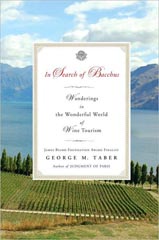
Book Review: In Search of Bacchus


By John ~ July 2nd, 2010

Since I had read and really enjoyed George Taber’s first book, Judgment of Paris, the story of the historic California vs. France wine tasting in Paris in 1976, I have been looking forward to reading another of his books. However, Kori read and reviewed Taber’s next book, To Cork or Not to Cork, and she wasn’t quite as impressed. In it, Taber takes readers through the history of wine closures going back to ancient times. As she said, “For a ‘wine-head’ like myself, I found the book quite interesting but was disappointed to find that after reading all 270 pages, Taber never definitively answers the question posed in the title of whether to cork or not to cork. A more appropriate title for this book would be The History of Wine Closures.”

After one hit and one okay book in our opinion, I was curious to see how we would find Taber’s book number three, In Search of Bacchus: Wanderings in the Wonderful World of Wine Tourism. As you may know, Bacchus is the Roman god of wine. So, in January 2008, Taber set out, as he says, in search of Bacchus in twelve of the world’s most interesting wine regions. This book is the story of what he found out about wine tourism along the way.

I have visited five of the regions he explored and would like to visit the other seven someday. I was interested in reading what Taber said about the five I’m familiar with, as an indication of how good a grade I would give the book. Each chapter follows basically the same format. The majority of the chapter recites the history of the wine region and its most prominent players. Then it gives a short summary of today in the region and contrasts the conditions today with the past. Each chapter then finishes with a short “Diary of a Wine Tourist,” which summarizes something memorable that Taber did while in the region—from bungee jumping in New Zealand, to big game drives in South Africa, to cooking classes in a Tuscan monastery. I found those diaries to be the most interesting part of the book.

In Search of Bacchus might be Taber’s best book, especially if you are a traveler. I liked what he said about the places I have visited and plan to use the information in this book to help me plan future trips to the other wine regions that he explored. So if you enjoy traveling and are interested in learning more about the wine regions of the world, I encourage you to pick up a copy today.

Have you already read In Search of Bacchus? If so, please leave a comment and let us know what you thought of it.

Cheers! Salud! Cin Cin!


Filed under: Wine Books, Wine Travel
 

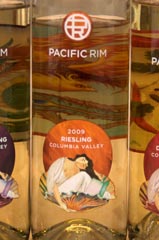
A Wine for Tonight: 2009 Pacific Rim Riesling


By Kori ~ July 1st, 2010

Would you like a quick suggestion for a good wine to drink tonight (or this weekend) that won’t break your budget and is widely available? Many of our readers have said this is something they would like, so here is this week’s selection, the 2009 Pacific Rim Riesling from the Columbia Valley of Washington State.

Our selection criteria include:

  • A very good Quality rating of >=3.5 stars (out of 5)
  • A price tag of <=$15
  • Must be widely available

Pacific Rim Winery, located in West Richland, Washington, is almost exclusively a Riesling producer. The first Pacific Rim Riesling was produced in 1992 as a brand within Bonny Doon Vineyard in Santa Cruz, California, and used grapes from California, Washington, and Germany. In 2007, owner Randall Grahm decided to downsize Bonny Doon and spun off Pacific Rim as a stand-alone winery dedicated to Riesling. The entire Pacific Rim operation relocated to Washington State with general manager and winemaker Nicolas Quillé running the operation. In three short years, Pacific Rim has already made its mark, consistently producing good wines at great prices that are widely available. Annual production at Pacific Rim is 140,000 cases with about 90 percent being Riesling.

“Portraying bright crispness, subtle sweetness and aromas of jasmine, pear and apple, the wine exemplifies the harmony of Riesling.” –Nicolas Quillé, winemaker

2009 Pacific Rim Riesling (Columbia Valley, Washington): Pale, greenish yellow. Very aromatic with candied peaches, honey, and fruitcake aromas. White peach, pear, and tropical flavors show through on the palate. Off-dry, medium-bodied, and crisp. Well-balanced with a long finish. Residual Sugar: 2.3%
Quality: 3.5 stars (out of 5)
QPR: 5 bangs for your buck (out of 5)
Where to buy: Received as sample, suggested retail $10; Available elsewhere, $9 to $14


Filed under: A Wine for Tonight, American Wine, Five-Bangs For Your Buck Wines, Riesling, Washington State Wine, White Wine, Wines Under $10, Wines Under $15, Wines Under $20, Wines Under $25
 

Highlights and Wine Tastings from the 2010 Wine Bloggers Conference


By Kori ~ June 30th, 2010

This past weekend, Dad (John), Colby, and I spent three jam-packed days in Walla Walla, Washington, for the third annual North American Wine Bloggers Conference. We were joined by over 300 fellow wine bloggers, wine industry participants, and media members for tastings, keynote addresses, breakout sessions, and visits to local vineyards and wineries. [See the bottom of this post for a recap of the wines that we tasted before, during, and after the WBC.]

As a judge for the WBC-or-BUST contest, I was invited to join the group of winners for a few of their pre-conference stops: a Woodinville Grand Tasting at Willows Lodge, Brunch and Unique AVA Wine Tasting at Cave B in Quincy, and the Walla Walla Vintners Pizza & Wine Social. These stops allowed me to visit with many winemakers and taste numerous wines before the conference was officially underway.

Things really kicked into high gear on Friday with the official start of the conference. We enjoyed a taco truck tasting for lunch followed by a keynote address by wine writer Steve Heimoff of Wine Enthusiast and SteveHeimoff.com on the future of wine writing. He made several points that really resonated with me: 1) Know who you are, find your voice, and then stretch it. 2) Transparency is key. Bloggers are forcing print critics to be more transparent. 3) To develop and expand your palate, it is important to read a lot, taste a lot, and write a lot. Alan Kropf of Mutineer Magazine then presented the 2010 Wine Blog Awards. Congratulations to all of the winners!
A portion of each day was devoted to breakout sessions on a variety of topics. I won’t bore you with the details, but we found most of the sessions very interesting and informative. We hope to incorporate some of the suggestions and ideas we formulated during these sessions to make Wine Peeps even better. The thread that ran through all of the sessions was the importance of remembering that we are all wine writers, no matter whether our platform is a blog, a newspaper, a magazine, or a book. And once again, there was an emphasis on social networking and interacting with our readers. (So if you aren’t already, please follow/like us on Twitter and Facebook.)

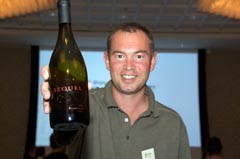
This year, we had two Live Wine Blogging segments (White Wines on Friday and Red Wines on Saturday) which featured wines poured for us by the winemakers themselves in a fast and furious “speed dating”-like format.

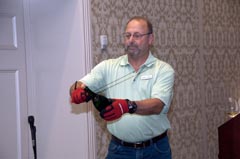
Ste. Michelle Wine Estates hosted dinner on Friday evening. Doug Gore, Senior Vice President of Winemaking and Vineyard Operations, introduced a number of their winemakers who were on hand pouring their wines. The highlight of the evening was when Domaine Ste. Michelle sparkling winemaker, Rick Casqueiro, demonstrated how to open a bottle of sparking wine with a saber. After dinner, we visited a number of tasting rooms in downtown Walla Walla who opened for an after-hours walkabout.
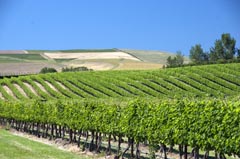
We got up bright and early the next morning for a fascinating presentation on the terroirs of the Walla Walla Valley by geologist Kevin Pogue. His talk was a perfect start to a day spent visiting vineyards and wineries in the Walla Walla Valley. We divided into groups of 15 and boarded buses, not knowing where we were headed until we got there. Our bus enjoyed visits to Cougar Hills Vineyard, a Syrah tasting and panel presentation at Skylite Cellars that also featured wines by Smasne Cellars and Riverhaven Cellars, and lunch at Pepper Bridge Winery.

The Washington Wine Commission hosted a grand tasting of Washington wines followed by a family-style dinner on Saturday evening with a Washington winemaker sitting at each table. Lettie Teague, wine columnist for The Wall Street Journal and author of Educating Peter, gave the keynote address on finding your voice.

One of my favorite sessions of the weekend was also the last, a Food and Wine Pairing seminar and lunch with chef Jeffrey Saad, the runner up on season 5 of The Next Food Network Star. The conference officially ended just after lunch on Sunday.
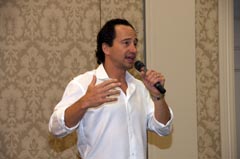
While I enjoyed all of the keynotes, sessions, events, and tastings, the best part of the conference was getting to meet so many of our fellow wine bloggers in person and see some friends we had made at previous conferences.

Many thanks to Allan Wright of Zephyr Wine Adventures and Joel Vincent of the OpenWine Consortium for organizing this wonderful conference and to all of the sponsors for your support in making it a reality.

We stayed in Walla Walla for a couple of extra days in order to visit a few more wineries. In the coming weeks, I will be posting in more detail about some of the conference topics and wineries we visited.

Here’s a breakdown of the wines that we tasted before, during, and after the Wine Bloggers Conference, except those that we already rated during the Live Wine Blogging segments (White Wines on Friday and Red Wines on Saturday). Under each Quality heading, the wine name and region will be listed along with price and QPR rating. Wines in bold type received a QPR rating of 5 bangs for your buck (out of 5).
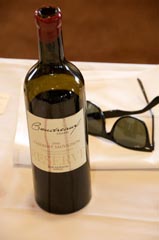
Quality: 4.5 stars (out of 5)
2007 Fielding Hills Cabernet Sauvignon, Wahluke Slope, $38, QPR: 5
2007 Betz Père de Famille Cabernet Sauvignon, Columbia Valley, $60, QPR: 5
2006 Boudreaux Reserve Cabernet Sauvignon, Washington State, $100, QPR: 5

2008 Betz La Côte Patriarche Syrah, Red Willow Vineyard, Yakima Valley, $55, QPR: 4

Quality: 4 stars (out of 5)
2008 Chateau Ste. Michelle & Dr. Loosen Eroica Riesling, Columbia Valley, $18, QPR: 5
2006 Rulo Syrah, Columbia Valley, $20, QPR: 5
2008 Walla Walla Vintners Sangiovese, Columbia Valley, $24, QPR: 5
2009 Hollywood Hill Vineyards Chardonnay, Puget Sound, $24, QPR: 5
2007 Gilbert Cellars Estate Syrah, Wahluke Slope, $24, QPR: 5
2007 Glencorrie Cabernet Sauvignon, Columbia Valley, $35, QPR: 5
2007 Rulo Cabernet Sauvignon, Horse Heaven Hills, $40, QPR: 5

2009 Sparkman Cellars Pearl Sauvignon Blanc, Columbia Valley, $19, QPR: 4
2009 Syncline Grüner Veltliner, Underwood Mountain Vineyard, Columbia Gorge, $20, QPR: 4
2009 Dowsett Family Winery Gewurztraminer, Celilo Vineyard, Columbia Gorge, $20, QPR: 4
2007 Camaraderie Tempranillo, Yakima Valley, $25, QPR: 4
2008 Nefarious Rx-4 Red Wine (Rhone-style blend), Columbia Valley, $27, QPR: 4
2007 Barrister Cabernet Franc, Columbia Valley, $27, QPR: 4
2005 Skylite Cellars Syrah, Columbia Valley, $32, QPR: 4
2008 Dusted Valley Big Bad MOFO! Petite Sirah, Columbia Valley, $35, QPR: 4
2006 Rulo Silo Reserve Syrah, Wahluke Slope, $35, QPR: 4
2006 Columbia Crest Walter Clore Private Reserve Red Wine, Columbia Valley, $36, QPR: 4
2005 Otis Kenyon Reserve Merlot, Seven Hills Vineyard, Walla Walla Valley, $40, QPR: 4
2007 Pepper Bridge Winery Cabernet Sauvignon, Walla Walla Valley, $55, QPR: 4
2008 William Church Malbec, Gamache Vineyards, Columbia Valley, $32, QPR: 3
2008 Hollywood Hill Vineyards Malbec, Wahluke Slope, $34, QPR: 3
2006 Cave B Cuvée de Soleil (Bordeaux-style red blend), Columbia Valley, $40, QPR: 3
2008 Buty Merlot and Cabernet Franc, Conner Lee & Champoux Vineyards, Columbia Valley, $40, QPR: 3
2007 Sparkman Cellars Ruby Leigh (Merlot-based blend), Columbia Valley, $42, QPR: 3
2007 Andrew Will Ciel du Cheval Vineyard Red Bordeaux Blend, Red Mountain, $45, QPR: 3
2006 Glencorrie Cuvée Marquis (Bordeaux-style blend), Columbia Valley, $45, QPR: 3
2007 Skylite Reserve (Malbec-based blend), Columbia Valley, $47, QPR: 3
2006 Alma Terra Syrah, Ciel du Cheval Vineyard, Red Mountain, $54, QPR: 2
2007 Buty Rediviva of the Stones (Syrah/Cab), Walla Walla Valley, $55, QPR: 2
2007 Pepper Bridge Winery Pepper Bridge Vineyard Red Wine, Walla Walla Valley, $55, QPR: 2
2006 Col Solare (Cabernet-based blend), Columbia Valley, $75, QPR: 1

Quality: 3.5 stars (out of 5)
2009 Chateau Ste. Michelle Dry Riesling, Columbia Valley, $9, QPR: 5
NV Domaine Ste. Michelle Blanc de Noirs, Columbia Valley, $12, QPR: 5
2006 Kiona Estate Lemberger, Red Mountain, $12, QPR: 5

2009 Nefarious Riesling, Stone’s Throw Vineyard, Columbia Valley, $18, QPR: 4
NV Barrister Rough Justice (Red blend), Columbia Valley, $20, QPR: 4
2008 Rulo Sundance Chardonnay, Wahluke Slope, $20, QPR: 4
NV Hard Row to Hoe Pinot Noir, Lake Chelan, $25, QPR: 4
2007 Walla Walla Vintners Cabernet Sauvignon, Walla Walla Valley, $35, QPR: 4
2006 Glencorrie Cabernet Sauvignon, Columbia Valley, $35, QPR: 4
2006 Glencorrie Cabernet Sauvignon, Walla Walla Valley, $40, QPR: 4
2007 Glencorrie Cabernet Sauvignon, Walla Walla Valley, $40, QPR: 4
2006 Rulo Cabernet Sauvignon, Klipsun Vineyard, Red Mountain, $40, QPR: 4
2008 Cedergreen Old Vine Chenin Blanc, Columbia Valley, $17, QPR: 3
2009 Cedergreen Old Vine Chenin Blanc, Columbia Valley, $17, QPR: 3
2009 Tildio Viognier, Lake Chelan, $18, QPR: 3
2008 Cougar Crest Grenache Rosé, Walla Walla Valley, $18, QPR: 3
2008 Rulo Viognier, Walla Walla Valley, $18, QPR: 3
2008 Walla Walla Vintners Cabernet Franc, Columbia Valley, $28, QPR: 3
2007 Dowsett Family Winery Devotion (Rhone-style red blend), Columbia Valley, $28, QPR: 3
2006 Skylite Cellars Syrah, Columbia Valley, $28, QPR: 3
2007 Skylite Cellars Syrah, Minnick Vineyard, Yakima Valley, $28, QPR: 3
2007 Hollywood Hill Vineyards Syrah, Red Mountain, $32, QPR: 3
2007 SYZYGY Syrah, Walla Walla Valley, $33, QPR: 3
2007 Sinclair Estate Syrah, Columbia Valley, $35, QPR: 3
2008 Buty Conner Lee Vineyard Chardonnay, Columbia Valley, $35, QPR: 3
2007 Woodward Canyon “Artist Series” Cabernet Sauvignon, Washington State, $49, QPR: 3
2007 Cooper Cabernet Sauvignon, Walla Walla Valley, $50, QPR: 3
2009 Amavi Semillon, Walla Walla Valley, $20, QPR: 2
2009 William Church Viognier, Conner Lee Vineyard, Columbia Valley, $21, QPR: 2
2009 Doyenne Rosé (Rhone-style blend), Yakima Valley, $23, QPR: 2
2009 Hollywood Hill Vineyards Roussanne, Horse Heaven Hills, $24, QPR: 2
2007 Camaraderie Malbec, Crawford Vineyard, Yakima Valley, $25, QPR: 2
2008 CAVU Malbec, Columbia Winery, $30, QPR: 2
2007 Cougar Crest Cabernet Franc, Walla Walla Valley, $36, QPR: 2
2007 Doyenne Syrah, Yakima Valley, $39, QPR: 2
2007 Pepper Bridge Winery Merlot, Walla Walla Valley, $50, QPR: 2
2007 Sparkman Cellars Stella Mae (Cabernet-based blend), Columbia Valley, $42, QPR: 1
2007 Sinclair Estate Vixen (Rhone-style red blend), Columbia Valley, $45, QPR: 1
2005 SYZYGY Saros (Tempranillo/Malbec/Cab), Columbia Valley, $45, QPR: 1
2007 Glencorrie Cuvée Marquis (Bordeaux-style blend), Columbia Valley, $45, QPR: 1
2007 Spring Valley Vineyard Frederick Cabernet Blend, Walla Walla Valley, $50, QPR: 1
2006 Alma Terra Syrah, Minnick Vineyard, Yakima Valley, $54, QPR: 1
2006 Pepper Bridge Winery Pepper Bridge Vineyard Red Wine, Walla Walla Valley, $55, QPR: 1
2007 Pepper Bridge Winery Seven Hills Vineyard Red Wine, Walla Walla Valley, $55, QPR: 1

Quality: 3 stars (out of 5)
2007 Columbia Crest Grand Estates Merlot, Columbia Valley, $13, QPR: 5
2007 DaMa Cowgirl Cab, Columbia Valley, $21, QPR: 5

2007 Rulo Syrca Red Wine (Syrah/Cab), Columbia Valley, $15, QPR: 4
2009 DaMa Rosé (Mourvedre/Syrah), Columbia Valley, $18, QPR: 4
2008 DaMa Syrah, Columbia Valley, $18, QPR: 4
2007 Gilbert Cellars Cabernet Sauvignon, Wahluke Slope, $28, QPR: 4
2007 Riverhaven Estate Cabernet Sauvignon, River Rock Vineyard, Walla Walla Valley, $34, QPR: 3
2006 SYZYGY Cabernet Sauvignon, Columbia Valley, $36, QPR: 3
2009 Shameless Hussy [Hard Row to Hoe] Sangiovese Dry Rosé, Lake Chelan, $15, QPR: 2
2009 Rulo Combine (Sauvignon Blanc/Muscat Ottonel), Evergreen Vineyard, Columbia Valley, $15, QPR: 2
2009 Rulo Rosé (Syrah/Cab), Walla Walla Valley, $15, QPR: 2
2007 Cedergreen Old Vine Chenin Blanc, Columbia Valley, $17, QPR: 2
2009 Cave B Saignée Rosé, Columbia Valley, $18, QPR: 2
2007 Tildio Merlot, Columbia Valley, $27, QPR: 2
2007 Des Voigne Cellars The Duke Red Wine (Zinfandel blend), Columbia Valley, $28, QPR: 2
2007 Riverhaven Estate Syrah, River Rock Vineyard, Walla Walla Valley, $28, QPR: 2
2007 Glencorrie Merlot, Stillwater Creek Vineyard, Columbia Valley, $28, QPR: 2
2009 Davenport Cellars Semillon, Columbia Valley, $19, QPR: 1
2007 Cougar Crest Viognier, Walla Walla Valley, $20, QPR: 1
2008 Tru Rosé (Syrah/Chard/Riesling), Washington State, $21, QPR: 1
2008 CAVU Barbera, Horse Heaven Hills, $30, QPR: 1
2008 Hollywood Hill Vineyards Cabernet Franc, Rattlesnake Hills, $32, QPR: 1
2007 Dusted Valley Malbec, Columbia Valley, $35, QPR: 1
2007 Camaraderie Elegance (Bordeaux-style red blend), Meek Family Vineyard, Yakima Valley, $35, QPR: 1
2007 Smasne Cellars Block 3 Syrah, Lawrence Vineyard, Columbia Valley, $35, QPR: 1

Quality: 2.5 stars (out of 5)
2007 Sweet Valley Double Barrel Red, Walla Walla Valley, $20, QPR: NR
2008 Rulo Birch Creek Chardonnay, Walla Walla Valley, $20, QPR: NR
2009 DaMa Chardonnay, Columbia Valley, $21, QPR: NR
NV Tru Blanc de Blancs, Washington State, $40, QPR: NR
2007 Sinclair Estate Cabernet Sauvignon, Walla Walla Valley, $45, QPR: NR

Quality: 2 stars (out of 5)
2007 Tru Gewurztraminer, Celilo Vineyard, Columbia Gorge, $21, QPR: NR


Filed under: American Wine, Barbera, Cabernet Franc, Cabernet Sauvignon, Chardonnay, Chenin Blanc, Five-Bangs For Your Buck Wines, Gewurztraminer, Grenache, Gruner Veltliner, Lesser Known Varietals, Malbec, Merlot, Petite Sirah, Pinot Noir, Red Wine, Riesling, Rose Wine, Roussanne, Sangiovese, Sauvignon Blanc, Semillon, Shiraz/Syrah, Sparkling Wine, Tempranillo, Vineyards, Viognier, Washington State Wine, White Wine, Wine Activities/Events, Wines NOT To Buy (1 & 2 Star), Wines Over $25, Wines Under $10, Wines Under $15, Wines Under $20, Wines Under $25, Zinfandel
 

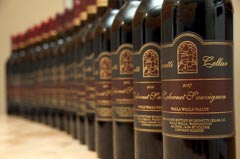
Tasting Group: Leonetti Cellar Cabernet Sauvignon Vertical, 1991-2007


By Kori ~ June 29th, 2010

Our Wine Peeps Tasting Group includes what we think is an excellent peer group of knowledgeable wine lovers to taste, share, and learn more about wine together. Unlike our monthly wine tasting dinners in which the guests rotate, this tasting group includes people who are committed to getting together once a month which we believe benefits all of us.
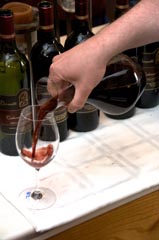
Since we live in Washington State and often drink wines from Washington State, most of our tasting group themes are purposefully non-Washington wines so that we can continue to hone our knowledge of the entire world of wine and maintain well-rounded palates. This month, however, we made an exception for a very special tasting of Washington wines.

One of our tasting group members generously provided wines from his personal collection so that we could do a Leonetti Cellar Cabernet Sauvignon vertical tasting of seventeen wines from the 1991 through the 2007 vintage.

Leonetti Cellar, located in Walla Walla, Washington, has a long and storied history for a Washington State winery. Founded by Gary and Nancy Figgins in 1977, Leonetti Cellar was the Walla Walla Valley’s first modern-day winery. Leonetti wines have been standard bearers for quality and consistency since the beginning and have achieved a cult following. In 1996, Gary and Nancy’s son, Chris, joined them in the winery after graduating with a degree in Horticulture from Washington State University. While Gary is still actively involved in the winery, Chris now serves as CEO and Director of Winemaking. From early on, the Figgins family has worked on developing their own vineyards in order to achieve their goal of exclusively using estate-grown fruit from the Walla Walla Valley. Leonetti only produces three or four wines each year, Cabernet Sauvignon, Merlot, Sangiovese, and in the best vintages, a Reserve. Their annual production is just over 6,000 cases.

While our tastings are usually blind, we decided not to taste these blind. We simply wanted to enjoy the wines and taste them in a logical order. We started with the oldest and worked our way to the youngest. One thing we all noticed before trying any of the wines was the remarkable consistency of their labels. Talk about brand identity. From a distance, you can’t tell the 1991 from the 2007. Their logo, label art, and label positioning on the bottle have remained the same. Through the years, there have been only two minor changes, from green to brown bottles and a slight variation in the capsules.

All of the wines were very good, and some were downright outstanding. We were pleased to find the 1991, a 19-year-old wine, still drinking very well though it is definitely in its “drink now” window. The consensus favorite of the evening was the 1999 vintage. For Leonetti Cellar, the 1999 vintage was the first time that they had a non-Reserve Cab bottling carry the Walla Walla Valley appellation designation. Every vintage since 1999 has been produced from Walla Walla Valley fruit. Another star of the tasting was the 2007 vintage, their current release. While it is definitely still a young wine, it is already drinking very well and shows great potential to only improve with some age. I look forward to trying it again in a few years, if I have the opportunity.
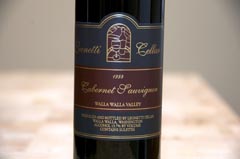
Wines from Leonetti Cellar can be hard to come by. They release their wines each year in mid-March. Wines sold directly from the winery are only available to their Mailing List, which is currently full and has a 4-5 year wait. If you are not one of the lucky few on their Mailing List, a limited number of their wines are available in finer retail shops and restaurants around the country.

From oldest to youngest:

1991 Leonetti Cellar Cabernet Sauvignon (Washington State): Deep brick color. Gorgeous nose with smoked meat and black plum aromas. Smoked meats, black plums, and licorice come through on the palate. Medium to full-bodied and tart with medium tannins and a long finish. Well-balanced. Still holding up very well but drink now.
Quality: 4 stars (out of five)
QPR: NA
Winery Retail: $NA

1992 Leonetti Cellar Cabernet Sauvignon (Columbia Valley, Washington): Deep garnet in color. Nose is a bit tight, then some black fruit aromas show through. A lot of black and red fruits up front as well as SweeTart candies. Medium to full-bodied and very tart with medium tannins and a long finish.
Quality: 3.5 stars (out of five)
QPR: NA
Winery Retail: $NA

1993 Leonetti Cellar Cabernet Sauvignon (Columbia Valley, Washington): Medium-deep garnet. Aromatic with cinnamon, spice, and black plum on the nose. Spice, blackberry, and blackcurrant on the palate. Medium-bodied with tart acidity and medium to high tannins. Well-balanced with a long finish.
Quality: 4 stars (out of five)
QPR: NA
Winery Retail: $NA

1994 Leonetti Cellar Cabernet Sauvignon (Columbia Valley, Washington): Medium-deep red garnet. Beautiful nose with luscious blackberry and floral aromas. Black fruits, spice, and a hint of BBQ sauce on the palate. Medium to full-bodied and crisp with medium to high tannins. Well-balanced with good complexity and a very long finish.
Quality: 4.5 stars (out of five)
QPR: NA
Winery Retail: $NA

1995 Leonetti Cellar Cabernet Sauvignon (Columbia Valley, Washington): 85% Cabernet Sauvignon, 7% Merlot, 8% Cabernet Franc. Deep red garnet in color. Very aromatic with gingerbread and spice on the nose. Black pepper, black currant, and spice on the palate. Medium to full-bodied and crisp with medium to high tannins. Well-balanced with a long, lingering finish.
Quality: 4.5 stars (out of five)
QPR: NA
Winery Retail: $NA

1996 Leonetti Cellar Cabernet Sauvignon (American): 84.5% Cabernet Sauvignon, 12.6% Cabernet Franc, 2.9% Petit Verdot. Note: Labeled as “American” because 34% of the fruit is from Ristow Vineyard in the Napa Valley. Deep red brick. Aromatic with ripe, jammy fruits on the nose. Black and red fruits, mint, and a hint of oak on the palate. Medium to full-bodied and tart with medium to high tannins and a long, slightly bitter finish.
Quality: 3.5 stars (out of five)
QPR: NA
Winery Retail: $NA

1997 Leonetti Cellar Cabernet Sauvignon (Columbia Valley, Washington): 86.1% Cabernet Sauvignon, 6.7% Cabernet Franc, 3.9% Merlot, 3.3% Petit Verdot. Deep garnet brick in color. Very aromatic with cedar and spice box aromas; flavors of black currant, cinnamon, spice, and cedar. Medium to full-bodied and lively with medium to high tannins. Well-balanced and smooth with a long, lingering finish.
Quality: 4.5 stars (out of five)
QPR: NA
Winery Retail: $NA

1998 Leonetti Cellar Cabernet Sauvignon (Columbia Valley, Washington): 75% Cabernet Sauvignon, 12.5% Merlot, 12.5% Petit Verdot. Deep, ruby red with a slight brick tone. Aromatic with black cherry and licorice on the nose. Black cherry cough syrup and smoke on the palate. Medium to full-bodied and crisp with medium to high tannins and a long finish.
Quality: 3.5 stars (out of five)
QPR: NA
Winery Retail: $NA

1999 Leonetti Cellar Cabernet Sauvignon (Walla Walla Valley, Washington): 89.5% Cabernet Sauvignon, 8.4% Merlot, 2.1% Petit Verdot. The consensus favorite. Deep red garnet in color. Very aromatic with cocoa and black currant on the nose. Black fruits, spice, baker’s chocolate, and a hint of smoked meats on the palate. Medium to full-bodied and lively with medium to high tannins. Extremely well-balanced with good complexity and a long, lingering finish.
Quality: 4.5 stars (out of five)
QPR: NA
Winery Retail: $NA

2000 Leonetti Cellar Cabernet Sauvignon (Walla Walla Valley, Washington): 86% Cabernet Sauvignon, 10% Cabernet Franc, 4% Merlot. Deep, dark ruby red. Jammy black fruits and black pepper on the nose and palate. Full-bodied and lively with medium to high, drying tannins and a long finish.
Quality: 4 stars (out of five)
QPR: NA
Winery Retail: $NA

2001 Leonetti Cellar Cabernet Sauvignon (Walla Walla Valley, Washington): 77% Cabernet Sauvignon, 13% Merlot, 4% Carmenere, 3% Syrah, 2% Petit Verdot, 1% Cabernet Franc. Deep, dark ruby red. Aromatic with chocolate, smoke, and spice on the nose. Black fruits and chocolate on the palate. Medium to full-bodied, very smooth, medium tannins, and a long finish.
Quality: 4 stars (out of five)
QPR: NA
Winery Retail: $NA

2002 Leonetti Cellar Cabernet Sauvignon (Walla Walla Valley, Washington): 84% Cabernet Sauvignon, 10% Merlot, 4% Cabernet Franc, 2% Carmenere. Deep, dark ruby red and aromatic. Smoked meat aromas lead to jammy black fruit and coffee flavors. Full-bodied and lively with medium to high tannins. Well-balanced with a long finish.
Quality: 4 stars (out of five)
QPR: NA
Winery Retail: $NA

2003 Leonetti Cellar Cabernet Sauvignon (Walla Walla Valley, Washington): 75% Cabernet Sauvignon, 18% Merlot, 3% Cabernet Franc, 3% Carmenere. Deep, dark ruby red. Ripe black fruit and spice box aromas and flavors. Medium to full-bodied with crisp acidity, medium to high tannins and a long finish.
Quality: 3.5 stars (out of five)
QPR: 2 bangs for your buck (out of 5)
Winery Retail: $70

2004 Leonetti Cellar Cabernet Sauvignon (Walla Walla Valley, Washington): 77% Cabernet Sauvignon, 19% Merlot, 3% Cabernet Franc, 1% Carmenere. Deep, dark ruby red. Aromatic with smoke, cedar, and spice on the nose; red and black fruits and chocolate come through on the palate. Full-bodied and crisp with high, drying tannins. Well-balanced with a very long finish.
Quality: 4 stars (out of five)
QPR: 4 bangs for your buck (out of 5)
Winery Retail: $75

2005 Leonetti Cellar Cabernet Sauvignon (Walla Walla Valley, Washington): 83% Cabernet Sauvignon, 8% Merlot, 3% Cabernet Franc, 4% Carmenere, 2% Malbec. Deep, dark purplish red in color. Mint and smoke on the nose; black fruits on the palate. Medium to full-bodied and lively with medium tannins and a long finish.
Quality: 3.5 stars (out of five)
QPR: 1 bang for your buck (out of 5)
Winery Retail: $80

2006 Leonetti Cellar Cabernet Sauvignon (Walla Walla Valley, Washington): 79% Cabernet Sauvignon, 14% Merlot, 4% Cabernet Franc, 3% Malbec. Dark, inky purplish red. Aromatic with black fruits and sawdust on the nose. A lot of fruit up front with blackberry and blueberry flavors. Medium to full-bodied and lively with medium to high, drying tannins. Well-balanced with a long finish.
Quality: 4 stars (out of five)
QPR: 3 bangs for your buck (out of 5)
Winery Retail: $85

2007 Leonetti Cellar Cabernet Sauvignon (Walla Walla Valley, Washington): 76% Cabernet Sauvignon, 17% Merlot, 4% Carmenere, 3% Malbec. Dark, inky purplish red in color. Very aromatic with smoke, cinnamon, and black fruits on the nose. Spice, black and red fruits, coffee, and a hint of bell pepper come through on the palate. Full-bodied with crisp acidity and high, drying tannins. Well-balanced with good complexity and a very long, lingering finish. There is a lot going on in this wine. I look forward to trying it again in a few years.
Quality: 4.5 stars (out of five)
QPR: 5 bangs for your buck (out of 5)
Winery Retail: $85


Filed under: American Wine, Cabernet Sauvignon, Five-Bangs For Your Buck Wines, Tasting Group, Washington State Wine, Wines Over $25
 

Seven Hills Winery: One of the Pioneers in the Walla Walla Valley


By Kori ~ June 28th, 2010

Founded in 1988 by winemaker Casey McClellan and his wife Vicky, Seven Hills Winery is located in downtown Walla Walla, Washington. Casey was raised in Walla Walla and is a fourth-generation farmer. In fact, he helped his father plant Seven Hills Vineyard in 1982, one of the first three vineyards in the Walla Walla Valley. He graduated from the University of Washington in 1983 and then spent time travelling in Europe. His farming experience combined with his exposure to some of the great winegrowing regions in Europe inspired him to study enology at UC-Davis. After completing his Masters of Science at Davis, he and Vicky returned to the Walla Walla Valley to open Seven Hills Winery. The winery was originally located in Milton-Freewater, Oregon, and moved to its current location in Walla Walla, just ten miles up the road, in 2000. Like many wineries in the two-state Walla Walla Valley AVA, Seven Hills sources fruit from vineyards in both Washington and Oregon.
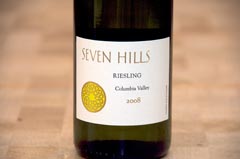
Recently, we had the opportunity to taste six wines from Seven Hills Winery in a blind samples tasting. These wines offer good overall quality, and we would recommend all six. Our favorite was the 2008 Riesling, an excellent expression of the variety. We also thought that the 2007 Syrah was very good.

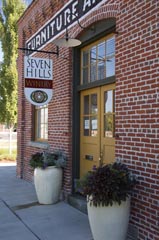
Seven Hills Winery and tasting room are located in the historic Whitehouse-Crawford building, which also houses the Whitehouse-Crawford Restaurant. The Seven Hills tasting room is bright and nicely appointed, and the barrel room can be seen from the tasting bar through a picture window. A trip to Walla Walla should definitely include a visit to Seven Hills Winery.

2008 Seven Hills Riesling (Columbia Valley, Washington): Pale, greenish yellow. Very aromatic with petrol and peach on the nose. Peach, apricot, lime, and a hint of cinnamon on the palate. Off-dry and light to medium-bodied with lively acidity. Well-balanced with good mouthfeel and a long finish.
Quality: 4 stars (out of 5)
QPR: 5 bangs for your buck (out of 5)
Where to buy: Received as sample, suggested retail $14; Available elsewhere, $9 to $16

2007 Seven Hills Syrah (Walla Walla Valley): Dark purple in color. Black cherry, smoked meats, and a hint of pepper on the nose and palate. Medium to full-bodied with lively acidity, medium to high tannins, and a long finish.
Quality: 3.5 stars (out of 5)
QPR: 4 bangs for your buck (out of 5)
Where to buy: Received as sample, suggested retail $22; Available elsewhere, $19 to $21

2007 Seven Hills Cabernet Sauvignon (Seven Hills Vineyard, Walla Walla Valley): Deep purple. Aromatic with molasses and black fruits on the nose; more black fruits, particularly black plums, and pencil lead on the palate. Medium to full-bodied with crisp acidity, medium tannins, and a long finish.
Quality: 3 stars (out of 5)
QPR: 4 bangs for your buck (out of 5)
Where to buy: Received as sample, suggested retail $32

2008 Seven Hills Pinot Gris (Oregon): Pale, greenish yellow. Very aromatic. Granny Smith apple and grapefruit aromas and flavors. Medium-bodied and tart with a long finish.
Quality: 3 stars (out of 5)
QPR: 2 bangs for your buck (out of 5)
Where to buy: Received as sample, suggested retail $16; Available elsewhere, $12 to $15

2007 Seven Hills Merlot (Seven Hills Vineyard, Walla Walla Valley): Deep, purplish red. Aromatic with cherry cola and red and black fruits on both the nose and palate. Medium-bodied and lively with medium tannins and a long finish.
Quality: 3 stars (out of 5)
QPR: 2 bangs for your buck (out of 5)
Where to buy: Received as sample, suggested retail $28; Available elsewhere, $25 to $26

2005 Seven Hills Pentad Vintage Red Wine (Walla Walla Valley): 55% Cabernet Sauvignon, 9% Merlot, 18% Petit Verdot, 9% Carmenere, 9% Malbec. Deep, purplish red in color. Moderately aromatic with some petrol aromas. Red fruits come through on the palate. Medium-bodied and lively with soft tannins and a long finish.
Quality: 3 stars (out of 5)
QPR: 1 bang for your buck (out of 5)
Where to buy: Received as sample, suggested retail $50; Available elsewhere, $45


Filed under: American Wine, Cabernet Sauvignon, Five-Bangs For Your Buck Wines, Merlot, Oregon Wine, Pinot Grigio/Pinot Gris, Red Wine, Riesling, Shiraz/Syrah, Washington State Wine, White Wine, Wines Over $25, Wines Under $15, Wines Under $20, Wines Under $25