Wine Blogging Wednesday #66: Your Tender-est Twosome


By Kori ~ February 24th, 2010

Our host for the February edition of Wine Blogging Wednesday, the blogosphere’s monthly virtual wine tasting event, is Jennifer Hamilton of The Domestic Goddess. She selected Your Tender-est Twosome as this month’s theme and asked us to pair a wine with a dessert saying, “Every once in a while, dessert deserves the attention given to a main course; and a wine to match.” This WBW is extra special because it is the first joint event between WBW and Sugar High Fridays, a similar monthly event focused on desserts and sweets.

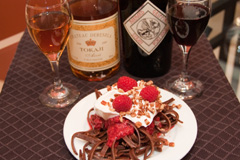
Since wine is our thing, we generally select the wines we want to try first and then determine the food to enjoy with them. However, when I read Jennifer’s theme, I asked Mom (LaGayle), our Wine Peeps food expert, to select a dessert she has wanted to try. Mom decided to make chocolate fettuccini with raspberry sauce topped with whipped cream and garnished with toasted pecans and fresh raspberries. In typical Wine Peeps fashion, we decided to try two wines for this Wine Blogging Wednesday to determine which one paired better with Mom’s chocolate fettuccini. We chose the 2000 Chateau Dereszla Tokaji Aszu 5 Puttonyos from Hungary and the 2008 Barnard Griffin Syrah Port from Washington State.

We were blown away by the Chateau Dereszla Tokaji; however, I must admit that the Barnard Griffin Syrah Port paired better with Mom’s chocolate fettuccini. So if I was going to drink one of these wines by itself, I would choose the Tokaji but if I was going to have this particular dessert again, I would pair the Syrah Port with it.

The chocolate fettuccini was a beautiful, albeit interesting, dessert. I love chocolate and raspberries, but I’m not sure that chocolate pasta is really my thing. For the wines, though, I would encourage you to give either or both of them a try.

2000 Chateau Dereszla Tokaji Aszu 5 Puttonyos (Hungary): Deep golden amber in color. Extremely aromatic with honey, apricot, and pear aromas. Flavors of dried apricots and oranges. Medium-bodied and sweet, but for a wine with high residual sugar, it does not taste sickeningly sweet. Well-balanced with a long, smooth finish.
Quality: 4.5 stars (out of 5)
QPR: 4 bangs for your buck (out of 5)
Where to Buy: JJ Buckley Fine Wines (California), $60 [500ml]

2008 Barnard Griffin Syrah Port (Columbia Valley, Washington): Dark, inky purple and very aromatic. Black cherry, blackberry, fig, and smoke come through on the nose; black cherry syrup, blackberry jam, fig, chocolate, and coffee on the palate. Medium to full-bodied and medium sweet with a long, smooth finish.
Quality: 3.5 stars (out of 5)
QPR: 5 bangs for your buck (out of 5)
Where to Buy: Esquin Wine Merchants (Seattle, WA), $15 [500ml]; PrimoVino (Colorado), $23 [500ml]


Filed under: American Wine, Dessert Wine, Five-Bangs For Your Buck Wines, Food & Wine, Hungarian Wine, Port, Shiraz/Syrah, Washington State Wine, Wine Blogging Wednesday, Wines Over $25, Wines Under $20, Wines Under $25
 

Taste Washington 2010 Preview


By Kori ~ February 23rd, 2010

Washington State ranks second nationally in wine production, has over 650 wineries, and is home to the Wine Spectator Wine of the Year for 2009. And as I’ve said numerous times before, Washington wines are perfectly positioned to thrive in our current economy. Washington State is producing outstanding wines that consistently deliver great bang for your buck.

If you love Washington wine, want to learn more about Washington wine, or are just looking for a fun event to attend, the upcoming Taste Washington in Seattle is just the event for you. Hosted by the Washington Wine Commission, Taste Washington is the ultimate carnival for wine and food lovers. Of the 650+ wineries in the state, over 200 of them are expected to be on hand pouring their wines at the Grand Tasting on Sunday, March 28th, at the Qwest Field Event Center. In addition, approximately 75 of the best Seattle-area restaurants will be serving small bites. And to round out the carnival-like atmosphere, there will also be fun and games, cooking demonstrations, author talks, and much, much more. The Grand Tasting begins with a two-hour VIP tasting from 2-4pm, followed by three hours of general admission from 4-7pm.

If a smaller, more intimate gathering is more your speed or you want to further your knowledge of wine and Washington wine in particular, Education Day on Saturday, March 27th, might be of interest to you. Held at the Bell Harbor International Conference Center, seven seminars will be offered on a variety of topics. These seminars afford attendees the opportunity to taste, discuss, meet, and learn from some of the biggest names in the Washington wine industry as well as a few notable guests from outside of Washington State.

Last year’s “Common Ground” seminars were such a hit that they are offering another one this year which will focus on Boushey Vineyard in the Yakima Valley. A few other seminars that sound very interesting are “The Legend of Quilceda Creek” (a look at Washington’s premier winery), “The Value Challenge” (compare $10-$20 Washington wines with those from around the world at the same price), and “Which One’s Washington?!” (a blind tasting challenge).

Recently, I attended the Taste Washington TweetUp hosted by the Washington Wine Commission at El Gaucho that featured 13 wines which were a preview of what will be poured at the Grand Tasting (see my notes below). The total cost to buy a bottle of each of these wines would set you back $528, but you can purchase a ticket to Taste Washington for $75 and taste these wines as well as many more.

We’ll be there both days and hope that those of you who live in the greater Seattle area will plan to attend as well. For more information or to purchase tickets, visit the Taste Washington website.
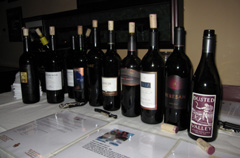
Here are the wines I tasted during the Taste Washington TweetUp, listed in the order we tasted them, with my Twitter-style notes as well as Quality and QPR ratings:

2008 DeLille Cellars Chaleur Estate Blanc (Columbia Valley, Washington): 62% Sauvignon Blanc, 38% Semillon. Pineapple, lemon, very crisp.
Quality: 3.5 stars (out of 5)
QPR: 1 bang for your buck (out of 5)
Suggested retail price: $34

2008 Woodward Canyon Winery Chardonnay (Washington State): Crisp, clean, fresh. Some oak but not overdone. Food-friendly.
Quality: 4 stars (out of 5)
QPR: 4 bangs for your buck (out of 5)
Suggested retail price: $44

2008 àMaurice Cellars Viognier (Columbia Valley, Washington): Another excellent wine from Anna Schafer. Floral, very crisp, long finish.
Quality: 4 stars (out of 5)
QPR: 3 bangs for your buck (out of 5)
Suggested retail price: $25

2008 Long Shadows Vintners Poet’s Leap Riesling (Columbia Valley, Washington): Light, fresh, citrus aromas and flavors. Lots of peach.
Quality: 3.5 stars (out of 5)
QPR: 4 bangs for your buck (out of 5)
Suggested retail price: $20

2007 Barrage Cellars “Outcast” Cabernet Franc (Boushey Vineyard, Yakima Valley, Washington): 100% Boushey Vineyard. Dark fruits, vegetal notes. A little heat.
Quality: 3.5 stars (out of 5)
QPR: 2 bangs for your buck (out of 5)
Suggested retail price: $35

2007 Cadence Winery Bel Canto (Cara Mia Vineyard, Red Mountain, Washington): 62% Cabernet Franc, 31% Merlot, 7% Petit Verdot. Dark fruits. Very well-balanced. Should get even better with age.
Quality: 4 stars (out of 5)
QPR: 2 bangs for your buck (out of 5)
Suggested retail price: $55

2002 Col Solare (Columbia Valley, Washington): 50% Cabernet Sauvignon, 30% Merlot, 20% Syrah. Extremely smooth. Drinking beautifully.
Quality: 4.5 stars (out of 5)
QPR: 4 bangs for your buck (out of 5)
Suggested retail price: $75 [Sold Out]

2007 Januik Winery Cabernet Sauvignon (Columbia Valley, Wasington): Black and red fruits, smoke, toast. Smooth.
Quality: 3.5 stars (out of 5)
QPR: 4 bangs for your buck (out of 5)
Suggested retail price: $30

2006 Pepper Bridge Winery Cabernet Sauvignon (Walla Walla Valley, Washington): Smooth, soft tannins. Dark fruits, a bit bitter on the back end.
Quality: 3 stars (out of 5)
QPR: 1 bang for your buck (out of 5)
Suggested retail price: $55

2007 Betz Family Winery Père de Famille Cabernet Sauvignon (Columbia Valley, Washington): 85% Cabernet Sauvignon, 8% Merlot, 7% Petit Verdot. Will be released in March. Young but gorgeous.
Quality: 4 stars (out of 5)
QPR: 4 bangs for your buck (out of 5)
Suggested retail price: $60

2006 Beresan Winery Malbec (Walla Walla Valley, Washington): Malbec is Seattle Magazine’s emerging varietal for 2009. Blue and black fruits, spice, pepper.
Quality: 3.5 stars (out of 5)
QPR: 2 bangs for your buck (out of 5)
Suggested retail price: $29

2007 Dusted Valley Vintners Stained Tooth Syrah (Columbia Valley, Washington): Syrah co-fermented with Viognier and some Grenache and Counoise blended in as well. Luscious black fruits, fruit-driven, pepper.
Quality: 3.5 stars (out of 5)
QPR: 4 bangs for your buck (out of 5)
Suggested retail price: $26

2007 Waters Winery Forgotten Hills Syrah (Walla Walla Valley, Washington): Barnyard funk and game. Lots of layers. Definitely a food wine.
Quality: 4 stars (out of 5)
QPR: 3 bangs for your buck (out of 5)
Suggested retail price: $40

To try these wines for yourself, make plans to attend Taste Washington next month.


Filed under: American Wine, Cabernet Franc, Cabernet Sauvignon, Chardonnay, Malbec, Red Wine, Riesling, Shiraz/Syrah, Viognier, Washington State Wine, White Wine, Wine Activities/Events, Wines Over $25, Wines Under $25
 

Women of Washington Wine: Sherrill Miller of E.B. Foote Winery


By Kori ~ February 22nd, 2010

Today’s post is part of a series featuring the Women of Washington Wine. In an industry once dominated by men, more and more women are joining the ranks as winery owners, vineyard owners, and winemakers. Being a woman myself, I am fascinated by these women and what they have done and continue to do. Through this series, I hope to introduce you to some of the brightest female faces in the Washington wine industry.

Sherrill Miller and her late husband, Rich Higginbotham, bought E.B. Foote Winery in 1991. One of the oldest wineries in Washington, E.B. Foote Winery was founded by Eugene Foote in 1978. Sherrill and Rich moved the winery to Burien, Washington, in 1999. Sadly, Rich passed away from Alzheimer’s disease in 2008, and Sherrill became the sole owner and winemaker. Today, E.B. Foote Winery produces about 2,200 cases annually.
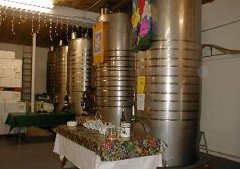
Recently, Sherrill was kind enough to take time out of her busy schedule to answer some questions for me and our Wine Peeps readers.

Highlights from Q&A with Sherrill Miller:

How did you first get involved in the wine business?
My husband and I visited E. B. Foote Winery one Saturday in January 1991.  Gene Foote was the owner/winemaker. He had a day job at Boeing and did the winery on the side. Gene was nearing retirement from Boeing and was selling the winery. My husband and I fell in love with the romantic notion of owning a winery. We had several in-depth conversations with Gene, and we decided that we wanted to try being winemakers, even though we had never made wine before. Gene assured us that anyone can make wine. (He’s right, but it takes a bit more than that to make good wine.) So we hocked our house, bought a winery, and then learned how to make wine. We kept our day jobs as our safety net so we could learn what to do and not become homeless if it didn’t work out.

What were the steps that led to where you are now?
We learned to make wine on the job—some from Gene Foote, some from other winemakers we met in the industry, some from reading various books.   We had been serious wine drinkers and knew more than the average wine drinker about wine. We relied on our collective palate to make wine the way we thought it should taste. In our early days, there were winemaker gatherings to share wine and wine knowledge with each other. Keep in mind, there were only about 35 wineries in Washington at that time.  We asked lots of questions.  We went to wine shows—like the home show for wineries. We could talk to reps about machinery, bottles, barrels, corks, labeling, and merchandise—just about anything that had anything to do with a winery. As we learned more, our wines got better and better. We realized early on that each vintage would be different from any other vintage. While there may be a general format for crafting our wines, we would have to make minor changes each year to bring out the best in the wine. Being minimalistic in our style, those changes would be related to length of time in oak, the kind of oak we used for a particular varietal, and any blending. An important part of our “training” was realizing that we had to drink at least as much other wine as our own. It would be important to keep our palates aware of various wines and winemaking styles. We needed to taste what our customers were tasting and have a broader base than just our wine. It would be very easy to get tunnel vision and think that our wine was better than it really was without some comparison.

Has being a woman been an advantage or a disadvantage in your wine journey?
My husband and I were the winemakers. We each had an equal part in crafting our wines. Our palates were different, and there would be much discussion about a wine and the blending that might go on to be sure we created the best wine we could. I found that when talking about wine or winemaking with customers or other winemakers, gender wasn’t even an issue. The issue was the wine—what vineyards were used, what oak was used, did it go through ML, what blend is it, etc. Whichever one of us happened to be doing the talking was the one the listener assumed was the winemaker.

But life changed in 2003 when my husband was diagnosed with Alzheimer’s disease. Over the next year, I gradually took over all of the responsibilities of the winery and the winemaking. I didn’t notice any change in the way customers or winemakers acted toward me or interacted with me. So even though it has been just me with no “male figure,” gender still has not been an issue for me. For me, the wine industry has been gender-neutral. (My husband passed away in September 2008.)

Do you use the fact that you are a woman to promote your wines? If so, how?
I don’t use gender to promote my wines or my winery. I think the wine should speak for itself. If a wine is well made and customers like it, it shouldn’t matter if it was made by a man or a woman. And I find that it doesn’t matter to my customers.

Are there more opportunities available to women today in the wine business than when you started?
I think in general there are just more opportunities in the wine business than when I started; but again, I don’t think gender has anything to do with it. There are more enology-education opportunities available at colleges here in Washington, and more start-up wineries being created. I think a successful winery has someone or some group of people who are passionate about wine and making wine, they have a strong business sense with enough working capital to get going, and they know something about wine and winemaking. I don’t see gender as being what makes or breaks a winery.

What advice do you have for a woman wanting to get involved in the wine business today?
My advice for anyone wanting to get started in the wine business (or any business for that matter) is learn as much as you can about it and keep learning! Don’t be afraid to ask questions, even the ones you think might be stupid. The only stupid question is the one that didn’t get asked! When we got started, we knew so little that we didn’t even know the questions to ask. But we kept going and asked all the questions we could think of. Pretty soon we had a body of knowledge and experience that things started making sense, and we kept asking questions. Knowledge is power, so be armed with plenty of knowledge (and more questions!).

What are your thoughts about the Washington wine industry, in general?
I find the Washington wine industry to be made up of serious, passionate people who want to make the best wine possible. Everyone I’ve talked to in the industry has been more than happy to share their knowledge and experiences. The Washington wine industry has worked hard to earn the reputation of making excellent wines. It’s in everyone’s best interest that we all make excellent wine. To that end, we all share ideas and help solve problems to help the industry to continue to raise the bar for quality.

In recent years the Washington wine industry has grown at a rapid rate. Do you expect that trend to continue?
I have welcomed the growth of the Washington wine industry. I think there are plenty of customers for all of us, both locally and globally. Competition can make all of us work just that much harder to improve.  But some of these new wineries released premium-priced wines as their first release. For various reasons, these wineries felt that $40 or more a bottle was warranted. While the quality of the wine may have matched the price, they immediately narrowed their customer base with the price. Now with the sluggish economy, more and more wine drinkers are looking for a quality wine at a much lower price point, thereby making their customer base even smaller. I think that the wine industry will continue to grow, but at a much slower pace than we have seen in the recent past. And unfortunately some of the established wineries will go under.

What is your vision for the future of E.B. Foote Winery?
My vision for the future of E. B. Foote Winery is two-fold: 1) to continue to focus on the quality of the wines I produce and keep the price affordable; and 2) to continue to focus on my customer service and customer relationships. As an ongoing process, I look at what’s been successful and keep doing it; I look at what should be done differently and change it; I look at what’s not working and stop doing it. I keep an open mind to new wine blends and new winery events.  The winery business is always changing, sometimes slowly, sometimes quickly. It’s my goal to keep on top of these changes to make them work for me, instead of the other way around.

Feel free to share any other thoughts that you believe would be of interest to our readers.
I feel it is important to support the community in which I live. I make donations to various auctions being put on by nonprofit organizations. For obvious reasons I am a strong supporter of the Alzheimer’s Association. I made a wine in tribute to my husband called Remembrance. It is a Cabernet/Merlot/Cabernet Franc blend, his favorite wine. I am donating 50% of the purchase price to the Alzheimer’s Association for a particular research project headed up by Dr. Brian Kraemer. So far I have donated nearly $29,000 to this project, and when all of the Remembrance is sold that figure will exceed $100,000. I have an annual fundraising weekend called Step into Spring and Stamp Out Alzheimer’s Disease where 10% of the sales from the weekend will also be donated.

Many thanks to Sherrill for sharing her story and thoughts with us. I wish her all the best and will be following her work and E.B. Foote Winery with great interest, and I hope that you will too.

(Photos from E.B. Foote Winery)


Filed under: American Wine, Interview, Washington State Wine, Women of Washington Wine
 

Wine Word of the Week: Cot


By Kori ~ February 20th, 2010

This week’s Wine Word of the Week is cot.
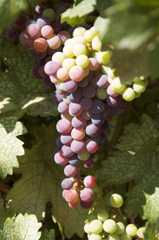
Official definition from Jancis Robinson’s The Oxford Companion to Wine:
Cot is an important French synonym for the black grape variety of French origin also known as Malbec and, in Cahors, Auxerrois.

Layman’s terms from Kori:
Cot is another name for Malbec.


Filed under: Wine Word of the Week
 

Washington’s Signature Varietals: Syrah and Riesling


By John ~ February 19th, 2010

The State of Washington has a unique position in the world of wine. It makes world-class wines of so many varietals that it dilutes its focus from just one “signature” varietal that has made so many wine regions almost legendary, such as Napa Cab and Oregon Pinot Noir. A good case can be made in Washington for Cabernet Sauvignon, Merlot, Bordeaux-type blends, Syrah, and Riesling, just to name a few. Cabernet Franc, Malbec, and Semillon have also done very well.
However, after tasting thousands of Washington wines over many vintages, talking to numerous growers and winemakers, and walking the rows of most of the major vineyards in Washington, I have concluded that Washington’s signature red wine is Syrah and its signature white wine is Riesling. Now if the realities of marketing would just reflect that lofty status.

Two Washington Syrahs, the 2005 Fielding Hills and the 2006 O*S Dineen Vineyard, have garnered the only 5 stars (out of 5) Quality rating we’ve ever given to Washington wines. And at the Washington Syrah seminar at Vintage Walla Walla last year, noted Washington wine writer and reviewer Paul Gregutt said:

“As I look over my tasting notes for the past few years, it is the syrahs that garner the highest scores as a group. It is a syrah that finally toppled my resistance to the 100-point barrier [2006 Charles Smith Royal City Syrah]. It is syrah that winemakers in this state almost universally love.”

That same Royal City Syrah also garnered the highest rating ever bestowed on a Washington red wine by Wine Spectator.

Washington Syrahs generally fall somewhere in between the jammy Shiraz of Australia and the more austere Syrah of the northern Rhone. They generally have good acidity and tannins. The common denominators of our favorites have been deep, dark purple color and luscious black fruits, with hints of black olives, green bell peppers, black pepper, and spice. The bottom line: Washington Syrah compares favorably with the best in the world.

On the white wine side, the number one grape in acres planted in Washington is Chardonnay, most of it fairly unremarkable; and there is very good Semillon, Viognier, and Sauvignon Blanc. But I believe that the undisputed leader when you combine quality and quantity is Riesling. Washington is the largest Riesling producing state in the United States. And, Washington State’s own Chateau Ste. Michelle is the largest Riesling producer in the world.
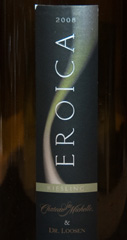
While Washington Riesling has been around for many years, the big leap forward came in the late 1990s when Chateau Ste Michelle and Dr. Ernst Loosen of Germany began collaborating on an effort to produce truly great Riesling in Washington’s Columbia Valley. Out of that joint venture has come Eroica, an internationally known and respected Riesling, while raising the bar for the entire Riesling category in Washington. While we have tasted and enjoyed Eroica on several occasions, the proof in the pudding for us was when it came out on top in one of our blind tastings of Washington Riesling, all of which were very good.

Today, Washington Riesling is mostly dry to off-dry, a great accompaniment with food. They generally have great acidity and flavorful fruit. You usually get citrus flavors such as lemon and lime, as well as apricot, peach, pear and, sometimes, tropical fruits too. The bottom line: Washington Riesling will stand up with the best you can find anywhere.

If you want to learn more about Washington Riesling, you might want to attend the Riesling Rendezvous July 11-13 in Woodinville, Washington, hosted by Chateau Ste. Michelle and Ernst Loosen.

What do you think are Washington’s signature varietals?


Filed under: American Wine, Red Wine, Riesling, Shiraz/Syrah, Washington State Wine, White Wine
 

A Wine for Tonight: 2008 FishEye Pinot Grigio


By Kori ~ February 18th, 2010

Would you like a quick suggestion for a good wine to drink tonight (or this weekend) that won’t break your budget and is widely available? Many of our readers have said this is something they would like, so here is this week’s selection, the 2008 FishEye Pinot Grigio from California.
Our selection criteria include:

  • A very good Quality rating of >=3.5 stars (out of 5)
  • A price tag of <=$15
  • Must be widely available

Each year since its 2005 launch, FishEye Winery has been named a Rising Star with Adam’s Beverage Dynamics and also a HOT BRAND by Market Watch. We were first introduced to FishEye during the Live Wine Blogging segment of last summer’s Wine Bloggers Conference. I was pleasantly surprised by this FishEye Pinot Grigio. It is very crisp and refreshing.

“FishEye is the type of wine that works well for a summer barbecue or as an everyday wine for the house. It’s a fun, quality wine that delivers intense flavor at a great price, making it an excellent choice for the everyday or casual wine drinker.” –Winemaker Jim McDonald

2008 FishEye Pinot Grigio (California): Apple, pear, melon. Very crisp, fresh. Amazing value for a summer (or wishing it was summer) sipper.
Quality: 3.5 stars (out of 5)
QPR: 5 bangs for your buck (out of 5)
Where to buy: Winery, $7; Available elsewhere, $5 to $9


Filed under: A Wine for Tonight, American Wine, California Wine, Five-Bangs For Your Buck Wines, Pinot Grigio/Pinot Gris, White Wine, Wines Under $10, Wines Under $15, Wines Under $20, Wines Under $25
 

Wine Tasting Dinner: Washington Syrah 2007


By Kori ~ February 17th, 2010

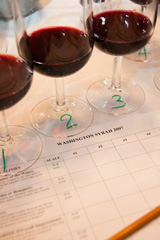
On Friday evening, we hosted our 80th wine tasting dinner. It was another fabulous evening of good wines, the company of wonderful friends, and Mom’s excellent food. This month’s dinner featured Washington Syrah from the 2007 vintage. I personally believe that the 2007 vintage may ultimately be considered the best ever in Washington State.

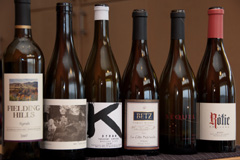
All six wines paired perfectly with Mom’s dinner of tomato basil soup, mixed green salad, ribeye steaks, roasted rosemary sweet potatoes, garlic sautéed Swiss chard, and topped off with a German chocolate dessert with whipped cream and shaved chocolate. Not only did four of the six wines receive a Quality rating of 4.5 stars (out of 5), but the top three also received a QPR rating of 5 bangs for your buck (out of 5). Even though these wines are not inexpensive, they are well worth the money.

Once again, a Fielding Hills wine came out on top. Mike Wade, owner/winemaker of Fielding Hills, continues to produce amazing wines, vintage after vintage. You may remember that his 2005 Syrah was our first “Wow!” wine from Washington. We had the pleasure to taste this 2007 Syrah when it was still in the barrel and were very impressed. We thought it was excellent when we tasted it just after it was released in October, but it has definitely improved with more time in the bottle, and I would expect it to continue to improve for a few years.

Bottom line: You can’t go wrong with any of these wines. Washington State produces fabulous Syrah, and the winemakers who made these six wines are among the state’s best.

From 1st to last in the group consensus rankings:
2007 Fielding Hills Syrah (Riverbend Vineyard, Wahluke Slope, Washington): Dark purple and very aromatic. Peppermint, floral, and raspberry aromas on the nose; more peppermint, mocha, and black and red fruits on the palate. Medium to full-bodied and crisp with medium to high tannins and a long finish. Well-balanced and smooth.
Quality: 4.5 stars (out of 5)
QPR: 5 bangs for your buck (out of 5)
Where to buy: Winery, $40; Available elsewhere, $40 to $43

2007 Owen Roe “Lady Rosa” Syrah (Yakima Valley, Washington): Deep, dark purple. Beautiful bouquet with aromas of black pepper, spice, black fruits, and a hint of green peppers. Black fruits, black pepper, and vegetal flavors come through on the palate as well. Medium to full-bodied and lively with medium to high tannins and a long finish. Well-balanced and smooth.
Quality: 4.5 stars (out of 5)
QPR: 5 bangs for your buck (out of 5)
Where to buy: Compass Wines (Anacortes, Washington), $55; Available elsewhere, $45 to $48

2007 K Vintners Syrah “Pheasant” (Pheasant Vineyard, Wahluke Slope, Washington): Deep, dark purple. Very aromatic. Black fruits, milk chocolate, and lemon zest come through on both the nose and palate. Medium to full-bodied and crisp with medium to high tannins and a long finish.
Quality: 4.5 stars (out of 5)
QPR: 5 bangs for your buck (out of 5)
Where to buy: Winery, $35; Cecile’s Wine Cellar (McLean, Virginia), $42

2007 Betz Syrah La Côte Patriarche (Red Willow Vineyard, Yakima Valley, Washington): Deep, dark, almost inky purple. Complex nose with aromas of red fruits, toffee, dirt, and burnt toast. Earthy flavors mingle with blackberry, red fruit, and toast. Medium to full-bodied and lively with medium to high tannins and a long finish.
Quality: 4.5 stars (out of 5)
QPR: 4 bangs for your buck (out of 5)
Where to buy: Winery, $55

2007 Sequel Syrah [Long Shadows] (Columbia Valley, Washington): Deep, dark purple. Nose is a bit tight at first. Aromas of smoke and oak. Black fruit and smoky flavors on the palate. Medium to full-bodied and crisp with medium to high tannins and a long, slightly bitter finish.
Quality: 4 stars (out of 5)
QPR: 2 bangs for your buck (out of 5)
Where to buy: Winery, $55

2007 Rotie Cellars Northern Blend (Columbia Valley, Washington): 97% Syrah, 3% Viognier. Dark, purple-red. Blue and black fruit as well as black pepper aromas and flavors. Good fruit up front but trails off a bit in the mid-palate. Medium to full-bodied and lively with medium to high tannins and a long finish.
Quality: 3.5 stars (out of 5)
QPR: 3 bangs for your buck (out of 5)
Where to buy: Winery, $35


Filed under: American Wine, Five-Bangs For Your Buck Wines, Red Wine, Shiraz/Syrah, Washington State Wine, Wine Tasting Dinners, Wines Over $25
 

Challenging Wine Pairing: Fettuccini Alfredo with Grilled Chicken


By LaGayle ~ February 16th, 2010

While my family and I really enjoy creamy dishes, we try to avoid them on a regular basis for the sake of healthier eating. However, once in a while we do like to treat ourselves to a dish that we probably shouldn’t eat!
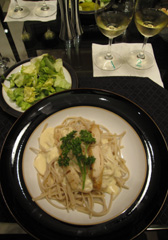
Fettuccini Alfredo has always been one of my favorite dishes. For this challenging wine pairing meal, my menu included a green salad with pepperoncini peppers and kalamata olives tossed with an Italian dressing, Fettuccini Alfredo with grilled chicken, and garlic bread. In addition to being a meal that I love, an added bonus is that it is quick and easy to make the Alfredo sauce. [We will be adding a Recipe section to the site soon. Stay tuned for this recipe and many more!]

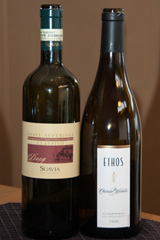
Once I had the meal planned, it was time to select the wines. Since Fettuccini Alfredo has a white, creamy sauce, I decided to pair it with two white wines, the 2008 Suavia Soave Superiore Classico and the 2006 Chateau Ste. Michelle Ethos Chardonnay. We enjoyed both wines; however, the overwhelming favorite and the unanimous choice of what paired best with the meal, especially with the creamy, Alfredo sauce, was the Soave. The apricot and mineral flavors and smoothness of the Suavia Soave were very good with this rich dish.

Bon Appétit!

2008 Suavia Soave Superiore Classico (Veneto, Italy): Grape: Garganega. Greenish yellow in color and very aromatic. Aromas of apricots, Corona Light beer, hops, tin, minerals, and flowers. More apricots as well as pears come through on the palate. Medium-bodied and lively with a long finish. Well-balanced and smooth.
Quality: 3.5 stars (out of 5)
QPR: 3 bangs for your buck (out of 5)
Where to buy: Esquin Wine Merchants (Seattle, Washington), $17.99; Available elsewhere, $13 to $17

2006 Chateau Ste. Michelle Ethos Chardonnay (Columbia Valley, Washington): Greenish yellow in color. Lots of oak and vanilla on the nose. Butter, oak, and a bit of citrus dominate the palate. Medium-bodied and smooth with a long finish.
Quality: 3 stars (out of 5)
QPR: 1 bang for your buck (out of 5)
Where to buy: Esquin Wine Merchants (Seattle, Washington), $31.99; Available elsewhere, $23 to $38


Filed under: American Wine, Challenging Wine Pairing, Chardonnay, Food & Wine, Garganega, Italian Wine, Washington State Wine, White Wine, Wines Over $25, Wines Under $20, Wines Under $25
 

Bouchaine Vineyards: 2007 Estate Pinot Noir


By Kori ~ February 15th, 2010

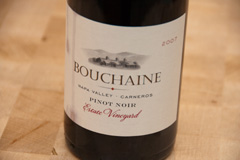
Regular readers know that it’s not often that I give high praise to a Pinot. However, we recently had the opportunity to taste the 2007 Bouchaine Estate Vineyard Pinot Noir in a samples tasting, and it was excellent.
Bouchaine Vineyards is the oldest continuously operated winery in the Carneros District of the Napa Valley in California. In 1929, an Italian winemaker named Johnny Garetto purchased the land that is today’s Bouchaine Vineyards. Beringer bought the estate from Garetto in 1951 and used it as a storage and blending facility. In 1981, Gerret and Tatiana Copeland of Wilmington, Delaware, together with a group of partners purchased the winery and established Chateau Bouchaine. Ten years later, the couple became sole proprietors of the winery and renamed it Bouchaine Vineyards.

The Copelands named Michael Richmond winemaker in 2002. Richmond uses an interesting human analogy to describe the dramatic difference between making Chardonnay and Pinot Noir, the two varieties best suited to the climate of Carneros.

“Making Chardonnay is like raising kids back in the 50’s, with a lot of parental control and the expectation that the next generation will conform to that training. Making Pinot is the more ‘modern way’ of raising children, where the parents just set the boundaries and try to keep them out of jail. With Chardonnay, we hope to be delighted by and proud of the outcome of our supervision; with Pinot, we hope to be delighted and relieved by the way it turns out. It’s the difference between shaping the Chardonnay and allowing the Pinot to manifest itself. Pinot is one of the most precocious and capricious of all grape varieties.”

Bouchaine is devoted to sustainable practices in the vineyard and winery, holding both the Napa Valley Green and Fish-Friendly Farming Environmental certifications.

2007 Bouchaine Estate Pinot Noir (Carneros, Napa Valley, California): Medium-deep ruby red in color. Beautiful bouquet with aromas of red fruits and pencil shavings. Strawberry, raspberry, cranberry, and smoke come through on the palate. Medium to full-bodied and lively with medium tannins. Well-balanced and complex with a long, pleasant finish.
Quality: 4 stars (out of 5)
QPR: 4 bangs for your buck (out of 5)
Where to Buy: Received as sample, suggested retail $45; Available elsewhere, $30 to $53 [previous vintages]


Filed under: American Wine, California Wine, Pinot Noir, Red Wine, Wines Over $25
 

Wine Word of the Week: Viscosity


By Kori ~ February 13th, 2010

This week’s Wine Word of the Week is viscosity.

Official definition from Jancis Robinson’s The Oxford Companion to Wine:
Viscosity, the quality of being viscous, is the extent to which a solution resists flow or movement. Honey is more viscous than sugar syrup, for example, which is considerably more viscous than water. Viscosity, which approximates to what wine tasters call body, can be sensed by the human palate in the form of resistance as the solution is rinsed around in the mouth.

Layman’s terms from Kori:
Viscosity generally describes the “thickness” of a wine on your palate. A sweet dessert wine is more viscous, or thicker, than a dry table wine.


Filed under: Wine Word of the Week