
Private Tasting: Washington Red Blends


By Kori ~ February 23rd, 2009

While watching an episode of Wine Library TV shortly after Taste Washington last year, I was introduced to Pomum Cellars in Woodinville, Washington. Prior to hearing Gary V. sing their praises, I had not heard of them. A few weeks later, Colby and I were out to dinner at Stumbling Goat Bistro and found the Pomum Shya Red on the wine list. We thought it was a good wine and paired quite well with our meal so the next time I was at Esquin, I picked up a bottle to put into our private tasting lineup against another Washington Red Blend, the Saviah Cellars Une Vallee, that has been one of our favorites to see how it would stack up.
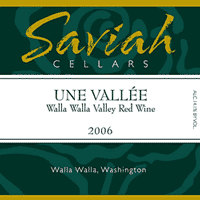
20090223_saviahunevallee2When we took the sacks off the wines after one of our recent double-blind private tastings, we discovered that we had just enjoyed the Pomum/Saviah matchup. For a more complete description of how we set up these private tastings, please refer to How We Taste.

Both wines were a perfect match to our dinner of spicy pot roast with onion, sweet potatoes, carrots, and a mixed green salad. We gave a slight edge to the 2006 Saviah Cellars Une Vallee over the 2004 Pomum Cellars Shya Red. They are both well-made wines but exhibit slightly different styles. The Saviah Une Vallee is more fruit-forward while the Pomum Shya Red has more chocolate and coffee notes. (Photo from Saviah Cellars)

We thought this was a great tasting. Both are good red wines that are worth a try if you see them on the shelf at your local wine shop or on a restaurant wine list. The Saviah Une Vallee is another top-notch effort from winemaker Rich Funk. If you happen to be in Walla Walla, be sure to stop by for a visit at Saviah Cellars. I have not had a chance to visit Pomum Cellars. They are not open regular hours, only for a few weekend events each year. However, I noticed that they are on the list for this year’s Taste Washington so I definitely plan to stop by their booth to try their new releases.

2006 Saviah Cellars Une Vallee Red Wine (Walla Walla Valley, Washington): 60% Cabernet Sauvignon, 34% Merlot, 6% Cabernet Franc. Deep, dark red. Very aromatic with aromas and flavors of black fruits, especially black plums. Fruit-forward and medium-bodied with medium tannins. Well-balanced with a long finish.
Quality: 4 stars (out of 5)
QPR: 4 bangs for your buck (out of 5)
Where to buy: Winery, $32; Available elsewhere, $33 to $36

2004 Pomum Cellars Shya Red (Columbia Valley, Washington): 51% Cabernet Sauvignon, 32% Merlot, 11% Cabernet Franc, 4% Malbec, 2% Petit Verdot. Deep, dark red with a slight haze. Chocolate-covered espresso beans and pencil eraser shreds come through on the nose. Coffee is the predominant flavor on the palate. Long finish.
Quality: 3.5 stars (out of 5)
QPR: 2 bangs for your buck (out of 5)
Where to buy: Esquin Wine Merchants (Seattle), $32.99; Wine Exchange (California), $38.99 [2005 is currently available vintage]


Filed under: American Wine, Red Wine, Washington State Wine, Wines Over $25
 

South Africa: A Day in the Paarl Region


By John ~ February 20th, 2009

20090220_fairviewOn our first day in the Cape Winelands, we were making good time to our morning appointment until we discovered that our exit in Paarl was closed due to road construction. Because we had never been to this area it took us about thirty minutes to circle around and get us back on track to Fairview Winery, our first stop of the day where we had an appointment at 10am.
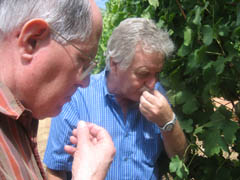
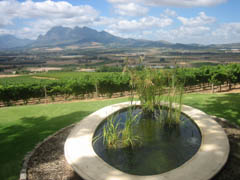
When we arrived at Fairview, we were greeted by Chris Bryant, Fairview’s communications director, who gave us a brief tour and then introduced us to Charles Back, the owner, who was kind enough to spend two hours with us answering questions for a video interview (which we will include in a future post), taking us on a tour of the vineyards including his home that has a beautiful view of the vineyards and mountains, and giving us a personal tasting of a wide range of their wines.

20090220_charlesbackIn the course of our conversations at Fairview we learned that the first production of wines on this wine farm was in 1699. Charles’ grandfather bought Fairview in 1937, and Charles has been in charge since the 1990’s. Fairview produces about 230,000 cases per year, of which 80 percent is exported. And 30 percent of their total production goes to the United States.
Most wine consumers in the United States probably know Fairview because of their famous Goats do Roam value label, but there’s a lot more to Fairview than goats. Overall the wines we tasted at Fairview were very good, but we were especially impressed with their Semillon, Petite Sirah, Chakalaka Blend, and La Beryl Rouge.

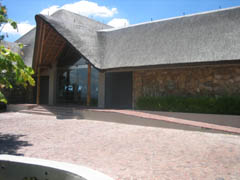
20090220_glencarlouOur other stop of the day was at Glen Carlou, a Hess Collection winery, which has both a beautiful tasting room and an impressive art collection. We tasted eight wines at Glen Carlou, and our favorite was the Gravel Quarry Cabernet Sauvignon.

Please remember from my previous posts on South African wines that because we are buying wines here at South African prices based on the rand (R), we decided that it would be misleading and of little value to our core constituency of readers in the U.S. to calculate a QPR rating unless it is a wine we can buy in the U.S. and is of good enough quality to want to buy. Therefore, for the purposes of the wine reviews on this trip, I will only calculate a QPR rating on a wine which I have given a Quality rating of 4 stars (out of 5) or higher and if I can find a U.S. vendor and price on which to base the QPR calculation. Wines that meet these criteria will be set apart from the others by bold type. Otherwise I’ll denote the QPR as Not Calculated (NC) if the Quality rating is 3 stars or higher or Not Recommended (NR) if the Quality rating is less than 3 stars.

Here’s a complete listing of the wines we tasted in Paarl:

Quality: 4 stars (out of 5)
2007 Spice Route (Fairview) Chakalaka, R90, QPR: 5 [Southern Hemisphere Wine Center (California), $19.99]
2006 Glen Carlou Gravel Quarry Cabernet Sauvignon, R300, QPR: 5 [Southern Hemisphere Wine Center (California), $44.99 for 2004 vintage]
2006 Fairview La Beryl Rouge, R90, QPR: 4 [Southern Hemisphere Wine Center (California), $33.99 for 2005 vintage]
2007 Fairview Semillon, R90, QPR: 3 [Southern Hemisphere Wine Center (California), $24.99 for 2006 vintage]
2007 Fairview Petite Sirah, R80, QPR: NC

Quality: 3.5 stars (out of 5)
2008 Goats do Roam Rose, R35, QPR: NC
2008 Fairview Darling Chenin Blanc, R42, QPR: NC
2007 Fairview Syrah, R60, QPR: NC
2008 Fairview Viognier, R70, QPR: NC
2006 Glen Carlou Cabernet Sauvignon, R85, QPR: NC
2007 Fairview Caldera GSM, R90, QPR: NC
2007 Fairview Primo Pinotage, R100, QPR: NC
2005 Glen Carlou Grand Classique, R110, QPR: NC
2006 Glen Carlou Syrah, R130, QPR: NC

Quality: 3 stars (out of 5)
2008 Fairview Riesling, R45, QPR: NC
2008 Spice Route (Fairview) Sauvignon Blanc, R48, QPR: NC
2008 Fairview Chardonnay, R58, QPR: NC
2007 Fairview Mourvedre, R60, QPR: NC
2008 Glen Carlou Sauvignon Blanc, R65, QPR: NC
2007 Glen Carlou Chardonnay, R85, QPR: NC
2005 Glen Carlou Zinfandel, R150, QPR: NC

Quality: 2 stars (out of 5)
2008 Glen Carlou Pinot Noir, R150, QPR: NR


Filed under: Cabernet Sauvignon, Chardonnay, Chenin Blanc, Five-Bangs For Your Buck Wines, Lesser Known Varietals, Mourvedre, Petite Sirah, Pinot Noir, Red Wine, Riesling, Rose Wine, Sauvignon Blanc, Semillon, Shiraz/Syrah, South African Wine, Viognier, White Wine, Wine Travel, Zinfandel
 

Wine Word of the Week: Barrel aging


By Kori ~ February 19th, 2009

winepeeps_wotw_2-1b2This week’s Wine Word of the Week is barrel aging.
Official definition from Jancis Robinson’s The Oxford Companion to Wine:
Barrel maturation [the term used in this book for aging a wine in a barrel] is the wine-making operation of storing a fermented wine in wooden barrels to create ideal conditions for the components of the wine to evolve and so that the wood imparts some oak flavor. This is an increasingly common practice for superior-quality still wines of all colors and styles, providing them, as it does, with the ideal preparation for bottle aging.

Layman’s terms from Kori:
Barrel aging is the process of letting wines mature in wood barrels. During this process, the characteristics of the barrel are imparted into the wine and affect the flavor and balance of the wine.


Filed under: Wine Word of the Week
 

Wine Blogging Wednesday #54: A Passion for Piedmont


By Kori ~ February 18th, 2009

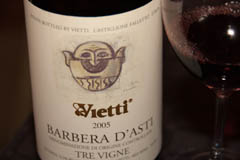
20090218_barbera_asti_trevigneOur host for the February edition of Wine Blogging Wednesday, the blogosphere’s monthly virtual wine tasting event, is David McDuff of McDuff’s Food and Wine Trail. David selected A Passion for Piedmont (a title he borrowed from wine writer Matt Kramer’s Piedmontese cookbook) as this month’s theme in which he asked us to pick any wine from the Piedmont region of Italy to taste, enjoy, and then write up our impressions. (Photo from Vietti)

I was thrilled when I saw David’s theme announcement because I became particularly interested in Piedmont when I read Vino Italiano for the Wine Book Club in February 2008. Piedmont, the second largest region in the country, is located in northwest Italy. Piedmont boasts the most DOCs and DOCGs of any other region.

“Piedmont, more so than even Tuscany, is the wine-lover’s mecca.” –Joseph Bastianich & David Lynch, Vino Italiano

20090218_viettibarberaWhile Piedmont is probably most well-known for its wines produced from the Nebbiolo grape in the DOCGs of Barolo and Barbaresco, Barbera provides most of the region’s everyday wine. Don’t let the “everyday wine” label fool you, though. The Barbera grape is capable of producing great wine, and we have found them to be excellent values, always welcome in these difficult economic times. When I’m looking at the wine list at an Italian restaurant and not wanting to spend a ton of money, I will often choose a Barbera. While many people look to Chianti as their go-to Italian wine, Barbera is mine.
We chose to blind taste two Barberas, one from the town of Asti and the other from the town of Alba (and that was even before David issued his Bonus Point Challenge of selecting two wines made from the same variety but from different areas within Piedmont).

“What sets Peimontese towns such as Alba and Asti apart is that people go there almost exclusively for the wine and food.” –Joseph Bastianich & David Lynch, Vino Italiano

Mom prepared a delicious dinner of smothered steak, tomatoes with Italian seasonings, brown rice, seasoned peas, and a fruit medley. All four of us Wine Peeps preferred the 2005 Vietti Barbera d’Asti Tre Vigne over the 2007 Damilano Barbera d’Alba. The Vietti got better with food while the Damilano seemed a bit out of balance as the meal progressed. Both are good wines, but the Vietti is the one to keep an eye out for on a restaurant wine list or at your local wine shop. Vietti is widely available and seems to be consistent from vintage to vintage.

2005 Vietti Barbera d’Asti Tre Vigne (Castiglione Falletto, Piedmont, Italy): Deep ruby red with aromas of earth and licorice. Black cherries and black pepper come through on the palate. Medium-bodied and lively with medium tannins and a long finish. Gets better with food.
Quality: 3.5 stars (out of 5)
QPR: 5 bangs for your buck (out of 5)
Where to Buy: Wine Exchange (California), $14.99 [2006 is currently available vintage]; Wine Globe (California), $19.99

2007 Damilano Barbera d’Alba (Piedmont, Italy): Deep ruby red in color. Leather comes through on the nose. Opens up a bit on the palate with flavors of anise and plums. Smooth, medium-bodied, and soft tannins. A bit out of balance as the meal progressed.
Quality: 3 stars (out of 5)
QPR: 4 bangs for your buck (out of 5)
Where to Buy: Esquin (Seattle), $18.99; Available elsewhere, $13 to $21


Filed under: Barbera, Five-Bangs For Your Buck Wines, Italian Wine, Wine Blogging Wednesday, Wines Under $15, Wines Under $20, Wines Under $25
 

South Africa: Wines of Constantia Valley


By John ~ February 17th, 2009

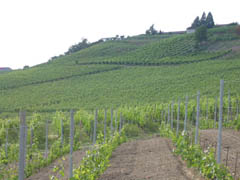
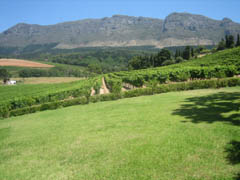
20090217_buitenverwachtingvineyardOur next excursion on our South Africa trip was a day trip to the wine farms of the Constantia Valley, a suburb of Cape Town. These wine farms are some of the oldest and most historical in the world outside of Europe, several dating back over 300 years. The setting is beautiful and serene with mountains usually in the background of every vineyard.  This area is a cooler climate region near the ocean, in contrast to warmer wine areas in Stellenbosch, Franschoek, and Paarl which we will be visiting later.

We started out at Groot Constantia Estate, established in 1685. It was the only one of the five wine farms we visited that charged a tasting fee. The Constantia Valley is known primarily for its white wines, especially Sauvignon Blanc and Muscat dessert wine, but I actually thought a couple of their reds were better than their whites.

Our second stop was at Constantia Uitsig, the youngest wine farm that we visited but a producer of two of the best white wines that we tasted on this day trip. Constantia Uitsig was the site of the recent celebration of the 350th wine vintage in South Africa.

The third stop on our tour was Steenberg Vineyards, a Graham Beck property, founded in 1682. While the setting was beautiful and the service was great, the overall quality of the wines was the least of the five, although they did have a decent Shiraz.

20090217_kleinconstantiaNext we visited the famous Klein Constantia Estate, home of the most famous wine in the world in the 1700’s, the Vin de Constance (sweet Muscat). The tasting room hostess told us about a recent tasting of a bottle of Vin de Constance over 200 years old that was still in good drinking condition. Klein Constantia was the most impressive facility we saw in the Constantia Valley, combining the old and the new in impressive fashion. They may have also had the best overall wine lineup of the five, with no real clunkers. My two favorites were a Cab/Shiraz blend and the 2004 Vin de Constance.

Our final stop was at Buitenverwachting, established in 1796. It is a very old wine farm kept in excellent condition by owner Richard Mueller and his wife Christine. We had the opportunity to visit with Richard and get some of the interesting history of Buitenverwachting first hand. Buitenverwachting means “Beyond Expectation” in English, so their wine is labeled “Beyond” in the U.S. They also had a generally good set of wines as you will see in the ratings list below.

20090217_buitenverwachtingAfter completing the wine farm visits in the early afternoon, we had a leisurely and delicious three course lunch at Buitenverwachting Restaurant in a glass-enclosed terrace overlooking the vineyards with the mountains in the distance. It was an excellent ending to a great first day in South Africa’s wine country.
Please remember from my previous post on South African wines that because we are buying wines here at South African prices based on the rand (R), we decided that it would be misleading and of little value to our core constituency of readers in the U.S. to calculate a QPR rating unless it is a wine we can buy in the U.S. and is of good enough quality to want to buy. Therefore, for the purposes of the wine reviews on this trip, I will only calculate a QPR rating on a wine which I have given a Quality rating of 4 stars (out of 5) or higher and if I can find a U.S. vendor and price on which to base the QPR calculation. Wines that meet these criteria will be set apart from the others by bold type. Otherwise I’ll denote the QPR as Not Calculated (NC) if the Quality rating is 3 stars or higher or Not Recommended (NR) if the Quality rating is less than 3 stars.
Here’s a breakdown of the wines that we tasted in the Constantia Valley:

Quality: 4 stars (out of 5)
2004 Klein Constantia Vin de Constance (sweet Muscat), R330, QPR: 4 [Sherry-Lehmann (New York), $46.95]
2008 Constantia Uitsig Sauvignon Blanc, R80, QPR: NC
2006 Buitenverwachting 1769 (Muscat), R80, QPR: NC
2007 Constantia Uitsig Constantia White, R112, QPR: NC
2006 Klein Constantia Anwilka (Cab/Shiraz), R190, QPR: NC
2005 Buitenverwachting Christine (Bordeaux blend), R200, QPR: NC

Quality: 3.5 stars (out of 5)
2007 Klein Constantia KC Rose’, R38, QPR: NC
2008 Buitenverwachting Sauvignon Blanc H.V., R75, QPR: NC
2005 Groot Constantia Cape Ruby Port, R75, QPR: NC
2008 Klein Constantia Sauvignon Blanc, R85, QPR: NC
2006 Groot Constantia Shiraz, R91, QPR: NC
2007 Steenberg Shiraz, R110, QPR: NC
2006 Klein Constantia Marlbrook, R150, QPR: NC
2005 Groot Constantia Gouverneurs Reserve (Bordeaux blend), R175, QPR: NC

Quality: 3 stars (out of 5)
2005 Buitenverwachting Meifort (Bordeaux blend), R50, QPR: NC
2008 Groot Constantia Semillon/Sauvignon Blanc, R52, QPR: NC
2008 Buitenverwachting Sauvignon Blanc, R63, QPR: NC
2008 Groot Constantia Sauvignon Blanc, R72, QPR: NC
2008 Steenberg Sauvignon Blanc, R82, QPR: NC
2007 Klein Constantia Rhine Riesling, R85, QPR: NC
2007 Steenberg Shiraz, R110, QPR: NC
2006 Klein Constantia Cabernet Sauvignon, R120, QPR: NC
2008 Steenberg Merlot, R125, QPR: NC

Quality: 2.5 stars (out of 5)
2008 Klein Steenberg Sauvignon Blanc, R42, QPR: NR
2007 Groot Constantia Constantia Rood, R56, QPR: NR
2008 Constantia Uitsig Chardonnay (unwooded), R72, QPR: NR
2004 Buitenverwachting Cabernet Sauvignon, R85, QPR: NR
2006 Groot Constantia Merlot, R91, QPR: NR
2007 Groot Constantia Gouveneurs Chardonnay, R94, QPR: NR
2006 Groot Constantia Cabernet Sauvignon, R102, QPR: NR
NV Steenberg Brut 1682 Sparkling Wine, R105, QPR: NR
2004 Constantia Uitsig Constantia Red, R120, QPR: NR

Quality: 2 stars (out of 5)
2008 Klein Steenberg Rose’, R42, QPR: NR
2006 Klein Steenberg Bordeaux Blend, R55, QPR: NR


Filed under: Cabernet Sauvignon, Chardonnay, Merlot, Moscato/Muscat, Port, Red Wine, Riesling, Rose Wine, Sauvignon Blanc, Shiraz/Syrah, South African Wine, Sparkling Wine, White Wine, Wine Travel, Wines NOT To Buy (1 & 2 Star), Wines Over $25, Wines Under $10, Wines Under $15, Wines Under $20, Wines Under $25
 

Washington’s Newest AVA: Snipes Mountain


By Kori ~ February 16th, 2009

The Alcohol and Tobacco Tax and Trade Bureau (TTB), the government agency that oversees all things wine, has established the 4,145-acre Snipes Mountain AVA as Washington State’s newest American Viticultural Area (AVA); it becomes official this Friday, February 20. Snipes Mountain is located in Yakima County between Granger and Sunnyside. Some of the vineyards and wineries located within Snipes Mountain include: Eaton Hill Winery (Granger), Steppe Cellars (Sunnyside), Tefft Cellars (Outlook), and Upland Estates Winery and Upland Vineyards (Outlook).

20090216_wa_ava_mapSnipes Mountain is Washington’s 10th AVA. It joins Rattlesnake Hills and Red Mountain to be the third AVA within the larger Yakima Valley AVA. It is Washington’s second-smallest AVA, just a touch larger than Red Mountain. (Map from Washington Wine Commission)

While Snipes Mountain is the newest AVA in the state, it is actually one of the state’s oldest growing areas. Grapes were first planted in Snipes Mountain by William B. Bridgman in 1917.

Here’s a list of all 10 AVAs in Washington State and the year they were established:
Yakima Valley (1983)
Walla Walla Valley (1984)
Columbia Valley (1984)
Puget Sound (1995)
Red Mountain (2001)
Columbia Gorge (2004)
Horse Heaven Hills (2005)
Wahluke Slope (2006)
Rattlesnake Hills (2006)
Snipes Mountain (2009)

The next AVA in Washington will most likely be Lake Chelan. Approval is pending but many in the Washington wine industry expect the Lake Chelan AVA to be established sometime during 2009.


Filed under: American Wine, Washington State Wine
 

South Africa: Nosing around Cape Town


By John ~ February 13th, 2009

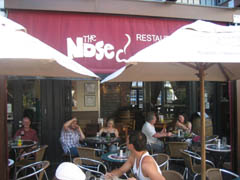
20090213_thenose1LaGayle and I are currently in South Africa visiting the major winelands of the Western Cape and tasting as many of their wines as we can that are available in the United States. On our first full day in Cape Town, after taking one of those Hop-On Hop-Off city tours, we walked up to the Cape Quarter area to find The Nose Restaurant & Wine Bar, a recommendation from noted South African wine writer Neil Pendock, who was kind enough to correspond with me prior to this trip and give me a heads-up on some “must-visit” places and wineries. We wanted to sample a couple of flights of South African whites and reds to get a little orientation to the wines before visiting the wine farms. Out of the six whites and six reds of different varietals that we tasted, nothing really knocked our socks off, but most were decent wines with the reds overall better than the whites.

After making our tasting notes and rating the wines, we ordered dinner. The food was very good and the prices were even better. For twelve generous wine samples, one steak dinner, one prawn dinner, and a bottle of water, the total tab including tip was $41 USD. Following dinner, we walked the kilometer back to our room and spent the rest of the evening sampling the wines we bought earlier in the day at Vaughan Johnson’s Wine Shop, another recommendation from Neil. We thought both of these wines, the 2006 De Toren Fusion V and the 2008 Cederberg Sauvignon Blanc, were better than any of the twelve we had at The Nose.

20090213_thenose2Because we are buying wines here at South African prices based on the rand (R), we decided that it would be misleading and of little value to our core constituency of readers in the U.S. to calculate a QPR rating unless it is a wine we can buy in the U.S. and is of good enough quality to want to buy. Therefore, for the purposes of the wine reviews on this trip, I will only calculate a QPR rating on a wine which I have given a Quality rating of 4 stars (out of 5) or higher and if I can find a U.S. vendor and price on which to base the QPR calculation. Wines that meet these criteria will be set apart from the others by bold type. Otherwise I’ll denote the QPR as Not Calculated (NC) if the Quality rating is 3 stars or higher or Not Recommended (NR) if the Quality rating is less than 3 stars.

Here’s a breakdown of the wines that we tasted on our first day in Cape Town:

Quality: 4 stars (out of 5)
2006 De Toren Fusion V, R285, QPR: 4 [Wine Library (New Jersey), $33.99]

Quality: 3.5 stars (out of 5)
2008 Cederberg Sauvignon Blanc R80, QPR: NC
2006 Belfield Cab/Merlot, R140, QPR: NC
2006 Jordan Merlot, R200, QPR: NC
2002 David Frost Cabernet Sauvignon, R212, QPR: NC
2006 Metzer Syrah, R248, QPR: NC

Quality: 3 stars (out of 5)
2008 Kleine Zalze Gamay Noir, R80, QPR: NC
2007 Sterhuis Chenin Blanc, R140, QPR: NC
2008 Babylon’s Peak Viognier, R168, QPR: NC
2007 Chamonix Sauvignon Blanc Reserve, R208, QPR: NC

Quality: 2.5 stars (out of 5)
2007 Laibach Ladybird White, R144, QPR: NR
2007 Diemersal Reserve Chardonnay, R208, QPR: NR

Quality: 2 stars (out of 5)
2005 Cloof “The Ink Spot” Cape Blend, R120, QPR: NR
2008 Iona Sauvignon Blanc, R188, QPR: NR

Our next stop on the South African wine trail will be in the Constantia Valley, a suburb of Cape Town. Stay tuned!


Filed under: Cabernet Sauvignon, Chardonnay, Chenin Blanc, Lesser Known Varietals, Merlot, Red Wine, Sauvignon Blanc, Shiraz/Syrah, South African Wine, Viognier, White Wine, Wine Travel, Wines NOT To Buy (1 & 2 Star), Wines Over $25, Wines Under $10, Wines Under $15, Wines Under $20, Wines Under $25
 

Wine Word of the Week: Aging


By Kori ~ February 12th, 2009

winepeeps_wotw_2-1b1This week’s Wine Word of the Week is aging.
Official definition from Jancis Robinson’s The Oxford Companion to Wine:
Aging of wine is an important aspect of wine connoisseurship, and one which distinguishes wine from almost every other drink. When a fine wine is allowed to age, spectacular changes can occur which increase both its complexity and monetary value. Aging is dependent on several factors: the wine must be intrinsically capable of it; it must be correctly stored (in a cool place and out of contact with air); and some form of capital investment is usually necessary.

Layman’s terms from Kori:
Aging of wine is an important aspect of winemaking and wine enjoyment. All wines are aged for a period of time (some longer than others) in barrels, tanks, or bottles, so that they can mature. In general, the aging process is more important for red wines than white wines. As red wines age, they tend to become less harsh, less tannic, and more complex. However, only a small number of wines truly benefit from extended bottle aging.


Filed under: Wine Word of the Week
 

Spotlight On: Pedroncelli Winery


By Kori ~ February 11th, 2009

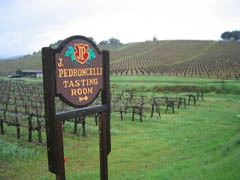
20090211_pedroncelli1Pedroncelli Winery, located in Geyserville, California, in the Dry Creek Valley of Sonoma County, was founded in 1927 by John Pedroncelli, Sr. Today, Pedroncelli is still a family-owned business, now in their fourth generation. Winemaker John Pedroncelli, Jr. has more than 40 vintages under his belt at Pedroncelli Winery.

We first visited Pedroncelli Winery in 2005 on a wine tasting trip to the Sonoma Valley. On that visit, we especially enjoyed their Mother Clone Zinfandel. Their historic block of 100-year-old Zinfandel vines continue to provide the budwood for their estate Zinfandel. This quarter-acre Mother Clone block sits adjacent to their winery and tasting room.

One of our early posts here on Wine Peeps featured Pedroncelli as a great value wine. We have consistently found them to be a go-to winery for getting the most bang for our wine buck.

We had the pleasure to taste some of their wines at the Wine Bloggers Conference in October. Once again, we thought that their Mother Clone Zinfandel was excellent, and their Three Vineyards Cabernet Sauvignon and “Four Grapes” Vintage Port were good as well. Their reputation for great value wines remained intact with all three wines boasting a QPR rating of 5 bangs for your buck.

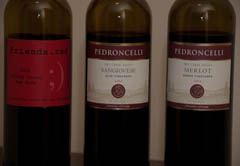
20090211_pedroncelli2Recently, I had the opportunity to taste three more Pedroncelli wines, the 2006 Merlot Bench Vineyards, 2005 Sangiovese Alto Vineyards, and the 2006 friends.red. My favorite of the three was the Merlot. It is a classic, solid Merlot with nice fruit up front, medium tannins, and a long finish. As you’ll see from the tasting notes below, two of the three wines have a QPR rating of 5 bangs for your buck. It is quite rare to find a winery that can produce such good wines, across the board, at such reasonable prices.

If you are ever in the Sonoma County area, I encourage you to visit Pedroncelli Winery. It has a classic, family-farm feel nestled next to beautiful hillside vineyards, and the people are very friendly. And if you are looking to save your hard-earned money during these tough economic times but still want to drink some excellent wines, look for the Pedroncelli label on the shelf at your local store.

2006 Pedroncelli Merlot Bench Vineyards (Dry Creek Valley, California): Black cherry, blackberry, and plum prevalent on both nose and palate. Very flavorful. Well-balanced with nice, round tannins, and a long finish. A solid, classic Merlot.
Quality: 4 stars (out of 5)
QPR: 5 bangs for your buck (out of 5)
Where to Buy: Received as sample, suggested retail $14; The Austin Wine Merchant (Texas), $10.75

2005 Pedroncelli Sangiovese Alto Vineyards (Dry Creek Valley, California): Black fruit and cedar box aromas lead to plum, cedar, and black licorice flavors on the palate. Fairly well-balanced. More fruit than most Old World Sangiovese. A bit hot but a pleasant sipper with a long finish.
Quality: 3.5 stars (out of 5)
QPR: 4 bangs for your buck (out of 5)
Where to Buy: Received as sample, suggested retail $14; Available elsewhere, $10 to $12

2006 Pedroncelli friends.red Sonoma County Red Wine (Sonoma County, California): Merlot, Syrah, Cabernet Franc, and Zinfandel. Medicinal aromas with a hint of mint. Light to medium-bodied with soft tannins. Red fruit flavors. A good hamburger or hot dog wine for a summer BBQ.
Quality: 3 stars (out of 5)
QPR: 5 bangs for your buck (out of 5)
Where to Buy: Received as sample, suggested retail $10; Carlo Russo Wine (New Jersey), $10


Filed under: American Wine, California Wine, Five-Bangs For Your Buck Wines, Merlot, Red Wine, Sangiovese, Spotlight On, Wines Under $15, Wines Under $20, Wines Under $25
 

Thank You for Your Input to Wine Peeps!


By Kori ~ February 10th, 2009

20090210_surveyOver 10 percent of the average daily readership of Wine Peeps responded to our recent Reader Survey. That is a fantastic response in any business, and we thank our loyal readers for your input to Wine Peeps. We have studied the survey results very carefully and plan to use them to make our wine blog even better in coming months and years.

We want to give special kudos to those of you who not only checked the boxes and filled in the blanks but took the time to give us constructive advice in the comments sections. It was amazing to us how many of you obviously took considerable time and gave serious thought to your comments. We really appreciate you and will do our best to make Wine Peeps your favorite wine destination on the internet.

For those of you who like statistics, here are some highlights:

  1. 86% of the respondents said Wine Peeps was either “very good” or “the best” wine blog. Even more important, no one said “don’t go back.”
  2. 76% of the respondents rated Wine Peeps as a blog they would “definitely recommend” to a friend or colleague. And no one said they would “absolutely not recommend.”
  3. “Interesting, Competent Content” was the overwhelmingly most popular answer to “When you think of Wine Peeps, what is the first thought that pops into your mind?”  “Wine Reviews/QPRs” and “Washington Wines” were the next two highest vote getters.
  4. The median age of our respondents was 40, with a range from 22 to 65. Men outnumbered women by 2 to 1, and more preferred red wine than white wine.
  5. The answers to “Favorite Varietal” and “Favorite Wine Region” were all over the board, most likely reflecting our interest and goal of helping you get the most bang for your wine buck anywhere in the world. Numerically, more respondents favored Washington wines, but it was not a huge percentage of the respondents.

Several things we plan to do better in 2009:

  • Make more videos, including informational videos as we visit vineyards and various wine regions as well as interviews with winemakers and other industry professionals.
  • Wine reviews from more different wine growing regions and countries. For example, we are touring South Africa wine country this month, doing an extensive French Bordeaux tasting in March, and visiting the Texas Hill Country in April. This, of course, is in addition to our ongoing extensive tastings of Washington wines.

Further out on the horizon, as we get more vintages under our belt, we plan to develop a Consistency score and ranking system to go with our existing Quality ratings and QPRs, and ultimately make available a sortable database of all the wines we taste, whether they are written up on our blog or not.

Thank you for your interest in Wine Peeps, and please let us know what else we can do to get and keep your attention.


Filed under: Survey