
A Wine for Tonight: 2009 Columbia Crest Grand Estates Cabernet Sauvignon


By Kori ~ June 21st, 2012
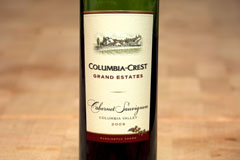
Would you like a quick suggestion for a good wine to drink tonight (or this weekend) that won’t break your budget and is widely available? Many of our readers have said this is something they would like, so here is this week’s selection, the 2009 Columbia Crest Grand Estates Cabernet Sauvignon from the Columbia Valley of Washington State.

Our selection criteria include:

  • A very good Quality rating of >=3.5 stars (out of 5)
  • A price tag of <=$20
  • Must be widely available

Columbia Crest, located in Paterson, Washington, has been one of our favorite sources of value wines for many years. Last year, Juan Munoz Oca took over as head winemaker from Ray Einberger. Einberger had been at the helm since 2002 when he took the reins from Doug Gore who had been the winemaker since Columbia Crest was founded in 1983. The Columbia Crest winemaking team has produced more 90+ scoring bottles of wine than any other winery in the world. For those of us who live in Washington State, it is nice to have such a consistent, affordable producer in our own backyard.

“Exhibiting big, bold flavors, our Grand Estates Cabernet Sauvignon highlights these classic characteristics while softening the edges just enough to call attention to delicate aromas and fruit complexity. Aromas and flavors of black cherry, plum and spice on the mid-palate are complemented by smooth tannins on the finish.” –Ray Einberger, Winemaker Emeritus

2009 Columbia Crest Grand Estates Cabernet Sauvignon (Columbia Valley, Washington): 87% Cabernet Sauvignon, 7% Merlot, and 6% Syrah. Deep, dark red. Aromatic with caramel, candied apple, and oak notes on the nose. Red and black fruits and earth come through on the palate. Medium-bodied with lively acidity, medium tannins, and a long, smooth finish.
Quality: 3.5 stars (out of 5)
QPR: 5 bangs for your buck (out of 5)
Where to buy: Received as sample, suggested retail $12; Available elsewhere, $8 to $13


Filed under: A Wine for Tonight, American Wine, Cabernet Sauvignon, Five-Bangs For Your Buck Wines, Red Wine, Washington State Wine, Wines Under $15, Wines Under $20, Wines Under $25
 

Oregon Wine: A Leader in Sustainable Viticulture


By Kori ~ June 20th, 2012

The state of Oregon is recognized across the country as being environmentally friendly. Ask any American to list the “greenest” states in the country and Oregon is likely to make their top 5. It is no wonder then, that Oregon grape growers and winemakers are committed to green practices as well.

Oregon has long been committed to sustainable winegrowing and earth-friendly practices. A significant number of the state’s vineyards are certified sustainable, organic, or biodynamic. And now, Oregon Certified Sustainable Wine (OCSW) has been launched as a unifying platform to make identifying those wines easy for consumers.

For a quick refresher on these viticultural terms:

  • Organic viticulture eliminates the use of synthetic products that create toxins in an attempt to build soil, protect the environment, and protect the health of the vineyard employees.
  • Biodynamic viticulture utilizes the same basic principles as organic viticulture, but then incorporates religious-like practices such as the alignment of planets, phases of the moon, and special preparations such as crushed quartz crystals.
  • Sustainable viticulture has the same goals as organic viticulture or biodynamic viticulture with one big difference: It incorporates the “scientific method” into the formula. It utilizes the least amount of intervention possible while managing in a way that sustains the long-term health of the vineyards as well as the economic viability of the operation.

During my recent media tour to explore Oregon wine country, I had the opportunity to attend a sustainability talk and tasting at Sokol Blosser Winery. There are a number of organizations associated with Oregon’s sustainable wine industry but the two that I’d like to highlight are LIVE (Low Input Viticulture & Enology) and OCSW (Oregon Certified Sustainable Wine).

LIVE (Low Input Viticulture & Enology)

LIVE is near and dear to the hearts of people in the Oregon wine industry. It is a program that provides education and independent third-party certification of vineyards and wineries using international standards of sustainable viticulture and enology practices in wine-grape and wine production. They have been certifying growers in Oregon since 1999 and in Washington since 2006. Recently, they expanded their geographical boundary to include all of the Pacific Northwest, including British Columbia and Idaho.

LIVE partners with Salmon-Safe to address watershed impacts and also administers the Carbon Reduction Challenge, a certification aimed at helping wineries to achieve energy efficiencies and addressing greenhouse gas emissions.

“Third party certification is very important in order to be transparent to both yourself and the consumer.” –Alex Sokol Blosser, Sokol Blosser Winery

OCSW (Oregon Certified Sustainable Wine)

OCSW, which launched in 2008, showcases the Oregon wine industry’s commitment to responsible winemaking, responsible grape growing, and third party certification. It is a unifying platform that employs a certification logo to help consumers easily identify and purchase sustainable wines. To carry the OCSW logo, a wine must meet both agricultural and winemaking requirements as certified by an independent third party.

To meet the agricultural requirements, 97% of the fruit used to produce the wine must be certified by LIVE, USDA Organic, Demeter Biodynamic, or Food Alliance and Salmon-Safe. And, to meet the winemaking requirements, the processor or facility where the wine was produced must be certified by LIVE, USDA Organic, Demeter Biodynamic, or Food Alliance.

The Value of Sustainability

Sustainable viticulture practices utilize the least amount of intervention possible while managing in a way that sustains the long-term health of the vineyards as well as the economic viability of the operation. Combined with softer winemaking practices, sustainable viticulture gives wineries the best shot at producing great wine over the long haul. While it is debatable whether or not “sustainable” wine is actually better or more flavorful, sustainable practices are certainly gentler on the earth, which allows growers to farm for quality wine grapes longer.


Filed under: American Wine, Oregon Wine, Vineyards, Wine Travel
 

Wine Word of the Week: Variety


By Kori ~ June 19th, 2012

This week’s Wine Word of the Week is variety.

Official definition from Jancis Robinson’s The Oxford Companion to Wine:
Vine varieties are distinct types of vine within one species of the vine genus vitis. Different vine varieties produce different varieties of grapes, so that the terms vine variety and grape variety are used almost interchangeably. Each variety of vine, or grape, may produce distinct and identifiable styles and flavours of wine.

Layman’s terms from Kori:
Variety refers to a specific type of grape with each variety having its own distinct characteristics; therefore, wines produced from each different variety have their own distinct characteristics as well. Examples of grape varieties include Chardonnay, Pinot Noir, Syrah, Cabernet Sauvignon, etc.


Filed under: Wine Word of the Week
 

Challenging Wine Pairing: Cajun Seasoned Halibut


By LaGayle ~ June 18th, 2012

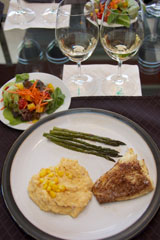
Halibut is the Wine Peeps fish of choice. We especially enjoy it blackened or broiled with Cajun seasonings. An excellent seasoning to use is Chef Paul Prudhomme’s Blackened Redfish Magic. This dish is delicious, easy, and quick to prepare. Along with the flavorful fish, this challenging wine pairing meal included a mixed green salad, roasted asparagus with balsamic browned butter, and creamy polenta.

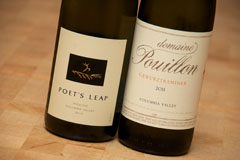
As usual, I consulted the book, What to Drink with What You Eat by Andrew Dornenburg and Karen Page, to determine which wines to pair with this spicy dish. I selected the 2010 Poet’s Leap Riesling and the 2011 Domaine Pouillon Gewurztraminer. Both wines were excellent; however, the unanimous choice as the best pairing with the meal was the Riesling. The slight residual sugar and crisp acidity of the Riesling works really well with the fatty acids in the fish and the spicy Cajun seasonings.

We’d love for you to share in the comments what you would have paired with this meal. And, as always, we welcome your suggestions for challenging wine pairings for us to try in the future.

Bon Appétit!

2010 Poet’s Leap Riesling (Columbia Valley, Washington): Pale to medium, greenish yellow. Gorgeous nose with white peach, honeydew, and a touch of petrol. More white peach and apricot come through on the palate. Off-dry and medium-bodied with racy acidity. Well-balanced with a long, lingering finish. Extremely crisp and refreshing. Residual Sugar: 1.31%
Quality: 4.5 stars (out of 5)
QPR: 5 bangs for your buck (out of 5)
Where to buy: Wine World (Seattle, Washington), $19.99; Available elsewhere, $17 to $25

2011 Domaine Pouillon Gewurztraminer (Columbia Valley, Washington): Pale, greenish straw yellow. Very aromatic with lychee nut, Anjou pear, and spice on the nose. Juicy pear and spice come through on the palate. Dry to very slightly off-dry and medium-bodied with crisp acidity. Well-balanced with a very long, refreshing finish.
Quality: 4 stars (out of 5)
QPR: 4 bangs for your buck (out of 5)
Where to buy: Wine World (Seattle, Washington), $17.99; Available elsewhere, $16.50


Filed under: American Wine, Challenging Wine Pairing, Five-Bangs For Your Buck Wines, Food & Wine, Gewurztraminer, Riesling, Washington State Wine, White Wine, Wines Under $20, Wines Under $25
 

A Wine for Tonight: 2010 The Seeker Sauvignon Blanc


By Kori ~ June 14th, 2012

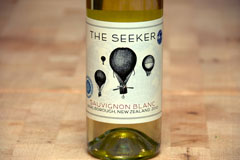
Would you like a quick suggestion for a good wine to drink tonight (or this weekend) that won’t break your budget and is widely available? Many of our readers have said this is something they would like, so here is this week’s selection, the 2010 The Seeker Sauvignon Blanc from the Marlborough region of New Zealand.

Our selection criteria include:

  • A very good Quality rating of >=3.5 stars (out of 5)
  • A price tag of <=$20
  • Must be widely available

The Seeker is a global wine brand featuring quality wines produced by family-owned wineries around the globe, each committed to sustainable farming and environmentally friendly methods of production. Each Seeker wine is bottled in lightweight glass, recycled and recyclable, and uses locally sourced packaging materials. Steve Smith, MW, sourced the grapes for this 2010 Seeker Sauvignon Blanc from two of New Zealand’s best Sauvignon Blanc growing regions, Marlborough and Martinborough.

“Aromas of citrus and nectarine with a touch of freshly-cut grass. A refreshing and vibrant palate with flavors of gooseberry and sweet summer herbs leading to a long and juicy finish.” –The Seeker

2010 The Seeker Sauvignon Blanc (Marlborough, New Zealand): Pale, greenish straw yellow. Very aromatic with grass and lime on both the nose and palate. Dry and medium-bodied with tart acidity and a long, refreshing finish. A nice summer sipper.
Quality: 3.5 stars (out of 5)
QPR: 4 bangs for your buck (out of 5)
Where to buy: Received as sample, suggested retail $13; Available elsewhere, $10 to $14


Filed under: A Wine for Tonight, New Zealand Wine, Sauvignon Blanc, White Wine, Wines Under $15, Wines Under $20, Wines Under $25
 

Watermill Winery: Great Fruit and Great Wines from the Brown Family


By Kori ~ June 13th, 2012

Watermill Winery is located in Milton-Freewater, Oregon, in the heart of the Walla Walla Valley AVA just 10 miles from downtown Walla Walla, Washington. The Brown family, a third generation apple-growing family and the owners of Blue Mountain Cider, founded Watermill in 2005. Rich Funk of Saviah Cellars initially oversaw the winemaking operations until Andrew Brown took over as winemaker in 2007.

Before launching their own winery, grapes grown by the Brown family were used for other prestigious wines from Northstar Winery, Seven Hills Winery, and Saviah Cellars. The Brown family owns some prized land in an area called “The Rocks” by the locals. They have pulled up some of their apple orchards to plant vineyards, and there is potential for even more vineyards to be planted on their land in the future.

“The Brown family is well known in the area for producing ultra-premium fruit and their wine grapes are no exception.” –Rich Funk, owner/winemaker of Saviah Cellars

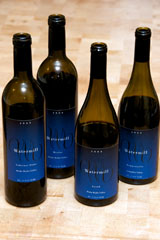
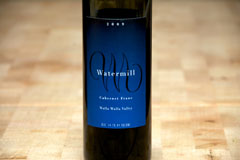
Recently, we had the opportunity to taste several wines from Watermill Winery in a blind samples tasting. While we thought all four of these red wines were very good, we especially enjoyed their 2009 Cabernet Franc. It is an excellent wine and wonderful with food.

Not only do the Browns produce great fruit and great wines, but they are also some of the nicest people we’ve had the pleasure to meet. If you are in the Walla Walla Valley, be sure to stop by Watermill Winery for a truly memorable visit. And regardless of whether you are able to visit or not, try to get your hands on a bottle or two of Watermill wine and enjoy.

2009 Watermill Cabernet Franc (Columbia Valley): Deep ruby red. Nice nose with cinnamon stick, spice, and black fruit aromas. Black fruit, spice, and smoke come through on the palate. Medium to full-bodied with lively acidity and medium to high tannins. Well-balanced with a long, smooth finish.
Quality: 4 stars (out of 5)
QPR: 4 bangs for your buck (out of 5)
Where to buy: Received as sample, suggested retail $28

2008 Watermill Syrah (Walla Walla Valley): Dark, inky purple. Nice nose with dark chocolate, black fruit, and creosote aromas. Jammy black fruit and black pepper come through on the palate. Medium to full-bodied with lively acidity, medium to high tannins and a long finish.
Quality: 3.5 stars (out of 5)
QPR: 4 bangs for your buck (out of 5)
Where to buy: Received as sample, suggested retail $24

2009 Watermill Merlot (Walla Walla Valley): Dark red. Aromatic with black plum and earth on both the nose and palate. Medium to full-bodied with lively acidity, medium to high tannins and a long finish.
Quality: 3.5 stars (out of 5)
QPR: 4 bangs for your buck (out of 5)
Where to buy: Received as sample, suggested retail $24

2008 Watermill Tempranillo (Columbia Valley): Dark purplish red. Aromatic with cinnamon, spice, earth, and black fruit on both the nose and palate. Medium to full-bodied with lively acidity, medium tannins, and a long, slightly bitter, finish.
Quality: 3.5 stars (out of 5)
QPR: 2 bangs for your buck (out of 5)
Where to buy: Received as sample, suggested retail $28


Filed under: American Wine, Cabernet Franc, Merlot, Oregon Wine, Red Wine, Shiraz/Syrah, Tempranillo, Vineyards, Wines Over $25, Wines Under $25
 

Wine Word of the Week: Punt


By Kori ~ June 12th, 2012

This week’s Wine Word of the Week is punt.

Official definition from Jancis Robinson’s The Oxford Companion to Wine:
Punt is the optional indentation in the bottom of wine bottles, particularly common in bottles of sparkling wine.

Layman’s terms from Kori:
If you are a sports fan, I’m sure you think of punt in terms of football. But punt has another meaning in the world of wine. Punt is the indentation in the bottom of wine bottles. Sparkling wines tend to have deeper punts. On standard bottles of still wine, deeper punts are sometimes used to make the bottles look bigger.  And some people use the punt as a place to put their thumb, while their other four fingers are on the outside of the bottle, as they serve the wine.


Filed under: Wine Word of the Week
 

Rasa Vineyards: Three Recent Releases from the Naravane Brothers


By Kori ~ June 11th, 2012

Founded in 2007 by brothers Pinto and Billo Naravane, Rasa Vineyards has already become a superstar on the Washington wine scene. Their beautiful winery is located south of downtown Walla Walla near the Washington/Oregon state line. Both Pinto and Billo have engineering and mathematical backgrounds and worked in the computer industry. As for their official titles at the winery, Pinto is the managing partner and Billo is the winemaker, but the brothers collaborate on every aspect of the business. Currently, they produce around 2,000 cases per year.

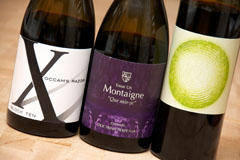
Recently, we had the opportunity to taste three recent releases from Rasa Vineyards in a blind samples tasting, the 2009 Occam’s Razor Syrah, the 2009 Doctrina Perpetua Montaigne Syrah, and the 2009 Living in the Limelight Petit Verdot.

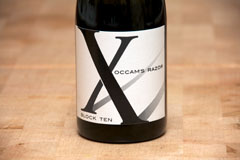
The 2009 Occam’s Razor and 2009 Doctrina Perpetua Montaigne are their first single-vineyard Syrahs. Occam’s Razor is from Block 10 of Seven Hills Vineyard and Doctrina Perpetua is from Block 5 of Bacchus Vineyard. Both blocks are planted with the Syrah Phelps clone.

All of the Rasa wines have interesting names with stories behind them. Occam’s Razor, named after a 14th century Franciscan friar and logician, basically states that given all the things are equal, the simplest answer is usually the best answer. The Naravane brothers use Occam’s Razor as one of the many guiding principles in their lives. Doctrina Perpetua means “forever learning”, and this inaugural vintage of Doctrina Perpetua celebrates Michel de Montaigne, who was a philosopher, essayist, skepticist, humanist, and one of the most important writers during the Renaissance. Living in the Limelight features Petit Verdot as the main character, a variety that is typically cast in a supporting role.

Rasa Vineyards offers their wines through their mailing list first. They are also distributed in a number of states. If you have not had a chance to try one of their wines, I encourage you to keep your eyes out for them on the shelf at your local wine shop or go ahead and put your name on their mailing list. Only open by appointment, Rasa Vineyards is definitely a must-visit if you are in the Walla Walla area.

For a more detailed write-up about Rasa Vineyards, the Naravane brothers, and their winemaking philosophy, please refer back to my Spotlight On: Rasa Vineyards post.

2009 Rasa Vineyards Occam’s Razor Syrah (Block 10, Seven Hills Vineyard, Walla Walla Valley, Oregon): Dark purple. Gorgeous nose with black fruit and floral notes. Blackberry, black cherry, floral notes, black pepper, and beef jerky come through on the palate. Full-bodied with crisp acidity, and high tannins. Well-balanced and smooth with a long, lingering finish.
Quality: 4 stars (out of 5)
QPR: 2 bangs for your buck (out of 5)
Where to buy: Received as sample, suggested retail $60; Available elsewhere, $60

2009 Rasa Vineyards Doctrina Perpetua Montaigne Syrah (Block 5, Bacchus Vineyard, Columbia Valley, Washington): Dark purple. Very aromatic with black fruit and earth on the nose. Blackberry, black cherry, earth, black pepper, and spice come through on the palate. Full-bodied with crisp acidity, and high, dry tannins. Well-balanced with a very long finish.
Quality: 4 stars (out of 5)
QPR: 2 bangs for your buck (out of 5)
Where to buy: Received as sample, suggested retail $60

2009 Rasa Vineyards Living in the Limelight Petit Verdot (Columbia Valley, Washington): 90% Petit Verdot, 5% Cab Franc, and 5% Cabernet Sauvignon. Dark purple in color. Aromatic with black fruit, earth, and tar on both the nose and palate. Medium to full-bodied with lively acidity, medium to high, dry tannins, and a long finish.
Quality: 3.5 stars (out of 5)
QPR: 1 bang for your buck (out of 5)
Where to buy: Received as sample, suggested retail $55


Filed under: American Wine, Petit Verdot, Red Wine, Shiraz/Syrah, Washington State Wine, Wines Over $25
 

A Wine for Tonight: NV Jacob’s Creek Sparkling Moscato


By Kori ~ June 7th, 2012

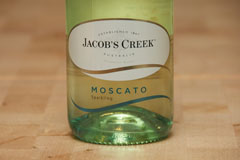
Would you like a quick suggestion for a good wine to drink tonight (or this weekend) that won’t break your budget and is widely available? Many of our readers have said this is something they would like, so here is this week’s selection, the NV Jacob’s Creek Sparkling Moscato from South Eastern Australia.

Our selection criteria include:

  • A very good Quality rating of >=3.5 stars (out of 5)
  • A price tag of <=$20
  • Must be widely available

Johann Gramp, a Bavarian immigrant, planted the first commercial vineyard in Australia’s Barossa Valley on the banks of Jacob’s Creek in 1847. In the early 1900’s, the company was registered as G. Gramp & Sons and the Orlando Wines trademark was established. In 1976, Orlando Wines officially launched the Jacob’s Creek brand. Bernard Hickin went to work for Orlando Wines that same year; he was promoted to Chief Winemaker in 2006. This NV Sparkling Moscato is part of the Jacob’s Creek sparkling range of wines.

“Fresh delicate tropical aromas with undertones of pear and peach, and a hint of honeysuckle blossom. Light and refreshing with tropical flavours; the wine marries subtle pear notes with a touch of melon leading to a zesty sparkling finish.” –Jacob’s Creek

NV Jacob’s Creek Sparkling Moscato (South Eastern Australia, Australia): Pale straw yellow. Small, fairly fast bead of bubbles. Aromatic with applesauce aromas on the nose. Apple, pear, and dried apricot come through on the palate. Medium sweet and medium-bodied with crisp acidity and a long, refreshing finish. A nice sparkling wine for summer.
Quality: 3.5 stars (out of 5)
QPR: 5 bangs for your buck (out of 5)
Where to buy: Received as sample, suggested retail $10; Available elsewhere, $7 to $12


Filed under: A Wine for Tonight, Australian Wine, Five-Bangs For Your Buck Wines, Moscato/Muscat, Sparkling Wine, Wines Under $10, Wines Under $15, Wines Under $20, Wines Under $25
 

Oregon Wine: Outside the Willamette Valley


By Kori ~ June 6th, 2012

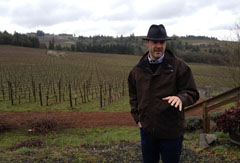
For many, Oregon wine is synonymous with the Willamette Valley. However, there are exciting things happening elsewhere in the state, including the Columbia Gorge, Southern Oregon, and, of course, the Oregon side of the Walla Walla Valley.
Today, Oregon boasts over 400 wineries and 16 AVA’s (American Viticultural Areas). With those AVA’s found in both warm and cool climates, Oregon winemakers are able to produce wines from over 70 different grape varieties.

During my recent media tour to explore Oregon wine country, I had the opportunity to visit the Columbia Gorge again and participate in a tasting of Southern Oregon wines.

Columbia Gorge

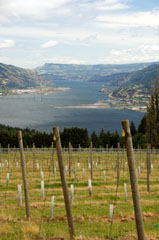
The Columbia Gorge AVA was established in 2004. It runs along the Columbia River and encompasses areas in both Washington and Oregon. Located just 60 miles east of Portland, the area boasts gorgeous views, numerous outdoor recreation options, quality vineyards, great wines, and very friendly folks.

The diversity of microclimates, soil, geography, and elevation allow the Columbia Gorge to grow numerous different grape varieties from Albarino to Zinfandel, hence their tagline, “A world of wine in 40 miles.”

The Pines Vineyard, located in The Dalles, Oregon, is home to some of the oldest vines in the Northwest. Their Old Vine Zinfandel vines are over 100 years old. On a trip to the Columbia Gorge in 2010, we toured The Pines Vineyard with owner Lonnie Wright.

“The Columbia Gorge is a transition area between the Willamette Valley and the Columbia Valley.” –Lonnie Wright, The Pines Vineyard

Two wines that I especially enjoyed during my most recent visit to the Columbia Gorge were the 2010 Viento Pinot Noir, Oak Ridge Vineyard [Quality: 4, QPR: 5, Price: $33] and the 2010 Viento Gruner Veltliner, Underwood Mountain Vineyard [Quality: 4, QPR: 4, Price: $20].

If you have not spent any time in the Columbia Gorge, I highly recommend it, for both outdoor recreation and wine tasting. And, when you are in Hood River, be sure to dine at Nora’s Table. They offer amazing food and an Oregon-focused wine list.

Southern Oregon

The Southern Oregon AVA was also established in 2004 and is comprised of three sub-AVAs, the Umpqua Valley, the Rogue Valley, and the Applegate Valley. The Umpqua Valley, established in 1984, is actually Oregon’s oldest viticulture region.

This region has been slower to develop, in part because they do not have a single-varietal focus. However, they seem to have finally turned a corner and are embracing their diversity. The rugged terrain and varied microclimates in Southern Oregon produce both warmer climate varieties like Cabernet Sauvignon, Syrah, Merlot, and Tempranillo as well as small amounts of cool climate varieties like Pinot Noir.

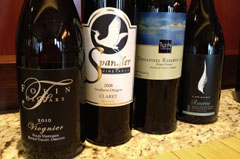
Four wines that I especially enjoyed during the tasting of Southern Oregon wines were the 2009 Folin Cellars Viognier, Rogue Valley [Quality: 4, QPR: 3, Price: $25], the 2008 Spangler Vineyards Claret [Quality: 4, QPR: 4, Price: $25], the 2008 Troon Zinfandel Reserve, Applegate Valley [Quality: 4, QPR: 2, Price: $60], and the 2008 Cowhorn Vineyards Syrah, Applegate Valley [Quality: 4, QPR: 3, Price: $45].

Walla Walla Valley

And, while we did not visit this area during the media tour, I would be remiss without mentioning that a number of the best Walla Walla Valley vineyards are actually on the Oregon side of the AVA. If your travels take you to Walla Walla, Washington, I encourage you to drive ten minutes south to Milton-Freewater, Oregon. While most of the vineyards themselves are not open to the public, you should definitely visit Watermill Winery.

The Brown family, a third generation apple-growing family and the owners of Blue Mountain Cider, founded Watermill Winery in 2006. Before launching their own winery, grapes grown by the Brown family were used for other prestigious wines from Northstar Winery, Seven Hills Winery, and Saviah Cellars. The Brown family owns some prized land in an area called “The Rocks” by the locals. They have pulled up some of their apple orchards to plant vineyards, and there is potential for even more vineyards to be planted on their land in the future.

Cheers!


Filed under: American Wine, Five-Bangs For Your Buck Wines, Gruner Veltliner, Oregon Wine, Pinot Noir, Red Wine, Shiraz/Syrah, Vineyards, Viognier, White Wine, Wine Travel, Wines Over $25, Wines Under $20, Wines Under $25, Zinfandel