Wine Peeps Top 10 Posts of 2010


By John ~ January 7th, 2011

As we begin a new year, it’s time for us to reflect on our body of work in 2010, what we’ve done well and where we can improve in 2011. When you have written as many posts as we have this year, 314 to be exact, it is quite a project to review them all and pick a top 10.

The ten we selected are not necessarily our personal favorites, but the ones that generated the most interest and discussion among our readers, not just on our Wine Peeps website, but on social media sites such as Facebook and Twitter as well.

So, without further ado, here are our top 10 posts for 2010, listed in chronological order from oldest to newest:

Now, we’d like to hear from you. Besides the ones listed above, what were your favorite Wine Peeps posts of 2010? And what topics would you like to see us cover in 2011?

Cheers!


Filed under: Best of
 

A Wine for Tonight: 2007 Las Rocas de San Alejandro Garnacha


By Kori ~ January 6th, 2011

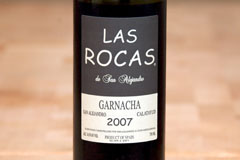
Would you like a quick suggestion for a good wine to drink tonight (or this weekend) that won’t break your budget and is widely available? Many of our readers have said this is something they would like, so here is this week’s selection, the 2007 Las Rocas de San Alejandro Garnacha from the Calatayud region of Spain.

Our selection criteria include:

  • A very good Quality rating of >=3.5 stars (out of 5)
  • A price tag of <=$15
  • Must be widely available

Bodegas San Alejandro, founded in 1962, is located in Miedes, Spain. It is a cooperative comprised of 350 associates. Their Las Rocas range of wines was first released in 2003 and was specifically produced to appeal to the American market. This Las Rocas Garnacha has been a consistent favorite of ours through the years and delivers serious bang for your buck.

“Deep ruby colored with a gorgeous nose. Attractive aromas of kirsch, raspberries, pepper and melted liquorice. Full flavored wine with a supple texture and no hard edges. Medium to full bodied, fruit driven sumptuously-textured and long aftertaste.” –Bodegas San Alejandro

2007 Las Rocas de San Alejandro Garnacha (D.O. Calatayud, Spain): 100% Grenache. Medium deep ruby red in color. Very aromatic with road tar, earth, and spice on the nose. Loads of red fruits and spice come through on the palate. Medium-bodied with crisp acidity, medium drying tannins, and a long finish.
Quality: 3.5 stars (out of 5)
QPR: 5 bangs for your buck (out of 5)
Where to buy: Fred Meyer (Seattle, Washington), $11.79; Available elsewhere, $7 to $14


Filed under: A Wine for Tonight, Five-Bangs For Your Buck Wines, Grenache, Red Wine, Spanish Wine, Wines Under $15, Wines Under $20, Wines Under $25
 

Dry Creek Vineyard: Zinfandel Specialist


By Kori ~ January 5th, 2011

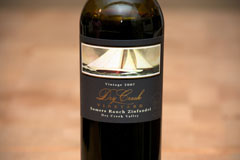
Dry Creek Vineyard, founded in 1972 by David Stare, is located in the heart of Dry Creek Valley just outside of Healdsburg, California. Producers of a number of very good wines, Dry Creek Vineyard is a self-proclaimed “Zinfandel Specialist” and justifiably so. They produce more Zinfandel than anything else, five different bottlings in fact. Today, Dry Creek Vineyard is run by David’s daughter Kim Stare Wallace and her husband Don.

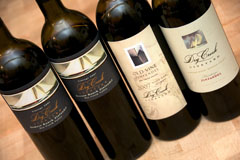
We recently had the opportunity to taste four Dry Creek Vineyard Zinfandels (all but their Late Harvest Zinfandel) in a blind samples tasting, the 2007 Somers Ranch Zin, the 2007 Beeson Ranch Zin, the 2007 Old Vine Zin, and the 2008 Heritage Zin. All four wines were good, but we especially enjoyed the Somers Ranch, interestingly the only one that is 100% Zinfandel.

Somers Ranch is located at the southern tip of the Dry Creek Valley. The vineyard sits on two adjacent hillsides and faces west which allows it to receive beneficial afternoon sun. The vines themselves were planted over 20 years ago. The 2007 Somers Ranch Zin is a limited production bottling with under 500 cases.

2007 Dry Creek Vineyard Somers Ranch Zinfandel (Dry Creek Valley, California): 100% Zinfandel. Deep, dark red. Very aromatic with black cherry, floral notes, and buttered popcorn on the nose. More black cherry, cinnamon, and clove show through on the palate. Medium to full-bodied with crisp acidity and medium to high tannins. Well-balanced with a long finish.
Quality: 4 stars (out of 5)
QPR: 4 bangs for your buck (out of 5)
Where to Buy: Received as sample, suggested retail $34

2007 Dry Creek Vineyard Beeson Ranch Zinfandel (Dry Creek Valley, California): 97% Zinfandel and 3% Petite Sirah. Deep red in color. Aromatic with cherry and cinnamon on the nose; more dark cherry and spice come through on the palate. Medium to full-bodied with lively acidity, medium drying tannins, and a long, slightly hot, finish.
Quality: 3 stars (out of 5)
QPR: 1 bang for your buck (out of 5)
Where to Buy: Received as sample, suggested retail $34

2007 Dry Creek Vineyard Old Vine Zinfandel (Dry Creek Valley, California): 82% Zinfandel and 18% Petite Sirah. Medium deep ruby red. Very aromatic with smoky and beef jerky aromas that lead to red fruit flavors, especially strawberry. Medium to full-bodied with lively acidity, medium tannins, and a medium finish.
Quality: 3 stars (out of 5)
QPR: 2 bangs for your buck (out of 5)
Where to Buy: Received as sample, suggested retail $28; Available elsewhere, $21 to $30

2008 Dry Creek Vineyard Heritage Zinfandel (Sonoma County, California): 82% Zinfandel and 18% Petite Sirah. Deep, ruby red in color. Nice nose with oak and plum aromas. Flavors of blackberry, black cherry, plum, and spice. Medium to full-bodied with crisp acidity, medium tannins, and a long finish.
Quality: 3 stars (out of 5)
QPR: 3 bangs for your buck (out of 5)
Where to Buy: Received as sample, suggested retail $19; Available elsewhere, $13 to $18


Filed under: American Wine, California Wine, Red Wine, Wines Over $25, Wines Under $20, Wines Under $25, Zinfandel
 

Wine Word of the Week: Mulled wine


By Kori ~ January 4th, 2011

This week’s Wine Word of the Week is mulled wine.

Official definition from Jancis Robinson’s The Oxford Companion to Wine:
Mulled wine is wine that has been heated with sugar and spices and also, sometimes, slices of fruit and even brandy. This was a particularly common way of serving wine in the Middle Ages, since honey and spices helped to compensate for any shortcomings in wine quality (which were likely to be considerable as the months since the harvest wore on in this age when wine was served directly from the barrel). The verb ‘mull’ was current at least from the beginning of the 17th century. Recipes vary and quantities are not critical. Red wine is almost invariably used, and cinnamon and cloves are common. Slow simmering retains the alcohol; fast boiling dissipates it.

Layman’s terms from Kori:
Mulled wine is a popular winter beverage in which sugar and spices are added to red wine and heated and typically served warm.


Filed under: Wine Word of the Week
 

From Apples to Grapes: Pepper Bridge Vineyard


By Kori ~ January 3rd, 2011

Kori S. Voorhees, our Wine Peeps Editor-in-Chief, is also a regular contributor to Washington Tasting Room Magazine, a quarterly magazine that focuses on Washington State wine with articles about wineries, vineyards, travel, and lifestyle. The following article, written by Kori, appeared in the Summer 2010 issue.
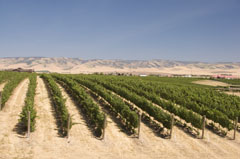
One of the pioneer plantings in the Walla Walla Valley, 19-year old Pepper Bridge Vineyard continues to improve with age

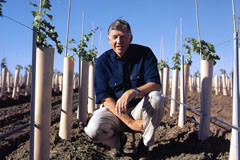
Growing apples in the Walla Walla Valley always seemed like a good idea to Norm McKibben and his business partner, Rob Rupar. So in 1989, they bought an old wheat ranch and set about clearing the land and planting apple trees, and named the farm “Pepper Bridge”, taking the name of an old low-water crossing across the Walla Walla River on the Pepper Family Farm (connecting an old military road between Fort Walla Walla and Fort The Dalles.) Along the way, they brought in Tom Waliser as a partner to help them develop the site and manage the orchard.

Early Walla Walla Valley Grapes

At the time, McKibben was a silent partner at Hogue Cellars, chairman of the board at Canoe Ridge Vineyards, and had a small vineyard of his own outside the Valley. Despite the fact there were less than 50 total acres of vineyards planted in the Walla Walla Valley, McKibben believed the Pepper Bridge Farm soil showed good promise for grape-growing. He talked to his partners about planting grapevines on the property and they agreed to give it a shot, planting five acres each of Cabernet Sauvignon and Merlot in 1991.

“I was doing all the farming for the apple end of it, so I volunteered to learn to grow grapes,” remembers Tom Waliser, who has been Pepper Bridge Farm’s vineyard manager since the beginning. “I thought to myself, how hard could it be? I learned there was a lot more to it than I anticipated. With apples, I was raising a product that was consumed by the consumers so they had to cosmetically look good. The more fruit we could grow on a tree, the more money we were going to make. With grapes, it’s all about internal quality. It doesn’t matter what they look like. It’s about getting the vine to focus more on the fruit and internal quality and limiting the volume, so you get small berries and concentration. It’s the opposite of apples. It was a big adjustment for me.”

Waliser made the adjustment quite well, and the wine-grape growing operation, now known as Pepper Bridge Vineyard, has been a rousing success story, despite early skepticism. “Some of the first comments were, ‘Good luck, it’ll never happen,’” said Waliser. “But it turns out that Walla Walla is a great place to grow grapes.”

Bragging Rights

It didn’t take long for some high-profile Washington wineries to express interest in Pepper Bridge Vineyard fruit. Their first five customers were Andrew Will, L’Ecole Nº 41, Leonetti, Seven Hills, and Woodward Canyon.

“I have to brag a little bit. We were the first winery to make wine from Pepper Bridge Vineyard,” said owner/winemaker Marty Clubb of L’Ecole Nº 41. “At the time, the Walla Walla Valley was really in its infancy. Not much fruit was actually grown there and Pepper Bridge Vineyard grapes were not well-known. In 1993, we started producing our Apogee wine using 100% Pepper Bridge Vineyard fruit. The wine has been so well-received by wine lovers worldwide that we’ve made seventeen consecutive vintages.”

L’Ecole’s Apogee is a Bordeaux-blend of Cabernet Sauvignon, Merlot, Malbec, and Cabernet Franc. Clubb’s goal is to produce a rich, robust, expressive red wine that showcases what Pepper Bridge Vineyard has to offer.

It’s All in the Fruit

As the vineyard grew in proportion to the apple orchard, the Pepper Bridge Winery estate winery was founded by Norm McKibben and partner, Ray Goff. The first-vintage 1998 Cabernet Sauvignon produced by Pepper Bridge Winery was a single-vineyard wine from Pepper Bridge Vineyard. Beginning with the 2000 vintage, the Pepper Bridge Vineyard Cabernet Sauvignon is a blend of Cabernet Sauvignon and Merlot, with small percentages of Malbec, Cabernet Franc and/or Petit Verdot added year-to-year, with the recipe changing based on winemaker Jean-Francois Pellet’s palate. Like L’Ecole, Pepper Bridge Winery strives to showcase what the vineyard does best in that particular year.

When asked to characterize the overriding traits of Pepper Bridge Vineyard fruit, McKibben, Waliser, Clubb, and Pepper Bridge Winery winemaker Jean-Francois Pellet all make mention of its dark fruits and strong structure. While L’Ecole and Pepper Bridge Winery make single-vineyard Pepper Bridge Vineyard wines, both wineries also produce wines that are a blend of grapes from Pepper Bridge Vineyard and Walla Walla’s Seven Hills Vineyard.

“It’s like ying and yang between those two Walla Walla estate vineyards. Pepper Bridge Vineyard is a little more structured, darker fruit while Seven Hills Vineyard has a little softer tannins and red fruit characteristics. They complement each other very well,” said Jean-Francois Pellet.

Currently, about 45 wineries purchase Pepper Bridge Vineyard grapes, including Leonetti, L’Ecole Nº 41, Pepper Bridge Winery, Long Shadows, Forgeron, and Saviah.

Keeping the Vines Stressed
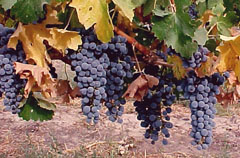
Pepper Bridge is one of the lower vineyards in the valley at an elevation of 850 feet. Its balanced soils are lake bed sediment from the Missoula floods.

“Our challenge is to make sure the plants don’t get too happy on this type of soil,” said Waliser. “Irrigation management is our biggest tool in getting high quality.”

Under Waliser’s direction, Pepper Bridge Vineyard is sustainably farmed and utilizes cutting-edge technology to monitor irrigation and weather. A network of weather stations all over the valley monitors temperature and humidity, tracking the data 24 hours a day. All of the blocks in the vineyard have moisture sensors that provide Waliser’s team with an ongoing report of what’s happening.

Now that the vines are 19 years old, Pepper Bridge Vineyard is really coming into its own. Pellet sums it up: “Every year the wines are getting more definition and more character.”

In the beginning, there was a struggle to decide if the former wheat ranch was going to be transformed into an orchard or a vineyard. Almost two decades later, 90 acres of apples are still grown, but the emphasis is definitely on the 200 acres of wine grapes. An excellent decision, indeed.


Filed under: American Wine, Vineyards, Washington State Wine, Washington Tasting Room Magazine, Wine Magazines
 

Best of 2010 in Washington Wine Country


By John ~ December 31st, 2010

After visiting more wineries and tasting more Washington wines than I can count, meeting many of the best winemakers in Washington, and walking the rows in many of the best known vineyards in the state, these are the Wine Peeps team’s picks as the best of 2010 in Washington Wine Country.

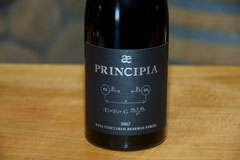
BEST WINE: 2007 Rasa Vineyards Principia Reserve Syrah (featured Sept 22)

Honorable Mention: 2008 Fielding Hills Cabernet Franc (featured Nov 1)

BEST WINERY: Quilceda Creek Vintners (featured May 11 [2009], April 2, April 21)

Honorable Mention: Rasa Vineyards and Fielding Hills Winery

BEST VARIETAL: Riesling (featured in a number of posts, including Feb 19 and July 19)

Honorable Mention: Cabernet Sauvignon, Cabernet Franc, and Syrah

BEST WINEMAKER: Bob Betz, Owner/Winemaker of Betz Family Winery (featured April 27)
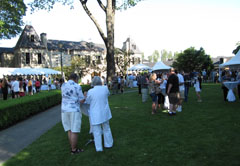
Honorable Mention: Paul Golitzin of Quilceda Creek

BEST VINEYARD: DuBrul Vineyard (featured Nov 29)

Honorable Mention: Champoux Vineyards and Boushey Vineyards

BEST AVA: Yakima Valley

Honorable Mention: Horse Heaven Hills and Columbia Gorge

BEST NEWCOMER: Rasa Vineyards/Pinto and Billo Naravane (featured Sept 22 and Nov 2)

Honorable Mention: Grand Rêve Vintners/ Paul McBride and Ryan Johnson

BEST WINE SHOP: Wine World Warehouse (featured Dec 3)

Honorable Mention: Fred Meyer – Ballard, Seattle; Esquin Wine Merchants, Seattle; Pete’s Wine Shop – Eastside, Bellevue

BEST WINE BAR: URBAN enoteca (featured Dec 6)

BEST WINE EVENT: Riesling Rendezvous (featured July 19)

Honorable Mention: Auction of Washington Wines

Congratulations to all of the winners! Keep up the good work.

Happy New Year! Best wishes for a happy, healthy, prosperous, and wine-filled 2011!


Filed under: American Wine, Best of, Washington State Wine
 

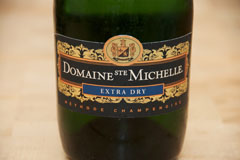
A Wine for Tonight: NV Domaine Ste. Michelle Extra Dry Sparkling Wine


By Kori ~ December 30th, 2010

Would you like a quick suggestion for a good wine to drink tonight (or this weekend) that won’t break your budget and is widely available? Many of our readers have said this is something they would like, so here is this week’s selection, the NV Domaine Ste. Michelle Extra Dry Sparkling Wine from the Columbia Valley of Washington State.

Our selection criteria include:

  • A very good Quality rating of >=3.5 stars (out of 5)
  • A price tag of <=$15
  • Must be widely available

What’s a better way to ring in the New Year this weekend than with a good sparkling wine with a great QPR? The Extra Dry is one of an excellent array of value sparkling wines from Domaine Ste. Michelle. Producing sparkling wines for over thirty years, Domaine Ste. Michelle is one of the largest sparkling wine houses in the United States, producing more than 300,000 cases each year. Rick Casqueiro has been head winemaker since 1994. Given the current state of our economy, I believe that celebrating the New Year with such an economical yet excellent bubbly is especially appropriate.

“A rich gold color with abundant bubbles. The wine is very elegant on the palate, and bursts with flavors of pear, guava and kiwi. The delicate flavors linger and make this a great pairing for seafood such as scallops, sea bass and crabs.” –Winemaker Rick Casqueiro

NV Domaine Ste. Michelle Extra Dry Sparkling Wine (Columbia Valley, Washington): Small, fairly fast bead of bubbles. Golden straw yellow in color. Nice nose with pear and yeasty aromas. Fig, pear, and apple come through on the palate. Slightly off-dry and medium-bodied with crisp acidity. Well-balanced and refreshing with a long finish. Residual Sugar: 2.3%
Quality: 4 stars (out of 5)
QPR: 5 bangs for your buck (out of 5)
Where to buy: Received as sample, suggested retail $12; Available elsewhere, $7 to $14


Filed under: A Wine for Tonight, American Wine, Five-Bangs For Your Buck Wines, Sparkling Wine, Washington State Wine, Wines Under $15, Wines Under $20, Wines Under $25
 

Wine Tech: Enotria Guide iPhone App (Audio Guide for Wine Pronunciation)


By Kori ~ December 29th, 2010

In this day and age, there are numerous apps, websites, and software programs that fight for the attention of wine lovers. All promise to help you with some aspect of your wine experience, whether it be keeping an inventory of your wine collection, recording tasting notes, accessing reviews at your fingertips, or any number of other tasks. But how are you to know which ones are worth your time and money? Periodically, we will feature something that falls into the general category of wine technology that we have personally found to be helpful.
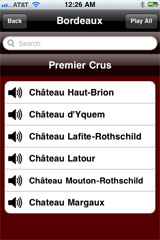
Do you ever wish that you had paid more attention in French class so that you could read the labels on French wines without sounding foolish to your friends? Would you like to be able to order an Italian wine in a restaurant without garnering snickers from the wait staff? Are you intimidated by German wine words like Trockenbeerenauslese? If you answered yes to any of these questions, then the Enotria Guide iPhone App could be for you.

The Enotria Guide is the first and, to my knowledge, only audio app for wine pronunciation. The guide contains over 200 terms and covers the major regions of France, Italy, and Germany. Either type a term in the search box or follow the menus to find what you are looking for, then tap the speaker icon next to the term and you will hear the word pronounced for you. You can also choose the Play All option to hear all of the words in a particular category pronounced.

If you would like to save a term to refer back to later, simply hold down on it for two seconds and it will be saved to your Study Guide. From the app’s home page, you can click on Study to quickly access your saved terms.

Melissa Lavrinc Smith, a Wine and Spirits Consultant for K&L Wine Merchants, developed the Enotria Guide. She is a graduate of the Culinary Institute of America, a Sommelier, and a Certified Sake Professional. In future upgrades and releases, Ms. Smith plans to add more terms, include more countries and regions, and incorporate Google Maps integration.
No matter your level of wine knowledge, this app can be helpful to have in your reference library. And how convenient to be able to carry it with you at all times.

So, if you received an iTunes gift card for Christmas and are wondering what to buy with it, I encourage you to visit the Apple App Store and check out the Enotria Guide which sells for $2.99. And for those of you who don’t have an iPhone, iPod touch, or iPad, the Enotria Guide is also available on CD.

Full Disclosure: We received a promo code to demo this app.


Filed under: Wine Tech
 

Wine Word of the Week: Transversage


By Kori ~ December 28th, 2010

This week’s Wine Word of the Week is transversage.
Official definition from Jancis Robinson’s The Oxford Companion to Wine:
Transversage is an occasional twist on the traditional method [of sparkling winemaking] whereby, immediately after disgorgement, the contents of bottles of sparkling wine made by the traditional method are transferred into a pressure tank to which the dosage is added before the wine is bottled, typically in another (often small) size of bottle, under pressure. This is how many half bottles, all airline ‘splits’ or quarter-bottles, and virtually all bottle sizes above a jeroboam of champagne are filled.

Layman’s terms from Kori:
Transversage is the process by which small- and large-format bottles of sparkling wine are filled. Using the traditional method of sparkling winemaking, standard 750ml bottles are riddled and then disgorged into a pressurized tank. Dosage is added and then the sparkling wine is transferred into other size bottles.


Filed under: Wine Word of the Week
 

Women of Washington Wine: Kay Simon of Chinook Wines


By Kori ~ December 27th, 2010

Today’s post is part of a series featuring the Women of Washington Wine. In an industry once dominated by men, more and more women are joining the ranks as winery owners, vineyard owners, and winemakers. Being a woman myself, I am fascinated by these women and what they have done and continue to do. Through this series, I hope to introduce you to some of the brightest female faces in the Washington wine industry.

Kay Simon and her husband Clay Mackey founded Chinook Wines in 1983. Kay is a 1976 graduate in enology from the University of California at Davis. She gained valuable winemaking experience working for wineries in California and Washington State. Clay began his career as a vineyard manager in the 1970’s and is a well-respected viticulturist. Kay and Clay met when they both worked at Chateau Ste. Michelle. They have been partners, in business and in marriage, for over 25 years. Located in Prosser, Washington, Chinook is housed in original farm buildings on their property and is surrounded by their estate Cabernet Franc vineyard. All of their fruit is sourced from the Yakima Valley, the AVA in which their winery is located. They strive to produce approachable, food-friendly wines.
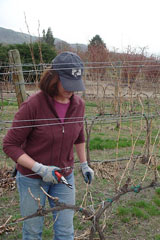
Recently, Kay was kind enough to take time out of her busy schedule to answer some questions for me and our Wine Peeps readers.

Highlights from Q&A with Kay Simon:

How did you first get involved in the wine business?
An interest in Foods and Nutrition took me to U.C. Davis (i.e. University of California at Davis) to study nutrition. Along the way, I discovered the classes in fermentation and ended up with a degree (Bachelor of Science) in Fermentation Science.

What were the steps that led to where you are now?
My first job was as a cellar supervisor trainee at a large San Joaquin Valley (CA) winery; followed by several years as a winemaker at Chateau Ste. Michelle. That’s where I met my future husband and business partner, Clay Mackey. Clay thought we should go into business for ourselves, which we did in 1983. Our friend, Stan Clarke, was General Manager at Quail Run Winery here in the Yakima Valley. We “borrowed” space for a couple of years and then found our current location for our winery and vineyard in Prosser.

Has being a woman been an advantage or a disadvantage in your wine journey?
Because I started in the business in 1976, women were few and far between in the industry (outside of the laboratory). My first job was actually partially because of a class action sexual discrimination suit filed against the company—so I guess that was an advantage! Otherwise, I’ve often thought that women needed to be every bit as capable as their male co-workers (and maybe better). In years past, I’ve been told directly by male bosses that they didn’t like women; though one actually came up to me years later at a wine industry symposium and said that I did very good work for him.

Are there more opportunities available to women today in the wine business than when you started?
Oh, yes. That’s certainly the case today, and I think the younger women are better able to balance the work and family thing. We needed to be laser-beam focused on our careers. Today, there are more women in the workplace in general, so it’s not as unique to be working in wine production as it was in the 1970’s.

What advice do you have for a woman wanting to get involved in the wine business today?
Get some education in the field. Get a job in the industry. Work hard. (Same advice for guys!)

What are your thoughts about the Washington wine industry, in general?
It’s been an interesting and very fun journey to be a part of this burgeoning industry. I think the wines are getting the respect that they deserve today for their quality. The strength of our state’s wine industry is really that we offer a great quality product and a good value at all parts of the price spectrum. I think this will stand us in good stead, especially now with a recovering economic situation.

In recent years the Washington wine industry has grown at a rapid rate. Do you expect that trend to continue?
Well, I think you have to look at what the growth actually is—lots of very small wine brands, which may or may not involve an actual “bricks and mortar” winery. I would hope to see more investment in mid- to large-scale wineries and vineyards, which would really solidify our industry’s place in the wine world.

How do you and your husband, Clay, divide the duties at the winery?
When we met, Clay was working as a viticulturist/vineyard manager, and I was working professionally as a winemaker. We’ve kept those roles, though our vineyard is quite small. Clay is the business manager/accounting manager as well. We have always shared the sales and tasting room activity. We find that mutual respect and division of duties based on our personal interests works well.

What is your vision for the future of Chinook Wines?
Interesting that you should ask this question. Our nephew Brian Mackey and his wife Lindsay Mackey have joined us in our business this year. They were looking for a situation where they could work together, and we have been seeking a way to perhaps get some time off! Clay and I aren’t ready to retire anytime soon, but we hope the business will grow to support a larger Chinook Family.

Feel free to share any other thoughts that you believe would be of interest to our readers.
Our winery and our approach have always been about the place where we make wine and live, the Yakima Valley. We hope that folks who seek the real core of what winemaking and winegrowing are all about will always visit and support wineries in wine country.

Many thanks to Kay for sharing her story and thoughts with us. I wish her and Clay all the best and will continue following their work and Chinook Wines with great interest, and I hope that you will too.


Filed under: American Wine, Interview, Washington State Wine, Women of Washington Wine