Today’s post is part of a series featuring the Women of Washington Wine. In an industry once dominated by men, more and more women are joining the ranks as winery owners, vineyard owners, and winemakers. Being a woman myself, I am fascinated by these women and what they have done and continue to do. Through this series, I hope to introduce you to some of the brightest female faces in the Washington wine industry.
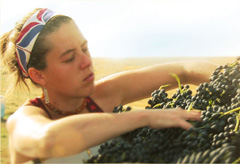 Ashley Trout moved from Washington, DC, to Walla Walla, Washington, in 1999 to attend college. After only two weeks in Walla Walla, she started making wine. Years later after a climbing accident that caused her to miss the crush season in Washington, Ashley decided to go to the southern hemisphere for their crush so she wouldn’t have to wait a full year to get back to her passion of winemaking. While in Argentina, Ashley fell in love with Malbec and Torrontes. She has been spending part of her year in Mendoza, Argentina, and part of her year in Walla Walla, Washington, ever since that first trip. Flying Trout Wines is a result of her bi-annual, bi-hemispherical winemaking adventures. The first vintage of Flying Trout Wines was in 2004; currently, annual production is fewer than 1,000 cases.
Recently, Ashley was kind enough to take time out of her busy schedule to answer some questions for me and our Wine Peeps readers.
Highlights from Q&A with Ashley Trout:
How did you first get involved in the wine business?
I had only been living in Walla Walla for a week when I saw an email from Chuck Reininger (Reininger Winery), looking for part-time, entry level help. I had just moved to Walla Walla from Washington, DC, so the concept of working in a winery, was pretty novel and exciting. I gave it a try—for 11 years now.
What were the steps that led to where you are now?
If you enjoy what you do, you tend to keep doing it. A part time college job became full time and then a very full time job. By the time I graduated from college, I knew that making wine was what I would be doing for the rest of my life.
The Argentine stuff started happening after I had a bad rock climbing fall. I fell 35 feet and broke a lot of bones. I missed crush in the northern hemisphere that year. Once I was better, I didn’t want to wait another eight months for crush, so I headed down south. I was raised speaking Spanish, so that wasn’t an issue.
Has being a woman been an advantage or a disadvantage in your wine journey? Please explain.
I’m going to let the cat out of the bag here and say that being a woman in this industry is a huge advantage. I’ve shown up to vineyards and had all of my fruit loaded and tied down for me. I’ve shown up to warehouses and watched while other guys restack pallets for me. This is a girl thing, not an industry-courtesy thing. My husband and buddies do not often receive the same benefits. Quite frankly, if everyone wants to think that I am helpless and the consequences of their misconceptions are that they do a bunch of dirty work while I drink some coffee, then that is their loss. I used to fight all of this stuff tooth and nail and I finally came to a conclusion: You can spend all of your time fighting the system and old boy farmers, trying to prove some feminist power thing, or you can drink a cup of coffee. The choice, to me, is clear.
While Flying Trout was still relatively obscure, I got invited to all sorts of wonderful restaurants and places to do events because I am a woman. This is a ridiculous reason to pick a winery. But if it means that I get Flying Trout up and running that much quicker, I am not going to be the one to spill the beans.
Do you use the fact that you are a woman to promote your wines? If so, how?
I don’t, but that doesn’t mean that people don’t do it for me. I get invited to women-only events all of the time, so why not. I do not, however, seek them out.
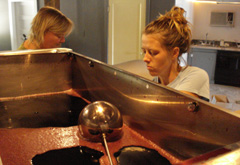 What advice do you have for a woman wanting to get involved in the wine business today?
What are you waiting for? Tis the Season.
What are your thoughts about the Washington wine industry, in general?
I’ve been in it since 1999, and it has been amazing to see it balloon. We’ve got an increasing understanding of AVAs, technology, soils, etc. The schools in the area (WSU, WWCC, OSU, some facets of Whitman even) are focusing more and more on what’s going on and we are getting more (mostly grad) students working on excruciatingly detailed investigations on terroir and weather. We’ve got big boys, with money, who can fund a lot of their own private projects. The lab people are talking with the farmers, who are talking with the technology guys, who are talking with the vineyards, and a lot of people are listening to each other. The knowledge, interest, and funding are skyrocketing.
In recent years the Washington wine industry has grown at a rapid rate. Do you expect that trend to continue?
Supply and demand is always the issue at stake. You can almost always find the cash to make an extra ten cases, but if year after year those extra ten cases aren’t selling, the cash does run out. If people keep coming in and starting wineries, someone is going to need to start selling to the South Carolina’s and New Hampshire’s of this country. Seattle basement cellars will fill up sooner rather than later. As long as people are getting the word out about Washington wines far and wide, I see the trend continuing. The limiting factor will not be the wines, the land, or people with interest in starting wineries. It will be based more on how many talented marketing people living in New Hampshire want to be hired by Washington wineries.
I understand that you work part of the year in Mendoza, Argentina and part of the year in Walla Walla. How did that arrangement come about and what have you learned from that experience?
I went down there without a lot of planning the first year. I was told that I had a job lined up by an Argentinean…. To make a long story short, he had been humoring me, and I was stuck in Argentina for two months without any reason for being there. So I started knocking on doors and talking to people and I got an internship with one of Michel Rolland’s wineries, Alta Vista. I worked in the lab and because I was the same age as all of the guys going through enology programs who worked at dozens of different wineries, I got to know a lot of the industry quickly and in an informal way. It was very fluid for such an unplanned event.
I’ve learned a lot about Malbec and Torrontes, two varieties that weren’t very prominent in the Walla Walla Valley. Torrontes still isn’t, and I don’t see it popping up here in big quantities ever. It really likes altitude. I deal with a lot more hail down there and some potassium issues that don’t exist up here in the same way.
They do a lot more “wine by numbers†in the lab due to the quantity of wine that they are making. Theirs is a much more scientific and numbers approach whereas, for the most part, we are more on the farming, artistic approach. Neither is better or worse, but they certainly are different.
What is your vision for the future of Flying Trout Wines?
I am really excited to be taking the winery to the next level. I will be working with others in a great production facility. I grew tired and frustrated working alone in a garage for so long. I actually have access to floor drains now (gasp!) and I can’t tell you how exciting that is. I can’t say who yet, because we are still in the process of dotting and crossing, but we’re going to throw a big party once we are allowed to tell.
Feel free to share any other thoughts that you believe would be of interest to our readers.
Wine drinkers of my generation are not afraid to try new things or weird varietals. This purchasing of oddities allows the wineries and vineyards to keep pushing the boundaries. Every single one of us benefits from this ripple effect, so keep up the good work everyone—and thank you.
—
Many thanks to Ashley for sharing her story and thoughts with us. I wish her all the best and will be following her work and Flying Trout Wines with great interest, and I hope that you will too.
(Photos from Flying Trout Wines)

 Wine Peeps is an independent wine blog dedicated to helping you get the most bang for your buck in wine. We do this through blind tastings of wine from around the world and calculations of
 For years, I’ve had friends tell me that they can’t find the great Washington State wines that I tell them about where they live. So with the help of Wine-Searcher.com and a lot of legwork, I’ve set out on a mission to prove them wrong.

 This week’s Wine Word of the Week is enology.
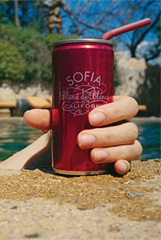 For years we’ve had wine marketing folks trying to dream up the best way to package and present wine: eye-catching labels, heavy bottles, then light bottles in an effort to be more “green,†and different shaped bottles to catch your attention. However, in all of the above, the basic package was still a glass wine bottle. Today, alternative wine packaging is everywhere.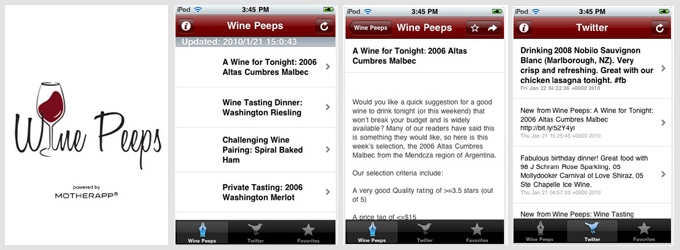
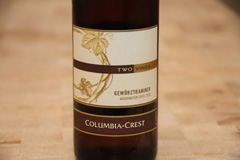 Would you like a quick suggestion for a good wine to drink tonight (or this weekend) that won’t break your budget and is widely available? Many of our readers have said this is something they would like, so here is this week’s selection, the
 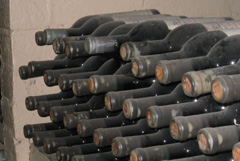 Actually, as a wine moves from youth to maturity, it simply undergoes changes just as you and I did growing up. Maturity doesn’t necessarily make us better people, but it sure does make us different people. The same thing goes for wine.
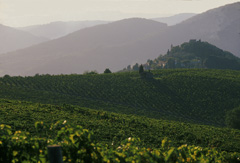 The
The 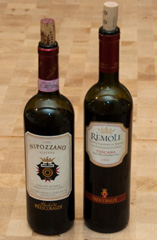 We recently had the opportunity to taste two Frescobaldi wines in a samples tasting, the 2006 Nipozzano Riserva and the 2008 Remole. These wines represent two of the brands within the extensive Frescobaldi portfolio.
 This week’s Wine Word of the Week is cellar.
 Thank you for your input to Wine Peeps. We had twice as many survey respondents as last year, although the percentage of responses was less than last year because our readership is so much larger. We have studied the survey results very carefully and plan to use them to make Wine Peeps even better in the coming months and years.


